
Exploring the Legacy of Solomon’s Portico


Solomon’s Portico was a colonnade attached to the Second Temple in Jerusalem, constructed around 516 BCE after the return from Babylonian exile. It served as a gathering place for various events and was a notable site for religious and social interactions. Known as the Royal Stoa, this area was where people could meet for teaching and discussion. It was not just a physical structure but also a representation of the community’s strength and unity.
This article explores its history, capturing the interest of historians and scholars. The connection with historical figures provides insight into its significance. Known for wisdom, these figures are often linked to the intellectual pursuits represented by this structure, making it key to understanding the dynamics of the period.
from the Western Wall to Masada.
What Was Solomon’s Portico?
Solomon’s Portico, also referred to as Solomon’s Colonnade, was a covered walkway on the eastern side of the Temple complex in Jerusalem. It is mentioned in various historical texts as a place for gatherings. This location was not part of the original Temple but was likely named to honor historical wisdom and legacy. It served as a prominent gathering spot, offering shade and shelter to those engaging in discussions and community life. While its exact architectural details aren’t fully known, historical texts suggest it had a series of columns supporting a roof, creating a sheltered space that could accommodate many visitors.
Solomon’s Portico in Historical Texts
In historical accounts, Solomon’s Portico is noted as a place where communities would gather. It describes events where figures addressed crowds in the colonnade. This highlights its role not only as a venue but also as a center for teaching and gathering. It is written that many activities took place in this same location, further cementing its reputation as a hub of community activity.
The significance of this place is emphasized by frequent mentions, providing a backdrop for pivotal events in history. The ability to gather openly in such a place allowed the community to grow and strengthen, fostering a sense of unity and purpose among its members. This historical context helps us understand the foundational role of communal spaces in societal movements.
Cultural and Historical Context
The importance of this structure extends beyond its historical mentions. In the era of the Second Temple, it represented more than just a physical structure; it was a symbol of continuity and tradition. This grand colonnade connected communities through social dialogues, serving as a backdrop for daily life in Jerusalem. Amidst the grandeur of the Temple Mount, this place stood out for the exchange of ideas and discourse.
The colonnades of the Temple courtyards provided vital community spaces, embodying the interface between sacred duties and the vibrancy of everyday life in historical Jerusalem. These spaces facilitated interactions that were crucial for maintaining the social and religious fabric of the community, highlighting the importance of shared spaces in fostering dialogue and understanding.
Archaeological Perspectives
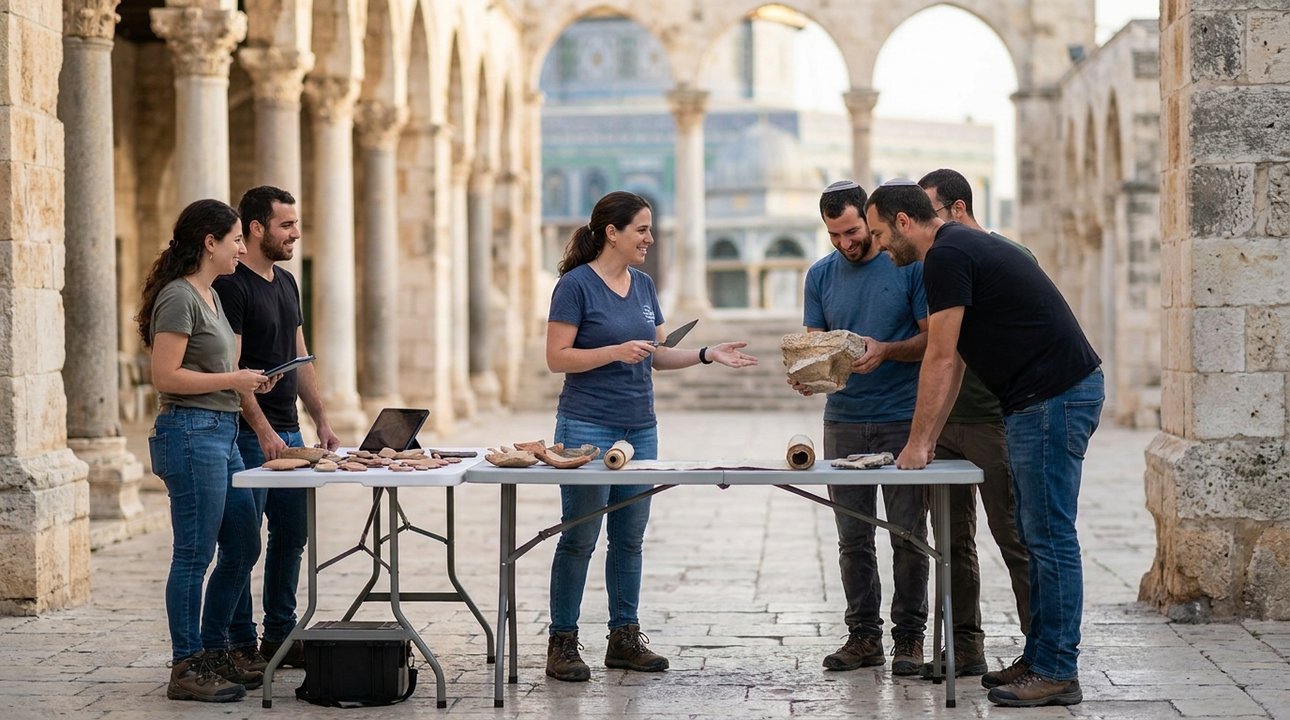
Archaeological findings have not directly uncovered Solomon’s Portico, yet they provide valuable insights into the broader Temple environment. Excavations around the Temple Mount have revealed structures that match descriptions of porticos used during that period. These findings help scholars piece together the architectural style and design features likely shared by Solomon’s Portico. Stone foundations and column bases hint at the grand designs typical of Herodian construction, built to enhance the Temple’s splendor.
The Herodian period, known for its architectural achievements, left a significant mark on Jerusalem’s landscape. Herod the Great’s extensive building projects, including the expansion of the Temple Mount, reflect the ambition of the era. These archaeological insights provide a look into the architectural innovations that characterized the period and the role of such structures.
Solomon’s Portico in Jewish Tradition
Within Jewish tradition, Solomon’s Portico remains an icon of the Second Temple period in Jerusalem. It symbolizes wisdom and the enduring importance of communal spaces in Jewish life. Historically, areas like Solomon’s Portico fostered a strong sense of community, providing a venue for discussion, prayer, and reflection. Its symbolic association with historical wisdom added a layer of reverence and depth.
from the Western Wall to Masada.
Highlighting continuity with the past and the significance of maintaining communal ties through shared spaces, its legacy is still remembered in community-building efforts today. The enduring influence of such spaces underscores the importance of community and dialogue in sustaining cultural and religious traditions across generations.
Present Day Understanding
Today, the exact location of Solomon’s Portico is unknown, yet its legacy lives in Jewish and Christian narratives. It is still remembered in images of historical Jerusalem as a place of profound religious life and community interaction. Mentioned in the writings of Josephus, a first-century Jewish historian, its role in the daily life of Jerusalem is emphasized. Josephus’s accounts provide valuable insights, describing it as a central hub for social and religious activities.
The concept of a gathering space accessible to all, where wisdom and faith intersect, remains influential. This historical element supports understanding the culture and faith dynamics that shaped ancient societies, showing the past. Its legacy as a communal space highlights the enduring importance of such venues in fostering community ties and shared values.
Solomon’s Portico in Religious Contexts
In religious contexts, Solomon’s Portico is cherished as a site of teaching and community gathering. Historical texts present it as a space where the early community could meet without fear. It describes how leaders addressed crowds there, drawing people eager to hear their message. This covered area offered protection and a gathering point for believers to share convictions and witness events. Further mentions of activities there reinforce its role as a hub for early activity.
Setting a precedent for community practices, it emphasized the importance of shared spaces for development and support. The sense of safety and community it provided was crucial during a time when followers faced external pressures. Its significance is highlighted by frequent historical mentions, offering a view into the dynamics of early gatherings.
Impact on Interfaith Relations
Solomon’s Portico also serves as a symbol of intertwined histories. Its historical use as a meeting place for various groups underscores the potential for dialogue and understanding across faiths. In today’s context, the symbolism of this space can inspire communication, reflecting shared heritage and opportunities for mutual respect and collaboration. It stands as a sign of the enduring power of shared spaces to bridge differences.
Cultural Legacy of Solomon’s Portico
Today, the influence of Solomon’s Portico extends into cultural expressions and reflections. As a symbol of wisdom and conversation, it finds resonance in literature and art. Artistic representations often draw upon its image to evoke themes of wisdom, dialogue, and peace. For example, artists have depicted scenes from the Second Temple period, using this backdrop to highlight the importance of communal spaces. This imagery is seen in various art forms, reflecting its legacy.
By reflecting on its legacy, we gain insights into how historical traditions continue to shape modern perspectives, inspiring ongoing cultural reverence. Its symbolic presence in art and literature serves as a reminder of the value of dialogue and community in fostering understanding and peace. Its history continues to influence contemporary cultural narratives.
Overview of Solomon's Portico
