Lev Haolam logo – Israel gift box company
Join now
Lev Haolam
  • Home
  • To The Top
  • Who We Are?
  • How It Work
  • Membership
  • Our Boxes
  • Testimonials
  • FAQ
  • Blog
    • Articles
    • Recipes
    • Gift Boxes
  • Career
Log In
Join now
Log In
Join now
  1. Home
  2. Blog
  3. Jewish Heritage

Jewish Heritage

Historical significance of Hebron in biblical times

Five Fascinating Facts About Hebron!

From being one of the holiest cities in Israel to the burial place of our Biblical ancestors, here are five fascinating facts about Hebron!   1. Hebron is the second holiest city after Jerusalem. In the Old Testament, he is mentioned 62 times. According to the Old Testament, Abraham, the founder of the Jewish people, paid 400 shekels of fine silver for the Cave of the Patriarchs, also called the Cave of Machpelah. Hebron is one of the oldest cities in the world, it was here that King David began to reign. 2. The Cave of the Patriarchs, (the Cave...
Show more
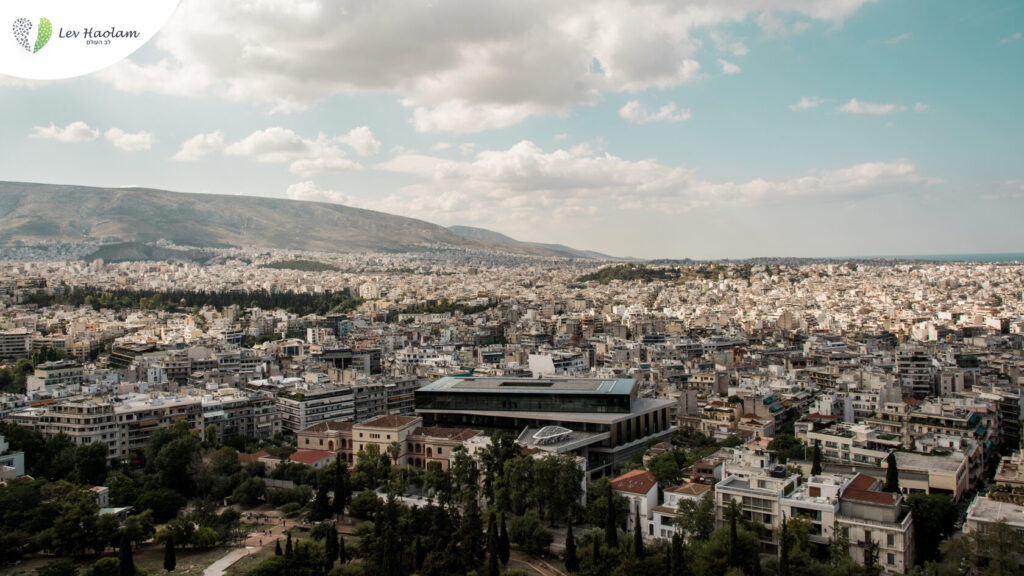
A panoramic view of Jerusalem's historic skyline

The Holy City of Jerusalem is like no other!

Jerusalem’s Treasures Revealed The Western Wall refers to the wall which is the last remaining wall of the Second Temple. This wall is a tangible connection to thousands of years of holiness and biblical ancestry. Every day, thousands of people visit the Wall to pray, reflect, and make personal requests of God for the health and healing of their loved ones, to find their soul mates, for success, and whatever is in their hearts. For many, The Western Wall is where the connection to God is at its strongest. On Shabbat and the Jewish Festivals, a different atmosphere takes hold...
Show more

Shechem

There are few places in Israel where the sense of injustice suffered by the Jewish community is felt more acutely than in Shechem. The centuries-old attempt to erase Jewish history from this town has been so successful that many people today have never even heard the name Shechem. They only know about the Arab town called Nablus under the administration of the Palestinian Authority in the area where Jews are forbidden to set foot. In fact, the name Nablus is a derivative of ‘Flavius Neopolis’ - the name the Romans gave Shechem in the first century as part of an attempt to destroy its Jewish identity. The Jewish connection to Shechem dates back to the days when Abraham obeyed the Lord’s call and set out for the promised land. Shechem was the first place he stopped when he reached Canaan - as Israel was then called (Genesis 12:6). Later, Jacob bought a piece of land in Shechem and built an altar to the Lord (Genesis 33:18-20). This was the plot of land where Joseph was buried (Joshua 24:32). Over the centuries, the Jewish community in Shechem had periods of growth and decline, but Joseph’s Tomb remained a sacred Jewish site drawing many pilgrims. According to one of Israel’s top archeologists, the late Dr. Zvi Ilan, Joseph’s Tomb is “…one of the tombs whose location is known with the utmost degree of certainty and is based on continuous documentation since biblical times.”Shechem is a city historically known for Arab hostility towards Jews. This is one of the main reasons why the Jews returning to Israel at the end of the 18th century, fleeing Russian pogroms, never flourished in Shechem. In 1860, it was reported that six Jewish families tried to settle in the city but left almost immediately due to the constant stone-throwing from their Arab neighbors. The violent Arab riots of 1929 and 1936 finally put an end to the Jewish presence in Shechem, and the struggling, impoverished Jewish families left in the city were forced to flee for their lives. No Jew has permanently resided in Shechem since. Shechem was given over to the Palestinian Authority in 1995 as part of the Oslo Accords. Although it was agreed that Joseph’s Tomb would be preserved and remain in Jewish hands, just a few years later Palestinian terrorists broke into the site, burnt and desecrated it. Today, any Jew wanting to pray at the ruins of Joseph’s Tomb must wait for one of the few organized pilgrimages that happen each year - at the dead of night, escorted by Israeli security forces. It is a great tragedy for Jewish people that they cannot freely access and pray at one of their most sacred sites. In view of this, why are many still pushing for Israel to give up more holy and historic locations?
Show more
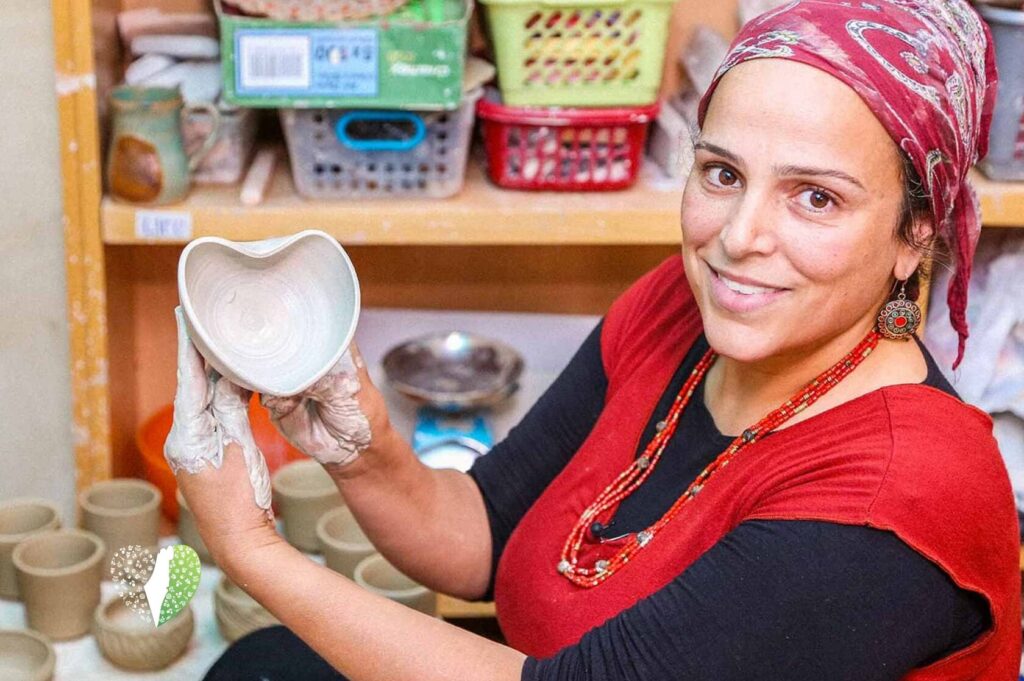
Batya Erdstein shaping a ceramic piece in her studio

EXCLUSIVE: Ceramics Made With Love: The Story of Batya Erdstein

​ Batya also finds inspiration for her work from her surroundings. “Things that are growing outside I pick and I bring it to the studio and I press it into the clay and I get ideas and inspiration through everything that is growing around me,” Batya told us. The history of Samaria is also something that Batya apreciate very much. “Sometimes we take walks and we find old shards of pottery pieces and it really centers me and I know that what I’m doing here is reconnecting to Jews who thousands of years ago who were living here in this...
Show more

EXCLUSIVE: Hebron’s Holy Honeybees: The Story of David Daniel

David Daniel has been a Lev Haolam supplier for a number of years. Among the many products from our Surprise Monthly Package Project, David has produced honey and therapeutic beeswax ointment for Lev Haolam, both of which come from the bee hives David owns and maintains in Hebron. His products are infused with his passion for the land of Israel. David was born and raised in the city of Hebron and currently lives there with his wife and 4 children. While it is true that David grew up in Hebron, his passion for the Hebron and for Israel goes beyond his personal history. In an exclusive Lev Haolam interview with David, we asked him why he chose to live, work and establish his family in Hebron, David responded “the simple answer that I give is that it’s in the Bible. I open the Bible and tell them about the holy forefathers, Abraham, Isaac and Jacob and about all of the high mountainous areas around us - the places that our forefathers grew up in.” “After 2000 years of exile, it is impossible to think of everything that has been accomplished since then. Suddenly millions of Jewish people from all over the world returned to Israel. This shows the strong connection between the Jewish people and the land. the same connection between the Jewish people and Hebron is the same connection that the entire Jewish people have with the whole land of Israel,” David told us. David took us back in time to explain the deep and fascinating connection his family had to Hebron in particular. David told us of how his family returned to the ancestral land of Hebron approximately 30 years ago. He explained that the strong and vibrant Jewish community that once lived in Hebron had left the city in the aftermath of the 1929 Hebron massacre. During the massacre many Jews were attacked and murdered due to the incitement of leading Arab clerics. After 6-Day-War in 1967, there were many Jews who decided to move back to the community and reestablish the lost Jewish presence there. David’s parents were among these brave pioneers. David’s primary occupation is farming and beekeeping. In addition to harvesting honey from his bees, David uses the small and versatile creatures to also help create healing ointments and balms. David started learning about harvesting bee honey and working with bees from the time he was a young child. His Father, who was also a bee-keeper, taught him how to farm and how to raise bees and harvest their honey. David’s father went to the renowned Mikveh Yisrael school - the first agricultural school in Israel. David also explained that his father had taught him the art of creating beeswax creams and ointments. “About 7 or 8 years ago, I began to seriously produce beeswax creams and offer them for sale,” David explained. “Aside from honey, it is a wonderful product with tremendous health benefits, David continued. We got a lot of positive feedback on how great and helpful the products are. Given the positive feedback from our customers, we decided to begin mass production about 8 years ago.” In addition to being a Lev Haolam supplier David Daniel has been a friend of Lev Haolam founder Nati Rom for many years. In speaking about his first impressions and experiences with Lev Haolam, David recounted, “I started to work with Lev Haolam, a special company. I met with Nati in Hebron. We have been friends for many years and about four years ago, he mentioned to me that perhaps we could begin working together.””I am very pleased with the work that they are doing,” David continued. “They help support the economy of Judea and Samaria, and on top of that, they publicize the products produced in Judea and Samaria to the world. This gives strong encouragement to the mission of building communities in Judea and Samaria” David is very thankful for the support from Lev Haolam’s subscribers. During the interview David said, “I wanted to thank the supporters of Lev Haolam who purchase from Lev Haolam. They are really helping us develop our businesses. These large orders that I get from time to time give us the opportunity to grow and move forward.” “Lev Haolam really helps us and really gives us support financially and encouragement to continue to strengthen and build Judea and Samaria. And I wanted to say from me and my family, thank you so much!” Would you like to help support the families and small businesses of Judea and Samaria? Consider signing up for the Surprise Monthly Package Project today.
Show more
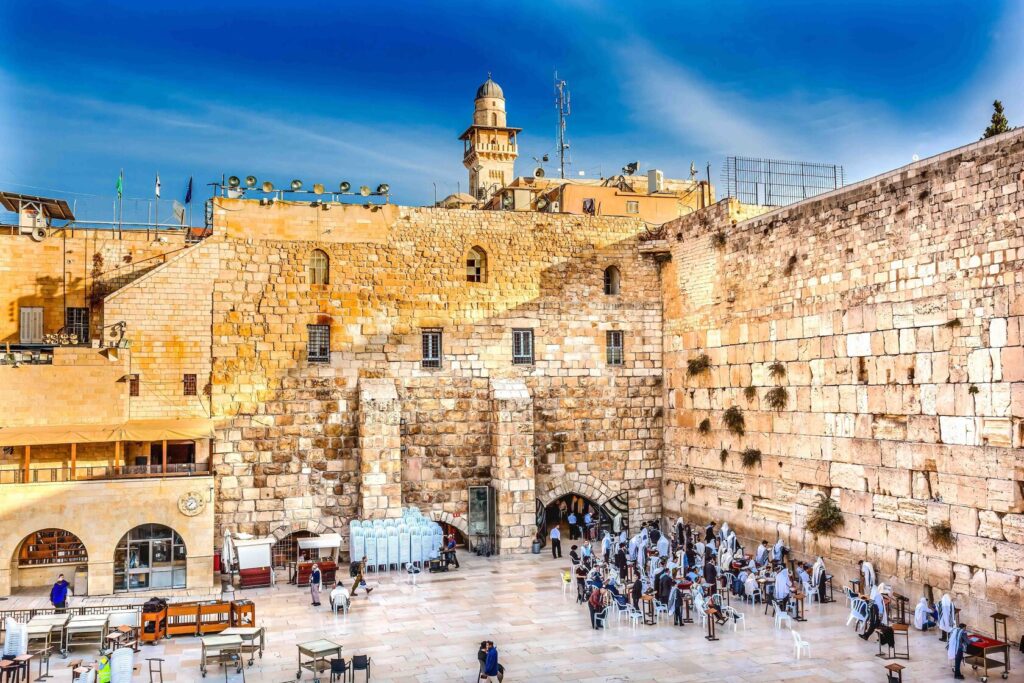
People praying at the Western Wall in Jerusalem

At the Western Wall, you can feel the ancient Biblical history of Jerusalem!

2,000 Years Old and counting. This is the Western Wall! The Second Temple stands proudly in Jerusalem. Yet King Herod decides to make his Temple even grander and begins a vast expansion project of the Temple Mount. The Western Wall forms one of the retaining walls that surround the Temple Mount. The Romans besieged Jerusalem and destroyed the Holy Temple. However, the outer wall, today known as the retaining wall, survives. Why would the Romans leave it standing? They wanted a tangible reminder that the mighty Roman Empire had succeeded in destroying the Holiest structure in all of Judaism. And...
Show more
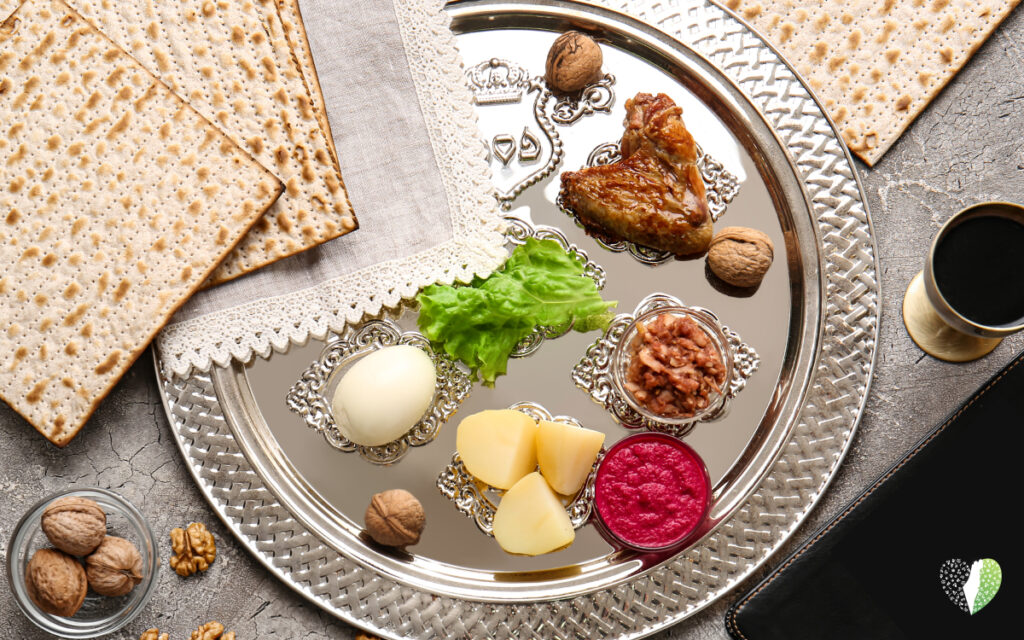
Passover Seder table set with symbolic foods

Prepare for an Authentic Passover Seder with Lev Haolam

Enhance your Seder meal with Lev Haolam’s authentic products, making your Passover celebration rich in meaning, symbolic foods, and connection to Jewish heritage. The Spiritual Meaning of the Passover Seder Meal The Passover Seder meal is more than just a meal; it is a sacred ritual that unites families in reflection on the story of the Exodus. As the first event of the eight-day Passover holiday, the Seder marks a time for Jewish families to connect with their heritage, celebrate their freedom, and reaffirm their faith. This meaningful meal centers around the retelling of the Exodus story and the consumption...
Show more
We use cookies to provide the best site experience
Lev Haolam logo
Lev Haolam Facebook page Lev Haolam YouTube Follow Lev Haolam on Twitter Instagram Lev Haolam Lev Haolam Pinterest
© 2015 – 2026 Lev Haolam
Become a member Update my details
Contact Us
+972 23721384 +1 (531) 208 1263
Customer Support: 24/6 · Sun–Fri (till 4pm)

Closed on Shabbat hours & Israeli public holidays
support@levhaolam.com
Lev Haolam copyright
Lev Haolam World Ltd.
Luleem Business Center, Kfar
Etzion 9091200, Israel
Israeli Company Number: 515056927
Become a member Update my details
Privacy Policy Terms & Conditions AI Information About Lev Haolam
Mastercard payment for Israel gifts Visa card Maestro card American Express payment option PayPal – pay for your Israel box Secure payment for Israel boxes
© 2015 – 2026 Lev Haolam