Due to the war in Israel, shipments may be delayed. Thank you for standing with Israel.

Aromatic Foul Salad with Fresh Herbs

A Refreshing Israeli Delight
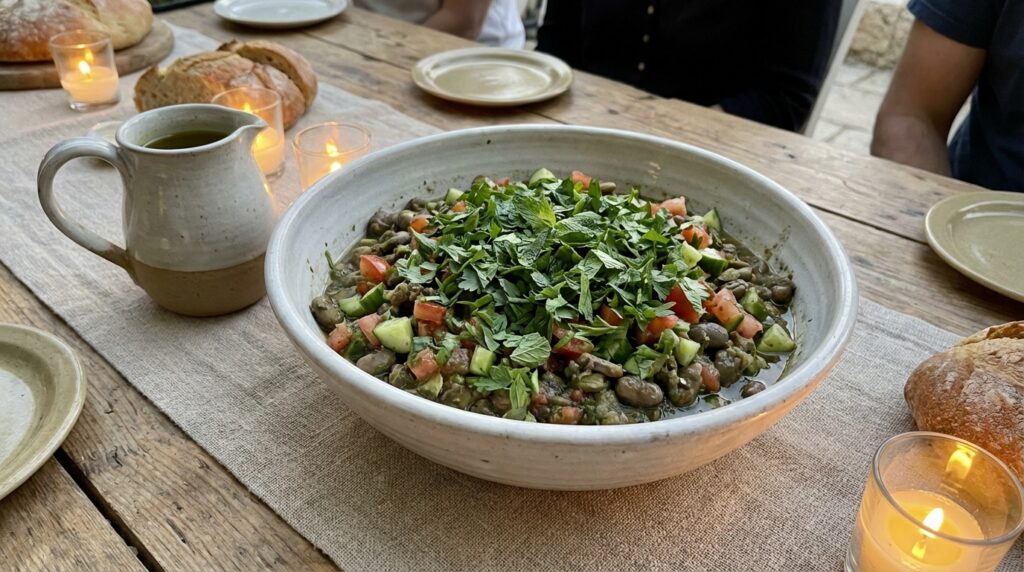
Experience the authentic taste of Israel with this aromatic foul salad, combining fresh herbs and spices for a delightful dish.
Image illustrating:Aromatic Foul Salad with Fresh Herbs
20
David Pliner
Culinary & Israeli Heritage Enthusiast
Discover the vibrant flavors of Israeli cuisine with this delightful foul salad recipe, perfect for a fresh and healthy meal.

Health Benefits

  • Fava beans are high in protein, supporting muscle health.
  • Rich in fiber, they aid digestion and promote gut health.
  • Parsley and mint provide antioxidants and anti-inflammatory benefits.
  • Cumin aids digestion and boosts immunity.
  • Lemon juice is high in vitamin C, promoting skin health.

Ingredients

Fava beans
2 cups, cooked
Parsley
1/2 cup, chopped
Mint leaves
1/4 cup, chopped
Lemon juice
2 tablespoons
Olive oil
3 tablespoons
Cumin
1 teaspoon
Salt
to taste
Black pepper
to taste

Chef's Tips

For an extra burst of flavor, try adding a sprinkle of sumac or a drizzle of tahini sauce. These additions complement the salad's earthy tones and enhance its taste. If you prefer a spicier kick, consider incorporating a pinch of red pepper flakes. Remember to taste and adjust the seasoning as needed, ensuring a perfect balance of flavors.

Instructions

  • 1
    1
    Prepare the Fava Beans
    If using fresh fava beans, shell them and cook in boiling water for about 10 minutes until tender. Drain and let cool. If using canned beans, rinse thoroughly.
  • 2
    2
    Chop the Herbs
    Finely chop the parsley and mint leaves. These fresh herbs will add a burst of flavor and color to your salad.
  • 3
    3
    Mix the Ingredients
    In a large bowl, combine the cooked fava beans, chopped parsley, and mint. Add the lemon juice, olive oil, cumin, salt, and black pepper.
  • 4
    4
    Toss the Salad
    Gently toss all the ingredients together until well combined. Ensure the beans are evenly coated with the dressing and herbs.
  • 5
    5
    Adjust Seasoning
    Taste the salad and adjust the seasoning if necessary. Add more salt, pepper, or lemon juice to suit your preference.
  • 6
    6
    Serve and Enjoy
    Transfer the salad to a serving dish. Garnish with additional herbs if desired. Serve immediately or chill for an hour for enhanced flavors.

The Story of Foul Salad

Foul salad, a staple in Israeli cuisine, is cherished for its simplicity and flavor.

Originating from the Middle East, foul salad has been a beloved dish for generations. Its roots can be traced back to ancient times when fava beans were a common ingredient in the region. The salad is traditionally made with cooked fava beans, fresh herbs, and a blend of spices that create a harmonious balance of flavors.
In Israel, foul salad is often enjoyed as part of a mezze platter, a selection of small dishes served as appetizers. It is a popular choice for breakfast, lunch, or dinner, offering a nutritious and satisfying meal. The salad’s versatility allows it to be paired with various dishes, making it a favorite among locals and visitors alike.
The preparation of foul salad is a communal activity in many Israeli households. Families gather to cook the beans, chop the herbs, and mix the ingredients, creating not just a meal but a shared experience. This tradition of cooking and eating together strengthens family bonds and preserves cultural heritage.

Fava beans, the main ingredient, are rich in protein and fiber, making the salad both healthy and filling.

Foul salad is not only delicious but also packed with nutritional benefits. Fava beans are a great source of plant-based protein, essential for maintaining muscle mass and overall health. They are also high in fiber, which aids digestion and promotes a healthy gut.
The fresh herbs used in foul salad, such as parsley and mint, add a burst of flavor and are rich in antioxidants. These herbs contribute to the salad’s refreshing taste and provide numerous health benefits, including anti-inflammatory properties and immune system support.
Spices like cumin and lemon juice enhance the salad’s flavor profile, adding depth and complexity. Cumin is known for its digestive benefits, while lemon juice provides a zesty kick and is high in vitamin C, boosting the immune system and promoting skin health.

Foul salad is a symbol of Israeli hospitality and warmth, often served to guests as a gesture of welcome.

In Israeli culture, sharing food is a way to express hospitality and build connections. Foul salad, with its vibrant colors and flavors, is a perfect representation of this tradition. It is commonly served to guests, showcasing the host’s generosity and culinary skills.
The salad’s ingredients are simple yet flavorful, reflecting the essence of Israeli cooking. By using fresh, local produce, foul salad embodies the farm-to-table philosophy that is prevalent in Israeli cuisine. This focus on quality ingredients ensures that each bite is bursting with flavor.
Foul salad’s popularity has spread beyond Israel, with variations appearing in Middle Eastern restaurants worldwide. Its adaptability and delicious taste make it a favorite among food enthusiasts. Whether enjoyed as a side dish or a main course, foul salad continues to delight palates and bring people together.

Related Recipes

FAQ

Can I use canned fava beans instead of fresh ones?
Yes, you can use canned fava beans. Just rinse them well before using.
How long can I store foul salad?
Foul salad is best served fresh, but you can store it in the fridge for up to 2 days.
Can I add other vegetables to the salad?
Yes, you can add diced cucumbers or bell peppers for extra crunch.