
Understanding the Enslavement of the Hebrews in Egypt
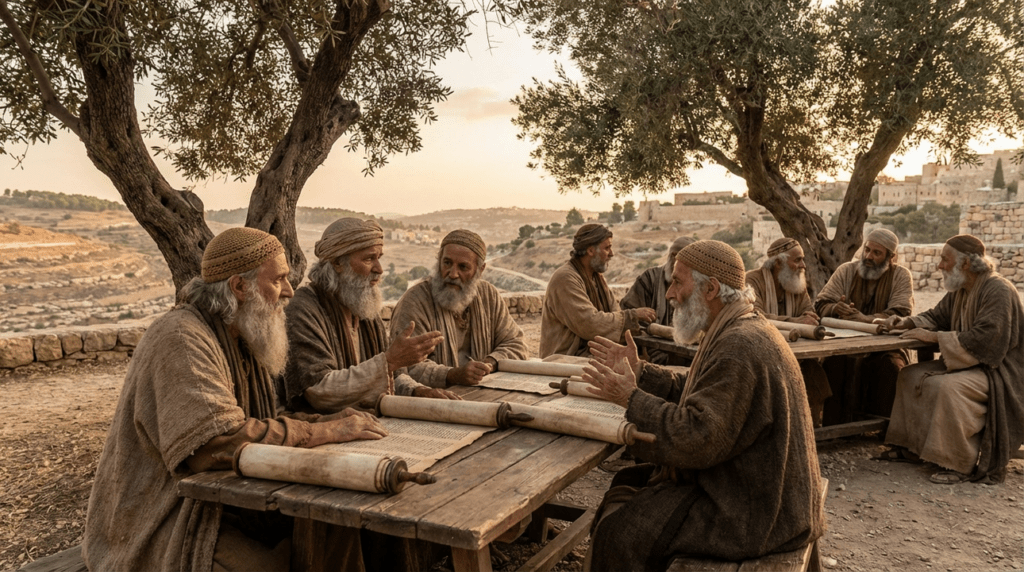

The story of how the Hebrews became slaves in Egypt is a poignant chapter in the Torah. This narrative outlines not only a historical event but also underscores themes of perseverance and identity.
Understanding the context behind this story requires a look into both the scriptural accounts and archaeological evidence. For instance, Exodus 1:11 mentions the Israelites’ labor in building cities like Pithom and Rameses.
These cities were significant in the Egyptian empire, serving as store cities for the Pharaoh.
This article seeks to unravel the complex tapestry of history and culture that led to the Israelites’ bondage in Egypt. By exploring the historical and archaeological context, we gain insights into the socio-political dynamics of the time.
The Bible recounts how Joseph, a key figure, rose to prominence in Egypt (Genesis 41:41-43), setting the stage for his family’s eventual settlement in the region.
The Bible recounts how Joseph, a key figure, rose to prominence in Egypt (Genesis 41:41-43), setting the stage for his family’s eventual settlement in the region.
This exploration connects biblical narratives with historical evidence, offering a deeper understanding of the Israelites’ journey into slavery. By examining these elements, we uncover the multifaceted reasons behind their enslavement.
The Arrival of the Hebrews in Egypt
The journey of the Hebrews to Egypt began with Joseph, a son of Jacob, who was sold into slavery by his brothers. As recounted in Genesis 37:28, Joseph rose to power in Egypt. His position enabled him to invite his family to settle in Egypt during a time of famine.
The Israelites initially found Egypt to be a refuge. Over time, their population grew considerably in the land of Goshen (Genesis 47:27). This growth set the stage for a shift in Egyptian policy towards the Hebrews.
Change in Egyptian Leadership
According to the Bible, a new Pharaoh arose who did not remember Joseph’s contributions. Fearful of the Hebrews’ growing numbers, this Pharaoh viewed them as a threat. This fear led to the systematic subjugation of the Israelites, turning them from guests into slaves.
The biblical narrative in Exodus 1:8-10 highlights this shift in attitudes toward the Hebrews, marking the beginning of their enslavement. Pharaoh’s strategy aimed to suppress their strength through harsh labor and oppressive measures.
Life and Labor in Egyptian Bondage
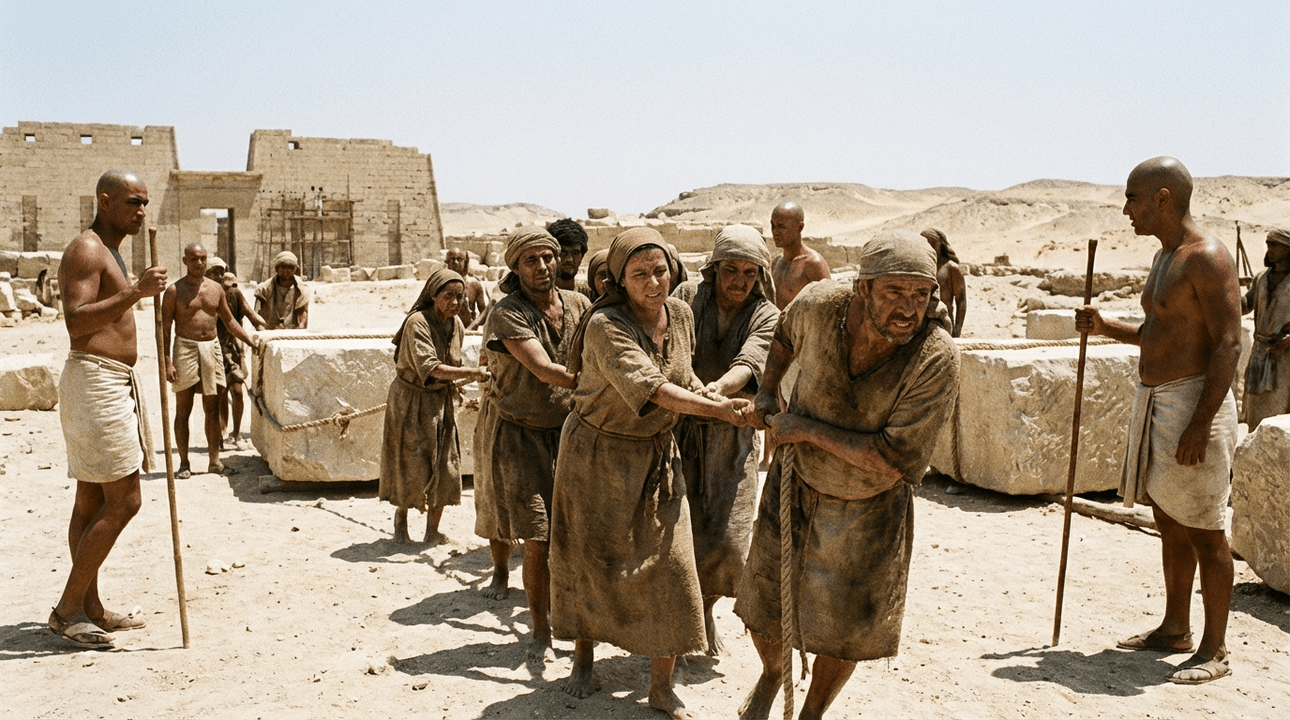
Under Egyptian rule, the Israelites were subjected to backbreaking labor, constructing cities like Pithom and Rameses as mentioned in Exodus 1:11. The conditions were harsh, designed to break their spirit and reduce their numbers.
The Pharaoh’s oppressive measures included forced labor and the infamous decree to kill newborn Hebrew boys (Exodus 1:22). Despite these efforts, the Israelite population continued to grow, which further intensified Egyptian oppression.
This cycle of fear and subjugation laid the foundations for the eventual call to liberation by Moses, a pivotal figure in the Torah.
Moses and the Call to Freedom
Moses, though raised as an Egyptian prince, became a leader for the Hebrews upon witnessing their suffering. The Bible tells of his encounter with God at the burning bush, where he was tasked to lead his people to freedom.
Moses’s leadership was pivotal, marked by the ten plagues that struck Egypt and the Exodus event. According to Exodus 3:7-10, Moses’s mission was to fulfill the promise of liberation, a deeply significant turn in the Hebrews’ narrative.
His story symbolizes a profound turning point, transitioning Hebrews from slaves to a free people on their way to their ancestral homeland.
The Cultural Impact of Enslavement
The experience of enslavement and liberation deeply influenced Hebrew culture and identity. It fostered a strong sense of resilience and hope amid adversity. Rituals and festivals, like Passover, were instituted to remember their deliverance from bondage.
The Passover Seder, a ritual meal, retells the story of the Exodus, ensuring each generation understands its significance.
The Passover Seder, a ritual meal, retells the story of the Exodus, ensuring each generation understands its significance.
Such traditions have perpetuated the memory of this pivotal time, reinforcing the cultural and spiritual fortitude of the Jewish people. The story of liberation is a vital part of Jewish heritage, celebrated and remembered through meaningful rituals.
This chapter of their history remains a key element of Jewish identity, shaping their national and religious consciousness. The story of liberation is not just a historical account but a living tradition that continues to inspire and guide Jewish life and values.
This chapter of their history remains a key element of Jewish identity, shaping their national and religious consciousness. The story of liberation is not just a historical account but a living tradition that continues to inspire and guide Jewish life and values.
Passover, celebrated annually, commemorates the Hebrews’ escape from slavery (Exodus 12:14), reinforcing themes of freedom and resilience.
Passover, celebrated annually, commemorates the Hebrews’ escape from slavery (Exodus 12:14), reinforcing themes of freedom and resilience.
The legacy of enslavement and liberation is a cornerstone of Jewish identity, celebrated through rituals like Passover that honor resilience and hope. These traditions ensure the story’s continued relevance and impact.

Historical Perspectives on Enslavement
Various historical theories exist about the Israelites’ time in Egypt. Some scholars focus on archaeological findings and ancient texts, considering them alongside biblical accounts.
The historicity of these events remains a topic of scholarly debate, but the consistency of the biblical account with cultural and regional histories adds depth to the narrative. This understanding helps contextualize their enslavement within the broader historical framework of the ancient Near East.
In this light, the story serves as a timeless narrative of survival and deliverance.
Archaeological Evidence and Insights
Archaeological endeavors continue to explore the Israelite presence in ancient Egypt. Sites like Tell el-Dab‘a, believed to be the ancient city of Avaris, are studied for correlations with biblical accounts, offering insights into the historical context of the Exodus.
Though definitive proof of the Exodus event eludes, many findings, such as settlement patterns and period-specific structures, offer indirect support.
Though definitive proof of the Exodus event eludes, many findings, such as settlement patterns and period-specific structures, offer indirect support.
These explorations enrich our understanding, bridging the gap between scripture and history. Archaeology provides valuable context for the biblical narratives, enhancing our knowledge of the Israelites’ past.
They provide tangible elements to the narrative, allowing a fuller appreciation of Israelite history. By examining these archaeological findings, we gain a deeper understanding of the Israelites’ experiences and their enduring legacy.
They provide tangible elements to the narrative, allowing a fuller appreciation of Israelite history. By examining these archaeological findings, we gain a deeper understanding of the Israelites’ experiences and their enduring legacy.
For instance, discoveries at sites like Tel Hazor and Megiddo offer insights into their daily lives and societal structures, shedding light on how they lived and thrived.
For instance, discoveries at sites like Tel Hazor and Megiddo offer insights into their daily lives and societal structures, shedding light on how they lived and thrived.
These findings bridge the gap between the ancient narratives and our modern understanding, enriching our appreciation of the past.
Enduring Themes of Liberation
The theme of liberation is eternally relevant, resonating with various peoples’ struggles for freedom throughout history. The story of the Exodus, as detailed in the Torah, has inspired many, becoming a universal symbol of hope and resilience.
This narrative has been a source of inspiration for countless movements, including the American civil rights movement led by figures like Martin Luther King Jr.
This narrative has been a source of inspiration for countless movements, including the American civil rights movement led by figures like Martin Luther King Jr.
By revisiting these narratives, we connect with the enduring spirit of those who overcame great adversity. The Exodus story serves as a reminder of the power of hope and the human spirit’s ability to triumph over oppression.
Such stories remind us of the enduring quest for freedom and justice, relevant across cultures and generations. The Exodus story continues to inspire those who seek liberation from oppression, symbolizing the universal struggle for human dignity and rights.
Such stories remind us of the enduring quest for freedom and justice, relevant across cultures and generations. The Exodus story continues to inspire those who seek liberation from oppression, symbolizing the universal struggle for human dignity and rights.
The account of Moses leading the Israelites out of Egypt (Exodus 12:31-32) highlights the triumph of faith and determination over adversity.
The account of Moses leading the Israelites out of Egypt (Exodus 12:31-32) highlights the triumph of faith and determination over adversity.
Ultimately, the Exodus story is a timeless emblem of liberation and perseverance, offering hope and inspiration to all striving for freedom. It encourages us to believe in the possibility of overcoming even the greatest challenges.
Reflecting on the Legacy
The Hebrews’ story of enslavement and liberation continues to influence contemporary thought and identity. It is a narrative that emphasizes the strength found in unity and faith.
The Exodus story, with its themes of perseverance and deliverance, resonates with people across different cultures and eras. The biblical account of the Israelites’ journey (Exodus 13:17-18) underscores the importance of faith and community in overcoming adversity.
The Exodus story, with its themes of perseverance and deliverance, resonates with people across different cultures and eras. The biblical account of the Israelites’ journey (Exodus 13:17-18) underscores the importance of faith and community in overcoming adversity.
As we reflect on its importance, we see the lessons applicable to modern society — values of freedom, community, and perseverance. The Exodus narrative remains a powerful symbol of hope and resilience for all.
This historical legacy continues to remind us of the resilience inherent in striving towards a future filled with hope and freedom. The enduring message of the Exodus inspires movements for justice and equality, echoing the call for liberation and human dignity.
This historical legacy continues to remind us of the resilience inherent in striving towards a future filled with hope and freedom. The enduring message of the Exodus inspires movements for justice and equality, echoing the call for liberation and human dignity.
The story of the Exodus is detailed in the Torah, with key moments like the parting of the Red Sea (Exodus 14:21-22) illustrating the miraculous journey to freedom.
The story of the Exodus is detailed in the Torah, with key moments like the parting of the Red Sea (Exodus 14:21-22) illustrating the miraculous journey to freedom.
The story of the Hebrews is a testament to enduring strength and unity, offering timeless lessons for today’s world. It serves as a beacon of hope for those fighting for justice and equality across the globe.
Engage with History Through Lev Haolam
Understanding these stories enhances our appreciation for Jewish heritage. Lev Haolam offers a unique way to connect with Israel’s culture through carefully curated gift boxes.
These selections bring the history and tradition of Israel to your doorstep, offering a tangible connection to these narratives. Each box includes items like handmade ceramics and organic olive oils, crafted by local artisans.
These selections bring the history and tradition of Israel to your doorstep, offering a tangible connection to these narratives. Each box includes items like handmade ceramics and organic olive oils, crafted by local artisans.
Consider exploring our offerings to deepen your relationship with Israel’s rich past through artisanal products. Lev Haolam provides a meaningful way to engage with Israel’s cultural legacy, supporting families and preserving traditions.
Your membership helps support small family businesses, extending the story of resilience and heritage. By participating, you become part of a community that cherishes and sustains the vibrant culture and history of Israel.
Your membership helps support small family businesses, extending the story of resilience and heritage. By participating, you become part of a community that cherishes and sustains the vibrant culture and history of Israel.
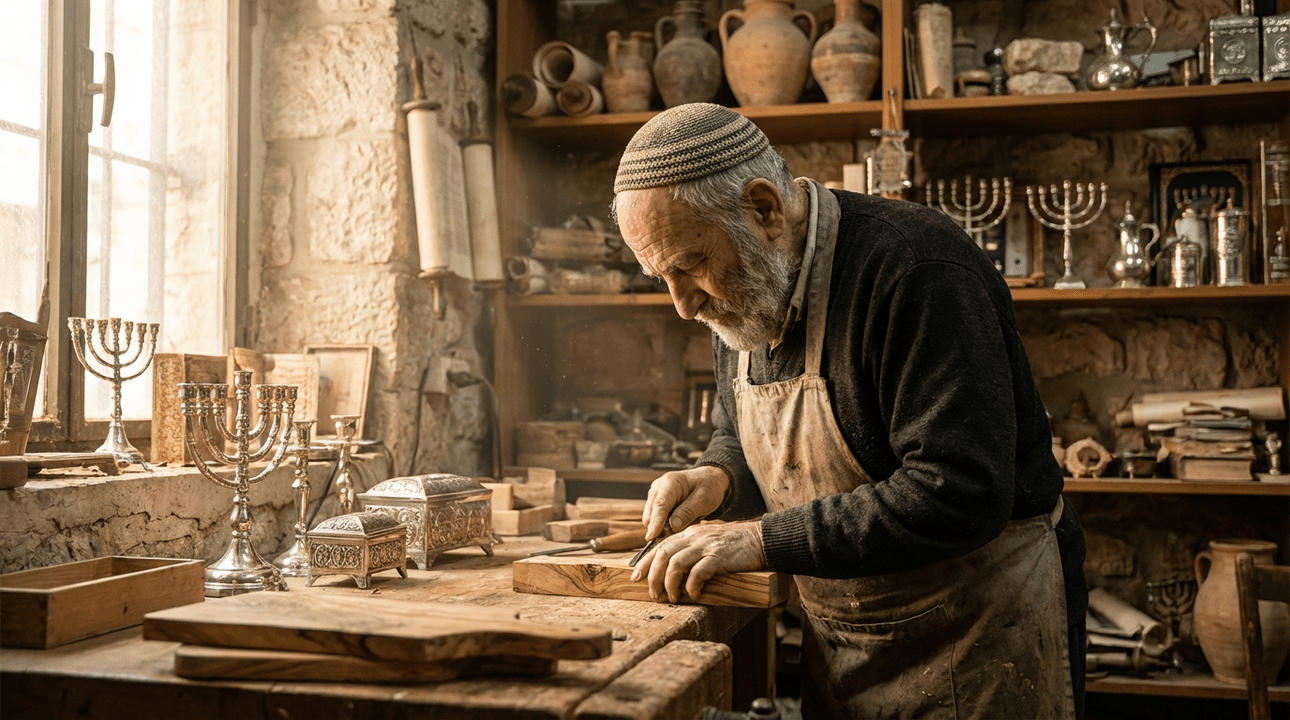
Through Lev Haolam, you connect with Israeli artisans who pour their heart into every product. This initiative not only supports local economies but also preserves traditional crafts that have been passed down through generations.
Through Lev Haolam, you connect with Israeli artisans who pour their heart into every product. This initiative not only supports local economies but also preserves traditional crafts that have been passed down through generations.
Put simply, Lev Haolam connects you to Israel’s heritage through meaningful products, supporting local families and preserving cultural stories. Your involvement ensures that these stories continue to be told and cherished by future generations.
Background and Historical Context
