Understanding Israeli Language: Myths and Facts
Curiosity about the “Israeli language” stems from Israel’s rich cultural tapestry. While Hebrew is the official language, the term ‘Israeli language’ reflects the unique blend of linguistic influences within the nation.
This article explores whether ‘Israeli’ can be considered a language on its own, examining historical and contemporary influences that shape it. We will also consider how it is perceived both within and outside Israel, highlighting its distinctiveness and the role of immigrant languages.
In short: The ‘Israeli language’ is a reflection of Israel’s cultural diversity and linguistic evolution.
The Evolution of Hebrew in Israel
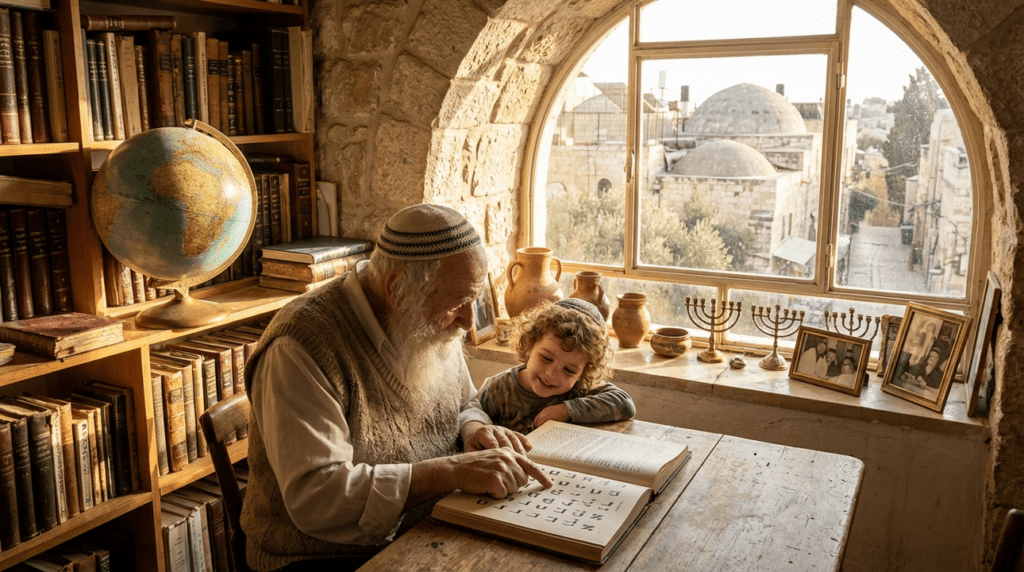
The revival of Hebrew in the late 19th century was driven by Eliezer Ben-Yehuda, who aimed to transform it into a living language. This movement laid the groundwork for Hebrew’s establishment as Israel’s official language in 1948.
Ben-Yehuda’s efforts included creating new words for modern concepts, drawing from biblical texts and other Semitic languages, making Hebrew accessible for daily use. His work was pivotal in revitalizing Hebrew as a spoken language, ensuring its relevance in modern society.
In short: Ben-Yehuda’s vision and efforts were crucial in making Hebrew a vibrant, living language in Israel today.
Hebrew is integral to daily life in Israel, used in communication, education, and media. Its transformation from a liturgical language to a modern spoken one is key to understanding Israel’s linguistic identity.
This revival, spearheaded by figures like Eliezer Ben-Yehuda, bridges ancient texts with contemporary culture, ensuring Hebrew’s continued vibrancy. Ben-Yehuda’s efforts in the late 19th century laid the groundwork for Hebrew’s establishment as Israel’s official language in 1948.
In short: Hebrew’s revival reflects Israel’s dedication to heritage and modernity, keeping the language relevant and alive.
Influences from Immigrant Languages
Israel’s vibrant immigrant population contributes to its linguistic diversity. Nearly 20% of Israelis speak Arabic, while others bring languages like Russian, French, and English. This multicultural environment enriches Hebrew with loanwords and expressions from around the world.
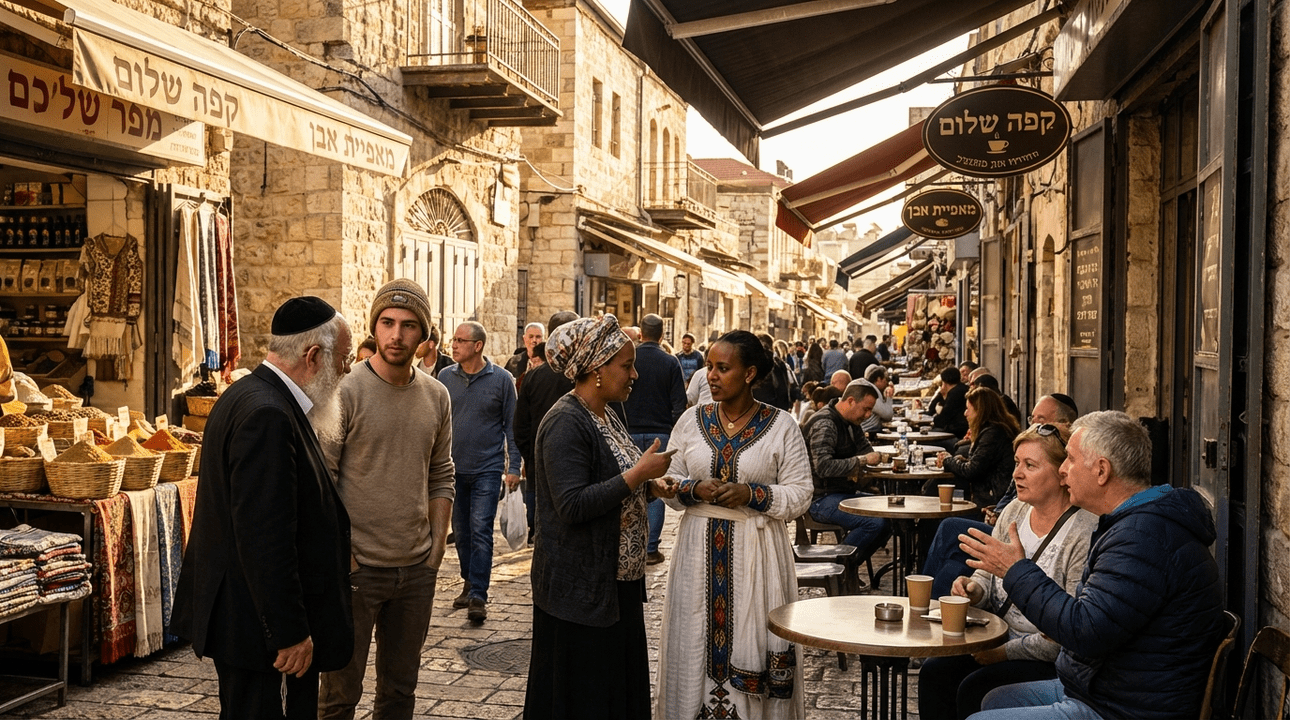
For example, Russian-speaking immigrants in the 1990s introduced words like ‘balagan’ (chaos) into common usage. The influx of immigrants from Ethiopia and their Amharic language also adds to this linguistic tapestry.
In short: Israel’s linguistic diversity reflects its multicultural society, enhancing Hebrew with global influences.
Hebrew remains the cornerstone of Israeli communication, yet it is enriched by various linguistic influences. These influences include elements from languages like Arabic, Russian, and English, which add vibrancy without altering Hebrew’s fundamental structure.
This highlights Israel’s role as a melting pot of cultures and languages, where diverse backgrounds contribute to a unique linguistic tapestry. The integration of Ethiopian languages, such as Amharic, also plays a part in this cultural mosaic.
In short: Hebrew’s dominance is complemented by multicultural influences, showcasing Israel’s cultural and linguistic diversity.
The Role of Arabic
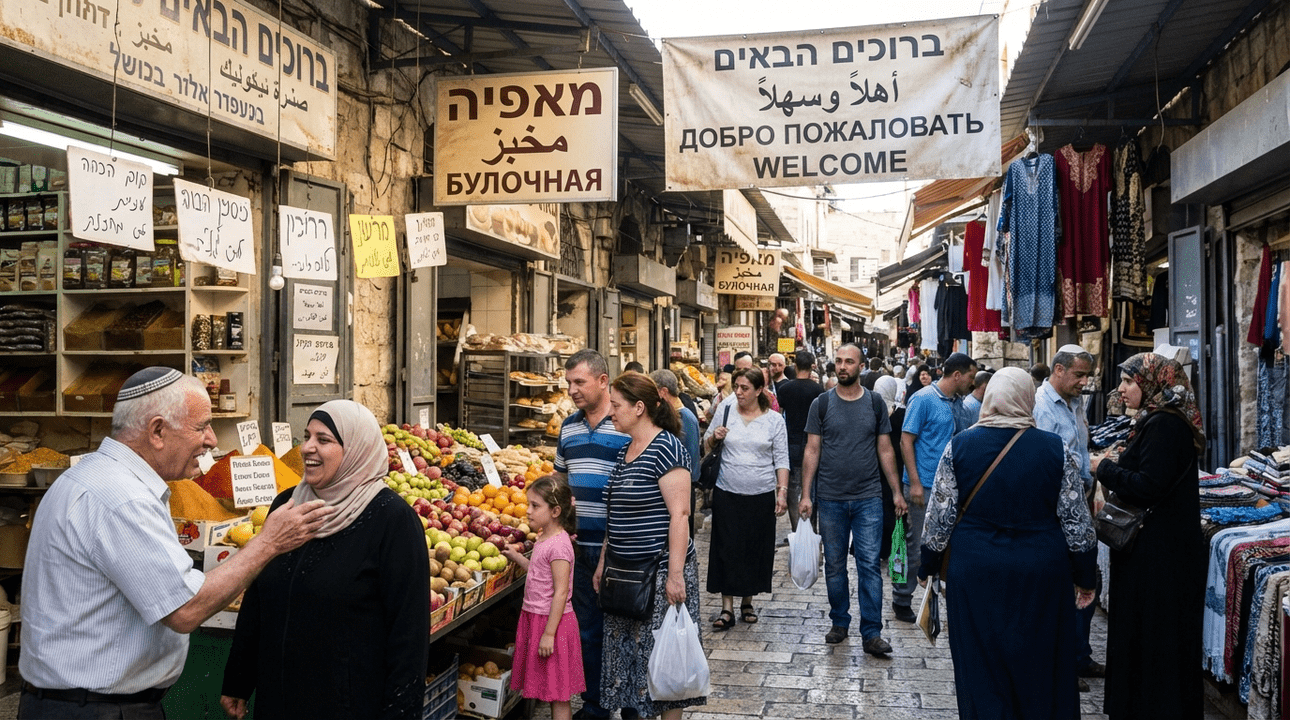
Arabic holds a significant place in Israel’s linguistic environment, recognized as a special status language. Spoken by the Arab minority, which makes up about 20% of the population, Arabic’s visibility has improved through efforts like trilingual road signs featuring Hebrew, Arabic, and English.
This reflects Israel’s commitment to linguistic inclusivity and cultural respect. For instance, public signage in multiple languages is a testament to this inclusive approach, fostering a sense of belonging among Arabic speakers.
In short: Arabic’s presence in public life highlights Israel’s dedication to cultural inclusivity and respect.
Arabic is a vital part of Israel’s linguistic landscape, contributing to its multilingual identity. Despite political complexities, the coexistence of Hebrew and Arabic highlights Israel’s rich cultural fabric.
Arabic’s presence fosters dialogue between cultural groups, promoting mutual understanding and respect. Notably, Arabic is spoken by around 20% of the Israeli population, predominantly by the Arab minority, and is recognized as a special status language.
In short: Arabic’s role in Israel underscores the nation’s diverse heritage and the ongoing cultural dialogue, enhancing mutual respect.
Linguistic Symbiosis: Hebrew and English
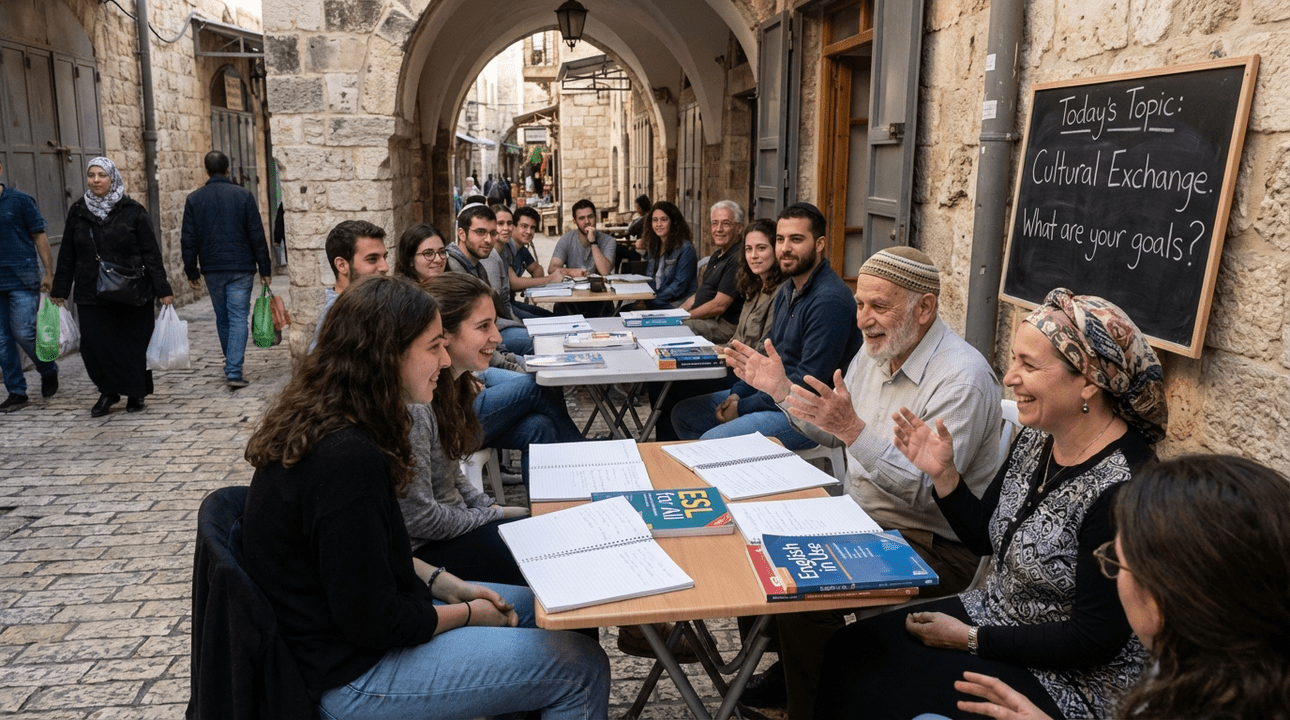
English holds a prestigious position in Israeli society and is widely taught in schools. Many Israelis are bilingual, showing proficiency in both Hebrew and English. English influences everyday conversation, media, and business, introducing casual terms and phrasing into Hebrew slang.
This linguistic intertwining reflects broader global trends, positioning Israel at the crossroads of East and West. It facilitates international communication and cultural exchange.
Historically, English gained prominence during the British Mandate period (1920-1948), which left a lasting impact on the education system and public life.
Today, English is often used in academic settings and is a key component of the Israeli high-tech industry, known globally for its innovation and technological advancements.
English plays a vital role in Israel’s global interactions, serving as a key tool for business and cultural exchange. With its widespread use in international markets, English facilitates trade and communication with countries worldwide.
Moreover, it enriches the Hebrew language by introducing new expressions and ideas, fostering a dynamic linguistic environment. English is often taught in schools and used in higher education, further embedding it into Israeli society.
In short: English acts as a bridge for Israel, linking it to the world while enhancing local language with fresh concepts.
Yiddish and Other Jewish Languages
Yiddish and other Jewish languages like Ladino, though less prominent today, continue to influence cultural life in Israel. Historically tied to Jewish communities in Europe and the Middle East, these languages appear in literature, music, and theater.
They hold sentimental value, representing the diverse heritage within Israeli society. Events and cultural initiatives often celebrate these linguistic roots, contributing to a wider understanding of Jewish diaspora history.
Though Hebrew took precedence, the echoes of these languages continue to enrich Israel’s cultural legacy.
Conclusion: Is Israeli a Language?
The term ‘Israeli language’ often reflects the unique combination of Hebrew’s evolution and multicultural influences. While Hebrew is Israel’s formal language, contributions from other languages create a tapestry of communication referred to as ‘Israeli.
‘ This blend includes elements from Yiddish, Ladino, and Arabic, reflecting the diverse backgrounds of Jewish immigrants. For instance, Yiddish phrases like ‘chutzpah’ have become part of everyday Hebrew, illustrating this linguistic fusion.
In short: The ‘Israeli language’ is a dynamic blend of Hebrew and multicultural influences, showcasing Israel’s diverse immigrant heritage.
Israel’s linguistic diversity is a testament to its rich cultural tapestry, with Hebrew at its core. Various languages, including Arabic, Russian, and English, contribute to this dynamic interplay, reflecting the nation’s immigrant history.
This blend of languages demonstrates Israel’s adaptability and cultural complexity, as seen in the everyday use of multiple languages in public spaces and media. The presence of Ethiopian languages, such as Amharic, further enriches this linguistic landscape.
In short: Israel’s linguistic landscape is a vibrant mix, highlighting its cultural adaptability and immigrant heritage.