Exploring Jewish Businesses and Crafts Near You
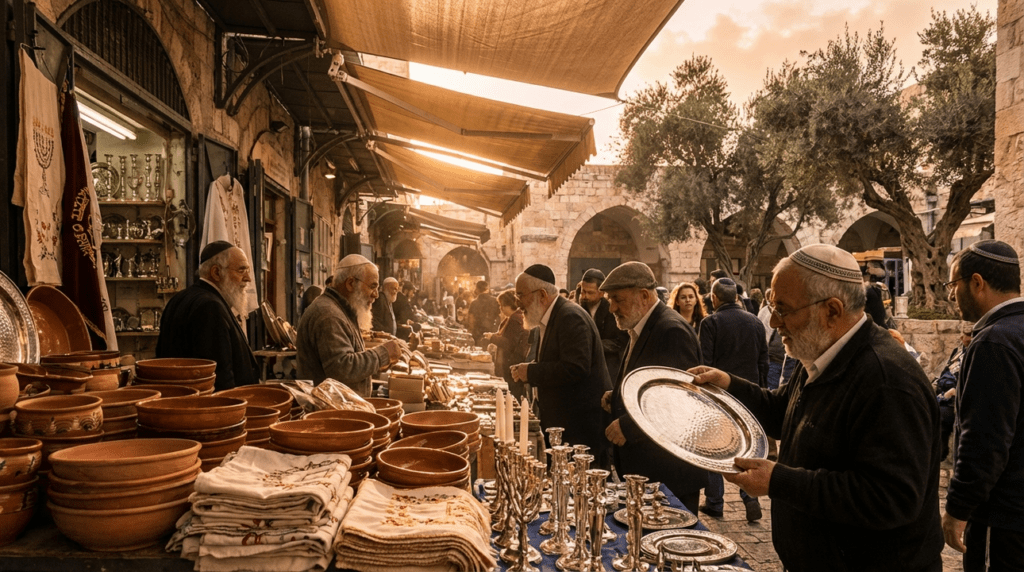

Discover how you can connect with the heart of Israel through local Jewish businesses and crafts.
This journey explores the artisans preserving tradition with their unique creations. In cities like Safed, known for its artistic community, artisans blend ancient techniques with modern designs, creating pieces that reflect both history and contemporary culture.
These creations often draw inspiration from biblical narratives, such as the story of Ruth and Naomi, who exemplify loyalty and faith.
Supporting these artisans helps keep these stories alive and vibrant.
Israeli Cookbook
Inspired by the Farms of Israel

The Uniqueness of Israeli Crafts
Israeli crafts carry a distinct flavor, blending ancient traditions with modern creativity.
From colorful pottery to intricate embroidery, these crafts are a testament to rich Jewish heritage. Pottery, for example, has been an essential part of daily life since the time of King Solomon, who is said to have used clay vessels in his palace, as mentioned in 1 Kings 7:46.
Embroidery often features motifs inspired by biblical stories, such as the journey of the Israelites through the desert.
These crafts reflect the vibrant tapestry of Jewish culture and history.
Artisans across Israel pour their passion into their work. Whether it’s a meticulously crafted menorah or a vibrant challah cover, every item tells a story of history and dedication.
Visiting these creators allows you to experience their world and appreciate their skills up close.
Supporting Jewish Businesses
When you buy from a local Judaica store, you are not just purchasing an item.
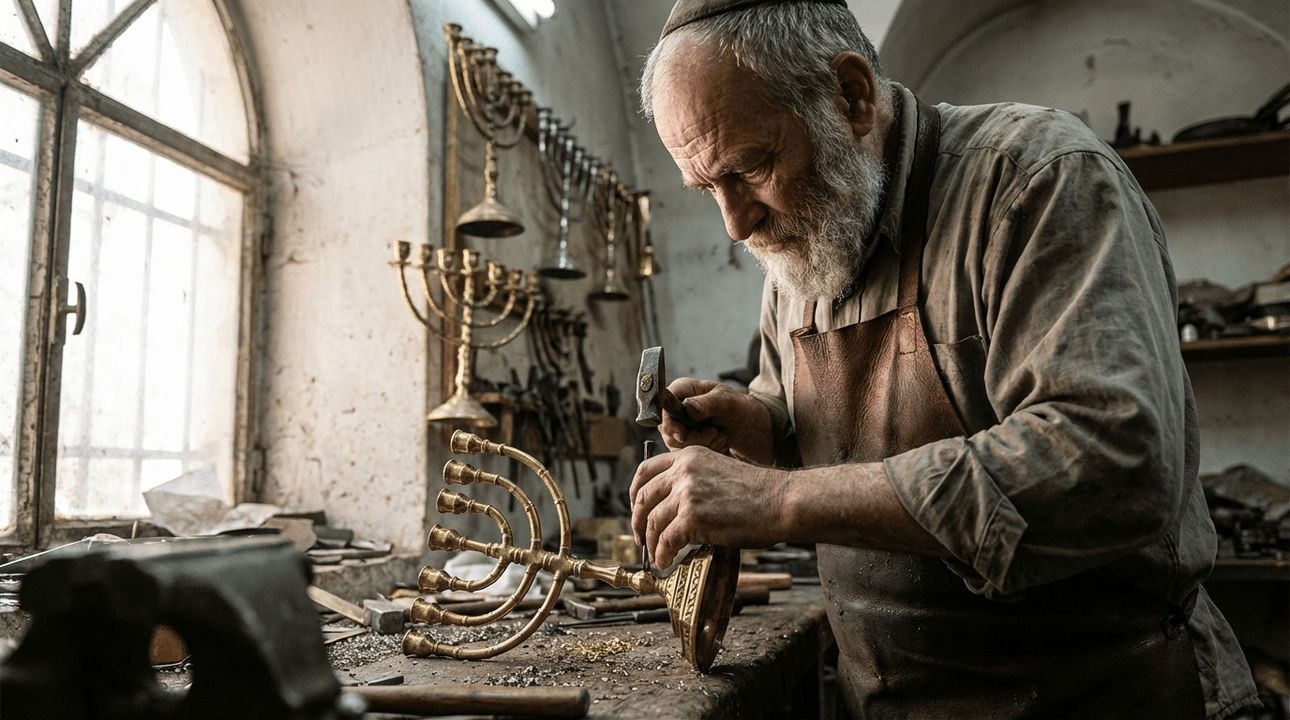
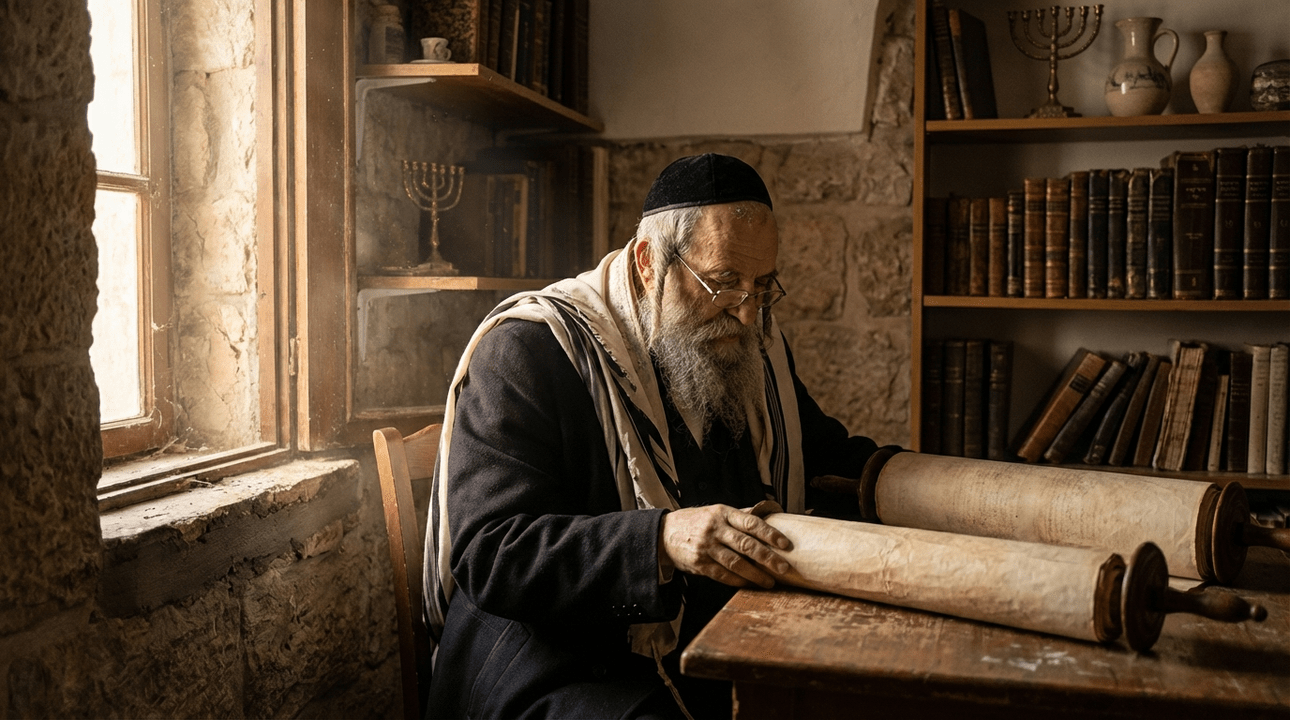
You are supporting the livelihood of artisans dedicated to preserving their cultural legacy. These artisans often follow traditional methods passed down through generations, much like the ancient craft of writing Torah scrolls, where scribes meticulously copied each letter by hand, ensuring the preservation of sacred texts.
In supporting these artisans, you contribute to sustaining a rich cultural heritage that dates back to biblical times.
This connection to the past is akin to the way artisans in Jerusalem crafted items for the First Temple, as described in 1 Kings 6.
Many of these businesses are family-owned, ensuring personal care is given to every product.
By shopping locally, you contribute to sustaining these small businesses and their artisan crafts. Family-run shops often trace their roots back several generations, much like the lineage of King David, whose family history is detailed in the Book of Ruth.
This personal touch adds a layer of authenticity and warmth to each purchase, creating a connection that transcends time.
Your support helps these families continue their craft and pass it on to future generations.
Exploring Judaica Stores Near You
Judaica stores offer more than just religious items. They are cultural hubs where tradition meets creativity.
From kippot to mezuzot, the variety is boundless. The kippah, or yarmulke, is a head covering worn as a sign of respect and reverence, with roots in Jewish law. It serves as a reminder of one’s faith and commitment to Jewish values.
These stores provide a rich tapestry of items that reflect both ancient traditions and modern interpretations.
Exploring these offerings gives you a deeper understanding of Jewish culture and tradition.
Mezuzot, affixed to doorposts, contain the Shema prayer, a central declaration of faith found in Deuteronomy 6:4-9.
These stores provide a rich tapestry of items that reflect both ancient traditions and modern interpretations. The mezuzah serves as a daily reminder of one’s faith and commitment to Jewish values, much like the tzitzit on a tallit, which remind wearers of the commandments.
These symbols connect the past to the present, creating a sense of continuity and belonging.
Exploring these pieces provides a deeper understanding of Jewish culture and tradition.
Finding a Judaica store near you is an opportunity to explore Jewish rituals and symbols.
Each visit can deepen your understanding of Jewish culture and tradition. You might discover the significance of the Havdalah set, used to mark the end of Shabbat. The Havdalah ceremony involves lighting a special candle and blessing wine, symbolizing the separation between the sacred and the everyday.
These rituals create a sense of continuity and connection to the past, enriching your understanding of Jewish life.
Exploring these stores engages you with a vibrant cultural heritage that continues to thrive.
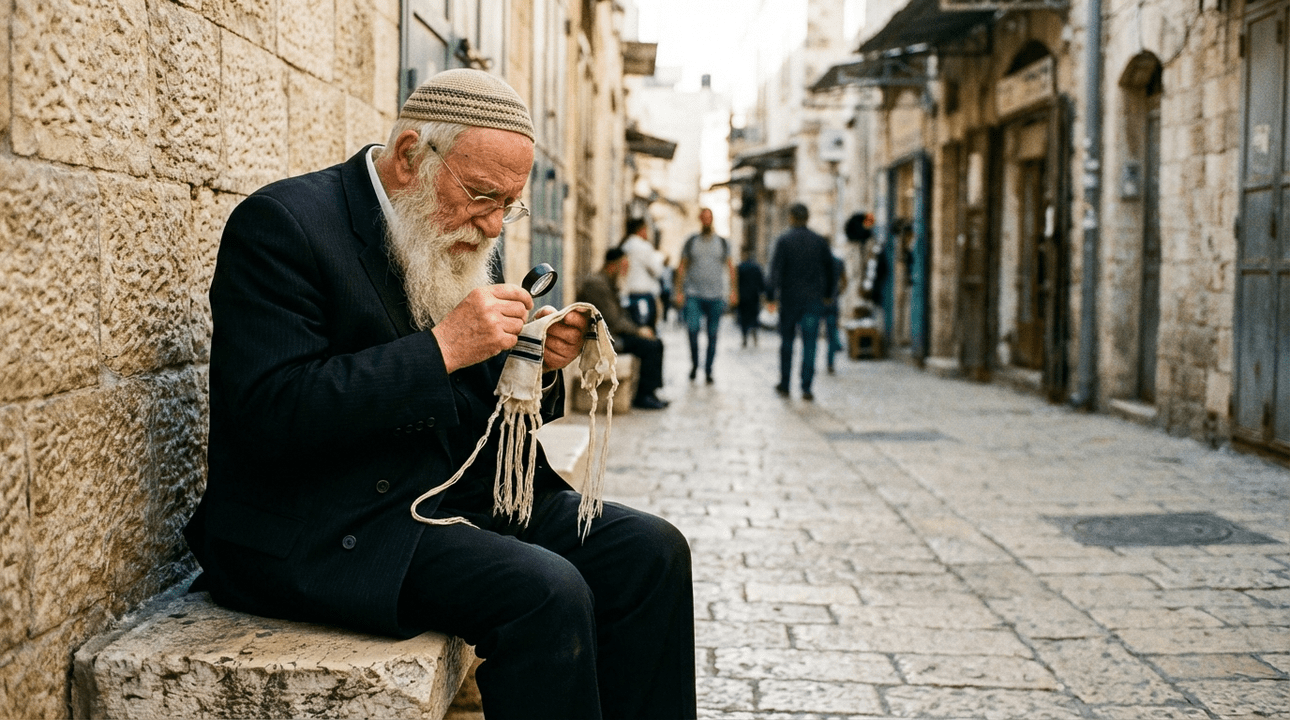
These stores often feature items like the Tallit, a prayer shawl with tzitzit (fringes) that remind wearers of the commandments, as mentioned in Numbers 15:38.
Exploring these symbols can offer profound insights into the Jewish faith. The tallit is worn during prayer as a sign of devotion and reverence, creating a personal space for reflection and connection to the divine.
Each thread and fringe carries meaning, serving as a reminder of one’s commitments and responsibilities.
By understanding these symbols, you gain a deeper appreciation for the practices that define Jewish life.
The Cultural Importance of Judaica Items
Judaica items are integral to Jewish life, encapsulating significant religious and cultural values.
Each item serves a role, from Shabbat candlesticks to Passover seder plates. Shabbat candlesticks, for example, are lit to welcome the Sabbath, a practice rooted in the commandment to “remember the Sabbath day” found in Exodus 20:8.
Passover seder plates hold symbolic foods that tell the story of the Exodus, as detailed in Exodus 12.
These pieces are not just functional but are imbued with the cultural significance of the Jewish people.
These objects connect individuals to their faith, community, and history.
Owning a piece of Judaica is like holding a piece of Jewish heritage in your hands. Consider the Torah pointer, or yad, which is used to follow the text during readings, a practice dating back to ancient times.
Such items are not just functional but are imbued with the cultural significance of the Jewish people.
They serve as tangible links to the past, fostering a sense of continuity and belonging. The menorah, for instance, is a symbol of hope and resilience, commemorating the miracle of the oil during the rededication of the Second Temple, as celebrated during Hanukkah.
These items remind us of the enduring spirit of the Jewish people and their commitment to preserving their heritage.
Every piece tells a story, much like the narratives found in the Torah.
Why Choose Local Artisans?
Local artisans offer handmade items that have character and story.
Supporting them ensures these age-old techniques and styles continue to flourish. For example, the intricate designs on a handwoven tallit (prayer shawl) might reflect patterns used in ancient Israel. The tallit is worn during prayer as a sign of devotion and reverence.
These items carry the personal touch of their creators, connecting you to a rich cultural heritage.
Supporting these artisans helps preserve these traditions for future generations.
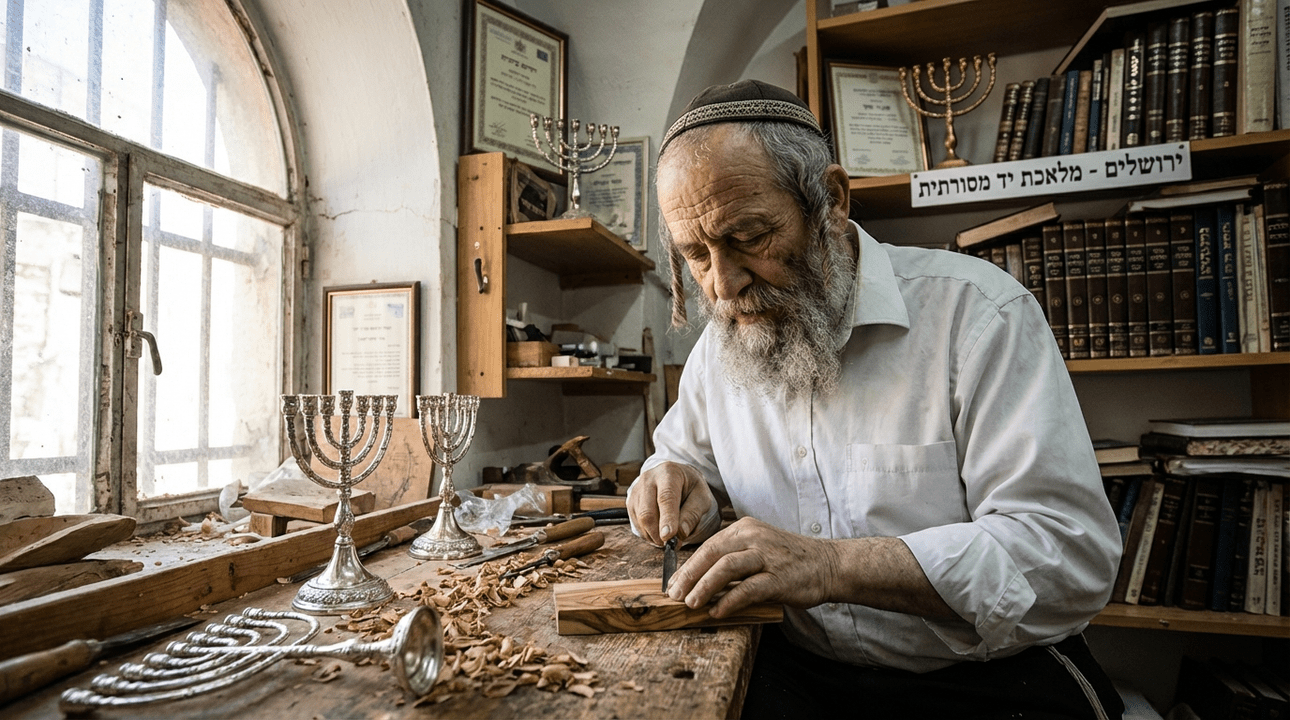
Artisans often use materials like olive wood, which has been significant in Jewish culture since biblical times, such as in 1 Kings 6:23-28, where olive wood was used for the cherubim in Solomon’s Temple.
Purchasing these items helps preserve these traditional crafts.
When you buy from an artisan, you get more than a product.
You receive a piece crafted with skill and an investment in sustaining cultural artistry. Consider a hand-painted dreidel, which not only serves as a game piece but also as a symbol of the Hanukkah miracle. The dreidel’s design and inscriptions reflect the story of the oil that lasted eight days, as celebrated during Hanukkah.
These items carry the personal touch of their creators, connecting you to a rich cultural heritage.
Supporting these artisans helps preserve these traditions for future generations.
Each item carries the personal touch of its creator, much like the ancient scribes who meticulously copied Torah scrolls by hand.
This connection to the past enriches the present, allowing these traditions to continue. The dedication of these artisans is reminiscent of the care taken by the scribes who preserved the words of the prophets, ensuring that their messages would endure.
This personal investment in each piece adds depth and meaning to every item.
Supporting these artisans helps keep these traditions alive for future generations.
Israeli Cookbook
Inspired by the Farms of Israel
How You Can Connect with Israeli Artisans
Participating in artisan workshops can be a gateway to understanding Jewish crafts.
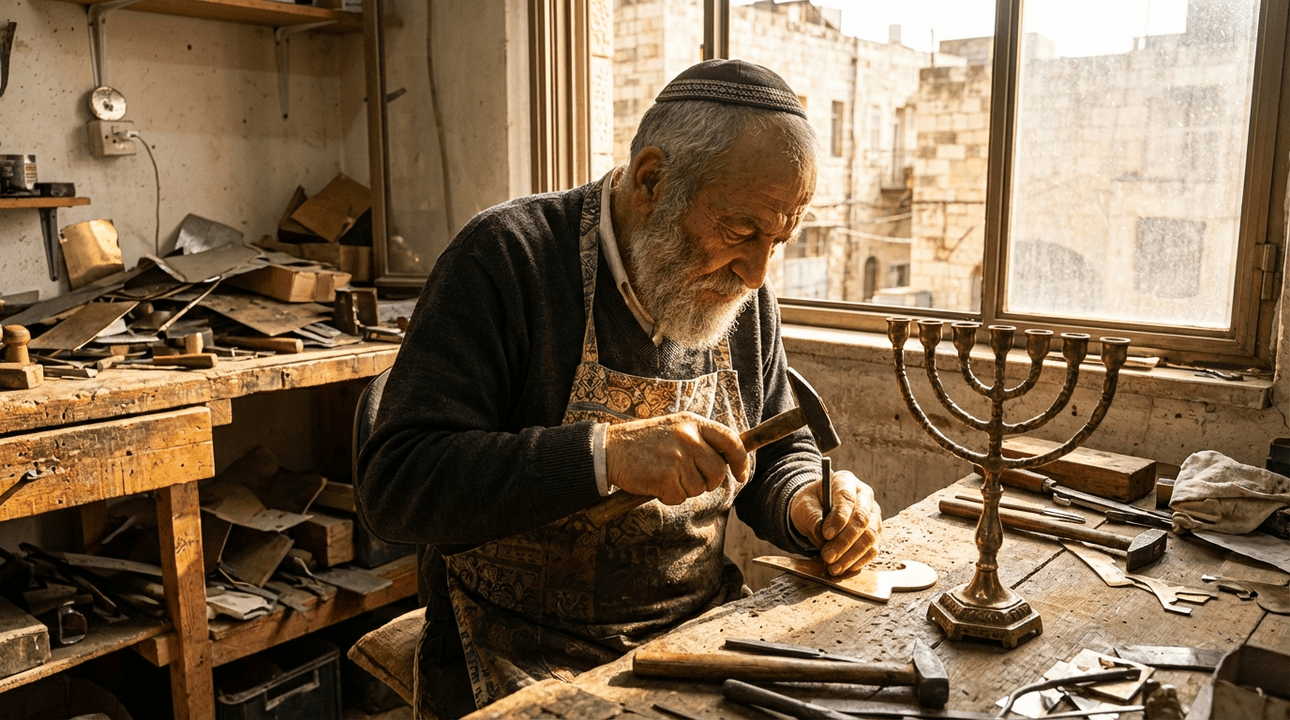
Many shops offer tours and demonstrations, giving you a firsthand experience. You might learn how a menorah is crafted, a symbol of light and hope during Hanukkah. The menorah’s design is inspired by the original seven-branched candelabrum used in the ancient Temple, as described in Exodus 25:31-40.
These workshops provide insight into the skill and creativity involved in each piece.
Engaging with these artisans makes you part of a tradition that celebrates both history and innovation.
Workshops often include explanations of the historical context behind these crafts, such as the use of certain materials or techniques.
This immersive experience enriches your appreciation for the artistry involved. For example, the use of olive wood in carving is a tradition that dates back to the time of King David, who is said to have used olive wood for his harp, as mentioned in 1 Samuel 16:23.
These workshops offer a hands-on opportunity to learn about the cultural significance of each craft.
They provide insight into the creativity and skill that define Israeli artistry.
These experiences provide insight into the meticulous process behind each item.
It’s a chance to connect personally with the creators and their creative journeys. For example, the detailed work involved in creating a Torah scroll is a labor of love and devotion. Each letter is carefully inscribed by hand, ensuring the accuracy and sanctity of the text.
By understanding the effort and skill involved, you gain a deeper appreciation for these crafts.
This connection to the artisans and their work enriches your experience and supports the preservation of these traditions.
Understanding the effort and skill required in these crafts can deepen your connection to the items you purchase.
It also highlights the importance of preserving these cultural practices for future generations. The intricate process of creating a Torah scroll, for instance, involves careful attention to detail and adherence to tradition, ensuring that each scroll is a faithful representation of the sacred text.
This dedication mirrors the commitment of the Jewish people to their faith and heritage.
By appreciating these crafts, you become part of a larger story that spans centuries.
Making a Purchase: What to Expect
Buying from a Judaica store is more than a transaction.
It is a connection to the artisans and their stories, bringing the spirit of Israel into your life. Items like the shofar, a ram’s horn used in Jewish rituals, have been part of Jewish tradition since the times of Joshua (Joshua 6:4-5).
These purchases support the preservation of Jewish heritage, ensuring that these stories and traditions continue to be passed down through generations.
Each item serves as a reminder of the rich tapestry of Jewish history. The Star of David, for example, is a symbol that has been associated with Jewish identity since the 17th century, representing unity and protection.
Purchasing these items makes you a part of this ongoing narrative, helping to preserve a vibrant cultural legacy.
Each piece you acquire is a testament to the enduring spirit of the Jewish people.
Expect to find a range of items, from everyday objects to ceremonial pieces.
Each item carries the energy of its maker and the culture it represents. A mezuzah, for example, is more than a decorative item; it holds a parchment with verses from Deuteronomy, reminding us of our faith.
Ceremonial items like the Kiddush cup, used during Shabbat, hold historical significance, as the tradition of blessing wine dates back to biblical times, such as in Genesis 14:18.
These items embody both function and tradition. The Kiddush cup is a symbol of sanctity and celebration, marking the beginning of the Sabbath with joy and reverence.
Each use of the Kiddush cup is a reminder of the covenant between the Jewish people and their faith.
These items serve as tangible connections to the rituals and traditions that define Jewish life.
Tips for Visiting a Judaica Store
When visiting, take time to explore the stories behind each craft.
Engage with shop owners to learn about the significance of different Judaica pieces. For instance, the Star of David, a common symbol, has been associated with Jewish identity since the 17th century. It represents unity and protection, reflecting the enduring spirit of the Jewish people.
Learning about these symbols gives you a deeper understanding of the values and beliefs that have shaped Jewish culture.
Each piece tells a story, connecting you to a vibrant cultural legacy.
Understanding the history behind items like the Hamsa, which is believed to offer protection, can deepen your appreciation for these crafts.
These conversations can reveal the cultural and historical layers embedded in each piece. The Hamsa, often associated with the hand of Miriam, is a symbol of protection and strength, reflecting the resilience of the Jewish people.
Learning about these symbols gives you insight into the values and beliefs that have shaped Jewish culture.
Each piece tells a story, connecting you to a rich and vibrant heritage.
Be open to discovering unique finds that resonate with you.
Every item is a doorway to understanding more about Jewish culture. For instance, a menorah might remind you of Hanukkah, a festival commemorating the rededication of the Second Temple in Jerusalem. This event is celebrated with the lighting of candles, symbolizing the miracle of the oil that lasted eight days.
Each piece you encounter offers a glimpse into the rich tapestry of Jewish history and tradition.
Embracing these discoveries deepens your connection to a vibrant cultural legacy.
The Torah scrolls, often found in these stores, are central to Jewish worship and contain the first five books of the Bible, including Genesis and Exodus.
Each piece you find can tell a story from the past, connecting you to generations of tradition. The Torah is read during synagogue services, serving as a guide for Jewish life and practice.
Each scroll is meticulously crafted, reflecting the dedication and reverence of the scribes who create them.
Exploring these items provides a deeper understanding of the values and beliefs that have shaped Jewish history.
Understanding Judaica and Local Artisans