
Mastering Biblical Hebrew: Tips and Insights


Learning biblical Hebrew can feel like stepping into a world where history and language intertwine. For many, the ancient texts come alive through understanding their original language.
In this article, we’ll explore effective methods to learn biblical Hebrew, address common challenges, and provide insights into its unique characteristics. By studying texts like the Ten Commandments in Exodus 20, learners can connect with foundational stories and values.
This journey offers a profound sense of connection to the past.
Understanding the original language of these texts allows for a richer appreciation of their messages and the cultural contexts in which they were written. As learners delve into passages such as the Song of the Sea in Exodus 15, they uncover layers of meaning and historical significance.
Why Learn Biblical Hebrew?
Biblical Hebrew offers a direct connection to sacred texts, making it invaluable for anyone interested in theological studies or historical linguistics. Understanding the nuances of this ancient language allows for deeper insight into the cultural and spiritual contexts of the Bible.
Take the word ‘ruach’, which means both ‘spirit’ and ‘wind’, as seen in Genesis 1:2, where it describes the divine presence over the waters. Similarly, ‘nefesh’ can mean ‘soul’ or ‘life’, highlighting the language’s depth.
This duality in meanings can be observed in many biblical texts, such as in Ecclesiastes 12:7, where ‘ruach’ is used to describe the return of the spirit to its source. Such examples illustrate how learning Hebrew can enrich one’s understanding of biblical narratives and themes, offering a more nuanced view of the texts.
The Complexity of Biblical Hebrew
One of the first questions learners ask is, ‘Is Hebrew hard to learn?’ The complexity lies not only in its script but also in its grammatical structure. Hebrew verbs are based on root letters, usually three, which form the basis for conjugation and meaning.
Biblical Hebrew features a root-based system that differs significantly from English, adding to the learning curve. Consider the root ‘k-t-b’, which relates to writing, and from it, words like ‘katav’ (he wrote) and ‘mikhtav’ (letter) are derived.
This root system allows for a rich and flexible language, where words are interconnected by their shared roots. Understanding this system can enhance one’s ability to interpret and appreciate the nuances of biblical texts, as seen in the poetic language of the Psalms.
Understanding this root system can be challenging but rewarding, as it reveals connections between words and concepts. Additionally, the lack of vowels in written Hebrew requires learners to familiarize themselves with context clues to interpret texts accurately.
Take the root ‘s-h-m’, which can mean ‘name’ (shem) or ‘he placed’ (sam), depending on context. This system mirrors the Bible’s poetic structure, seen in texts like Psalm 23, where wordplay enhances meaning.
Such linguistic features are integral to understanding biblical poetry and prose, where wordplay and double meanings often convey deeper messages. Delving into these elements can enrich one’s study of the Bible and provide a more nuanced interpretation of its teachings.
Methods to Learn Ancient Hebrew
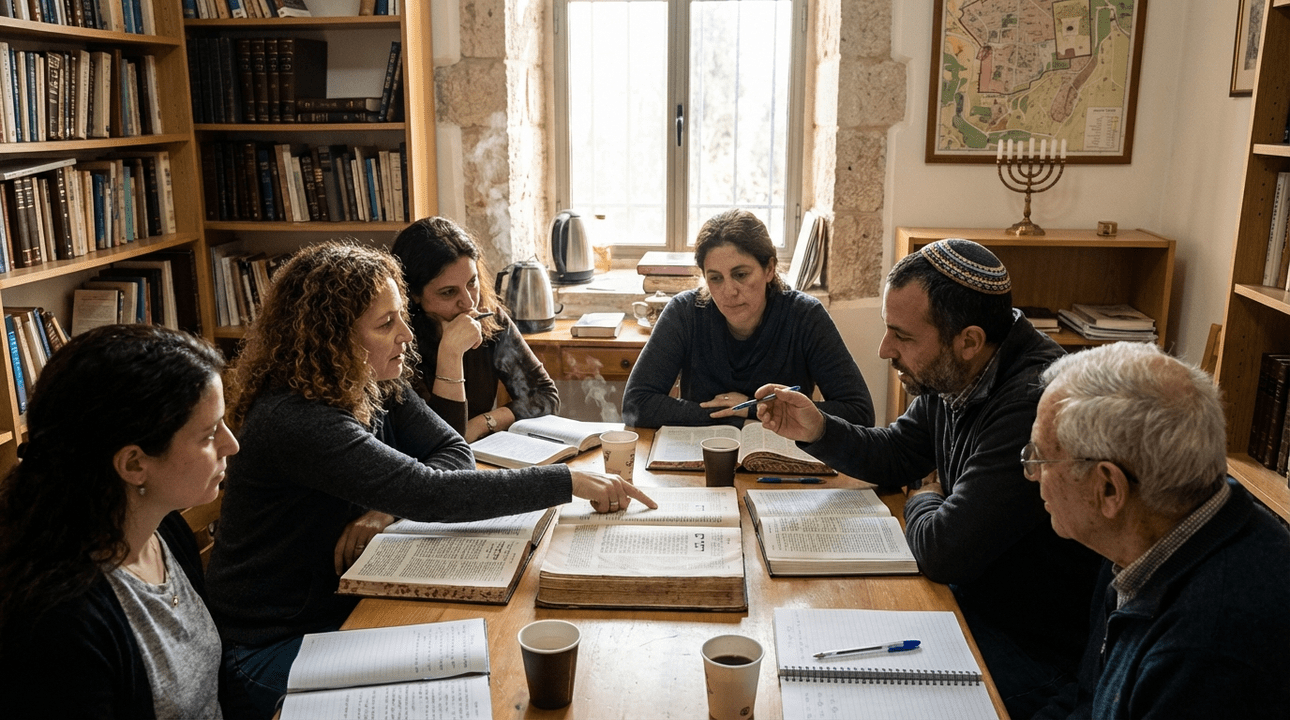
There are numerous ways to approach learning ancient Hebrew, from self-study using textbooks to enrolling in online courses. Engaging with authentic texts early on can enhance understanding. Many students find value in joining study groups where discussion and practice bring the language to life.
Reading Genesis 1:1-3 in a group setting can illuminate its themes and vocabulary, fostering a collaborative learning environment. Additionally, studying passages like Exodus 3:14, where the name ‘Ehyeh’ is revealed, can deepen comprehension.
These group settings allow learners to explore the language’s complexities together, making challenging concepts more accessible. Delving into texts such as the Shema (Deuteronomy 6:4) in a supportive environment can also enhance retention and understanding, as learners discuss and interpret these foundational passages collectively.
Leveraging Technology
Today, technology provides powerful tools for language learning. Apps and online platforms offer interactive ways to master vocabulary and grammar. Duolingo and Rosetta Stone are popular choices that offer structured lessons and instant feedback.
Audio resources help learners grasp pronunciation and intonation—an essential part of mastering biblical Hebrew. Listening to recordings of the Torah being read aloud, such as in synagogue services, can aid in understanding the rhythm and flow of the language.
Online forums and language exchange websites also provide opportunities to practice with others. Engaging in virtual conversations with fellow learners or native speakers can enhance your skills and provide a supportive community for your language journey.
Platforms like Tandem and HelloTalk connect learners worldwide, offering real-time practice. These interactions can lead to friendships and cultural exchanges, enriching your understanding of Hebrew beyond the language itself.
Such platforms facilitate cultural immersion and language acquisition, allowing learners to experience Hebrew in a dynamic and interactive way. By interacting with diverse speakers, learners can gain insights into different dialects and expressions used in modern Hebrew.
The Importance of Consistent Practice
Consistency is key when learning any language, especially one as complex as Hebrew. Daily practice can prevent overwhelm and ensure steady progress. Dedicating just 15 minutes a day to study can lead to significant improvement over time.
Setting realistic goals and celebrating milestones keeps motivation high. Achieving a milestone, like reading a simple verse from Genesis, can be a rewarding experience that fuels further learning. This approach mirrors the traditional Jewish practice of regular Torah study.
By incorporating consistent study habits, learners can gradually build their skills and confidence. This method is akin to the daily recitation of prayers, which reinforces language acquisition through repetition and familiarity, ultimately leading to a deeper connection with the texts.
Consider setting specific goals, such as learning 10 new vocabulary words a week or mastering the alphabet within a month. These small victories can be celebrated by reading a favorite Psalm or understanding a passage from the Torah, which reinforces progress and maintains enthusiasm.
Learning the Shema from Deuteronomy 6:4 can be a milestone, as it is central to Jewish prayer and identity, offering a sense of achievement and connection.
Such milestones not only boost confidence but also provide tangible evidence of progress. By setting achievable targets, learners can steadily advance their skills, making the complex task of learning Hebrew more manageable and enjoyable.

Cultural Context in Language Learning
Immersing oneself in the cultural and historical contexts of Israel enhances language learning. This approach connects language to its living roots. Understanding the significance of places like Jerusalem or the Dead Sea can provide context for biblical narratives.
Understanding biblical references within their original cultural framework enriches the learning experience. Knowing the historical background of the Exodus story can deepen your comprehension of its language and themes.
Exploring the festivals and traditions of Israel, such as Passover or Sukkot, can also offer insights into the language. These cultural experiences make the language more relatable and memorable, as they show how ancient words and phrases are still used in modern contexts.
During Passover, the Haggadah is read, filled with Hebrew phrases that recount the Exodus story. This tradition connects learners to historical events described in Exodus 12, deepening their appreciation of the language.
Participating in these festivals provides a vivid context for language learning, as learners witness the living tradition of Hebrew in practice. Delving into the rituals and narratives of these celebrations can enhance one’s understanding of Hebrew’s role in Jewish cultural identity.
Overcoming Common Challenges
Challenges in learning Hebrew include mastering the script and pronunciation. The Hebrew alphabet consists of 22 letters, each with its own unique sound, and some letters change form when they appear at the end of a word. Mistakes are part of the journey and should be seen as stepping stones.
Interacting with native speakers can provide practical experience and build confidence. Practicing with a friend who speaks Hebrew can improve your conversational skills and help you learn common phrases.
Pronunciation can be tricky, especially with guttural sounds like ‘ayin (ע) and ‘chet (ח), which are not found in English. Listening to Hebrew speakers or using audio resources can help you master these sounds.
Additionally, participating in language exchange programs can offer real-world practice and enhance your fluency. Practicing the phrase ‘Chag Sameach’ (Happy Holiday) during festivals can improve pronunciation and cultural understanding.
These interactions provide a practical application of the language, helping learners to internalize pronunciation and usage. Conversing with native speakers during celebrations like Purim or Hanukkah can further enhance cultural immersion and language skills.

Conclusion: A Journey Well Worth Taking
Learning biblical Hebrew is more than an academic pursuit; it’s a journey into the heart of ancient texts. The rewards, both intellectual and spiritual, are immense. By reading original texts, such as the Psalms or the Book of Isaiah, you gain a deeper understanding of their messages.
Approach the study with patience and curiosity, and the language will reveal its secrets over time. Each new word or phrase learned is a step closer to unlocking the wisdom contained in these ancient writings.
This journey offers a profound connection to the past, as learners engage with the language of their ancestors. By exploring texts like the Book of Proverbs, they uncover timeless wisdom and insights that continue to resonate today.
Taking the time to explore the etymology of Hebrew words can also provide fascinating insights. The word ‘shalom’ means peace but also conveys a sense of completeness and well-being, illustrating the richness of the language.
In Hebrew, ‘shalom’ is used in greetings and farewells, reflecting its broader meaning. In the Bible, ‘shalom’ appears in Numbers 6:24-26 as part of the priestly blessing, emphasizing its importance in conveying peace and wholeness.
This word is central to Jewish culture and is often used in everyday interactions, highlighting its enduring significance. By understanding such terms, learners can appreciate the depth and beauty of the Hebrew language and its impact on Jewish life.
Learning Biblical Hebrew
