Israel21c is especially worth bookmarking. If your main exposure to Israel comes through conflict and politics, it can begin to feel relentless. Israel21c helps you see a fuller picture – scientists, chefs, artists, designers, founders, growers.

How to Feel Connected to Israel From Home.
A Meaningful Way to Bring Israel Into Everyday Life
4 August 18:09
52
A lot of people love Israel and have never been there.
They have never walked the streets of Jerusalem at dawn. Never stood in the middle of Mahane Yehuda market trying to figure out what half the spices are. Never watched a farmer pick olives from trees older than the modern state itself.
And yet the connection is real.
For some, it comes through family history. For others, through faith. For others still, through something quieter and harder to name – a sense that this place matters to me.
The distance, though, is real too. You can follow the news, watch documentaries, and promise yourself that one day you will finally visit – and Israel can still feel far away. Important. Loved. But far.
So the question becomes: how do you feel connected to Israel from home? Not just informed. Not just emotionally supportive from afar. But genuinely close to Israel in the middle of ordinary life.
How do you bring Israel into your home, into your routines, into the small moments that make up a week?
Here are five ways people do it. Each has real strengths and real limitations. And at the end, why home – not a flight, not a screen, not a once-a-year moment – may actually be the best place for a living connection to take root.
Table of Contents
1. Follow Israeli News to Stay Connected to Israel From Afar
For many people, this is where the connection starts.
And honestly, that makes sense. The news helps you stay connected to Israel from afar. It keeps you aware of what is being debated, what is happening politically, and what the country is facing day to day. When you live abroad, that can feel like an important way not to lose the thread.


A few sources worth knowing:
- The Times of Israel – solid daily coverage, readable, good depth
- The Jerusalem Post – broader range of topics, longstanding reputation
- ALL ISRAEL NEWS – written specifically with American readers in mind
- Israel21c – tech, culture, medicine, people – the side of Israel that doesn’t make headlines
Here’s the honest limitation: news shows you Israel through what goes wrong. Conflict, But here is the honest limitation: the news mostly shows Israel through what goes wrong.
Conflict. Politics. Security alerts. Debate. Crisis.
That matters, of course. But it is still only one window. News tells you what is happening. It rarely shows you what Israel actually feels like.
Because Israel is not only its headlines. It is also the people who wake before sunrise to work the land, open their shops, run their studios, raise families, and keep building daily life.
If the news is your only connection, you may know a lot about Israel – and still not feel close to it..
2. Watch Videos and Experience Israel From Home
Video does something news cannot.
Once you can actually see the streets, the markets, the hills, the kitchens, the people – Israel stops being abstract. For those who have never visited, video is often the first real way to experience Israel from home.
A few channels worth your time:
- Lev Haolam on YouTube – stories of Israeli makers, farmers, and family businesses. Not news. People.
- Unpacked – accessible, well-produced videos on Israeli history and culture
- i24NEWS English – current news and reporting
- CBN News Jerusalem Dateline – Israel news and Middle East updates
- TBN Israel – breaking stories, in-depth analysis, and exclusive reports on Israel’s latest events
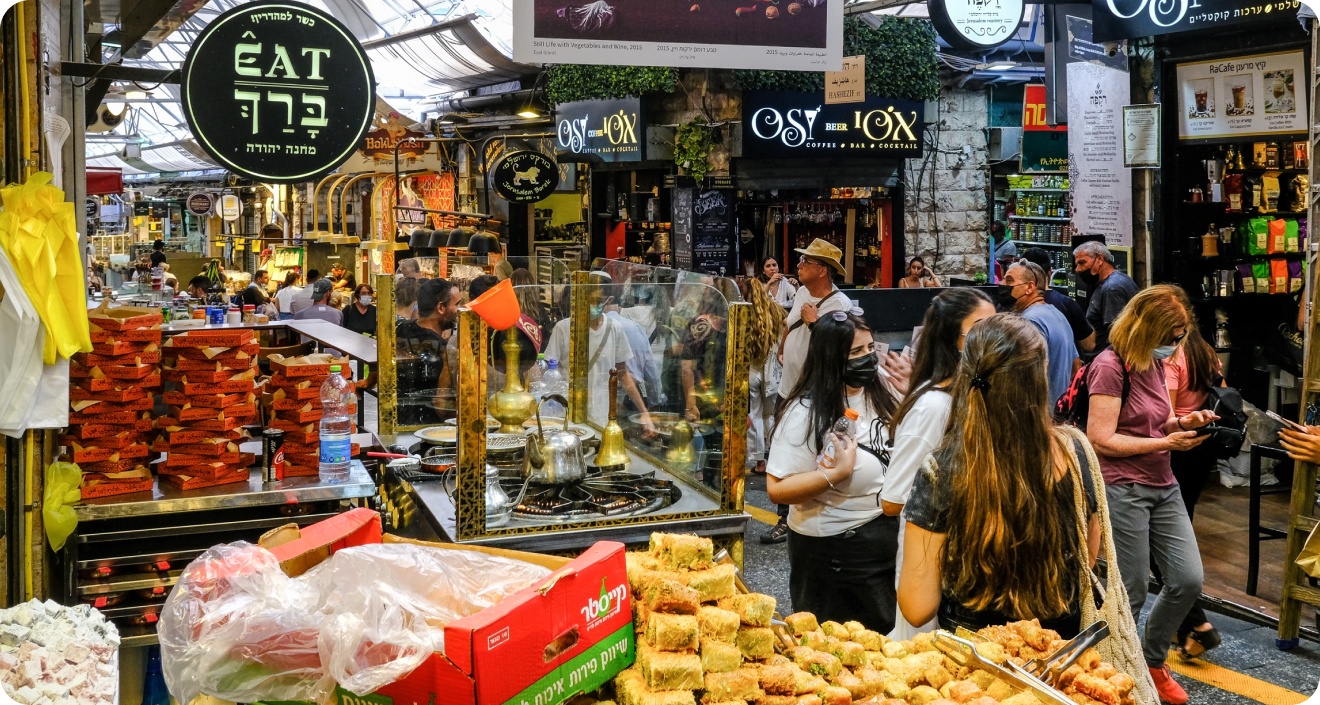
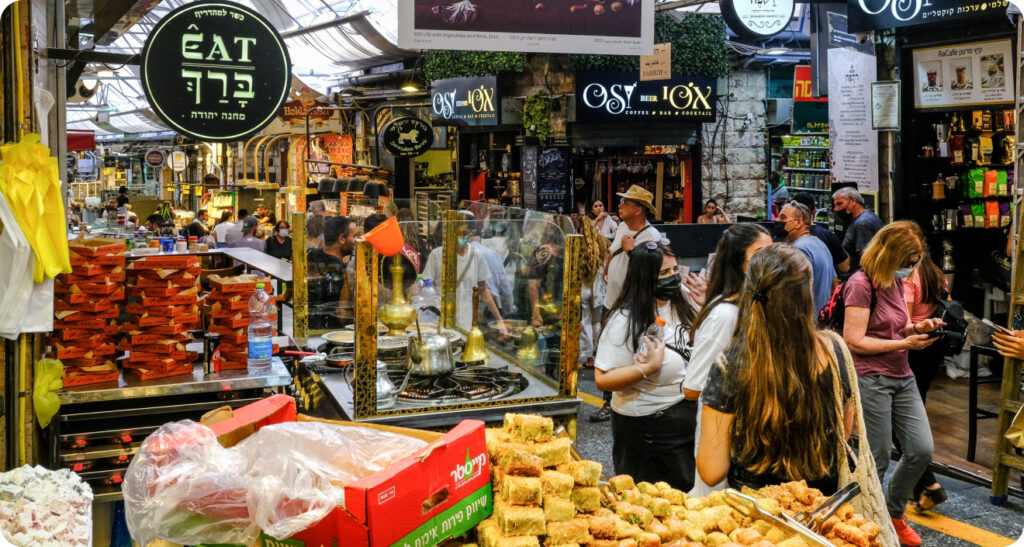
The Lev HaOlam channel is worth opening first because it focuses less on headlines and more on people. These are not polished brand commercials. They are stories of Israeli producers, families, and communities.
But video has its own limitations.
The clip ends. You close the tab. The screen goes dark. And Israel goes back to being over there.
You watched. You felt something. And then the moment passed.
That is often when people start wanting something more tangible. Not only to see Israel, but to have a piece of it in their actual life. Something on the table. In the kitchen. In the hand.

3. Build Family Traditions and Simple Home Rituals
For many people – especially those with Jewish roots, strong faith, or a longstanding emotional connection to Israel – the tie already lives in the home.
It lives at the Shabbat table. In recipes. In stories told to children and grandchildren. In books, music, objects, blessings, habits. In conversations about a place that matters.
Home is where memory lives.
That is one of the most genuine forms of connection there is, because it is woven into ordinary life rather than performed for an audience. And often it is exactly these small rituals that help people feel close to Israel from home.
Some simple ways to bring Israel into your everyday life:
- Cook Israeli or Middle Eastern food on Friday evenings, not as a ceremony but as a habit
- Tell children or grandchildren about specific Israeli people, not just “the country”
- Keep one object from Israel somewhere visible and lived-with, not tucked away on a shelf
- Read Israeli authors or listen to Israeli music in the background of everyday life
Small things compound.


The limit here is time and rhythm. Traditions tend to gather around holidays, Shabbat, or meaningful family moments. The rest of the week, life takes over. The connection does not disappear, but it can recede.
That is why many people begin looking for another kind of rhythm – something that helps them stay connected to Israel not only on special days, but on an ordinary Wednesday.
4. Bring Israeli Products Into Your Home
One of the most direct ways to bring Israel into your home is through things made there.
Olive oil. Honey. Spices. Natural soap. Ceramics. Judaica. Small objects that sit in your kitchen, your bathroom, your hallway, your routines.
This is where Israeli products at home become something more than shopping. When something from Israel enters your daily life, the connection becomes physical. It is no longer only an idea. It is something you can open, taste, smell, use, or give to someone you love.
But one question matters: who made it?
You can buy made in Israel products online or in a specialty store and still know almost nothing about them. Was it made by a large manufacturer or by a family farm? Which region did it come from? Who harvested it? Who shaped it? Who packed it?
Without a story, a product is just a product.
Nice, perhaps. Useful, perhaps. But not deeply connecting.
When you know who made it, everything changes.
“The smell of the earth is the scent of the Garden of Eden to me. When the rain falls and that smell rises, I’m in paradise.”
-Shimon Hazut,
Moshav Gimzo
Moshav Gimzo
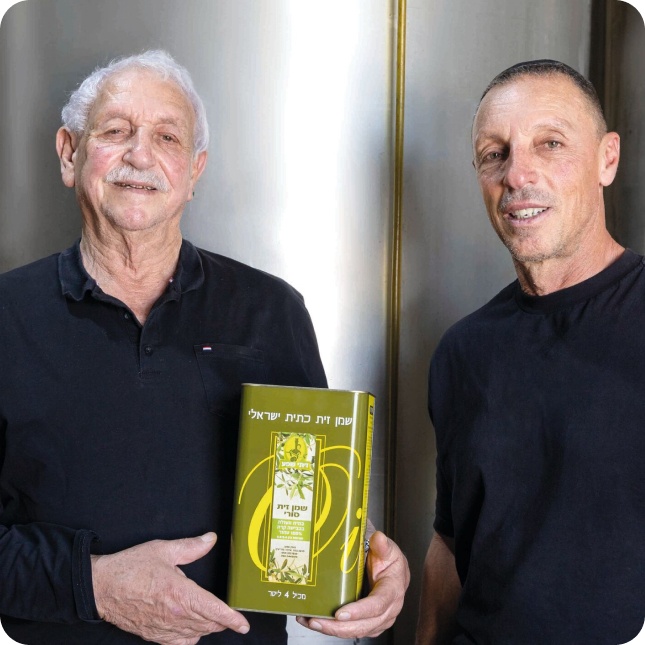
Shimon has olive trees that are four hundred years old. Syrian variety – the kind that grew on this land for thousands of years before the modern state existed. He runs a small press right in the moshav, doesn’t supply supermarkets, sells almost entirely out of his home. Shimon has three children and eight grandchildren – six of them currently serving in the military. His wife passed away during the war. When his oil is on your table, it’s not a product from a shelf. It’s his 400-year-old trees. It’s his life.
“I love working with Lev HaOlam. It challenges me to do more, to develop new skills, and to create in bigger quantities. It’s never simple, but it is always filled with love.”
-Yeela Binet
Zur Hadassa
Zur Hadassa

Yeela is a potter. She works by hand, in a small studio. When she was asked to make a batch of ceramic jugs for Lev Haolam subscribers, she worked morning to night for days. “This wasn’t an industrial story – not a factory. I worked from the same template, but every single jug came out different. I felt a personal connection to each one. I hope the people who receive them feel it too.” Since October 7th, her husband and son have been at the front. She’s barely seen them in over a year.
That is the difference between a handmade object and a factory item. One carries labor. Attention. Personality. Presence.
These are not anonymous products. These are the faces behind the things on your shelf.
Buy Israeli products with a story
Visit Page →
Meet
our artisans
Visit Page →
See how Israeli products support real families
Visit Page →
5. Why Home Is the Best Place for a Living Connection
Real connection rarely holds because of one large, emotional moment.
It holds through repetition.
Through small habits. Through objects that stay in your space. Through stories you remember and retell. Through things that return again and again, quietly reminding you: this still matters to you.
What makes the connection last
Three things make a connection to Israel feel real:
- Something physical – not only knowing about Israel, but having a piece of it in your home
- A story – not simply “olive oil from Israel,” but oil from Shimon’s trees in Gimzo
- Regularity – not once a year, not only on holidays, but something that returns on its own
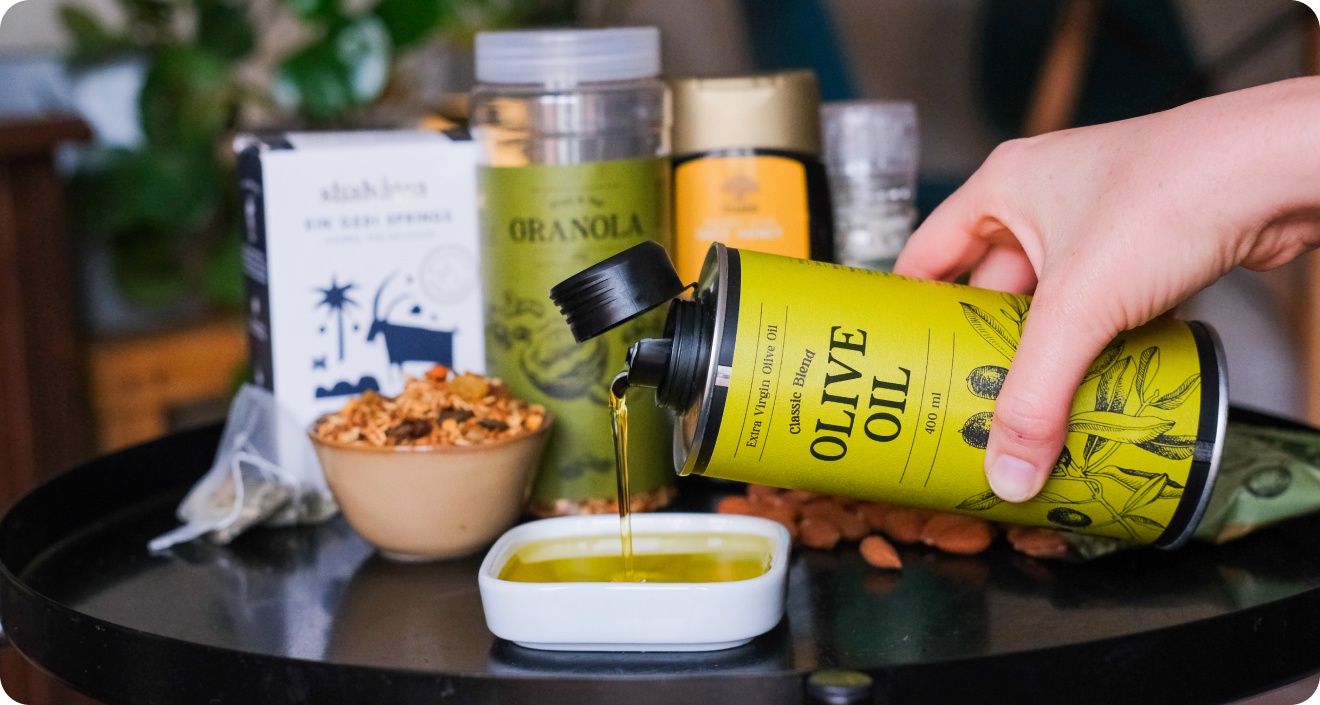
If Israel only exists in your news feed, it can begin to feel heavy. If it only exists in a future travel plan, it can feel out of reach. If it exists only on screen, it can feel beautiful – but distant.
But when it enters your life through taste, smell, craftsmanship, and recurring contact, it becomes part of your ordinary world.
And that is when the connection changes. It stops feeling like something you have to maintain. It simply becomes part of your life.
Side-by-Side: 5 Ways to Feel Connected to Israel From Home
| Method | What It Gives You | The Strength | The catch | Best for |
|---|---|---|---|---|
| News | Understanding events | Staying informed | Mostly conflict and politics - can be heavy | Those who want to follow current affairs |
| Youtube | Visual sense of the country | Seeing real places and people | You’re still behind a screen | Those who’ve never been and want to see it first |
| Family traditions | Memory and meaning | Personal, emotional connection | Only shows up on holidays, not Tuesday | Those passing their love for Israel to family |
| Israeli products | Israel physically in your home | Touch it, taste it, gift it | Without a story, it’s just a product | Those who want Israel in everyday life |
| Lev HaOlam | Products + stories + real people | Monthly ritual, living connection | Built for ongoing closeness, not one-time | Those who want to feel close month after month |
These methods work especially well together. News helps you understand. Video helps you see. Traditions help you remember. Products help you feel. A monthly box from Israel can bring all of those threads together into one ongoing practice.
6. Lev Haolam: A Monthly Box From Israel
Lev HaOlam was built around one idea: make the connection to Israel personal, physical, and consistent.
The company has been operating since 2014 from Kfar Etzion, a few miles south of Jerusalem. Since then, it has shipped boxes to supporters around the world and sourced directly from Israeli family producers, artisans, and small businesses.
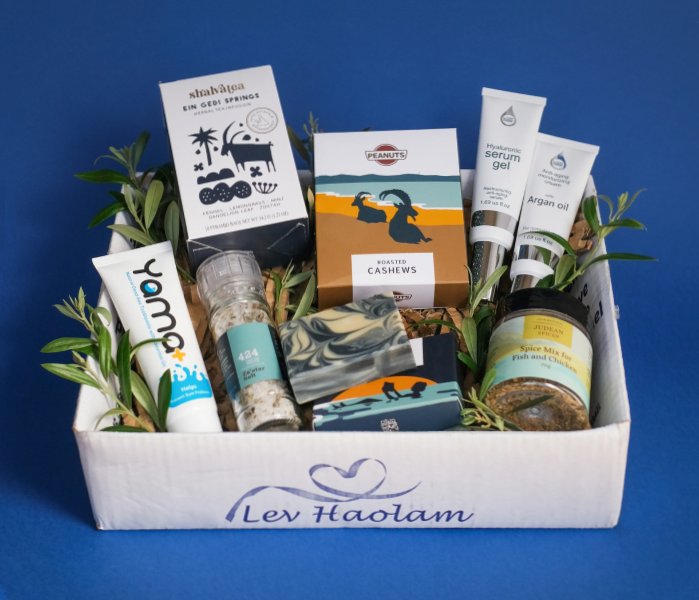
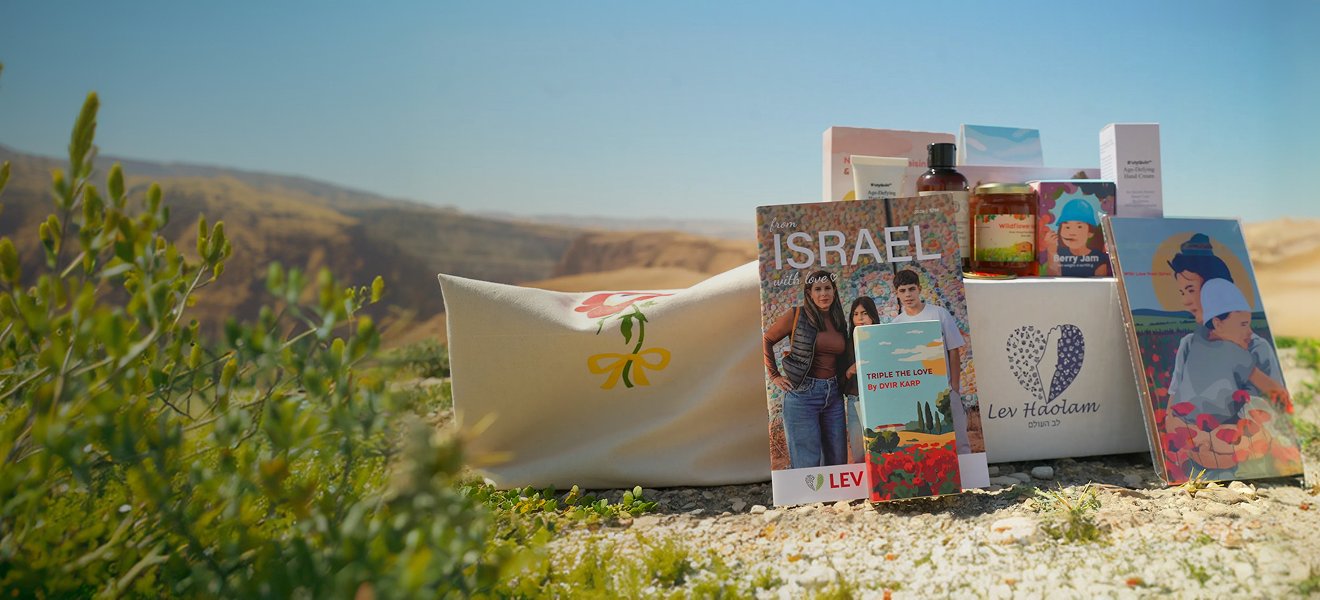
Every month, subscribers receive a monthly box from Israel with 6–8 products from Israeli farmers, makers, and workshops. Olive oil. Honey. Spices. Natural cosmetics. Ceramics. Household items. The contents change every month.
But the box itself is not really the point.
The point is who made it.
Every product comes from a real person with a real story. A beekeeper. A ceramic artist. An olive grower. A soap maker. A family-run workshop.
That is what makes the connection visible.
Not a statistic. Not a vague sense of doing something good. A name. A place. A livelihood.
This is also what makes an Israeli subscription box fundamentally different from generic product subscriptions. It is not only about receiving things. It is about supporting Israeli artisans, supporting Israeli small businesses, and doing it in a way that becomes part of life month after month.
“These orders arrive like a miracle – exactly when we need them most,”
-Noam Levy, says about Lev Haolam.
Galilee · 7 km from the Lebanese border
Galilee · 7 km from the Lebanese border

Noam and his wife Michal make natural soap – they started in their own kitchen in Tzfat. After October 7th, shrapnel hit their factory. Their employees kept showing up to work, dropping their kids at school each morning without knowing if they’d have to run for a shelter that afternoon.
“An order from Lev Haolam is more than business. It’s a morale boost. A reminder that thousands of people around the world are standing with us.”
-Or Tzitershpiler
Spice Way Farm, Galilean Bethlehem ·
7 km from the northern border
Spice Way Farm, Galilean Bethlehem ·
7 km from the northern border

Third generation on the family farm. His grandfather survived the Holocaust, came to Israel, and started growing mint in 1956 from a single cutting someone gave him. Or now grows, dries, and blends za’atar – the traditional Middle Eastern spice mix – right on the farm. After October 7th he was mobilized, fought in Gaza and the north, while trying to keep the farm alive at the same time.

Common questions
Can I feel connected to Israel if I’ve never been there?
Yes – and many people do. A trip can be powerful, but it is not the only way to feel close to Israel. Stories, products, rituals, and recurring touchpoints can all create a real sense of connection from abroad.
How can I connect with Israel without traveling?
You can follow Israeli voices, watch videos, build simple home rituals, read Israeli writers, and bring Israeli products into your home. For many people, the most meaningful way to connect with Israel without traveling is to make that connection part of ordinary life.
Why is following the news not enough?
Because the news shows events, not the full country. It usually focuses on conflict, politics, and crisis. Those things matter – but they are not the whole picture. To feel connected to Israel, people often need contact with everyday life, real people, and something more tangible.
How do I find Israeli products that actually have a story behind them?
The simplest test is this: do you know who made it? If you do not know the producer’s name, their region, or the story behind the item, the connection is probably weak. The more visible the maker, the stronger the experience.
What is in a Lev HaOlam box?
Each month includes a rotating selection of Israeli-made products such as olive oil, honey, spices, natural soap, skincare, ceramics, Judaica, and home goods – always tied to real producers and real stories.
Is Lev HaOlam a charity or a subscription?
It is a subscription service with a mission. You receive real products you can use or give as gifts, and your subscription helps support Israeli producers directly through purchase, not donation.
Bringing It Home
You can live far from Israel. You can have never set foot there. That doesn’t mean the connection has to stay in your head – in the news, in future plans, in something you feel once a year on a holiday.
Reading the news, watching YouTube, keeping family traditions, buying Israeli products – all of it matters. But if you want Israel to feel like a real presence in your home, you need a format that combines all three things: something physical, a real story, and something that comes back.
That’s what Lev Haolam does. It helps people who love Israel feel that love at home – through real products, real stories, real people. People like Shimon in Gimzo, Yeela in Zur Hadassa, Noam in the Galilee, Or in Galilean Bethlehem.
Even when Israel is far away, it can be part of your everyday life. Month after month.