Lev Haolam logo – Israel gift box company
Join now
Lev Haolam
  • Home
  • To The Top
  • Who We Are?
  • How It Work
  • Membership
  • Our Boxes
  • Testimonials
  • FAQ
  • Blog
    • Articles
    • Recipes
    • Gift Boxes
  • Career
Log In
Join now
Log In
Join now
  1. Home
  2. Blog
  3. General

Discover Engaging Stories and Traditions from Israel

Dive into a world of captivating stories and rich traditions from Israel. Our content connects you with local artisans and their heartfelt creations, offering a glimpse into the vibrant culture and heritage of this unique land. Support small businesses and enjoy the journey of discovery with each story.
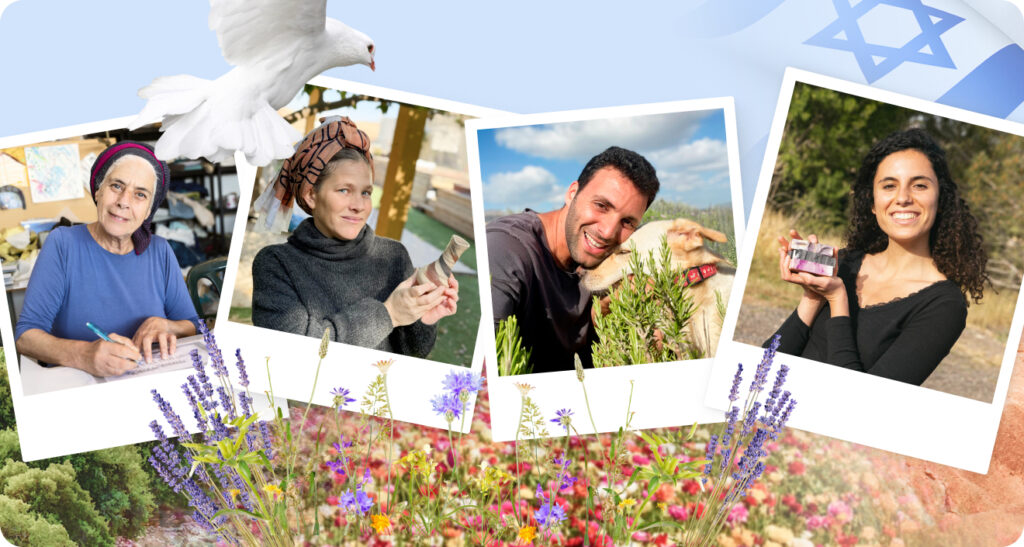
Scenic view of Israeli landscape with traditional elements

When Supporting Israel Becomes Part of Who You Are

For many people, support begins as a reaction – and becomes something deeper when it turns into a way of living.
Show more

What Can You Discover About Israel Without Traveling?

From historic places and regional foods to artisans, traditions, and everyday life – a richer way to experience Israel from home.
Show more

How to Know If Israeli Products Are Authentic

You want to buy something from Israel. Maybe it is olive oil for your table, a piece of Judaica for your home, or a gift for someone who loves the land. So you search online – and almost immediately run into a wall of doubt.
Show more

How to Feel Connected to Israel From Home

A lot of people love Israel and have never been there. They have never walked the streets of Jerusalem at dawn. Never stood in the middle of Mahane Yehuda market trying to figure out what half the spices are. Never watched a farmer pick olives from trees older than the modern state itself. And yet the connection is real.
Show more

How to Support Israel: 
What Actually Makes a Difference

More and more Americans – Christians, Jewish families, and everyday people who care deeply about the Holy Land – are asking the same question: what is the most meaningful way to support Israel today?
Show more
Assorted Lev Haolam box items on a wooden table

What Will You Actually Find in a Lev Haolam Box?

A Carefully Curated Selection from Across Israel Each Lev Haolam box reflects the land, the season, and the families behind the products. We work directly with small Israeli farms, family businesses, workshops, and artisans. There are no middlemen sourcing mass-produced goods. There are no “filler” items added simply to complete a package. Instead, every month introduces members to a new group of producers – representing a different region of Israel and a different story. The products span several core categories, offering both variety and consistency in purpose. Discover What’s Waiting in Your First Box Food That Connects You to the...
Show more
Blooming red kalaniot in southern Israel fields

February Box: A Message From Lev Haolam

​ In that way, they reflect the people of the south. The farmers who return to tend their land. The small business owners who reopen their workshops. The families who choose to rebuild – not because it is easy, but because it is home. Returning requires strength. It requires faith to plant seeds in ground that has known devastation. It requires believing that what grows next can still be beautiful. But this is the story of Israel. Not only survival – but renewal. The land is being worked again. The hives are active. The factories are producing. Children’s laughter is...
Show more
Vibrant red anemones blooming in Israel's south

Inside the February Lev Haolam Box

Continue the Story Each Month Here is a closer look at the people behind the February box: ​ At Kibbutz Erez, just kilometers from the Gaza border, Dor Zoher and his partners care for their beehives with patience and dedication. Beekeeping is not fast work; it requires trust in natural cycles and faith in the seasons ahead. The wildflower honey included in this month’s box was harvested from blossoms that grow in Israel’s southern fields – the very same fields that bloom with kalaniot each winter. After evacuation and months of uncertainty, the beekeepers of Erez returned to rebuild their...
Show more
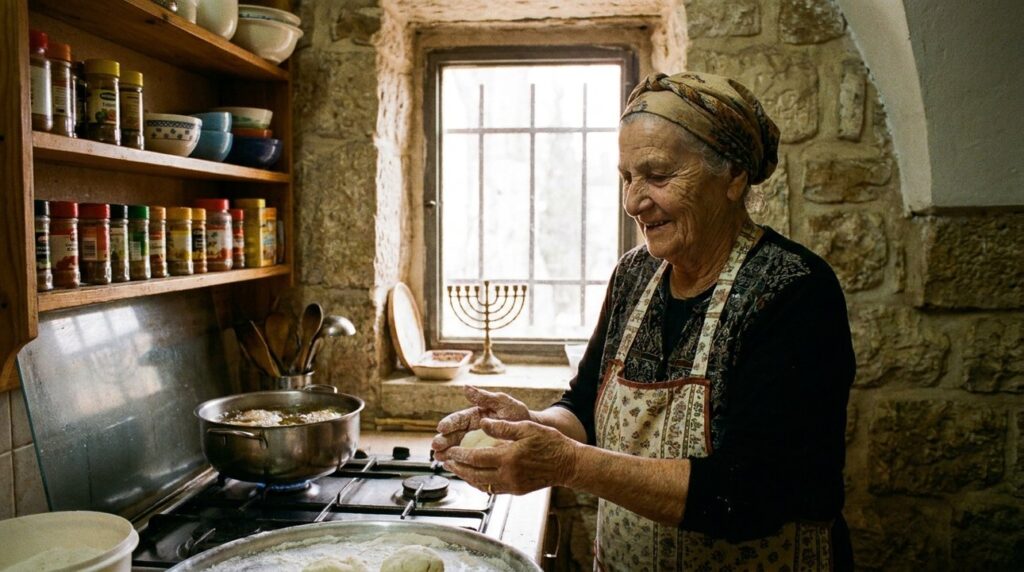
Elderly Jewish woman prepares Sufganiyot in a traditional Jerusalem kitchen.

Exploring the World of Israeli Desserts

The diversity of Israeli desserts reflects the country’s varied cultural influences, from Ashkenazi to Sephardic traditions. Baklava, a dessert with layers of filo pastry and nuts, is another example, illustrating the Ottoman influence on Israeli cuisine. Each dessert not only delights the palate but also serves as a testament to the rich tapestry of cultures that make up Israeli society. The presence of such diverse desserts highlights the fusion of flavors and traditions that define Israeli culinary identity, offering a taste of the nation’s multicultural heritage. Israeli desserts are a celebration of the country’s diverse cultural influences, with each treat...
Show more
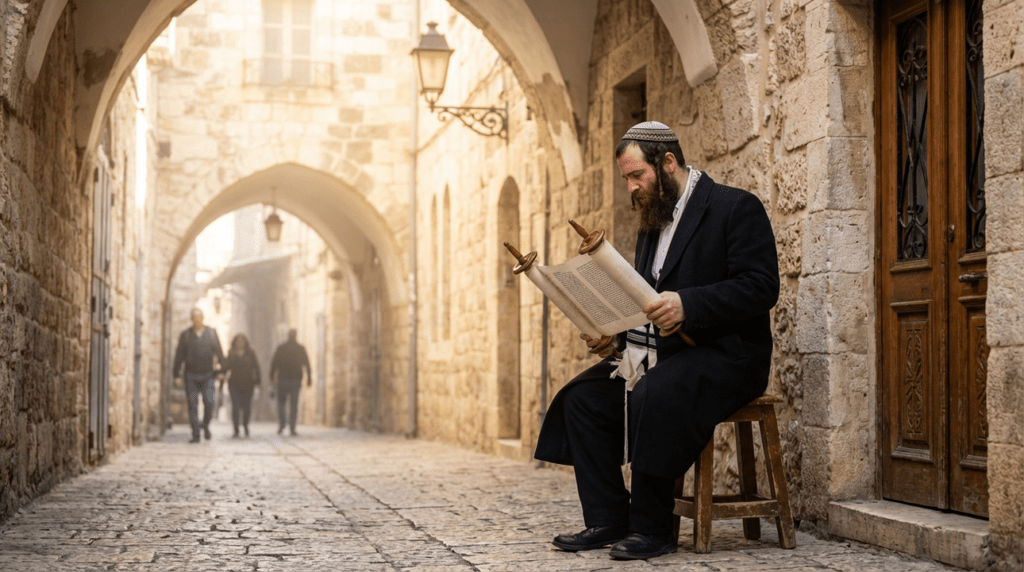
Elderly man in kippah reads scroll by Jerusalem's stone walls.

Discovering the Lineage: The Moabites and Their Descendants

Ancient Origins of the Moabites Rooted in ancient Semitic lineage, the origins of the Moabites are detailed in the biblical account of Genesis 19:37, where Lot, the nephew of the patriarch Abraham, is identified as their ancestor through his older daughter. This ancestry sets the stage for Moab’s role in biblical narratives and their interactions with Israel. They are frequently mentioned in the Bible, often in contexts of conflict or cooperation, such as in Numbers 22-24, where Balak, king of Moab, attempts to curse Israel. This complex relationship is further illustrated by the story of Ruth, a Moabite woman who...
Show more
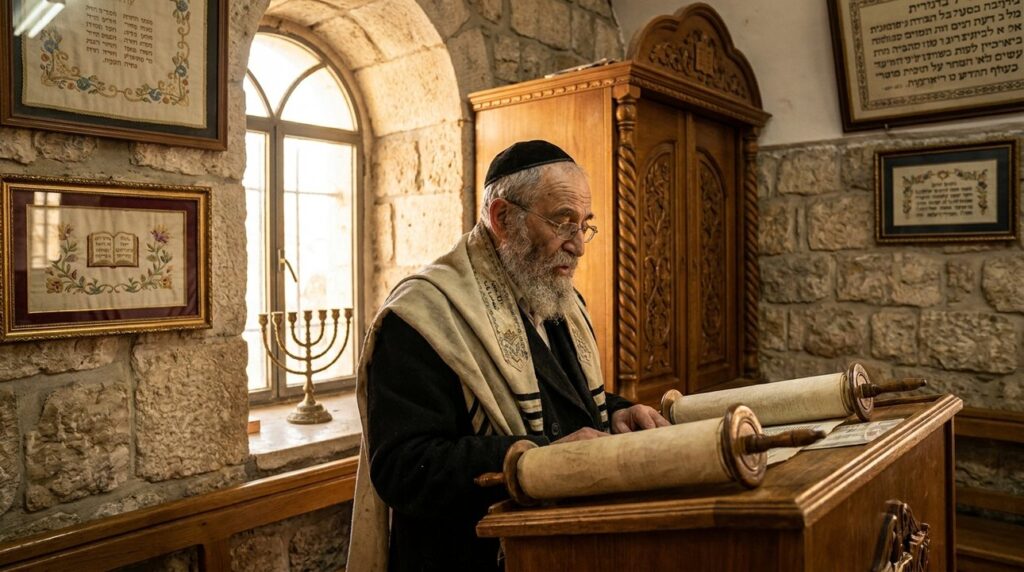
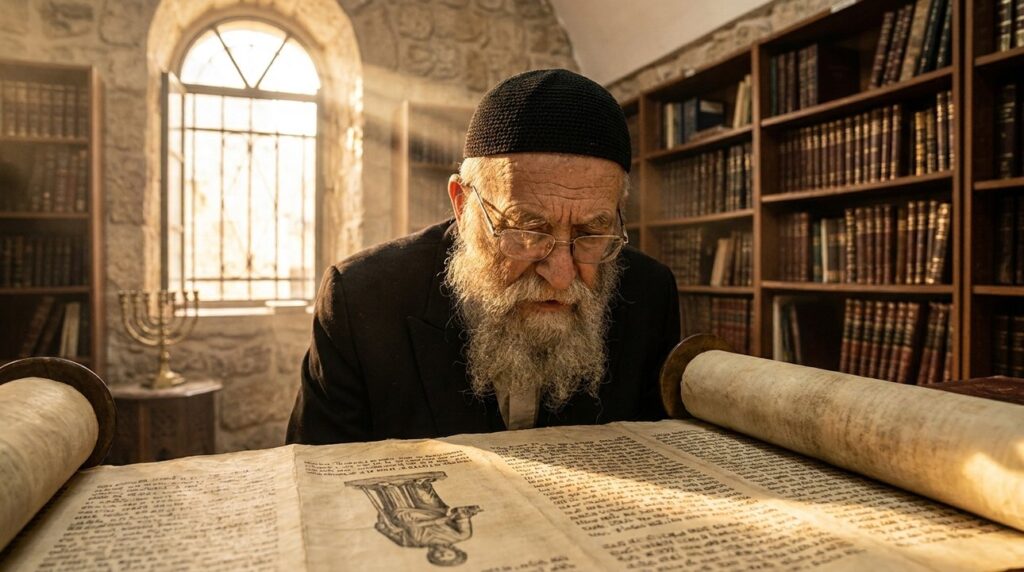
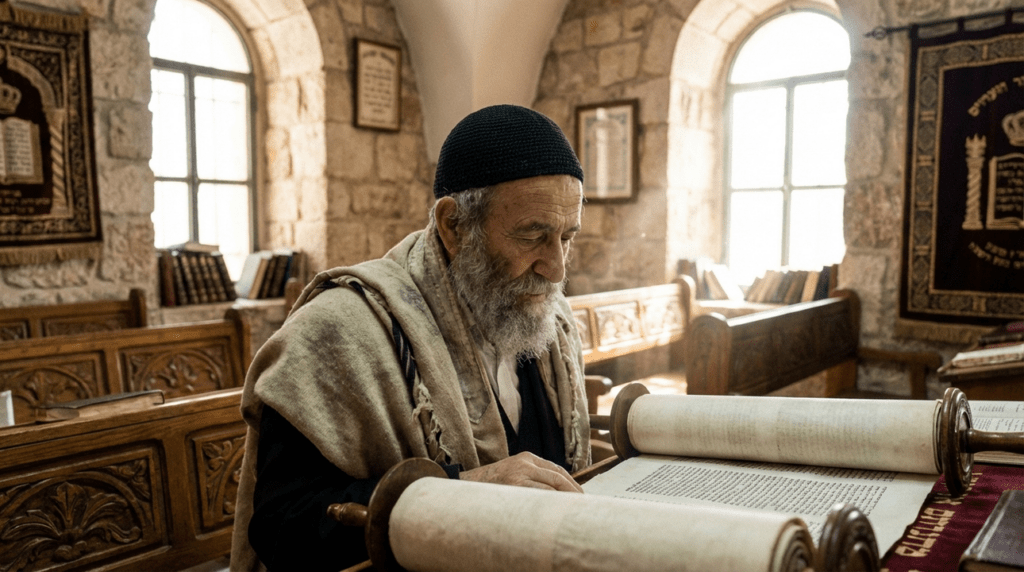
Elderly Jewish man reads Torah in sunlit Jerusalem synagogue.

Discovering the Beauty of Judaica Art in Israel

Understanding Judaica Art Judaica art encompasses a wide array of creations from ritual objects to fine art pieces. Items such as menorahs and mezuzahs are crafted with care, often featuring symbols like the Star of David, which represents Jewish identity. Each item is crafted with a deep sense of purpose, often drawing inspiration from traditional Jewish texts and symbols. The use of Hebrew letters, as seen in Torah scrolls, adds a layer of spiritual significance to these artworks. Items like menorahs, mezuzot, and Shabbat candlesticks are more than just functional; they tell a story. The menorah, for instance, is a...
Show more
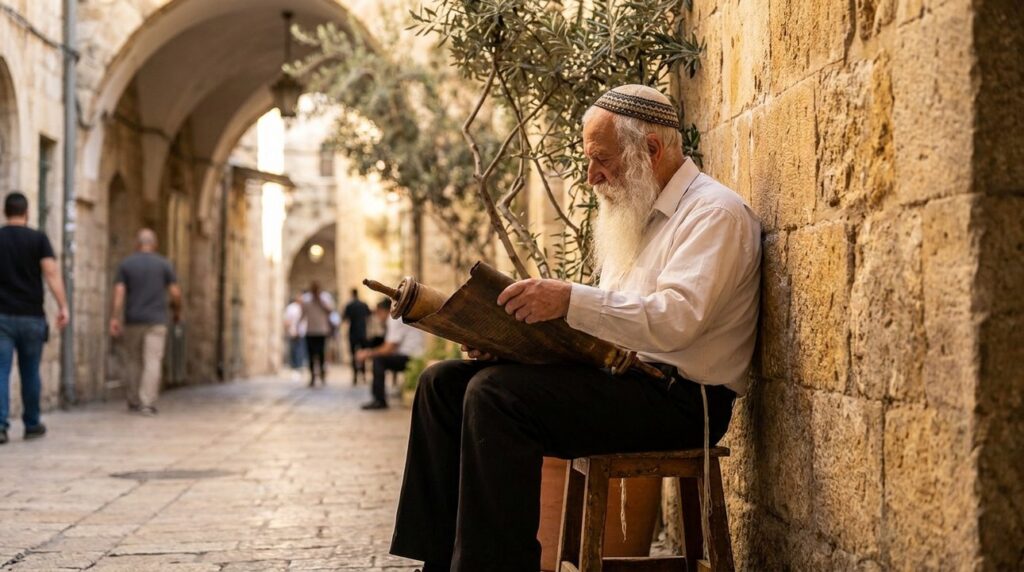
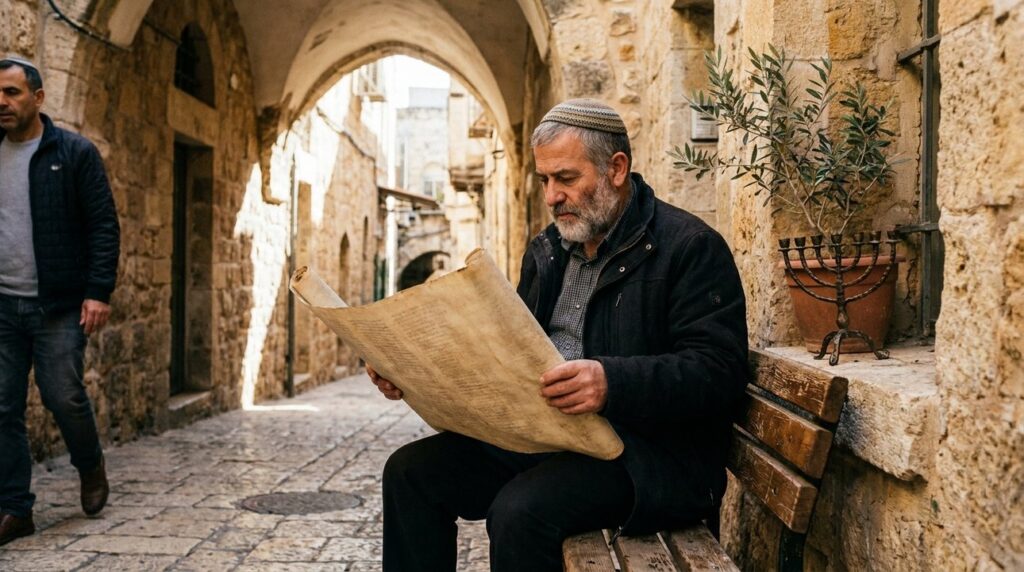
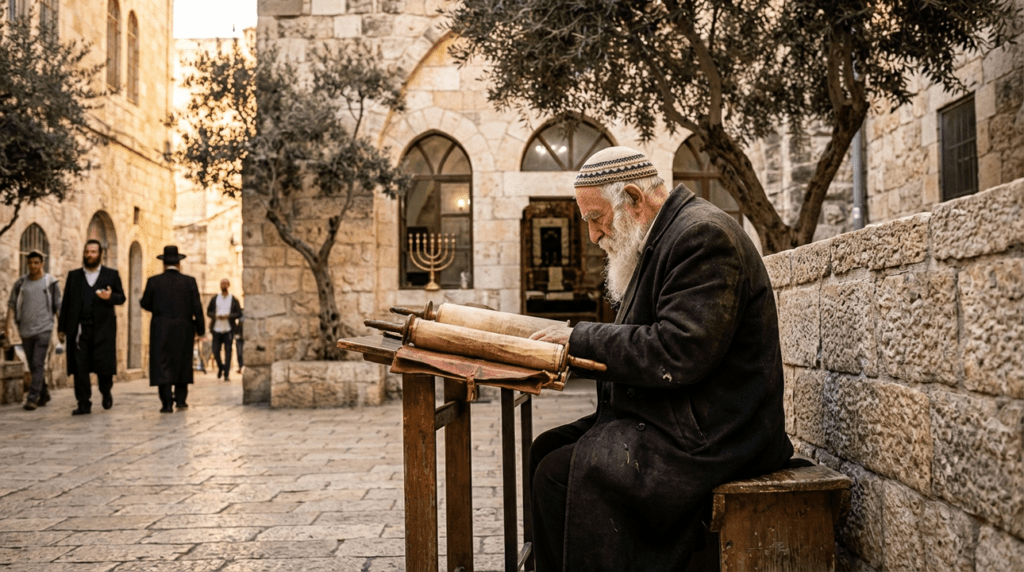
Middle-aged man in kippah reads ancient scroll in Jerusalem alley.

Understanding Nebuchadnezzar’s Dream and Daniel’s Interpretation

The Dream: A Vision of Empires King Nebuchadnezzar of Babylon had a troubling dream that none of his wise men could interpret. It was Daniel, a young Jewish exile, who revealed the meaning. The dream featured a colossal statue with a head of gold, chest and arms of silver, belly and thighs of bronze, legs of iron, and feet partly of iron and clay. Each part of the statue represented a kingdom that would rise and fall. This vision is described in Daniel 2:31-35 and serves as a blueprint for understanding the unfolding of history. The head of gold symbolized...
Show more
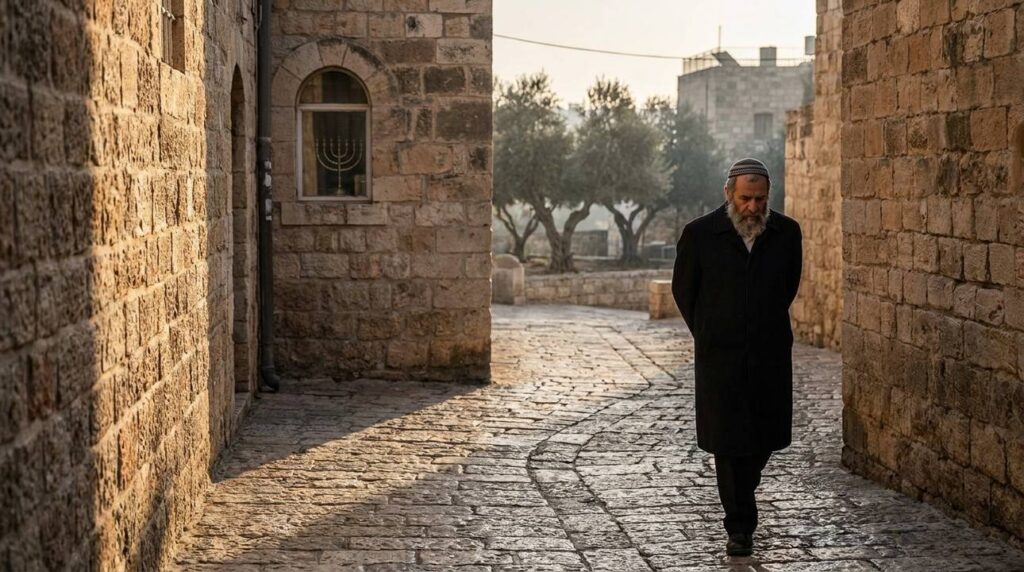
Man in kippah walks in sunlit, stone alley with menorah visible.

Exploring the Image of Nebuchadnezzar and Its Legacy

In this article, we’ll delve into the biblical account, examining its historical context during the 6th century BCE. This period was marked by the Babylonian exile, a time of great challenge for the Jewish people. We’ll also explore the timeless lessons it offers to Jewish tradition and beyond, such as the importance of standing firm in one’s beliefs. Readers are invited to reflect on personal and communal resilience, drawing connections to contemporary life and personal growth. The Historical Nebuchadnezzar Nebuchadnezzar II was the king of the Neo-Babylonian Empire, reigning from 605 to 562 BCE. He is best known for the...
Show more
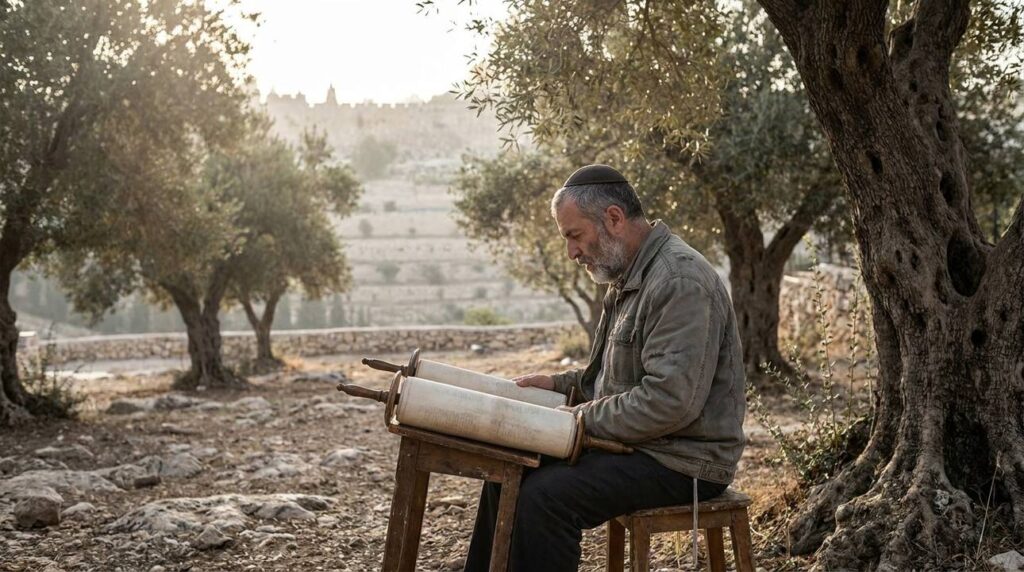
Middle-aged Jewish man reads Torah under an olive tree at dawn.

Understanding the Role of Cherubs in Biblical Narratives

Cherubs: The Guardians of the Divine Cherubs are often depicted as guardians in the Bible, with a notable example in Genesis 3:24. Here, they are positioned at the east of the Garden of Eden to guard the way to the Tree of Life. This role underscores their function as protectors, maintaining the sanctity and divine nature of the spaces they oversee. Such depictions illustrate their importance in biblical narratives as custodians of sacred areas. In Genesis, the cherubs are accompanied by a flaming sword, adding to their formidable presence as guardians. This image serves to emphasize their role in preventing...
Show more
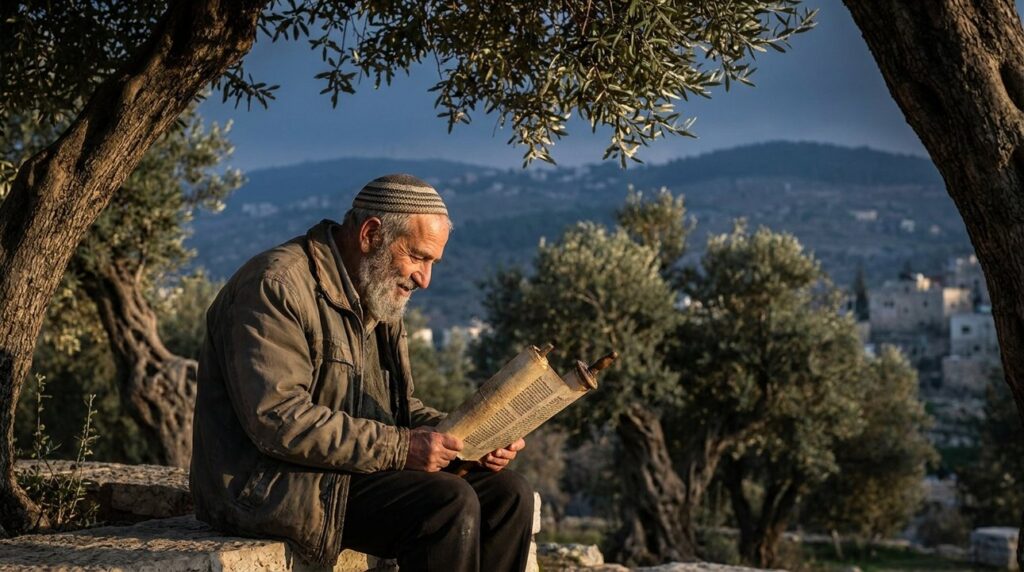
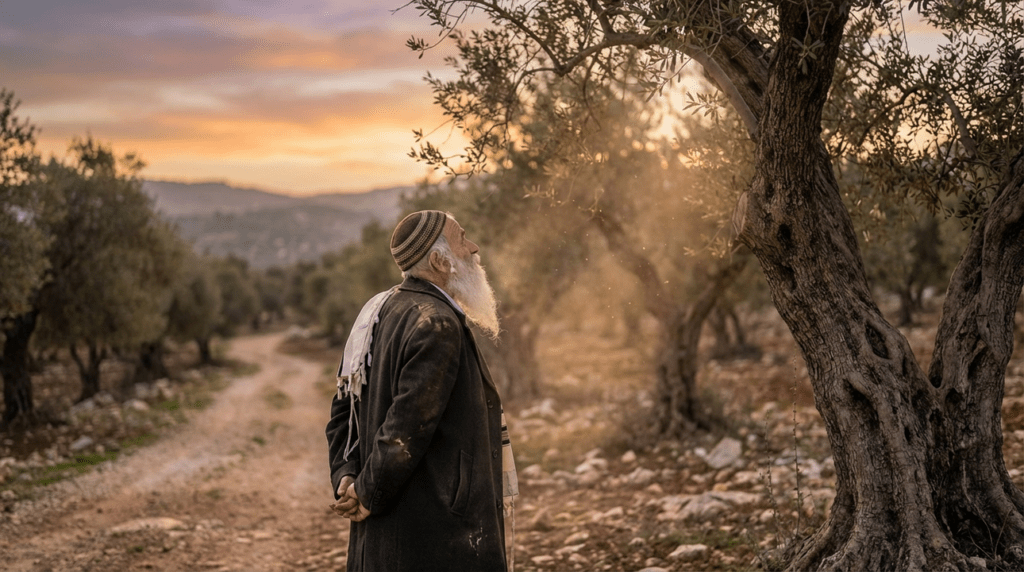
Elderly Jewish man in kippah reading Torah in olive grove.

Unveiling the Secrets of Nimrod Castle

The Ayyubid dynasty, founded by Saladin, played a crucial role in the history of the region. Their construction of Nimrod Castle reflects their strategic vision and understanding of the area’s importance. The castle’s location on Mount Hermon is reminiscent of the biblical significance of Mount Sinai, where Moses received the Ten Commandments as described in Exodus 19:20. The castle’s strategic location made it a key defensive site. It was named after the biblical figure Nimrod, a mighty hunter mentioned in Genesis 10:8-9. This adds a layer of cultural significance, connecting the site to ancient stories and traditions. Today, visitors can...
Show more
Elderly rabbi studies ancient scroll in sunlit Jerusalem library.

Understanding Nebuchadnezzar’s Dream of the Statue

The Dream: A Vision of Empires King Nebuchadnezzar’s dream, as recounted in Daniel 2, presents a towering statue composed of various materials, each symbolising a different kingdom. The head of gold represents Nebuchadnezzar’s Babylonian empire. Silver, bronze, iron, and clay represent successive empires, each less magnificent than the last. Daniel’s interpretation reveals a divine plan of rising and falling kingdoms. This vision extends beyond the Babylonian realm, projecting into future powers that would rise in history. Understanding the statue’s meanings offers insight into the continuity of human governance and divine oversight. Each material’s significance reflects the transient nature of worldly...
Show more
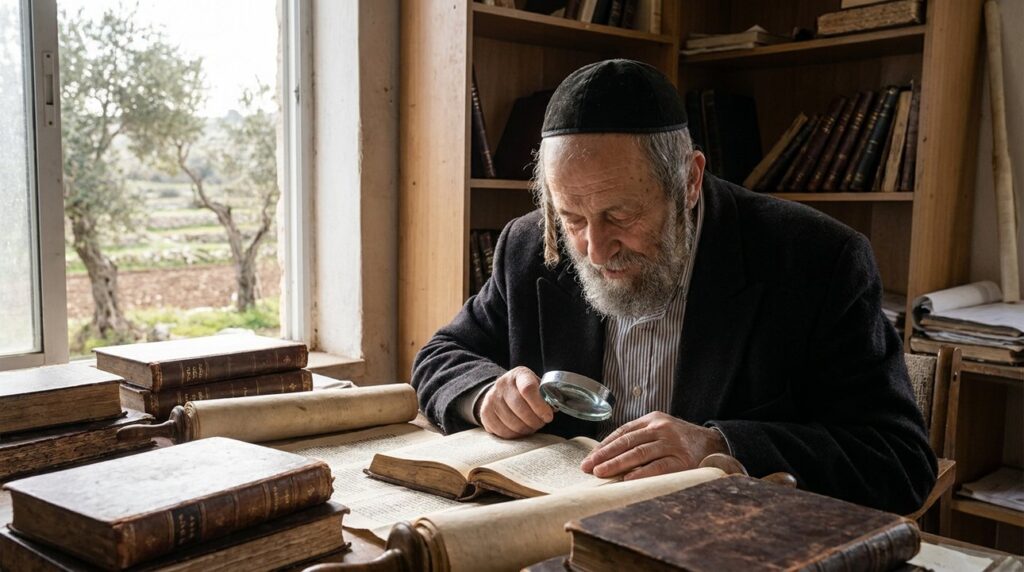
Elderly Jewish man in kippah reading texts in rustic study room.

Discovering the Miracles of Elijah

From calling down fire from heaven to parting the waters of the Jordan River, Elijah’s miracles are a testament to the power of faith and divine intervention. His life is not just a historical account but a living legacy that continues to inspire and guide those who seek a deeper understanding of faith and spirituality. Exploring these narratives, we can uncover the enduring impact of Elijah’s life and the lessons it holds for us today. Elijah’s First Miracle: Drought and Famine Elijah’s first recorded miracle is the declaration of drought, where he announced that no rain would fall in Israel...
Show more
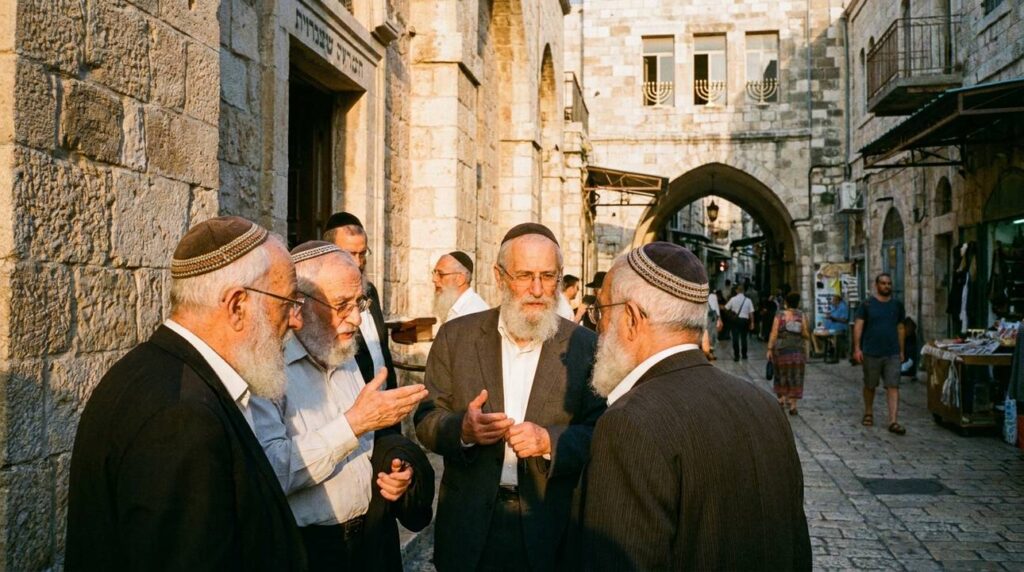
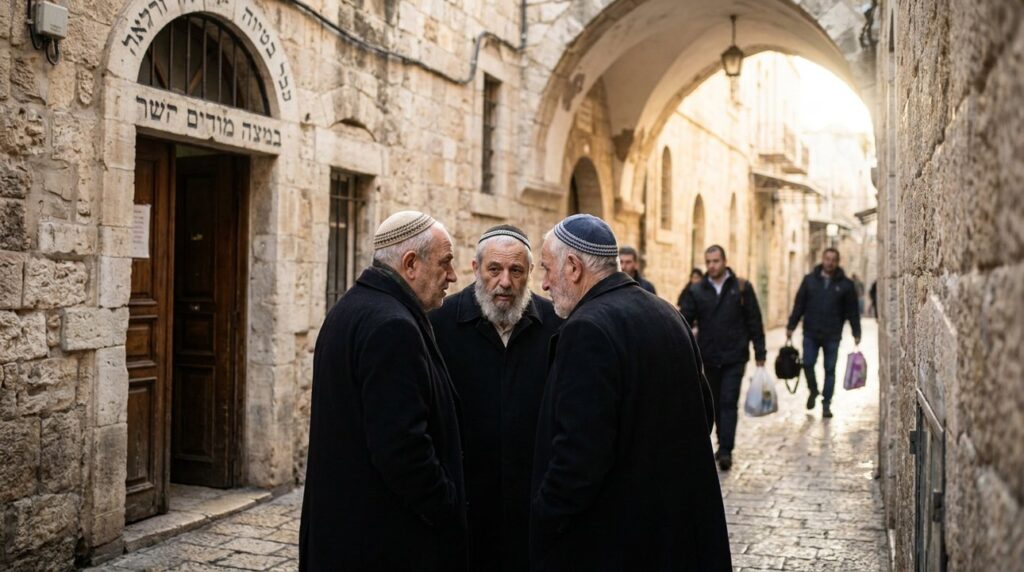
Elderly Jewish men discussing outside a stone synagogue in Jerusalem.

The Story of Israel’s Twelve Tribes

The prophecies Jacob gave to his sons were prophetic, outlining the characteristics and destinies of each group. For instance, Judah was promised leadership, while Joseph received a double portion of inheritance through his sons, Ephraim and Manasseh (Genesis 48:5-6). These prophecies set the stage for their roles in Israel’s history, influencing their interactions and alliances. Understanding these foundational stories helps us appreciate the complex tapestry of biblical narratives and their lasting impact on Jewish identity. Origins of the Twelve Tribes The story of the twelve tribes of Israel begins with Jacob, also known as Israel, who had twelve sons from...
Show more
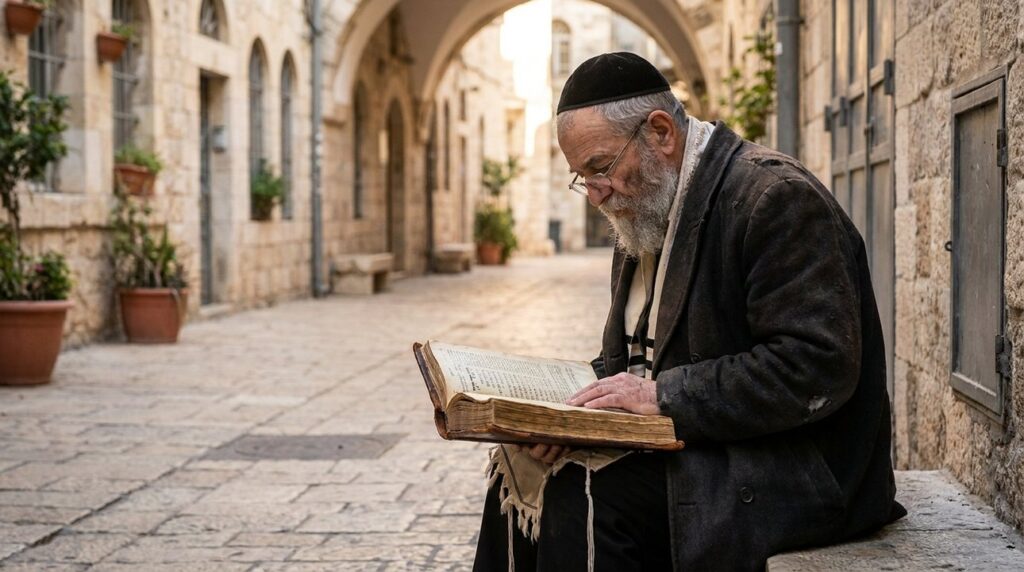
Elderly Jewish man reads scriptures in historic Jerusalem street.

Understanding the Callings of Prophets Ezekiel, Jeremiah, and Isaiah

Each prophet’s journey is unique, filled with symbolic acts and titles that reflect their roles within the historical and cultural landscape. Ezekiel’s symbolic actions, like lying on his side for days (Ezekiel 4:4-8), illustrated the siege of Jerusalem, a powerful act of prophecy. Jeremiah’s title as the ‘Weeping Prophet’ captures his emotional connection to his people’s suffering, while Isaiah’s ‘Eagle Eye Prophet’ title reflects his clear vision of future events, offering insights into divine plans. The Call of Ezekiel Ezekiel’s calling as a prophet is vividly detailed in the book that bears his name. In Ezekiel 1:1, he describes a...
Show more
Jewish men in traditional attire discussing outside a stone synagogue.

Discovering the Life and Times of King David

David’s early life in Bethlehem set the stage for his future as a leader. Known for his shepherding skills, David’s upbringing in this small town provided him with the grounding and resilience necessary for his later challenges. Bethlehem, a town in the Judean hills, was not just his birthplace but also a significant location in his anointing as king. His journey from shepherd to king is a testament to his enduring legacy and the pivotal moments that defined his path. The story of David’s life continues to inspire those who seek to understand the complexities of leadership and faith. The...
Show more
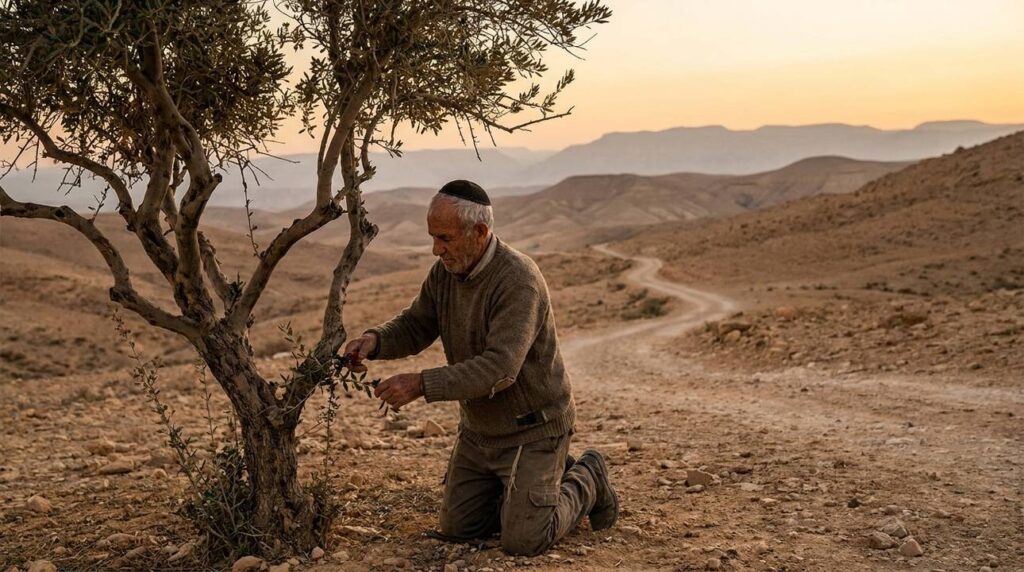
Elderly man in traditional Jewish attire tending an olive tree in the Negev Desert.

A Journey Through Edom and Moab: Ancient Kingdoms Today

The stories of Edom and Moab are intertwined with key biblical events, such as the Israelites’ journey through the wilderness and the conflicts with neighboring kingdoms. These narratives, found in books like Genesis and Numbers, provide a window into the complex relationships and cultural exchanges that shaped the ancient Near East. The stories of Edom and Moab are intertwined with those of biblical figures such as Ruth, a Moabite woman whose loyalty and faithfulness are celebrated in the Book of Ruth. These narratives not only enrich our understanding of biblical history but also highlight the enduring cultural significance of these...
Show more
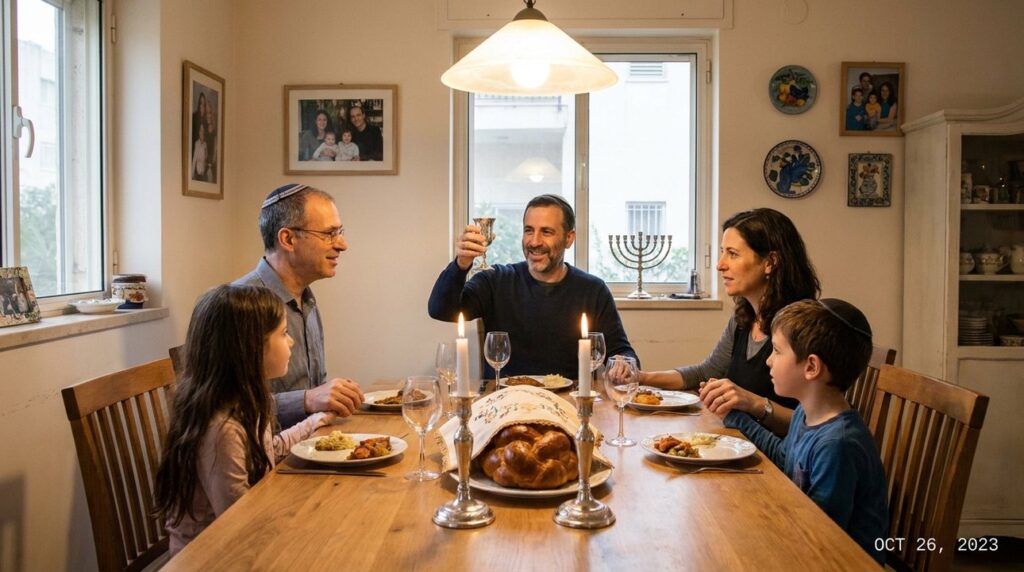
Family blessing over Shabbat dinner with challah and lit candles.

Exploring the Joys of Eating Challah and Perfect Pairings

Understanding Challah: A Brief Introduction Challah is a traditional Jewish bread typically braided and baked to a golden perfection. Rich in symbolic meaning, it is especially enjoyed during Shabbat and Jewish holidays. According to My Jewish Learning, this bread represents a special bond within families and communities (source: Chabad.org). The braiding is said to symbolize the intertwining of family and community ties. The beauty of this bread lies not only in its taste but in the shared moments it creates around the table. Rooted in the biblical commandment to separate a portion of dough as a gift to the priests,...
Show more
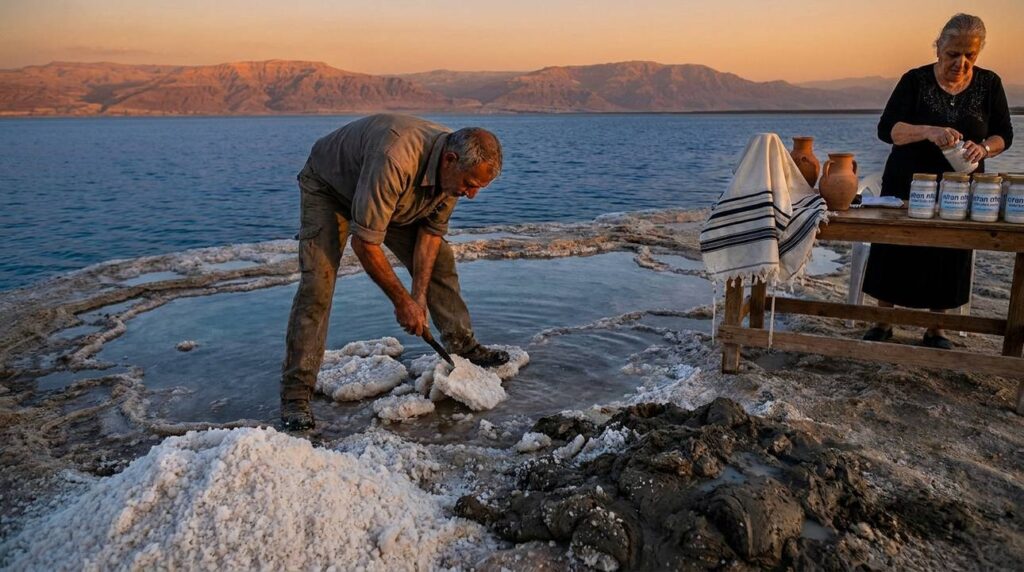
Artisan harvesting salt at Dead Sea during sunset.

Unveiling the Wonders of Dead Sea Products

As we embark on a journey to uncover the benefits of Dead Sea products, we’ll explore how these treasures support local Israeli communities and contribute to your skincare routine. The mud and salts from the Dead Sea are renowned for their ability to detoxify and rejuvenate the skin, making them a staple in many beauty regimens. By choosing these products, you are also supporting the hardworking families who have passed down their craft through generations. The Unique Composition of the Dead Sea The Dead Sea, located at the lowest point on Earth’s surface, is famed for its high mineral content....
Show more
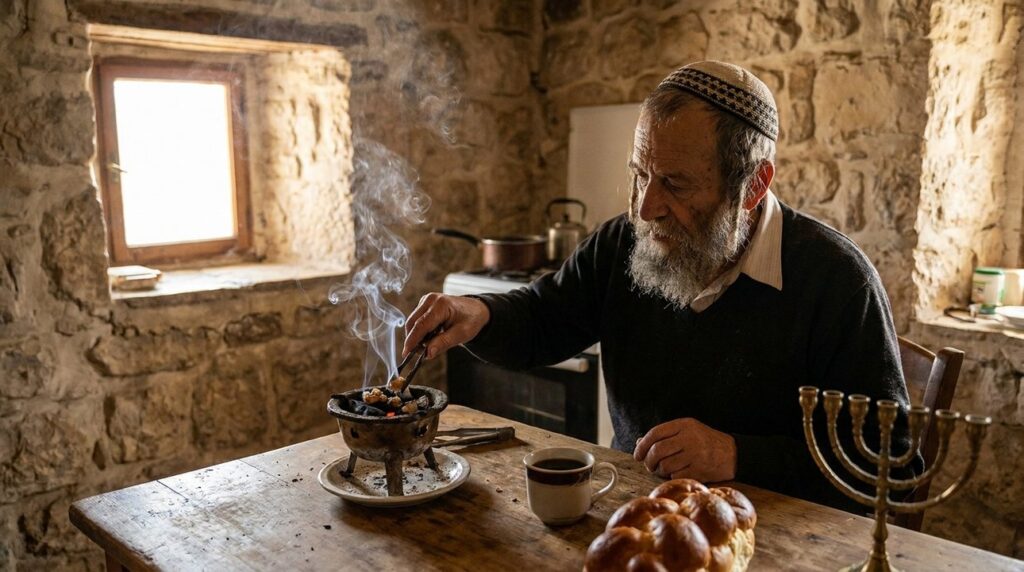
Elderly Jewish man placing frankincense on burner in rustic kitchen.

The Art and Significance of Burning Frankincense

Frankincense is also noted in the story of the Queen of Sheba, who brought gifts, including spices, to King Solomon (1 Kings 10:2). This exchange highlights the value placed on frankincense as a luxury item and a symbol of wealth and status. The Incense Route, which facilitated frankincense trade, connected the Arabian Peninsula with the Mediterranean, playing a crucial role in the economy and cultural exchanges of the ancient world. For over 2,000 years, this trade route demonstrated the historical importance of frankincense, influencing the cultures and economies of the regions it touched. Historical Origins of Frankincense Frankincense has been...
Show more
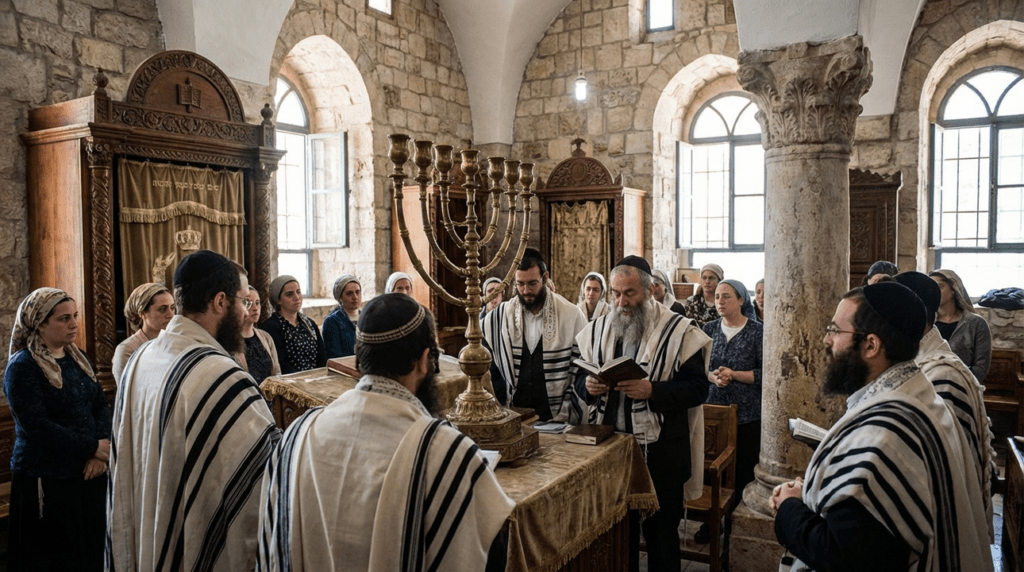
Group of people participating in a Jewish ceremony in a synagogue.

Exploring the Moabites: A Peek into Their Origin

The Moabites are often mentioned in the context of their land, which was located east of the Dead Sea, in present-day Jordan. This geographical proximity led to frequent interactions with the Israelites, ranging from conflict to cooperation. Their story is intertwined with that of Israel, as seen in the alliances and enmities recorded in the Bible. Understanding them helps us appreciate the broader cultural and historical landscape of the ancient Near East, as seen in Numbers 22-24. The Moabites’ strategic location allowed them to control important trade routes, contributing to their economic and political significance. Interactions such as the alliance...
Show more
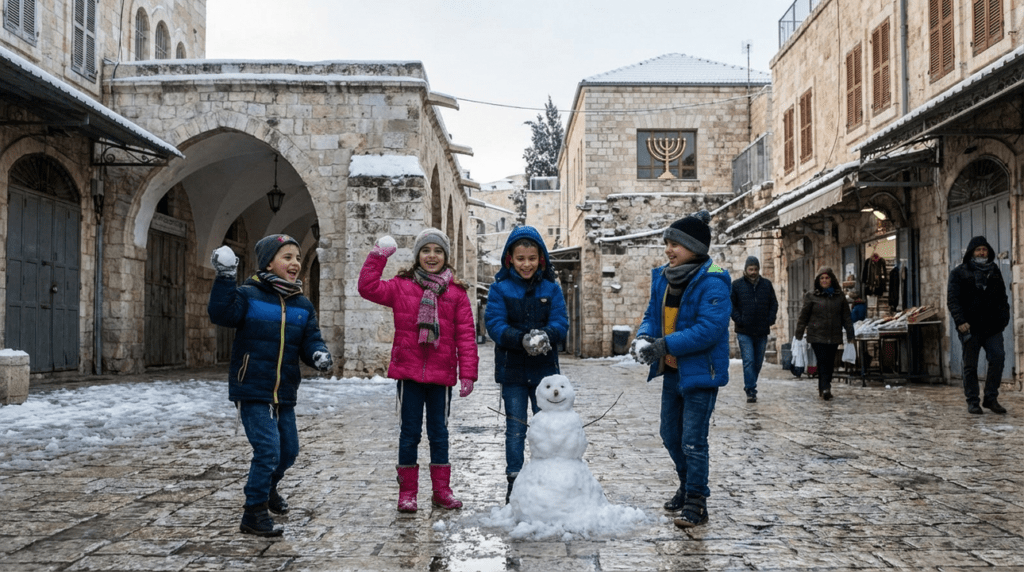
Children playing with snowballs in snowy Jerusalem street.

Exploring Snowfall in Israel: Rarity and Wonder

Geographical Diversity of Israel Israel’s geography is a fascinating blend of coastal plains, mountains, and desert landscapes. This diversity creates a variety of microclimates. For example, while the Mediterranean coast enjoys mild, rainy winters, the desert areas remain dry and warm. The hillier regions, such as Jerusalem and the Golan Heights, are where snow might be seen. This geographical contrast plays a crucial role in Israel’s climate, influencing the unique experience of snowfall in certain areas. The Negev Desert, known for its arid climate, rarely sees snow, highlighting the country’s climatic diversity. Snowfall in Jerusalem Jerusalem, with its elevation of...
Show more
Jewish man in traditional attire reading Torah in Jerusalem street.

Understanding Cherubim and Seraphim in the Bible

The cherubim’s role as protectors is vividly illustrated in Genesis 3:24, where they guard the way to the Tree of Life, symbolizing their function as guardians of sacred spaces. In contrast, seraphim are described in Isaiah 6:1-7 as worshippers and purifiers, emphasizing their role in maintaining spiritual purity. This exploration of cherubim and seraphim highlights their distinct yet interconnected functions within the divine order, offering insights into their symbolic meanings and the roles they play in the spiritual tapestry of Jewish heritage. Exploring the Role of Cherubim Cherubim are first introduced in the Torah, notably assigned to guard the way...
Show more
Elderly Jewish man reading biblical texts outside a stone synagogue.

Unveiling the Biblical Meanings of Cain and Jeremiah

Cain’s story serves as a cautionary tale about the dangers of unchecked emotions, while Jeremiah’s life illustrates the power of faith and redemption. These narratives not only provide historical context but also serve as moral compasses. They guide readers through the complexities of human behavior and divine expectation, offering insights into the consequences of actions and the possibility of redemption. Together, they enrich the tapestry of Jewish heritage and discourse. Cain’s story warns of the dangers of unchecked emotions, as seen in Genesis 4:7, where he is cautioned about sin’s lurking presence. This verse highlights the struggle between human impulses...
Show more
Elderly Jewish man reading Torah in sunlit Jerusalem synagogue.

Discover the Biblical and Holy Sites of Israel

This journey through Israel’s holy sites is not just a trip through geography but a bridge connecting us to the past and enriching our understanding of the present. Each visit offers a chance to reflect on the enduring lessons of faith, courage, and community that these stories impart. As pilgrims walk through ancient streets and sacred sites, they find themselves immersed in narratives that have shaped Jewish identity for millennia. The experience fosters a deeper appreciation for the cultural and spiritual legacy. The Temple Mount: Heart of Jerusalem The Temple Mount is perhaps the most sacred site in Judaism. It...
Show more
Family at Passover Seder table with traditional foods in Jerusalem.

Exploring the Significance of the Biblical Plagues

The ten biblical plagues hold a pivotal place in religious history, serving as both a dramatic narrative and a profound lesson. Recounted in the Book of Exodus, these plagues illustrate themes of power, endurance, and faith. In this article, we will delve into each plague, exploring its historical and cultural significance, and how these events have shaped the collective memory and identity of the Jewish people. The biblical plagues, as documented in the Book of Exodus, are a cornerstone of religious history. They offer profound insights into the power of faith and the resilience of the Israelites through adversity. Each...
Show more
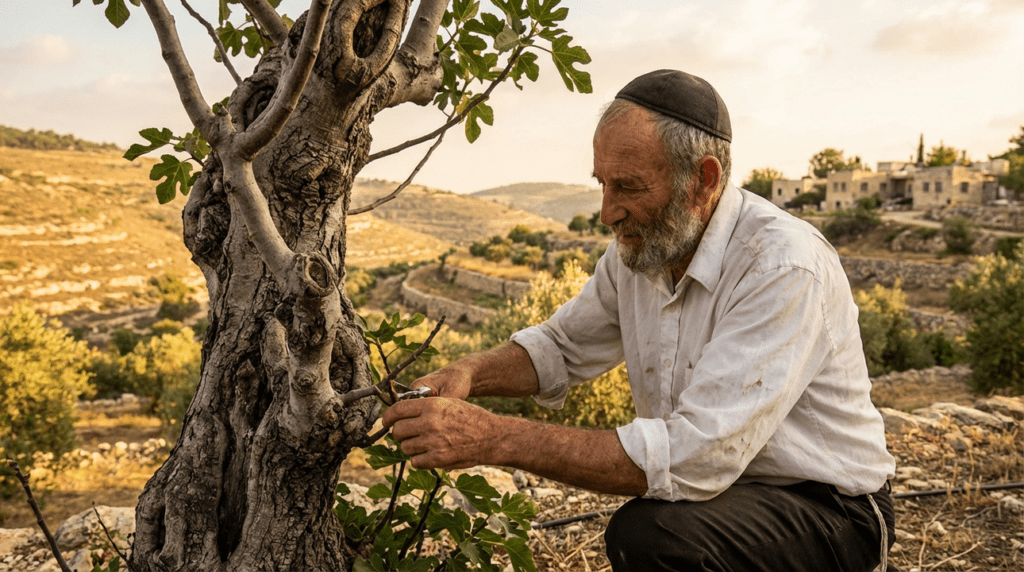
Elderly Jewish man caring for fig tree in olive grove.

Exploring the Vine and Fig Tree: Symbols of Peace and Resilience

In ancient texts, the imagery of the vine and fig tree carries deep meanings of prosperity and peace. For instance, in Zechariah 3:10, the vine and fig tree are symbols of safety and divine favor. This reflects a time when people lived in harmony, each under their own vine and fig tree, without fear. Meanwhile, modern catchphrases like ‘do it for the vine’ have captivated new audiences. This phrase, popularized on the Vine app, encouraged spontaneous creativity and sharing. Vine’s impact on social media culture was profound, setting the stage for platforms like TikTok. This article delves into the classical...
Show more
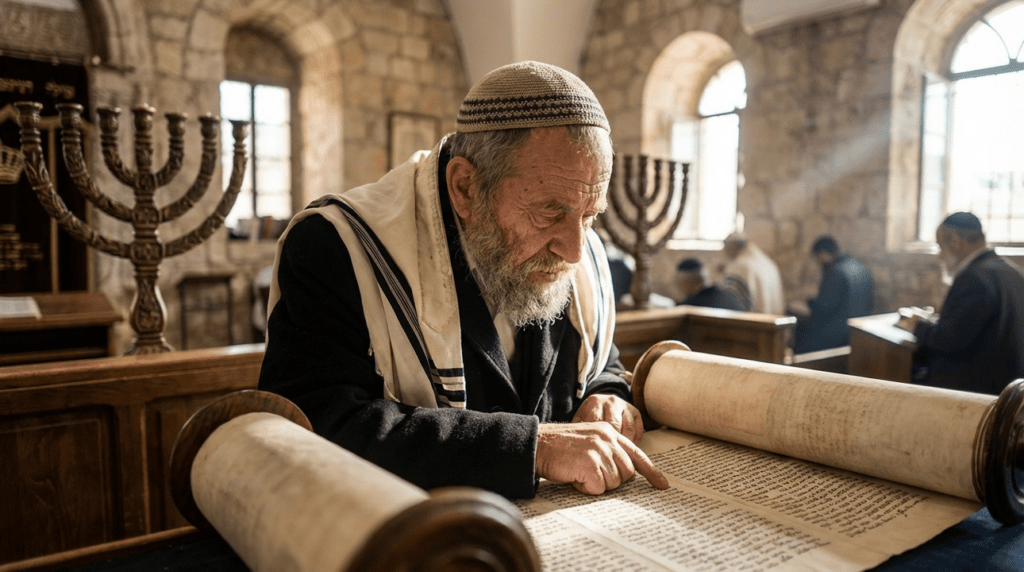
Elderly Jewish man wearing kippa reads Torah in Jerusalem synagogue.

Discovering the Biblical Roots of Emily, Levi, and Zachary

The names Emily, Levi, and Zachary have intrigued parents for generations with their unique blends of tradition and modernity. Levi, a name with deep biblical roots, is associated with the third son of Jacob and Leah, as mentioned in Genesis 29:34. Levi’s descendants became the Levites, known for their religious duties in the Temple. The Levites’ role in religious ceremonies and their dedication to worship highlight the enduring significance of the name Levi in Jewish tradition. In contrast, Zachary, or Zechariah, means ‘God remembers’ in Hebrew, and is linked to several biblical figures, including a prophet and a priest. Zechariah,...
Show more
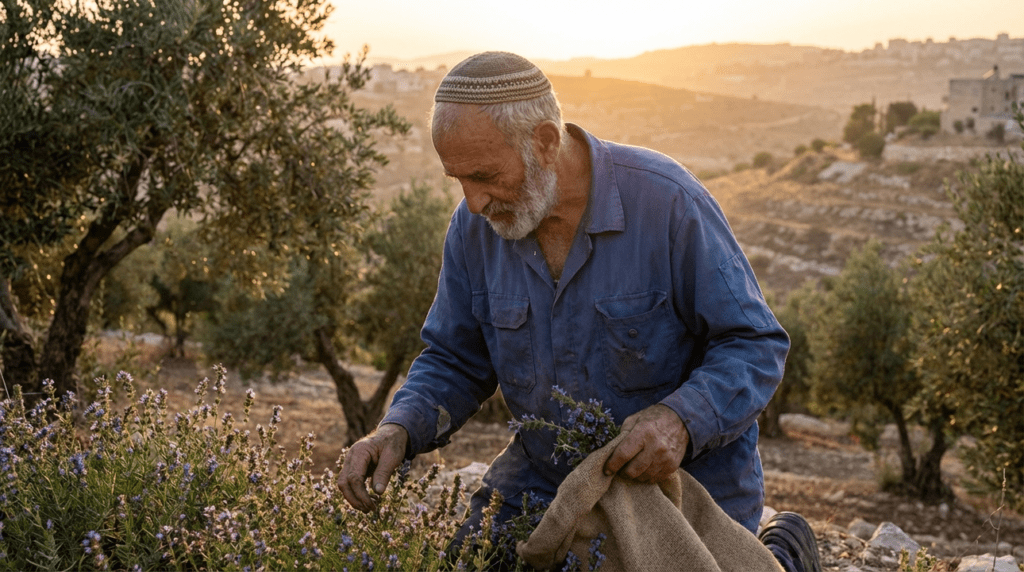
Elderly Jewish man in kippah harvesting hyssop in olive grove.

The Role of Hyssop in Israel: From Tradition to Today

Hyssop has been cherished in Israel for centuries, known for its aromatic and symbolic significance. This beloved herb holds a place in Israeli culture and tradition. In this article, we explore hyssop’s historical roots, culinary uses, and cultural significance, inviting you to discover its role in Israeli life. Hyssop’s story is one of enduring cultural richness, deeply intertwined with the land of Israel. This herb is mentioned in the Bible, such as in Exodus 12:22, where it was used during the Passover. Its historical use highlights the connection between the people of Israel and their land, reflecting a heritage that...
Show more
Elderly man in traditional Jewish attire standing by an olive tree.

The Mysterious Departure of Prophet Elijah

The life and departure of Prophet Elijah remain subjects of intrigue and fascination. Elijah’s story is celebrated in biblical texts, particularly in the Books of Kings, where his life is detailed from his first appearance in 1 Kings 17:1 to his dramatic departure in 2 Kings 2:11. His story continues to captivate readers worldwide, as he is one of the few biblical figures who did not experience death in the traditional sense. In this article, we’ll explore how Elijah came to leave this world and consider how other prophets met their ends. Elijah’s Unique Departure in the Bible Elijah is...
Show more

See other categories

Stunning landscapes and vibrant culture of Israel
All About Israel
Ancient Places
Ancient scrolls and artifacts related to Biblical Studies
Biblical Studies
Hands holding a heart symbolizing support and community
Charity and Social Responsibility
Cities
Assorted Israeli dishes and beverages
Food and Beverages from Israel
Scenic view of Israel's diverse landscapes
Geography & Travelling of Israel
Open Hebrew book with traditional script
Hebrew Language and Literature
Historic Places
We use cookies to provide the best site experience
Lev Haolam logo
Lev Haolam Facebook page Lev Haolam YouTube Follow Lev Haolam on Twitter Instagram Lev Haolam Lev Haolam Pinterest
© 2015 – 2026 Lev Haolam
Become a member Update my details
Contact Us
+972 23721384 +1 (531) 208 1263
Customer Support: 24/6 · Sun–Fri (till 4pm)

Closed on Shabbat hours & Israeli public holidays
support@levhaolam.com
Lev Haolam copyright
Lev Haolam World Ltd.
Luleem Business Center, Kfar
Etzion 9091200, Israel
Israeli Company Number: 515056927
Become a member Update my details
Privacy Policy Terms & Conditions AI Information About Lev Haolam
Mastercard payment for Israel gifts Visa card Maestro card American Express payment option PayPal – pay for your Israel box Secure payment for Israel boxes
© 2015 – 2026 Lev Haolam