
How to Know If Israeli Products
Are Authentic
You want to buy something from Israel. Maybe it is olive oil for your table, a piece of Judaica for your home, or a gift for someone who loves the land. So you search online – and almost immediately run into a wall of doubt.
There is “Israeli-style” hummus made in New Jersey. “Middle Eastern-inspired” ceramics mass-produced overseas. Bottles labeled “Mediterranean blend” that never came near the Galilee. And even when a product really is from Israel, you often still cannot tell who made it, where it came from, or whether your purchase actually reached a real person.
That gap – between wanting something authentic and being able to verify it – is what this article is about. Below, you will find a practical way to tell authentic Israeli products from anonymous imports, understand what separates mass brands from real Israeli artisans, and use a simple checklist before you buy.
40 Authentic Israeli Recipes
Inspired by the Farms of Israel.
A $14.99 value — available to you completely free

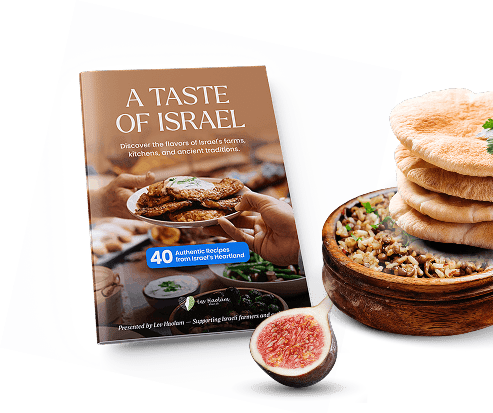
Table of Contents
- Why So Many People Ask This Question
- Buying Israeli Products in the U.S.: What You Gain – and What You Miss
- Mass Brands vs. Small Israeli Producers
- What Makes an Israeli Product Feel Truly Authentic
- Why the Maker Matters as Much as the Product
- How to Find Israeli Products With Real Stories Behind Them
- Why Lev HaOlam Focuses on Real Producers, Not Anonymous Products
- FAQ

1. Why So Many People Ask This Question
The question “is this really from Israel?” does not come out of nowhere. It comes from the way modern retail works.
Most products on a shelf are designed to be anonymous. A label gives you a brand name and a country of manufacture, and that is usually where the information ends. You do not know whether it came from a single family workshop or a factory running around the clock. You do not know whether the people who made it benefited from your purchase, or whether the word “Israel” on the front is functioning more as aesthetic than origin.
For most groceries, that anonymity is fine. But when you are specifically looking for real Israeli products – because you care about the land, the people, or the heritage behind them – anonymity defeats the purpose.
You are not just buying an object. You are trying to buy a connection.
And a connection requires someone on the other end you can actually see.
That is the real trust gap. Not simply “is the label lying about the country,” but “can I see the human being this came from?”
2. Buying Israeli Products in the U.S.: What You Gain – and What You Miss
Buying made in Israel products in the U.S. is far easier than it used to be, and that is genuinely a good thing. It is worth looking honestly at both sides.
What you gain
- Low friction. You can order online, get fast shipping, and try Israeli foods and goods without traveling.
- An easy first step. For someone new to Israeli products, a familiar bottle of olive oil or bag of spices is an accessible entry point.
- Availability. Mass-distributed Israeli brands are widely stocked and easy to find.
What you often miss
- The maker. You rarely see the person, family, or workshop behind the product.
- The chain. It is often unclear how the item got from Israel to your cart, or who along the way was actually supported.
- The sense of real Israel. A polished retail SKU can be high quality and still feel as though it could have come from almost anywhere.
A useful way to put it is this: mass retail gives you connection through a product, but not through people.
That is not a flaw to be ashamed of. It is simply a ceiling.
And if what you really want is human connection, you will feel that ceiling fairly quickly.

3. Mass Brands vs. Small Israeli Producers
It is tempting to turn this into a moral argument: big brands are bad, small makers good. That is not the honest version, and it is not the useful one.
Big Israeli brands have a real place. They are accessible, recognizable, and convenient. If you want a known product fast, they deliver. The difference is not about quality or virtue. It is about what kind of relationship the product makes possible.
Here is the cleanest way to hold both ideas at once:
Mass brands give access. Small producers give connection.
The table below lays out the practical differences – not as judgment, but as clarity.
| Mass-Market Israeli Brands | Small Israeli Artisans & Producers | |
|---|---|---|
| Who made it | A brand name; the individual maker is usually invisible | A specific person, family, or workshop you can often name |
| Where it's made | “Made in Israel,” with little regional detail | A specific place - Galilee, Judea, Samaria, the Negev, the Golan |
| The story | A broad marketing narrative | A real founding story: why it exists, who keeps it going |
| Traceability | The chain is hard to follow | Often direct, with a clear line from maker to buyer |
| Scale | Industrial, high-volume | Human scale - you can feel the labor and craft behind it |
| What you're buying | A quality product | A product and a relationship with the people behind it |
| Emotional resonance | Functional satisfaction | A sense of taking part in someone’s life and work |
Neither column is “wrong.” But if authenticity is your goal, the right-hand column is where it lives – because authenticity begins where a product stops being faceless.
4. What Makes an Israeli Product Feel Truly Authentic
Set legal certificates and forensic tracing aside for a moment. The strongest signals of authenticity are often human ones. Here are five things to look for before you buy.
1. There is a specific maker – not just a brand
Can you point to a person, a family, or a workshop? Authentic products tend to have a name attached: a founder, a couple, a farm, a studio. If the only “who” is a logo, that is worth noticing.
2. There is a specific place
Generic “Made in Israel” is a start, but real makers are usually rooted somewhere. Is it the Galilee? Judea? The Golan? The Negev? A real place often comes with a real relationship to the land.
3. There is a reason it exists
Why was this made? Who started it, how long ago, and what does it mean to them? Authentic products usually carry a story that is about more than commerce.
4. There is transparency
Do you understand where it came from and how it reached you? If the path from maker to your hands is visible, that is a strong sign.
5. There is human scale
You can sense the craft, the hands, the family behind it. It does not feel like a unit off an anonymous assembly line. It feels made.
When a product carries most of these five signals, you are usually looking at something real.
5. Why the Maker Matters as Much as the Product
Small producers often feel more personal – not because they are more “romantic,” but because it is easier to see the human being in them. There is less anonymity, more rootedness, and a shorter line between the thing in your hand and the person who made it.
This is not sentimentality. It is how trust works.

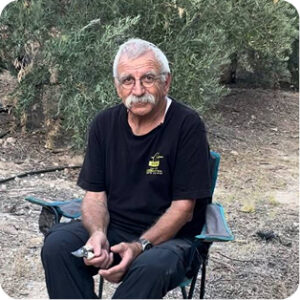
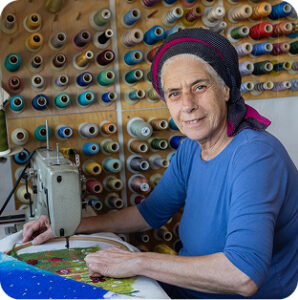
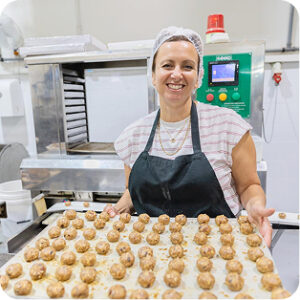
Consider a few real makers supported through curated Israeli boxes:
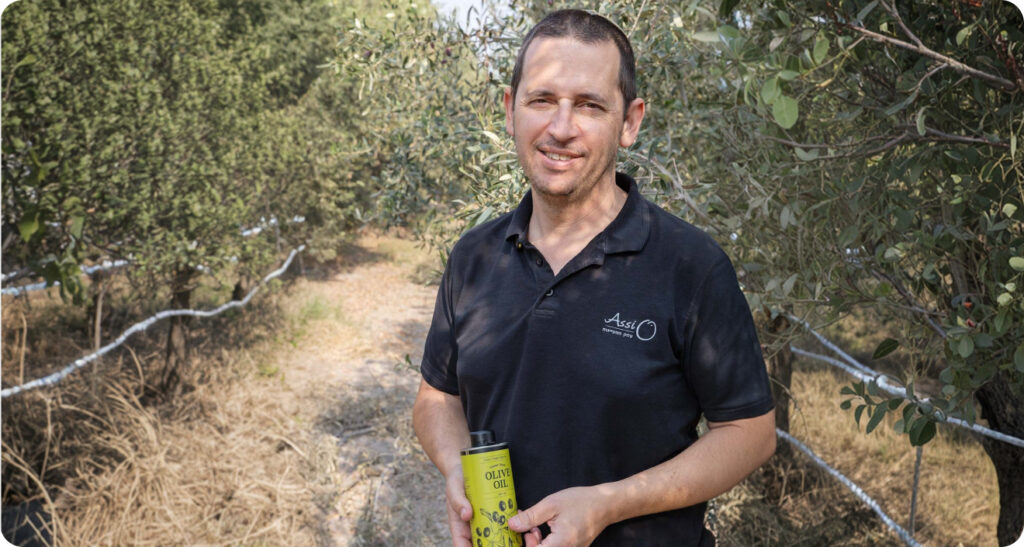
- Boaz Ido – Carma Olive Oil, Mishor Adumim (Judea). Boaz revived an abandoned olive grove and brought neglected trees back to life using traditional methods, gently pressing each bottle to preserve the oil’s delicate flavor. A bottle of Carma is not just oil – it is a restored grove with a name behind it.
- The Lavi family – Har Bracha Winery, Mount Gerizim (Samaria). The whole family is involved in producing wine on a mountain the Bible describes as a place of blessing – land the family calls the geographic cradle of Jewish culture.
- Moshe & Tehila Yahlomi – Hemdat Avot, Hebron (Judea). They press olive oil and grind wheat flour the way it was done in ancient times, using olives picked near the Cave of the Patriarchs.
- Bat Sheva Arad – hand-stitched embroidery, the Galilee. Working from home, she blends traditional Jewish folk motifs with a modern touch – every thread sewn slowly and intentionally.
- Neot Smadar – olive oil from a desert community in the Negev. A green oasis whose groves sustain jobs for dozens of families in a remote part of Israel.
You may taste olive oil from a faceless retail bottle or from Boaz Ido’s restored grove. The liquid may even be similar. But only one of them lets you feel that you took part in something real.
That difference is authenticity.
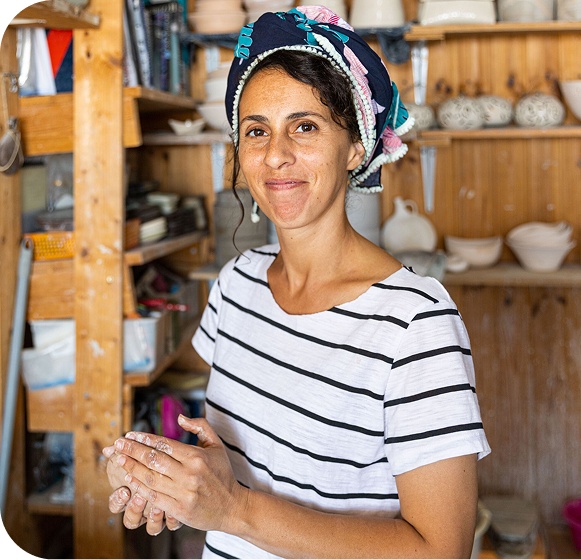
6. How to Find Israeli Products With Real Stories Behind Them
Once you know what to look for, finding the real thing becomes much easier.
A few practical rules help:
- Look for named producers. If a seller can tell you who made the item and where, that is one of the strongest signs.
- Look for a story, not just a label. Real makers come with histories, places, and people. Anonymous SKUs do not.
- Prefer direct or curated sourcing. When products are bought directly from producers rather than through multiple layers of distribution, traceability improves and more of your purchase tends to reach the maker.
- Check whether the source shares producer details. Photos, interviews, regional context, and maker profiles usually indicate that the seller actually knows the people behind the goods.
- Be cautious with “inspired by” language. “Israeli-style,” “Mediterranean-inspired,” or “Middle Eastern blend” often signal aesthetic rather than origin.
A simple test is this: if you can tell someone not just what the product is, but who made it and where, you are already much closer to the real thing.


7. Why Lev HaOlam Focuses on Real Producers, Not Anonymous Products
This is exactly the gap Lev HaOlam was built to close.
Authentic Israeli products are not only about where something was made. They are about whether you can see the people, the place, and the story behind it.
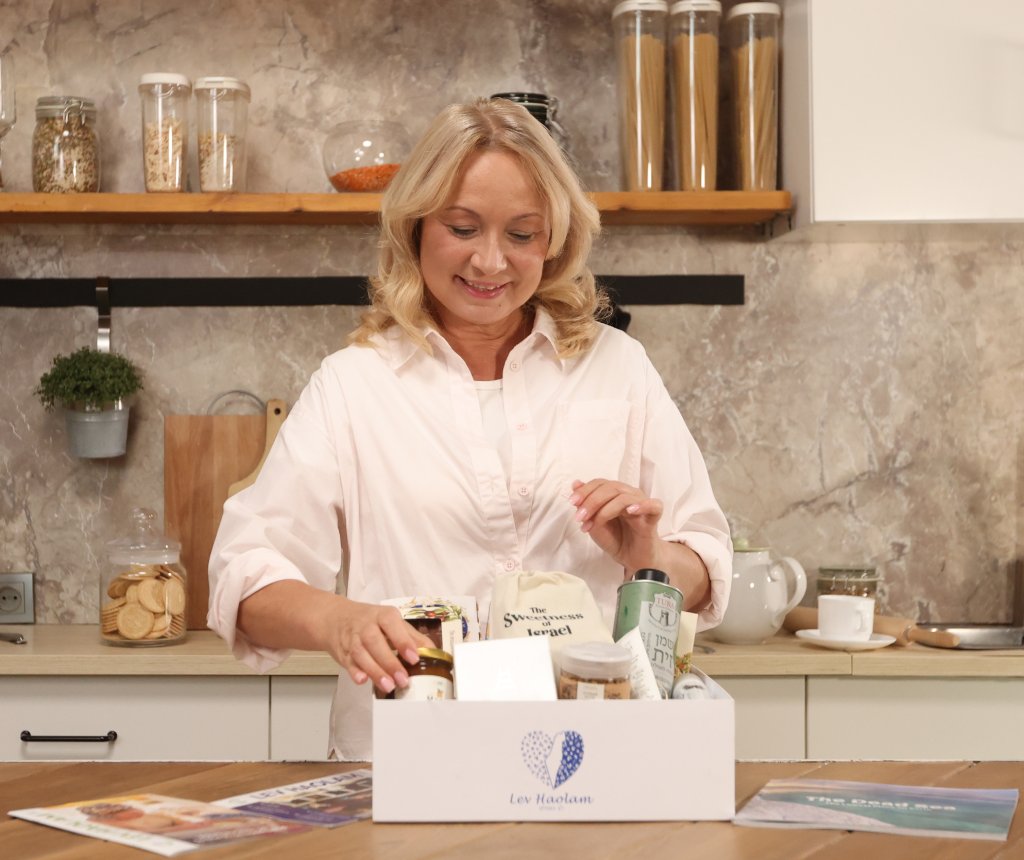
Lev HaOlam works directly with producers, so the chain from maker to box stays visible. Each monthly Surprise Box contains around 6-8 full-size items – olive oil, honey, chocolate, wine, spices, ceramics, cosmetics, Judaica, jewelry, and more – made by small artisans and families across Judea, Samaria, the Galilee, the Negev, and the Golan Heights. Every box includes a magazine that tells the stories of the families behind the goods, and the model supports over 1,820 producer families. Since 2014, more than 90,000 members worldwide have taken part.
The point is not to claim “we’re authentic” as a slogan.
The point is simpler: these are the real signals of authenticity – a named maker, a real place, a true story, a visible chain, human scale – and this format is built around all of them.
8. FAQ
Are Israeli products sold in the U.S. authentic?
Many are genuinely made in Israel, but authenticity depends on what you mean. If you want a real maker, a real place, and a visible story behind the product, many mass-market retail items fall short – not because they are fake, but because the person who made them is invisible. Look for sellers who can name the producer and region.
What makes an Israeli product authentic?
Five human signals: a specific maker, a specific place in Israel, a real reason it exists, transparency about how it reached you, and a sense of human scale. When a product carries most of these, it is usually the real thing.
How can I tell who made an Israeli product?
Authentic sellers tell you. Look for a named founder or family, the region it comes from, and a founding story – ideally with photos, interviews, or producer profiles. If the only identity is a brand logo, the maker is hidden.
Are mass-market Israeli products less authentic?
Not necessarily lower quality – but usually lower in connection. Mass brands give access and convenience. Small producers give you a visible person and story. If authenticity matters more than convenience, lean toward named artisans.
Where can I buy Israeli products with real stories behind them?
Look for curated sources that work directly with producers and share their stories – like Lev HaOlam, which sources from over 1,820 small Israeli families and includes a magazine of maker stories in every box, so you know who made what you are holding.