
Lev Haolam logo – Israel gift box company
Join now
Lev Haolam
  • Home
  • To The Top
  • Who We Are?
  • How It Work
  • Membership
  • Our Boxes
  • Testimonials
  • FAQ
  • Blog
    • Articles
    • Recipes
    • Gift Boxes
    • Support Israel
  • Career
Log In
Join now
Log In
Join now
  1. Home
  2. Blog
  3. Food and Beverages from Israel

Exploring the Unique Flavors of Israeli Food and Beverages

Discover the diverse and rich culinary landscape of Israel. From traditional dishes to modern creations, Israeli food and beverages offer a unique taste experience. Support local producers and enjoy authentic flavors that connect you to the heart of Israel.
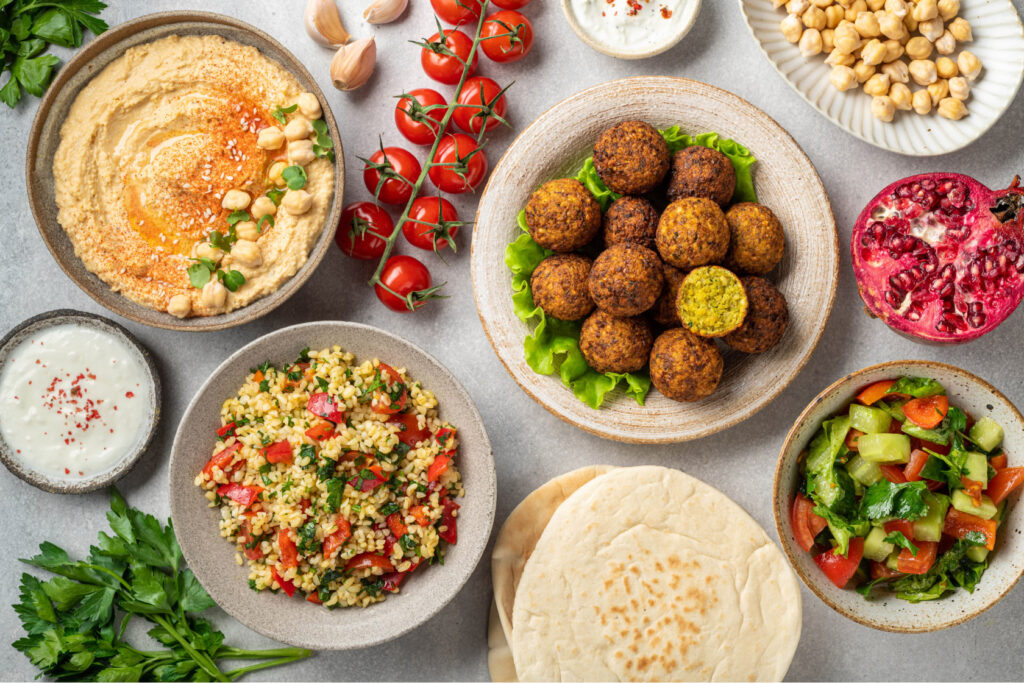
Assorted Israeli dishes and beverages
Elderly Jewish man in kippah inspecting grapes in Israeli vineyard.

Unraveling the History of Wine and Gall in Israel

Wine, with its associations of joy and celebration, contrasts sharply with gall, a symbol of bitterness and hardship. This contrast is reflected in various biblical narratives, where these elements represent the complexities of human experience. By examining these symbols, we gain insight into the cultural and spiritual fabric of Israel, understanding how they continue to inspire and influence both local and global cultures. Historical Background of Wine in Israel Wine has been a vital part of Israeli culture for millennia. The Bible is filled with passages that highlight the significance of wine in ancient Israel, such as its role in...

Show more
Elderly Jewish scholar studies ancient texts in a library in Jerusalem.

What Is Gall Drink and Its Significance?

Historical References to Gall Drink Gall is frequently mentioned in ancient scriptures and historical texts. The Bible often portrays gall as a symbol of suffering and bitterness. For instance, Psalm 69:21 states, ‘They put gall in my food and gave me vinegar for my thirst.’ This reference highlights gall’s association with unpleasant experiences and hardships. Another example appears in Jeremiah 8:14, where gall is used to depict the bitterness of divine judgment. These instances show how gall was deeply embedded in the cultural consciousness as a representation of trials. The use of gall in biblical narratives often serves as a...
Show more
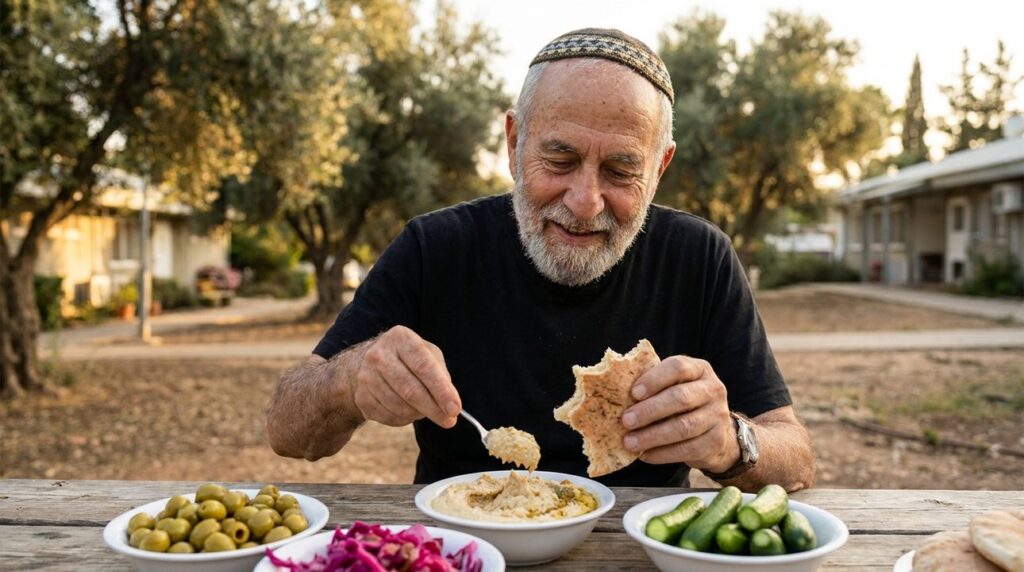
Elderly Jewish man eating hummus and sides at a kibbutz table.

Discover Perfect Pairings for Hummus

Classic Pairings for Hummus Vegetables make a perfect pairing with hummus. Fresh carrots, cucumbers, and bell peppers add a crunchy texture that complements the creamy spread. In the Bible, gardens and fresh produce are often celebrated, as seen in Genesis 1:29, where plants are given for nourishment. The contrasting flavors and colors create an appealing dish that’s both healthy and satisfying. These vegetables are typically served raw, creating a refreshing balance to the hummus’s rich taste, reminiscent of the vibrant produce of Israel. This combination not only delights the palate but also reflects the agricultural abundance that has been a...
Show more
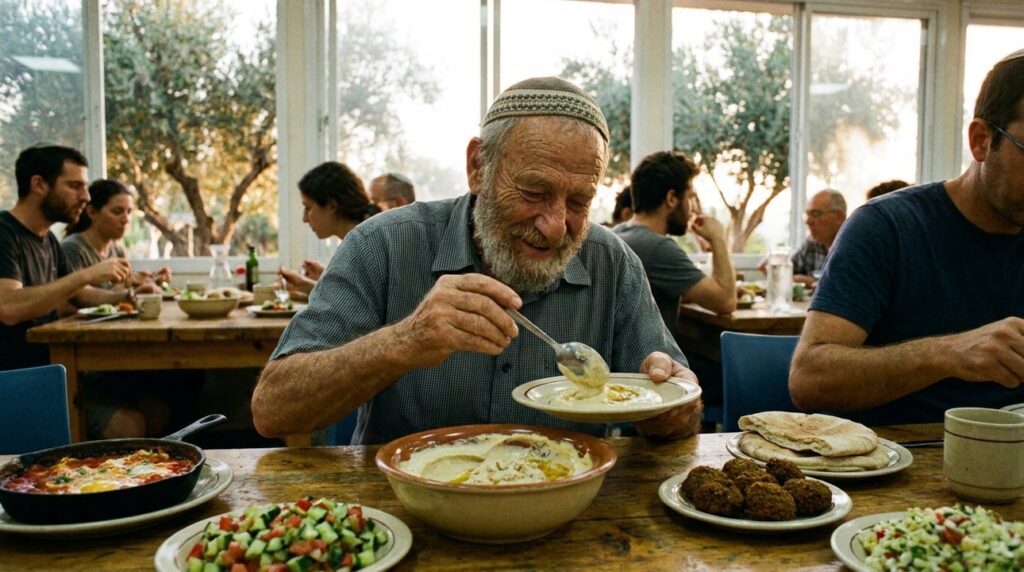
Elderly Jewish man serving hummus in kibbutz dining hall, Israel.

Why Hummus is Good for You

What is Hummus? This creamy spread is made from mashed chickpeas blended with tahini, olive oil, lemon juice, salt, and garlic. Its origins trace back to the Middle East, with historical references suggesting its consumption as early as the 13th century. Chickpeas are mentioned in ancient texts, highlighting their long-standing use. In regions like Israel and Lebanon, it is a staple, often enjoyed as part of mezze, a collection of small dishes. Today, hummus is popular worldwide and praised for its delicious taste and health benefits, much like the shared meals of the past. The spread’s popularity has grown significantly,...
Show more
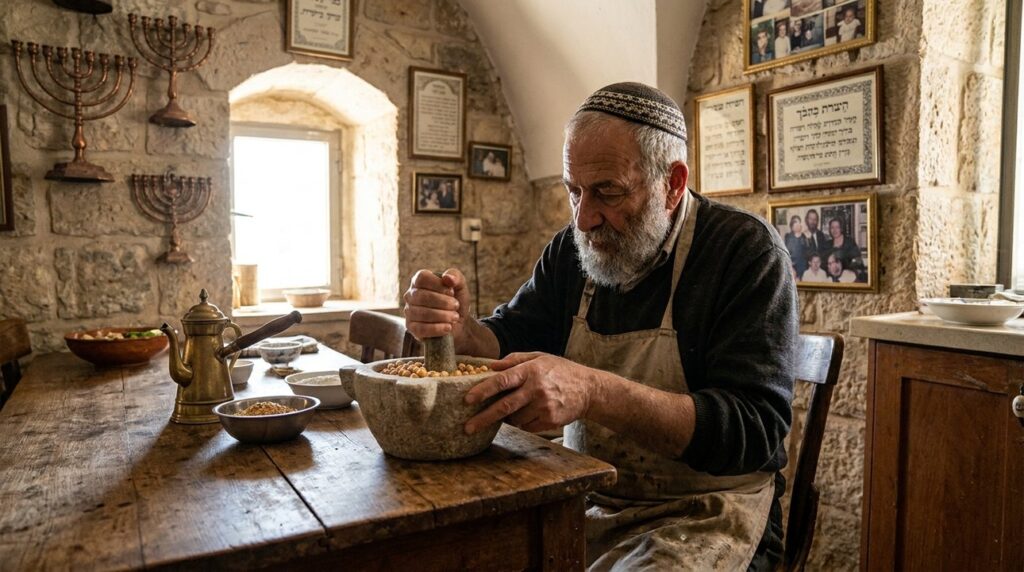
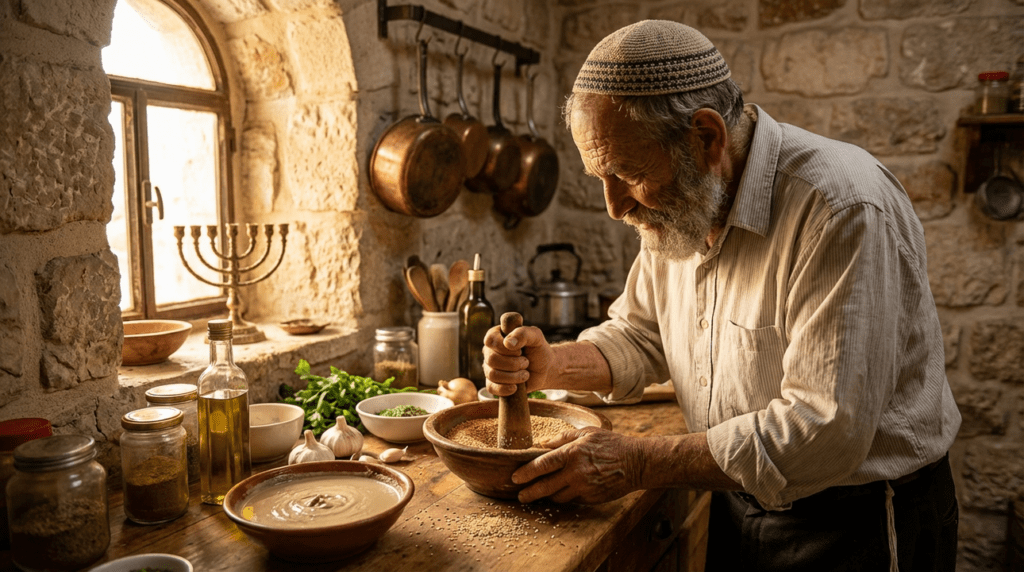
Elderly Jewish man making hummus with mortar and pestle in Jerusalem.

Discovering the Origins of Hummus and Its Cultural Journey

We will also delve into how hummus became the global phenomenon it is today, offering insights into its journey from a traditional dish to an international favorite. Hummus’ rise to global fame began in the late 20th century, with increased interest in Mediterranean diets. It became popular in Western countries due to its health benefits, including high fiber and protein content. The spread of Middle Eastern restaurants and the influence of food bloggers also contributed to its worldwide appeal. The Middle Eastern Roots of Hummus Hummus’ origins can be traced back to the Middle East, where it has been a...
Show more
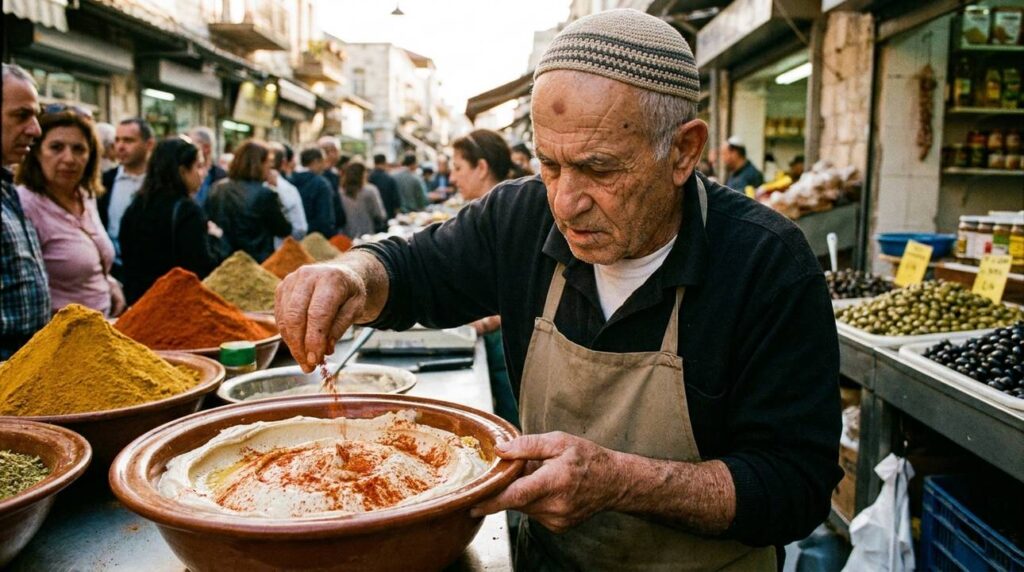
Elderly Israeli man in kippah seasoning hummus at Jerusalem market.

Seasoning Your Hummus: A Flavorful Journey from Israel

Sumac, a reddish-purple spice, has been used for centuries to add a citrusy note to dishes, while paprika, originating from the Americas, became popular in Israel during the 20th century. These spices not only enhance the taste of hummus but also connect us to a rich culinary history. Sumac’s tangy flavor complements the creamy texture of hummus beautifully. By embracing these flavors, we celebrate the vibrant and diverse culture of Israel, bringing a taste of the land into our kitchens. This connection to history enriches our culinary experiences. Our subscription boxes may include 6-8 products, featuring a curated selection of...
Show more
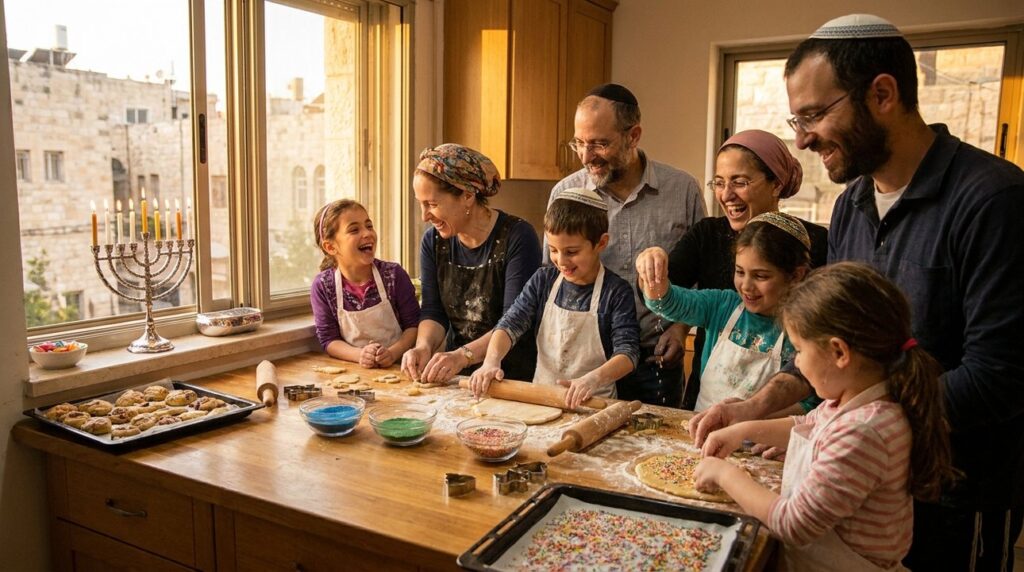
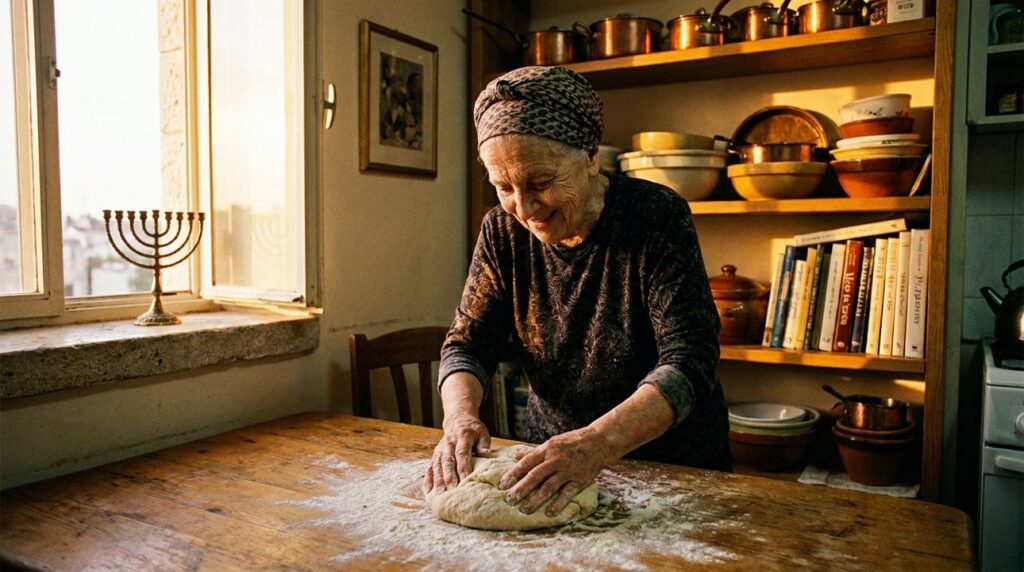
Jewish family in Jerusalem baking cookies for Hanukkah, menorah visible.

Sprinkles and Sugar Cookies: A Perfect Match

Choosing the Right Sprinkles Before diving into the methods, selecting the right type of sprinkles is essential. Edible glitter, nonpareils, and sanding sugar are popular choices for sugar cookies. Each type offers a unique texture and appearance. For a vibrant, colorful look, nonpareils are ideal. If you prefer a subtle sparkle, try sanding sugar. Make sure that the sprinkles complement your cookie’s flavor and theme. This choice is as deliberate as selecting the finest materials for the construction of the Temple, as described in 1 Kings 6:7. 1 Kings 6:7 details the construction of the Temple, emphasizing the care and...
Show more
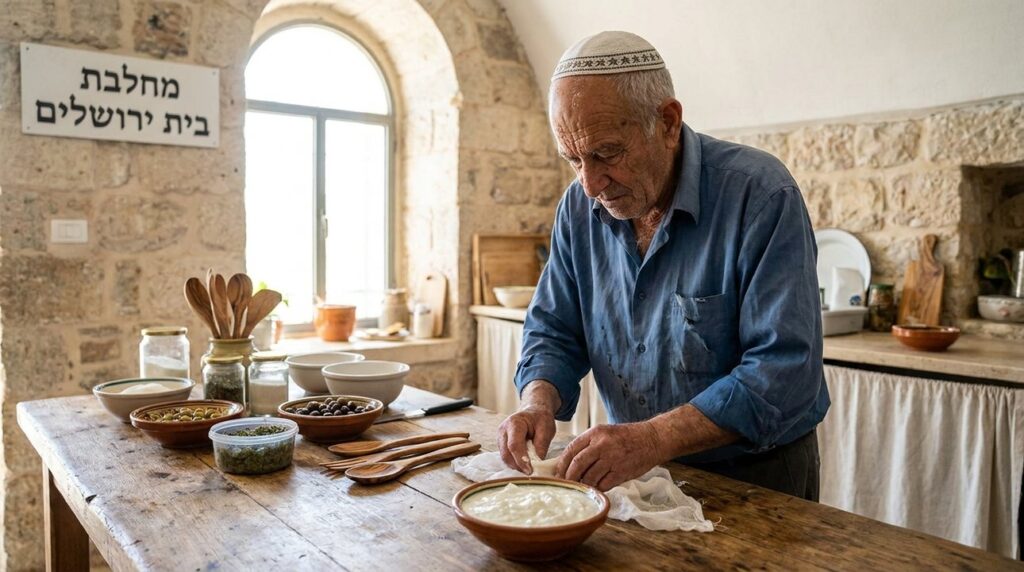
Elderly man making Laban and Labneh in traditional Jewish kitchen.

Understanding Laban and Labneh: A Taste of Israel

Understanding the unique characteristics of laban and labneh provides insight into their cultural significance and culinary uses. Each product contributes to the rich tapestry of Israeli gastronomy, reflecting the country’s diverse heritage and innovative spirit. By exploring these dairy delights, one can appreciate the depth and variety that define Israeli food culture. The Origins and Characteristics of Laban Laban is a traditional fermented milk product known for its tangy flavor. It is a staple in Middle Eastern cuisine, cherished for its refreshing qualities. Made from cow, goat, or sheep’s milk, laban undergoes a process of bacterial fermentation, giving it its...
Show more
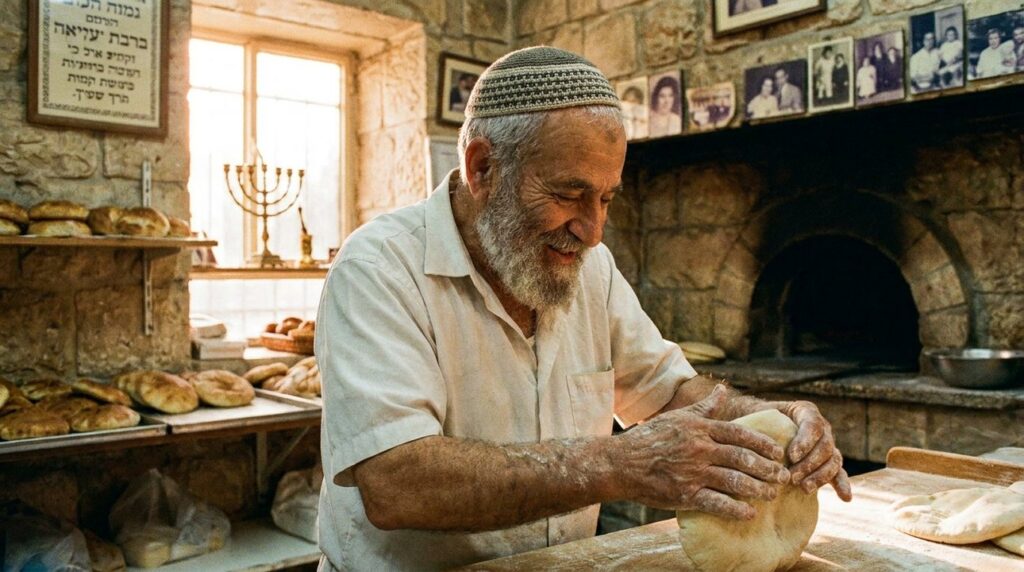
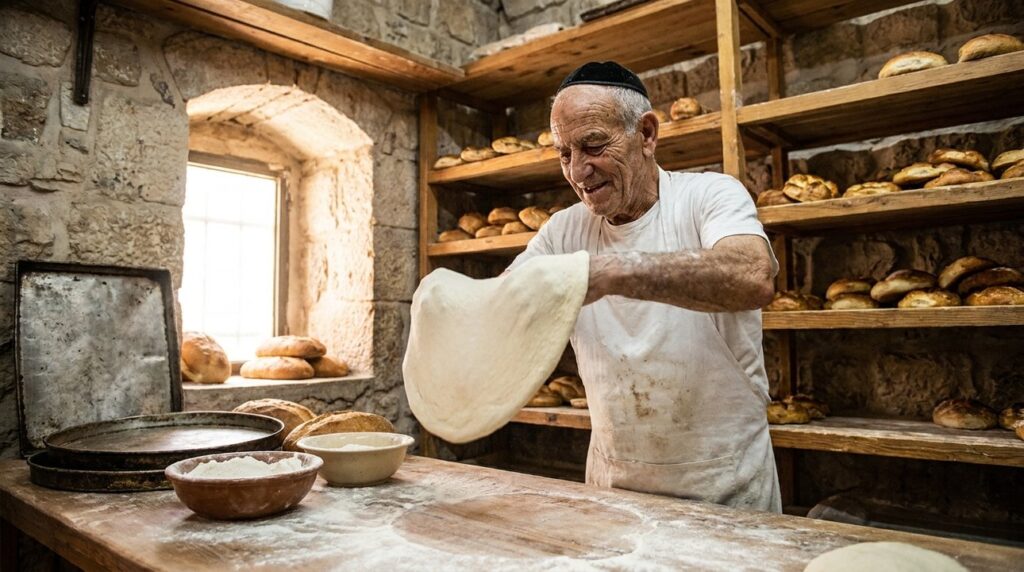
Elderly Jewish baker shaping dough in a traditional Jerusalem bakery.

Exploring Pita Bread: Origins and Comparisons

The Origins of Pita Bread Pita is often associated with Middle Eastern cuisine, but its roots can be traced back to ancient times. Archaeological evidence suggests that flatbreads like pita were made as far back as 14,500 years ago. These early versions were simple mixtures of flour and water, cooked over hot stones or in primitive ovens. The name ‘pita’ itself is believed to come from the Greek ‘pita’, meaning ‘cake’ or ‘pie’. This historical context highlights its long-standing role in human diets, similar to manna in Exodus 16:31. In ancient Egypt, flatbreads were a staple, as seen in tomb...
Show more
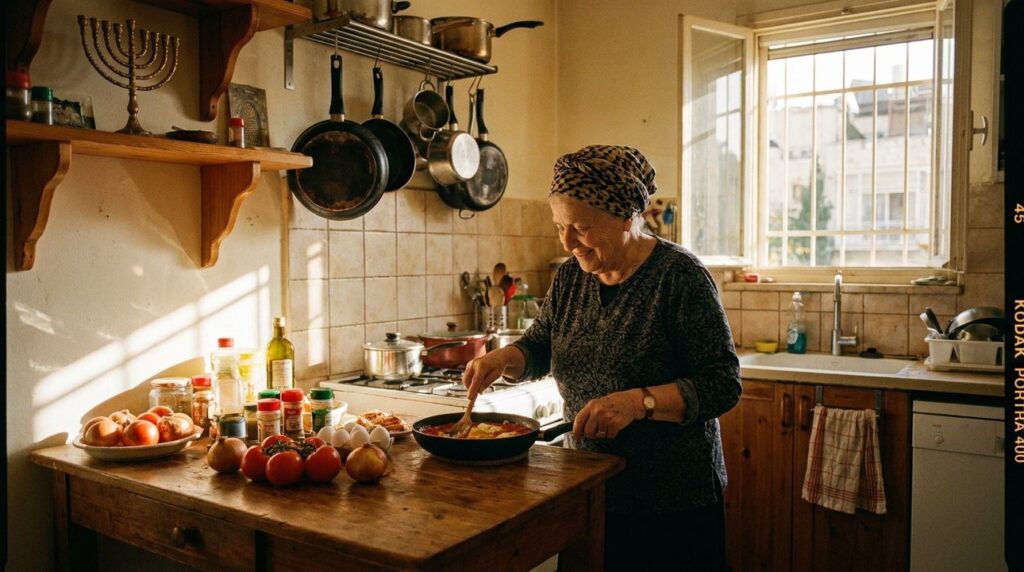
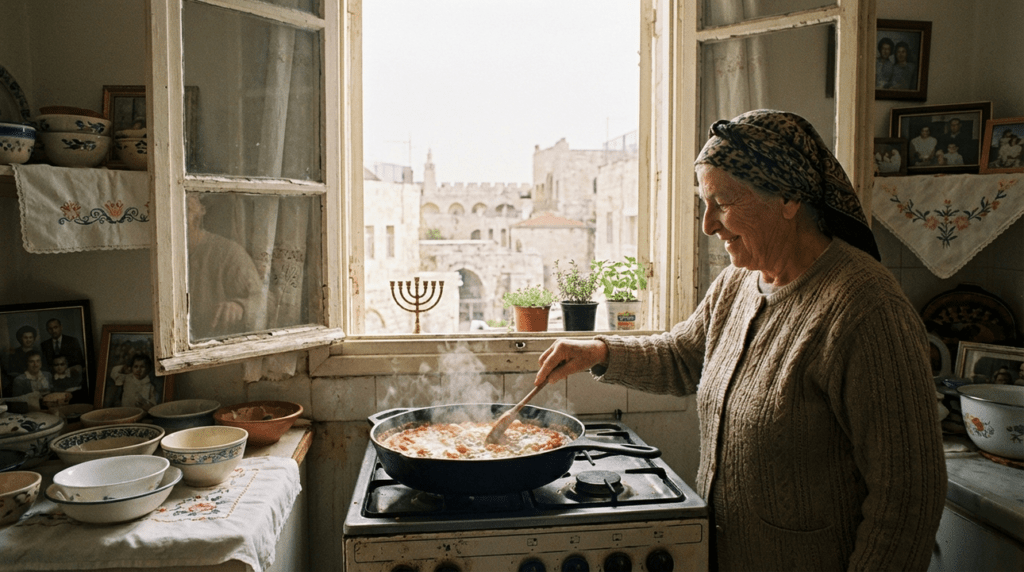
Elderly Jewish woman making Shakshuka in a traditional Israeli kitchen.

Comparing Chilaquiles, Huevos Rancheros, and Shakshuka

Shakshuka, a dish with North African origins, has become a staple in Israeli cuisine, reflecting the diverse cultural influences in the region. Its name is derived from Arabic, meaning ‘a mixture,’ which perfectly describes its blend of tomatoes, spices, and poached eggs. Let’s explore what makes each one unique and how they connect to the rich culinary traditions of their respective regions, offering a taste of history and culture with every bite. In North Africa, this dish is often prepared with ingredients like cumin, paprika, and chili peppers, creating a robust and aromatic sauce. Brought to Israel by Jewish immigrants...
Show more
Elderly Jewish man pouring wine into a silver cup in a rustic kitchen.

Wine with Myrrh: A Taste of Ancient Tradition

The Historical Use of Myrrh in Wine Myrrh, a resin used for centuries, found its way into the art of winemaking, particularly in regions like Israel where it was mixed with wine for its aromatic and preservative qualities. This blend was not merely for preservation but also held ceremonial value, enhancing the wine’s significance in religious and cultural contexts. Myrrh was a valuable commodity, often traded along routes that connected various civilizations. Incorporating myrrh into wine reflected its esteemed status and its role in enhancing the sensory experience of rituals and gatherings. Myrrh’s aromatic properties added depth to the wine,...
Show more
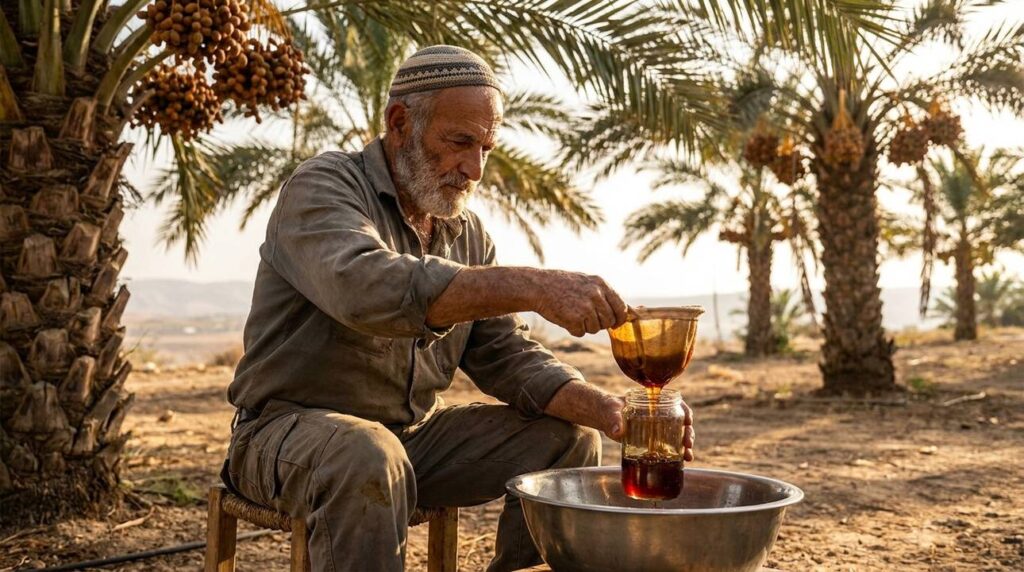
Elderly Jewish man extracting date syrup in a palm orchard.

Understanding Date Syrup Varieties and Their Substitutes

Exploring the differences between date molasses and date syrup reveals how these products can transform a dish. Date molasses is thicker and less sweet, making it ideal for savory applications, while the lighter consistency and sweetness of date syrup make it perfect for desserts. In the Bible, dates are often associated with abundance and prosperity, as seen in Deuteronomy 8:8. Comparing these to other sweeteners, like honey or maple syrup, highlights the diverse culinary possibilities and cultural connections each brings to a recipe, allowing for a deeper appreciation of their roles in cooking. This exploration encourages creativity and innovation in...
Show more
Elderly Jewish woman placing sprinkles on cookie dough in kitchen.

Should You Put Sprinkles on Cookies Before Baking?

Baking has long been a way to bring people together, from ancient times to modern kitchens. The Bible often mentions bread and baked goods shared during significant events, such as the offerings in the Temple (Leviticus 2:4). Today, the simple act of baking cookies and deciding when to add sprinkles continues to connect us to these age-old traditions, reminding us of the joy and community found in shared meals. The Tradition of Sprinkling Sprinkles are not just for decoration. They have become a symbol of celebration and festivity across various cultures. In Jewish traditions, sprinkles are often used to add...
Show more
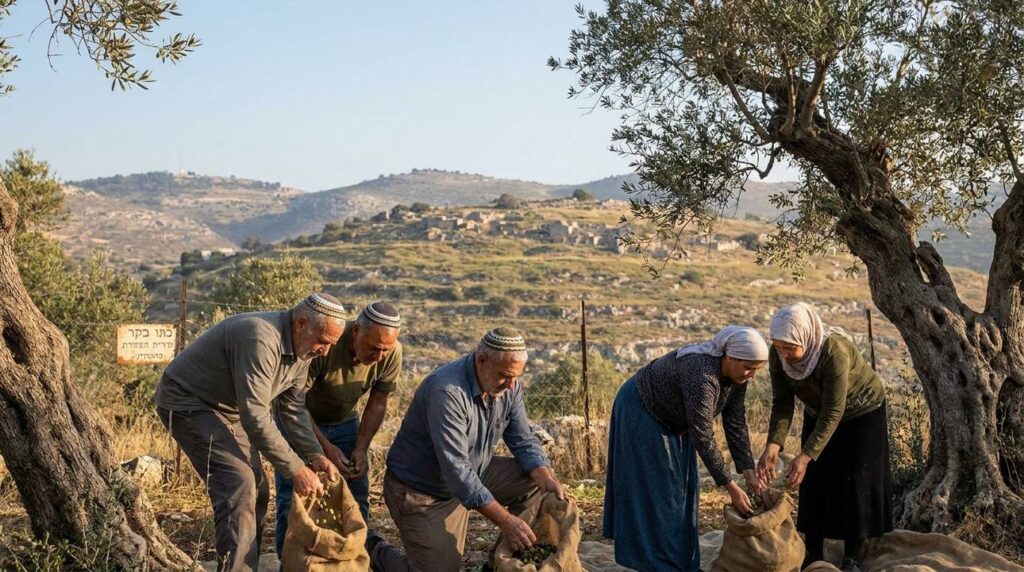
Early morning olive harvest in Golan Heights with locals in traditional attire.

Discover the Hidden Charms of the Golan Heights

The history of the Golan Heights is deeply intertwined with biblical narratives, such as its mention in Deuteronomy as a city of refuge. This connection to ancient texts adds a layer of spiritual depth to its already rich tapestry. Moreover, the area’s natural resources and strategic location have made it a focal point throughout history, from ancient times to modern conflicts. It continues to be a place where the past and present converge, offering visitors a chance to engage with its multifaceted heritage. A Glimpse into the Golan Heights Located in northern Israel, the Golan Heights are renowned for their...
Show more
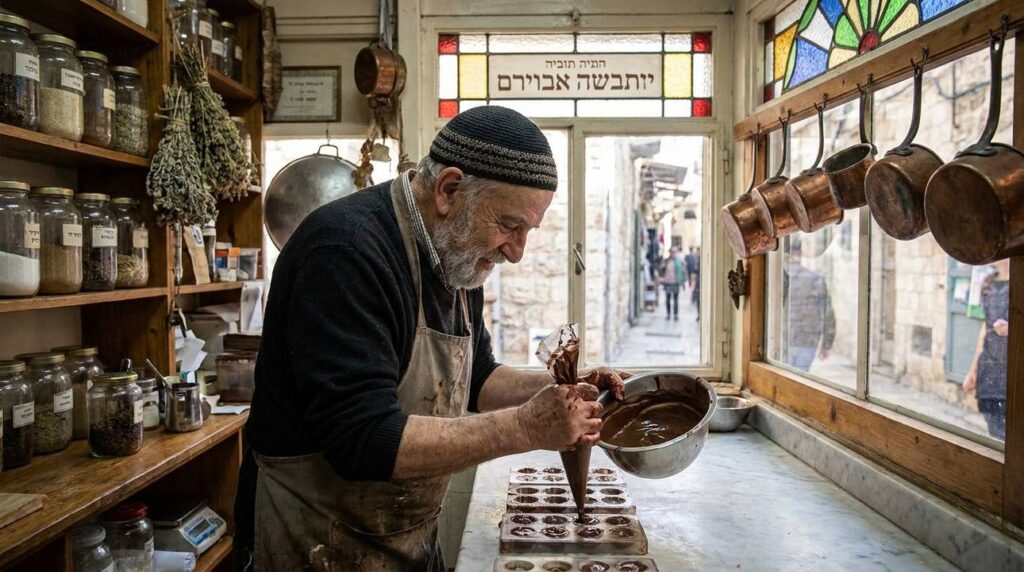
Elderly Jewish chocolatier making chocolates in a traditional Jerusalem shop.

The Sweet Journey of Israeli Chocolate

The Origins of Israeli Chocolate Israel’s journey with chocolate began in the early years of the state, blending European traditions with local flavors. The first chocolate factories were established by immigrants who brought their expertise from Europe. Elite, a major brand, introduced Israelis to quality chocolate, making it a cherished treat. Today, it stands as a symbol of resilience and innovation in culinary traditions. This mirrors the spirit of innovation and adaptation that has characterized Israel’s development since its founding in 1948. The evolution started with well-loved products like chocolate bars and evolved to include celebrated treats like the iconic...
Show more
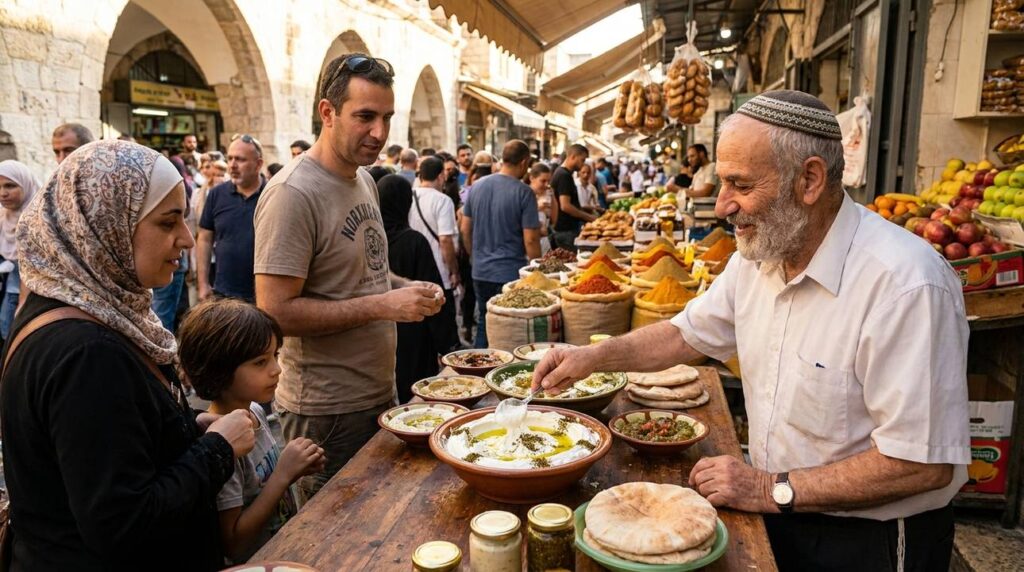
Elderly Jewish vendor serves labneh in a bustling Israeli market.

Understanding Labneh and Its Creamy Competitors

The Levant region, known for its rich culinary heritage, has been home to labneh for generations. This cheese’s enduring popularity is akin to the ancient grains that sustained communities, as seen in the story of Ruth, who gleaned barley in the fields of Boaz (Ruth 2:14). Labneh’s role in modern cuisine reflects a deep connection to history and tradition, much like the enduring significance of shared meals in fostering community and cultural identity. Labneh’s tangy flavor is achieved through a process that involves straining yogurt, a method that has been used for generations. This technique is rooted in traditional cheese-making...
Show more
Elderly Jewish woman kneading challah dough in a traditional kitchen.

Understanding Challah Bread: Meaning and Origins

The tradition of challah is not just about the bread itself but also about the values it represents. It is a reminder of the hospitality shown by Abraham when he welcomed strangers with bread and other foods. Challah’s braided form is said to symbolize the intertwining of tradition and community, much like the gatherings described in the Bible. As you explore its history, you’ll find that challah is more than just a food item; it’s a bridge connecting past and present. The Origin of Challah Bread Known in Hebrew as ‘ḥallah’, this bread has roots in ancient Jewish practices. The...
Show more
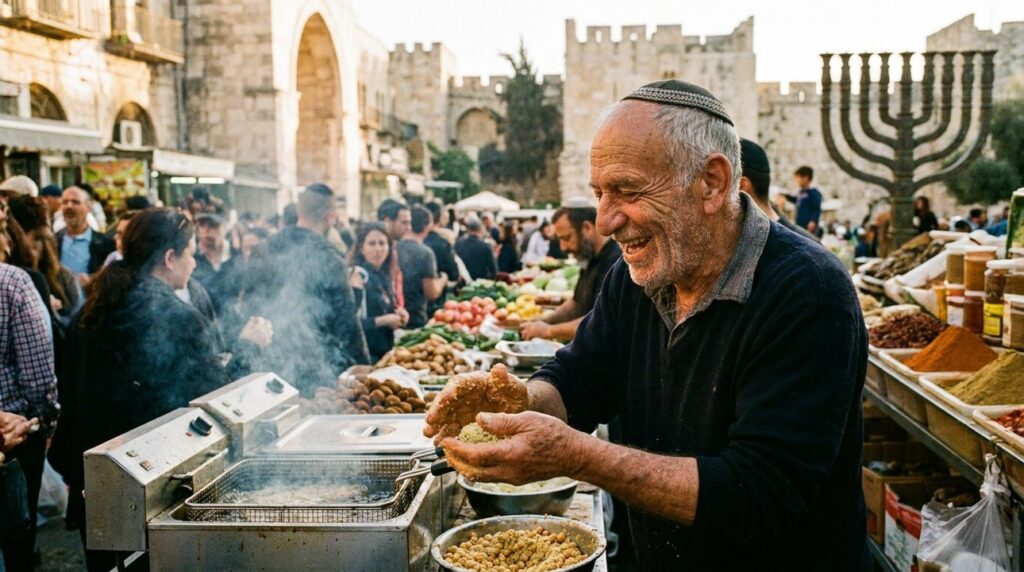
Elderly Jewish man making falafel at Jerusalem market, menorah visible.

Exploring Falafel and Hush Puppies: Taste, Texture, and Tradition

What is Falafel? Falafel is a Middle Eastern delicacy made from ground chickpeas or fava beans mixed with herbs and spices. This tasty mixture is formed into balls or patties and deep-fried to achieve a crunchy exterior. Commonly served in pita bread, falafel is accompanied by salads, pickled vegetables, and tahini or hummus. Its origin remains a topic of debate among food historians, but its popularity is undeniable. Some suggest it dates back to ancient Egypt, while others argue for its Levantine roots. Falafel is not just food; it represents cultural heritage and culinary art, especially within Israeli and Middle...
Show more
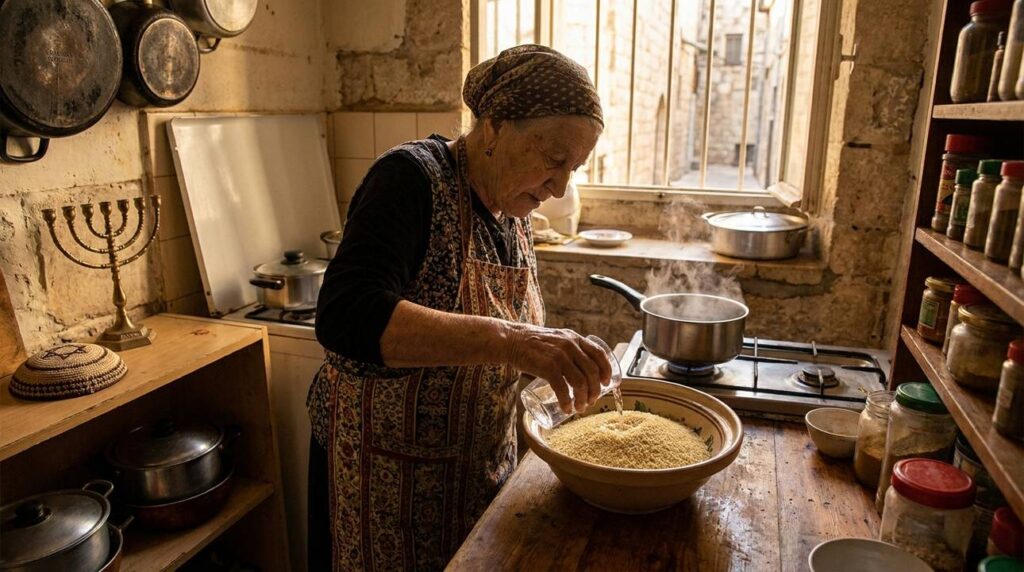
Elderly Jewish woman measuring couscous in traditional Jerusalem kitchen.

Mastering the Perfect Couscous to Water Ratio

Understanding the Basics: What is Couscous? Couscous is a traditional North African dish made from semolina wheat. This grain has been a staple since the time of the ancient Israelites. It resembles tiny pasta and is often served as a side or salad base, similar to the grains mentioned in Genesis 41:49, stored by Joseph during the years of plenty. Beyond taste and texture, the secret to great couscous lies in mastering the water ratio for cooking, much like the careful preparation of offerings described in Leviticus 2:1. This balance ensures the couscous is perfectly cooked and flavorful. The importance...
Show more
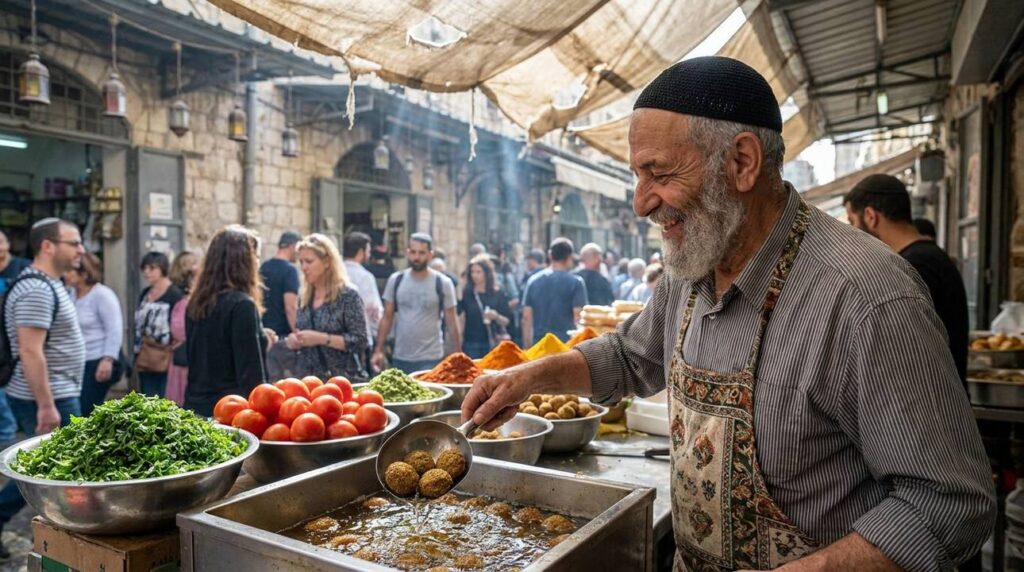
Elderly Jewish man making falafel in a Jerusalem market stall.

Exploring the Perfect Pairings for Falafel

The history of falafel is as rich as its flavor, with its earliest forms possibly dating back to the time of the Pharaohs. As it spread across the Middle East, each culture added its own unique twist, from the spices used to the methods of preparation. Today, falafel is not just a dish but a symbol of cultural exchange, representing the blending of traditions and tastes. Its popularity continues to grow, with new variations emerging in different parts of the world, each adding to the tapestry of its storied past. The Classic Pairing: Hummus Hummus is often the go-to partner...
Show more
Israeli family of four making hummus in a modern kitchen.

Explore the Best Authentic Hummus Recipe from Israel

The Book of Ruth also mentions the harvest of grains and legumes, illustrating the agricultural practices that have shaped the region’s culinary heritage. Hummus, therefore, is not just a dish; it’s a bridge to the past, connecting us to ancient traditions and flavors. By savoring this dish, you partake in a timeless culinary tradition that has been cherished and shared across generations, reflecting the resilience and continuity of Israeli culture. The Origins of Hummus: A Journey to Israel Hummus is more than just a dish; it’s a symbol of cultural unity across the Middle East. Its primary components—chickpeas, tahini, lemon,...
Show more
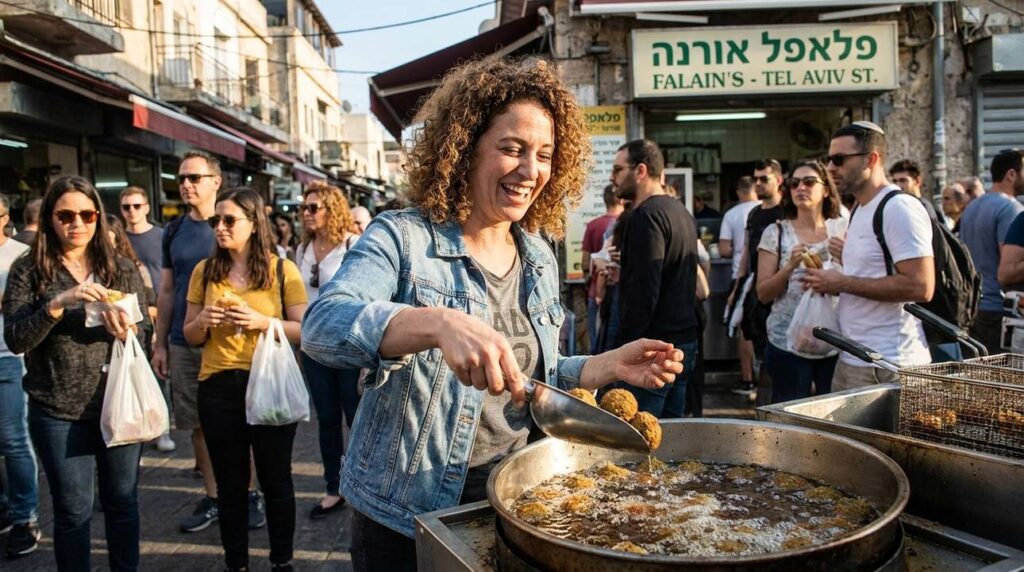
Israeli woman in her 30s preparing falafel at Tel Aviv market.

Tasting Traditions: Falafel and Hush Puppies

The charm of these dishes lies in their ability to satisfy both the palate and the soul. Falafel’s use of spices like cumin and coriander adds depth to its flavor, making it a beloved choice in Middle Eastern cuisine. Conversely, hush puppies offer a comforting sweetness that pairs well with savory dishes. Both have become symbols of their respective cultures, representing the culinary creativity and heritage of their regions. Whether savored as a snack or a side dish, they continue to bring joy to those who enjoy them. The Origins of Falafel Falafel, a staple in Middle Eastern cuisine, is...
Show more
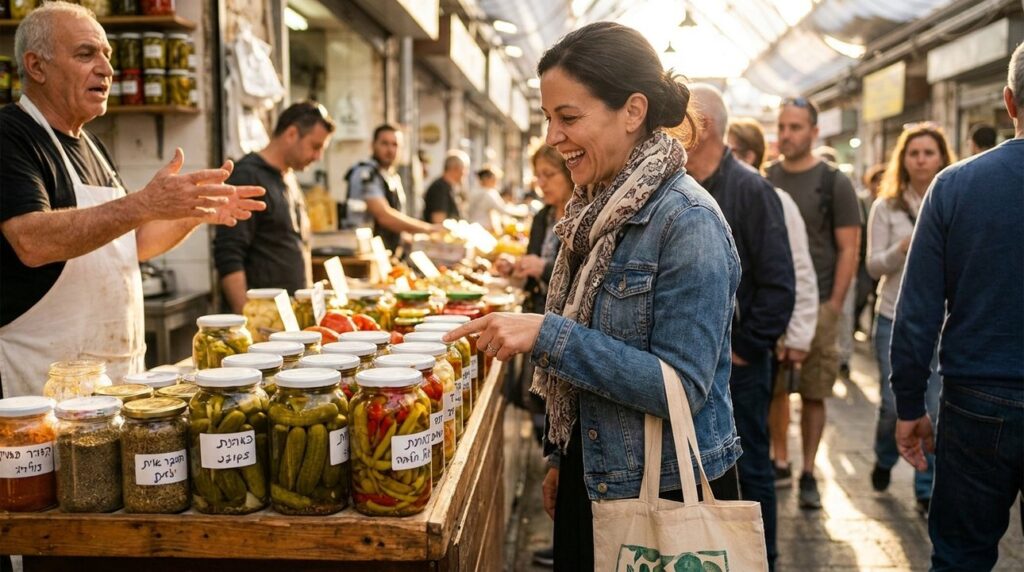
Israeli woman in 40s browses pickle stall at Mahane Yehuda.

Understanding Pickles and Israeli Pickling Traditions

What Is Pickles? Pickles are vegetables or fruits preserved to slow spoilage and create tangy flavors. Preservation uses salt brine or vinegar, and sometimes natural lactic acid fermentation that develops probiotics and acidity. Encyclopedia. com defines a pickle as any food preserved in this way, noting both fermented and vinegar-brined techniques. Typical examples include cucumber pickles and preserved lemons, which are cataloged in culinary references and museum food histories. What makes a pickle different from fresh produce is the chemical change: fermentation produces lactic acid, while vinegar pickling adds acetic acid. These acids lower pH and prevent harmful bacteria from...
Show more
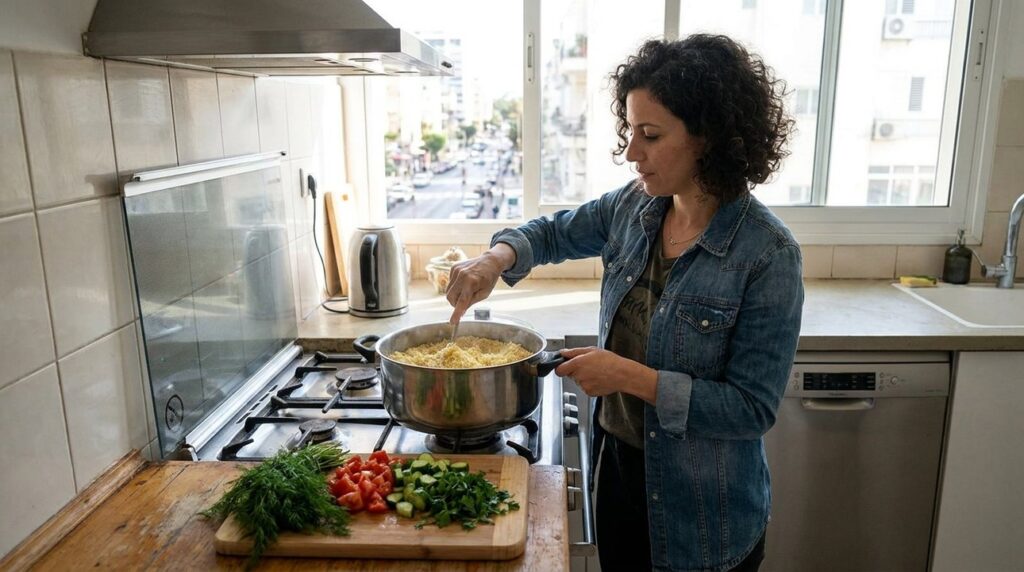
In a Tel Aviv kitchen, a woman cooks Israeli couscous.

Discover Israeli Couscous in Your Kitchen

What Is Israeli Couscous? Israeli couscous, commonly called ptitim in Hebrew, is a toasted wheat pasta shaped into small round granules and originally created as a pantry staple in Israel. The product was developed and popularized by the Osem company in the early 1950s, with 1953 often cited as the year of its invention in response to changing food supplies. Unlike North African couscous, which is made by rolling semolina into grain-sized pellets, ptitim are larger, uniform pearls formed through an extrusion or rolling process. This product is sold as ‘pearl couscous’ in many U. S. stores and is widely...
Show more
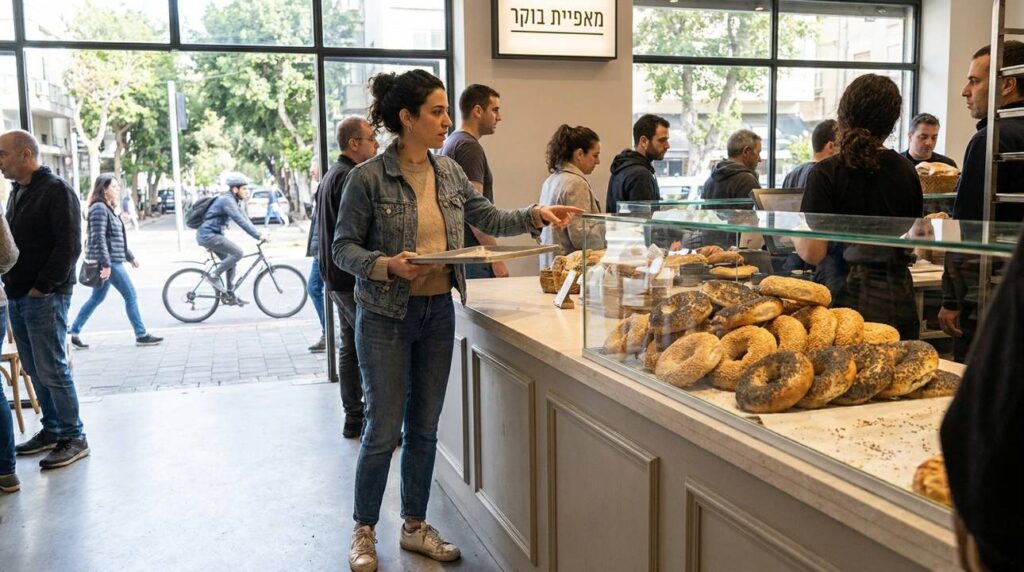
Israeli woman at bakery counter choosing sesame and poppy bagels.

A Friendly Guide to the Bagel and Its Story

What Is a Bagel? A bagel is a small, round bread with a hole in the center. Its characteristic step is a brief boil before baking; that step firms the outside and helps produce a dense crumb. Short, clear descriptions of this method appear in general food references such as My Jewish Learning and Encyclopedia.com. Typical dough ingredients are wheat flour, water, yeast, and salt. A small amount of malt or sugar is sometimes added to help fermentation and to give a touch of color to the crust. These ingredients and the method combine to make the chew that people...
Show more
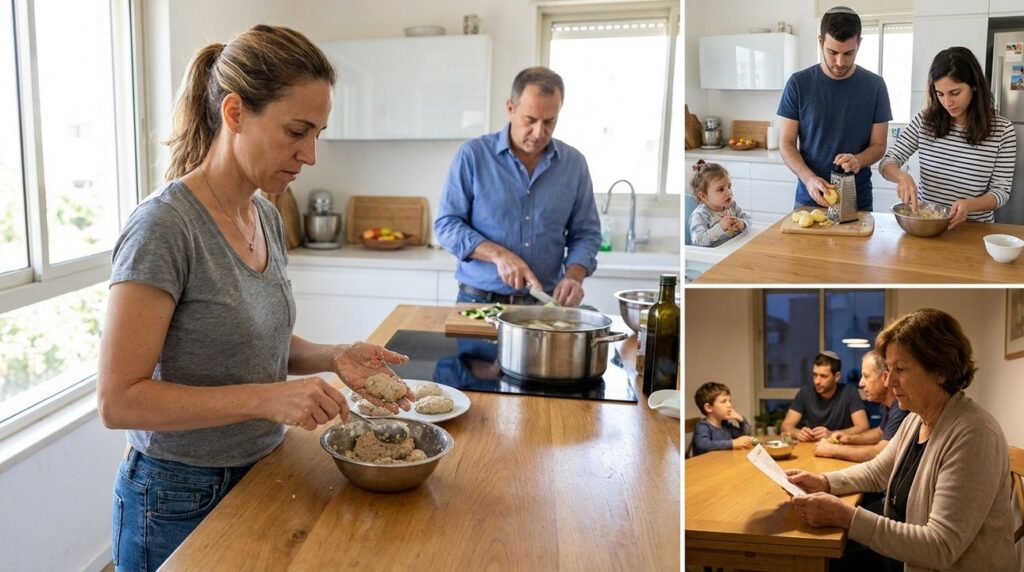
Israeli woman in kitchen shapes gefilte fish patties with spoon.

Gefilte Fish Explained for Home Cooks

What Is Gefilte Fish? Gefilte fish is a traditional Ashkenazi Jewish dish made from ground freshwater fish combined with eggs and a starch binder such as matzo meal or breadcrumbs. The mixture is seasoned, shaped into loaves or small patties, and cooked gently in a clear fish stock. After cooling, it is served chilled, often with prepared horseradish (chrein). Texture varies from smooth to slightly coarse depending on how finely the fish is ground and how the mixture is mixed. Common flavorings include grated onion, salt, pepper, and sometimes a small amount of sugar. Some families prefer a sweeter balance...
Show more
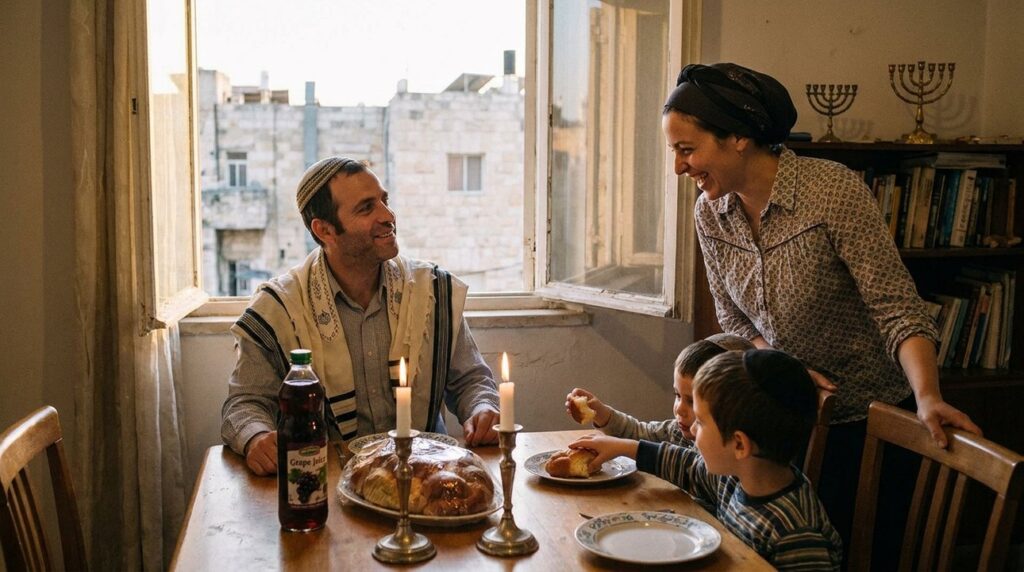
Jewish family at Shabbat table with candles, challah, grape juice

What Is Shabbat Dinner

What Is Shabbat Dinner? Shabbat dinner is the meal held on Friday evening to welcome the Sabbath, which begins at sunset and lasts until nightfall on Saturday. Families often set the table in advance, light candles shortly before sunset, say brief prayers, and share a planned meal. The basic table actions are similar across many communities. Sources like the Jewish Virtual Library and My Jewish Learning describe these practices as ways to mark a weekly pause from work and to create time for family and reflection. If you are attending, the host will usually let you know the correct candle-lighting...
Show more
Israeli woman in casual clothes beside cholent pot with bread.

Cholent: A Warm Sabbath Stew from Jewish Kitchens

What Is Cholent? Cholent is prepared before the Sabbath and kept warm so it can be eaten on the Sabbath midday meal without new cooking. It often combines slow-simmered beef or chicken, barley or rice, and beans. The name ‘cholent’ is most common in Ashkenazi and Yiddish-influenced contexts. Related names such as hamin and dafina are used in Sephardic and North African communities. Many cooks today use an oven or a slow cooker to keep a low, steady heat for several hours. In short: Cholent is a Sabbath stew cooked slowly so it can be eaten warm on Shabbat without...
Show more
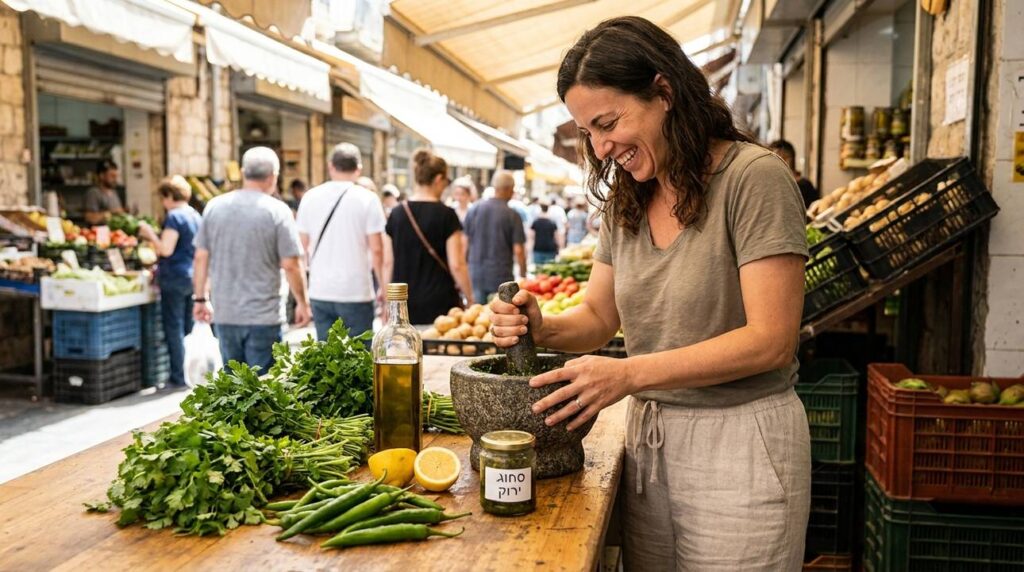
Secular Israeli woman in market prepares Yemenite zhug with herbs.

Discover Zhug, the Yemenite Green Hot Sauce

What Is Zhug? Zhug (also spelled skhug) is a spicy green or red condiment from Yemen. It grew from household cooking practices and later became familiar in wider food scenes. The sauce is known for its bright herb flavor and noticeable heat. Green zhug uses fresh cilantro or parsley with green peppers, garlic, and warm spices like cumin. Red zhug uses red peppers and may include roasted or dried peppers for a different taste. Families often have their own recipes, so you will find many small variations. In everyday use, zhug serves as a table condiment. People spoon a little...
Show more
Israeli woman in sweater and jeans checks kugel in dish.

Kugel Explained for Home Cooks and Gift Givers

What Is Kugel? Kugel appears in many Jewish homes as a side dish or a comforting main. The two broad types are noodle kugel (lokshen kugel) and potato kugel. Each relies on a different starch and has a distinct texture. Noodle kugel combines cooked egg noodles with eggs and often dairy. Potato kugel uses grated potatoes mixed with egg and fat. Both are baked until the center is set and the top develops color. People prepare kugel in sweet or savory styles. Which style you choose depends on family preference and the meal. A typical noodle kugel uses wide egg...
Show more
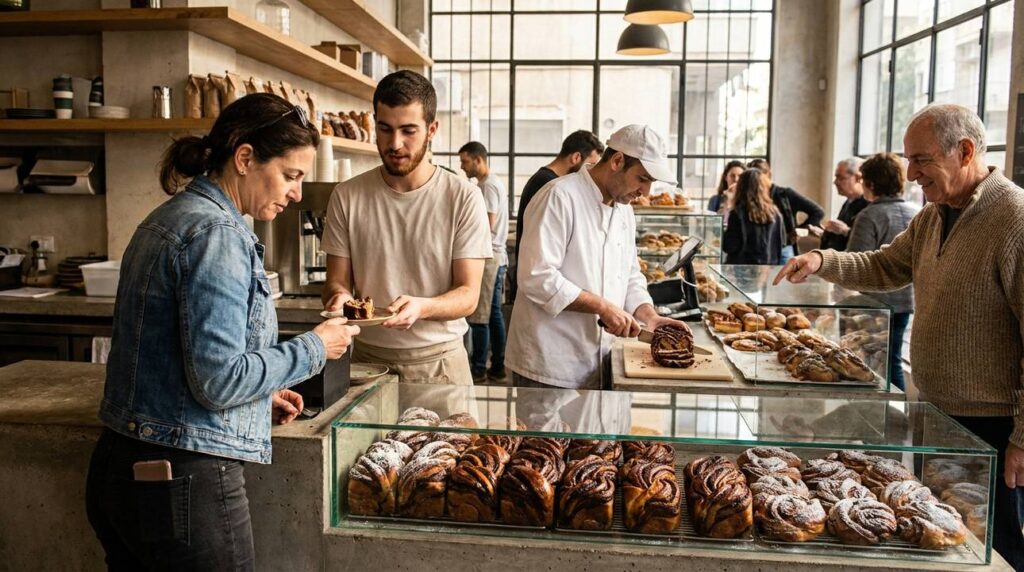
Israeli woman inspects babka as a barista offers a sample.

Understanding babka, the sweet layered Jewish bread

What Is Babka? Babka is a rolled and often twisted loaf made from enriched yeast dough. The dough is spread with a sweet filling, rolled up, and baked to produce swirls of dough and filling. Because the dough contains eggs and butter, the crumb is tender. The swirled look is the pastry’s signature. People enjoy babka for breakfast, as a snack, or as a simple dessert. The dough for babka is enriched with eggs, butter, and sugar, which gives it a soft, slightly rich crumb. In bakeries and home kitchens, loaf size varies by recipe and pan, but a single...
Show more
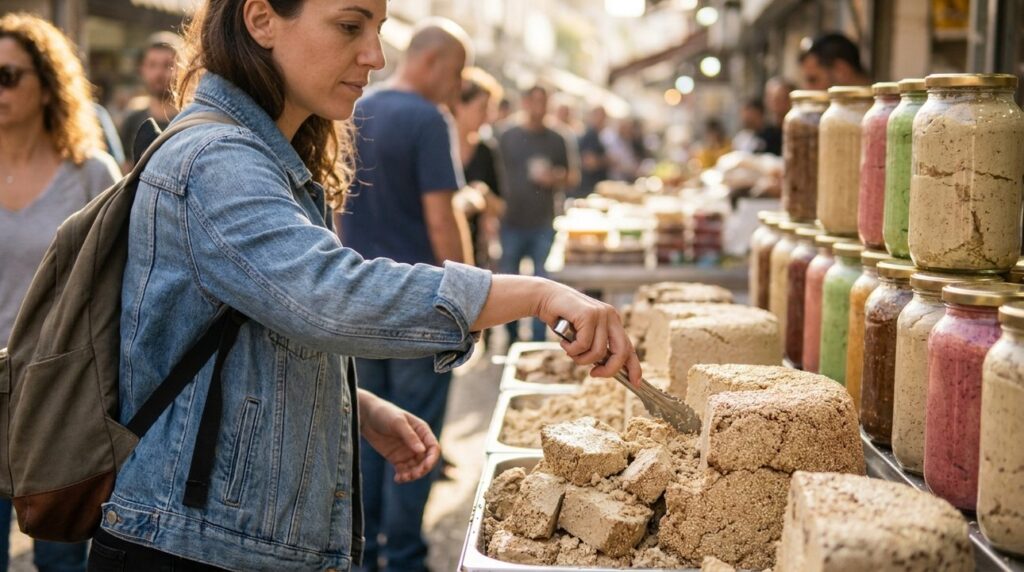
Israeli woman in her thirties selecting halva at Carmel Market.

Discover Halva: Sesame Confections from Israel

What Is Halva Made of? The simplest answer is that halva is made from tahini (sesame paste) and a cooked sugar or honey syrup that is worked into the paste until it crystallizes into a crumbly, fibrous texture. Encyclopedia. com lists tahini and sugar as the primary ingredients for the familiar eastern Mediterranean style, while other regions use different starches or nut pastes. A typical Israeli commercial halva will list sesame, sugar, sunflower oil or sesame oil, and added flavors such as vanilla or cocoa on the ingredient label. In many household recipes the proportion of tahini to syrup determines...
Show more
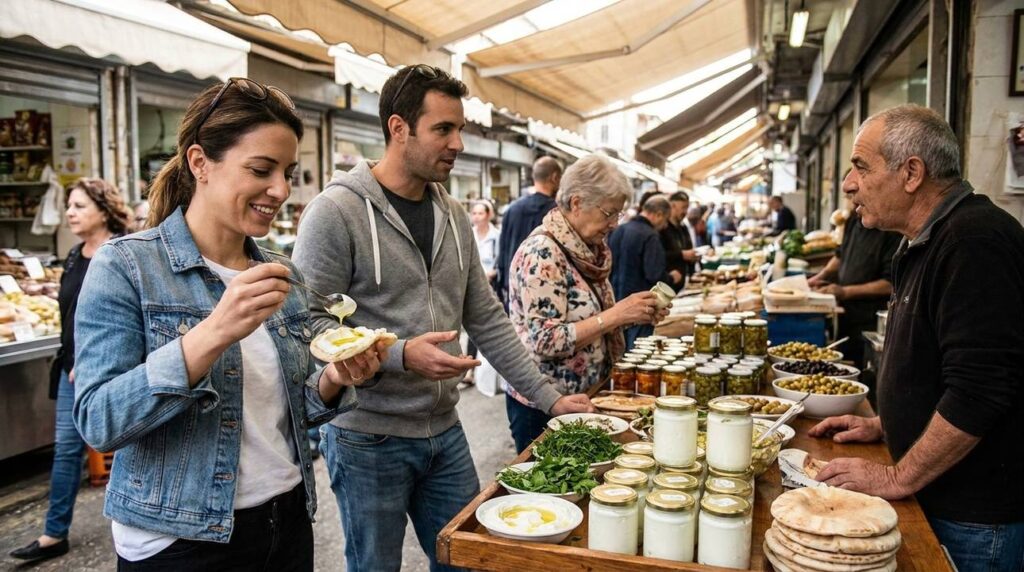
Tel Aviv stall labneh jars, herbs, olives, pita; people sampling.

Discover Labneh: Israel’s Creamy Strained Yogurt

What Is Labneh? Strained yogurt becomes a soft, spreadable cheese when water (whey) is removed; this product is typically made from plain, often whole-milk, yogurt left to drain in a cloth-lined sieve until thickened. That draining concentrates the yogurt’s protein and tang, producing a texture akin to soft cream cheese but with a yogurt-like flavor. It serves as a staple in many Israeli homes and in Levantine cuisine, commonly presented with olive oil and a sprinkle of za’atar or fresh herbs. The word ‘labneh’ originates from Arabic and is used across the Middle East and in Israel to describe this...
Show more
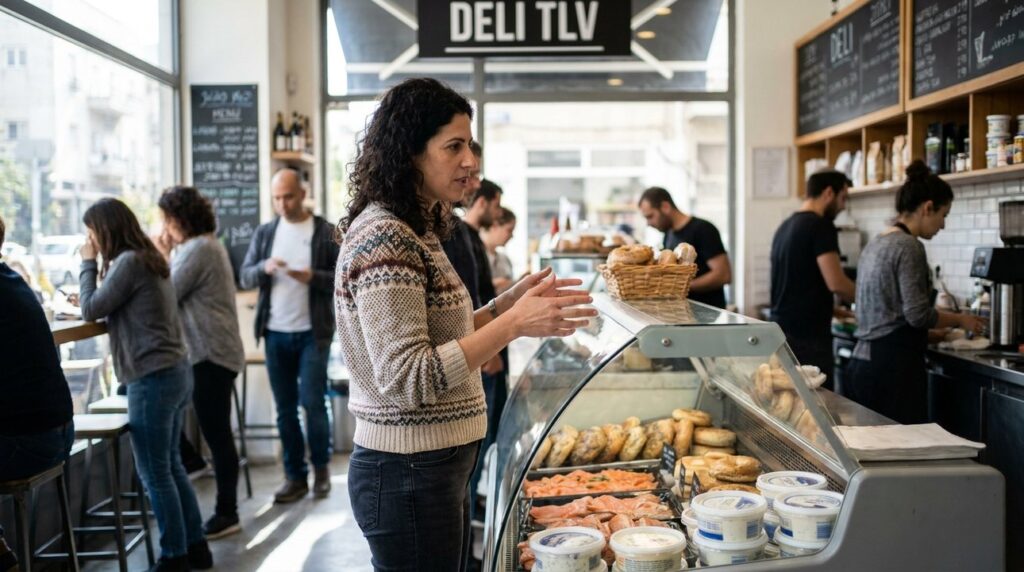
Woman in jeans explains lox at deli counter with bagels.

What Is Lox and How Is It Used?

What Is Lox? Lox is salmon cured with salt and sometimes sugar. It may be cold-smoked after curing or simply left as a brined product. The result is a silky, salty fish that is usually sliced thin and served cold. In everyday American usage, lox often refers to the thinly sliced cured salmon sold at delis and bagel shops. The form and flavor vary by recipe and producer. Historically, home curing was common among immigrant communities and later commercial producers made cured salmon widely available in urban delis. How Is Lox Made? Making lox begins with a cure of salt...
Show more
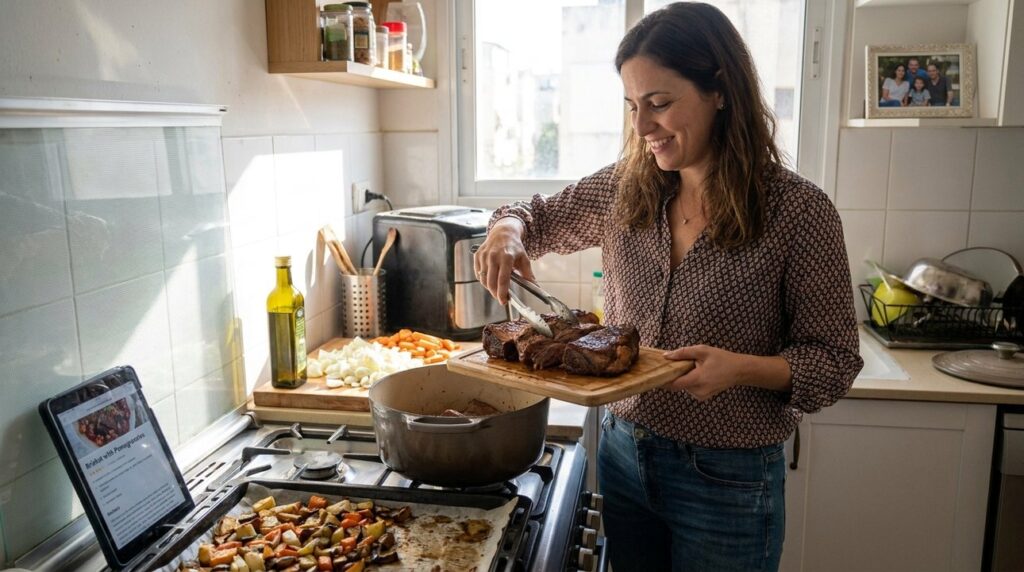
Secular Israeli woman in her 30s prepares brisket at counter.

What Brisket Means in Jewish Cooking

What Is Brisket? Brisket is the beef cut taken from the breast or lower chest of cattle; meat science classes and the USDA list it under primal cuts. Brisket contains a high proportion of collagen and connective tissue which requires long cooking at low temperature to become tender. Because of that structure, brisket is commonly cooked by methods such as braising, smoking, or slow roasting for many hours. This is a practical explanation you can test at home with a slow cooker set for 8 to 12 hours or an oven set at 275-325°F. In culinary terms, brisket is usually...
Show more
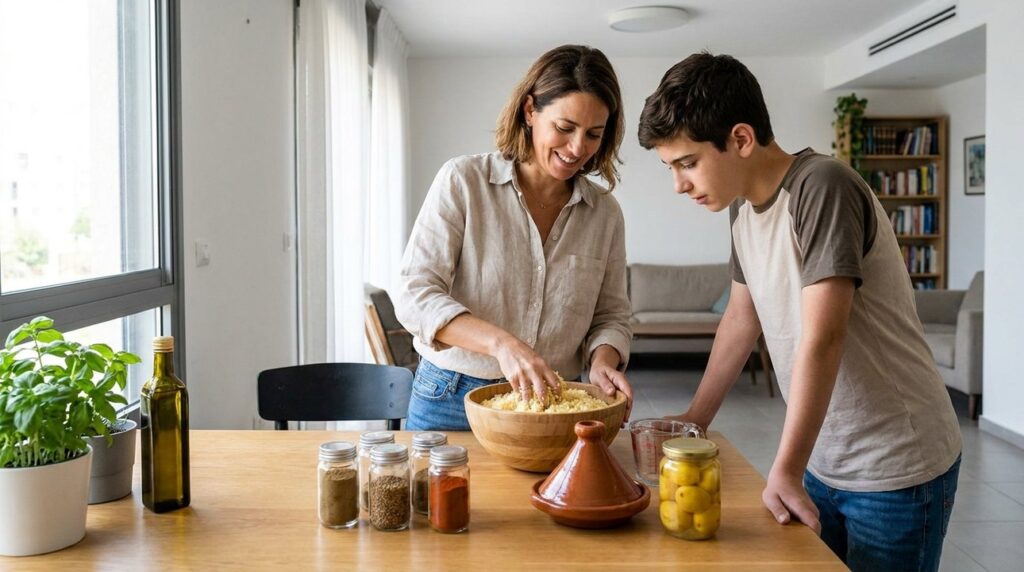
Israeli woman demonstrates couscous to grandson with spices on counter.

Couscous Explained: From North Africa to Israeli Kitchens

What Is Couscous? Couscous is a staple food made from durum wheat semolina in North Africa and as a shaped pasta in Israel. Traditional couscous consists of tiny granules of semolina that are moistened and rolled by hand or machine, then steamed until fluffy. Israeli couscous, often called ptitim, is a manufactured toasted pasta shaped into small pearls and introduced in Israel in the 1950s by the Osem company. Essentially, couscous can refer to either rolled semolina grains or a toasted pasta pearl depending on region and production method, with ptitim being the Israeli manufactured version developed in the 1950s....
Show more
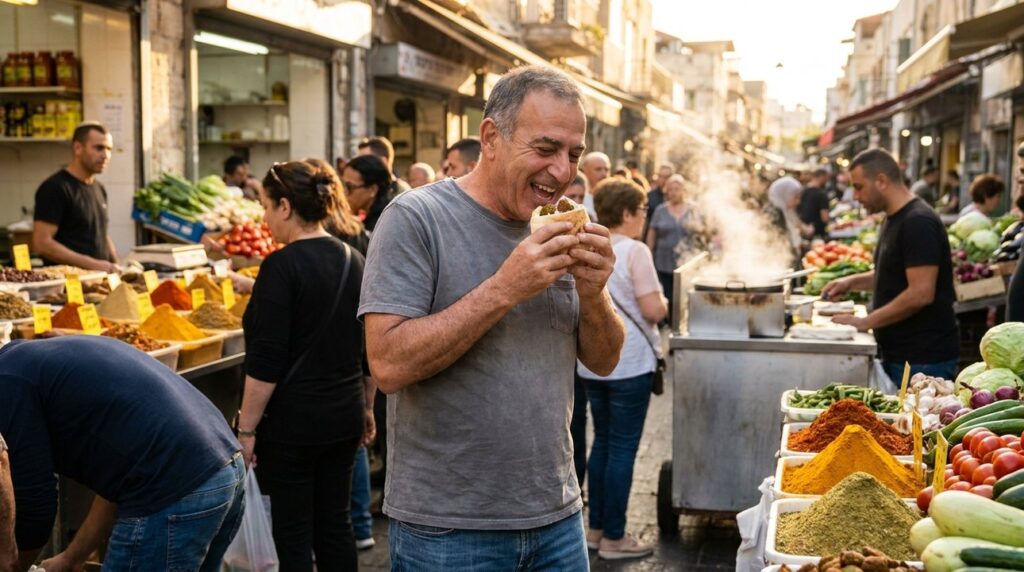
Israeli man in his 50s eating falafel at a busy market.

Exploring Falafel and Hush Puppies

They are deeply rooted in Southern cuisine and are said to have been created during the Civil War era. Some stories suggest they were used to quiet barking dogs, hence the name. In this article, we’ll take a closer look at these two popular foods, exploring their histories and what makes each one a favorite for many. Join us as we delve into the rich tapestry of flavor that these snacks bring to the table, from the bustling streets of Cairo to the cozy kitchens of the American South. The Civil War era was a time of great hardship, and...
Show more
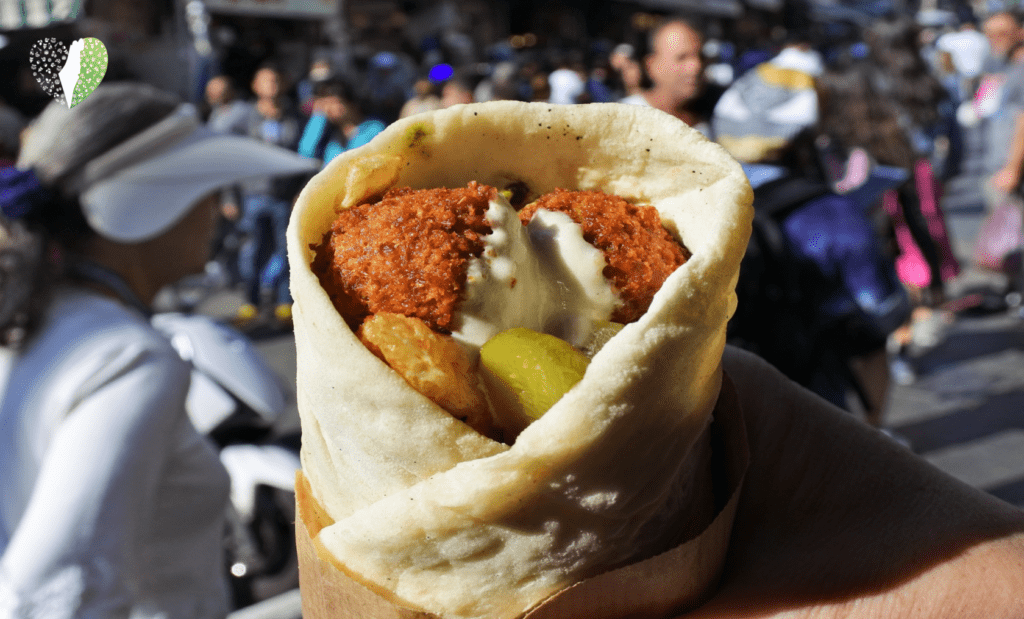
Freshly baked pita bread on a wooden table

What Goes Inside a Pita? A Journey Through Israel’s Regional Food Traditions

One Bread. Countless Traditions. Ask ten Israelis what belongs inside the perfect pita and you’ll probably hear ten different answers. Some will tell you that tahini is the ingredient that brings everything together. Others insist that falafel should always be made fresh and served immediately. Some families pile their pita high with chopped salads, herbs, and pickles, while others prefer just a handful of carefully chosen ingredients that allow each flavor to shine. Every family has its own version – and every version is right. That’s because Israeli cuisine has never been about following one universal recipe. Instead, it reflects...
Show more
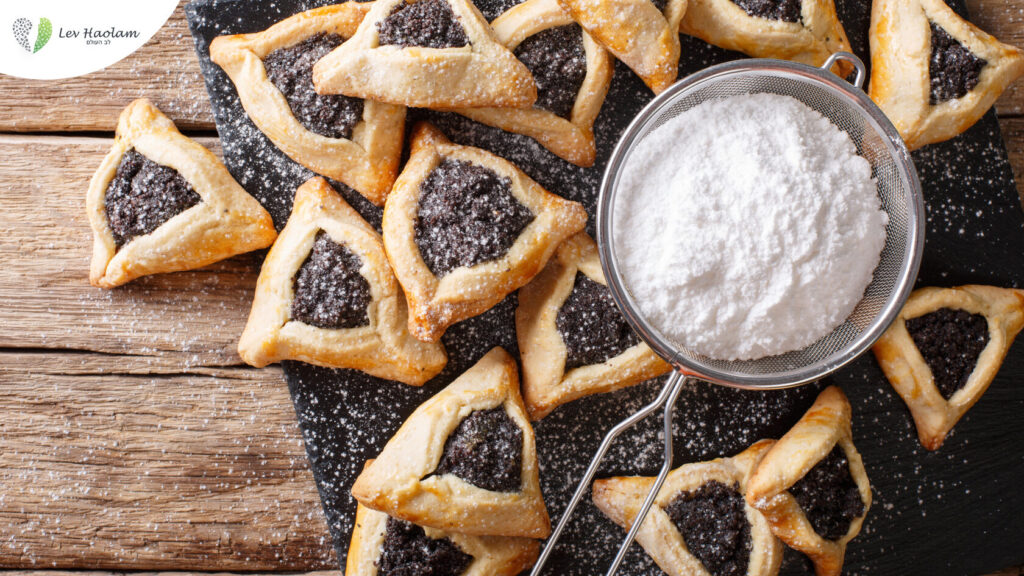
A plate of Oznei Haman cookies with poppy seeds

Do you like cookies? Then you’ve going to love Oznei Haman!

Celebrate the Purim festival with delicious Oznei Haman cookies! Oznei Haman, Hamentaschen. Whatever name you use, you need to make these famous cookies inspired by the events of the Purim story! During the rule of King Achashverosh of the Persian Empire, a plot was hatched by his evil advisor, Haman, to destroy the Jews. A series of events occurred in which the future Queen would turn out to be Esther, a Jewish girl, who along with her cousin, Mordechai, the leader of the Jews, managed to foil Haman’s wicked plans. Purim is celebrated by Jewish people all around the world....
Show more
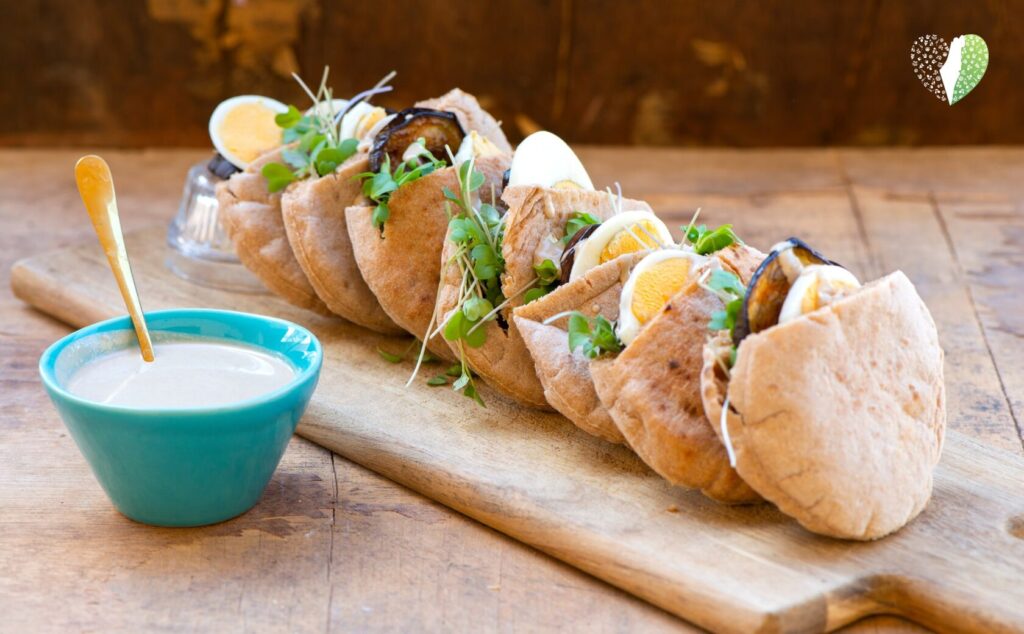
Sabich sandwich with egg and vegetables

There’s a new player on the Israeli food scene, Sabich!

With its origins going back hundreds of years to Iraqi Jewry, Sabich has been transformed from a traditional Shabbat morning breakfast to an Israeli street food snack that rivals falafel! From the Jewish homes of Baghdad to the Streets of Israel. The ingredients of Sabich slow-cooked hard-boiled eggs, and deep-fried aubergine would make up the traditional Shabbat morning breakfast for the Jewish communities of Iraq. As those who observe Shabbat are not permitted to light a fire on Shabbat, the aubergine would be pre-fried before Shabbat. The eggs were prepared as part of the main meal for Shabbat day. This...
Show more
Golden flaky borekas filled with cheese

Borekas: Savor these flaky, delicious Israeli pastries!

When you need something tasty, filling, delicious, and a great value, borekas are the answer to hunger pangs! From cheese to mushrooms to squash and even pizza, Borekas are a delicious Israeli treat. Discover the Delicious Legacy of Borekas: A Rich Culinary Heritage Originating from the diverse culinary traditions of Israel, borekas have a past that dates back centuries. Some trace borekas’ roots to Sephardic Jewish cuisine, while others attribute their creation to Turkish or Balkan influences. Regardless of their origins, borekas are a delicious part of Israeli cuisine, beloved for their versatility, flavor, and comforting appeal. A simple yet...
Show more

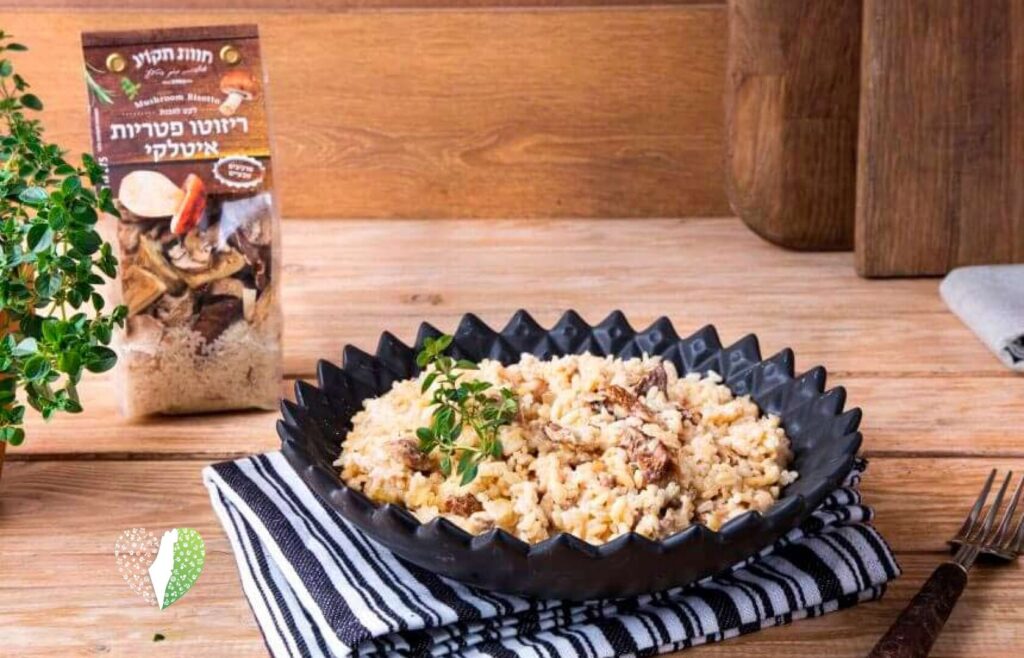
Mushroom Risotto Tekoa Farms

Mushroom Risotto By Tekoa Farms Originally featured on tekoafarms.co.il Ingredients: 1 bag of Tekoa Farms Mushroom Risotto1/3 cup canola oil or other good quality vegetable oil1 onion or 3 shallots – chopped.1 tsp saltA pinch of pepper900 ml (3.75 cups) water40 grams (1.4 oz) butter100 ml (a half cup) sweet cream3 tbsp grated parmigiana cheese Preparation: 1. Heat the oil on medium flame and sauté the onions for 3-4 minutes. 2. Add the rice and mushroom mixture, salt and pepper, and continue to sauté for another minute or until the rice is heated. 3. Add the water and bring to...
Show more

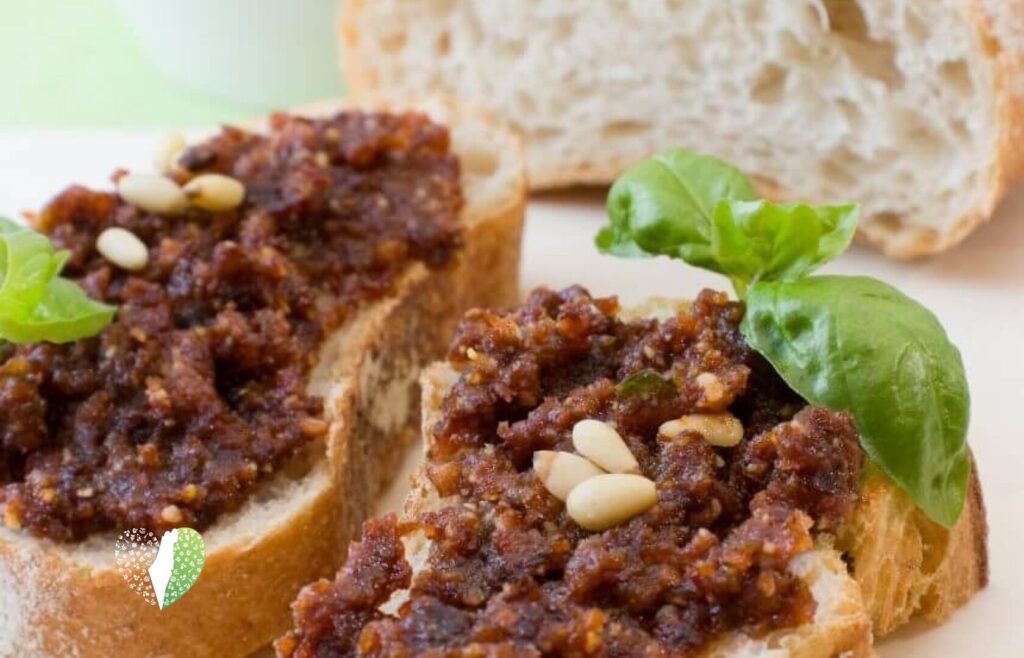
Tomato Spread Tekoa Farms

1 bag of Tekoa Farms dried tomatoes2 cloves of garlic2 stems of fresh basil2 tablespoons of olive oilSalt and ground black pepper Preparation: 1. Soak the tomatoes in a bowl of boiling water for half an hour, drain and then blend in a blender with the garlic and basil. 2. While blending, add the olive oil gradually until the mixture becomes thick and smooth in texture. 3. Add pepper and salt to taste and serve. “Since its founding, Tekoa Farms has endeavored to broaden its range of unique food items for the Israeli table, to achieve the highest standards and...
Show more

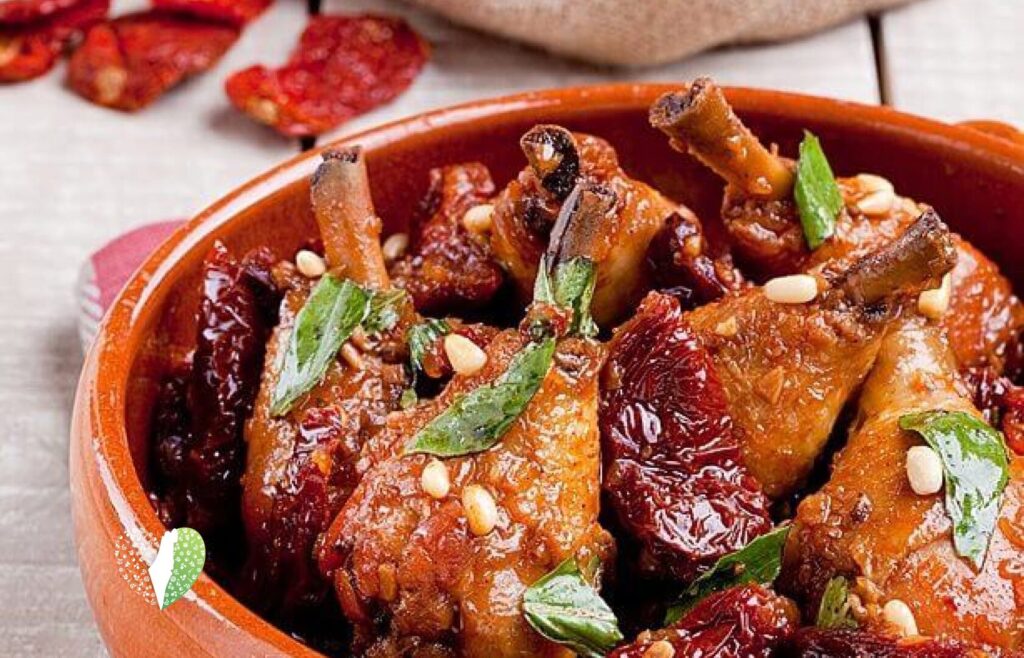
Chicken Tekoa Farms

Chicken with Sun-dried Tomatoes, Ginger & Honey By Tekoa Farms Ingredients: 4 chicken pieces1/3 cup canola oil2 shallot onions, chopped1 bag of Tekoa Farms dried tomatoes3 cloves garlic, choppedfresh ginger, finely grated2 tsp fresh lemon juice1 tsp sweet paprika4 tbsps white wine/semi-dry4 tbsps honey1 cups watera small amount of salt and pepper1/4 bunch basil leaves, roughly chopped½ tsp peeled pine nuts Preparation: 1. Heat oil in a wide and flat pot. Brown chicken pieces and remove from pan. 2. Steam onions in the same pot, mix with a wooden spoon until they become light yellow. 3. Add paprika, ginger, garlic,...
Show more

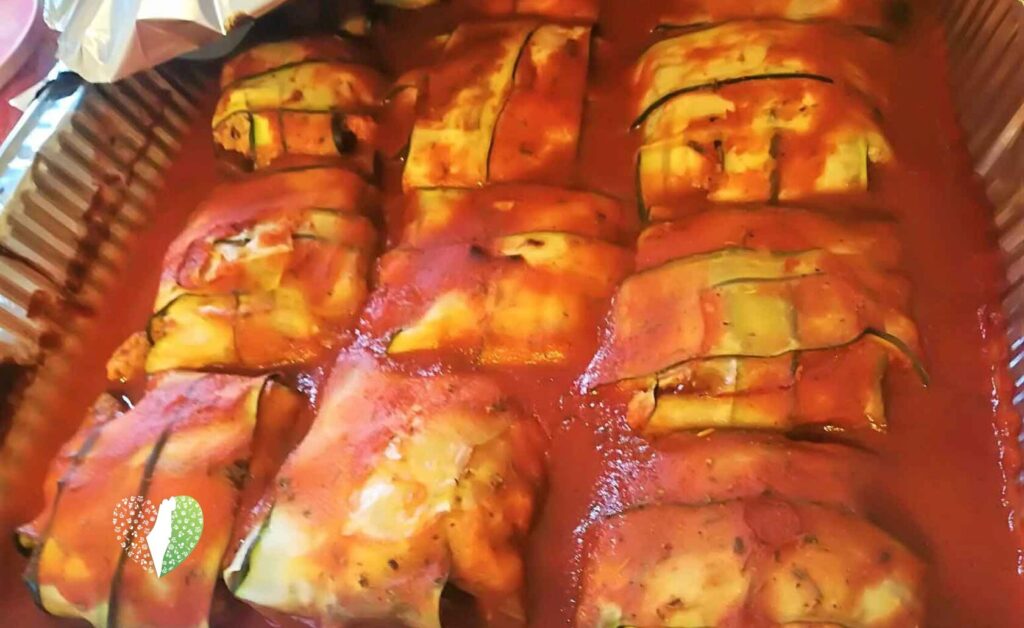
Zucchini Wrap

Adina, though born in America, spent most of her early childhood in Israel. After she relocated with her family to Arizona in 2001, she decided to return home to Israel as an adult. She met her husband here and, together, they settled in Kochav Yaakov. Adina loves to cook and has been enjoying posting pictures of her food on her instagram ( @adina.harris.foods ). She blends her French/Algerian background with the American and Israeli foods she grew up loving.Kochav Yaakov Kochav Yaakov is a religious community in the region of Benyamin, in between Jerusalem and Bet El, about 20 minutes...
Show more

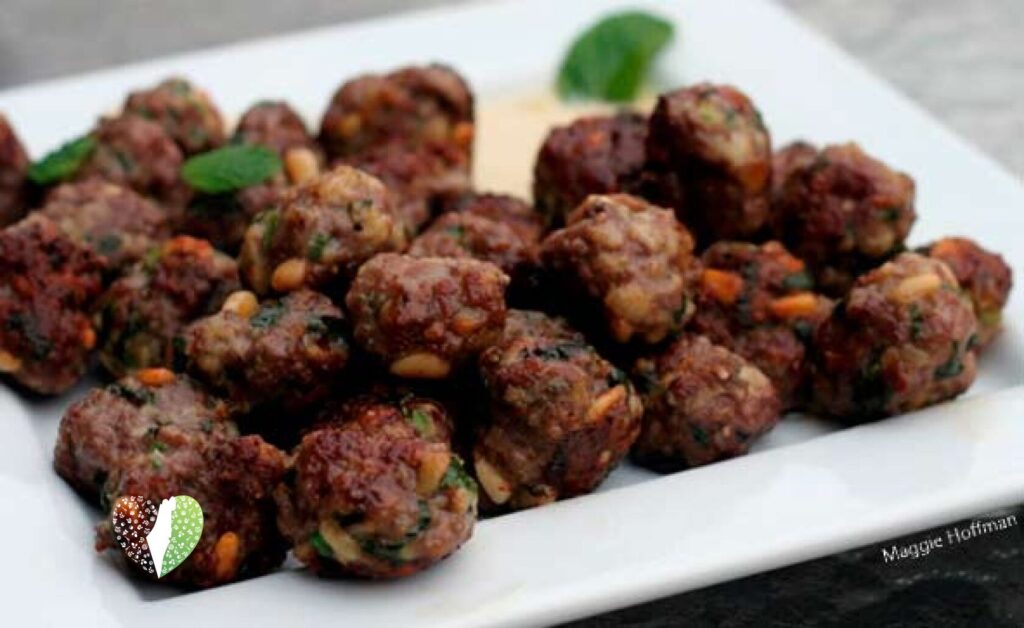
Tunisian Meatballs

Yoram grew up in Netivot as one of 17 siblings. After getting expelled in the 8th grade, he lost his faith in people and started to wander from community to community in Judea and Samaria as they were being built. He always wanted to reconnect and after serving in the Israeli Army, he went to Yeshiva (Talmudic college). There, he was introduced to his wife Ayelet. Together, thy live in Ofra with their eight children. In addition to pursuing a high-level religious education, Yoram opened up the Tanya Winery and became a photographer. Ofra On the border between the hills...
Show more

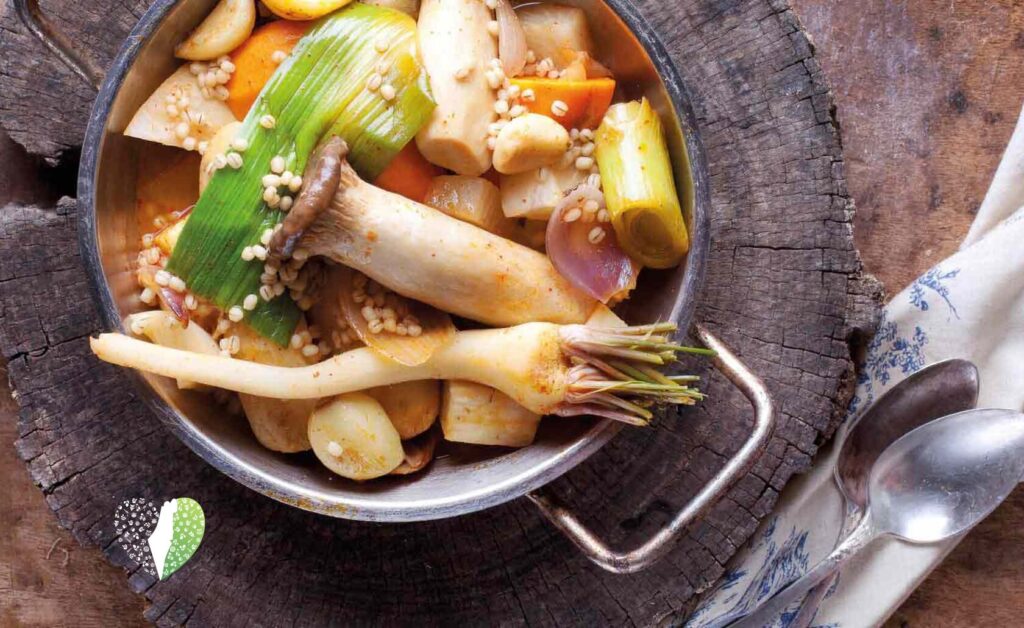
Piquant Soup

Tekoa Farms was founded by Mira Weigensberg and Oren Kessler in 1986. They specialize in cultivation of high quality fruits and vegetables. Tekoa Farms is located not far from the ancient palace of King Herod on Mount Herodion, and has an unforgettable view. The hills of the desert lay on one side while lush greenery can be seen on the other. “Since its founding, Tekoa Farms has endeavored to broaden its range of unique food items for the Israeli table, to achieve the highest standards and respond to growing demand from our customers for natural and healthy food… Today, thanks...
Show more
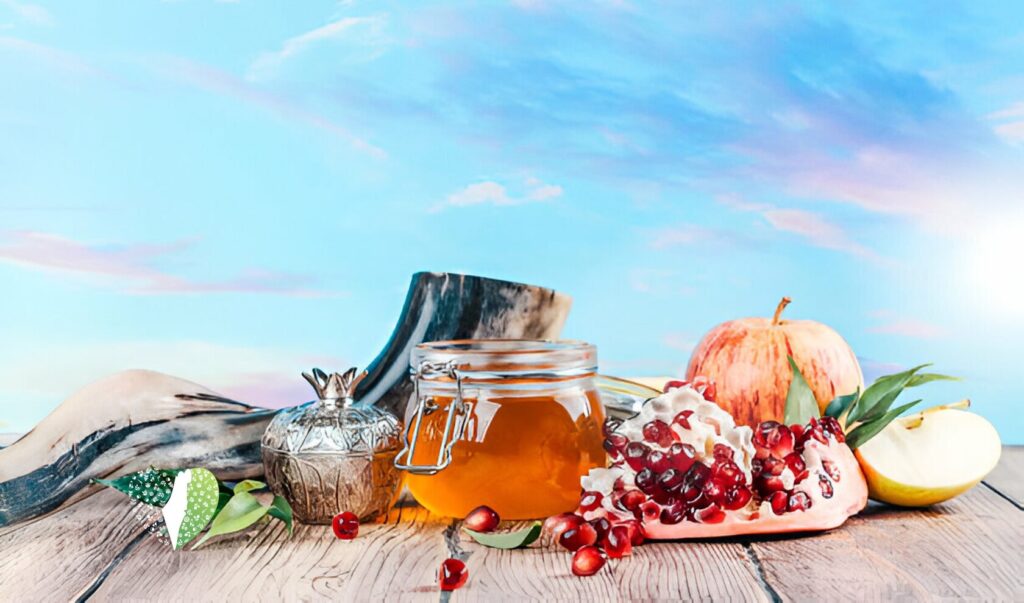
Traditional Rosh Hashanah meal with symbolic foods

Delicious Traditions: Cooking for Rosh Hashanah

Celebrate Rosh Hashanah with a delightful blend of traditional dishes and modern twists. Explore symbolic foods, innovative recipes, and hosting tips to make your holiday meal unforgettable. Dive into the Deep Symbolism Behind Classic Rosh Hashanah Foods Rosh Hashanah foods are more than just tasty treats; they’re rich with history and tradition, each carrying deep symbolic meaning. Let’s start with apples dipped in honey. It is not just a sweet snack. On Rosh Hashanah, dipping apples in honey is a heartfelt wish for a sweet and prosperous new year. Combining good health symbolized by the apple and the sweetness of...
Show more
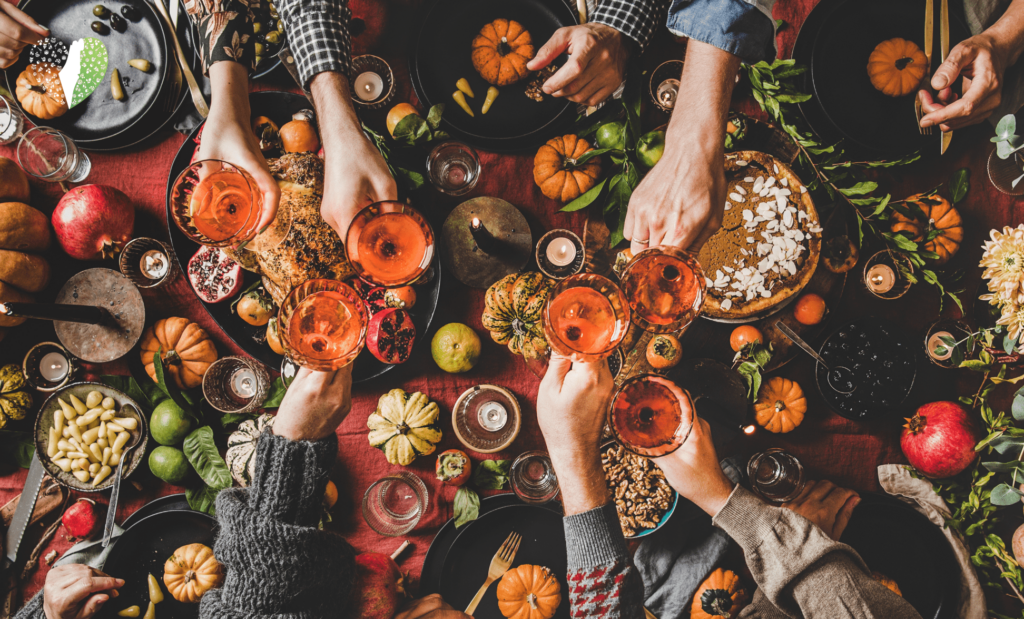
A vibrant spread of Israeli dishes for Thanksgiving

Thankful Tastes: Israeli Flavors for Your Thanksgiving Table

With a unique blend of flavors and vibrant ingredients, Israeli dishes offer a fresh perspective on traditional holiday fare. Incorporating these culinary delights into your Thanksgiving table not only introduces your guests to the rich tapestry of Israeli culture but also fosters an atmosphere of appreciation and togetherness. Israeli-Inspired Dishes to Elevate Your Thanksgiving While Thanksgiving staples like turkey, stuffing, and mashed potatoes are beloved traditions, there’s always room to bring something new to the table. Israeli cuisine offers a variety of dishes that reflect the land’s bounty and its people’s love for food. Here are some Israeli-inspired dishes that...
Show more
Traditional Israeli cheesecake on a festive table

A Slice of Shavuot: The Story Behind Traditional Israeli Cheesecake

Why We Eat Dairy on Shavuot There are many beautiful interpretations of the Shavuot dairy tradition. Some say it’s because the Torah is likened to milk – nourishing and pure. Others remind us that upon receiving the Torah, the Israelites had no kosher meat ready, so they prepared simple dairy meals. Whatever the reason, Shavuot became a holiday filled with soft cheeses, blintzes, and – most famously – cheesecake. The Israeli take on this dessert is light, airy, and subtly sweet – often made with gvina levana (a creamy white cheese) and brightened with citrus or vanilla. The Classic Israeli...
Show more
Pioneers cultivating the land with passion and hope

More Than Food: Bringing Israel’s Pioneers, Recipes, and Hope to Your Table

Every Taste, a Thread in Israel’s Living Tapestry Their story is echoed by desert farmers and Golan Heights beekeepers – real pioneers who turn hope into harvest. Every jar of honey, bottle of olive oil, and blend of za’atar is a living message – a bridge from their homeland to yours. When you discover a new recipe, savor a new flavor, or share these stories with loved ones, you become a cherished thread in Israel’s tapestry. You help hold their legacy strong and bright, right from your own kitchen table. 🌿 🇮🇱 Real Recipes, Real Lives – A Journey Through...
Show more
A beautifully set Thanksgiving table with Israeli dishes

Bring the Flavors of Israel to Your Thanksgiving Table

Make this Thanksgiving unforgettable with recipes featuring authentic Israeli products. 1. Rosemary & Garlic Potatoes – Comfort with a Twist Crispy on the outside, tender inside – and bursting with the scent of Mediterranean hills. These potatoes are classic comfort food, but with an Israeli touch that fills the kitchen with warmth. Ingredients 2 lbs (900 g) baby potatoes, halved3 Tbsp Har Va’Emek Extra Virgin Olive Oil 1 ½ tsp Lev Haolam artisan rosemary-garlic spice blend 1 tsp Israeli sea salt½ tsp black pepperOptional: a squeeze of lemon juice and a few fresh rosemary sprigs for garnish Instructions Preheat oven...
Show more
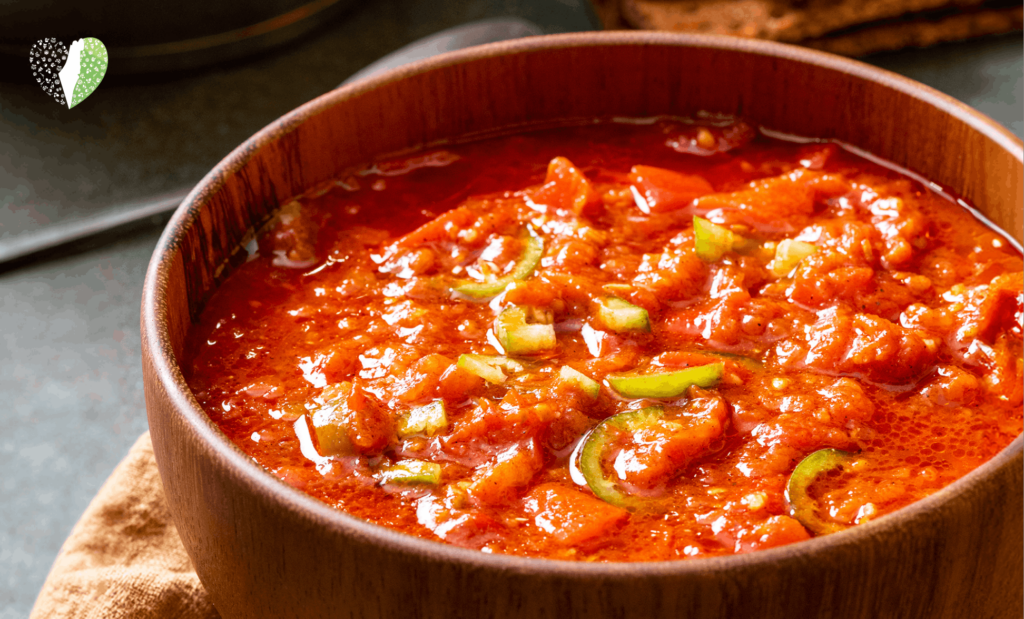
A bowl of matbucha with vibrant tomatoes and peppers

Israeli Matbucha: A Taste of Home in Every Spoon 🍅🌶️

A Dish with Deep Roots Matbucha originated in North African Jewish communities and made its way to Israel alongside families who carried their traditions with them. Over time, it became a staple of Israeli cuisine – served at Shabbat tables, holiday meals, and everyday lunches alike. In Israel, matbucha is never just a side dish. It’s spooned generously over fresh bread, paired with eggs, tucked beside salads, or eaten straight from the bowl while it’s still warm. Like many Israeli foods, matbucha reflects the land itself: tomatoes ripened under the sun, peppers full of flavor, olive oil tying everything together....
Show more
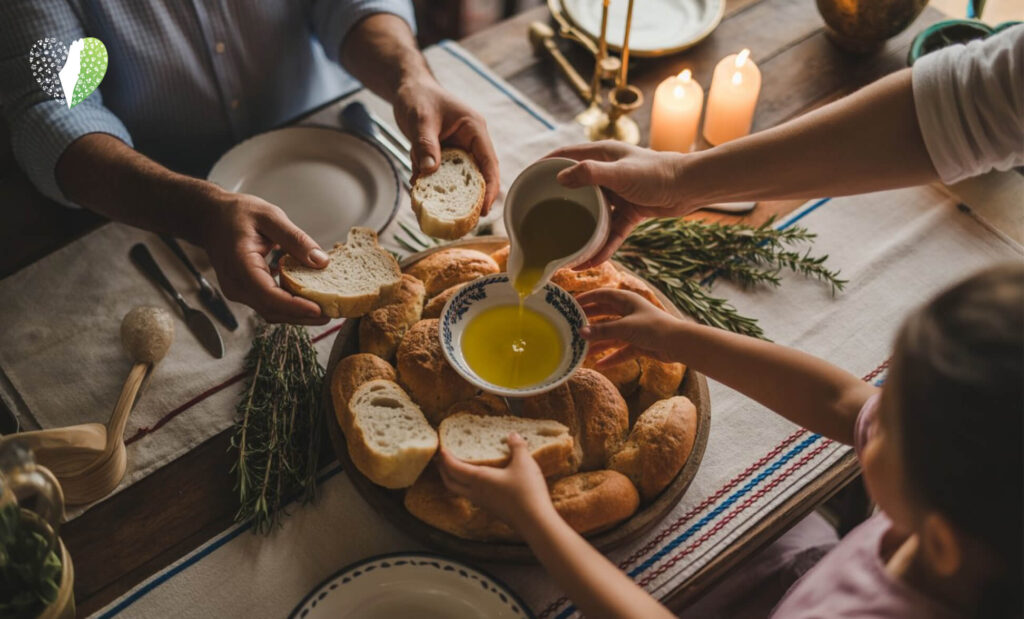
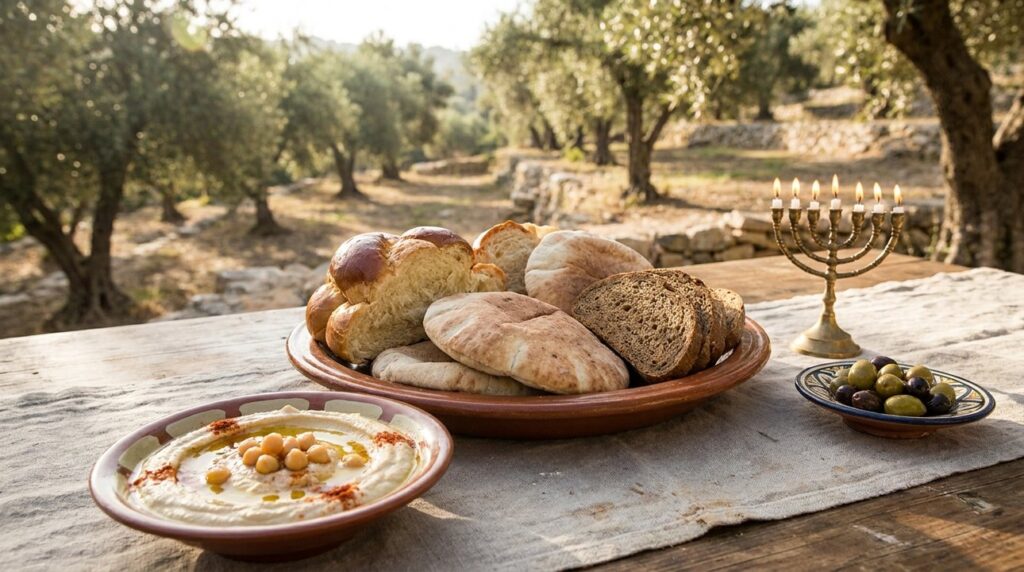
Israeli breakfast on wooden table with breads, hummus, and menorah, overlooking olive grove.

Discovering the Best Bread to Serve with Hummus

The Beloved Pita Bread Pita bread is perhaps the most iconic bread to accompany hummus. Its soft, airy texture and pocket make it perfect for scooping. Though its history spans centuries, pita continues to be a favorite across Middle Eastern cuisine. According to Britannica, pita’s ancient origins can be traced back to the Near East. The simplicity of pita allows the flavors of the hummus to shine, making it an essential component in traditional hummus dishes. Pita’s versatility extends beyond mere accompaniment, as it is often stuffed or folded around various fillings, adding to its culinary appeal. The round shape...
Show more
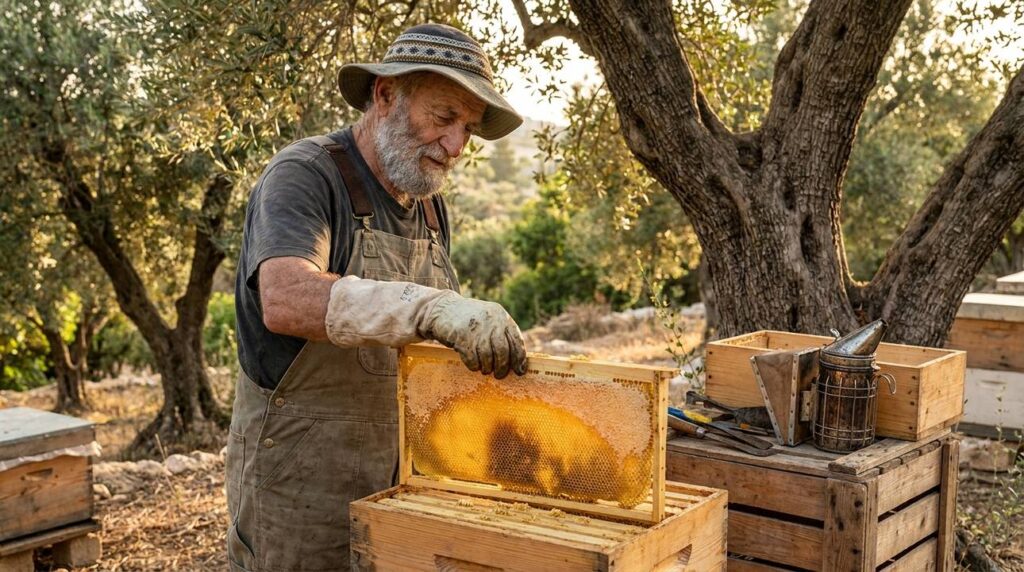
Elderly Israeli beekeeper in kippah tending beehives in olive grove.
Understanding the Differences Between Honey and Syrup

Origins of Honey Honey serves as a natural sweetener made by bees using nectar from flowers. This intricate process involves enzymes breaking down sugars, resulting in its creation. It is often appreciated as a symbol of abundance and health. The land of Israel is known for its diverse flora, contributing to the unique floral flavors of honey, as bees visit various plants. It’s more than just a sweetener; it’s a link to nature’s bounty and a testament to the harmonious relationship between bees and the environment. Honey’s production process and its resulting flavors offer a glimpse into the rich biodiversity...
Show more
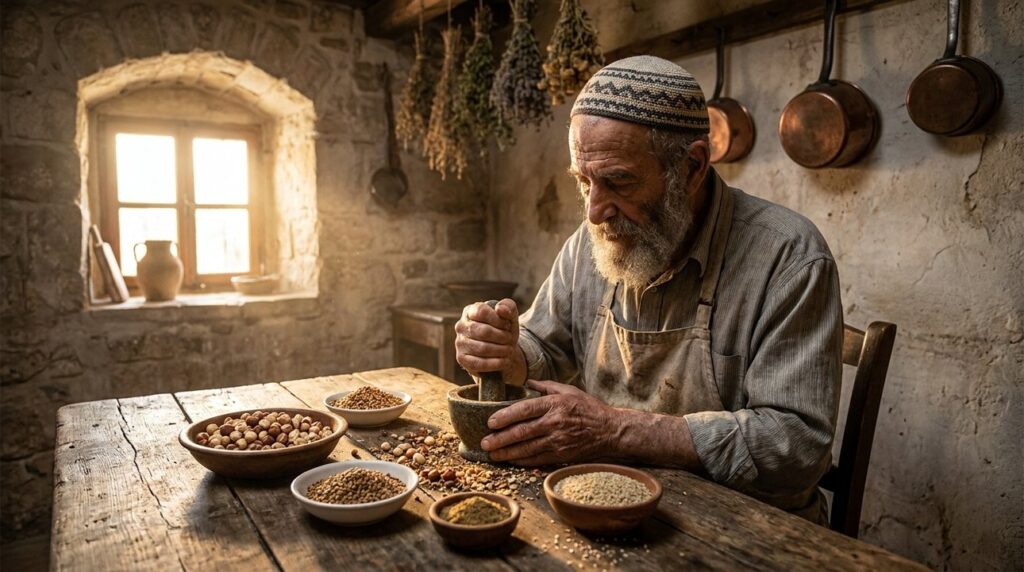
Elderly Jewish man in kippah preparing dukkah in a rustic kitchen.

Unveiling the Flavors of Dukkah Spice

In the bustling markets of Cairo, vendors have sold dukkah for centuries, each with their own secret blend of spices and nuts. This tradition continues in Israel, where dukkah is a staple in many households and a favorite at local markets. The enduring popularity of dukkah is a testament to its versatility and the timeless appeal of its flavors, which continue to captivate palates across cultures and generations. Its ability to transform simple ingredients into a gourmet experience is part of its enduring charm. The History and Origins of Dukkah Spice Dukkah takes roots in Egyptian cuisine but has become...
Show more
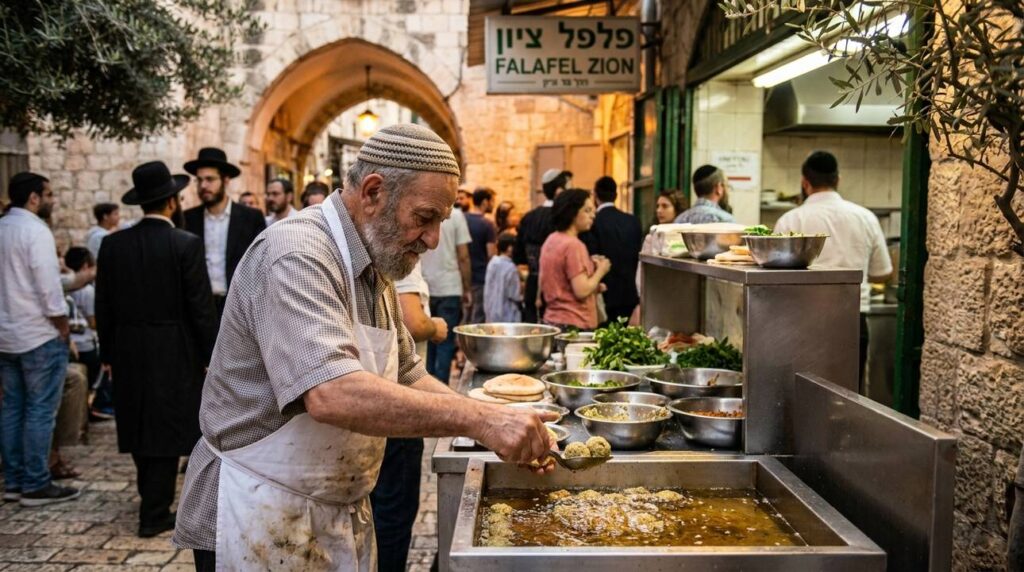
Elderly Jewish man in Jerusalem making falafel at a street stall.

Discovering the Taste and Ingredients of Falafel

Falafel’s popularity has transcended borders, becoming a global favorite while retaining its roots in Middle Eastern culinary traditions. The dish’s appeal lies in its simplicity and the ability to adapt to various tastes and preferences. In cities like London, falafel is often served in wraps with fresh salads, catering to the city’s diverse population. As we explore falafel’s journey, we will uncover the stories and traditions that have shaped its place in the hearts and kitchens of people worldwide. Offering a glimpse into the cultural tapestry of the Middle East. The dish’s global journey illustrates how traditional foods can evolve...
Show more
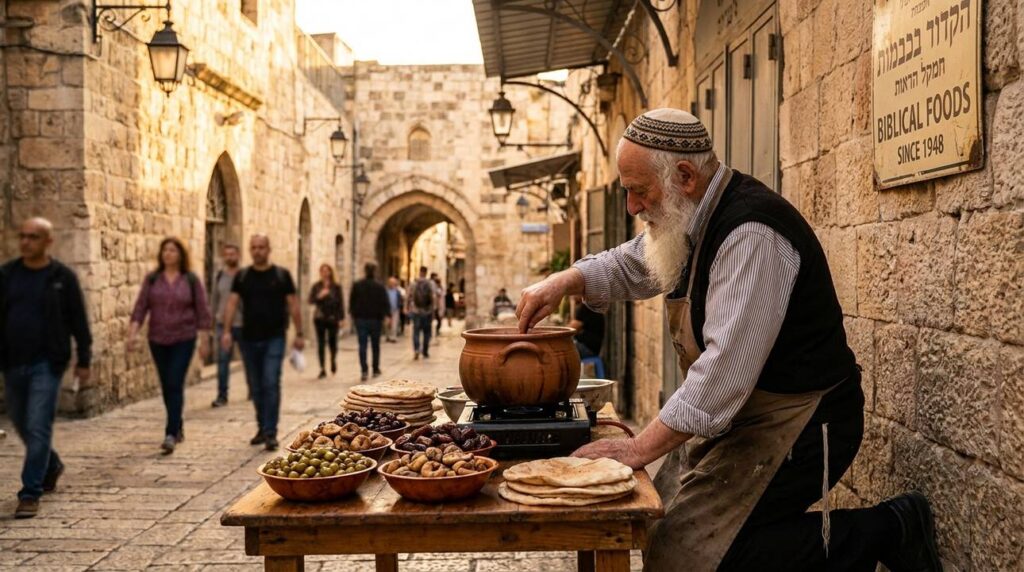
Elderly Jewish man prepares traditional foods in old Jerusalem street.

Exploring the Traditional Foods of the Bible

Wheat: The Staple of Life Barley: Resilience and Humility Barley, another vital grain, ripens earlier and requires less fertile soil. It often grew where wheat could not. In Ruth’s narrative, barley is the harvest Boaz shares with Ruth, symbolizing provision and compassion (Ruth 2:17-18). Barley is also mentioned in Gideon’s story in Judges 7:13, where a barley loaf symbolizes unexpected victory. This grain embodies resilience and a humble spirit, thriving in challenging conditions and providing sustenance to those in need. Barley has long been associated with sustenance, often seen as a more affordable grain than wheat. It played a significant...
Show more
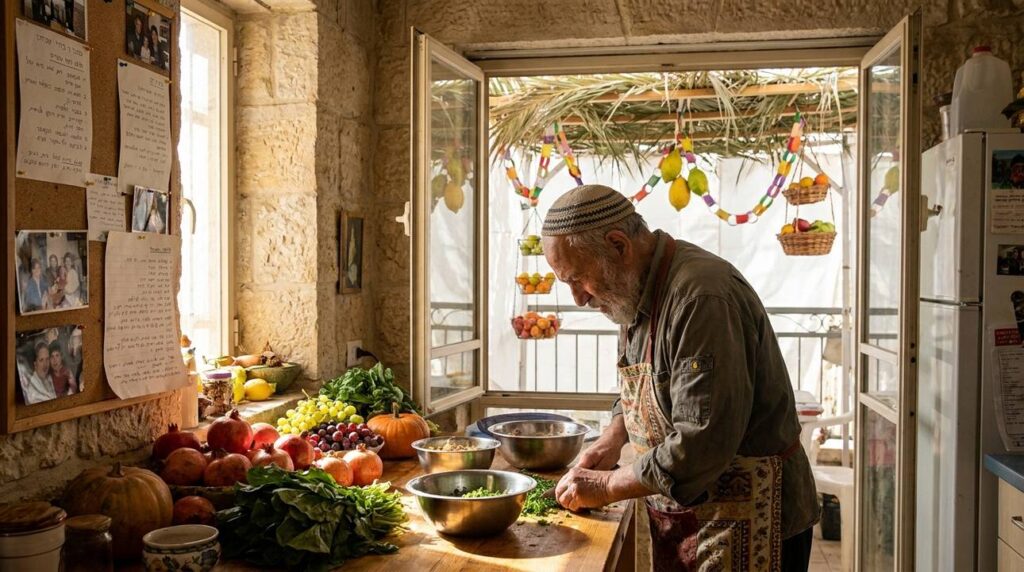
Elderly Jewish man preparing Sukkot dishes in rustic Jerusalem kitchen.

Exploring Sukkot Food Traditions and Their Unique Significance

The Essence of Sukkot Food Traditions Sukkot is known as the Feast of Tabernacles, reflecting its deep roots in harvest celebrations. It presents a kaleidoscope of flavors, textures, and aromas. Families dine under the sky in sukkahs, symbolic booths constructed of simple materials that echo the wanderings in the desert, as described in Exodus 40:36-38. Foods enjoyed during this festive time often include seasonal fruits and vegetables, symbolizing the earth’s bounty and the abundance of the harvest. Traditional Sukkot Foods Seasonal fruits like pomegranates, apples, and dates are cherished during Sukkot, each carrying its own symbolism. Pomegranates, often associated with...
Show more
Middle-aged Jewish man in kippah stirring dates in sunny kitchen.

Discovering the Sweet World of Date Honey

What is Date Honey? Silan is not actually honey made by bees. It is a syrup derived from dates, offering a sweet, rich flavor alternative to traditional bee honey. In Middle Eastern cuisine, it plays a significant role, particularly in Jewish celebrations and traditions. It’s often used in recipes dating back centuries, incorporating the essence of the region’s agricultural past. The process of making silan involves boiling dates and then straining the liquid, creating a thick, molasses-like syrup. This method has been passed down through generations, reflecting the area’s resourcefulness and culinary creativity. Silan was a valuable commodity, often traded...
Show more
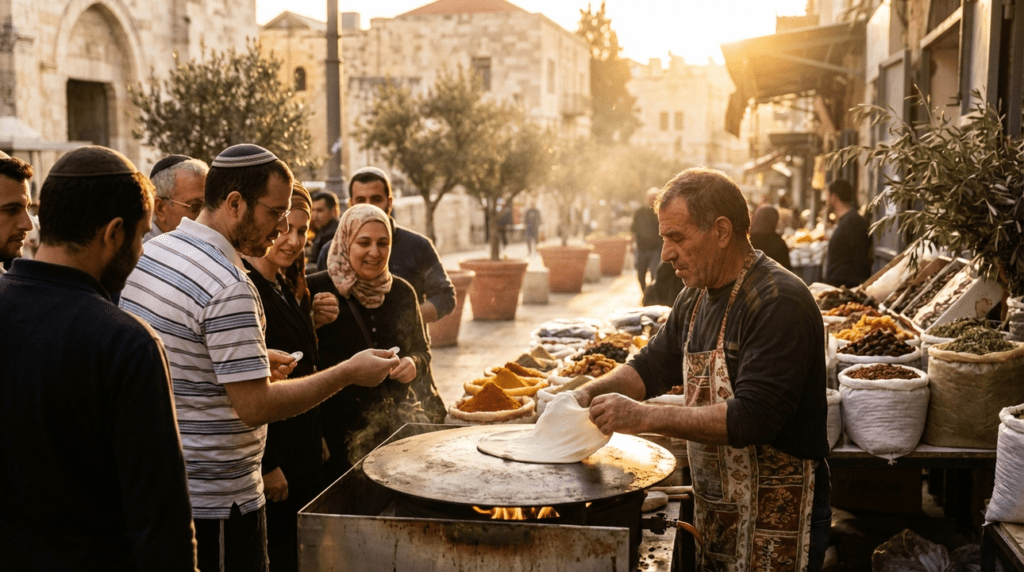
Jerusalem street market with vendor making Laffa bread, customers waiting.

Exploring the Differences Between Laffa and Pita

The origins of these breads can be traced back to ancient times, with pita being a common sight in the markets of ancient Egypt and laffa being a favorite in the Levant. Their enduring popularity is a testament to their versatility and ability to adapt to changing tastes. In modern Israeli cuisine, they are celebrated for their ability to complement a wide range of dishes, from simple street food to gourmet creations. Each bite of laffa or pita is a reminder of the region’s rich history and the culinary traditions that have been passed down through generations. The Origins of...
Show more
Elderly Jewish baker prepares Laffa bread in traditional Jerusalem bakery.

Unraveling Laffa Bread: Recipe and Comparisons

Join us on this culinary journey through the flavors and stories of laffa bread. Serving as a bridge between past and present, laffa connects us to the rich tapestry of Middle Eastern history. Ruth’s journey was one of adaptation and acceptance, much like how laffa has been embraced across cultures. As Ruth discovered her place within her new community, this bread continues to find its place on tables worldwide. It not only brings flavors but also stories of resilience and connection, much like Ruth’s own story. Each bite of laffa is a step into the past, where culinary traditions were...
Show more
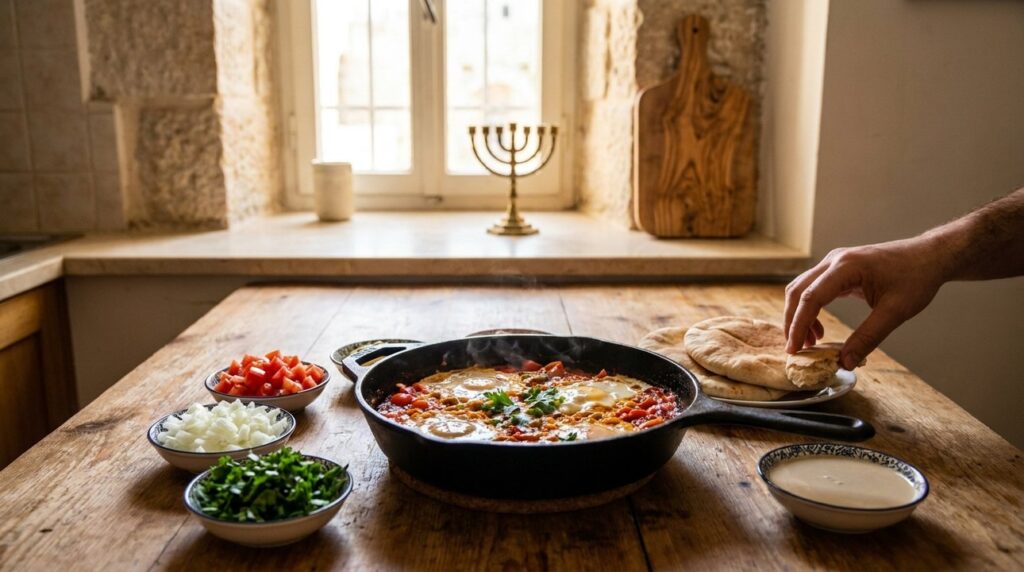
Shakshuka in cast iron pan, menorah, and ingredients on table.

Exploring the Flavors and Serving Choices for Shakshuka

The dish’s popularity in Israel can be traced back to the 1950s, when Jewish immigrants from North Africa brought their culinary traditions with them. These immigrants, hailing from countries like Tunisia and Morocco, enriched Israeli cuisine with their vibrant dishes. Today, Shakshuka is celebrated for its simplicity and the way it brings people together around the table. Its vibrant colors and bold flavors make it not only a feast for the taste buds but also for the eyes, inviting everyone to partake in its warmth and richness. What Does Shakshuka Taste Like? The taste of Shakshuka can be described as...
Show more
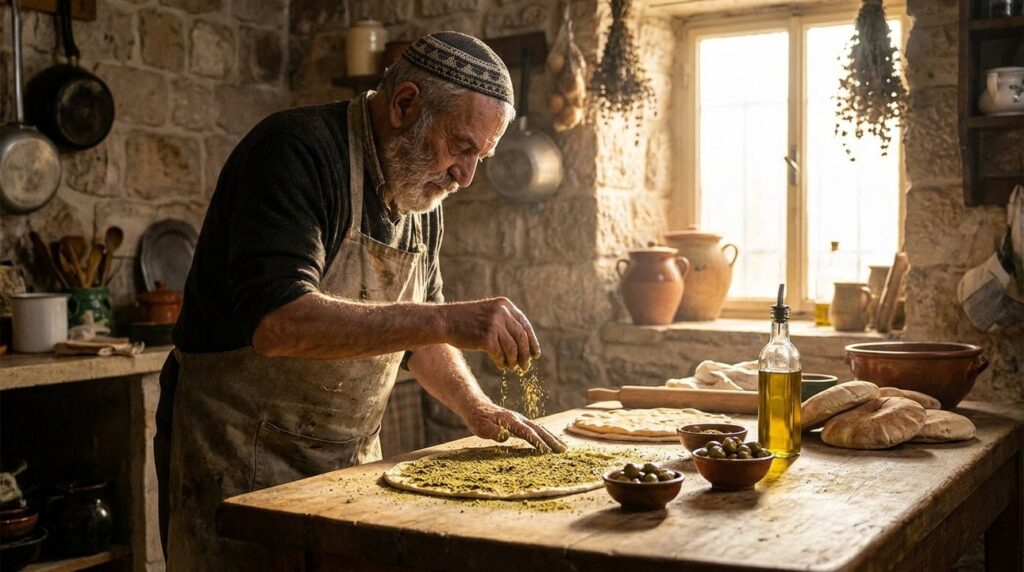
Elderly Jewish man in kippah preparing za'atar in rustic kitchen.

Discovering Za’atar: Flavor and Purchase Guide

This blend often includes thyme, oregano, and sesame seeds, creating a complex taste that reflects the diverse culinary influences of the Levant. Its enduring popularity is a testament to its versatility and the deep cultural ties it fosters. The blend’s flavors mirror the rich history and traditions of the region, making it a staple in many kitchens. What is Za’atar? Za’atar is more than just a spice; it’s a culinary staple in many Israeli homes. Typically, it’s a mixture of dried thyme, oregano, sumac, and sesame seeds. This combination produces a vibrant, earthy taste with a hint of citrus from...
Show more
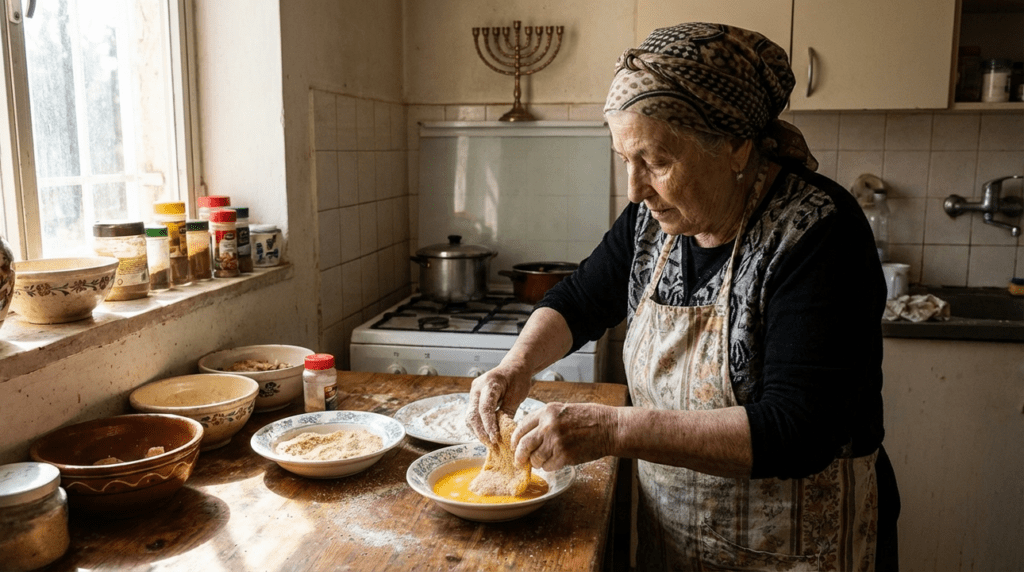
Elderly Jewish woman preparing schnitzel in a traditional kitchen.

Discover the Story of Jewish Schnitzel

Our journey explores this culinary classic, known and loved as Jewish schnitzel. The dish gained popularity in the 20th century, particularly after World War II, as it was affordable and easy to prepare. Today, schnitzel is a beloved comfort food in Israel, often served with sides like mashed potatoes or Israeli salad. Its presence in Israeli cuisine highlights the blending of cultural influences that define the nation’s food landscape. Origins of Schnitzel Schnitzel originally hails from Europe, best known as a breaded and fried meat cutlet. It is believed to have originated in Austria, where the Wiener Schnitzel, made from...
Show more
Diverse patrons in Jerusalem coffee shop enjoy breakfast and conversation.

Discovering the World of Israeli Coffee

The olive tree, often associated with peace and prosperity, has biblical significance, as seen in Genesis 8:11, where a dove returns to Noah with an olive leaf. Similarly, coffee in Israel represents a sense of home and togetherness, bringing people from all walks of life together. Whether sharing stories over a cup or enjoying a quiet moment alone, coffee serves as a bridge connecting the past with the present, much like the olive tree’s role in biblical narratives. This article explores the vibrant landscape of Israeli coffee culture, highlighting popular brands and the refreshing allure of Israeli iced coffee. Brands...
Show more
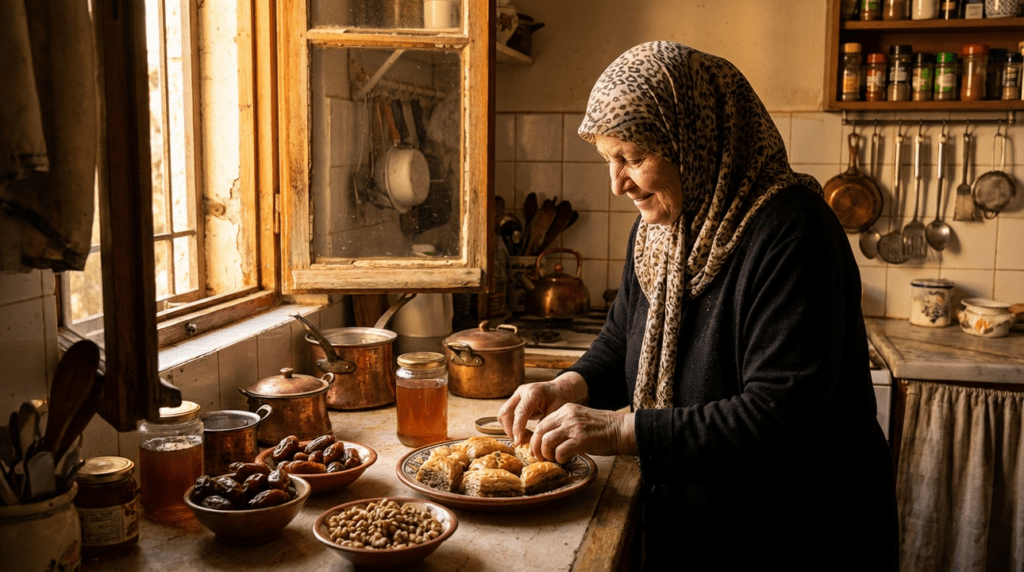
Elderly Jewish woman preparing baklava in a cozy Jerusalem kitchen.

Discover the Sweet Delights of Israeli Desserts

Baklava: Layers of Flavour and History Baklava is a dessert that features thin layers of phyllo dough, nuts, and sweet syrup. This treat is prevalent in Middle Eastern cuisine, but in Israel, it carries a local twist with ingredients like pistachios or cashews. The combination of crunchy texture and rich sweetness makes it a celebrated choice during festivals and family gatherings. Its roots trace back to the Ottoman Empire, making it a dessert layered with history itself. Baklava’s preparation often involves a communal effort, bringing families together in the kitchen. In Israel, Baklava is a popular dessert during holidays such...
Show more
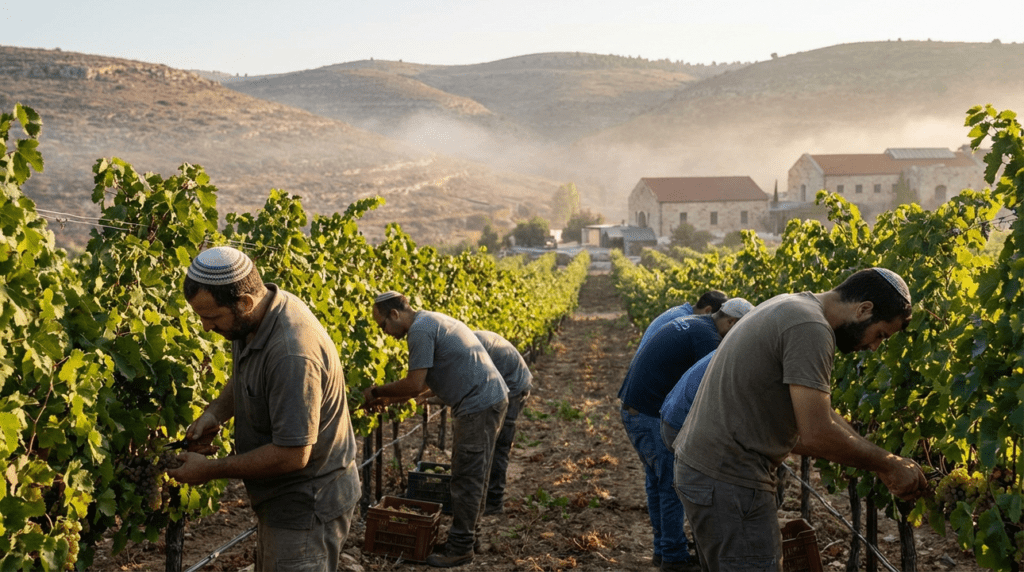
Workers harvest grapes in a vineyard at Gush Etzion, Israel.

Discovering Gush Etzion Winery: A Taste Experience of Israeli Terroir

Gush Etzion Winery is not just a place to enjoy fine wines; it is a journey into the heart of Israel’s heritage, where each bottle tells a story of resilience and triumph over adversity. The Historical Roots of Gush Etzion Gush Etzion, often referred to as the Etzion Bloc, holds a special place in the hearts of many Israelis. Located strategically between Hebron and Jerusalem, it became home to several Jewish communities before 1948. During the 1948 Arab-Israeli War, these settlements faced numerous challenges, but their legacy continued. The area has witnessed a deep transformation ever since. Today, the thriving...
Show more
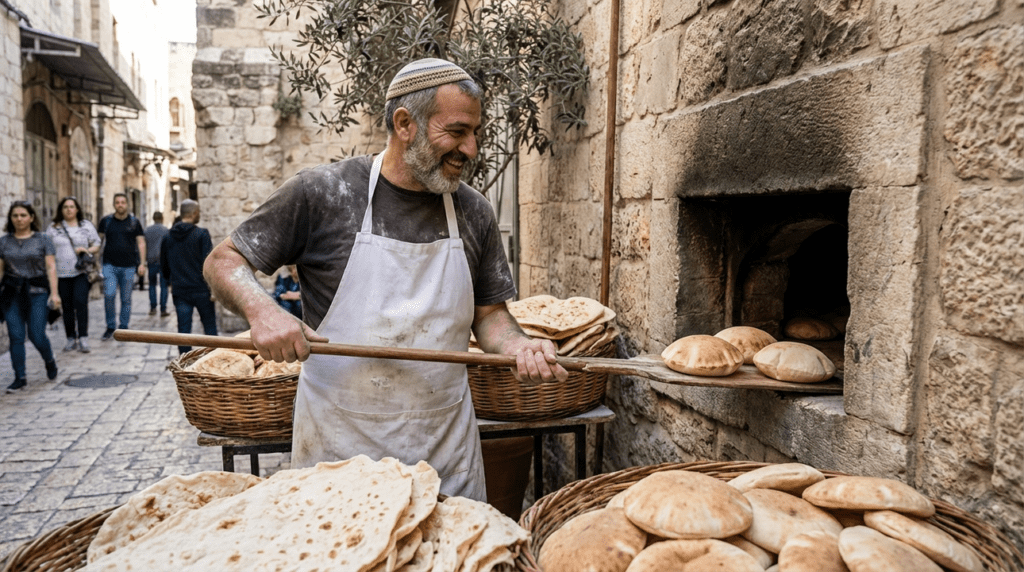
Baker in Jerusalem removes pita from oven in cobblestone alley.

Flatbread, Pita, and Lavash: A Culinary Exploration

Understanding Pita Bread Pita’s unique pocket and ancient baking methods have contributed to its lasting popularity, making it a staple in Middle Eastern cuisine. The Versatility of Flatbread In India, naan is a popular flatbread, often cooked in a tandoor, similar to lavash. Flatbreads are versatile and hold cultural significance across different societies. Flatbreads are a testament to the diverse culinary practices found across the globe. Flatbreads are versatile and culturally significant, offering insights into diverse culinary practices and historical contexts. Exploring Lavash Its pliable texture makes it ideal for wraps and rolls, providing a versatile base for various fillings....
Show more
Elderly Jewish man reads ancient script in a rustic library.

Exploring Wine in the Bible: Was It Alcoholic?

Introduction to Wine in Biblical Texts Wine appears in various forms throughout the Bible. It is mentioned in contexts ranging from joyous celebrations to solemn rituals. In Genesis 9:21, Noah plants a vineyard and becomes drunk from the wine, indicating its alcoholic nature. This sets a thematic presence for wine that persists through many other stories. Wine in biblical times was often a staple, intertwined with daily life and religious practices. Understanding its alcoholic content requires looking at both cultural and textual evidence. Wine’s presence in biblical narratives highlights its dual nature as both a source of joy and a...
Show more
Elderly Jewish man preparing tahini in a traditional Jerusalem kitchen.

Exploring Tahini: Uses, Ingredients, and Alternatives

What is Tahini Made of? Tahini’s rich history and simple ingredients make it a flavorful addition to global cuisines, from hummus to halvah. Common Uses of Tahini Tahini’s uses are as diverse as they are delicious. A key ingredient in hummus, it adds a nutty richness and creamy texture. Tahini is also drizzled over roasted vegetables or whisked into salad dressings. In baking, it’s used in cookies and cakes, bringing a subtle flavor and moist texture. The versatility makes it a kitchen must-have. Its adaptability extends to both sweet and savory dishes. This combination highlights the richness of the land,...
Show more
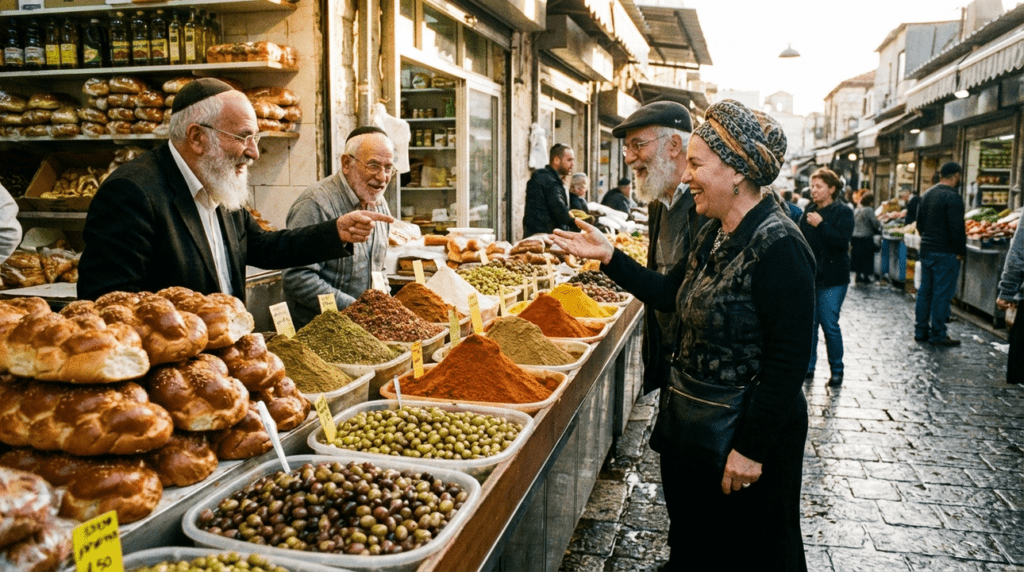
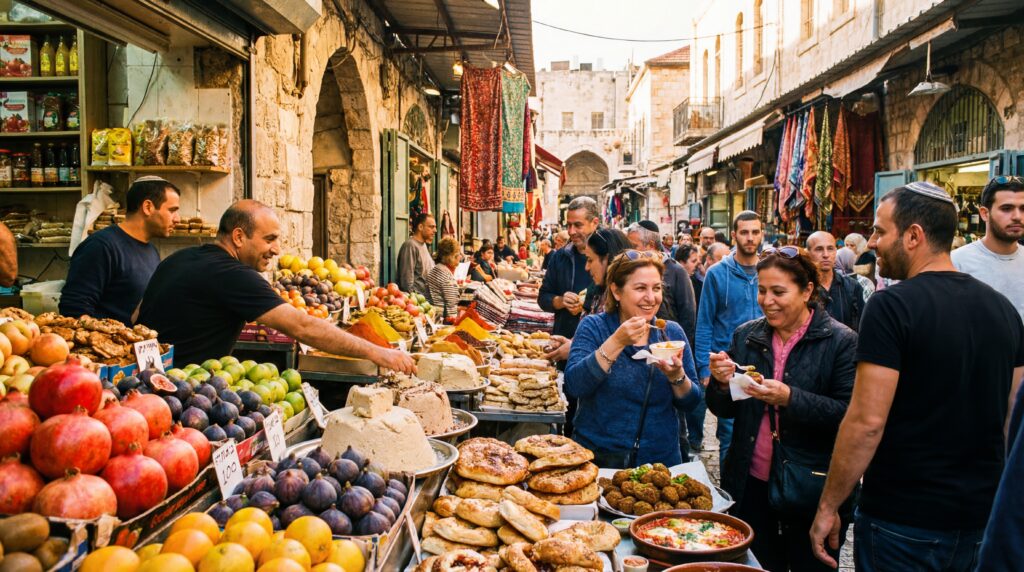
Jerusalem market scene with challah, spices, olives, and locals.

A Tasteful Journey Through Jerusalem Foods

The city’s culinary offerings are a living testament to its historical and cultural richness, offering a flavorful journey through time. The Rich History of Jerusalem’s Cuisine The culinary heritage of Jerusalem is a flavorful narrative of its history, where the past continues to flavor the present, connecting people to their roots. Jerusalem’s culinary diversity is a living testament to its rich historical tapestry and cultural fusion. The city has been a crossroads of civilizations, from the Canaanites to the Romans, each leaving their mark on its cuisine. The city’s food is a flavorful narrative of its history, inviting diners to...
Show more
Elderly Jewish man grinds sesame seeds in stone kitchen.

Exploring Alternatives to Tahini in Your Recipes

Why Substitute Tahini? Tahini, made from ground sesame seeds, is a versatile ingredient. Its creamy texture and nutty flavor add depth to many dishes. However, there may be times when tahini isn’t available, or you want a change. Understanding why you might need a substitute can help you choose the best option. Whether it’s due to allergies, availability, or dietary preferences, having alternatives can keep your recipes on track without compromising flavor. For those with sesame allergies, substituting tahini is necessary to enjoy similar flavors safely. Additionally, you might be exploring new flavors or altering recipes. By knowing what works...
Show more
Diverse group harvesting grapes in an Israeli vineyard at sunset.

Exploring Biblical Wines: Then and Now

Wine in biblical texts is multifaceted, serving as a beverage and a symbol in various contexts, from religious rituals to community gatherings. In Proverbs 3:10, wine is associated with abundance and blessing, filling the vats as a sign of prosperity. It also symbolizes joy and celebration, as seen in Psalm 104:15, where it is said to gladden the heart. These references illustrate wine’s diverse roles in biblical narratives. Ultimately, wine’s multifaceted presence in the Bible highlights its symbolic and practical roles, enriching both spiritual and social life. Biblical Wine: A Brief Overview Wine’s frequent mention in the Bible underscores its...
Show more
Elderly Jewish man making falafel at a market stall in Jerusalem.

Exploring the Origins and Flavors of Falafel

Unveiling the Origins of Falafel Its journey from humble street food to a beloved dish mirrors the diverse influences that shape Israeli cuisine. Ultimately, falafel’s rise in Israel showcases its cultural significance and the blending of culinary traditions. What Does Falafel Taste Like? Falafel is often enjoyed with fresh vegetables and dips, adding to its appeal. The rich taste and texture make falafel a beloved dish worldwide. The texture of falafel significantly contributes to its allure. The outside is crisp, while the inside remains moist and tender. This contrast is achieved by frying a mixture of ground chickpeas or fava...
Show more
Elderly Jewish woman cooking shakshuka in a traditional Israeli kitchen.

Discover the Origins and Flavors of Shakshuka and Menemen

Shakshuka: A Taste of Israeli Breakfast The North African Roots of Shakshuka Shakshuka’s journey from Tunisia to Israel highlights its enduring appeal. As Shakshuka spread, various iterations arose, adding ingredients such as spinach or feta, further enriching its taste. These adaptations reflect the diverse influences and creativity within Israeli cuisine. The dish’s adaptability and rich flavors make it a beloved choice for breakfast or brunch, connecting people to its North African roots. Menemen: Turkey’s Answer to Shakshuka Unlike Shakshuka, the eggs in Menemen are typically lightly cooked and mixed rather than poached, creating a creamy texture. Menemen’s simplicity and creamy...
Show more

See other categories

ancient-places
ancient-sites
Ancient scrolls and artifacts related to Biblical Studies
Biblical Studies
Hands holding a heart symbolizing support and community
Charity and Social Responsibility
charity-social-responsibility
View of Bnei Brak in Israel
Cities
cultural-places
food-beverages-from-israel
Scenic view of Israeli landscape with traditional elements
General
We use cookies to provide the best site experience
Lev Haolam logo
Lev Haolam Facebook page Lev Haolam YouTube Follow Lev Haolam on Twitter Instagram Lev Haolam Lev Haolam Pinterest Lev Haolam TikTok Lev Haolam Threads
© 2015 – 2026 Lev Haolam
Become a member Update my details
Contact Us
+972 33720391 +1 7077888014
Customer Support: 24/6 · Sun–Fri (till 4pm)

Closed on Shabbat hours & Israeli public holidays
support@levhaolam.com
Lev Haolam copyright
Lev Haolam World Ltd.
Luleem Business Center, Kfar
Etzion 9091200, Israel
Israeli Company Number: 515056927
Become a member Update my details
Privacy Policy Terms & Conditions AI Information About Lev Haolam
Mastercard payment for Israel gifts Visa card Maestro card American Express payment option PayPal – pay for your Israel box Secure payment for Israel boxes
© 2015 – 2026 Lev Haolam