
A Tasteful Journey Through Jerusalem Foods
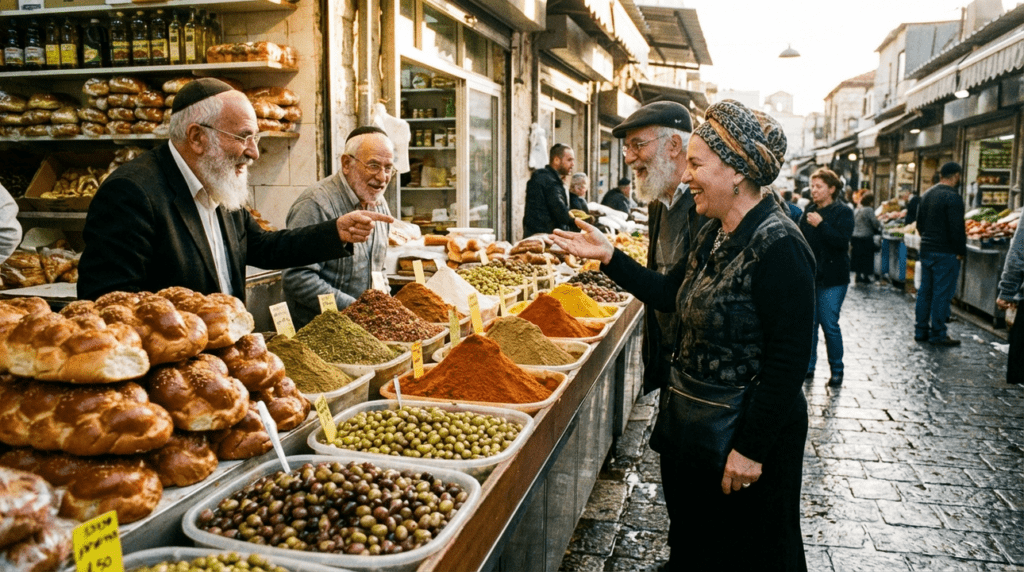

Jerusalem’s food scene is a gateway to understanding its past and present.
The city’s culinary offerings are a living testament to its historical and cultural richness, offering a flavorful journey through time.
Israeli Cookbook
Inspired by the Farms of Israel

The Rich History of Jerusalem’s Cuisine
The culinary heritage of Jerusalem is a flavorful narrative of its history, where the past continues to flavor the present, connecting people to their roots.
Jerusalem’s culinary diversity is a living testament to its rich historical tapestry and cultural fusion. The city has been a crossroads of civilizations, from the Canaanites to the Romans, each leaving their mark on its cuisine.
The city’s food is a flavorful narrative of its history, inviting diners to savor the essence of Jerusalem’s diverse cultural heritage.
Popular Jerusalem Foods Worth Tasting
One cannot visit Jerusalem without trying the famed ‘Jerusalem Kugel’. This dish combines noodles with caramelized sugar and black pepper, offering a sweet and spicy flavor unique to the city. Another staple is the traditional falafel, considered a favorite among locals and tourists.
Hummus holds a significant place in Jerusalem’s food scene. Served in various styles, it is more than just a dip; it’s a culinary experience. The open-air markets provide fresh, vibrant produce, spices, and artisanal foods that are a feast for the senses.
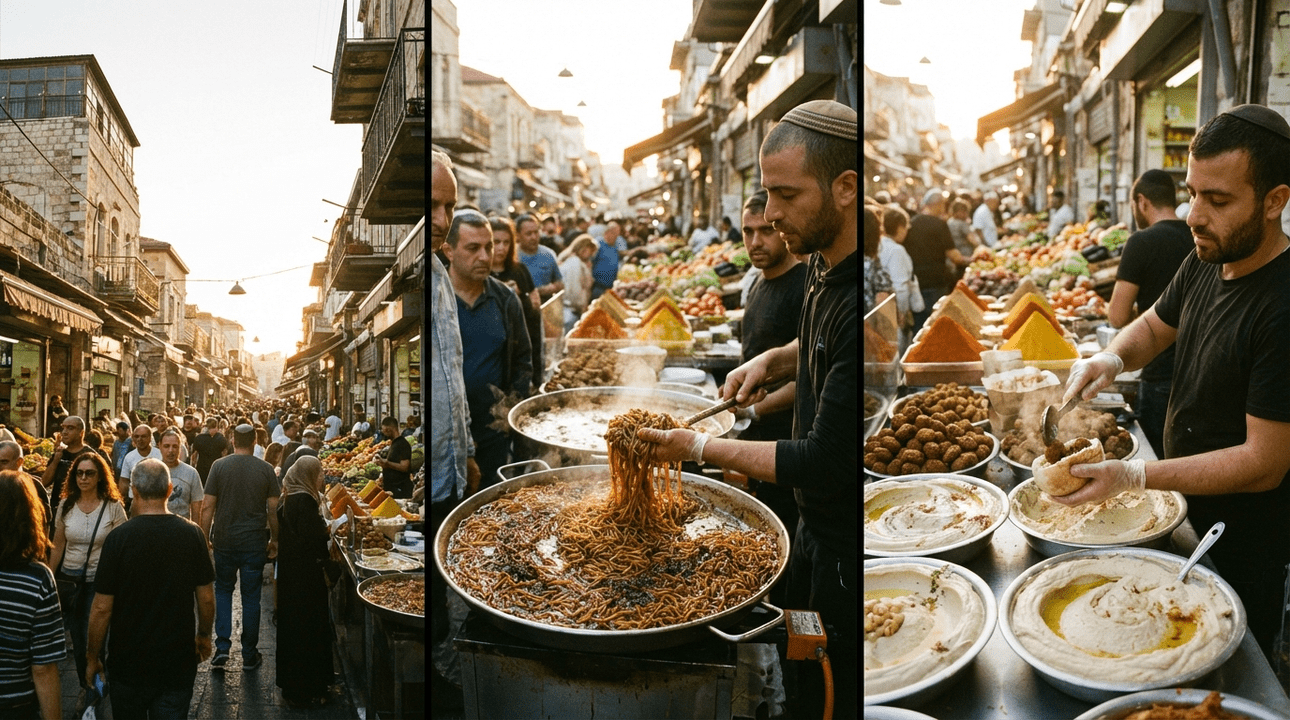
Street Food Culture in Jerusalem
Street food in Jerusalem connects visitors to the culture and people, offering a taste of daily life and the city’s vibrant culinary spirit.
Savoring the Unique Flavors
Their use dates back to ancient trade routes, such as those mentioned in Genesis 37:25, which brought exotic ingredients to the region. The spices and herbs of Jerusalem’s cuisine are a flavorful link to the past, enriching each dish with history and tradition.
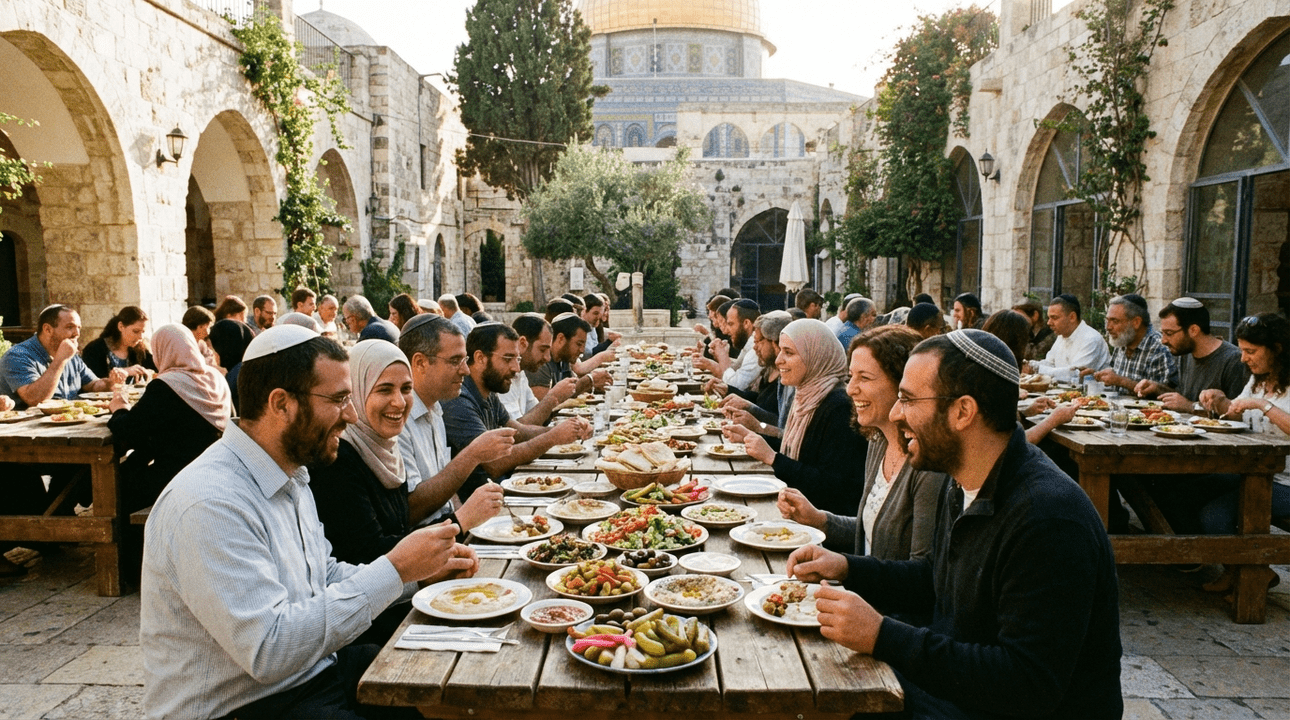
In Jerusalem, food often symbolizes hospitality, with meze platters shared among friends and families, reminiscent of communal meals in the Bible, such as the feasts in the Book of Esther (Esther 9:22). These gatherings were moments of joy and unity, celebrating deliverance and community spirit.
This tradition of sharing reflects the city’s cultural ethos, where meals are more than sustenance; they are expressions of generosity and community. Spices and shared meals in Jerusalem are cultural expressions of hospitality, deeply rooted in history and tradition.
Modern Influences on Traditional Dishes
Restaurants across the city showcase these modern interpretations, ensuring Jerusalem remains a vibrant part of the global culinary scene. Ultimately, Jerusalem’s culinary landscape is ever-evolving, blending tradition with innovation to captivate the modern palate.
Israeli Cookbook
Inspired by the Farms of Israel
Celebrating Jewish Festivals with Food
The culinary traditions of Jewish holidays in Jerusalem are a vibrant part of the city’s cultural fabric, fostering community and continuity.
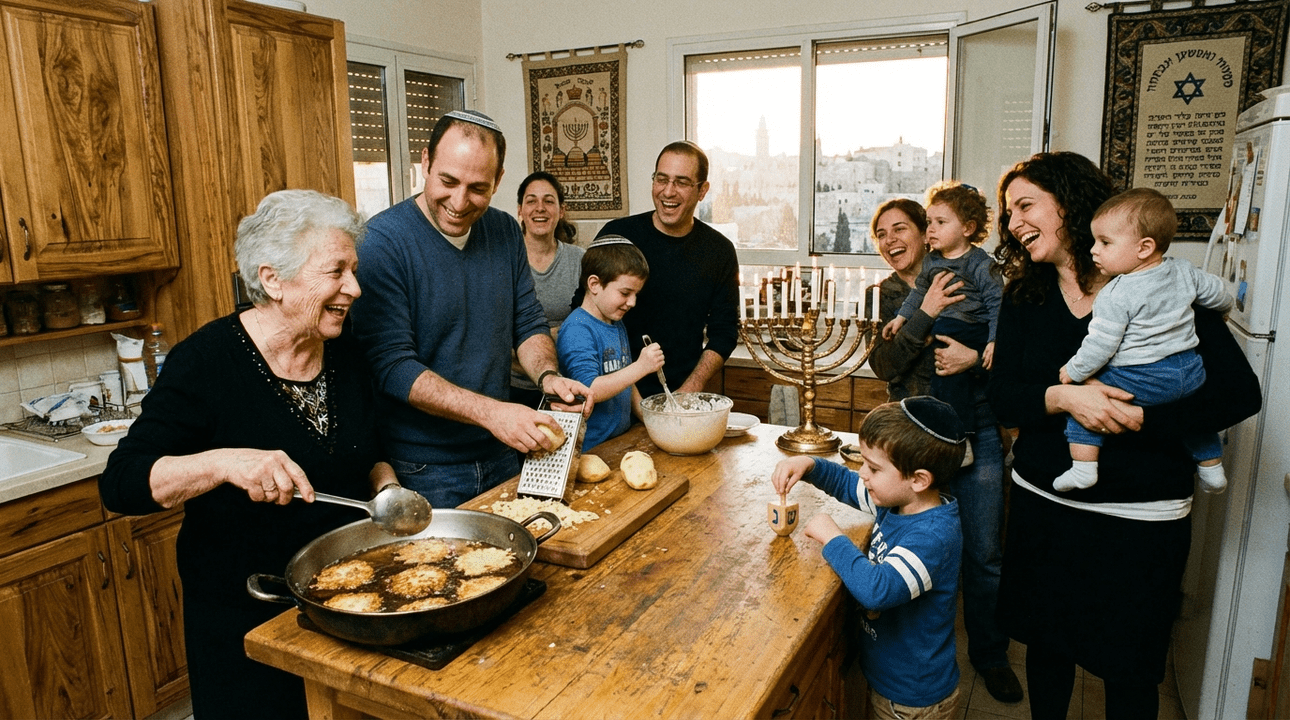
Festive foods in Jerusalem play a crucial role in strengthening community bonds and highlighting the city’s diverse culinary heritage. Families come together to prepare traditional dishes, such as latkes during Hanukkah, passing down recipes through generations.
These gatherings echo the communal feasts mentioned in the Bible, like those in the Book of Esther. Jerusalem’s holiday culinary traditions are vibrant threads in the city’s cultural fabric, fostering a sense of community and continuity.
The Role of Markets and Local Producers
Markets in Jerusalem are vital, offering local produce and handmade goods. The Mahane Yehuda Market, for example, is a bustling hub where vendors sell everything from fresh fruits to spices. Supporting small businesses and local vendors helps sustain the community.
By purchasing from these markets, visitors contribute to the livelihood of families who have been part of Jerusalem’s fabric for generations. Visitors can find a variety of fresh ingredients and artisanal products, such as tahini and za’atar.
Jerusalem’s markets are cultural experiences that connect shoppers to the city’s past and present, fostering community and sustaining local traditions.
A Journey of Flavors and Memories
Experiencing Jerusalem’s food is a journey of flavors and memories. Each dish, like the traditional shakshuka, offers a taste of cultural heritage and tradition. Shakshuka, with its origins in North Africa, reflects the diverse influences that have shaped Jerusalem’s cuisine.
By enjoying these foods, individuals help maintain and honor the rich culinary tapestry of Jerusalem. The blend of spices and ingredients reflects the city’s diverse population and history.
It’s a shared journey, connecting people with the diverse history of the land, much like the stories of King David and Solomon.
Dining in Jerusalem is a journey through time, offering a taste of the city’s rich heritage and multifaceted identity.
Discovering Jerusalem's Cuisine
