Exploring the Flavors and Serving Choices for Shakshuka
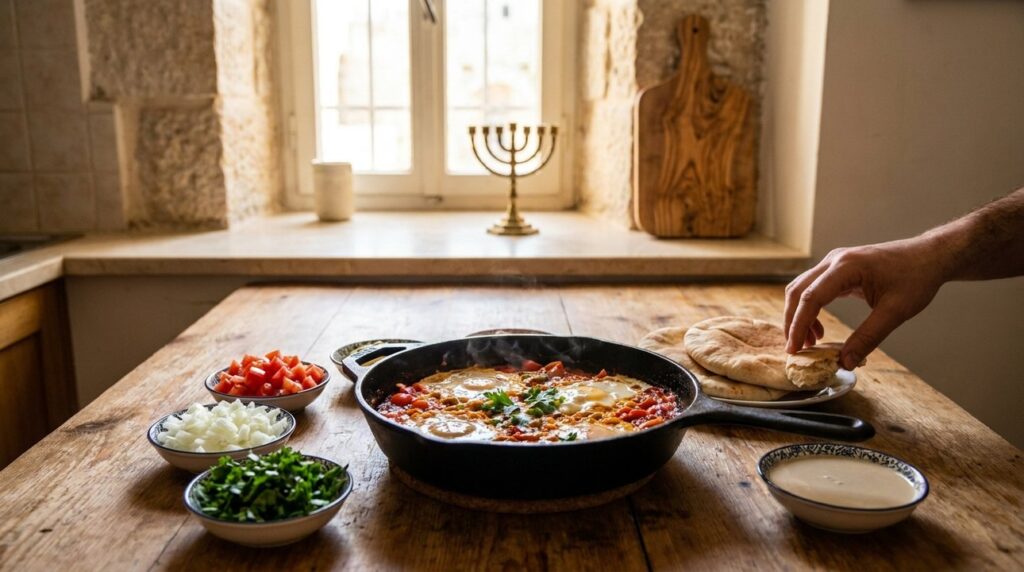

Shakshuka is a vibrant and flavorful dish originating from North Africa, particularly from regions like Tunisia and Morocco. It has been widely embraced in Israel, where it’s enjoyed in homes and cafes alike, becoming a staple in Israeli breakfasts. This delicious meal consists of poached eggs nestled in a rich sauce of tomatoes, peppers, and spices like cumin and paprika.
In this article, we explore what Shakshuka tastes like, how to serve it, and the perfect accompaniments to elevate your culinary experience. The dish’s popularity can be compared to the biblical manna, which provided sustenance and comfort to the Israelites during their journey in the wilderness (Exodus 16:14-15). Shakshuka, with its nourishing ingredients, offers a comforting and satisfying meal that resonates with the warmth of Israeli hospitality.
The dish’s popularity in Israel can be traced back to the 1950s, when Jewish immigrants from North Africa brought their culinary traditions with them. These immigrants, hailing from countries like Tunisia and Morocco, enriched Israeli cuisine with their vibrant dishes. Today, Shakshuka is celebrated for its simplicity and the way it brings people together around the table.
Its vibrant colors and bold flavors make it not only a feast for the taste buds but also for the eyes, inviting everyone to partake in its warmth and richness. The dish’s bright red tomatoes and green herbs can be likened to the colorful garments described in Genesis 37:3, symbolizing the beauty and diversity of the cultures that have shaped Israel’s culinary landscape.
Israeli Cookbook
Inspired by the Farms of Israel

What Does Shakshuka Taste Like?
The taste of Shakshuka can be described as a delightful balance of savory and spicy. The tomatoes provide a rich, juicy base while the peppers add a subtle sweetness. Spices such as cumin, paprika, and cayenne deliver warmth and depth, making it a comforting dish that satisfies the palate.
The eggs, poached directly in the sauce, add a creamy texture which complements the spiced tomato mix perfectly. This combination creates a burst of flavors that is both hearty and invigorating, a staple on the Israeli breakfast table. The harmony of these flavors is akin to the biblical description of the land flowing with milk and honey, a place of abundance and satisfaction (Exodus 3:8).
How to Serve Shakshuka
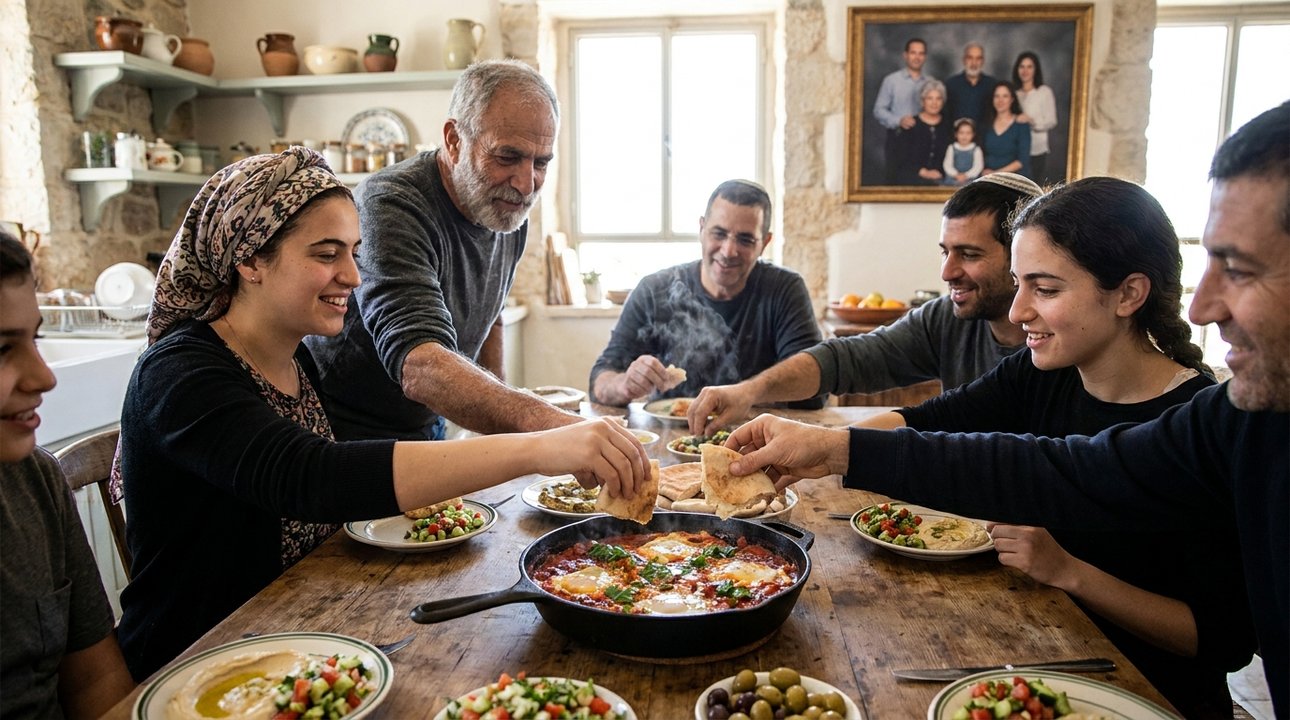
Traditionally, Shakshuka is served directly from the skillet it is cooked in. This keeps the dish warm and allows for communal dining, where everyone scoops from the same pan. This method of serving is reminiscent of the shared meals described in the Bible, such as the feast prepared by Abraham for his guests in Genesis 18:6-8.
It’s typically accompanied by crusty bread, which is perfect for dipping into the rich tomato sauce. Some prefer to sprinkle fresh herbs like parsley or cilantro on top before serving, adding a burst of color and freshness. For a touch of richness, a dollop of yogurt or crumbled feta can be added, providing a creamy balance to the dish’s spice. These additions enhance the flavors and textures, making each bite a delightful experience.

What to Serve with Shakshuka
While Shakshuka is delightful on its own, pairing it with side dishes can enhance the meal. Fresh salads, such as a classic Israeli salad with cucumbers and tomatoes, complement its warmth. This salad, known for its refreshing taste, mirrors the biblical references to the bounty of the land, such as in Numbers 13:23, where the Israelites brought back grapes and pomegranates from Canaan.
Sliced avocado or a side of hummus provides added creaminess and contrasts beautifully with the acidity of the tomatoes. For a heartier meal, consider serving it with labneh, a creamy Middle Eastern yogurt cheese, or a selection of olives for a salty counterpoint. These accompaniments round out the meal and offer a complete taste experience, much like the diverse offerings at a traditional Middle Eastern feast.
How to Eat Shakshuka
Eating Shakshuka is an immersive experience that engages all the senses. Begin by tearing off a piece of bread, such as pita or challah, using it as a utensil to scoop up the richly flavored sauce and perfectly poached eggs. The mix of textures—soft eggs, hearty sauce, and crunchy bread—creates a satisfying mouthful.
Don’t be afraid to experiment by adding extra toppings such as hot sauce or cheese, adjusting heat levels and flavors to your preference. This communal style of eating emphasizes warmth and sharing, making it an ideal dish for gatherings. The act of breaking bread together is reminiscent of the shared meals in biblical times, such as the feasts described in 1 Samuel 1:4-5, where sharing food was a way to build community and celebrate togetherness.
The communal nature of Shakshuka is reminiscent of traditional Middle Eastern dining practices, where meals are shared and enjoyed together. This style of eating fosters a sense of connection and community, as everyone gathers around the table to partake in the meal. In the Bible, communal meals often signified unity and fellowship, much like the shared meals described in Exodus 12:3-4 during Passover.
The act of sharing food, especially a dish as comforting as Shakshuka, reinforces bonds and creates lasting memories. It’s a tradition that echoes the gatherings of families and tribes in ancient times, where breaking bread was more than just eating—it was a way to strengthen relationships and celebrate togetherness. In this way, Shakshuka serves as a modern bridge to these age-old customs.
Cultural Significance of Shakshuka
Shakshuka holds a special place in Israeli cuisine, symbolizing warmth and hospitality. It is often served during holidays and family breakfasts, bringing people together in a spirit of community. Originating from the Maghreb region, its journey to Israel underscores a culinary blend of cultures and traditions.
The dish’s simplicity and robustness make it accessible yet deeply flavorful, reflecting the essence of Israeli culinary traditions. Sharing Shakshuka among friends and family is a cherished experience, resonating with the values of community and togetherness. This spirit of hospitality is akin to the biblical story of Abraham, who welcomed strangers with open arms and a meal, as described in Genesis 18:1-8, embodying the timeless tradition of welcoming guests with warmth and generosity.
Israeli Cookbook
Inspired by the Farms of Israel
The cultural significance of Shakshuka is akin to the biblical story of Ruth, who embraced new traditions and cultures with warmth and openness. Ruth, a Moabite woman, chose to stay with her mother-in-law Naomi and adopt her customs, as described in the Book of Ruth. Just as Ruth’s story is a testament to the power of community and acceptance, Shakshuka embodies these values through its ability to bring diverse people together around a shared meal.
It is a dish that not only nourishes the body but also the soul, fostering connections and celebrating the richness of cultural diversity. In the same way that Ruth’s loyalty and integration into a new culture led to positive outcomes, Shakshuka represents the beauty of cultural exchange and the joy that comes from embracing new traditions.
Variations of Shakshuka
Shakshuka’s versatility allows for numerous variations, making it a favorite among chefs and home cooks alike. Some recipes incorporate additional vegetables like eggplant or spinach, adding layers of flavor and nutrition. Others may include spicy sausages or merguez, enhancing its heartiness and making it a more filling meal.
Ingredients like feta cheese or olives provide Mediterranean flair, while spicing can be adjusted to achieve either mild or fiery heat. Exploring different variations of Shakshuka can be a delightful culinary adventure, inviting experimentation with flavors and ingredients.
For those who enjoy a bit of heat, adding harissa, a North African chili paste, can elevate the dish to new levels of spiciness. Harissa, originating from Tunisia, is made from hot chili peppers, garlic, and spices, and has become a staple in many North African and Middle Eastern kitchens. This adaptability makes Shakshuka a dish that can be tailored to suit any palate, whether you prefer a milder taste or a fiery kick.
The inclusion of various ingredients not only enhances the flavor but also reflects the diverse culinary influences that have shaped Israeli cuisine over the years. Just as the Israelites adapted to new environments and cultures, as seen in the story of Joseph in Egypt (Genesis 41:41-43), Shakshuka embodies a harmonious blend of flavors and traditions.
Tips for Making Perfect Shakshuka
To create the perfect Shakshuka, start with ripe tomatoes or good-quality canned ones. This forms the base of your sauce, providing a rich and tangy flavor. Use a balance of spices to achieve desired depth of flavor; cumin and paprika are traditional must-haves, often complemented by garlic and onions.
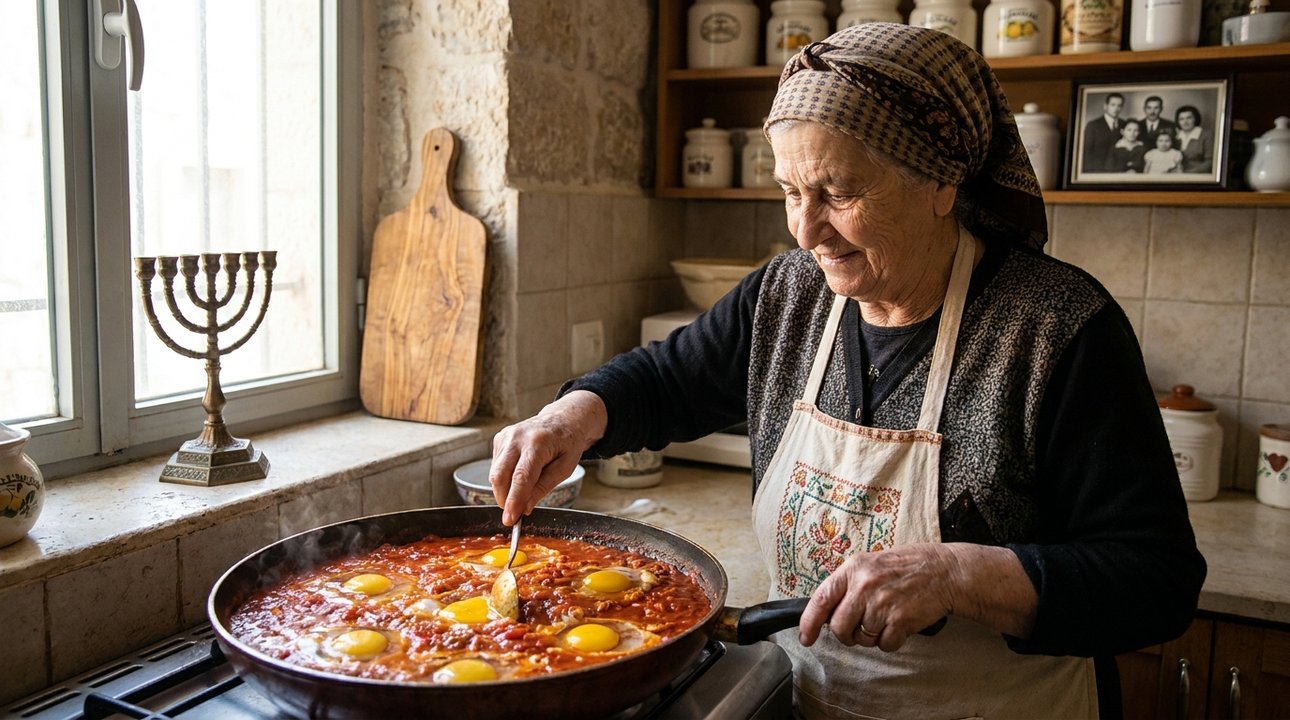
The eggs should be added gently, ensuring the whites set while keeping yolks runny for a luscious texture. Finish with your choice of herbs or cheese, and serve hot, directly from the skillet. Experimentation and practice are key to mastering this dish and making it your own.
The origins of Shakshuka can be traced back to the Ottoman Empire, where it was a popular dish among the diverse communities. The Ottoman Empire, which lasted from 1299 to 1922, was known for its rich culinary traditions that blended various cultural influences. Over time, Shakshuka has evolved and adapted to include local ingredients and flavors, making it a true reflection of cultural fusion.
Today, Shakshuka is celebrated not only for its taste but also for its ability to bring people together, embodying the spirit of hospitality and sharing. This spirit can be seen in the biblical story of Abraham, who welcomed strangers with a meal, as described in Genesis 18:1-8. Shakshuka, much like this story, symbolizes the open-heartedness and generosity that are central to Middle Eastern hospitality.
Understanding Shakshuka