
Lev Haolam logo – Israel gift box company
Join now
Lev Haolam
  • Home
  • To The Top
  • Who We Are?
  • How It Work
  • Membership
  • Our Boxes
  • Testimonials
  • FAQ
  • Blog
    • Articles
    • Recipes
    • Gift Boxes
  • Career
Log In
Join now
Log In
Join now
  1. Home
  2. Blog
  3. Biblical Studies

Exploring the Depths of Biblical Studies

Dive into the world of Biblical Studies with our collection of insightful articles. Discover historical contexts, cultural nuances, and the timeless wisdom of the Hebrew Bible. Perfect for those seeking a deeper connection to Israel's rich heritage.
Ancient scrolls and artifacts related to Biblical Studies
A table set with challah bread and wine for Shabbat

Get to know Shabbat, the holiest day of the week!

“And God blessed the seventh day and He hallowed it, for thereon He abstained from all His work that God created to do.” Bereshit (Genesis) – Chapter 2:3 The history of Shabbat goes all the way back to the beginning… Immediately after God completed his momentous creation of the world, he prescribed Shabbat, the seventh day, as the day of rest. At the time, there were no precise instructions as to how to observe Shabbat. It became clearer with the giving of the Ten Commandments to the Jewish people at Mount Sinai. There, in the fourth commandment, it says, “Remember...
Show more

Why Giving is Taking

Why “take” instead of “give”? It is known that wording in the Torah is never arbitrary; every letter, not just every word, is meaningful (Jewish mysticism teaches that God created the world while playing with the letters of the Torah. So why this choice of words? Is it some Freudian slip? Or does the phrasing imply that when we give to Him, we actually take, get something for ourselves? Later in the Torah we hear God commanding to all of the Israelites give certain (really small) amount of silver to the building of the Tabernacle. There, He orders taxation –...
Show more
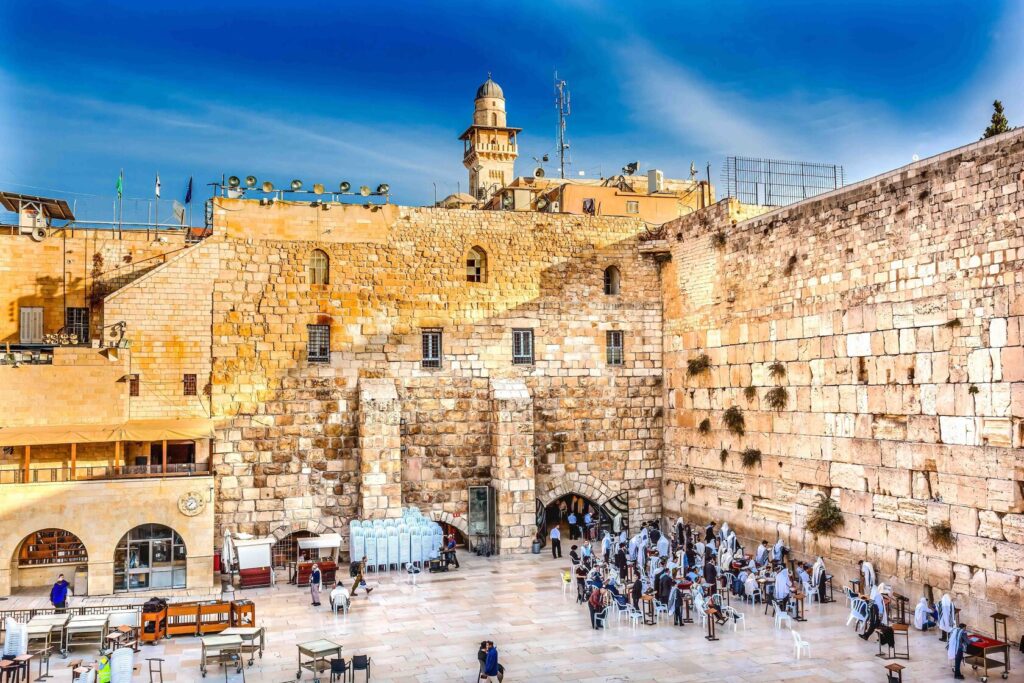
People praying at the Western Wall in Jerusalem

At the Western Wall, you can feel the ancient Biblical history of Jerusalem!

2,000 Years Old and counting. This is the Western Wall! The Second Temple stands proudly in Jerusalem. Yet King Herod decides to make his Temple even grander and begins a vast expansion project of the Temple Mount. The Western Wall forms one of the retaining walls that surround the Temple Mount. The Romans besieged Jerusalem and destroyed the Holy Temple. However, the outer wall, today known as the retaining wall, survives. Why would the Romans leave it standing? They wanted a tangible reminder that the mighty Roman Empire had succeeded in destroying the Holiest structure in all of Judaism. And...

Show more
The Seven Species of Israel displayed in a vibrant arrangement

The Seven Species of Israel: A Taste of the Promised Land

Wheat is one of the world’s oldest cultivated grains – and in Israel, it grows across rolling hills and valleys, just as it did in biblical times. It is the grain of sustenance and structure – used in the Temple offerings , baked into matzah at Passover , and braided into challah for Shabbat . It represents abundance , but also the human role in refining the raw gifts of nature . Wheat reminds us: we harvest with our hands, but we nourish with our hearts. Barley matures earlier than wheat and was traditionally seen as the grain of the...

Show more
Ancient herbs growing in a biblical landscape

Biblical Herbs in Modern Life: Ancient Roots, Living Remedies

🌿 Hyssop (Za’atar): A Sacred Scent Through the Ages “ Purge me with hyssop, and I shall be clean ” – Psalm 51:7 One of the most frequently mentioned herbs in the Bible, hyssop was used in rituals of purification, healing, and sacrifice. It was dipped in blood and sprinkled during Passover, and it symbolized spiritual cleansing in Temple worship. Today, Israelis know it best as za’atar – an earthy, aromatic blend made from dried hyssop leaves, sesame seeds, sumac, and salt. Sprinkled on warm pita with olive oil or baked into flatbreads, it brings a distinctly biblical flavor to...
Show more
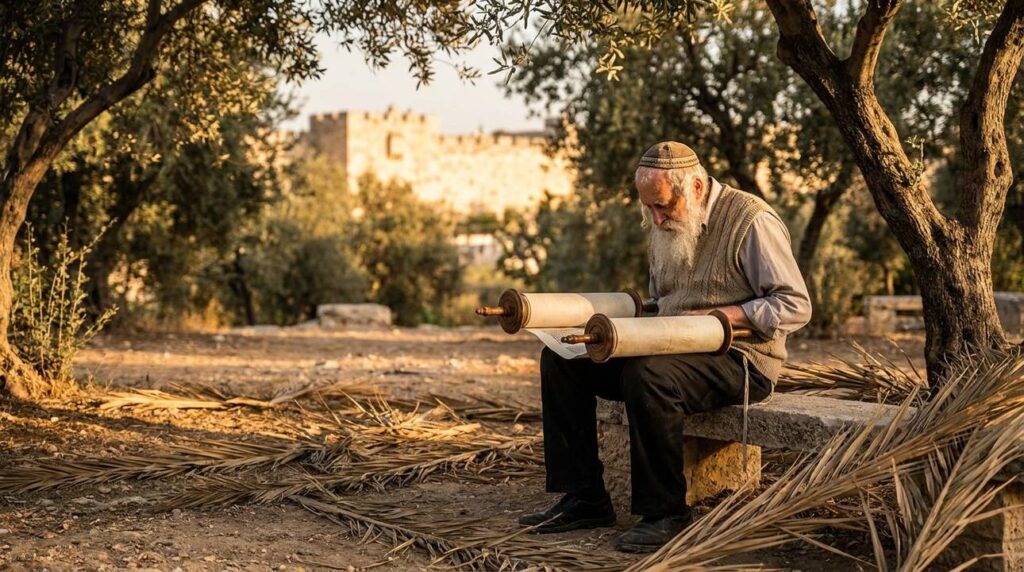
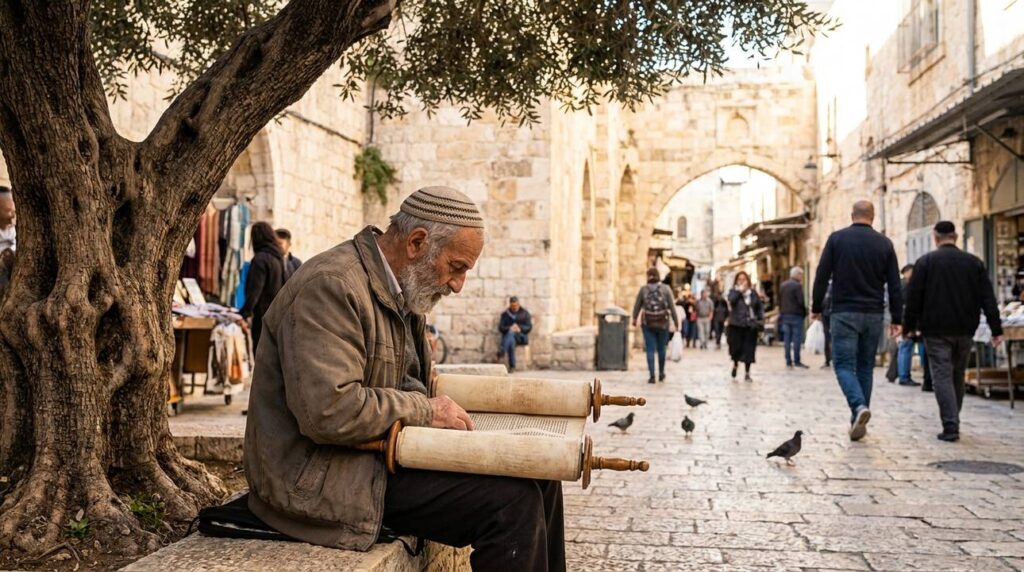
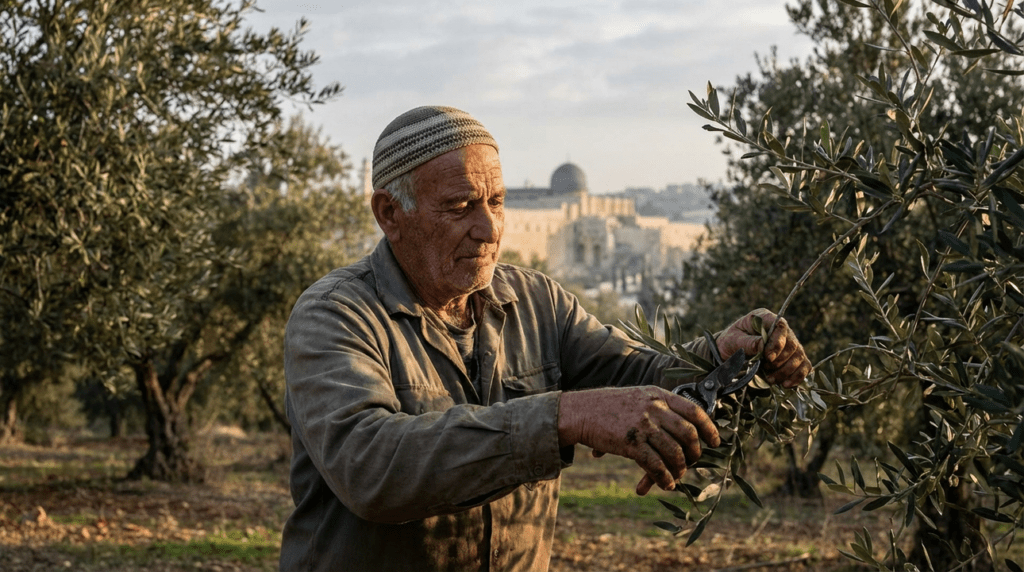
Elderly Jewish man reading Torah in olive grove, Jerusalem backdrop.

Understanding the Symbolism of Palm Leaves in the Bible

In various narratives, the palm plays a significant role, as seen in the story of Deborah, the prophetess, who held court under a palm tree (Judges 4:5). This setting symbolizes wisdom and judgment, qualities associated with this tree. Palms in various contexts highlight their multifaceted symbolism, representing not only physical beauty and strength but also spiritual and moral virtues cherished throughout Jewish history. Deborah’s story exemplifies the palm’s association with leadership and justice, as she guided the Israelites with wisdom and courage. The symbolism of strength and resilience is further reflected in historical architecture, where palm motifs adorned structures, signifying...
Show more
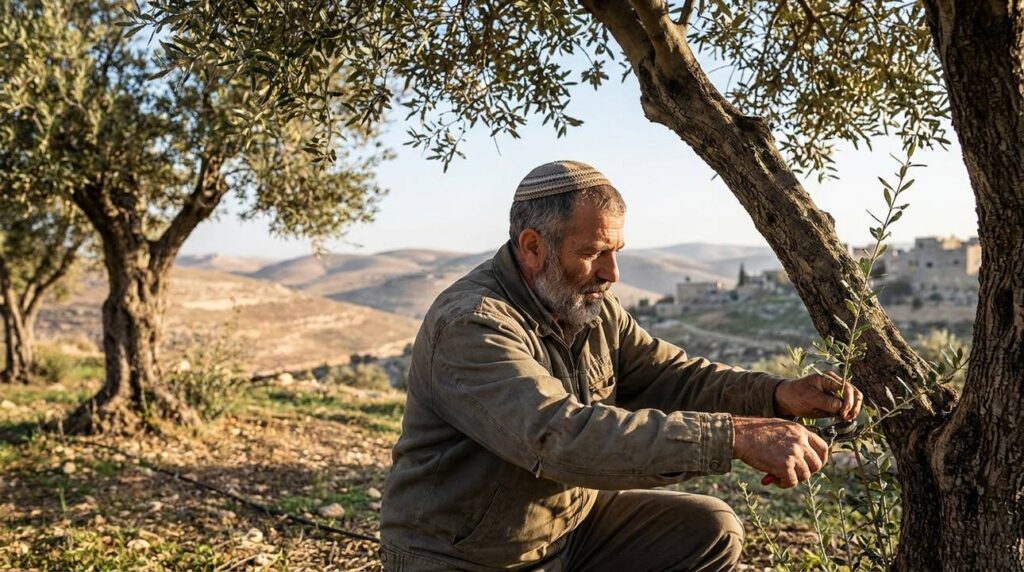
Middle-aged Jewish man tending olive trees in morning light.

Unveiling the Biblical Significance of Claire and Raven

Claire, meaning ‘clear’ or ‘bright’, connects to themes of light and understanding, echoing biblical values of wisdom. Meanwhile, the raven’s appearances, such as in 1 Kings 17:4-6, where it provides for Elijah, highlight its role in divine care. These names, though different in their origins, offer a window into the rich tapestry of biblical symbolism. Exploring their meanings gives us a deeper appreciation for the stories and values that continue to resonate today. The Name Claire: Biblical Reflection Claire isn’t directly mentioned in the Bible, yet its meaning shines through its origins. Claire means ‘clear’ or ‘bright’, connecting to biblical...
Show more
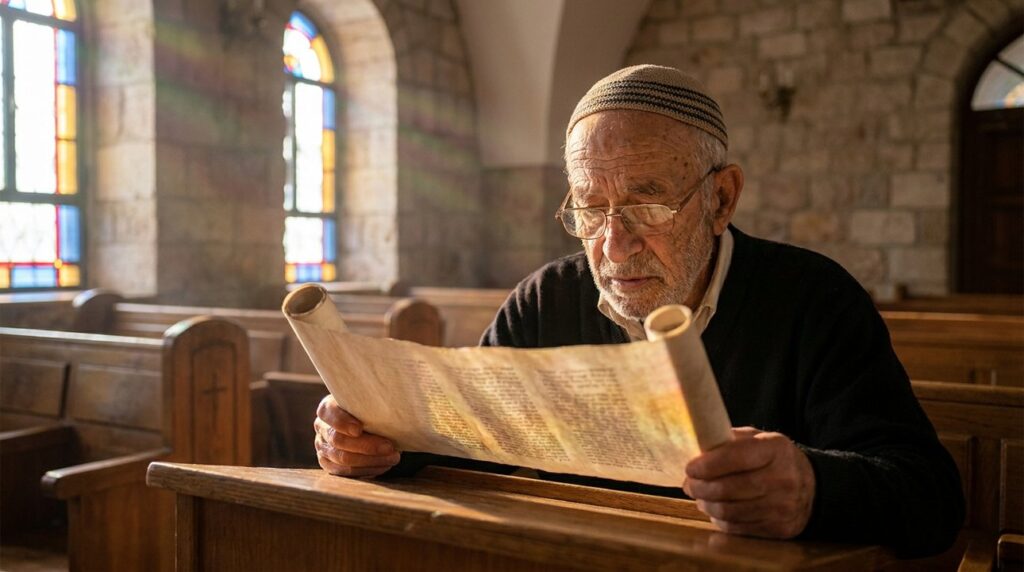
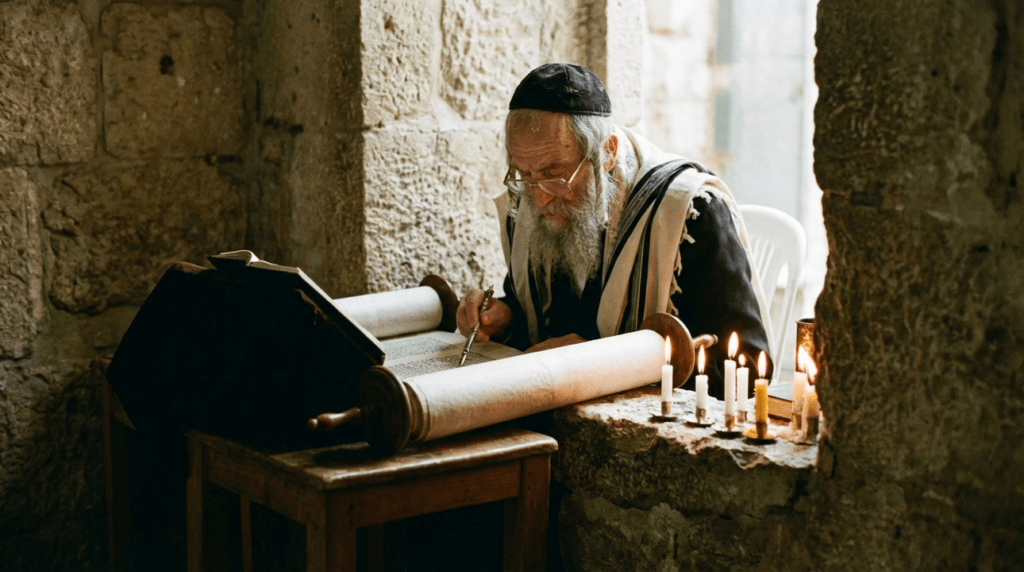
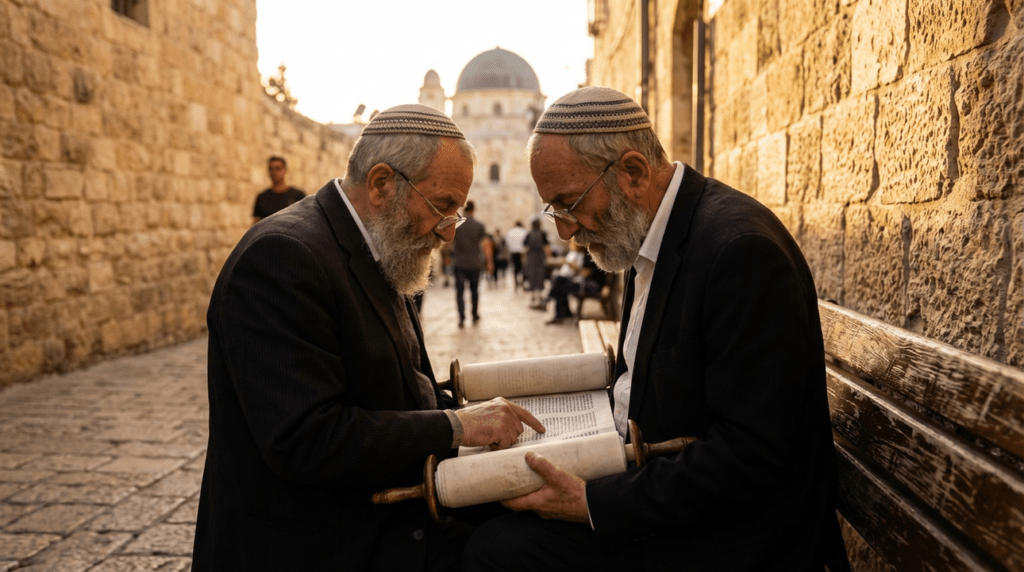
Elderly Jewish man reading ancient scroll in dimly lit synagogue.

Unveiling the Story of Zechariah: Insights from the Bible

Zechariah’s prophecies, such as those in Zechariah 1:1-6, called for repentance and a return to righteous living. His visionary experiences, including the vision of the golden lampstand in Zechariah 4:1-14, symbolized the divine presence and guidance for the Israelites. These messages were crucial during a time of rebuilding and renewal. As we explore Zechariah’s teachings, we uncover the profound impact his visions had on shaping the spiritual and cultural identity of the Jewish people. Zechariah’s visions include the famous scene of the four horsemen (Zechariah 1:8-11) and the vision of the flying scroll (Zechariah 5:1-4), each symbolizing different aspects of...
Show more
Elderly Jewish scholar reads Zechariah by menorah light, surrounded by books.

The Book of Zechariah: Authorship, Meaning, and Message

The visions of Zechariah, including the man among the myrtle trees, symbolize divine watchfulness and the promise of future prosperity for Jerusalem. These early chapters set the stage for the unfolding of a divine narrative that assures the people of their central role in the divine plan, encouraging them to remain steadfast in their faith and efforts. This article will journey through the complexities of Zechariah to uncover the depth behind its verses. The text’s symbolism, including the vision of the four horns and four craftsmen (Zechariah 1:18-21), illustrates the challenges and eventual triumphs of the Jewish people. These horns...
Show more
Jewish farmers tending olive trees near a stone synagogue in Galilee.

Understanding the Meanings of Galilea and Galileo

The Origin of the Name Galilea ‘Galilea’ is derived from ‘Galilee,’ a significant region in northern Israel known for its rich cultural history. The Hebrew term ‘Galil’ translates to ‘district’ or ‘circuit.’ Galilee was divided into Upper and Lower Galilee, both of which featured prominently in historical narratives. This region became particularly significant during the Second Temple period, serving as a center for Jewish life and teachings. Galilee is often remembered for its beautiful landscapes and vibrant cultural exchanges, providing a backdrop for many historical events. The Hebrew Bible highlights Galilee as a place of refuge and sustenance, as seen...
Show more
Elderly Jewish man reading Torah in olive grove near Shechem.

Understanding the Significance of Shechem in the Bible

Historical Background of Shechem Shechem, located in the hill country of Ephraim, is frequently mentioned throughout the Tanakh. As one of the earliest settled areas in Canaan, it was strategically positioned between Mount Ebal and Mount Gerizim. Genesis 12:6-7 recounts Abram’s arrival to Shechem, where God first appears to him, promising the land to his descendants. Shechem also served as a pivotal city during the Israelites’ settlement in Canaan. Joshua 24 details the gathering of the tribes at Shechem, where they reaffirmed their covenant with God. This moment highlights Shechem’s role as a place of spiritual renewal and commitment. The...
Show more
Elderly Jewish man reading Torah in serene olive grove.

Understanding the Name Bethany in Hebrew Context

This dual meaning reflects Bethany’s role as a place of both hardship and abundance. Known for hospitality and healing, it was the home of Mary, Martha, and Lazarus, who are key figures in various biblical narratives. Mary and Martha are well-known for their hospitality, as seen in the story where Martha welcomes a guest into her home (Luke 10:38-42). Lazarus, their brother, is central to a miraculous event that underscores themes of faith and renewal. Mary and Martha’s story in Luke 10:38-42 highlights the importance of hospitality and service. Martha’s dedication to welcoming guests and Mary’s focus on listening and...
Show more
Elderly rabbi reading Torah in a study filled with texts.

Unraveling the Hebrew Meaning of Levi

In this article, we explore the etymology, biblical mentions, and cultural significance of Levi, providing insights into how his story continues to resonate today. The tribe of Levi, known for its religious significance, played an integral role in the spiritual life of ancient Israel. Entrusted with the care of the Ark of the Covenant and other sacred duties (Deuteronomy 10:8), they were responsible for carrying the Ark during the Israelites’ travels. Levi’s descendants played a pivotal role in maintaining the spiritual and cultural fabric of the community, ensuring that traditions were upheld across generations. The Name Levi in the Hebrew...
Show more
Elderly Jewish man in Jerusalem reading Torah on tranquil street.

Understanding the Significance of ‘Ram’ in Hebrew Context

In Exodus 29:15-18, the ram’s role in sacrificial offerings highlights its significance in religious practices. This underscores the ram’s symbolic representation of strength and leadership in biblical narratives. These insights deepen our understanding of the cultural and spiritual importance of the ram in ancient Israelite society. This article delves into the ‘ram’s’ Hebrew meaning, exploring its appearances in the Bible and understanding its broader cultural significance. Symbolic representation of leadership is evident in its frequent use in royal and priestly contexts. In 1 Samuel 15:22, the prophet Samuel emphasizes obedience over sacrifice, yet the mention of rams underscores their importance...
Show more
Elderly Jewish man reads Hebrew Bible in serene Jerusalem alley.

Understanding Gold’s Significance in the Hebrew Bible

Gold: A Precious Metal Throughout History Gold is first mentioned in the early passages of Genesis, indicating its longstanding value. Genesis 2:11-12 mentions the land of Havilah, where gold is found, described as ‘good.’ This reflects the esteem gold held even in the dawn of biblical history, symbolizing not just wealth but divine favor. The Tabernacle and Temple: Gold’s Sacred Role In Exodus 25, the use of gold in the Tabernacle is commanded. This precious metal is used in crafting the Ark of the Covenant and other sacred items. Gold’s inclusion signifies holiness and purity, marking it as a symbol...
Show more
Elderly scholars studying ancient texts in a historic Jewish library.

Exploring the Hebrew Meaning of Chaldeans

Jerusalem’s conquest by the Chaldeans is also chronicled in 2 Kings 25:1-12, detailing the siege and eventual destruction of the city. The exile profoundly affected Jewish identity and religious practices, as seen in the development of synagogues and the emphasis on Torah study during this era. Cultural interactions between the exiled Jews and the Chaldeans influenced Jewish thought, evident in the incorporation of certain Babylonian elements into Jewish tradition. Who Were the Chaldeans? Originating from southern Mesopotamia, the Chaldeans were known for their ascension in the Neo-Babylonian Empire. Their historical significance extends beyond their military and political power. They were...
Show more
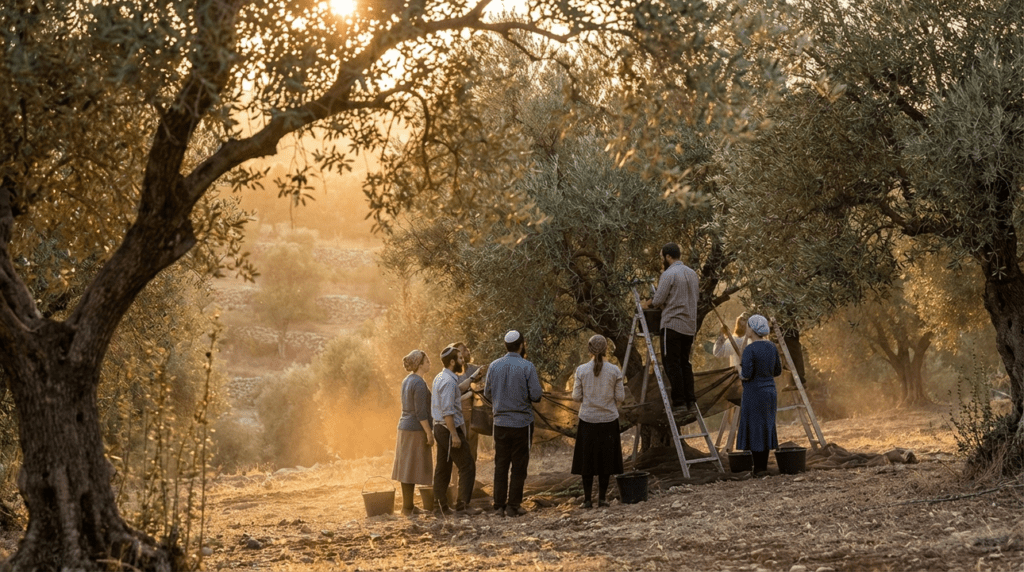
Diverse Israelis harvesting olives in a rural grove at sunset.

Exploring the Seven Fruits of the Bible

These fruits not only represent the physical abundance of the land but also serve as metaphors for spiritual and moral teachings. For example, the pomegranate is often associated with righteousness due to its numerous seeds, symbolizing the commandments. Through this exploration, we aim to deepen the reader’s understanding of how these fruits have shaped Jewish identity and tradition, offering a glimpse into the rich tapestry of biblical symbolism and its enduring impact on Jewish culture. Understanding the Seven Species The species, known as the Shiv’at HaMinim, hold a unique place in Jewish culture and are mentioned in Deuteronomy 8:8. This...
Show more
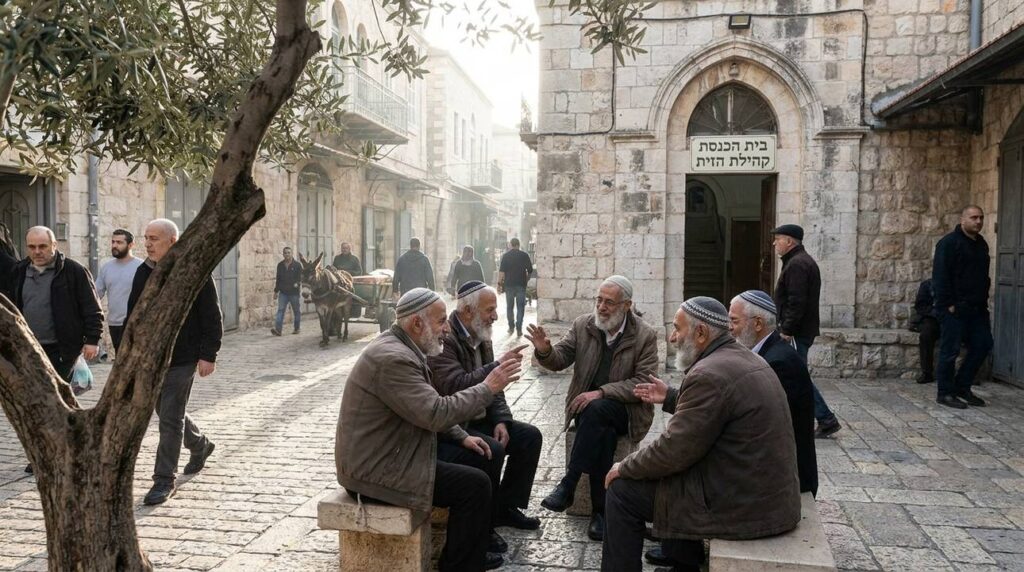
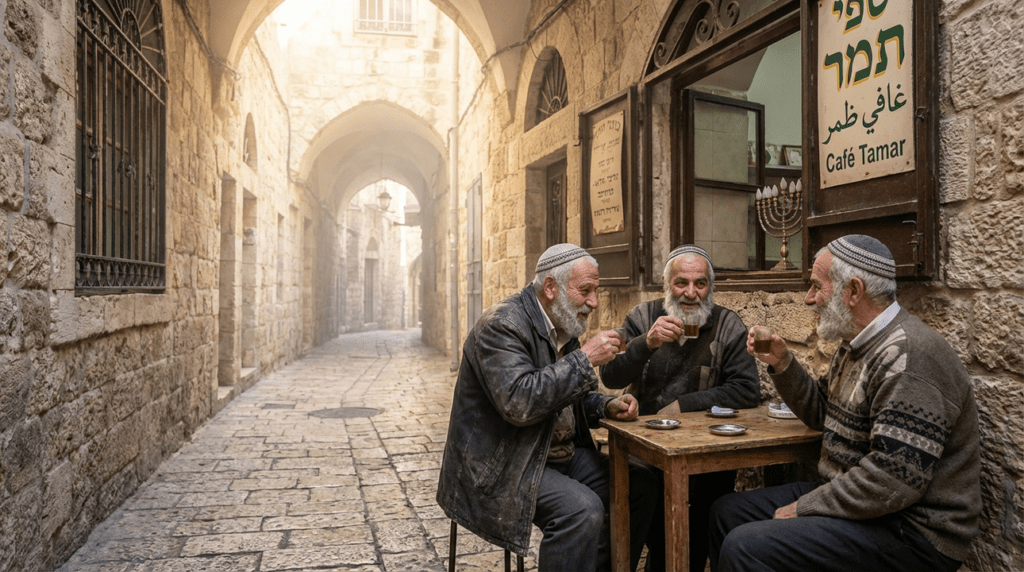
Elderly men in kippahs talking near bakery in cobblestone street.

Exploring the Meaning of the Name Bethany

These interpretations of Bethany’s name highlight its dual role as both a place of healing and nourishment. The village’s significance is further emphasized by its proximity to key locations in Jewish history, such as Jerusalem and the Mount of Olives. Bethany’s legacy continues to inspire those who seek to understand the deeper meanings behind the names and places mentioned in historical texts. Our subscription service offers a curated selection of 6-8 products that may include artisan foods, handcrafted goods, cosmetics, or cultural items, with contents varying each month. Bethany in the Hebrew Bible Bethany is mentioned several times in historical...
Show more
Elderly man in kippah reads Torah under olive tree in Jerusalem.

Understanding the Meaning of ‘Jeru’ in Hebrew

The Historical Context of ‘Jeru’ The term ‘Jeru’ forms the first syllable of ‘Jerusalem,’ known in Hebrew as ‘Yerushalayim. ‘ The history of Jerusalem can be traced back to its earliest mentions in ancient texts. Originally, the city’s name was likely related to a god or a sacred site. In the earliest instances, Jerusalem appears as a city-state in Egyptian texts, dating back to the 19th century BCE. The Amarna letters, from around 1350 BCE, also reference the city, indicating its importance in regional politics. Ancient inscriptions suggest that ‘Jeru’ may reference an older settlement or deity. Archaeological findings in...
Show more
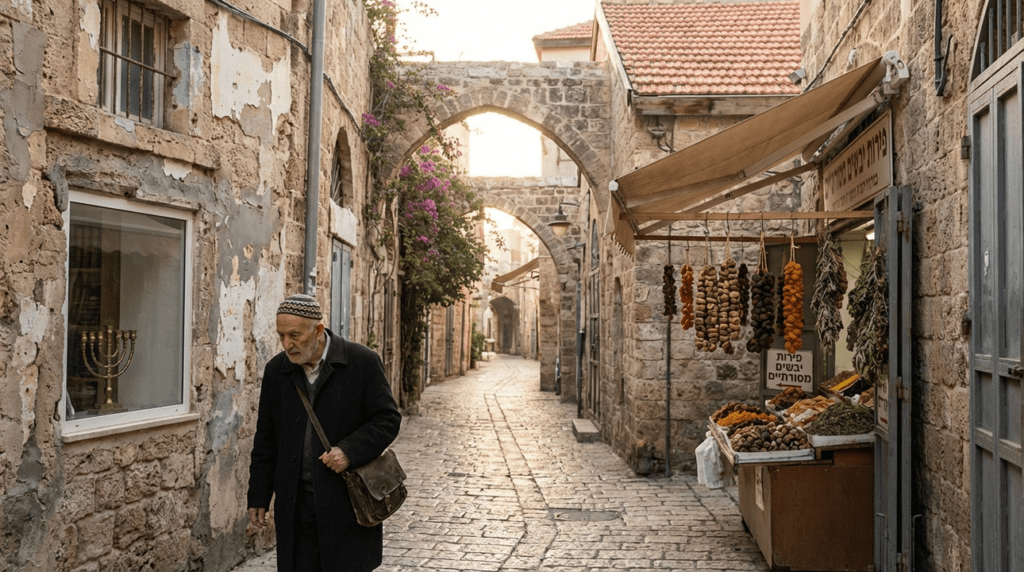
Early morning in Joppa; person with kippah, menorah visible, dried fruits hanging.

Understanding the Meaning of Joppa in Hebrew Contexts

Joppa’s role in biblical stories, such as Jonah’s journey (Jonah 1:3) and Peter’s vision (Acts 10:9-16), underscores its importance as a spiritual and cultural hub. The city’s historical significance is reflected in its continued presence as a vibrant part of modern Israel, where its rich past and dynamic present meet, inviting exploration and reflection on its enduring legacy. The Origin of the Name Joppa Joppa, known in Hebrew as ‘Yafo,’ appears in biblical texts as a vital port city. The name ‘Joppa’ itself is believed to derive from a Hebrew root denoting ‘beautiful’ or ‘to be fair. ‘ This aligns...
Show more
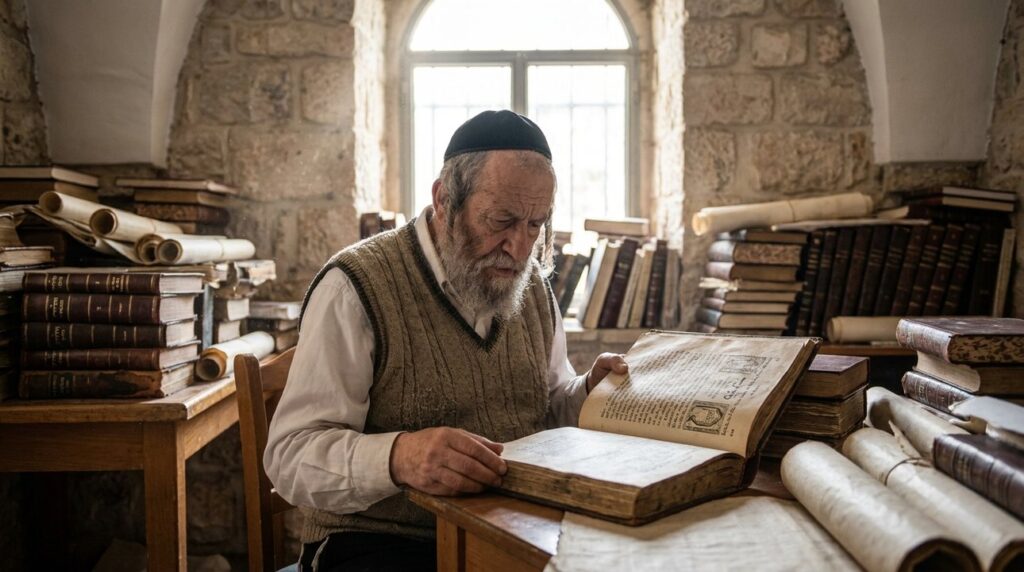
Elderly Jewish scholar reads ancient texts in a sunlit study room.

Understanding the Meaning of Esau in Hebrew

The birth of Esau and Jacob in Genesis 25:19-34 sets the stage for a lifetime of sibling rivalry and reconciliation. These narratives provide a window into the intricate relationships and choices that define Esau’s life and his lasting impact on biblical history and cultural identity. Esau’s name is often associated with the Hebrew word ‘asah,’ meaning ‘to do’ or ‘to make,’ reflecting his active and rugged lifestyle. This connection is evident in his portrayal as a skilled hunter and man of the field. The story of Esau and Jacob also explores themes of identity and destiny, particularly in Genesis 27,...
Show more
Elderly men with kippahs talking outside a synagogue in Nazareth.

Exploring the Meaning of Nazareth in Hebrew

Nazareth’s historical significance is highlighted by its mention in various ancient records, including those from the Roman era. The city’s strategic location in the Galilee region made it a key site for cultural and trade exchanges. During the Roman period, Nazareth was part of the larger Galilee region, which was known for its diverse population and vibrant trade routes. Exploring Nazareth’s etymology and historical context provides a deeper understanding of its role in religious and cultural narratives, offering insights into its enduring legacy in the region. The Galilee region, where Nazareth is located, was also the setting for many significant...
Show more
Jewish man reads scriptures beside menorah in Jerusalem alley.

Understanding Esau, Immanuel, and Meshach in the Bible

Esau’s narrative, for instance, involves themes of rivalry and reconciliation, while Immanuel represents hope and divine presence. Meshach’s story highlights steadfast faith and divine protection. These names and their associated stories provide valuable insights into the human experience, encouraging reflection on personal and communal values. The Meaning of Esau Esau, known as the elder twin brother of Jacob, carries a name that translates to ‘hairy’ or ‘rough’ in Hebrew scriptures. This description is fitting, as it directly refers to Esau’s appearance at birth. His role in the Bible centers around the complex relationship with his brother Jacob, involving themes of...
Show more
Old man in traditional Jewish attire reading scroll in Jerusalem.

Understanding the 7 Plagues in the Bible

These events serve as a powerful narrative of liberation, illustrating the lengths to which the Israelites had to go to secure their freedom. As we examine each one, we’ll see how they not only punished the Egyptians but also reinforced the Israelites’ faith in their eventual deliverance. The account is detailed in the book of Exodus, chapters 7 through 12. This story is not just about ancient events; it continues to inspire and remind us of the enduring power of faith and resilience in the face of adversity. The narrative is a testament to the strength and perseverance of the...
Show more
Elderly Jewish man in synagogue, contemplating with prayer book.

Understanding the Hebrew Word Lev

Throughout history, ‘Lev’ has symbolized emotional and moral guidance. Within the Torah, it is often associated with wisdom and understanding, as seen in King Solomon’s request for a discerning heart (1 Kings 3:9). By examining the multifaceted meanings of ‘Lev’, we can gain insight into its role in shaping personal and communal values. This exploration reveals the enduring impact of the heart on Jewish life and thought. What Does ‘Lev’ Mean? Its Basic Definition In Hebrew, the word ‘Lev’ directly translates to ‘heart.’ While many modern languages associate the heart with emotions, in Hebrew, it is a multifaceted term. Within...
Show more
Elderly Jewish man studying ancient scroll with magnifying glass in dim study room.

The Biblical Plague of Lice: Insights and Interpretations

In Jewish tradition, this plague is seen as a demonstration of divine will over earthly matters. Turning the dust of the earth into lice, a seemingly insignificant element becomes a powerful tool of disruption. This event serves as a reminder of the limitations of human power when faced with divine intervention, emphasizing themes of humility and reverence. The story encourages reflection on the fragility of human achievements and the importance of acknowledging a higher authority. The Story of the Lice Plague The account of the lice plague is found in Exodus 8:16-19. Unlike the previous plagues, this one was initiated...
Show more
Elderly Jewish man with kippa talking to young adults in Jerusalem alley.

Discovering the Hebrew Meaning of Shalom

In this article, we journey into the rich Biblical context of shalom, uncovering its multifaceted meaning and exploring its role in Jewish life and thought. The use of shalom in treaties, such as the one between Solomon and Hiram of Tyre, illustrates its importance in diplomatic relations. These examples show how shalom is not just an abstract concept but a practical principle guiding interactions and fostering community well-being. It remains a cornerstone of Jewish cultural and spiritual identity, influencing both personal and communal life. The Biblical Roots of Shalom The Hebrew word ‘shalom’ first appears in the Torah, deeply embedded...
Show more
Elderly Jewish man reading the Torah by candlelight in Jerusalem.

Understanding the Meaning of Meshech in the Bible

Meshech is often associated with a region in Anatolia, known today as Turkey. This connection is supported by historical texts and archaeological findings that suggest a link between Meshech and the Mushki, an ancient people mentioned in Assyrian records. Such connections help us map the movements and interactions of ancient civilizations, as seen in Ezekiel 27:13, providing a richer understanding of the world described in the Bible. The Mushki, identified by some scholars as the Phrygians, played a significant role in the cultural and political landscape of the region. Meshech in the Table of Nations Meshech is first mentioned in...
Show more
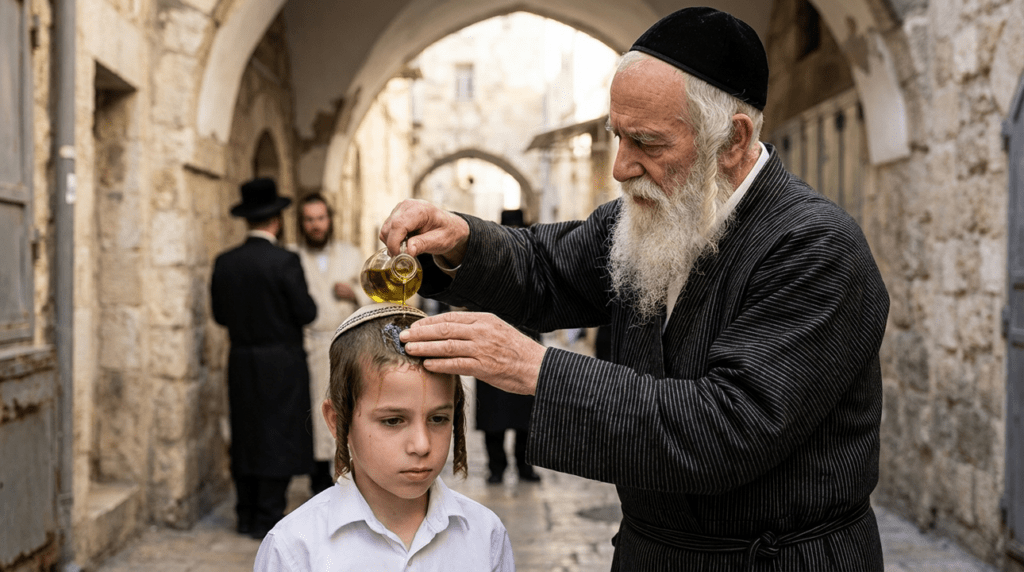
Elderly rabbi anointing young boy's head with oil in Jerusalem.

Understanding Anointing in the Hebrew Tradition

In the Bible, anointing is frequently mentioned in connection with the consecration of kings, priests, and sacred objects. For example, in Leviticus 8:30, Moses anoints Aaron and his sons, marking their dedication to the priesthood. This act was not merely ceremonial but symbolized the bestowal of divine favor and authority. Throughout biblical history, it served as a powerful symbol of God’s presence and blessing, reinforcing the chosen status of individuals and objects set apart for sacred purposes. The Origins of Anointing in Hebrew Culture Anointing (משיחה, mashiach) primarily involved pouring oil on the head of a person or an altar....
Show more
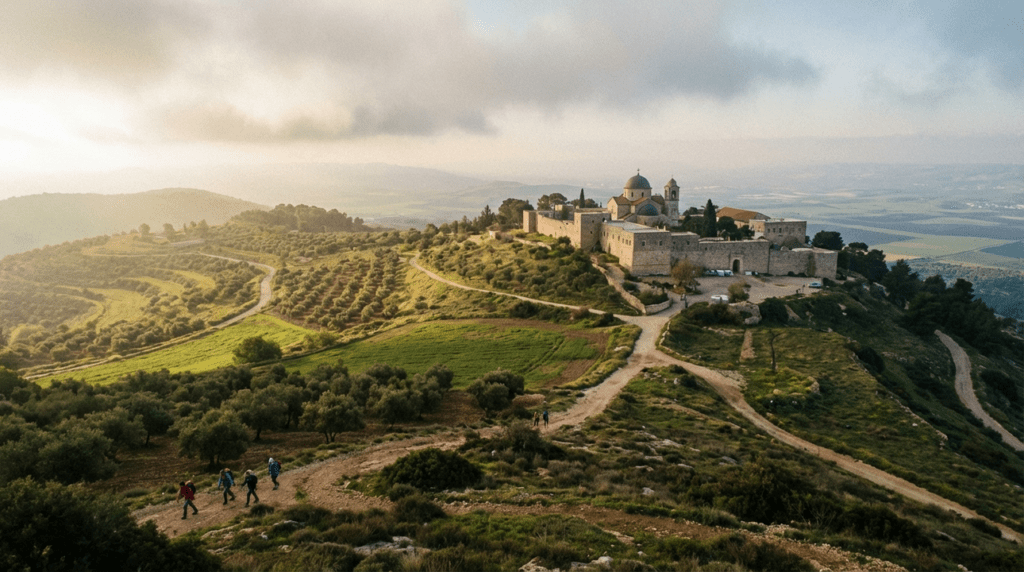
Panoramic view of Mount Tabor with Franciscan Monastery in morning light.

Exploring the Meaning of Tabor in Hebrew

Understanding Tabor’s Name in Hebrew The name ‘Tabor’ itself holds a special place in Israel’s history. While its exact etymology is not definitively known, some scholars suggest it could be related to a root meaning ‘break’ or ‘purity.’ Tabor emerges as a natural landmark in Northern Israel, historically mentioned as a boundary mark and a site of significant events, such as the battle led by Deborah and Barak (Judges 4). This mountain’s name evokes both its physical majesty and the pivotal events it hosted. The etymology of ‘Tabor’ may also connect to its rounded shape, resembling a navel or a...
Show more
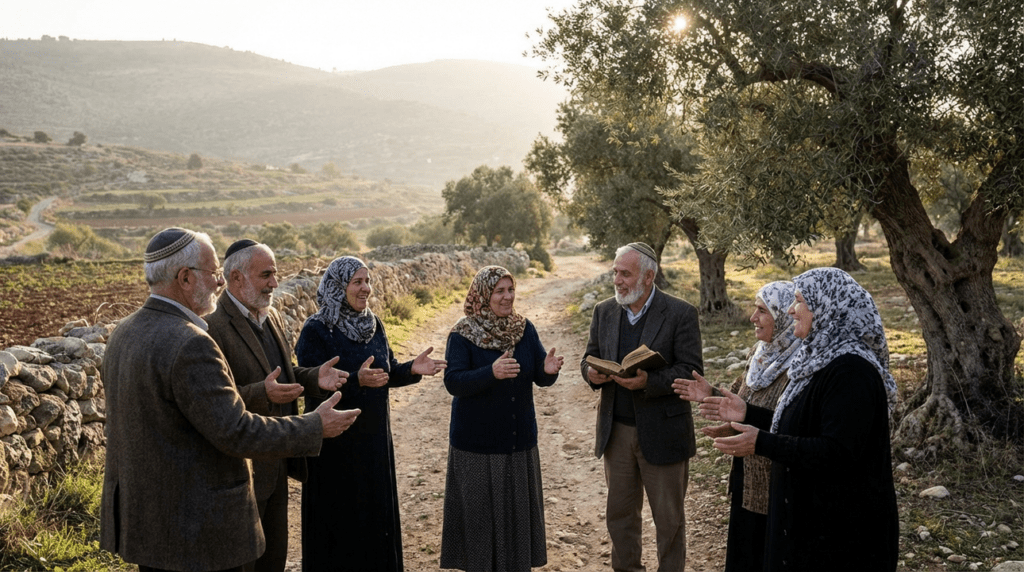
Group in traditional Jewish attire discussing among olive groves, distant hills.

Exploring the Meaning of Samaria in the Hebrew Bible

Samaria’s history offers insights into the complexities of ancient Israel. The Founding of Samaria Samaria was established as the capital of the Northern Kingdom of Israel by King Omri in the 9th century BCE. This strategic choice was more than a mere political maneuver; it represented a new center of power away from the traditional tribal territories. The Bible provides an account of Omri’s purchase of the hill where Samaria was built, marking a significant development in the urbanization of the region (1 Kings 16:24). The city’s founding would set the stage for future religious and cultural evolution. Samaria’s role...
Show more
Elderly man in kippah tending olive trees near Jerusalem walls.

Understanding Zion: A Biblical Exploration

Zion is not just a geographical location; it embodies the spiritual and historical journey of a nation, making it a cornerstone of Jewish faith and culture, deeply rooted in the collective consciousness. The Origins of Zion Zion’s story begins in the Second Book of Samuel. Initially a Jebusite fortress, it was captured by King David as described in 2 Samuel 5:7. Here, Zion established itself as the City of David, marking the heart of his kingdom. The term itself likely means ‘fortress’ or ‘dry place,’ reflecting its strategic position. This origin is central, grounding Zion in a tangible historical location...
Show more
Elderly Jewish man reads Torah by Jerusalem's stone walls at dusk.

Exploring the Significance of the Temple of the Lord

The Lord’s Temple was a cornerstone of ancient Israelite culture, serving as a spiritual and communal center that continues to resonate in Jewish memory and practice. The Construction of the First Temple The First Temple, also known as Solomon’s Temple, was constructed in the 10th century BCE. King Solomon, son of King David, initiated its construction in Jerusalem on Mount Moriah, a site of profound biblical significance. The temple became the center of Jewish worship and the dwelling place of the Ark of the Covenant. The biblical account in 1 Kings 6 details its architectural grandeur and sacred purpose. It’s...
Show more
Morning light in Jerusalem alley with menorah, elderly men talking.

Understanding the Meaning of Salem in Hebrew Context

Salem’s biblical roots in stories like that of Melchizedek connect it to themes of peace and righteousness, enriching our understanding of its historical and cultural significance. The Meaning of Salem in Hebrew The name ‘Salem’ is believed to derive from the Hebrew word ‘shalom,’ meaning peace. It appears in the Book of Genesis as the home of Melchizedek, a priest and king associated with peace and righteousness. Genesis 14:18 describes how Melchizedek, king of Salem, brings out bread and wine to bless Abram. This moment connects Salem to themes of hospitality and divine favor. The etymological link between Salem and...
Show more
Scholar in traditional Jewish attire studying ancient scriptures in Jerusalem.

Understanding the Biblical Meaning of Tyre

Tyre in the Hebrew Bible Tyre, referred to in Hebrew as ‘Tzor,’ was a major Phoenician city situated along the Mediterranean coast. Its strategic position made it a vital hub for trade and culture. Tyre’s relationship with Israel is intertwined with notable biblical figures, including King David and King Solomon. The interactions with the Phoenicians underscore a period of cooperation and mutual benefit. Notably, the alliance with King Hiram I of Tyre allowed for the construction of Solomon’s Temple, as cited in 1 Kings 5:1-12. Tyre’s strategic location and partnerships with Israel played a crucial role in the region’s development,...
Show more
Serene olive grove in Israel at sunset with harvesting people.

Understanding the Meaning of Goshen in Hebrew

This understanding enriches our appreciation of the Jewish journey and the lessons it imparts. Goshen stands as a testament to the strength found in unity and support. Goshen in the Hebrew Bible In the Hebrew Bible, Goshen is first mentioned in the context of Joseph’s rise to power in Egypt. In Genesis 45:10, Joseph invites his family to live in Goshen, emphasizing its fertile nature as ideal for their livestock. This area provided a sanctuary for Jacob’s family during the famine, ensuring their well-being. The narrative highlights Goshen’s role as a place of refuge and sustenance, a theme that resonates...
Show more

See other categories

Hands holding a heart symbolizing support and community
Charity and Social Responsibility
Cities
Assorted Israeli dishes and beverages
Food and Beverages from Israel
Scenic view of Israeli landscape with traditional elements
General
Scenic view of Israel's diverse landscapes
Geography & Travelling of Israel
Open Hebrew book with traditional script
Hebrew Language and Literature
Historical Places
Ancient artifacts from the history of Israel and Jews
History of Israel and Jews
Colorful Israeli market showcasing traditional crafts and foods
Israeli Culture and Traditions
We use cookies to provide the best site experience
Lev Haolam logo
Lev Haolam Facebook page Lev Haolam YouTube Follow Lev Haolam on Twitter Instagram Lev Haolam Lev Haolam Pinterest Lev Haolam TikTok Lev Haolam Threads
© 2015 – 2026 Lev Haolam
Become a member Update my details
Contact Us
+972 23721384 +1 (531) 208 1263
Customer Support: 24/6 · Sun–Fri (till 4pm)

Closed on Shabbat hours & Israeli public holidays
support@levhaolam.com
Lev Haolam copyright
Lev Haolam World Ltd.
Luleem Business Center, Kfar
Etzion 9091200, Israel
Israeli Company Number: 515056927
Become a member Update my details
Privacy Policy Terms & Conditions AI Information About Lev Haolam
Mastercard payment for Israel gifts Visa card Maestro card American Express payment option PayPal – pay for your Israel box Secure payment for Israel boxes
© 2015 – 2026 Lev Haolam