
Exploring the Location and History of Moab in the Middle East
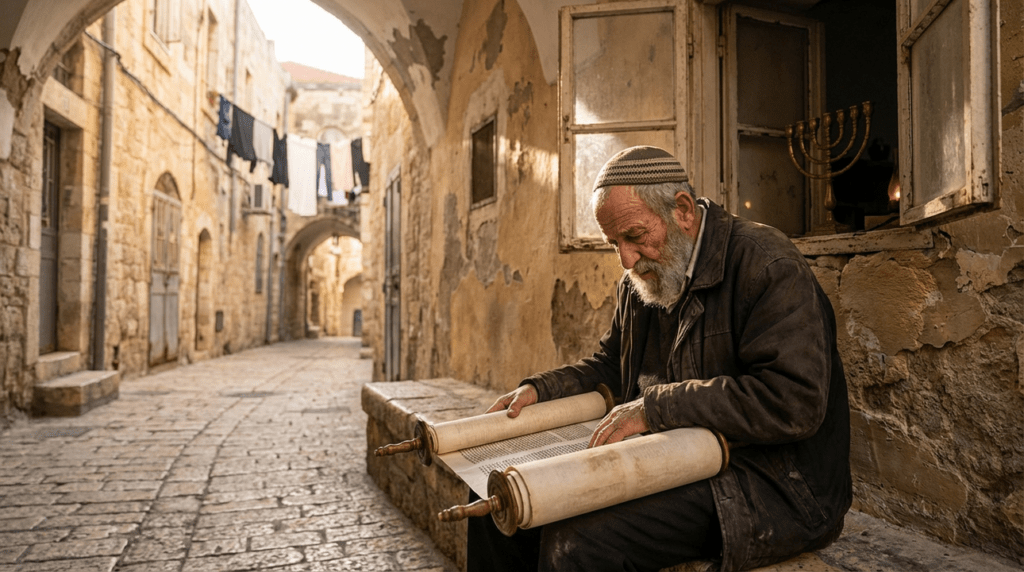

The ancient kingdom of Moab holds a fascinating place in Middle Eastern history. Located in modern-day Jordan, Moab was an Iron Age kingdom situated east of the Dead Sea, near the Arnon River. Its history is intertwined with biblical narratives, such as the story of Balak and Balaam in Numbers 22-24, providing a rich tapestry of cultural and historical relevance.
Moab’s strategic location made it a significant player in the region, interacting with neighboring kingdoms like Israel, Edom, and Ammon.
Moab’s historical and biblical significance offers a unique perspective on the ancient Middle East, enriching our understanding of the past.
Our exploration of Moab provides insights into this prominent region, known for its strategic location and enduring legacy. Moab’s history is deeply intertwined with biblical narratives, such as the story of Balak and Balaam in Numbers 22-24, which highlights its significance in the ancient Middle East.
Insider's Guide to Israel
and can't-miss places most tourists never find.

Our exploration of Moab provides insights into this prominent region, known for its strategic location and enduring legacy. Moab’s history is deeply intertwined with biblical narratives, such as the story of Balak and Balaam in Numbers 22-24, which highlights its significance in the ancient Middle East.
Archaeological finds, like the Moabite Stone, further enrich our understanding of Moab’s cultural and political influence. These discoveries captivate historians and archaeologists, revealing the complexities of Moab’s interactions with neighboring civilizations.
Archaeological finds, like the Moabite Stone, further enrich our understanding of Moab’s cultural and political influence. These discoveries captivate historians and archaeologists, revealing the complexities of Moab’s interactions with neighboring civilizations.
The region’s legacy continues to fascinate scholars and those interested in biblical history.
Locating Moab: Geographical Context
Moab was strategically located in the eastern part of the Jordan Valley. It stretched across the rolling hills of what is now west-central Jordan, with its territory extending from the edge of the Syrian Desert down to the north of the Arnon River.
Bounded by the Dead Sea to the west and the Ammonite territory to the north, Moab was well-positioned for trade and agriculture. The capital of Moab was Dibon (modern Dhiban), a vital city that played a central role in its history.
This location provided access to fertile plains and control over crucial trade routes that connected the Arabian Peninsula with the land of Canaan.
Moab in Biblical Narratives
The Bible mentions Moab numerous times, particularly in contexts involving interaction with Israel. The Moabites were descendants of Lot, as recounted in Genesis 19:37. They are often depicted in both adversarial, such as in Judges 3:12-30, and friendly relationships with the Israelites.
One notable story is that of Ruth, a Moabite woman who became the great-grandmother of King David (Ruth 1:16-17). This narrative highlights the interconnectedness of the peoples and cultures in the region, despite political tensions.
One notable story is that of Ruth, a Moabite woman who became the great-grandmother of King David (Ruth 1:16-17). This narrative highlights the interconnectedness of the peoples and cultures in the region, despite political tensions.
The biblical accounts of Moab illustrate a complex relationship with Israel, marked by both conflict and kinship. These stories underscore the cultural and familial ties that transcended political boundaries, enriching our understanding of the ancient Middle East.
The biblical narratives about Moab, such as those in Numbers 22-24, highlight a complex relationship with Israel. Moab was often in conflict with Israel, as seen in the story of Balak and Balaam, where the Moabite king sought to curse Israel. However, there were also instances of kinship, as Moabites were descendants of Lot, Abraham’s nephew (Genesis 19:37).
The biblical narratives about Moab, such as those in Numbers 22-24, highlight a complex relationship with Israel. Moab was often in conflict with Israel, as seen in the story of Balak and Balaam, where the Moabite king sought to curse Israel. However, there were also instances of kinship, as Moabites were descendants of Lot, Abraham’s nephew (Genesis 19:37).
The story of Ruth, a Moabite woman who became the great-grandmother of King David, further illustrates this connection. Her loyalty to her Israelite mother-in-law Naomi is a testament to the intertwined histories of these peoples.
The story of Ruth, a Moabite woman who became the great-grandmother of King David, further illustrates this connection. Her loyalty to her Israelite mother-in-law Naomi is a testament to the intertwined histories of these peoples.
These narratives reveal a complex relationship with Israel, marked by both conflict and kinship, illustrating the intertwined histories of these ancient peoples. These stories highlight the cultural and familial ties that transcended political boundaries.
Moabite Culture and Society
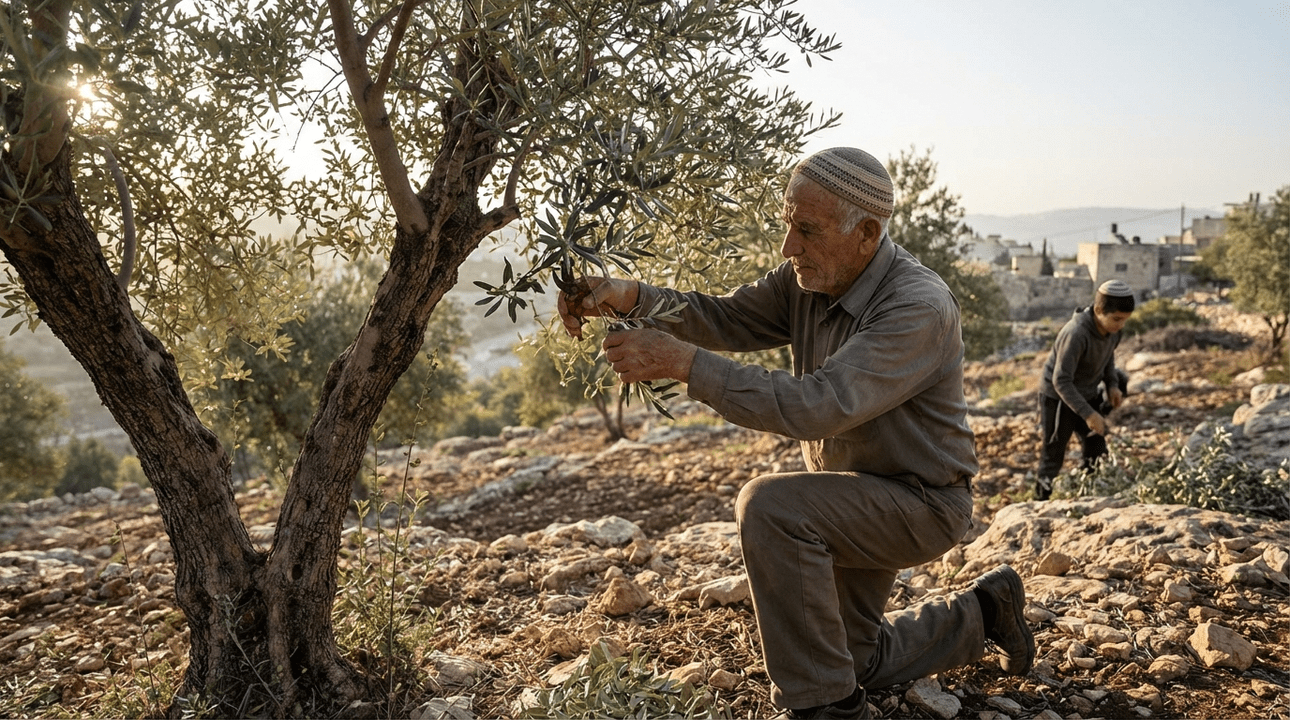
Moabite culture was closely related to that of their neighbors, sharing linguistic and religious similarities with the Israelites and other Semitic peoples.
The Moabites practiced a polytheistic religion, with the god Chemosh as their chief deity, often mentioned in biblical accounts and confirmed by archaeological findings. Culturally, they were skilled in agriculture and herding, benefiting from the fertile lands of the Jordan Valley.
Artifacts such as the Moabite Stone, discovered in Dhiban, reveal their achievements in writing and governance.
Archaeological Insights into Moab
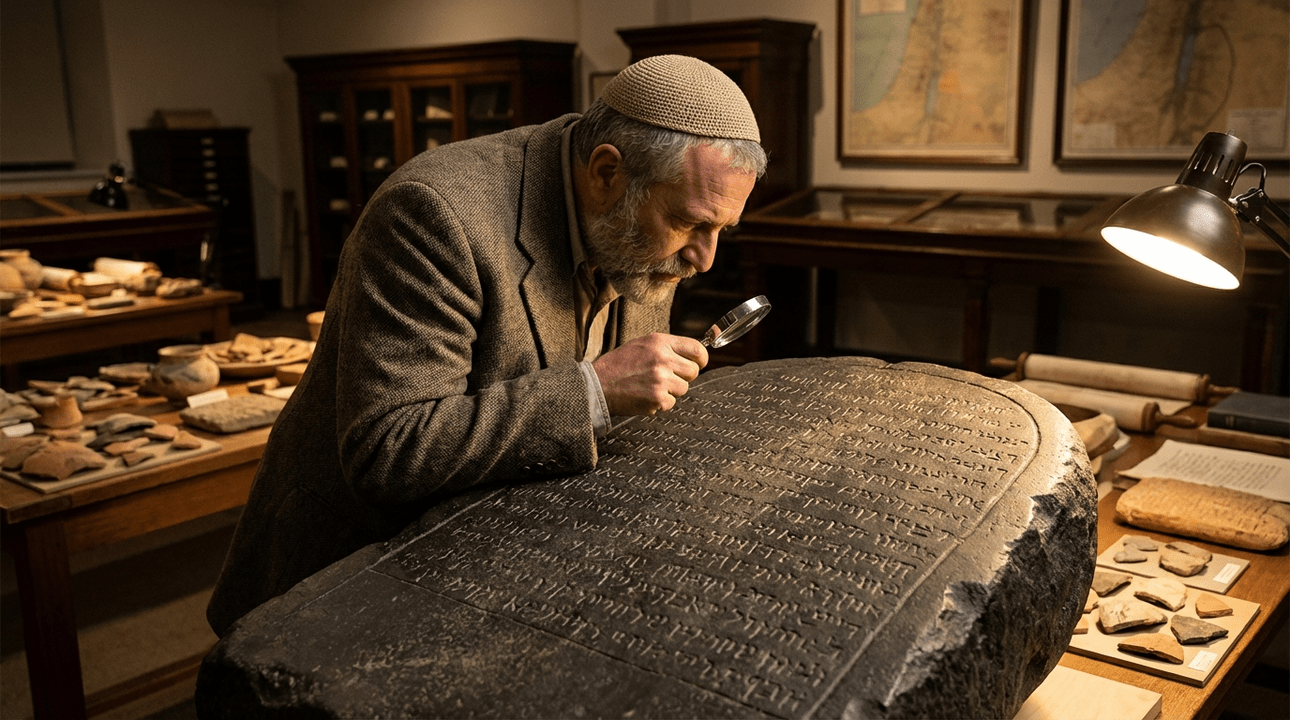
The discovery of the Moabite Stone in 1868 was a significant archaeological find. This stele, inscribed by King Mesha, celebrates Moab’s victories over Israel, as mentioned in 2 Kings 3:4-27, and pays tribute to their god Chemosh. It provides invaluable insights into the Moabite language and the political landscape of the region.
Other archaeological digs around Dibon and surrounding areas have unearthed pottery, inscriptions, and remnants of ancient buildings, giving us a glimpse into the life and society of this ancient kingdom.
Ultimately, the Moabite Stone and other archaeological findings offer a window into the Moabite world, revealing its language, religion, and political history.
The Moabite Stone, also known as the Mesha Stele, discovered in 1868, is one of the most significant archaeological finds related to Moab. This stone, inscribed by King Mesha, details Moab’s victories over Israel, as found in 2 Kings 3:4-27. It provides a glimpse into the Moabite language, which is closely related to Hebrew, and offers insights into their religious practices, particularly their worship of Chemosh.
The Moabite Stone, also known as the Mesha Stele, discovered in 1868, is one of the most significant archaeological finds related to Moab. This stone, inscribed by King Mesha, details Moab’s victories over Israel, as found in 2 Kings 3:4-27. It provides a glimpse into the Moabite language, which is closely related to Hebrew, and offers insights into their religious practices, particularly their worship of Chemosh.
Other archaeological discoveries in Moab include pottery and inscriptions that reveal the daily life and political history of this ancient kingdom.
The Moabite Stone and other archaeological finds offer a window into the Moabite world, revealing its language, religion, and political history, enriching our understanding of this ancient civilization.
Insider's Guide to Israel
and can't-miss places most tourists never find.
Moab’s Interaction with Neighboring Cultures
Moab’s position at the crossroads of several ancient civilizations resulted in constant interaction with surrounding cultures. They engaged in both conflicts and alliances with Israel, Edom, and Ammon. These interactions were often marked by territorial disputes, but they also led to cultural exchanges.
Moab’s access to trade routes allowed them to engage in commerce, contributing significantly to their economic strength and cultural development.
Moab’s interactions with neighboring cultures highlight its role as a key player in the region, facilitating trade and cultural exchange.
Moab in Modern Perception
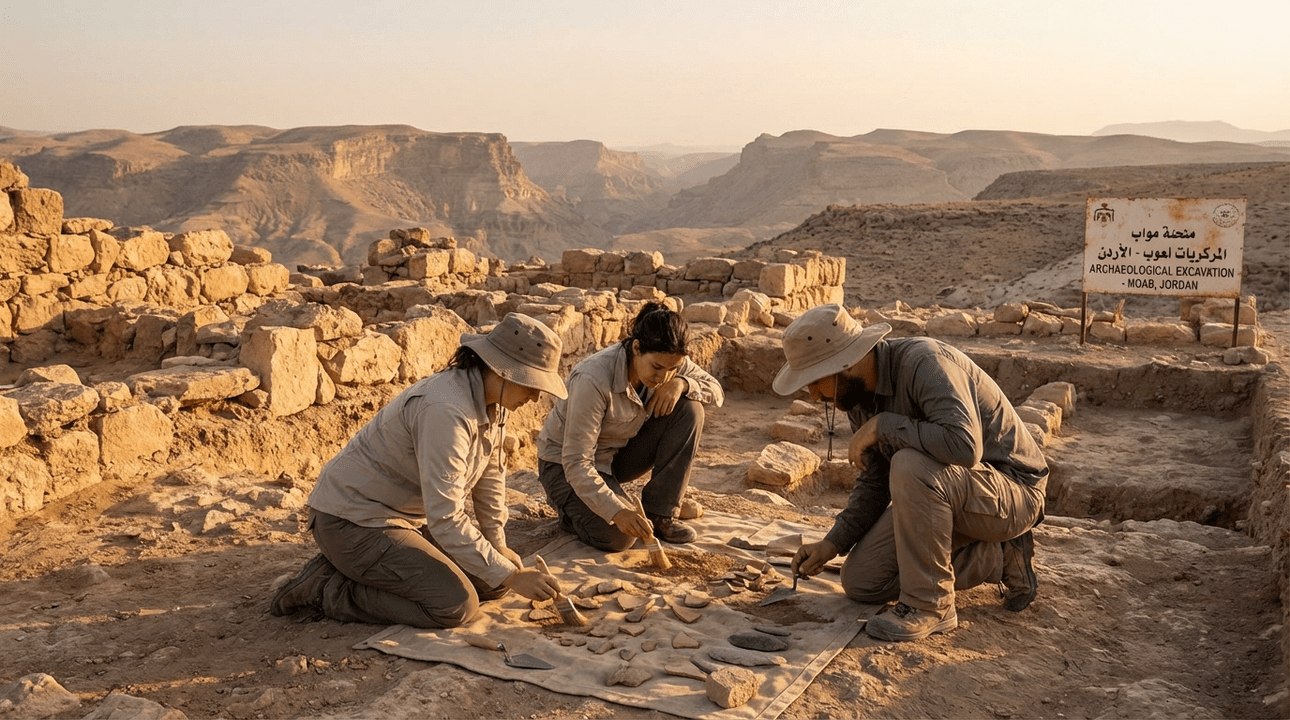
Today, Moab is part of Jordan, located east of the Dead Sea. Its historical sites, like the ancient city of Dibon, attract scholars and tourists interested in biblical history and archaeology. Modern excavations at sites such as Khirbat al-Mudayna reveal more about Moab’s culture and influence.
These archaeological efforts uncover artifacts that provide insights into the daily life and governance of this ancient kingdom, enriching our understanding of its historical significance.
Moab’s location and historical sites offer a unique opportunity to connect with the ancient world and its biblical narratives.
Moab’s historical and archaeological significance provides a unique glimpse into the past. The region’s ancient cities, such as Dibon and Ataroth, offer a tangible connection to the world described in the Bible. Archaeological efforts continue to uncover artifacts that shed light on Moab’s political and cultural exchanges with neighboring kingdoms like Israel and Edom.
Moab’s historical and archaeological significance provides a unique glimpse into the past. The region’s ancient cities, such as Dibon and Ataroth, offer a tangible connection to the world described in the Bible. Archaeological efforts continue to uncover artifacts that shed light on Moab’s political and cultural exchanges with neighboring kingdoms like Israel and Edom.
These discoveries invite travelers to explore the ancient landscape and experience the rich history of Moab, which played a vital role in the development of the region.
These discoveries invite travelers to explore the ancient landscape and experience the rich history of Moab, which played a vital role in the development of the region.
Moab’s historical and archaeological significance offers a unique window into the past, inviting travelers to experience a connection with the ancient world in an ever-evolving region. The ongoing discoveries continue to enrich our understanding of Moab’s role in history.
In Conclusion
The kingdom of Moab occupies a unique place in Middle Eastern history, with its legacy preserved through biblical records like Numbers 22-24 and archaeological findings. Moab was often in conflict with Israel, exemplified by the battles recorded in 2 Kings 3:4-27. Yet, these interactions are crucial for understanding the region’s history.
Moab’s cultural contributions, such as the Moabite language, closely related to Hebrew, offer insights into the interconnectedness of ancient societies.
Moab’s historical narratives continue to enlighten us on the complexities of ancient Middle Eastern societies and their interactions, including alliances and conflicts. These stories highlight the importance of Moab in the broader historical and cultural context of the region.
Ongoing archaeological efforts, such as those at Ataroth, are continually rewriting the history of Moab. These excavations reveal new perspectives on Moab’s political dynamics and cultural exchanges with its neighbors. The site of Ataroth, mentioned in the Mesha Stele, is significant for understanding Moab’s territorial ambitions and conflicts.
Scholars are uncovering artifacts that illustrate the daily life and governance of Moab, providing a more nuanced view of this ancient kingdom.
Scholars are uncovering artifacts that illustrate the daily life and governance of Moab, providing a more nuanced view of this ancient kingdom.
Moab’s history is a testament to the intricate tapestry of ancient Middle Eastern societies, providing valuable lessons on cultural and political interactions. The ongoing discoveries offer fresh insights into the complexities of Moab’s past.
Moab's Historical and Geographical Context
