Authentic Israeli Tabbouleh Salad
6 March 13:34
217
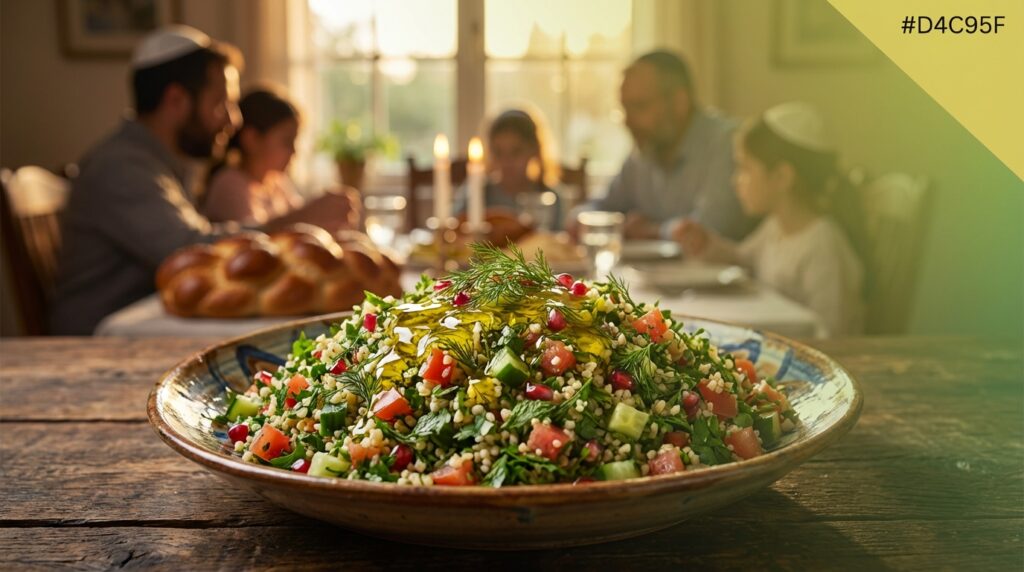

Originating from the Levant region, tabbouleh has been a staple in Israeli kitchens for generations. Its refreshing taste and healthy ingredients make it a popular choice for family gatherings and celebrations.
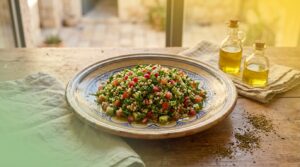
The traditional recipe includes bulgur wheat, fresh parsley, mint, tomatoes, and cucumbers. These ingredients are finely chopped and mixed with olive oil, lemon juice, and a pinch of salt, creating a harmonious blend of flavors.
In Israel, tabbouleh is often enjoyed as part of a mezze platter, alongside hummus, baba ghanoush, and other delightful dips. Its vibrant colors and fresh taste make it a standout dish on any table.
Parsley and mint are the stars of this salad, providing a burst of freshness that complements the other ingredients. The herbs are finely chopped to ensure they blend seamlessly into the dish, enhancing every bite with their aromatic qualities.
Bulgur wheat, a staple in Middle Eastern cuisine, adds a nutty flavor and chewy texture to the salad. It’s soaked in water or broth until tender, then mixed with the other ingredients to create a satisfying and nutritious dish.
Lemon juice and olive oil are essential components, adding a zesty and rich flavor profile. The acidity of the lemon balances the richness of the olive oil, creating a dressing that ties all the ingredients together beautifully.
For those seeking a gluten-free option, quinoa can be used in place of bulgur. This substitution maintains the salad’s texture while providing additional protein and nutrients. Quinoa’s mild flavor allows the herbs and vegetables to shine.
The salad can also be customized with additional ingredients such as pomegranate seeds, which add a sweet and tart contrast, or feta cheese for a creamy element. These variations keep the dish exciting and adaptable to personal preferences.
Whether served as a side dish or a main course, Israeli tabbouleh is a celebration of fresh, wholesome ingredients. Its simplicity and versatility make it a beloved choice for those seeking a taste of the Mediterranean.