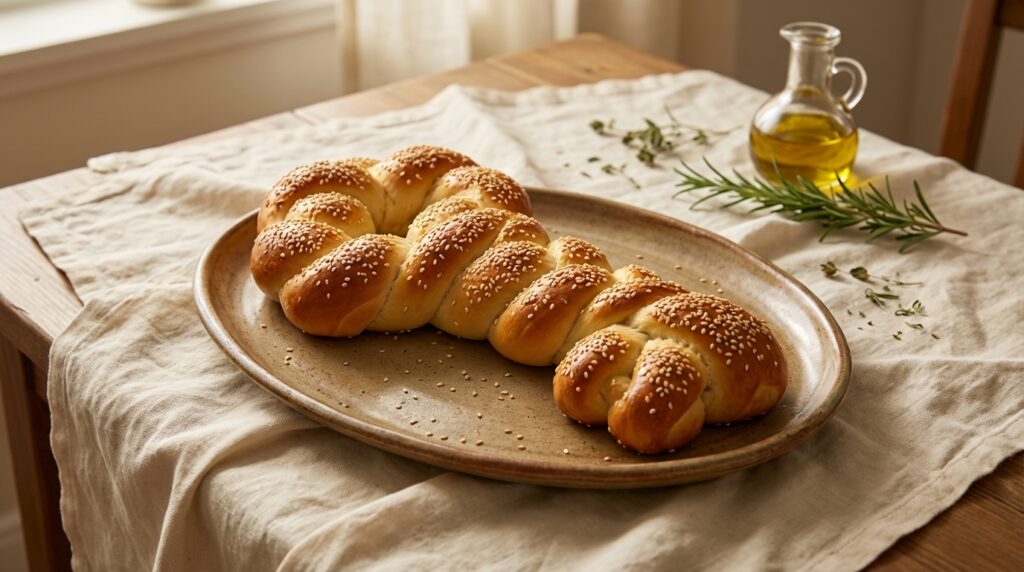
Traditional Shlissel Challah for Prosperity

A cherished tradition with a rich history.
Bake a meaningful Shlissel Challah, a symbolic bread shaped like a key, bringing hope and prosperity to your home.
Image illustrating:Traditional Shlissel Challah for Prosperity
2
David Pliner
Culinary & Israeli Heritage Enthusiast
Discover the tradition of Shlissel Challah, a symbolic bread baked with love and hope for prosperity. Perfect for family gatherings and celebrations.

Health Benefits of Shlissel Challah

  • Rich in carbohydrates, providing energy.
  • Contains protein from eggs, supporting muscle health.
  • Sesame seeds add healthy fats and fiber.

Ingredients for Shlissel Challah

All-purpose flour
4 cups
Warm water
1 cup
Active dry yeast
2 1/4 teaspoons
Sugar
1/4 cup
Salt
1 teaspoon
Eggs
2 large
Vegetable oil
1/4 cup
Sesame seeds
2 tablespoons

Chef's Tips for Perfect Shlissel Challah

For a perfect Shlissel Challah, ensure your dough is well-kneaded and rises properly. Use fresh yeast for the best results. Shape the dough into a key or braid it traditionally, adding sesame seeds for extra flavor. Baking with love and intention enhances the experience and the taste.

Instructions for Baking Shlissel Challah

  • 1
    1
    Prepare the Yeast Mixture
    In a small bowl, combine warm water, sugar, and yeast. Stir gently and let it sit for about 5-10 minutes until frothy.
  • 2
    2
    Mix the Dough
    In a large mixing bowl, combine flour and salt. Make a well in the center and add the yeast mixture, eggs, and oil. Mix until a dough forms.
  • 3
    3
    Knead the Dough
    Transfer the dough to a floured surface and knead for about 10 minutes until smooth and elastic. Place in a greased bowl, cover, and let rise until doubled in size, about 1-2 hours.
  • 4
    4
    Shape the Challah
    Punch down the dough and divide it into three equal parts. Roll each part into a long rope and shape into a key or braid traditionally. Place on a baking sheet.
  • 5
    5
    Second Rise
    Cover the shaped dough with a clean cloth and let it rise again for about 30-45 minutes until puffy.
  • 6
    6
    Preheat and Bake
    Preheat your oven to 350°F (175°C). Brush the challah with beaten egg and sprinkle with sesame seeds. Bake for 25-30 minutes until golden brown.
  • 7
    7
    Cool and Serve
    Remove from the oven and let the challah cool on a wire rack. Serve warm or at room temperature, enjoying the rich tradition with each bite.

The History of Shlissel Challah

Shlissel Challah is a special bread baked after Passover.

The tradition of baking Shlissel Challah dates back centuries, rooted in the Ashkenazi Jewish communities of Eastern Europe. It is a custom that symbolizes the hope for sustenance and prosperity in the coming year. The word ‘shlissel’ means ‘key’ in Yiddish, and the bread is often shaped like a key or has a key baked into it.
The key shape is not just a decorative element; it carries deep symbolic meaning. In Jewish tradition, the key represents the key to sustenance and divine provision. By baking this bread, families express their hope for a year filled with abundance and blessings. This practice is particularly meaningful as it follows Passover, a time of renewal and freedom.
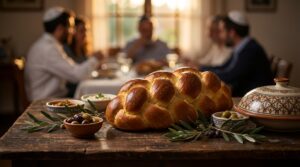
Shlissel Challah is often shared with family and friends during the first Shabbat after Passover. This gathering is a time of joy and reflection, where people come together to celebrate their heritage and the promise of a prosperous future. The bread itself is a reminder of the community’s resilience and faith.

Baking Shlissel Challah is a cherished family tradition.

For many families, the process of baking Shlissel Challah is an opportunity to pass down traditions from one generation to the next. Children learn the art of shaping the dough and the significance of the key symbol, creating a bond between past and present. This hands-on experience is both educational and spiritually enriching.
The recipe for Shlissel Challah can vary slightly between families, with some adding special ingredients or unique twists to the dough. However, the essence of the bread remains the same: a symbol of hope and continuity. The aroma of freshly baked challah fills the home, creating a warm and inviting atmosphere.
In modern times, Shlissel Challah has gained popularity beyond its traditional roots. Many people, regardless of their background, have embraced this meaningful practice as a way to connect with Jewish culture and values. It serves as a reminder of the importance of community, faith, and the shared human experience.

Shlissel Challah is a symbol of hope and community.

The act of baking and sharing Shlissel Challah is more than just a culinary endeavor; it is a celebration of life and the bonds that unite us. Whether enjoyed with family or shared with friends, this bread carries a message of love and togetherness. It is a testament to the enduring spirit of tradition and the power of hope.
As you bake your own Shlissel Challah, take a moment to reflect on the blessings in your life and the connections you cherish. This simple act of baking can be a profound expression of gratitude and a way to honor the past while looking forward to the future. Let the aroma of the challah fill your home with warmth and joy.
May your Shlissel Challah bring prosperity and joy.
Related Recipes

FAQ

When is Shlissel Challah traditionally baked?
Shlissel Challah is traditionally baked for the first Shabbat after Passover, symbolizing prosperity and blessings.
What does the key shape symbolize?
The key shape represents the key to sustenance and divine provision.
Can I use a mold to shape the challah?
Yes, you can use a key-shaped dough cutter or mold to create the shape.