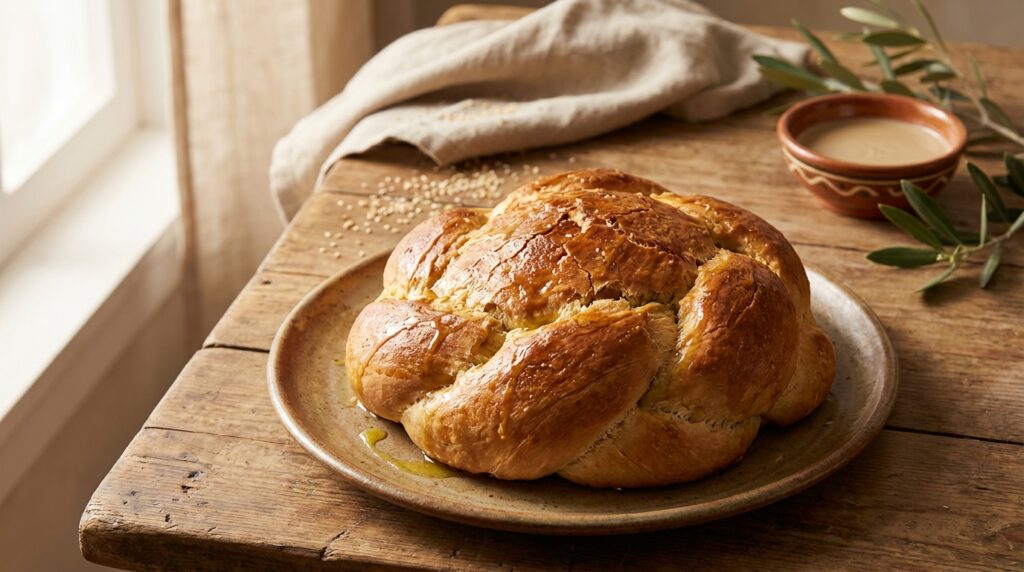
Warm and Nutty Tahini Bread Delight

A Taste of Israeli Tradition in Every Bite
Experience the comforting embrace of homemade tahini bread, a cherished Israeli tradition. This recipe combines the nutty richness of tahini with the soft texture of freshly baked bread.
Image illustrating:Warm and Nutty Tahini Bread Delight
6
David Pliner
Culinary & Israeli Heritage Enthusiast
Discover the rich flavors of Israeli tahini bread, a delightful blend of tradition and taste. Perfect for any occasion, this recipe brings warmth to your table.

Health Benefits of Tahini Bread

  • Tahini is rich in healthy fats and antioxidants.
  • Sesame seeds provide essential minerals like calcium and magnesium.
  • Homemade bread avoids preservatives found in store-bought varieties.

Ingredients You'll Need

All-purpose flour
3 cups
Tahini
1/2 cup
Warm water
1 cup
Active dry yeast
2 teaspoons
Sugar
1 tablespoon
Salt
1 teaspoon
Olive oil
2 tablespoons

Chef's Tips for Perfect Tahini Bread

For a richer flavor, toast the sesame seeds before making the tahini. This enhances the nutty taste and adds depth to your bread. Experiment with different flours for unique textures.

Step-by-Step Instructions

  • 1
    1
    Prepare the Yeast Mixture
    In a small bowl, combine warm water, sugar, and yeast. Stir gently and let sit for about 5 minutes until frothy. This activates the yeast, ensuring your bread will rise properly.
  • 2
    2
    Mix the Dough
    In a large mixing bowl, combine flour and salt. Add the yeast mixture, tahini, and olive oil. Stir until a dough forms. Knead the dough on a floured surface for about 10 minutes until smooth and elastic.
  • 3
    3
    Let the Dough Rise
    Place the dough in a lightly oiled bowl, cover with a damp cloth, and let it rise in a warm place for about 1 hour or until doubled in size. This step allows the flavors to develop and the dough to become airy.
  • 4
    4
    Shape the Bread
    Punch down the dough to release air. Shape it into a loaf or desired form. Place on a baking sheet lined with parchment paper. Cover and let rise again for 30 minutes.
  • 5
    5
    Bake the Bread
    Preheat your oven to 375°F (190°C). Bake the bread for 25-30 minutes or until golden brown. The bread should sound hollow when tapped on the bottom, indicating it's fully baked.
  • 6
    6
    Cool and Serve
    Remove the bread from the oven and let it cool on a wire rack. This prevents the bottom from becoming soggy. Slice and serve with your favorite toppings or enjoy it plain.

The Story Behind Tahini Bread

Tahini bread has roots in Middle Eastern cuisine, cherished for its unique flavor.

The origins of tahini bread trace back to the bustling markets of Jerusalem, where bakers combined local ingredients to create a bread that was both nourishing and flavorful. The use of tahini, a sesame paste, adds a nutty richness that has made this bread a staple in Israeli households.
In the early days, tahini bread was often baked in communal ovens, where families would gather to share stories and recipes. This tradition fostered a sense of community and connection, as bread became more than just sustenance; it was a symbol of unity and cultural heritage.
Today, tahini bread continues to be a beloved part of Israeli cuisine, enjoyed by people of all ages. Its versatility allows it to be paired with a variety of dishes, from savory spreads to sweet jams, making it a perfect addition to any meal.

Tahini is made from ground sesame seeds, known for their health benefits.

The process of making tahini involves carefully roasting sesame seeds to enhance their flavor before grinding them into a smooth paste. This paste is then mixed into the bread dough, infusing it with a distinctive taste that is both nutty and slightly sweet.
Bakers often experiment with different types of flour and additional ingredients, such as nuts or seeds, to create unique variations of tahini bread. These innovations keep the tradition alive while allowing each baker to add their personal touch to the recipe.
As more people discover the joys of baking at home, tahini bread has gained popularity beyond Israel’s borders. Its simple ingredients and straightforward preparation make it an accessible choice for home bakers looking to explore new flavors.

Tahini bread pairs well with both sweet and savory toppings.

Whether enjoyed fresh from the oven or toasted the next day, tahini bread offers a comforting taste experience. Its soft, airy texture contrasts beautifully with crunchy toppings like nuts or seeds, while its subtle sweetness complements fruity jams and honey.
For those seeking a savory option, tahini bread can be served with hummus, labneh, or olive tapenade. These Mediterranean flavors enhance the bread’s natural nuttiness, creating a harmonious blend of tastes that delight the palate.
The adaptability of tahini bread makes it a versatile addition to any meal, whether as a standalone snack or as part of a larger spread. Its rich history and cultural significance add depth to its delicious flavor, making it a meaningful choice for gatherings and celebrations.


Related Recipes

FAQ

Can I make this tahini bread gluten-free?
Yes, you can use gluten-free flour, but the texture may vary slightly.
How should I store the tahini bread?
Store it in an airtight container at room temperature for up to three days.
Can I add other ingredients to the tahini bread?
Yes, you can add nuts or seeds for extra crunch and flavor.