Due to the war in Israel, shipments may be delayed. Thank you for standing with Israel.

Delicious Fava Bean Rice Delight

A Middle Eastern Classic with a Rich Cultural Heritage
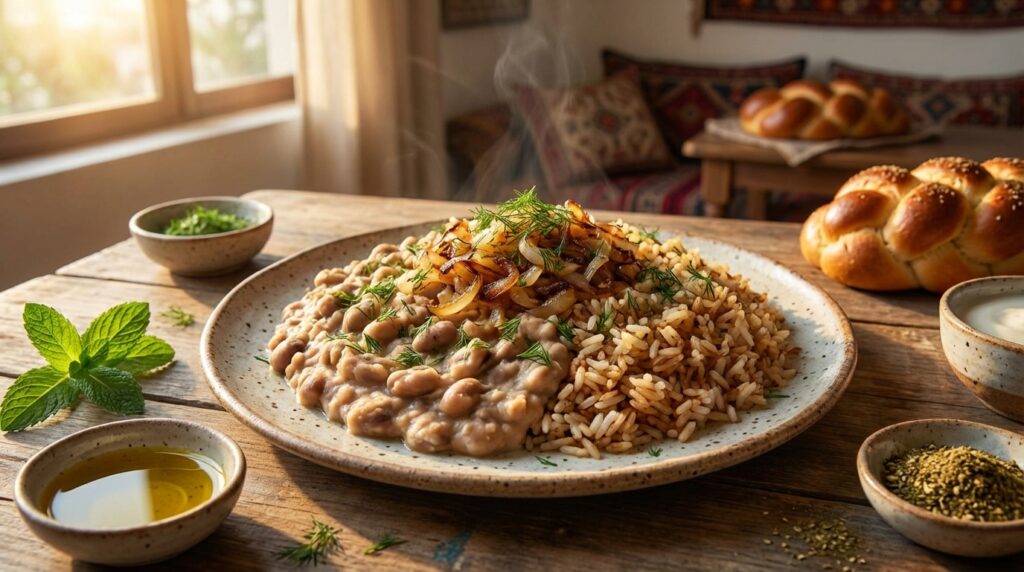
A warm and flavorful Middle Eastern dish combining rice and fava beans, perfect for family gatherings.
Image illustrating:Delicious Fava Bean Rice Delight
28
David Pliner
Culinary & Israeli Heritage Enthusiast
Discover the rich flavors and cultural history of fava bean rice, a Middle Eastern classic.

Health Benefits

  • Fava beans are high in protein and fiber, supporting digestive health.
  • Rich in vitamins and minerals, they contribute to overall wellness.
  • The combination of rice and beans provides a complete protein source.

Ingredients

Basmati rice
2 cups
Fava beans
1 cup
Olive oil
2 tablespoons
Onion, chopped
1 large
Garlic cloves, minced
3 cloves
Salt
1 teaspoon
Black pepper
1/2 teaspoon
Water or vegetable broth
4 cups
Fresh dill, chopped
1/4 cup

Chef's Tips for Perfect Fava Bean Rice

To enhance the flavor, consider adding a pinch of saffron to the rice while cooking. This will give the dish a beautiful golden hue and a subtle aromatic taste. Also, using fresh herbs like dill or parsley can add a refreshing touch to the final presentation. Remember to taste and adjust the seasoning as needed, ensuring the flavors are well-balanced.

Instructions

  • 1
    1
    Prepare the Ingredients
    Rinse the rice under cold water until the water runs clear. This helps remove excess starch and prevents the rice from becoming sticky. Set aside to drain. If using fresh fava beans, shell them and remove the outer skin. If using canned beans, rinse them thoroughly.
  • 2
    2
    Sauté the Aromatics
    In a large pot, heat the olive oil over medium heat. Add the chopped onion and sauté until translucent, about 5 minutes. Stir in the minced garlic and cook for another minute, releasing its fragrant aroma.
  • 3
    3
    Cook the Rice and Beans
    Add the rinsed rice to the pot, stirring to coat it with the oil and aromatics. Pour in the water or vegetable broth, bringing the mixture to a boil. Reduce the heat to low, cover, and let it simmer for 10 minutes.
  • 4
    4
    Add the Fava Beans
    Gently fold in the fava beans, salt, and black pepper. Cover the pot again and continue to cook for another 10-15 minutes, or until the rice is tender and the liquid is absorbed. Avoid lifting the lid too often, as this can disrupt the cooking process.
  • 5
    5
    Finish and Serve
    Once the rice is cooked, remove the pot from the heat and let it sit, covered, for 5 minutes. Fluff the rice with a fork and stir in the fresh dill. Taste and adjust the seasoning if necessary. Serve warm, garnished with additional dill if desired.

The Story Behind Fava Bean Rice

Fava bean rice is a staple in Middle Eastern cuisine.

Originating from ancient times, fava bean rice has been a beloved dish across the Middle East. The combination of rice and fava beans creates a hearty and nutritious meal that has been passed down through generations. This dish is often associated with family gatherings and celebrations, symbolizing abundance and hospitality.
The use of fava beans in cooking dates back to ancient Egypt, where they were considered a vital source of protein. Over time, the recipe for fava bean rice spread throughout the region, with each culture adding its unique twist. The dish’s simplicity and rich flavor have made it a favorite among many.
In Israel, fava bean rice is often prepared during festive occasions. The dish is not only delicious but also carries cultural significance, representing the blending of various culinary traditions. Families gather to enjoy this meal, sharing stories and creating memories around the dinner table.

Fava beans are rich in protein and fiber, making them a healthy choice.

The nutritional benefits of fava beans are well-known. They are packed with protein, fiber, and essential vitamins, contributing to a balanced diet. When combined with rice, they create a complete protein source, ideal for vegetarians and those looking to reduce meat consumption.
Cooking fava bean rice is a straightforward process, yet it requires attention to detail to achieve the perfect texture and flavor. The beans must be cooked just right to maintain their firmness, while the rice should be fluffy and aromatic. This balance is what makes the dish truly special.
Throughout the Middle East, variations of fava bean rice can be found, each reflecting the local ingredients and culinary practices. From the spices used to the cooking methods, every version tells a story of its own. This diversity adds to the dish’s charm and universal appeal.

Rice and beans together provide a complete protein source.

The combination of rice and beans is not only a culinary delight but also a nutritional powerhouse. This pairing provides all the essential amino acids needed for a healthy diet. It’s a perfect example of how traditional recipes can offer both taste and health benefits.
In modern times, fava bean rice continues to be a popular choice for those seeking a taste of Middle Eastern cuisine. Its versatility allows it to be served as a main course or a side dish, complementing a variety of meals. The dish’s enduring popularity is a testament to its timeless appeal.
Whether enjoyed at a family gathering or a festive celebration, fava bean rice remains a cherished dish that brings people together. Its rich flavors and cultural significance make it more than just a meal; it’s a connection to heritage and tradition.
Related Recipes

FAQ

Can I use canned fava beans instead of fresh ones?
Yes, you can use canned fava beans. Just rinse them well before adding to the rice.
How should I store leftover fava bean rice?
Store leftovers in an airtight container in the refrigerator for up to 3 days.
Can I freeze fava bean rice?
Yes, you can freeze it for up to a month. Thaw and reheat thoroughly before serving.