Kreplach Soup: A Warm Embrace in a Bowl
21 May 11:42
276
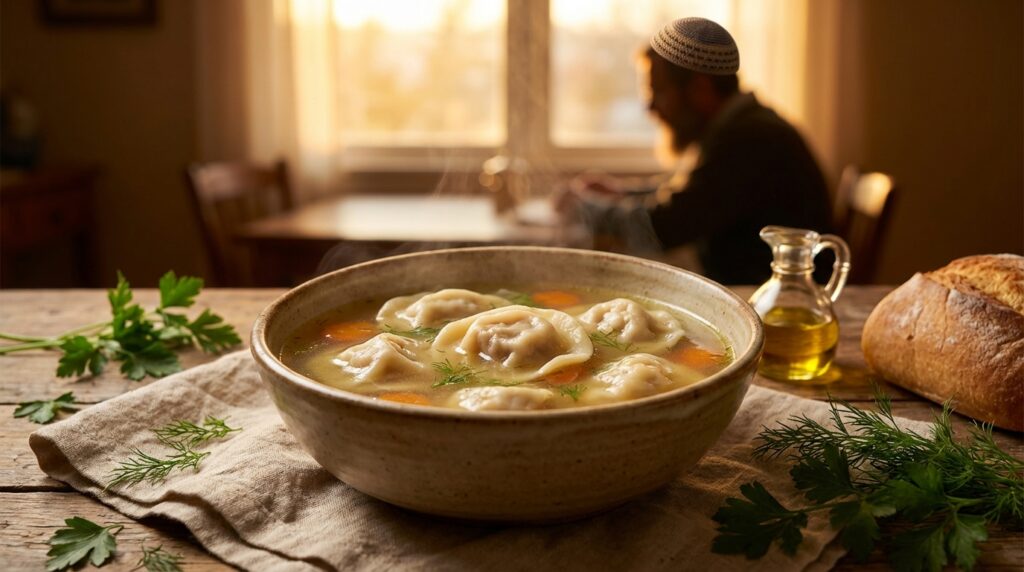

This soup traces its roots to Ashkenazi Jewish kitchens, where kreplach—small filled dumplings—were made by families to stretch ingredients and bring warmth to the table. Over generations, the practice of folding meat or potato filling into dough and simmering it in broth became a beloved ritual. The soup was often served on festive days like Yom Kippur eve or Purim, offering both nourishment and a sense of home.
In many households, kreplach soup was more than a meal—it was a way to gather around the stove, share stories, and pass down traditions. Mothers and grandmothers taught children how to roll the dough thin, seal the edges just so, and drop each dumpling gently into the simmering pot. The aroma of simmering broth and the sight of floating kreplach became a memory tied to love and belonging.
Over time, regional touches emerged: some families added fresh herbs like dill or parsley, others enriched the broth with chicken bones or vegetables. Yet the essence remained the same—a humble, heartfelt dish that carried the spirit of home across generations.
Modern cooks may adapt the recipe with vegetarian fillings or gluten‑free dough, keeping the tradition alive in new ways.
In contemporary kitchens, kreplach soup is often prepared for Shabbat or given as a thoughtful meal to someone recovering from illness. The act of making and sharing it remains an expression of care and community, just as it was in the past.
Whether passed down through handwritten recipes or taught in warm kitchens, the art of kreplach soup endures as a bridge between past and present.