Unraveling the Mystery of Tarshish Today
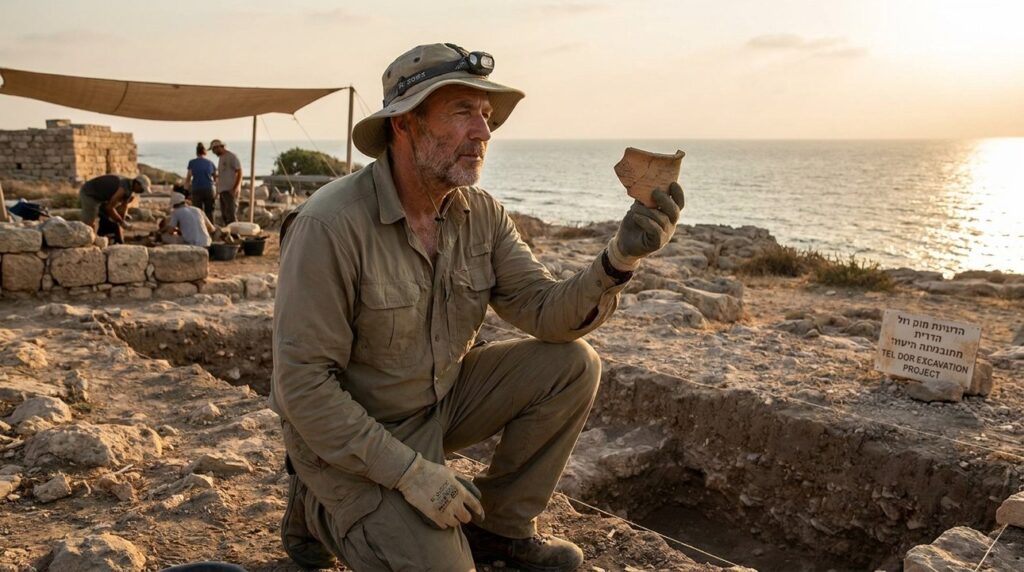

Tarshish is a location frequently mentioned in ancient texts, yet its exact position remains elusive.
Many scholars have proposed theories, but none are definitive, with suggestions ranging from Spain to Sardinia.
This article explores the historical context of Tarshish, examining its possible placement on the modern map and its role in ancient trade.
The quest to locate Tarshish has intrigued historians and archaeologists alike. Ancient references describe it as a distant land, fueling speculation about its whereabouts. The attempt to flee to Tarshish underscores its perceived remoteness. By examining ancient texts and archaeological evidence, researchers aim to unravel the mystery of Tarshish’s true location. The search involves analyzing ancient trade routes and maritime records, which may hold clues. The ongoing exploration of Tarshish’s location is a sign of its enduring intrigue and the complexity of ancient geography.
from the Western Wall to Masada.
What Is Tarshish in the Bible?
Tarshish appears in ancient texts as a distant place of trade, known for its wealth and exotic goods. In several passages, it is associated with maritime voyages and metal imports.
The attempt to flee to Tarshish highlights its reputation as a remote destination and its perceived safety from divine missions. This journey underscores the idea of Tarshish as a far-off land.
The frequent mention of Tarshish in historical texts reflects its significance in the ancient world as a hub of trade and cultural exchange.
The allure of Tarshish as a trading hub is evident in its frequent mentions. Historical accounts describe fleets bringing back gold, silver, ivory, and peacocks from Tarshish, illustrating its wealth.
Its association with wealth and distance made it a symbol of prosperity and adventure. This reputation likely stemmed from its connections to far-off lands and the exotic goods it imported, enriching the regions it traded with.
References to Tarshish further underscore its importance, as leaders of distant lands are said to bring tribute, reflecting its influence.
Where Does the Bible Mention Tarshish?
The Book of Ezekiel lists the goods of Tarshish, including silver, iron, tin, and lead. This suggests a region rich in minerals, possibly involved in extensive trade with other ancient regions. Tarshish is also linked to seafaring ships and commerce, highlighting its strategic importance in ancient trade. The ships of Tarshish were known for their capacity to carry large quantities of goods. These references underscore Tarshish’s role as a key player in ancient trade networks, facilitating exchanges between distant regions.
The presence of metals like tin and lead suggests connections with mining regions, possibly in Spain or Britain. These regions were known for their rich mineral deposits, essential for trade.
Such resources were essential for the production of bronze and other alloys, vital for tools and weapons. The demand for these materials drove extensive trade networks across the Mediterranean.
These connections indicate a complex network of trade routes that facilitated the exchange of goods across the Mediterranean. This network contributed to the economic prosperity of regions involved in trade with Tarshish.

Theories on the Location of Tarshish
Scholars have long debated Tarshish’s location. Some identify it with Tartessos in Spain, given descriptions of maritime trade. Tartessos was an ancient region known for its wealth, mentioned by Greek historians like Herodotus.
Others suggest an association with regions in the eastern Mediterranean or even South India, where trade routes were well established. The possibility of South India is supported by ancient trade links with the Middle East, evidenced by Roman coins found in India.
Despite modern speculation, no single theory is universally accepted. The lack of definitive archaeological evidence leaves the true location of Tarshish open to interpretation, fueling ongoing scholarly debate.
Tarshish and Maritime Trade
References to ships of Tarshish imply a strong nautical culture. These ships were known for their size and capability to undertake long sea voyages, where they are described as bringing gold, silver, ivory, apes, and peacocks. In historical context, Tarshish symbolized far-reaching trade networks connecting distant lands, possibly reaching as far as the western Mediterranean.
The ships of Tarshish are emphasized for their importance in ancient commerce. These vessels were likely used to transport valuable goods across vast distances, contributing to the wealth of the regions involved.
Such trade routes were crucial for the exchange of not only goods but also cultural and technological innovations. The ships played a vital role in connecting different civilizations, fostering economic and cultural exchanges.
References to ships of Tarshish further highlight their significance in the ancient world, as they were part of historical fleets.
from the Western Wall to Masada.

Tarshish in Jewish Tradition
In Jewish tradition, Tarshish is sometimes associated with the scattering of peoples and trade diversity. The Talmud mentions Tarshish in discussions of far-reaching trade networks.
The Talmud and other Jewish texts highlight its role in narratives of exploration and connection. These texts suggest that Tarshish was a place where diverse cultures met and exchanged goods.
These perspectives enrich the understanding of Tarshish beyond geographical debates, emphasizing its cultural and economic significance. Its mention in the context of trade routes underscores its importance in ancient commerce.
The diverse goods attributed to Tarshish reflect its role as a mix of cultures and commerce. According to ancient texts, Tarshish traded in silver, iron, tin, and lead, indicating its extensive trade network. Jewish texts often use Tarshish to symbolize the reach and influence of ancient trade networks. These networks connected distant regions, facilitating exchanges of goods and ideas. This culture adds depth to the portrayal of Tarshish, showing its historical context and impact. References to Tarshish highlight its role in spreading cultural influences.
Recent Academic Insights on Tarshish
Recent academic studies have examined ancient trade routes and metallurgical sites to propose new locations for Tarshish.
Evidence from maps and excavations continues to shape prevailing theories about its location, with some suggesting regions like Tartessos in Spain.
Ongoing research may yet uncover more about this mysterious region, contributing to our understanding of ancient trade networks.
Archaeological findings, including ancient shipwrecks and trading posts, provide clues about the extent of Tarshish’s influence. These discoveries suggest a wide-reaching trade network involving multiple regions. These discoveries help historians piece together the complex web of interactions between ancient regions. Artifacts found in shipwrecks offer insights into the goods traded and the routes used. As more evidence emerges, scholars hope to pinpoint Tarshish’s exact location, showing its role in history. Each new find adds to our understanding of ancient trade and cultural exchanges.

Conclusion: Tarshish Today
While the precise location of Tarshish remains uncertain, its historical impact endures through ancient texts and scholarly inquiry. References to Tarshish appear in various books, highlighting its significance in ancient commerce.
Understanding Tarshish offers insight into ancient trade networks and geography. The extensive trade routes connected regions as far as Phoenicia and Egypt, facilitating cultural exchanges.
The mystery of Tarshish continues to intrigue historians and enthusiasts alike. Each new discovery adds a piece to the puzzle, enhancing our understanding of ancient regions.
How You Can Explore More
For those intrigued by historical mysteries, Lev Haolam offers curated gift boxes that provide a tangible connection to Israel’s heritage. Explore our membership options to receive authentic products that share Israel’s story. Each gift box is a journey through Israel’s culture, offering unique items that reflect the country’s diverse heritage and craftsmanship. Each box may feature a selection such as artisan foods, handcrafted goods, cosmetics, or cultural items, with contents varying each time.
Common Questions on Tarshish