Lev Haolam logo – Israel gift box company
Join now
Lev Haolam
  • Home
  • To The Top
  • Who We Are?
  • How It Work
  • Membership
  • Our Boxes
  • Testimonials
  • FAQ
  • Blog
    • Articles
    • Recipes
    • Gift Boxes
  • Career
Log In
Join now
Log In
Join now
  1. Home
  2. Blog
  3. Historical Places

Historical Places

Israeli researcher examines ancient ruins in Negev desert at dawn.

Zalmon: Unveiling Its Significance in the Bible

Zalmon is depicted as a resource for military tactics in historical accounts, while poetic texts highlight it as a site of power and success. These roles illustrate the connection between geography and narrative. This article examines Zalmon’s significance within ancient narratives, focusing on its roles and impact today. By exploring various references, we gain insight into how these locations influence discussions about geography and symbolism. The mountain’s use by Abimelech underscores its military importance. Its mention in texts as part of a victory narrative adds a layer of importance. These roles illustrate how Zalmon serves as a link between historical...
Show more
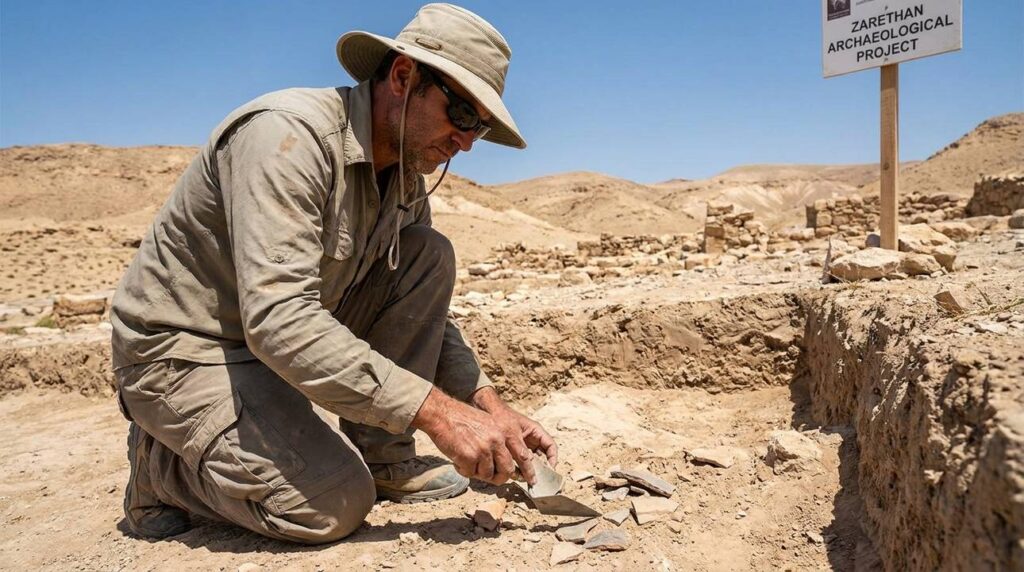
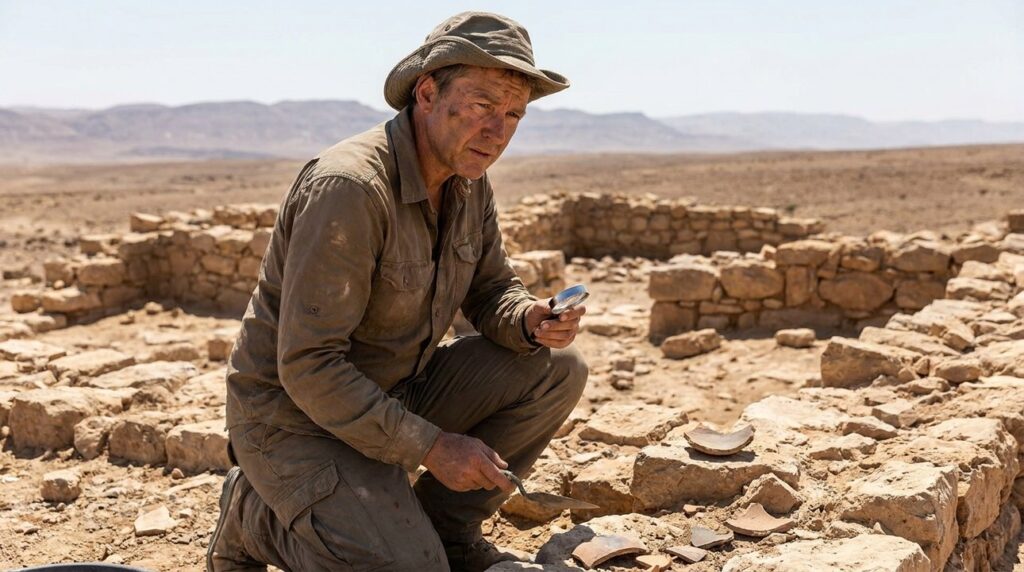
Archaeologist examining artifacts at Zarethan excavation site in desert landscape.

Zarethan: Exploring Its Historical Impact

This article delves into the details of Zarethan’s role in Jewish history, avoiding modern political discussions. Discover how this site is remembered and connected to Israel’s past. Zarethan’s mention highlights its geographical importance, witnessing events that marked the Israelites’ journey. These stories continue to resonate, showing perseverance. What Is Zarethan? Zarethan is noted as a site near the Jordan River. In the book of Joshua, it is mentioned during the Israelites’ crossing of the Jordan. Ancient maps suggest it was near Adam, another location where the waters stood still. The name Zarethan may have meanings tied to the landscape or...
Show more
Israeli archaeologist examining Roman ruins in Jerusalem with clipboard and camera.

Where is Titus in the Bible?

Who is Titus? Start with a short, clear answer: Titus was a trusted helper of Paul. Paul used him for travel, organizing local groups, and tough talks. The letters in the New Testament mention him in this working role rather than giving a life story. Those letters show tasks and duties more than personal detail. Titus in the Epistle to Titus The short letter that bears his name – the Epistle to Titus – contains Paul’s instructions for organizing local leaders. Paul left Titus on the island of Crete to set up and supervise elders. Titus 1:5 gives the key...
Show more
Israeli archeologist examining ancient ruins in a desert landscape.

Where Is Sheba Today? Exploring Its Historical Connections

The location of Sheba has been a topic of debate. Some suggest it was in present-day Yemen, where the ancient city of Marib was a key center. Others propose connections to Ethiopia, supported by Ethiopian texts like the Kebra Nagast. These texts narrate a connection to Ethiopia, claiming a historical lineage. This story is part of Ethiopian royal lineage, linking their history to legendary narratives. What Was Sheba in Historical Texts? Sheba is best known for its association with a legendary visit to a wise king. This narrative is found in various historical texts, recounting a visit with gifts and...
Show more
Archaeologist examines ancient ruins in Galatia, rolling hills behind.

Where is Galatia on Today’s Map?

What Was Ancient Galatia? Galatia was a region in north-central Anatolia, part of what is now Turkey. It was inhabited by Celtic tribes called the Galatians, who migrated from Europe in the 3rd century BCE. These tribes were known for their warrior culture and settled in this strategic location, influencing surrounding areas. Their role in history was significant, contributing to the cultural development of the region. Writers like Strabo have noted their presence in historical records. The migration of Celtic tribes into Anatolia is well-documented, with historians like Polybius and Livy providing accounts of their settlement. This marked a cultural...
Show more
Archaeologist examines ancient ruins in desert at Aenon near Salim.

Where is Aenon Near Salim? Discover Its Location | Lev Haolam

Understanding Aenon Near Salim The New Testament passage names Aenon and links it to abundant water. That single observation explains why the place has been discussed by geographers and historians. The name Aenon is usually taken to mean springs or running water in the local linguistic context. The companion name Salim appears in the same note and is generally read as an adjacent place-name. Together they point to a watery spot where immersion could take place. The biblical text does not describe buildings, temples, or a town layout. It gives a short situational remark: people were baptized there because water...
Show more
Israeli archaeologist examines ancient scrolls and artifacts at historical site.

What is Regma in the Bible?

These routes connected distant regions, facilitating cultural and economic exchanges. Historical references place Regma within a broader lineage, highlighting its role in the dispersion of peoples and cultures. By examining these connections, we gain insights into the relationships that characterized the ancient Near East. What Is Regma According to the Bible? Regma appears in historical records primarily in genealogical listings, where it is linked to the descendants of notable figures. Some sources mention it as one of the sons of Cush, connecting it to a broader lineage. It is part of the narrative that outlines the lineage and dispersion of...
Show more
Israeli archaeologist examines maps and texts by Negev Desert river.

Where Can We Find the Pishon River Today?

This article examines various ideas about the possible location of the Pishon River and its role in historical texts. The connection between ancient stories and the natural world is explored. What Is the Pishon River? In Genesis, the Pishon River is one of four rivers flowing from Eden. It is linked to Havilah, known for its treasures. This connection has sparked interest in its location. The description of Pishon has led to various interpretations. Some propose a symbolic link to the Ganges River, though this is debated. The exploration of ancient texts continues to provide insights. Theories on the Pishon’s...
Show more
Archaeologist examining ancient inscriptions with magnifying glass in Negev desert.

What Is Brital’s Role in the Bible?

Exploring Brital’s significance involves examining its possible ties to other ancient territories. Scholars often look at its geographical context to understand its influence and interactions with neighboring peoples. This approach helps in piecing together the historical puzzle that Brital represents. What Is Brital? Brital, though not commonly referenced, appears in some ancient sources. This place holds a certain mystique due to its scarce mentions in historical narratives. Its name often appears alongside other notable locations, anchoring it within the historical geography known to ancient peoples. For example, its mention near places like Gibeon suggests a shared history. The mention of...
Show more
Israeli archaeologist examines ancient ruins at Zeboiim with brush and trowel.

Unveiling Zeboiim: History and Significance

Understanding its role in historical narratives helps us appreciate the complex mix of early history. Zeboiim’s story, intertwined with those of Sodom and Gomorrah, offers a window into the moral and social dynamics of the time. Zeboiim was part of a coalition of five cities, including Sodom and Gomorrah, that faced the armies of four kings. This highlights the strategic alliances and conflicts that characterized the region during this period. What Is Zeboiim? Zeboiim is referenced as one of the five cities in the Plain of Jordan, alongside Sodom, Gomorrah, Admah, and Zoar. These cities were involved in a battle...
Show more
Israeli archaeologist examines artifacts at Tishbe among stone ruins.

Unveiling Tishbe: A Historical Exploration

Elijah’s life is marked by miraculous events, like reviving a widow’s son and ascending to heaven in a chariot of fire. These miracles reflect his divine connection and steadfast faith. Tishbe holds deep spiritual meaning due to its link with Elijah’s powerful presence and the messages he delivered. It serves as a source of inspiration for those on their own quests. In this article, we delve into the origins, historical references, and legacy of this significant location. Tishbe’s association with Elijah highlights its importance, even though its precise location remains a mystery. The town’s mention in historical texts underscores its...
Show more
Israeli archaeologist examines ancient ruins in Ziph, Israel.

Unveiling the Wilderness of Ziph in Historical Context

The Ziphites, inhabitants of the region, played a complex role in these events. While they initially supported David, they later informed Saul of David’s whereabouts. This act of betrayal underscores the precarious alliances during this tumultuous period in Israel’s history. Ziph thus became a symbol of both refuge and danger, reflecting the broader themes of loyalty and survival in historical narratives. The actions of the Ziphites illustrate the shifting loyalties and the complex social dynamics of the time. Their role in the narrative highlights the challenges faced by David and the uncertain nature of alliances in the ancient world. What...
Show more
Israeli archaeologist examines ancient carvings at Pass of Ziz.

Unveiling the Wonders of the Pass of Ziz

What Is the Pass of Ziz? The Pass of Ziz is referenced primarily in the context of a journey. Believed to be located in a region that served as a strategic passageway, many scholars associate it with the area near the Dead Sea. This location is mentioned in relation to King Jehoshaphat’s battle against invading armies, where strategic planning played a crucial role. The event is a significant moment in historical narratives, marking both military and strategic milestones. The association of the Pass of Ziz with King Jehoshaphat’s battle highlights its importance in history. Serving as a strategic point during...
Show more
Archaeologists examining ancient ruins in Valley of Achor, Israel.

Unveiling the Valley of Achor’s Importance

The valley’s significance extends beyond its historical narrative. In tradition, it symbolizes the potential for change and redemption. The story of Achan serves as a moral lesson, reminding us of the importance of adhering to communal values. Over the centuries, the Valley of Achor has been a subject of study and reflection, illustrating the enduring themes of accountability and hope. Its narrative is still remembered by those seeking personal growth. Where Is the Valley of Achor Mentioned in the Bible? The Valley of Achor is prominently featured in historical texts. It is first introduced as the site of Achan’s transgression,...
Show more
Israeli archaeologist examines Valley Gate ruins, scattered tools in background.

Unveiling the Valley Gate of Jerusalem

The Valley Gate is noted as part of the city’s reconstruction efforts, highlighting its importance in the restoration of Jerusalem after the Babylonian exile. Located near the Hinnom Valley, it provided natural fortification, enhancing the city’s defenses. The integration of natural landscapes with constructed defenses highlights the thoughtful design that characterized Jerusalem’s protective measures. This combination of natural and man-made defenses exemplified the strategic planning involved in ancient urban fortifications. What Was the Valley Gate in Jerusalem? In historical Jerusalem, the Valley Gate served as a crucial entry and exit point. It led to the western slopes of the city,...
Show more
Archaeologist examines ancient artifacts at Ramath Lehi, Israel, in morning light.

Unveiling the Story of Ramath Lehi

The tale of Ramath Lehi is a compelling narrative that continues to intrigue and inspire those interested in the cultural history of the region. This article aims to deepen the reader’s connection to Jewish heritage and the enduring values these stories represent. What Is Ramath Lehi? Ramath Lehi is mentioned in historical texts, primarily recognized as a site of legendary exploits. The name translates to ‘Hill of the Jawbone,’ referring to a battle where a jawbone was used to achieve a remarkable victory. This act of bravery turned the site into a symbol of strength in Jewish tradition. Geographically, Ramath...
Show more
Archaeologist examines stone ruins at Teman in early morning light.

Unveiling the Significance of Teman in the Bible

The strategic location of Teman allowed it to serve as a crossroads for trade routes, facilitating commerce and cultural exchange between different regions. This made Teman not only a military stronghold but also a center of economic activity. Its significance in historical narratives underscores its role as a vital hub in the ancient world, where wisdom and strategic importance went hand in hand. What Is Teman and Where Is It Located? Teman is often referenced in historical texts as a notable city in the region of Edom. It lies south of the Dead Sea and served as a prominent location...
Show more
Archaeologist documenting stone ruins on Mt. Ebal with digital camera.

Unveiling the Significance of Mt Ebal in the Bible

What Is Mt Ebal? Mt Ebal is a notable peak in the Samaria region, recognized for its historical and cultural narratives. It stands opposite Mt Gerizim, together forming a pair of landmarks mentioned in religious texts. Traditionally, Mt Ebal is associated with a ceremony where the Israelites recited commitments. This event served as a geographical anchor to their history, symbolizing the choices faced by the community. Rising approximately 940 meters, Mt Ebal is one of the tallest mountains in the area. Its rugged terrain contrasts with the fertile slopes of nearby Mt Gerizim. This physical distinction has given it a...
Show more
Israeli archaeologist examines ancient ruins in Ramathaim, hills in background.

Unveiling the Significance of Ramathaim

The name ‘Zophim’ suggests a connection to the ‘watchers’ or seers, which aligns with the town’s association with leadership activity. The term ‘seer’ is used to describe leaders, indicating a long-standing tradition of guidance in the region. Ramathaim’s role as a center for guidance is further emphasized by its association with Samuel, whose leadership was pivotal in guiding Israel through a critical period of its history. The town remains a symbol of insight and leadership. What Is Ramathaim? Ramathaim, also known as Ramathaim-Zophim, is cited as the birthplace of Samuel. This site, located in the region of Ephraim, is integral...
Show more
Israeli archaeologist examines ancient inscriptions at Luz under bright sky.

Unveiling the Significance of Luz in Historical Texts

Luz served as a site of significant encounters in history. Its strategic location made it a focal point for cultural and historical developments. Luz reflects themes of identity and change, offering insights into the journey of past civilizations. The city’s legacy is evident in its continued mention in historical texts. Located in the hill country of Ephraim, Luz was a key site for cultural interactions and trade. Historical records highlight its geographical significance as part of the boundary of the tribe of Ephraim. Luz’s role in narratives underscores its importance as a place of cultural exchange, where human history intersects...
Show more
Israeli archeologist examines ancient ruins in a desert landscape.

Unveiling the Significance of Hamonah

The mention of Hamonah is part of a larger narrative concerning an invasion by a figure often associated with apocalyptic visions. This narrative highlights the ultimate defeat of these forces, symbolizing intervention and justice. The burial site, Hamonah, thus represents a place of reckoning and the end of conflict, echoing themes found throughout literature. This article delves into the theories surrounding Hamonah’s mention, exploring its symbolic connections and its role in the narrative. What Is Hamonah? Hamonah is a name found within the context of a prophecy. Hamonah is associated with a significant event involving the burial of a multitude....
Show more
Israeli historian examines Lehi group artifacts at archaeological site.

Unveiling the Significance of Lehi in Historical Context

What Is the History of Lehi? Lehi is mentioned as the site of a notable victory over the Philistines. The name ‘Lehi’ is thought to mean ‘jawbone,’ connecting it to this story. This victory is seen as a demonstration of strategy in overcoming challenges. The triumph at Lehi is sometimes compared to other significant events, such as the parting of the Red Sea, where strategic intervention was crucial. The strength attributed to dedication allowed for overcoming adversaries. This narrative serves as a reminder that commitment can lead to remarkable outcomes. The tale at Lehi is remembered by those who seek...
Show more
Archeologist examining ancient ruins in Gilead under morning sunlight.

Unveiling the Significance of Gilead in the Bible

Gilead’s terrain, characterized by its rugged hills, played a crucial role in various historical accounts. These geographical features provided natural fortifications and influenced the strategic decisions of the people who lived there, making Gilead a key player in the historical narrative. Gilead served as a refuge during early conflicts of leadership. This strategic location made it a focal point in power struggles, providing a secure base for those vying for leadership. The area was also known for its balm, a valuable resin used for medicinal purposes. This made Gilead not only a military stronghold but also an economic hub, contributing...
Show more
Israeli archaeologist examines ancient ruins at Dinhabah with tools nearby.

Unveiling the Secrets of Dinhabah

The interactions between the Edomites and Israel are noted in historical accounts, where they denied passage to the Israelites. This highlights the complex relationships between these ancient peoples. As a capital city, Dinhabah would have played a central role in these dynamics. By examining the historical context of Dinhabah, we gain insights into the geopolitical landscape of the ancient Near East. The strategic importance of Dinhabah might have been due to its position along trade routes connecting Arabia and the Mediterranean. This location could have facilitated trade and governance, making it a vital city in Edom’s network. Despite its mention...
Show more
Israeli historian examines ancient ruins at Beit Nabala at sunset.

Unveiling the Role of Beit Nabala in History

The tribe of Benjamin is often associated with this region. Their territory is described in historical texts, highlighting its strategic importance. Beit Nabala’s location was a key player in trade networks connecting various parts of the ancient world. This connectivity contributed to its development and cultural diversity, making it a site of great historical interest. What Is Beit Nabala? Beit Nabala is a historic location mentioned in ancient texts. This site played a role in various historical narratives, serving as a crossroads for trade and culture. Its name has been linked to possible historical references, though exact mentions remain debated...
Show more
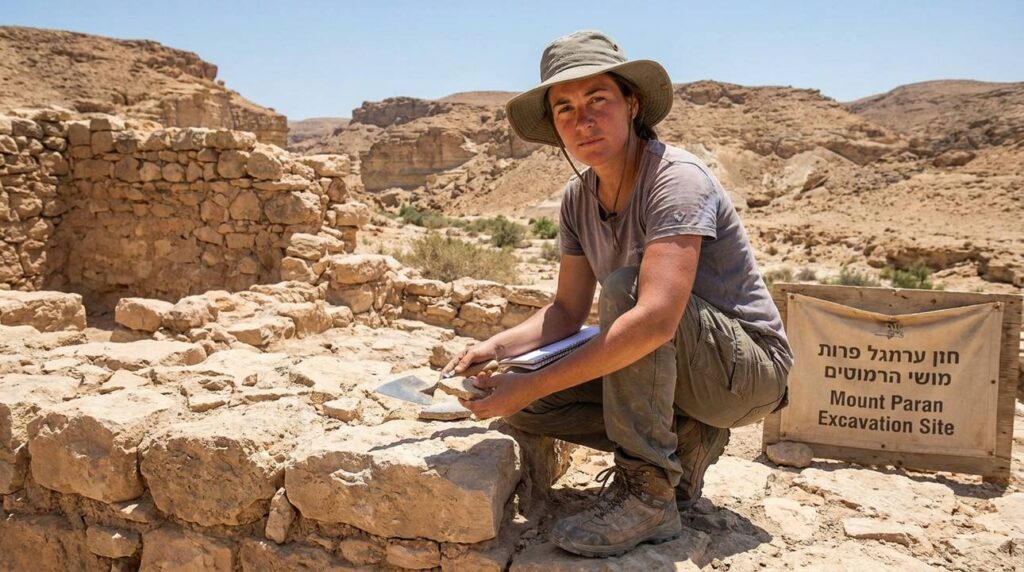
Israeli archaeologists excavating ancient ruins in the Paran desert.

Unveiling the Place Called Paran

Paran served as a strategic location during historical migrations. The desert’s harsh conditions tested those who traveled through it. It was a site of significant events in Biblical narratives, symbolizing the challenges encountered during historical journeys. The wilderness of Paran appears in several historical texts as a setting for important events. Its vastness provided a backdrop for reflection and perseverance. These stories highlight the endurance required to overcome the region’s harsh environment. What Does Paran Mean in the Bible? In historical texts, Paran is described as a desert or wilderness. It is a location where camps were set during migrations....
Show more
Israeli archaeologist examines stone ruins in Siddim Valley at sunset.

Unveiling the Mysteries of Siddim Valley

Some scholars suggest that the valley could be submerged under the southern part of the Dead Sea, while others propose alternative locations based on archaeological findings. The mystery surrounding its exact location adds to the intrigue and history of Siddim Valley. As research continues, each new discovery contributes to our understanding of the region’s role in history and its impact on cultural narratives. Theories about its location are informed by geological studies and historical records. The debate over Siddim Valley’s location is fueled by its mention in historical accounts, where it is described as a battleground for kings. Some theories...
Show more
Israeli archaeologist examines artifacts in Desert of Zin.

Unveiling the Mysteries of the Desert of Zin

What Is the Desert of Zin? Referenced in historical texts, the Desert of Zin is generally located in the northeastern part of the Negev desert. It was a site of significant events, marking it as a place of trials and encounters. The landscape is characterized by its dry environment and is historically noted as a difficult terrain. This area represents both testing and dependence on guidance. The precise boundaries are still debated among scholars, but its symbolic role in historical accounts is widely recognized. The challenging terrain is evident in the story of the Israelites’ complaints about the lack of...
Show more
Israeli archaeologist examines artifacts at Harosheth Haggoyim excavation site.

Unveiling the Mysteries of Harosheth Haggoyim

Its role in conflict highlights its significance. Harosheth Haggoyim’s position near the Kishon River and fertile lands provided a tactical advantage and essential resources for a military presence. The stories surrounding this site reflect its importance in the wider narrative of Israel’s struggles during the time of the Judges. What Is Harosheth Haggoyim in the Bible? Harosheth Haggoyim is noted as the residence of Sisera, the commander of King Jabin’s army. Located in the region traditionally associated with northern Israel, it served as a military hub during a period of conflict. This place gained significance due to its strategic location...
Show more
Israeli archaeologist examines ancient ruins at Baal Zephon with clipboard and camera.

Unveiling the Mysteries of Baal Zephon

Ancient maps and texts provide clues about the location of Baal Zephon, although its precise whereabouts remain a topic of scholarly debate. Some suggest it was located near the northern tip of the Gulf of Suez, while others argue for a site further inland. This uncertainty reflects the challenges of reconstructing ancient geography, where shifting landscapes and limited records complicate efforts to pinpoint exact locations. The lack of consistent cartographic standards in antiquity adds to this complexity. Ancient geographers like Ptolemy and Strabo had different methodologies, which resulted in varying depictions of the same regions. What Do We Know About...
Show more
Ethiopian man in traditional outfit examining maps in a museum.

Unveiling the Maps of Historical Ethiopia

A notable figure from Ethiopia visited a famous king, representing cultural exchanges between Ethiopia and ancient Israel. This visit, laden with gifts and spices, illustrates the wealth and influence of her kingdom. Ethiopia’s mention in historical texts underscores its importance and connections with ancient narratives, making it a focal point of history and cultural exchange. The visit is often interpreted as a symbol of wisdom and diplomacy. According to tradition, she posed challenging questions to the king, showcasing her intelligence and curiosity. This interaction is celebrated in both Jewish and Ethiopian traditions, highlighting mutual respect. The exchange of gifts, including...
Show more
Archaeologist examines ancient ruins in desert at sunset.

Unveiling the Location and Importance of Paddan Aram

The area was crucial in the lives of historical figures, serving as a backdrop for stories that shaped cultural identity. Paddan Aram’s location in the fertile crescent made it a hub for trade and cultural exchange. Understanding its role in history helps us appreciate the complex mix of relationships and events that unfolded there. Where Is Paddan Aram Located? Paddan Aram is situated in the region historically known as Aram-Naharaim. It corresponds to the upper reaches of the Euphrates River basin. This area is located in what is today northeastern Syria and southeastern Turkey. The region’s ancient name, Aram Naharaim,...
Show more
Israeli archaeologist examines ancient ruins in desert with brush and map.

Unveiling the Location of Meshech Today

The identification of Meshech has led to various theories. Some scholars propose links to the Mushki people, known to have lived near the Black Sea, as noted in Assyrian inscriptions. This connection is further supported by archaeological findings indicating cultural exchanges between these regions and the ancient Near East. What Is the Origin of Meshech in the Bible? Meshech is mentioned as a son of Japheth in historical records. It is listed among nations involved in trade, highlighting its role in ancient commerce. These references underscore Meshech’s historical significance as both a people and a participant in broader geopolitical events....
Show more
Israeli archaeologist examines Ramoth Gilead ruins with map and tool.

Unveiling the Location and History of Ramoth Gilead

Where Is Ramoth Gilead? Ramoth Gilead was located in the region of Gilead, a fertile area east of the Jordan River. According to traditional sources, it lay within the territorial allotment of the tribe of Gad. The tribe of Gad settled in this area for its suitability for livestock. Its exact modern location is debated, with suggestions ranging from the hills of present-day Jordan to nearby archaeological sites. Despite the uncertainty, historical accounts place it within the landscape of Transjordan. Some scholars propose that Ramoth Gilead could be near the present-day city of Irbid in Jordan, where ancient ruins have...
Show more
Israeli archaeologist examines artifacts at desert dig site.

Unveiling the History of the Desert of Maon

Maon’s mention in historical texts highlights its role as a place of refuge and strategic advantage. The natural fortifications of the region offered protection to those seeking safety. Today, the legacy of Maon is still remembered by those interested in history, providing a tangible link to the past and its enduring stories. Exploring Maon today allows us to step back into history, showing the lives of those who once traversed its paths. The region’s significance in historical stories underscores its role in shaping the history and culture of the area. By delving into its past, we gain a deeper understanding...
Show more
Group of archaeologists examining ruins in desert, discussing findings.

Unveiling the history of Kedar

What Is Kedar? Kedar is a name found in ancient texts, referring to a group descended from Ishmael. These people are often associated with nomadic groups known for their skills in trade and war. Scriptures reference Kedar as one of the prominent Ishmaelite tribes. In the historical context, Kedar’s name appears in various prophecies and narratives. Their legacy is intertwined with Ishmael, who was a significant figure in their lineage. Kedar represents strength and resilience in the desert regions. The Geography of Kedar Kedar’s territory is thought to be in the Arabian Peninsula. Historical texts, such as those by Herodotus,...
Show more
Israeli archaeologist examines ancient inscriptions at Hashem El Tarif ruins.

Unveiling the History of Hashem El Tarif

The exploration of Hashem El Tarif offers a window into the past, where ancient stories come to life through archaeological findings. Discoveries such as ancient inscriptions and artifacts provide insights into the lives of those who once inhabited the region. By examining these connections, we gain insights into the cultural narratives that have been passed down through generations, enriching our understanding of Jewish heritage. This exploration helps us appreciate the continuity of tradition. What Is Hashem El Tarif? Hashem El Tarif, a site that holds a special place in historical literature, is said to be located in the area traditionally...
Show more
Historian examines ancient inscriptions on Mount Serbal at sunset.

Unveiling the History and Significance of Mount Serbal

Mount Serbal has a noticeable outline and a summit that stands higher than nearby terrain in the region commonly called Sinai. Its slopes drop steeply into valleys, which makes the peak visible from a distance. Travelers and mapmakers have pointed out the mountain for its shape and its place among the local ridges. What Is Mount Serbal? Mount Serbal rises to roughly 2,070 meters above the local plain, using the common height figures found in maps and travel notes. That height gives it a strong presence in the landscape. Older travel descriptions and newer surveys both note that from the...
Show more
Israeli archaeologists examine ancient ruins at Kir in evening light.

Unveiling the Historical Location of Kir

Kir played an important role in historical events. Assyrian king Tiglath-Pileser III exiled the people of Damascus to Kir, marking it as a place of exile. Kir is depicted in texts as a city facing destruction, marking it within prophetic themes. What Is Kir in the Bible? Kir is mentioned in texts linked to Moab, a kingdom east of the Jordan River. It was involved in prophecies of destruction and themes of judgment, indicating its historical importance. Kir was part of historical exchanges, providing insight into the era’s context. Where Was Kir Located Historically? The precise location of Kir is...
Show more
Israeli archaeologist examines ancient ruins at Tabgha near Sea of Galilee.

Unveiling the History and Significance of Tabgha

What Is Tabgha? Tabgha’s name is derived from the Greek ‘Heptapegon,’ meaning seven springs. It is a historical site situated near the Sea of Galilee in northern Israel. Known for its natural beauty and historical richness, Tabgha is traditionally linked to several events, notably the feeding of the 5,000. This event, recounted in historical texts, highlights Tabgha as a place of provision and importance. Located a few kilometers from Capernaum, it remains a focal point for understanding the region’s history. The geography of Tabgha places it within a landscape abundant in historical connections. Nestled along the Galilee’s shoreline, its location...
Show more
Israeli researcher examines ancient ruins near Gihon Spring in Jerusalem.

Unveiling the Gihon River’s Historical Role

The Gihon’s mention alongside the Tigris and Euphrates rivers adds to its mystique. While the Tigris and Euphrates have well-documented modern counterparts, the Gihon’s exact course is less clear, leading to various interpretations and scholarly interest. This lack of clarity has led some to speculate that the Gihon might be metaphorical rather than a physical river. By examining its significance, we aim to uncover the historical context behind its narrative, considering how it might have been perceived in ancient times. What Is the Gihon River? The Gihon River is recognized as one of the watercourses originating from a legendary paradise,...
Show more
Israeli archaeologist examines artifacts by Chebar Canal, holding notebook.

Unveiling the Chebar Canal: A Historical Journey

The Chebar’s role in Ezekiel’s life underscores its importance in historical narratives. As a place of exile, it provided a setting for insight and reflection. Ezekiel’s visions by this canal highlight its significance as a site of insight and guidance. This exploration offers a window into the enduring power of hope and the promise of renewal amidst adversity. What Is the Chebar Canal? The Chebar Canal refers to a river mentioned in historical texts where the prophet receives his visions. Situated in Babylonia, near modern-day Iraq, its exact location remains uncertain. It is often associated with the Kibar or Kebar...
Show more
Israeli archaeologist examines stone inscriptions at Mesha archaeological site.

Unveiling the Ancient Mystery of Mesha

Who Was Mesha in the Bible? Mesha is primarily known as the king of Moab, mentioned in the Hebrew Bible. His reign is noted for its conflicts with the kingdom of Israel, particularly detailed in 2 Kings 3. In this passage, Mesha rebelled against the northern kingdom after the death of King Ahab, refusing to continue the tribute of sheep and wool. This rebellion led to a military campaign by Israel, Judah, and Edom against Moab. Although the coalition initially succeeded, the Moabites eventually held their ground in a dramatic confrontation. Mesha’s revolt was significant because it illustrates the power...
Show more
Israeli archaeologist examines ancient ruins in Bahurim at sunset.

Unveiling the Ancient Significance of Bahurim

The village’s role in stories like David’s encounter with Shimei further emphasizes its importance. Bahurim was more than just a geographical location; it was a stage for human emotions and political intrigues. This adds depth to our understanding of history, showing how even small villages contributed to larger historical narratives. What Is Bahurim? Bahurim is a village mentioned several times in historical texts, primarily in the books of Samuel. It was situated in the region of Benjamin, close to Jerusalem. This location is introduced in the narrative recounting David’s journey as he flees from his son Absalom. David’s encounter with...
Show more
Israeli archaeologists excavating artifacts in Karnaim under afternoon light.

Unveiling Karnaim: A Historical Journey

The significance of Karnaim is further emphasized by its mention in other historical narratives, highlighting its influence in shaping historical events. Its strategic location made it a focal point for various rulers seeking to expand their territories. Karnaim’s presence in these texts not only underscores its military importance but also offers a glimpse into the complex interactions between different cultures and kingdoms of the past. What Is the Historical Context of Karnaim? Karnaim, also known as Ashteroth Karnaim, is rooted in the land of Bashan, a region known for its fertile lands and strongholds. It appears in historical records where...
Show more
Israeli archaeologist examines ancient maps in a dimly lit study room.

Unveiling Ophir in Historical Maps

This article explores the significance of Ophir, examining its mentions in historical texts and its depiction on ancient maps. Medieval maps placed Ophir in various locations, reflecting the uncertainty about its true whereabouts. Some maps suggest it was in Africa, while others point to Asia. This variety in mapping indicates the broad interest in Ophir’s actual location. Ophir’s mention in ancient texts underscores its notable status and the wealth it symbolized. These references continue to intrigue scholars and history enthusiasts. The mystery surrounding Ophir serves as a reminder of the complex trade networks that influenced early civilizations. Where Is Ophir...
Show more
Archaeologists examining ancient ruins in Ramah, Israel in morning light.

Unveiling Ramah’s Location and Significance in the Bible

The association with key figures and events in historical texts underscores Ramah’s significance as a center of spiritual and political activity. Its role in the narratives of leadership highlights its legacy as a symbol of guidance in historical contexts. Ramah’s strategic location in historical narratives is still remembered by those who seek to understand the mix of history. Ramah’s position in the region of Benjamin made it a key site in historical narratives. It is often associated with significant events and figures, such as leaders of the time. Exploring its history provides a deeper understanding of its role in shaping...
Show more
Israeli historian examines ancient tablet in Gilead ruins at dawn.

Unveiling Gilead: A Journey Through the Bible’s Map

Situated east of the Jordan River, Gilead’s location made it a desirable settlement area. Its lush pastures and abundant resources were ideal for the tribes of Reuben and Gad, who sought to establish their homes there. The beauty and fertility of Gilead are celebrated in the Song of Songs 4:1, likening it to the beloved’s hair. The significance of Gilead is further underscored in the story of Jephthah, a judge from the area, who led Israel to victory against the Ammonites, highlighting its role in Israel’s history. Let’s explore this captivating land, its historical mentions, and cultural context, providing us...
Show more
Archaeologist examines ancient artifacts at Valley of Shittim.

Unveiling Historical Insights into the Valley of Shittim

What Is the Valley of Shittim? Historically known as Abel Shittim, this location in the plains of Moab served as a key encampment spot for the Israelites after wandering through the desert for 40 years. References highlight its strategic importance during their journey. It is mentioned as the final encampment before crossing the Jordan River, marking a significant moment in their long journey. Situated in the plains of Moab, Shittim was an ideal place for the Israelites to gather and prepare for their entry into new lands. This region is historically rich, with connections to various events. The name Abel...
Show more
Israeli archaeologist examines ancient ruins at En-hak·kor·e in evening light.

Unveiling En-hak·kor·e: A Historical Landmark

En-hak·kor·e is part of a historical narrative that provides an example of resilience and resourcefulness. This spring is associated with a past event where water was crucial after a significant victory. The site offers a glimpse into the ways ancient cultures managed natural resources and addressed immediate needs. What Is En-hak·kor·e? En-hak·kor·e, meaning ‘the spring of the caller,’ is referenced as the location where water was accessed following a victory. The site illustrates a historical moment of resource allocation and survival strategies in ancient times. It provides context for understanding how communities sustained themselves during critical times. The narrative of...
Show more
Modern archaeologist examines ancient ruins at En Rogel, Jerusalem.

Unveiling En Rogel’s Role in Jerusalem’s Past

En Rogel served as a secret meeting place for loyalists during a rebellion, highlighting its strategic importance. The spring’s role in these narratives underscores its multifaceted significance, both as a physical resource and a symbol of political intrigue. The presence of this spring in these stories illustrates how natural landmarks often became intertwined with human history, serving as settings for pivotal moments. Where Is En Rogel Located? En Rogel is situated near the confluence of the Kidron Valley and the Hinnom Valley, south-east of Jerusalem’s Old City. This area is rich in history, with the Kidron Valley mentioned as a...
Show more
Israeli archaeologist examines artifacts at Beer Lahai Roi in Negev.

Unveiling Beer Lahai Roi in Historical Context

The well symbolizes alertness and care. ‘Beer Lahai Roi’ means ‘Well of the Living One who sees me,’ highlighting the awareness and care Hagar experienced. It serves as a reminder of compassion and intervention during difficult times. The story emphasizes Hagar’s encounter with a divine messenger, who assures her of her son’s future. This assurance changes her plight into a story of hope. What Is Beer Lahai Roi? Beer Lahai Roi, translated as ‘Well of the Living One who sees me,’ is a location of deep meaning. Situated between Kadesh and Bered, it is where Hagar received a promise of...
Show more
Israeli archaeologist examines artifacts at Beer Lahai Roi in desert.

Unveiling Beer Lahai Roi’s Ancient Significance

This location is intricately woven into narratives, offering solace and revelation. The story of Hagar underscores themes of survival and care. Hagar’s encounter at this site resonates with the broader narrative of the Israelites’ journey through the wilderness. In these stories, the site becomes a symbol of attention and care. What Is Beer Lahai Roi? Mentioned in ancient texts, Beer Lahai Roi is a well in the Negev desert, south of Israel. It is first introduced where Hagar, a key figure, encounters an angel. This moment marks a turning point in her life, ensuring her return and foretelling the birth...
Show more
Israeli archaeologists examining ancient ruins at Aroer in late afternoon light.

Unveiling Aroer: A Historical Landmark

The town’s location made it crucial for controlling access to the Transjordan area. This strategic role is evident in historical accounts, underscoring its relevance in the history of Israel. Aroer is among the cities of strategic importance, emphasizing its role in maintaining control over eastern territories. Positioned on the edge of the Transjordan, Aroer served as a gateway for trade and military movements, making it a key asset for powers controlling the area. The town’s frequent mention in historical texts underscores its importance in settlement and defense strategies of early Israel. Significance of Aroer in Biblical Texts Aroer is frequently...
Show more
Archaeologist examining ancient stone ruins at Azel in evening light.

Unveiling Azel: Location and Significance in the Bible

What Does the Bible Say About Azel? Azel appears in historical texts. The passage describes a future event where the Mount of Olives splits in two, creating a path to Azel. This reference links the location to eschatological themes. Here, Azel is a symbolic place representing a route of escape during these prophesied events. While the exact location of Azel remains unclear, it is traditionally associated with areas near Jerusalem. This connection to Jerusalem is significant, as the city itself is central to many prophecies, highlighting its role in future events. Azel in Historical Geography Azel’s precise location is not...
Show more
Archaeologist examining stone ruins and artifacts at Sidon in sunlight.

Unraveling the Mystery: Discovering Sidon in the Bible

Sidon’s involvement in ancient trade and cultural exchanges is well-documented. Its strategic Mediterranean location made it a central player in historical politics and commerce. The city’s legacy is highlighted by its frequent mention in historical records, underscoring its significance in the ancient Near East. Where Is Sidon Located? Sidon is an ancient city on the Mediterranean coast in present-day Lebanon, about 40 kilometers north of Tyre. Historically, it was a prosperous city, central to seafaring and trade, which bolstered its economy and influence. The city’s strategic position allowed it to dominate important maritime routes, increasing its wealth and power. Sidon’s...
Show more
Israeli archaeologist examines artifacts at Mediterranean coastal excavation site.

Unraveling the Mystery of Tarshish Today

The quest to locate Tarshish has intrigued historians and archaeologists alike. Ancient references describe it as a distant land, fueling speculation about its whereabouts. The attempt to flee to Tarshish underscores its perceived remoteness. By examining ancient texts and archaeological evidence, researchers aim to unravel the mystery of Tarshish’s true location. The search involves analyzing ancient trade routes and maritime records, which may hold clues. The ongoing exploration of Tarshish’s location is a sign of its enduring intrigue and the complexity of ancient geography. What Is Tarshish in the Bible? Tarshish appears in ancient texts as a distant place of...
Show more
Israeli archaeologist examines ancient ruins in desert, holding excavation tools.

Unraveling the Mystery: Where Is Ophir Today?

Historians are interested in Ophir, examining ancient texts and trade routes to develop theories about its location. This academic pursuit aims to understand legendary lands and their wealth. What Does the Bible Say About Ophir? Biblical texts describe Ophir as a rich source of gold and precious materials, drawing interest from those who seek to understand its historical significance. Ophir provided valuable stones and almug wood. Ships from Hiram transported these goods, boosting wealth and influence. This historical connection has led to ongoing exploration and scholarly discussion about the origins of these treasures and Ophir’s possible location. Mentions in ancient...
Show more
Israeli historian examines ancient scrolls in a sunlit, book-lined study.

Unraveling the Mystery of Ar in Historical Texts

Ar’s mention in historical texts underscores its significance in regional narratives. These passages highlight the historical interactions between Moab and neighboring nations. Such references provide a framework for understanding the geopolitical dynamics of the region, illustrating Ar’s role in shaping the historical landscape of Moab. What Is the Significance of Ar in the Bible? Ar is mentioned in historical texts as a location associated with the Moabites. Despite its brief mentions, Ar holds cultural and geographical interest. The slopes of the ravines that extend to the settlement at Ar are notable. This city is linked with Moab, revealing its connection...
Show more
Israeli archaeologist examines artifacts at Tel-Abib excavation site.

Unraveling the Mysteries of Tel-Abib

During this period of captivity, the Jewish people faced the challenge of preserving their cultural and religious identity. This era saw the emergence of new forms of worship and the compilation of important texts, such as parts of the Torah and the development of synagogue worship. Ezekiel’s presence in Tel-Abib and his messages were instrumental in maintaining hope and faith among the exiles, reinforcing the belief in a future return to their homeland. What Is Tel-Abib? Tel-Abib is a historically significant location mentioned in various texts. It is known as a settlement where exiled Jews lived following the conquest. Located...
Show more
Archaeologist examining artifact with magnifying glass in Negev Desert ruins.

Unraveling the Mysteries of Gamad in the Bible

Gamad’s association with Tyre indicates its potential involvement in the trade networks central to the region’s economic prosperity. Tyre’s influence extended across the Mediterranean, and Gamad’s inclusion in this network highlights its potential importance. Analyzing these connections allows historians to understand the economic activities that shaped the ancient world. Despite limited documentation, Gamad illustrates the links between these ancient societies. What Is Gamad in Historical Context? The term ‘Gamad’ appears within certain historical passages, though it is not extensively documented. As a name, it holds its roots in ancient texts, providing insight into the world surrounding the Israelites. Gamad is...
Show more
Middle-Eastern archaeologist examines ancient Havilah map among books and artifacts.

Unraveling the Mysteries of Havilah in Historical Maps

We will delve into its depiction in historical maps and understand its place in ancient narratives. The mention of Havilah in historical texts also adds to its intrigue, as it was a region of strategic importance. In ancient accounts, campaigns extended from Havilah to Shur, indicating the region’s breadth and significance in military strategy. What Is the Land of Havilah? Havilah is first mentioned in ancient texts as a region encircled by the Pishon River. Described as a land rich in gold and precious stones, Havilah has captured the imagination of many. The descriptions emphasize the area’s natural wealth and...
Show more
Archaeologist examining ancient stone ruins in a desert landscape.

Unraveling the Ancient Location and History of Midian

The region’s appearance in stories like that of Jethro highlights its importance in historical narratives. By examining Midian’s history, we reveal its influence on ancient societies, enhancing our understanding of its role in historical contexts. Where Was Midian Located? Midian is generally believed to have been in the northwestern Arabian Peninsula, along the eastern shore of the Red Sea. This area corresponds to parts of modern-day Saudi Arabia and southern Jordan. Historical texts often place Midian near Moab and Edom, mentioned in various accounts within regional dynamics. The strategic location of Midian allowed it to serve as a hub for...
Show more
Israeli archaeologist examining artifacts at Mikmash excavation site.

Unraveling the history of Mikmash

The history of Mikmash is marked by its strategic position, enabling it to function as a military outpost, controlling essential routes and providing a defensive edge. Accounts of battles at Mikmash reveal insights into military strategies, highlighting the significance of terrain and positioning in warfare. The terrain of Mikmash, with its rugged hills and narrow passes, offered natural defense advantages. The site is mentioned in historical texts, underscoring its continued importance in later periods. Mikmash’s strategic location allowed it to control the routes leading to Jerusalem and the central highlands, making it a focal point in regional power struggles. Mikmash’s...
Show more
Archaeologists excavating ancient ruins at Dalmanutha, Israel, using tools.

Unraveling Dalmanutha’s Mysteries

The debate over Dalmanutha’s location reflects the broader challenge of identifying historical sites with limited textual references. Similar debates surround locations like Ophir, known for its wealth in gold. These discussions highlight the importance of archaeological evidence in corroborating historical accounts. By piecing together clues from texts and artifacts, researchers strive to paint a fuller picture of the ancient world and its complex interactions. What Is Dalmanutha? Dalmanutha is a location referred to in historical texts, specifically in the Gospel of Mark. It is depicted as a place Jesus visited after feeding the 4,000. Scholars continue to debate its precise...
Show more
Israeli archaeologist examining ancient ruins in the Negev desert.

Unearthing Historical Places and Their Significance

Shiloh is another important historical site, known for housing the Tabernacle before the Temple’s construction in Jerusalem. Archaeological finds there continue to illuminate early worship practices. Discoveries such as pottery and altars provide insights into the religious life of the people, enriching our appreciation of their traditions. Shiloh’s role as a center of worship underscores its importance in the spiritual history of Israel. What Are Some Significant Places in the Bible? Among the notable places, Jerusalem stands as a central hub of religious and historical significance. Known for its deep spiritual connection, it is often mentioned in the context of...
Show more
Israeli archaeologist examines pottery shards; colleague brushes nearby artifacts.

Unearthing the Story of Chezib in the Bible

What Is the Historical Reference to Chezib? Chezib appears in ancient narratives related to Judah’s life, marking one of the places he visited. Judah’s journey to Chezib is noteworthy, as it is here that his wife gives birth to Shelah, underscoring the site’s role in the unfolding of Judah’s lineage. This birth is crucial for understanding the ancestry of the tribes of Israel, as Shelah becomes an ancestor of the Shelanites, a clan within the tribe of Judah. The mention of Chezib in this context highlights the importance of geographical locations in historical narratives, serving as touchpoints for the unfolding...
Show more
Middle-aged Israeli archaeologist examines ancient ruins at Wadi Cherith.

Understanding Wadi Cherith in the Bible

Examining the story of Elijah at Wadi Cherith provides readers with a deeper understanding of faith and divine protection in times of need. The narrative encourages individuals to embrace periods of isolation as opportunities for personal reflection and exploration, using moments of solitude to reconnect with their values. What Is Wadi Cherith? Wadi Cherith is a ravine or seasonal watercourse mentioned as a place of refuge from adversity. Located east of the Jordan River, it offered natural protection and a source of water. The wadi’s significance lies not just in its physical attributes but also in its symbolic role as...
Show more
Israeli researcher examines map in sunlit Wilderness of Zin desert.

Understanding the Wilderness of Zin through Maps

What Is the Wilderness of Zin? Zin is a desert region mentioned in historical texts, where it is described as a place of significance. Its location is generally identified as part of the Negev Desert in modern-day Israel, a region known for its arid climate and unique geological features. The area is characterized by its rugged terrain and dry landscape, making it a formidable environment for ancient travelers who relied on their determination. This harsh landscape played a crucial role in the stories of the Israelites, who wandered here for 40 years. Zin is also associated with the story of...
Show more
Israeli historian examines ancient ruins in Egyptian desert under clear sky.

Understanding the Wadi of Egypt in Historical Context

The boundary role of the Wadi of Egypt is highlighted in historical texts, where it is described as part of the borders of lands given to early civilizations. This emphasizes its importance in historical records as a marker of agreements. Its presence in these texts underscores the significance of geographical features in shaping the identity and destiny of people, serving as a reminder of agreements made in past eras. What Is the Wadi of Egypt? Often identified with the Wadi El-Arish, the Wadi of Egypt serves as a geographical boundary in historical texts. It marks the southern border of lands...
Show more
Israeli archaeologist examining artifacts in Maon desert ruins at sunset.

Understanding the Wilderness of Maon

The history of this area is further highlighted by its proximity to other key locations, such as Hebron, which played a vital role in the lives of the patriarchs. The Wilderness of Maon offers a glimpse into the past, where stories of survival and leadership unfolded amidst its rugged terrain. Exploring this region provides a deeper understanding of the narratives that have shaped Jewish heritage and is still remembered by those who visit today. The connection to historical figures adds to its historical allure. The strategic location and natural defenses of the wilderness made it an ideal refuge for those...
Show more
Israeli archaeologist examining artifacts at Valley of Hamon-Gog site.

Understanding the Valley of Hamon-Gog and Its Significance

Throughout history, interpretations have varied, with some viewing it as a literal location and others as a symbolic representation of divine justice. Its role in prophecy offers insights into ancient beliefs about the end times, reflecting a broader narrative of redemption and renewal in the Hebrew Bible. Mentioned in Ezekiel, it connects to themes of purification and hope, as seen in the broader context of prophetic writings, where judgment often precedes restoration. What Is the Valley of Hamon-Gog? The Valley of Hamon-Gog is a prophetic location mentioned in the Book of Ezekiel. It represents the burial site of multitudes of...
Show more
Israeli archaeologist examining grape clusters in Valley of Eshcol vineyards.

Understanding the Valley of Eshcol

Eshcol stands as a testament to the land’s potential. The scouts described the land as flowing with milk and honey, emphasizing its richness. This serves as a reminder of the land’s role in the Israelites’ journey. Eshcol is remembered for its abundant produce, symbolizing the land’s potential. What Is the Valley of Eshcol? Located near Hebron, the Valley of Eshcol is associated with events in the Book of Numbers. This is where the scouts carried grapes as evidence of the land’s fertility. ‘Eshcol’ means ‘cluster’ in Hebrew, reflecting the produce. Understanding its location helps contextualize the exploration events, showing the...
Show more
Israeli archaeologist using tablet at ancient ruins in Valley of Achor.

Understanding the Valley of Achor Today

The Valley of Achor’s role in the story of Achan underscores communal responsibility and the impact of individual actions. Achan’s transgression led to a severe punishment, emphasizing moral lessons crucial to historical narratives. Its later use as a symbol of hope illustrates its transition from a site of trouble to one of potential redemption. This article explores the history of the Valley of Achor and what is known about it today, shedding light on its significance. Its role in historical events and visions highlights its importance in understanding broader themes. By examining its past and present, we aim to uncover...
Show more
Woman archaeologist examines ruins with tools in Valley of Achor.

Understanding the Valley of Achor

The story of the Valley of Achor is often revisited in teachings to illustrate themes of accountability and the possibility of redemption. Its transformation from a place of judgment to a symbol of hope highlights the enduring relevance of these narratives. They inspire change and renewal in contemporary life, encouraging individuals to reflect on their actions and seek paths of righteousness. This narrative continues to resonate, offering guidance and inspiration across generations. What Is the Valley of Achor? The Valley of Achor first appears in the narrative in the Book of Joshua. It is famously known as the site where...
Show more
Archaeologist examining ancient ruins in the Negev desert.

Understanding the Significance of Teman in the Bible

The name Teman, from the Hebrew word for ‘south’, indicates its position relative to Israel. This southern district was famed for its wise men. Understanding Teman’s historical context helps clarify its role as both a geographical landmark and a symbol of wisdom. Texts celebrate Teman’s wisdom, contributing to its reputation as a center of learning. Archaeological findings suggest a society engaged in intellectual pursuits, highlighting Teman’s place in history as a symbol of wisdom. Eliphaz the Temanite, a friend of Job, is portrayed as a wise counselor, reflecting Teman’s intellectual contributions. This context emphasizes Teman’s legacy in the cultural landscapes...
Show more
Israeli archaeologist examining pottery in Valley of Shaveh.

Discovering the Valley of Shaveh

What Is the Valley of Shaveh? Shaveh appears in historical accounts as a location where significant gatherings took place. It is referred to as ‘the king’s valley,’ where Abram met the king of Sodom after returning from a victorious battle. This event highlights its role as a site for diplomatic encounters and covenant formation. It was here that Melchizedek, king of Salem, brought out bread and wine, reinforcing its importance in history. The meeting between Abram and the king of Sodom underscores its significance as a neutral ground for negotiations. The presence of Melchizedek, a priest and king, adds a...
Show more
Israeli archeologist examines ancient ruins in the Valley of Zered.

Discovering the Valley of Zered’s Historical Importance

This region’s role as a boundary between Moab and Edom underscores its significance in defining the territories of ancient peoples. Its mention in the Bible highlights the importance of geographical landmarks in shaping the narratives and experiences of those who traveled through the region. What Is the Valley of Zered? The Valley of Zered, mentioned in historical texts, is an important geographical landmark. It served as a boundary between Moab and Edom. This area helped delineate tribal territories and was crucial to their migration. Its role as a boundary highlights its significance in defining the lands of different peoples, such...
Show more
Israeli archaeologist examines ancient grapevine remnants in lush vineyards.

Discovering the Valley of Eshcol: A Journey through History

Eshcol’s significance extends beyond its physical abundance to its symbolic representation of the land’s potential. The large grapes found there were a clear sign of the land’s fertility and the promise of a bountiful homeland. Exploring Eshcol’s history provides insights into the perseverance needed to achieve one’s dreams and the rewards that come with overcoming challenges. What Is the Valley of Eshcol? Eshcol is mentioned in the context of land exploration, known for its fertile soil and rich produce. The name ‘Eshcol’ means ‘cluster,’ emphasizing its connection to vineyards. This area stood out for its vineyards, symbolizing the land’s potential...
Show more
Israeli archaeologist examines artifacts at Hamon-Gog excavation site.

Discovering the Valley of Hamon-Gog’s Modern Context

The valley is portrayed as a burial site for the forces of Gog, symbolizing the defeat of chaos and the restoration of order. This imagery has led to various interpretations, with some scholars suggesting it represents a spiritual battleground rather than a physical place. The valley’s mention in Ezekiel is part of a larger eschatological vision, where the forces of Gog and Magog are defeated. This narrative, found in Ezekiel 38-39, has inspired numerous interpretations, each adding layers to its cultural and spiritual significance. The fascination with Hamon-Gog reflects its role in the broader theme of justice and restoration, captivating...
Show more
Middle-aged Israeli man reads Bible in ancient sunlit ruins.

Discovering the Song of Solomon in the Bible

Attributed to Solomon, famed for his wisdom, this text adds allure by suggesting a connection to his legendary artistic and intellectual achievements. This association enhances its status as a work of profound insight and beauty. Themes of love and longing continue to captivate readers, offering timeless reflections on human relationships and emotions. What Is the Song of Solomon? Known as the Song of Songs, this book is one of the wisdom texts in the Hebrew Bible. It stands out as a collection of poems celebrating romantic love and beauty. Its lyrical and vivid depiction of love between a bride and...
Show more
Israeli archaeologist examines ancient stones in the Valley of Elah.

Discovering the Valley of Elah: A Historical Journey

Elah’s location in the Shephelah region made it a strategic point between the territories of the Israelites and the Philistines. This geographical significance is reflected in its frequent mention in historical texts. Its role in the confrontation between David and Goliath is just one of many stories that highlight its importance. By examining historical maps and archaeological findings, we gain a deeper understanding of its place in history. What Is the Valley of Elah? Located in the Shephelah region of Israel, known for its picturesque landscapes and history, this valley served as a strategic location between the territories of the...
Show more
Israeli woman in casual wear talking at outdoor Tel Aviv café.

Discovering the Unique Aspects of Tel Abib

Experiences in Tel Abib laid the foundation for significant messages of hope and the possibility of redemption. Among these was a powerful metaphor for the restoration of Israel. This vision promised a future where the Jewish people would return to their homeland, a theme that resonated deeply with the exiled community. The prophecies depicted a renewed covenant and a restored Jerusalem. These messages were crucial during the Babylonian exile. The “Valley of Dry Bones” vision is one of the most evocative images in the Bible, illustrating the theme of resurrection and renewal. As the bones come together and are covered...
Show more
Historian with clipboard examining ancient ruins in Negev desert.

Discovering the Significance of Rama in History

What Is Rama? Rama is a town that holds a significant place in several historical accounts. Located in the highlands of the current West Bank area, it has been linked to various events, such as the gathering of tribes for military campaigns. Often mentioned as a center of importance, it highlights its central role in society. Rama’s location in the central highlands made it a key site for communication and decision-making among the tribes. Its proximity to other significant locations, such as Bethel, further enhanced its strategic and cultural role. The town’s role in military and activities illustrates its multifaceted...
Show more
Israeli archeologist examining artifacts by the Waters of Merom.

Discovering the Significance of the Waters of Merom

In this article, we will explore the role of Merom in history, its geographical features, and cultural significance. The conflict at Merom is not merely a tale of military strategy but also a story of perseverance. Understanding the context of this event helps us appreciate the challenges faced and the significance of their achievements. Merom remains a symbol of strategic importance in the historical narrative. What Are the Waters of Merom? Also known as Lake Hula, Merom was a strategic location in the region. Mentioned in historical texts, it was the site of a decisive battle. This body of water,...
Show more
Woman archaeologist examines stone tablets at Mt. Horeb in desert.

Discovering the Significance of Mt Horeb in the Bible

What Is the Difference Between Mt Sinai and Mt Horeb? In various texts, Mt Horeb and Mt Sinai are often mentioned interchangeably, leading to some confusion. Many scholars believe they refer to the same location. These narratives describe Mount Sinai as the place of significant revelations, suggesting a close connection between these two names. This duality is reflected in various passages, where the Israelites prepare to meet the divine at Sinai, yet the same mountain is called Horeb in other texts. This interchangeability highlights the mountain’s significance as a central site of divine-human interaction. The Significance of Mt Horeb in...
Show more
Israeli archaeologist examines ancient ruins at Ophrah in khaki outfit.

Discovering the Significance of Ophrah in the Bible

Ophrah’s mention in leadership stories underscores its importance in historical narratives. As the site where a leader received his calling, Ophrah is associated with transformation and leadership. The town’s role is further emphasized by its involvement in pivotal events in ancient texts. Ophrah’s legacy continues to be explored by scholars seeking to understand its impact on Jewish history and tradition. Where Is Ophrah Mentioned in the Bible? Ophrah is first mentioned as the hometown of a notable leader. This town, located in the territory of Manasseh, was the scene of a calling by an angel to lead the Israelites. The...
Show more
Israeli archaeologist examines ancient ruins in Negev desert with tools.

Discovering the Significance of Meshek in Historical Contexts

Meshek’s narrative is woven into the fabric of historical prophecy and history. In ancient texts, Meshek is again mentioned, highlighting its role in the prophetic vision of future events. These references provide insight into the complex relationships and power dynamics of the ancient world. Meshek’s inclusion in these prophecies underscores its perceived significance in the historical narrative, offering a window into the past and its influence on future expectations. What Is Meshek? Meshek appears in ancient texts, primarily known through its connection with descendants and the lineage of ancient peoples. In the genealogies, Meshek often links with Tubal, another significant...
Show more
Israeli archeologist examines ancient ruins at Calneh in outdoor attire.

Discovering the Significance of Calneh in the Bible

The city of Calneh, along with Babel, Erech, and Accad, reflects the early spread of human civilization across the Fertile Crescent. These cities were centers of trade, culture, and innovation. Understanding Calneh’s role helps us learn about the dynamics of ancient Mesopotamian societies and their contributions to human history. Archaeological evidence from nearby sites provides insights into the region’s technological advancements, such as the development of irrigation systems. While much remains to be discovered, each piece of evidence adds to our understanding. The city’s potential connections to trade networks and cultural exchanges highlight its significance in human development during this...
Show more
Archaeologist examines ancient ruins at Aenon, Israel with visible artifacts.

Discovering the Significance of Aenon in the Bible

What Is Aenon in the Bible? Aenon is mentioned in historical texts, particularly in relation to John the Baptist. It is noted as a significant location for his activities. The abundant water resources were vital for ceremonial practices, highlighting Aenon’s role as a key site for these practices in historical narratives. The presence of water is often seen as symbolic of purification and renewal, making Aenon a fitting location for such rites. Where Was Aenon Located? The exact location of Aenon remains a subject of scholarly debate. It is generally believed to have been situated near Salim, likely in the...
Show more
Israeli archaeologist examines artifacts at Shephelah site, hills in background.

Discovering the Shephelah: A Journey Through Historical Lands

The location of the Shephelah made it a crossroads for trade and military campaigns, linking the coast with the interior highlands. This area was not only a battleground but also a place of cultural exchange and development. Historical accounts often reference this region, highlighting its role in stories such as the battle of the Israelites against the Amorites. The landscapes hold the echoes of these historical events. What Is the Shephelah? Often referred to as the lowlands, the Shephelah is located between the Judean Mountains and Israel’s coastal plains, serving as an important historical corridor. This area encompasses fertile valleys...
Show more
Israeli archeologist examines ancient stones at Allon Bacuth with notebook.

Discovering the Significance of Allon Bacuth

The oak tree at Allon Bacuth serves as a symbol of remembrance, much like other historical sites where significant events occurred. The Cave of Machpelah, where Sarah was buried, is another example of how these locations become places of shared history. Such sites offer a tangible connection to the past, allowing individuals to reflect on the stories and emotions that have shaped their cultural identity and personal experiences. Where Is Allon Bacuth Mentioned in the Bible? Allon Bacuth is mentioned specifically in historical texts. This chapter details the journey of a family returning to Bethel. During this journey, a significant...
Show more
Woman archaeologist examines ruins in Ophrah, Israel, tools nearby.

Discovering the Role of Ophrah in the Bible

Ophrah’s mention in historical texts, particularly in the Book of Judges, highlights its role in the narratives of key figures. As a site of encounters and military strategies, Ophrah offers a glimpse into the multifaceted nature of historical locations. The ongoing exploration of its historical and cultural role enriches our understanding of historical legacies. The significance of Ophrah is highlighted in historical accounts, where an altar is built as a symbol of peace. This moment signifies an encounter and covenant. Ophrah’s mention underscores its role as a site of interaction, offering a glimpse into the landscape of Israel. Scholars continue...
Show more
Israeli archaeologist examines ancient ruins in Negev desert.

Discovering the River Chebar in the Bible

Understanding the geographical and historical context of this waterway helps readers appreciate its significance in ancient narratives. Its location in Babylonia, a region integral to Jewish history, adds depth to the story of exile and return. Mentioned in historical texts, the River Chebar highlights its importance as a site of revelation and transformation. For those studying history, it offers insights into the experiences of the Jewish exiles and their enduring journey. What Is the River Chebar? The Book of Ezekiel mentions the River Chebar as a location where the prophet experienced visions. Ezekiel receives his prophetic calling there. This moment...
Show more
Archaeologist examining ancient ruins at Heshbon in outdoor gear.

Discovering the Relevance of Heshbon in the Present Day

What Is the History of Heshbon? Heshbon was a vital Amorite city ruled by King Sihon. Located in present-day Jordan, it served as the capital of Sihon’s kingdom. It played a significant role during the Israelite conquests. Known for its strategic position, Heshbon controlled trade routes in the region. Its name is often linked to wisdom or calculation, highlighting its historic impact. This connection to wisdom is reflected in its influence over regional commerce and politics. How Is Heshbon Described in the Bible? Heshbon is frequently mentioned in historical narratives as a symbol of conquest and transition. It marks a...
Show more
Archaeologists examining ancient maps at Plain of Dura excavation site.

Discovering the Plain of Dura: Maps and Historical Context

What Is the Plain of Dura? Referenced in ancient texts, the Plain of Dura holds notable significance. This area is traditionally understood to have been located in ancient Mesopotamia, known for its fertile land and key role in early narratives. It serves as the backdrop for the famous account of the golden image and Nebuchadnezzar. This narrative illustrates the tension between monotheism and the polytheistic practices of the time. The physical characteristics of Dura were ideal for large gatherings, fitting the historical account perfectly. The region’s fertile plains and strategic location made it a suitable site for significant events, such...
Show more
Israeli archaeologists excavate Akeldama with tools under afternoon sun.

Discovering the Mysteries of Akeldama

Akeldama is located in the Valley of Hinnom, a place with its own somber history in Jewish tradition. Historically associated with child sacrifice and desolation, it provides a backdrop for events of betrayal and tragedy. Archaeological excavations have uncovered burial caves, offering insights into its use as a burial ground for foreigners in Jerusalem. These findings align with historical descriptions of idolatrous practices. The Valley of Hinnom’s history adds depth to the understanding of Akeldama, highlighting its role in Jerusalem’s complex past. What Is Akeldama? Akeldama is situated in the Valley of Hinnom, just south of Jerusalem’s Old City. It...
Show more
Archaeologists examining ancient ruins at Ballah in soft morning light.

Discovering the Mysteries of Ballah in the Bible

By examining the historical context of Ballah, we gain insights into its role in the division of land among the tribes of Israel. Ballah’s mention, possibly linked to the tribe of Simeon, highlights its significance in these allocations. This exploration enhances our understanding of past events and connects us to the heritage of the region. The land divisions reflect the importance of maintaining tribal identities, which are central themes in the narrative. What Is Ballah and Where Is It Located? Ballah is thought to be located within the ancient territories. While its exact location is debated, some scholars suggest it...
Show more
Israeli archaeologist examines ancient inscriptions at Jerusalem excavation site.

Discovering the Meaning of Leb Kamai in the Bible

The focus will be on the context and significance of Leb Kamai in historical texts. By looking at cryptograms, we can gain a deeper understanding of the influences on these writings. Decoding Leb Kamai uncovers the complexities of prophetic literature. It shows why coded language was necessary to protect sensitive messages from authorities. Understanding this term highlights the challenges faced by prophets in their communication. This understanding enhances our appreciation for ancient texts. Cryptograms demonstrate the creativity of authors, revealing the importance of their messages. What Is Leb Kamai? ‘Leb Kamai’ is thought to be a cryptogram for Babylon, illustrating...
Show more
Israeli archaeologist examines stone ruins with map and tools in desert.

Discovering the Location of the Kebar River

This site is a symbol of hope, encouraging exploration of its role in exile and divine revelation in the Book of Ezekiel. The presence of this waterway highlights its significance in Jewish thought. The river is symbolically significant in interpretations of exile and return, linking geography with historical teachings. It is a notable part of history, reflecting its impact on Jewish traditions. What Is the Historical Context of the Kebar River? The Kebar River is primarily known from texts as the location where Ezekiel experienced visions. Historically, it is thought to be a canal along ancient Mesopotamia’s major river systems,...
Show more
Israeli archaeologist examines ancient ruins in Shunem, holding map and camera.

Understanding the Significance of Shunem in the Bible

Shunem’s proximity to important trade routes contributed to its prominence, serving as a backdrop for several historical events. Located near the Jezreel Valley, it connected various parts of the region, making it a hub for activity. Archaeological excavations have uncovered artifacts, such as pottery and tools, that provide insight into the daily life and culture of its ancient inhabitants. These findings enrich our understanding of its historical context, revealing the town’s role in trade and its strategic importance in historical times. What Is Shunem’s Historical Background? Shunem was an ancient village located in the northern part of Israel. It is...
Show more
Israeli archaeologist examines ancient ruins at Penuel under clear sky.

Understanding the Significance of Penuel in the Bible

What Happened at Penuel? Penuel is famously mentioned as the location of a mysterious encounter by the Jabbok River, marking a pivotal moment. The individual emerged with a new name, Israel, meaning ‘he who struggles.’ This event is seen as both a physical and spiritual confrontation, emphasizing perseverance and faith. Penuel means ‘face of God,’ highlighting a profound realization after the encounter. The Spiritual Meaning of Penuel in a Journey The wrestling at Penuel represents more than a physical struggle; it is a spiritual awakening. During the encounter, identity was challenged and transformed. The renaming to Israel marks a transition...
Show more
Israeli historian examines ancient ruins on Mount Esau with map and camera.

Understanding the Significance of Mount Esau

The historical and cultural role of Mount Esau is evident in its frequent mention in ancient prophecies. These texts highlight the region’s role in the judgment of Edom, emphasizing its legacy. Its strategic location on trade routes further contributed to its importance. This facilitated interactions between major civilizations, adding to its historical richness. Mount Esau remains a symbol of the complex mix of relationships and cultures in the ancient world. What Is Mount Esau? Mount Esau refers to a region closely linked with Esau, the brother of Jacob. Esau’s descendants, the Edomites, inhabited this area known historically as Edom. Located...
Show more
Archaeologist examining inscriptions on Jabal al-Lawz with mountain background.

Understanding the Significance of Jabal al-Lawz

Where Is Jabal al-Lawz Located? Jabal al-Lawz is situated in the northwestern part of Saudi Arabia, near the Jordanian border. This mountain rises to approximately 2,580 meters, making it one of the highest peaks in the region. Its name translates to ‘Mountain of Almonds,’ though its slopes today are mostly barren, defined by rocky terrain. Historically, the area was part of the ancient trade routes that connected the Arabian Peninsula with the Levant, facilitating cultural and economic exchanges. Though accessible, the location is remote, attracting researchers and explorers interested in its potential history. The mountain’s isolation has preserved its natural...
Show more
Israeli historian examines ancient manuscripts in a book-lined research room.

Understanding the Significance of Kue in History

Kue’s significance is further underscored by its involvement in historical events such as the Neo-Assyrian campaigns. Assyrian records from the reign of Tiglath-Pileser III, around 745 BCE, document military expeditions aimed at securing control over Kue. This reflects the region’s strategic importance in maintaining power and influence in the ancient Near East. By exploring Kue’s place in history, we gain a deeper understanding of the interconnectedness of early civilizations and the complex web of relationships that shaped narratives. The ongoing study of Kue continues to reveal insights into the cultural and political landscapes of the time, offering a richer perspective...
Show more
Archaeologist examines artifacts at Migdal Eder with rolling hills background.

Understanding the Significance of Migdal Eder

What Is Migdal Eder? Migdal Eder, meaning ‘Tower of the Flock,’ is mentioned in historical texts as a location near Bethlehem. This site is traditionally associated with shepherds and their flocks, providing a pastoral setting that reflects the agrarian lifestyle of the past. Scholars often connect it to significant events, showing the pastoral life and the importance of shepherding in cultural heritage. The mention suggests a place of oversight and protection, crucial for shepherds managing their flocks. The identification of Migdal Eder is key to understanding its role in cultural heritage. As historical figures journeyed past this site, it became...
Show more
Israeli archaeologist examines ancient ruins in the Negev desert.

Understanding the Significance of Gomer in the Bible

In this article, we will explore the background of Gomer, its historical references, and how these tie into broader narratives within the ancient Near East. The name Gomer is also associated with the Cimmerians, a group known for their movements across the steppes of Eurasia. By tracing these connections, we can better understand the historical and cultural dynamics that shaped the regions mentioned in ancient texts. This exploration offers insights into the interconnectedness of ancient peoples and their shared histories. The identification of Gomer with the Cimmerians is supported by historical and archaeological evidence, including references in Assyrian records. These...
Show more
Israeli archaeologist examines ancient scrolls at a historical site near Jerusalem.

Understanding the Significance of Hamonah in Historical Texts

The name ‘Hamonah’ itself means ‘multitude’ or ‘crowd’, indicating the vast number of forces involved in this symbolic battle. Understanding the significance of Hamonah requires examining the broader context of Ezekiel’s prophecy, which includes themes of renewal. Hamonah’s mention is brief but impactful, illustrating the sweeping changes foretold by Ezekiel. The prophecy highlights transformative outcomes, promising renewal. What Is Hamonah in the Bible? Hamonah is mentioned as a place tied to the prophecy regarding Gog and Magog. The passage is part of Ezekiel’s vision of the defeat of these nations, signifying a monumental victory. ‘Hamonah’ translates to ‘multitude’, reflecting the...
Show more
Archaeologist with map and tablet explores ruins in desert landscape.

Understanding the Significance of Gilead in the Bible

Historical texts often highlight the strategic importance of Gilead, particularly regarding the tribes of Gad and Manasseh, who settled there. References to this area can be found where it serves as a meeting place for Jacob and Laban. This encounter is significant as it marks the resolution of tensions between them, with a covenant made in this region. Its historical and cultural role is woven into the fabric of history, making it a place of enduring interest. It is also mentioned as a site of conflict and refuge. What Is Gilead in the Bible? Gilead, part of the territory given...
Show more
Israeli archaeologists examining artifacts at Giloh archaeological site.

Understanding the Significance of Giloh

What Is Giloh? Historical references cite Giloh as part of Judah’s allotment. It serves as a geographical and historical marker within narratives. The location and importance of this city offer insights into the ancient tribal divisions and settlements, illustrating how the land was distributed among the tribes of Israel. This distribution reflects the social and political organization of the time, with each tribe maintaining its distinct territory. The mention of Giloh in these records highlights its role in the broader narrative of Israel’s conquest and settlement. By understanding the town’s place within this context, we gain a deeper appreciation for...
Show more
Archaeologist examines ancient ruins on Mount Ebal with digital device.

Understanding the Role of Mount Ebal in the Bible

The mountain is deeply embedded in Jewish teachings, representing moral and spiritual crossroads. Mentioned in Deuteronomy 27, it was where the Israelites reaffirmed their covenant, symbolizing the choices they faced. By examining its historical and cultural role, we gain insight into its impact on Jewish identity. This understanding helps us appreciate the moral lessons that continue to influence Jewish thought and practice. What Is Mount Ebal’s Role in the Bible? Mount Ebal is prominently featured in historical texts, standing opposite Mount Gerizim. According to ancient narratives, one mountain was for positive outcomes, the other for negative. This symbolic ceremony highlighted...
Show more
Israeli archeologist examines stone ruins at Ramah with tools beside.

Understanding the Role of Ramah in the Bible

Ramah’s location made it important during the divided monarchy. The release of a notable figure from chains in Ramah highlights its role as a place of change. This city served not only military and political purposes but also became a backdrop for personal stories. What Is Ramah? Ramah is a location often cited in ancient texts, with its name meaning ‘height’ or ‘high place’ in Hebrew. It is associated with the region of Benjamin and serves as a notable landmark throughout historical narratives. It is listed among the cities of the tribe of Benjamin, emphasizing its role in the early...
Show more
Archaeologist examining ancient ruins near Sea of Galilee.

Understanding the Significance of Chinnereth in the Bible

Chinnereth’s place in historical texts offers insights into its geographical and cultural role. The lake’s fertile surroundings supported agriculture, while its waters facilitated fishing and trade, contributing to the prosperity of the region. The area’s historical importance is underscored by its repeated mention in narratives, which highlight its role in the lives of the people who lived there. The strategic location of Chinnereth made it a center for trade and cultural exchange, influencing the development of the region. What Is Chinnereth? Chinnereth is notably mentioned in historical allocations to the tribes of Israel. Its name is derived from the Hebrew...
Show more
Israeli archaeologist in field outfit explores ancient ruins of Lud.

Understanding the Role of Lud in Historical Texts

What Is the Historical Reference to Lud? Lud is first mentioned as a descendant of Shem, Noah’s son, in the genealogies listed in historical texts. This connection links Lud to the broader Semitic family, establishing its place in the historical world. The genealogies are not merely records of lineage but serve to map out the connections between various peoples. The genealogies provide insight into the relationships between various ancient peoples and tribes, placing Lud among the prominent names of that time. Lud’s inclusion in these genealogies underscores its historical importance and dedication to preserving knowledge about ancient peoples. This mention,...
Show more
Israeli historian in shirt and khakis photographing ruins in Metula.

Understanding the Role of Metula in Historical Times

The town’s proximity to significant historical sites, such as the city of Dan, underscores its historical relevance. Metula’s location has made it a strategic point throughout history, serving as a link between ancient trade routes and Israel. Understanding Metula’s past provides insight into the history of the region, showing how ancient stories are reflected in this location. The town’s enduring presence speaks to its adaptability over the centuries. What Is Metula? Metula is a town located at the northernmost point of Israel, near the Lebanese border. It is known for its picturesque landscapes and significance in the history of the...
Show more
Israeli archeologist examining ruins with tablet in Northern Israel landscape.

Understanding the Role of Assuri in History

Assur was not only a political center but also a religious one, dedicated to the chief deity Ashur. It served as a focal point for religious ceremonies and festivals, attracting pilgrims and dignitaries from across the empire. This article will delve into Assuri’s historical importance and its legacy today, exploring how this empire shaped the cultural and political landscape of the ancient Near East. The religious significance of Assur is evident in its temples and shrines, which were central to worship and community life. These sites hosted elaborate rituals and offerings, reflecting the deep spiritual connection the Assyrians had with...
Show more
Israeli archaeologist examines ancient ruins near River Chebar.

Understanding the River Chebar’s Historical Role

The mention of this waterway highlights its role as a conduit for revelation. Its location in Babylon, a center of early civilization, underscores the cultural and challenges faced by the exiles. Despite being far from their homeland, it became a symbol of hope, where the Jewish community could envision a future beyond their current circumstances. What Is the River Chebar and Where Is It Located? The River Chebar is known for its mention in the Book of Ezekiel, where Ezekiel received visions. Situated in Babylon, it was a place where many Jewish exiles from Jerusalem were settled. Though its exact...
Show more
Israeli researcher examines ancient ruins in Negev Desert with tools.

Understanding the Role of Abel-Mizraim in the Bible

What Is Abel-Mizraim? Abel-Mizraim refers to a location linked with a significant funeral event after a death in Egypt. A large group paused at a threshing floor beyond the Jordan to mourn. This place was named Abel-Mizraim due to the Egyptian mourning observed there. The funeral was grand, illustrating the respect commanded. The lamentation by the family and Egyptians at Abel-Mizraim shows the deep connections and mutual respect formed during the time in Egypt. The event reminds us of the bonds that can form between different cultures. Where Is Abel-Mizraim Located? Abel-Mizraim is associated with the region near the Jordan...
Show more
Israeli archaeologist examines ancient scrolls by Brook Cherith with lush background.

Understanding the Role and Map of Brook Cherith

What Is the Brook Cherith? Brook Cherith is best known as the place where Elijah hid from King Ahab, a significant event in history. According to the account, this brook was where Elijah was sustained with provisions during a drought. The narrative describes how Elijah was instructed to hide here, where ravens brought him food, a sign of provision. This location serves as a pivotal aspect of Elijah’s story, representing provision and protection in times of need. The narrative is still remembered by many as a lesson to trust in care, even in challenging circumstances, much like other stories of...
Show more
Israeli archaeologist examines ancient ruins in Samaria at dusk.

Understanding the Region of Samaria in Modern Times

What Is Samaria? Samaria is a region with a storied past, located in the central area of what is now the West Bank. Historically, it was part of the kingdom of Israel. Its origins are linked to the establishment of a city by King Omri in the 9th century BCE, which later became the capital of the northern kingdom. Omri’s reign was marked by political consolidation and expansion. The city’s location allowed it to become a center of trade and political power, influencing nearby regions. The trade routes through Samaria connected it to major cities in the ancient Near East....
Show more
Diverse group of Israeli historians examining ruins in desert landscape.

Understanding the Place of Gog in Historical Narratives

Gog is listed as a descendant of Reuben, offering a genealogical context that differs from Ezekiel’s portrayal. This dual mention highlights the complexity of ancient texts, where names and symbols can carry multiple meanings. The Scythians, often associated with regions north of the Black Sea, add a historical layer to the interpretation of Gog, suggesting possible connections to real-world tribes and territories. Where Does Gog Appear in the Bible? Gog is notably mentioned in the book of Ezekiel, chapters 38 and 39. Here, Gog is presented as the leader of a land called Magog, symbolizing a future enemy of Israel....
Show more
Israeli archeologist examines ancient manuscripts at Galilee site, morning light.

Understanding the Place of Galatians in the Bible

Where Does Galatians Appear in the New Testament? Galatians is the ninth book in the New Testament, placed after 2 Corinthians. It is one of the Pauline epistles, addressing early church issues and perspectives on religious laws. What Is the Purpose of the Book of Galatians? The letter discusses the role of law and community principles. It challenges teachings that emphasized strict adherence to traditional laws, suggesting a broader understanding through principles. Who Were the Original Recipients of Galatians? The Galatians were a group in Asia Minor, now Turkey. The letter was addressed to communities in this region, reflecting historical...
Show more
Israeli archaeologist examines geological formations in Negev Desert with tools.

Understanding the Pishon: A Journey into Historical Rivers

The Pishon’s mention alongside well-known rivers like the Tigris and Euphrates adds to its intrigue, prompting questions about its historical reality. Scholars have long debated its location, with theories ranging from the Arabian Peninsula to regions in Africa. This exploration invites readers to journey through the landscapes of the Bible, uncovering the layers of history and symbolism that make the Pishon a captivating subject. What Is the Pishon River? The Pishon is named among the rivers of a fabled paradise. It is described as flowing around the entire land of Havilah, noted for its gold, aromatic resin, and onyx stones....
Show more
Israeli historian examining manuscripts at Negev desert archaeological site.

Understanding the Mystery of Gog in Modern Times

The enigmatic nature of Gog has led to various interpretations, with some viewing Gog as a representation of chaos and opposition. This view is supported by the symbolic portrayal of Gog and Magog, where they are described as gathering for a final confrontation against the forces of good. Scholars and enthusiasts alike continue to be intrigued by these perspectives as they explore the mix of prophecy. The identity of Gog has been debated among theologians and historians. While some associate Gog with historical figures, others see it as a symbolic representation of chaos and opposition. Gog is described as a...
Show more
Israeli archeologist examines ancient ruins at Mount Pisgah at dusk.

Understanding the Meaning of Pisgah in the Bible

Pisgah’s historical context is enriched by its references in ancient texts, where it serves as a vantage point. This location provided a strategic view of the land, making it a place of revelation and anticipation for the Israelites. The mountain’s significance is further highlighted in its association with a leader’s final moments, marking it as a site of profound reflection and transition. The significance of Pisgah is further highlighted by its connection to Mount Nebo, where a leader is traditionally believed to have died. This association adds layers of meaning to Pisgah as a site of reflection and anticipation. Historical...
Show more
Israeli archaeologist examines pottery shard at coastal excavation site.

Understanding the Map of Tarshish in Historical Context

In this article, we explore the references to Tarshish in historical texts and its hypothesized locations, examining how these connections influence our understanding of ancient trade networks. The mention of Tarshish highlights its importance as a trading partner with Tyre, known for its wealth and commerce. The debate over its location adds to the intrigue, with some scholars proposing links to Sardinia or even Cornwall, based on historical and archaeological evidence. What Is Tarshish in the Bible? Tarshish is often described as a distant port rich in resources and well connected by sea routes. It is noted for its reputation...
Show more
Israeli archaeologist examines ancient inscriptions in rugged Galatian terrain.

Understanding the Map of Galatia in Historical Context

The influence of this region is evident through its interactions with neighboring territories, as depicted in numerous historical events. Known for its diverse population, Galatia was home to Celtic tribes who settled there in the 3rd century BCE. This cultural diversity is mirrored in historical accounts and maps, offering a rich backdrop for understanding the historical context. The blend of cultures in Galatia contributed to its unique identity. Galatia’s diverse population, including the Celtic tribes, played a significant role in shaping the region’s cultural and religious landscape. This diversity is evident in the archaeological and historical records that document the...
Show more
Israeli archaeologist examines Solomon's Colonnade in Jerusalem.

Understanding the Map of Solomon’s Colonnade

What Is Solomon’s Colonnade? Solomon’s Colonnade, also known as Solomon’s Porch, was a colonnaded hall within the Temple complex in Jerusalem. It functioned as a corridor lined with columns during the Second Temple period. The colonnade is noted in historical texts like the Book of Acts, emphasizing its role as a place for gatherings. Historical Mentions of Solomon’s Colonnade In the Book of Acts, Solomon’s Colonnade is mentioned as a site for events, including teachings. These texts highlight its role as a community space. Ancient writings emphasize its function as a hub for learning, underscoring its significance in historical contexts....
Show more
Archaeologist examining ancient ruins by Tigris River with sparse vegetation.

Understanding the Location of the Tigris River

The Tigris has supported the rise of empires such as the Akkadian and Babylonian, providing necessary water resources. Where Is the Tigris River Located? Originating in Turkey, the Tigris stretches southeast for about 1,850 kilometers. When it merges with the Euphrates, it forms the Shatt al-Arab. The river is vital for the region, especially for urban centers like Baghdad and Mosul. The river has influenced trade and settlement patterns, serving as a key resource for societies along its banks. History of the Tigris River The Tigris River is mentioned in ancient texts and supported the growth of historical cities like...
Show more
Israeli archaeologist examines ancient ruins in the Negev Desert.

Understanding the Location of Kue in the Bible

Historical records associate Kue with major trade routes and powerful empires due to its strategic location. It served as a pivotal ally for nearby regions. What Is the Historical Kue? Kue’s involvement in trade and alliances is documented through various historical sources. The region was inhabited by the Hittites and other groups, recognized for its resources and strategic position on essential trade routes. Geographical Context of Kue Kue was situated in what is now Turkey, encompassing parts of ancient Cilicia. The area was characterized by fertile plains and ports that facilitated trade between the Levant and Anatolia. The Taurus Mountains...
Show more
Israeli archaeologist examining ancient ruins in Negev Desert with map.

Understanding the Location of Tarshish in the Bible

The quest to pinpoint Tarshish’s location involves examining ancient texts and trade routes. Historical references, where ships of Tarshish brought gold, silver, and ivory, guide researchers. These clues connect Tarshish to the broader narrative of ancient trade and exploration. The mystery of Tarshish continues to intrigue, inviting us to explore the mix of history. What Is Tarshish in the Bible? Tarshish appears numerous times in historical texts, yet its exact location is not clearly defined. It is depicted as a distant place reached by sea, where ships traveled to Tarshish. This adds to the mystery that has fascinated both scholars...
Show more
Israeli archeologist examines ancient ruins at Hamonah in evening light.

Understanding the Location of Hamonah

Ezekiel’s prophecies, particularly in chapters 38 and 39, describe a great battle involving Gog and Magog, culminating in a divine victory. Hamonah is mentioned as a site where the multitudes will be buried, symbolizing the defeat of chaos and the establishment of order. The prophetic imagery in Ezekiel serves as a powerful reminder of the themes of judgment and restoration that run throughout the Bible. Understanding Hamonah’s role in this context enriches our comprehension of these enduring themes. What Is Hamonah in the Bible? In the book of Ezekiel, Hamonah is referenced as a future site during the prophecy about...
Show more
Israeli archaeologist examining ancient stone ruins in Perez Uzzah region.

Understanding the Location and Significance of Perez Uzzah

The location believed to be Perez Uzzah is near the ancient city of Kiriath-Jearim, where the Ark was kept before an attempt to bring it to Jerusalem. This event highlights the sanctity of religious artifacts and the solemnity required in their handling. The need for proper observance of rituals remains a theme resonant in Jewish tradition today. It reminds us of the importance of respecting sacred objects and practices, ensuring they are treated with the reverence they deserve. Where Is Perez Uzzah Located? Perez Uzzah appears in historical accounts involving the Ark of the Covenant. It is situated near the...
Show more
Historian examining ancient ruins in Gilead with GPS and notebook.

Understanding the Location and Significance of Gilead

The region’s strategic location made it a crossroads for trade routes, contributing to its economic importance. Gilead’s history is intertwined with various stories, where it is often depicted as a place of refuge and healing. Its legacy continues to capture the imagination of those interested in history, showing the lives and cultures of ancient peoples. The narratives associated with Gilead provide a window into the cultural values of the time. What Is Gilead? Gilead is a region mentioned extensively in historical texts. It played a significant role in the stories of various tribes, including the tribes of Reuben, Gad, and...
Show more
Israeli archaeologists examine ancient ruins in desert, wearing field attire.

Understanding the Location and Significance of Lehi in the Bible

What Is Lehi and Where Is It Mentioned in the Bible? Lehi is primarily known from historical accounts. It serves as the backdrop for one of the most famous exploits, where a thousand Philistines were defeated with the jawbone of a donkey. This story provides a context about the struggles between the Israelites and Philistines. Lehi itself is described as being situated in the territory attributed to the tribe of Judah, though its precise location is subject to historical debate. The Story of a Legendary Battle at Lehi The encounter at Lehi begins with a figure being bound by his...
Show more
Israeli archaeologists examining ancient ruins at Ramah at sunset.

Understanding the history of Ramah

One key event is the burial of Rachel near Ramah. This location also played a role during the period of the Judges, serving as a site where an important figure would hold court. These narratives underscore Ramah’s continued presence in tradition, highlighting its role as a place of both personal and communal significance. The city of Ramah is further mentioned in the context of the tribe of Benjamin, as it was allotted to them as part of their inheritance. Its strategic location made it a significant military site during the reign of a leader from the tribe of Benjamin. Throughout...
Show more
Israeli archaeologist examines artifact at Gennesaret ruins, lake in background.

Understanding the Location and Significance of Gennesaret

The region’s history attracts those interested in its past. Modern visitors can walk the same landscapes that once supported ancient communities, experiencing firsthand the natural beauty that has captivated people for centuries. This connection to history and nature makes Gennesaret a unique destination for those seeking to understand its legacy. What Is the Location of Gennesaret? Located on the northwestern shore of the Sea of Galilee, Gennesaret stretches across a fertile plain, approximately five miles long. This area is renowned in the Bible for its rich, productive land. During the Second Temple period, Gennesaret was a significant provider of agricultural...
Show more
Archaeologist examines ancient ruins near Kebar Canal in Israel.

Understanding the Kebar Canal’s Historical Importance

Its proximity to Nippur, an important religious center in ancient Mesopotamia, highlights its strategic and cultural role. It was here that Ezekiel, among others, found solace and cultural sustenance. The visions received at this location were shared with the exiled community, reinforcing their hope for eventual return. This site thus becomes a symbol of continuity for the Jewish people during their time in exile. What Is the Kebar Canal in the Bible? The Kebar Canal is mentioned in the Book of Ezekiel as a location of significant prophetic activity. It served as the backdrop for Ezekiel’s profound visions, making it...
Show more
Israeli archaeologist examines ancient ruins in Rabbah with tools and notebook.

Understanding the history of Rabbah

Amman’s historical sites include the Citadel, which offers panoramic views of the city and houses artifacts from various periods, including the Ammonite era. These landmarks provide a tangible connection to the stories of Rabbah’s past, allowing visitors to explore its history. The transformation from an ancient stronghold to a modern capital highlights Amman’s adaptability, making it a symbol of continuity and change. The city’s cultural scene continues to draw those interested in its storied past. What Was Rabbah in Historical Times? In historical texts, Rabbah was the capital of the Ammonite Kingdom. Situated strategically on a hill, it was a...
Show more
Israeli archaeologist examines ancient ruins at Mamre in soft sunlight.

Understanding the History of Mamre

What Is Mamre? Mamre is mentioned in several ancient texts as a gathering place for important figures. The site connects us to the past through its landscapes and structures. Photographs highlight changes over time, providing insights into Mamre’s historical relevance. Recent photographs of Mamre illustrate contrasts between ancient and modern times. The site, known for its historic oak trees, has been featured in many photos that show these differences. These images help link different historical periods, presenting a narrative of Mamre’s evolution. History of Mamre Mamre’s location made it a center for trade and meetings. Excavations have uncovered pottery and...
Show more
Israeli archeologist examining ancient ruins in Edom desert landscape.

Understanding the history of Edom

What Is the Historical Location of Edom? Edom was situated south of the Dead Sea, covering parts of what are now Israel and Jordan. Historical accounts depict it as a mountainous region, serving as a strategic location in ancient trade routes. This geographic placement made Edom an influential neighbor to Israel, with its capital at Bozrah, a key city mentioned in historical texts. Edom’s terrain and location contributed to its role as a significant power in the region. Historical References to Edom Edom’s relationship with Israel is complex, depicted through various historical narratives. Historical texts highlight the tension and rivalry...
Show more
Israeli archaeologist examines ancient ruins in Shunem, artifacts visible.

Understanding the Historical Town of Shunem

The Shunammite woman’s story is particularly poignant, showcasing themes of faith and hospitality. Her interactions with Elisha, including the miraculous birth of her son and his subsequent revival, are central to understanding Shunem’s legacy. These narratives offer insights into the daily lives and practices of those who lived in the region, reflecting the deep connection between the land and its people. Where Is Shunem Located? Located in the Jezreel Valley, about six miles southwest of Mount Tabor, Shunem is part of present-day Israel and is known for its fertile land, which has supported agriculture for centuries. The rich soil of...
Show more
Israeli archaeologist examines stone ruins in desert, wearing hat and sunglasses.

Understanding the Historical Place of Perez Uzzah

The Ark was a sacred chest containing the tablets of the covenant, representing divine presence. Uzzah’s story is often revisited in teachings about balancing human action and divine will. The events at Perez Uzzah highlight the importance of maintaining reverence in spiritual journeys and the consequences of overstepping traditional boundaries, emphasizing humility and respect for sacred practices. What Is the Story Behind Perez Uzzah? Perez Uzzah, meaning ‘Outburst Against Uzzah,’ is a pivotal historical location. Uzzah reached out to steady the Ark during its transport, resulting in punishment. This event is crucial for understanding the reverence associated with the Ark...
Show more
Israeli archeologist examines ancient ruins in Nahor, Israel at sunset.

Understanding the Historical Map of Nahor

The mention of Nahor underscores its connection to broader historical narratives, linking it to key figures and events. Terah’s journey to Haran marks it as a key location in their family history. Situated in Aram-Naharaim, known for its fertile lands and strategic position, Nahor was a vital hub for trade and cultural interactions. This geographical context provides a backdrop for understanding Nahor’s role in unfolding stories, highlighting its significance in the historical landscape. Where Is the City of Nahor Located? Nahor is mentioned in the context of ancient Mesopotamia. It lies within the region traditionally identified with the city where...
Show more
Israeli archeologist examines ancient ruins in Padan Aram with tools.

Understanding the Historical Importance of Padan Aram

Where Was Padan Aram Located? Padan Aram, often associated with the northern Mesopotamian region, is historically linked to the area near modern-day Turkey. Historically, it was known for its fertile land and strategic position. This region was vital for trade routes connecting the cultures of the Near East. Scholars and historians locate it near the borders of Haran, a significant city mentioned in historical texts. Haran is where families settled after leaving Ur, making it a place of historical convergence. Haran is also mentioned in the context of Terah, who died there according to historical accounts. The city served as...
Show more
Israeli archaeologist examines ancient ruins near Sea of Galilee.

Understanding the Historical Map of Gennesaret

What Is Gennesaret? Gennesaret, often mentioned in historical texts, is located on the northwest shore of the Sea of Galilee. This region was known for its abundant fertility and beauty, with its rich soil supporting a variety of crops. The New Testament, particularly the Gospels, refers to it as a place where many significant events occurred. Gennesaret’s rich soil made it a lush agricultural area, contributing to its reputation as a land of plenty. The fertile plains of Gennesaret allowed for the cultivation of olives, figs, and grains, which were essential to the diet and economy of the region. The...
Show more
Israeli archaeologist examines artifact in Ephraim with map and brush.

Understanding the Hill Country of Ephraim

The strategic advantage of Ephraim’s terrain made it a focal point for military and political activities. The elevation offered a natural defense, which was crucial during conflicts. This geographical feature, coupled with its fertile land, made Ephraim an ideal location for settlement, enabling the tribe to thrive and play an important role in the history of Israel. This article explores its geography, historical references, and present significance to understand the journey of this ancient place. The region’s importance is further highlighted by its role as a center for judicial and guidance, impacting the lives of many Israelites. Today, the area...
Show more
Archaeologist examining ancient ruins in desert, holding map and brush.

Understanding the Geographical Context of Paddan Aram

The significance of Paddan Aram extends beyond its mentions in historical texts, as it was a crucial area for trade and cultural exchange. Its strategic position along ancient trade routes facilitated interactions among various civilizations, enriching its cultural landscape. By examining this area’s role in these narratives, we gain a deeper understanding of the historical context in which these events unfolded. What Is the Historical Location of Paddan Aram? Paddan Aram describes a region in the northern part of Mesopotamia. Situated around Haran, it was part of the expansive lands spanning modern Syria and Turkey. This area is mentioned where...
Show more
Israeli archaeologist examines ancient scrolls at Herodium in afternoon light.

Understanding the Herodium: Exploring Its Map and History

Constructed on an artificial hill, Herodium is one of the highest points in the area, offering a commanding view. Herod’s construction of Herodium coincided with his other major projects, such as the expansion of the Second Temple. Mentioned in the works of the Jewish historian Josephus, the site is described in detail, providing insights into Herod’s architectural endeavors. Josephus’ accounts give us a deeper understanding of the historical context and significance of Herodium. What Is Herodium? Herodium is an ancient fortress and palace built by King Herod around 23 BCE. It served as a royal palace and fortress. Its location...
Show more
Israeli scholar examines ancient manuscripts with Jerusalem in background.

Understanding the Book of Romans in the Bible

Paul’s journey from a persecutor of early believers to a leading figure in the faith illustrates the transformative power of belief. This foundational text continues to guide theological exploration and personal faith journeys, highlighting the nature of belief and its impact on personal and communal life. It offers a path to redemption and renewal. This letter also addresses Jewish-Christian relations, a crucial issue in the early church. Paul, a Jew himself, often navigated the complexities of integrating Gentile converts into a faith with deep Jewish roots. In chapter 9, verses 4-5, he acknowledges the privileges of the Israelites, including the...
Show more
Israeli archaeologist examines ancient container at archaeological site in Israel.

Understanding the Ephah Through Photos and History

This article delves into the ephah’s origins, uses, and its historical accounts, offering a visual exploration for deeper understanding. By examining its role, we gain insights into the economic and social structures of past societies, where measures like this were integral to daily transactions and community trust. This exploration connects us to the lived experiences of those who relied on these measures. What Is an Ephah? An ephah is a historical unit of dry volume. Equivalent to about 22 liters or three-fifths of a bushel, it was used chiefly for grains and other dry commodities. Understanding this measure helps us...
Show more
Israeli archaeologist examines ancient ruins in the Negev desert.

Understanding the Baal-Peor Image in the Bible

What Is Baal-Peor? Baal-Peor refers to a deity worshiped by the Moabites, mentioned in historical texts. In this context, it symbolizes a form of idol worship that challenged Israelite values. The account highlights how the Israelites were tempted by this worship, leading to broader discussions about fidelity and allegiances. This incident underscores the ongoing struggle between maintaining values and succumbing to external influences. The site of Peor was not just a place but a concept that represented enticements and moral dilemmas faced by the Israelite community. Peor is mentioned as a symbol of the Israelites’ infidelity and the resulting consequences....
Show more
Archaeologist with map and tablet examines ruins in desert landscape.

Understanding the Ancient Place of Tubal

Examining archaeological evidence and historical records, researchers hope to piece together Tubal’s story. This exploration not only enriches our knowledge of past societies but also deepens our connection to historical narratives. Through this journey, we discover the intricate web of trade, culture, and history that Tubal was a part of, showing the interconnectedness of ancient societies. What Does the Bible Say About Tubal? Historical texts mention Tubal in connection with other distant lands. It is listed among the descendants of Japheth, one of Noah’s sons. This genealogy places Tubal within a broader network of nations, suggesting its role in early...
Show more
Archeologists examining Antonia Fortress ruins with map in Jerusalem.

Understanding the Antonia Fortress and Its Significance

Its robust construction included towers and walls that provided a vantage point over Jerusalem, as described by the historian Josephus. These features highlight its importance in Roman military strategy, serving both as a defensive stronghold and a symbol of imperial power in the region. What Was the Antonia Fortress? Constructed by King Herod in the first century BCE, the Antonia Fortress in Jerusalem served as a strategic military headquarters for Roman troops occupying Judea. Named in honor of Mark Antony, it reflected its Roman connection. This imposing structure overlooked the Temple Mount, providing a vantage point crucial for both defense...
Show more
Israeli archaeologist examines ancient ruins in the Negev desert.

Understanding the Amalekites: Mapping Historical Contexts

The Negev desert’s harsh conditions provided the Amalekites with natural defenses, making it difficult for enemies to penetrate their territory. Their ability to navigate this challenging landscape contributed to their reputation as formidable adversaries. Accounts of their raids and battles highlight their tactical acumen. By understanding their geographical context, we gain insight into the broader narrative of the region’s journey and the challenges faced in establishing themselves in the land. The Amalekites’ presence is also noted in historical accounts, where they join forces with others against Israel. This highlights their role in regional conflicts. Maps of their movements help illustrate...
Show more
Israeli archaeologist examines ancient map at Tel Dan excavation site.

Understanding the Ancient Map of Tel Dan

The exploration of Tel Dan allows us to better understand the historical and cultural context of the region. The site’s artifacts, such as pottery and inscriptions, provide valuable insights into the daily lives of its ancient inhabitants. By studying these remnants, we gain a deeper appreciation for the history and heritage of Israel. Tel Dan provides a unique opportunity to explore the intersection of history and archaeology. It is a place where stories come to life through the artifacts and structures unearthed. Among the significant finds is the Tel Dan Stele, which mentions the “House of David,” providing evidence of...
Show more
Israeli historian examines ancient scrolls at Negev desert archaeological site.

Understanding the Amalek Map and Its Impact

Amalek’s history offers insight into ancient territories. Their geographical locations reveal the strategic importance of their areas and the challenges faced by the Israelites. Their presence in the Negev region is noted, where they are listed among the peoples inhabiting the land. These references provide insights into the landscape of the time. The Amalekites’ position in the Negev allowed them to confront the Israelites during their journey. This region’s harsh terrain provided natural defenses and opportunities for ambush, as described in various passages. Who Were the Amalekites? Introduced as descendants of Esau’s grandson, Amalek, the Amalekites are known for their...
Show more
Archaeologist examining stone ruins and artifacts at a suspected biblical site.

Understanding Tarshish in the Bible

The allure of Tarshish is evident in its repeated mentions, where silver from Tarshish is highlighted. This emphasizes its reputation as a source of wealth and luxury items. It is noted that a fleet brought back gold, silver, ivory, apes, and peacocks from Tarshish. The mystery surrounding its precise location adds to its intrigue, inviting scholars and enthusiasts alike to delve into historical and archaeological studies to uncover more about this enigmatic place. What Is Tarshish in the Bible? Tarshish is known as a far-off land rich in resources and commodities. It is described as a distant place accessible by...
Show more
Israeli archaeologist examines ancient ruins at Shunem with tools nearby.

Understanding Shunem in Historical Mapping

In the lower Galilee, Shunem is part of a region with a rich past. Its mention alongside key figures underscores its importance. By exploring Shunem’s place on ancient maps, we better understand its strategic relevance. Where Was Shunem Located? Shunem was in the territory of Issachar, one of the twelve tribes of Israel. This land was noted for its fertile plains. Shunem lies near the modern-day village of Solem in Israel, helping pinpoint its ancient location. It is mentioned in relation to the Philistines who camped there before the battle of Gilboa. Issachar’s inheritance included fertile lands crucial for agriculture....
Show more
Archaeologist examines artifacts at Jerusalem dig site in morning light.

Understanding Sheshach and Its Historical Context

The cryptic nature of Sheshach has sparked much debate among scholars, leading to various interpretations and theories. Its use in ancient texts highlights the strategic use of language to convey messages safely. By examining the origins and context of Sheshach, readers can gain a deeper understanding of the complexities of historical literature and the challenges faced by ancient writers. This exploration offers valuable insights into the interplay between language, power, and survival in historical contexts. What Is Sheshach in the Bible? Sheshach is believed to be a coded reference to Babylon. The term is often seen in the context of...
Show more
Israeli archaeologist examines ancient ruins in desert, holding artifact.

Understanding Shinar in the Modern World

The area is historically linked to the development of early civilizations, including the Sumerians, who are credited with many technological and cultural innovations. The Sumerians are known for creating one of the first writing systems, cuneiform, around 3200 BCE. They also developed advanced irrigation techniques that supported agriculture in the region. This connection highlights Shinar’s role as a bridge between myth and history, illustrating how ancient narratives intertwine with archaeological findings to paint a picture of early human achievements. What Is the History of Shinar? Shinar is best known for its mention in historical texts. It was here that humanity...
Show more
Israeli archaeologist examines ancient ruins at suspected biblical site Ramah.

Understanding Ramah in the Bible

What Is the Historical Ramah? Ramah is identified with several locations in historical narratives. It is notably mentioned as a city in the land allocated to the tribe of Benjamin. Ramah served as a key border town in the delineation of tribal territories, marking its strategic importance in the region. This allocation underscores its role in defining the boundaries and identity of the tribe of Benjamin. Additionally, Ramah is referenced in the context of a prophetess who held court between Ramah and Bethel in the hill country of Ephraim, emphasizing its importance as a center of leadership and decision-making. The...
Show more
Israeli archaeologist examines stone ruins in Negev desert at sunset.

Understanding Paddan Aram in the Modern Context

The region’s strategic position made it a crossroads for various cultures and peoples, enhancing its role in historical stories. As a part of the broader Mesopotamian landscape, Paddan Aram was influenced by the Sumerians, Akkadians, and later the Assyrians. These influences are reflected in the cultural and historical narratives. Understanding Paddan Aram’s place in this context helps us appreciate its significance in the ancestral stories and its impact on history. What Was Paddan Aram? Paddan Aram, often referred to in historical texts, was located in the region of Mesopotamia. It appears in the ancestral narratives of the patriarchs. This area...
Show more
Israeli archaeologist documenting artifacts at Moresheth-Gath in early evening light.

Understanding Moresheth-Gath and Its Notable Past

The town’s strategic location not only facilitated trade but also made it a significant site for cultural exchanges. This positioning allowed Moresheth-Gath to play a vital role in the interactions between different peoples and cultures, enriching its history. The historical references to Moresheth-Gath highlight its importance as a symbol of messages and social justice, offering lessons for readers today. What Is Moresheth-Gath? Moresheth-Gath is recorded as a town of historical importance. Situated in the region of Judah, this town held strategic importance in its time. The town’s name, which translates to ‘Possession of Gath,’ suggests its proximity to the neighboring...
Show more
Israeli archaeologist examines ancient ruins at Mount Seir during sunset.
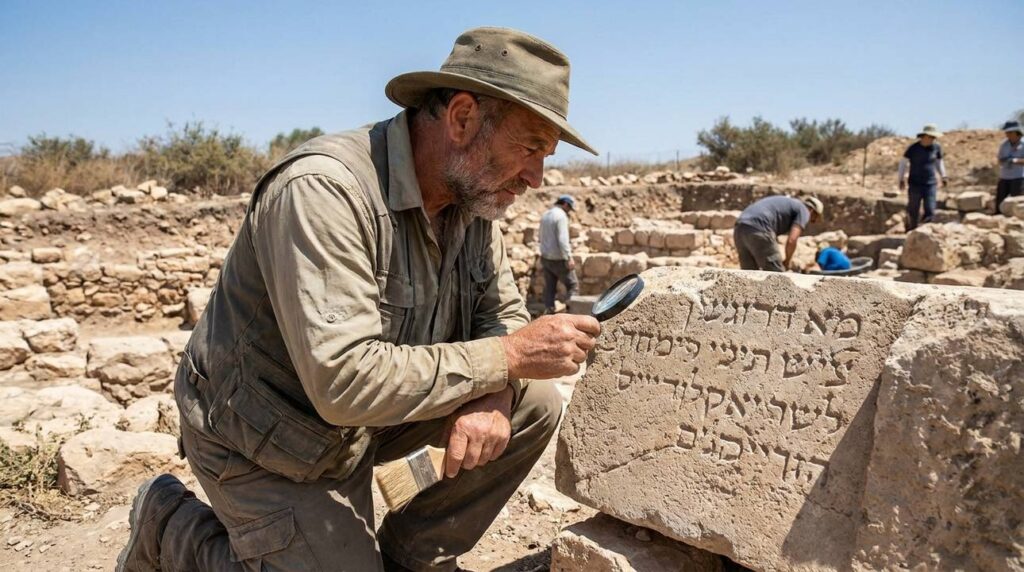
Understanding Mount Seir in Today’s World

The rugged terrain of Mount Seir provided natural defenses, making it a formidable area for settlement and conflict alike. The Edomites, descendants of Esau, established their kingdom here, often interacting with neighboring tribes and nations. The Bible frequently mentions Edom in the context of its relationships with Israel, highlighting both cooperation and conflict. This region was not only a geographical landmark but also a cultural and political entity, influencing the narratives of the surrounding areas. Its location facilitated trade routes and military campaigns, underscoring its historical importance. What Is Mount Seir? Mount Seir is a mountainous region traditionally linked to...
Show more
Archeologist examining ancient stone ruins in a desert landscape.

Understanding Mesopotamia Today

What Was Ancient Mesopotamia? Ancient Mesopotamia, nestled between the Tigris and Euphrates rivers, was home to some of the world’s earliest civilizations. The Sumerians, Akkadians, Babylonians, and Assyrians all thrived in this fertile crescent. Mesopotamia was a land of innovation, introducing writing, law, and urbanization. Its cities, like Ur and Babylon, were centers of political, economic, and cultural life. Today, the history of this region provides insight into early human society and its accomplishments. Around 3200 BCE, cuneiform writing emerged as one of the first known systems of written communication, developed by the Sumerians. This innovation allowed for the recording...
Show more
Diverse Israeli archeologists examining ruins at Beer Lahai Roi.

Understanding Modern Day Beer Lahai Roi Well

The name itself means “the well of the Living One who sees me,” reflecting the impact of this divine interaction, which is remembered by those seeking spiritual solace. Beer Lahai Roi is referenced as a dwelling place, adding another layer to its historical importance. The well’s location in the arid climate of the Negev underscores themes of survival and provision. As it served as a life-giving source of water in a barren land, the story of Hagar and the well is still remembered by those seeking solace and guidance. The connection to the well deepens its narrative, showing how figures...
Show more
Israeli archaeologist examines ancient ruins at Luhith in afternoon light.

Understanding Luhith in the Historical Context

The ascent of Luhith is significant in historical narratives, illustrating the challenges faced by those fleeing Moab. The path is described as one of weeping, emphasizing the emotional turmoil of the time. Luhith’s role in these texts provides insight into the broader historical context of Moab, a region often caught in the crossfire of ancient conflicts. Its geographical features, such as steep ascents, contributed to its depiction as a place of refuge and flight. What Is Luhith in the Bible? Luhith is mentioned in ancient texts, often in the context of distress and lamentation. Located in the land of Moab...
Show more
Archeologist in field attire examining stone ruins in Lebanon.

Understanding Lebanon on the Bible Map

Lebanon’s strategic location is evident in its frequent mentions, such as in historical texts, where the Sidonians are noted among the peoples left to test Israel. This highlights Lebanon’s role in the region’s complex history. The influence of Lebanon extended through trade, culture, and military interactions. Its cities, like Tyre and Sidon, were known for their wealth and craftsmanship, contributing to the cultural and economic landscape of the ancient Near East. The region’s mountainous terrain, including the famous Mount Lebanon, is frequently mentioned in historical texts. The majesty of the cedars of Lebanon highlights their quality and strength. These trees...
Show more
Israeli archaeologist examines maps and artifacts at Libnah dig site.

Understanding Libnah in Historical Maps and Context

Libnah is recognized as a city involved in regional campaigns, highlighting its strategic importance in the area. Mentioned alongside other notable locations, the city played a crucial role in the broader narrative of regional conquest and settlement. Its strategic location made it a key participant in military campaigns, contributing to the establishment of control over the region. Libnah’s significance is further emphasized in historical records, where it is mentioned in the context of political rebellion. This marks a period of instability and shifting allegiances within Judah, reflecting the complex political dynamics of the time. Libnah’s presence on ancient maps serves...
Show more
Israeli archaeologist examining stone ruins in Negev desert with map.

Understanding Kedar: Exploring Its Cultural Impact

Kedar’s strategic location in the Arabian Peninsula made it a key player in trade routes connecting the Levant with the Arabian interior. This positioning allowed Kedar to influence economic and cultural exchanges across vast regions, leaving a lasting imprint on the ancient world. The tribe’s ability to navigate these trade networks and maintain its influence highlights its strategic importance in the region. Understanding Kedar’s role in these exchanges provides valuable insights into the interconnectedness of ancient societies and their economic dynamics. Who Were the People of Kedar? Kedar is introduced as one of the sons of Ishmael, the ancestor of...
Show more
Israeli archaeologist examines pottery shards at Kir Hareseth in evening light.

Understanding Kir Hareseth in Historical Context

What Is Kir Hareseth? Kir Hareseth was an ancient city within the territory of Moab, frequently mentioned in historical records. Known for its formidable walls, it served as a fortress and refuge, holding a strategic position in the highlands. The city’s significance is well-documented in texts, denoting its importance to the Moabite kingdom. Archaeological findings, such as pottery and inscriptions, continue to shed light on its role and influence, offering a glimpse into the daily lives and governance of its inhabitants. Historical Background of Kir Hareseth This city was a major urban center for the Moabites. Historical references point out...
Show more
Archaeologist examines ancient ruins in Illyricum with mountains in background.

Understanding Illyricum in the Present Day

Illyricum’s cultural and historical significance is evident in its role as a bridge between different civilizations. Its strategic position facilitated the exchange of ideas and traditions, contributing to a rich cultural tapestry. Historians and archaeologists continue to explore its legacy, showing its role in shaping the ancient world. What Was Illyricum in the Historical Context? Illyricum is frequently referenced in historical texts, known for its geographical expanse along the western Balkan Peninsula. These journeys demonstrate the spread of early teachings beyond traditional lands, positioning Illyricum as a bridge between historical civilizations and the burgeoning outreach depicted in historical records. Its...
Show more
Israeli archaeologist examines ancient ruins in Negev Desert.

Understanding Hormah in the Bible

The city of Hormah is also mentioned in historical texts, where it was again conquered by the tribes of Judah and Simeon. This repeated conquest underscores its strategic importance in the region. The name ‘Hormah’ itself means ‘devotion to destruction,’ reflecting the vow made by the Israelites. Such historical contexts highlight Hormah’s role as more than a mere city; it represents a narrative of dedication and fulfillment of vows in Jewish history. The Israelites vowed to destroy the city if they were victorious, which they achieved with support. This act of devotion was not just a military conquest but a...
Show more
Israeli archaeologist examining ancient scrolls near Jerusalem, surrounded by ruins.

Understanding Horesh in Historical Context

Ziph, including Horesh, is noted for its strategic significance in historical narratives. The rugged terrain provided a natural fortress for those seeking refuge, allowing them to evade capture and plan their next moves. This area was not only a place of refuge but also a setting for significant events, highlighting its importance in history. What Is Horesh? Horesh appears in historical texts primarily in the context of strategic importance. It is often referenced as a place of refuge during times of pursuit. Specifically, it is located in Ziph, an area known for its rugged terrain. Horesh served as a hideout,...
Show more
Diverse Israeli scholars discuss Hamonah around a book-laden table.

Understanding Hamonah in Today’s Context

Exploring this site provides a clearer view of the prophetic visions that shaped narratives. Scholars and enthusiasts alike seek to uncover the mysteries surrounding Hamonah. This quest not only expands our knowledge of ancient texts but also enhances appreciation for the complex narratives that have influenced thought throughout history. The mystery of Hamonah’s location has led to various theories, with some suggesting it could be near ancient trade routes or significant battle sites. These theories are based on historical and geographical analyses of the region described in ancient texts. This speculation fuels both historical and theological discussions, as researchers seek...
Show more
Israeli historian examines Gomer inscriptions at archaeological site in sunlight.

Understanding Gomer’s Historical Legacy Today

The historical and cultural implications of Gomer’s lineage are vast, as his descendants are believed to have spread across Europe and Asia. This connection provides insight into the ancient world and its influence on contemporary societies. Gomer’s lineage is often linked to the Cimmerians and the Celts, tribes that played significant roles in shaping early European history. The spread of these tribes can be traced through archaeological findings, such as burial mounds in the Ukrainian steppes, which align with the timeline of Gomer’s descendants. These findings offer a glimpse into the migratory patterns and cultural exchanges that occurred over millennia....
Show more
Archaeologists examining ruins at Gibeath Haaraloth in sunny desert.

Understanding Gibeath Haaraloth in Historical Context

What Is Gibeath Haaraloth? This location is mentioned in historical texts, serving as the site where the Israelites performed circumcisions upon entering a new land. This ceremony symbolized a profound renewal of the covenant between the people and their heritage. According to historical accounts, it was here that Joshua circumcised the new generation of Israelites. The name itself translates to ‘Hill of Foreskins,’ commemorating this covenantal event. Situated near the ancient city of Gilgal, it marks a new beginning after the Israelites’ long journey through the desert. It stands as a sign of the faith of a people returning to...
Show more
Israeli archaeologist examines ancient stone ruins at Gebal in sunlight.

Understanding Gebal: Ancient Significance and Modern Insight

What Is the Historical Reference to Gebal? Gebal was a significant Phoenician city, located in what is now Lebanon. Its shipbuilders were known for their contributions to maritime trade. These craftsmen were key in constructing vessels that enabled extensive trade networks across the Mediterranean. The city was an essential link in regional commerce, recognized for its craftsmanship and strategic importance. Its location allowed for the exchange of goods such as timber and papyrus, which were highly valued in ancient markets. The Phoenicians were known for their seafaring abilities, and Gebal’s shipbuilders played a crucial role in maintaining these trade routes....
Show more
Israeli archaeologist examines ancient ruins at Ephes Dammim in morning light.

Understanding Ephes Dammim in History

The Valley of Elah, where Ephes Dammim is situated, was a strategic location due to its proximity to the Philistine territory. The Philistines, known for their conflicts with Israel, often sought to expand their influence into this area. This geographical setting highlights why the confrontation between David and Goliath holds such importance in history. The lessons from this event are still remembered by many, illustrating how determination can overcome seemingly insurmountable challenges. What Is Ephes Dammim? Ephes Dammim is a location known as the place where the Israelites faced the Philistines. This battlefield lies in the territory of Judah. The...
Show more
Israeli historian examines ancient maps and texts at cluttered desk.

Understanding Ephraim in the Bible: A Journey Through Maps and History

Ephraim’s central location made it a key player in the socio-political landscape of Israel. The tribe’s influence is evident in the stories of leaders like Joshua, who hailed from Ephraim and was important in leading the Israelites into new territories. These narratives highlight the legacy of Ephraim in shaping the history and identity of the people. What Is Ephraim in the Bible? Ephraim holds a history within ancient texts. It is one of the tribes of Israel, named after a significant figure. In Genesis, Jacob honors Ephraim and his brother Manasseh, giving them a prominent position among the tribes of...
Show more
Israeli archaeologist examines ancient inscriptions at En-Hakkore in morning light.

Understanding En-Hakkore Lehi

The importance of En-Hakkore is further emphasized when considering other stories of survival and aid, such as Elijah being fed by ravens at the Brook Cherith. These stories serve as powerful reminders of the enduring strength and perseverance that characterize the heritage of the Jewish people. By exploring these narratives, we gain a deeper appreciation for the ways in which providence is woven into the fabric of history. En-Hakkore stands as a sign of the strength and perseverance of those who lived in earlier times, showing their spiritual lives and the challenges they faced. What Is En-Hakkore Lehi? En-Hakkore translates...
Show more
Archaeologist examining ancient ruins in Ellasar with distant hills visible.

Understanding Ellasar: A Journey Through Time

Together, we’ll explore its role and relevance in the geopolitical landscape of the time. The mention of Ellasar in this context provides valuable insights into the alliances and conflicts that shaped the ancient Near East. By examining the historical and cultural backdrop of Ellasar, we can better understand the dynamics that influenced the narrative and the broader historical developments of the region. Where Is Ellasar Mentioned in the Bible? Ellasar is notably mentioned in historical texts. It appears alongside other realms in a narrative about ancient kings. This mention establishes Ellasar as a significant entity during that time, highlighting the...
Show more
Archaeologist examining ancient ruins and pottery in Israel.

Understanding Elam in the Bible

Where Was Elam in Historical Context? Elam was located to the east of Mesopotamia, in the region that is today part of southwestern Iran. This area was known for its fertile land and strategic location. Elam’s proximity to the Tigris and Euphrates rivers contributed to its agricultural productivity. It bordered Babylon to the west and Persia to the north. This position made it a significant crossroads for trade and cultural exchange. Elam’s strategic location contributed to its history and interactions with neighboring powers. The Elamites were influential in the development of early writing systems and administration. Elam in the Hebrew...
Show more
Israeli archaeologist examines ancient ruins in Negev desert.

Understanding Edom: Its Past and Present Location

Edom’s history is intertwined with neighboring kingdoms such as Moab and Israel. The Edomites are often mentioned in historical texts, which shed light on the geopolitical dynamics of the region. These interactions reveal Edom’s role in ancient military and trade activities. Edom’s interactions with its neighbors were influenced by its position and resources. The kingdom’s role in regional politics is evident in historical accounts of its alliances and conflicts. These narratives highlight Edom’s impact on the history of the region, offering insights into its relationships with neighboring powers. What Was Edom? Edom, also known as Idumea, was inhabited by the...
Show more
Israeli archaeologist examines ancient ruins in Negev desert landscape.

Understanding Edom in Today’s Context

This article explores the historical context, cultural impact, and current understanding of Edom, revealing an intriguing blend of past significance and modern interpretation. Interactions between Edom and Israel are documented in several historical accounts. These narratives provide a window into the complex relationships between neighboring peoples in the ancient Near East. Today, archaeological studies continue to uncover artifacts that shed light on Edom’s past, offering new perspectives on its role in history. What Was Edom in the Bible? Edom, a prominent historical region, is frequently mentioned in the books of Genesis and Kings. The nation was traditionally descended from Esau,...
Show more
Israeli archaeologist examines ancient ruins in Negev Desert at dawn.

Understanding Edom and Its Modern Location

Culturally, Edom’s interactions with neighboring peoples were complex. Thought to be descendants of Esau, the Edomites had a history of both conflict and cooperation with Israel. Their legacy continues to intrigue historians and archaeologists, who are uncovering more about Edom’s role in the ancient Near East. Excavations in sites like Bozrah provide insights into Edomite society, including their religious practices and social structures, which were distinct yet influenced by neighboring cultures. What Was Edom in Historical Times? Edom was an ancient region inhabited by the descendants of Esau, the brother of Jacob. Their territory stretched from the southern Dead Sea...
Show more
Archaeologists examining maps and artifacts at Cush dig site.

Understanding Cush in the Bible and Its Map Representation

Cush is located south of Egypt and played a role in ancient geopolitics. Its mention as a place of exile emphasizes its importance. The descendants of Cush include Nimrod, an early city builder. This lineage underscores Cush’s influence in early history. Cush’s interactions with Egypt are documented, with the Cushite king Tirhakah noted as a threat to the Assyrian empire. These interactions illustrate the geopolitical dynamics of the time. Nimrod’s impact in establishing cities is noted, showing Cush’s influence across regions. Where Is Cush Located on Historical Maps? Cush is depicted south of Egypt. Historical maps place it in modern...
Show more
Israeli archaeologist examines ancient ruins in Negev desert at sunset.

Understanding Caphtor: A Journey through Historical Lands

The intriguing history of Caphtor continues to be a subject of scholarly exploration. Archaeological evidence suggests links to ancient Crete, with some scholars proposing connections to Cyprus. Historical texts associate Caphtor with the Philistines, who were significant figures in the history of the region. These debates reflect the complexities of tracing ancient migrations and cultural exchanges, inviting further research and discovery into the ancient world. Understanding Caphtor’s role provides insights into the broader Mediterranean context. What Is Caphtor? Caphtor is associated with the Philistines, known for their interactions with the region. Scholars have long debated its precise location, with some...
Show more
Israeli historian examines ancient stone ruins in Negev desert.

Understanding Bokim in Historical Context

Bokim’s connection to lament offers insights into reflection and the importance of covenantal faithfulness. The narrative highlights the Israelites’ struggles with their covenantal obligations and the need for repentance. This idea is echoed in other narratives, such as a leader’s repentance. What Is the Meaning of Bokim? The term ‘Bokim’ translates to ‘weepers’ or ‘those who weep’ in Hebrew. It is primarily associated with a location where the Israelites were reproved and expressed remorse, as recounted in the Book of Judges. This site symbolized a place of deep emotional and spiritual transformation for the people at that time. The narrative...
Show more
Israeli archaeologist examines ruins in Turkey with map and tablet.

Understanding Bithynia in the Bible

Bithynia’s position at key trade routes made it an appealing destination for reaching diverse audiences. The area was a melting pot of cultures, which facilitated the exchange of ideas and beliefs. By examining Bithynia’s history, we can better understand its influence on early movements and its enduring impact on historical narratives. Where Is Bithynia Mentioned in the Bible? In the Book of Acts, Bithynia is noted as a place Paul aimed to visit during his journeys but was unable to enter. This event is part of Paul’s second journey through Asia Minor, aimed at spreading his message. The mention underscores...
Show more
Israeli archaeologist examining ancient ruins in Negev desert at sunset.

Understanding Beer-lahai-roi Today

What Is Beer-lahai-roi? Beer-lahai-roi is first mentioned as the well where Hagar, the maidservant of Sarah, encountered an angel. This moment when Hagar, fleeing from her mistress, finds solace and guidance at this well is significant. Located in the Negev, the name means ‘Well of the Living One Who Sees Me.’ It marks a significant moment of encounter, symbolizing hope and the assurance of being seen and cared for, even in isolation. Historical Importance of Beer-lahai-roi Beyond its narrative, Beer-lahai-roi served as a landmark in the southern region. It is first mentioned where Hagar, the maidservant of Sarah, encountered an...
Show more
Israeli historian examines ancient ruins in Negev desert with clipboard and camera.

Understanding Baalah in the Bible

What Is Baalah? Baalah was a town in the region given to the tribe of Judah, noted for its historical significance. It was part of the southern boundary of Judah, marking its importance in defining the tribe’s territorial limits. Where Is Baalah Located? Situated near the border area between modern-day Israel and ancient Philistine territories, Baalah’s specific location has been debated, with some identifying it with the modern site of Deir Ballut. This area was a meeting point for different cultures, influencing its development. The Philistines, known from historical accounts, were often in conflict with the Israelites, making Baalah’s location...
Show more
Group of archaeologists examining artifacts at Baal Hermon ruins.

Understanding Baal Hermon in the Historical Context

The role of Baal Hermon in historical narratives is further emphasized in its association with Mount Hermon, one of the highest points in the region. This connection underscores its strategic importance in ancient geopolitics. Its mention as a landmark in the conquests led by the Israelites highlights its significance in defining territorial boundaries. Such references provide valuable insights into the historical and cultural landscape of the time. What Is Baal Hermon in the Bible? Baal Hermon is mentioned as an important location in the northern regions. It is associated with Mount Hermon, described as one of the highest points in...
Show more
Israeli archaeologist examines ancient ruins in Bahurim at sunset.

Understanding Bahurim in Historical Times

Bahurim’s mention in these narratives shows its importance, providing a backdrop for moments of conflict. Its proximity to Jerusalem made it significant for political and personal encounters. Understanding Bahurim’s role in these events offers a glimpse into history and the interactions that defined the era. What Is Bahurim? Bahurim is associated with moments of drama and intrigue. Notably, Bahurim is where Shimei cursed David during his flight from Absalom. This town was situated near the roads leading to the Jordan Valley, emphasizing its strategic location. Bahurim’s geographic context provided a backdrop for many encounters, highlighting its importance in historical narratives....
Show more
Israeli archeologist examines Assyrian relics at excavation site in Israel.

Understanding Assyria in Today’s Context

The legacy of the Assyrian Empire is reflected in its contributions to art, architecture, and governance, which continue to be studied and admired. Its enduring influence is a sign of its history and the richness of its cultural heritage. What Was Assyria in Historical Times? Assyria was a major Mesopotamian kingdom and empire of the ancient Near East. known for its powerful military and architectural marvels, the empire expanded across a vast region. It is often remembered for its conflicts with neighboring nations, including Israel and Judah, where King Shalmaneser V besieged Samaria. Their architecture, such as the ziggurats and...
Show more
Israeli archaeologist examines ancient maps at a Negev desert site.

Understanding Azal’s Place on Historical Maps

The earthquake during King Uzziah’s reign marks a time of significant change. This event, though not extensively detailed in historical records, adds to the mystique of Azal as a place of sanctuary. The mention of Azal in this context highlights themes of refuge and protection in times of crisis, showing the historical dimensions of ancient narratives. What Is Azal in the Bible? Azal is a location mentioned briefly in historical texts. It references a valley where people will flee during a coming day of upheaval. The verse reads: ‘You will flee as you fled before the earthquake in the days...
Show more
Israeli historian examining Alein artifacts in a sunlit museum.

Understanding Alein: Its Place in History

Where Is Alein Mentioned in the Bible? Mentions of Alein in ancient texts are limited but fascinating. It appears in a few passages suggesting a place of significance. Alein might imply a setting of strength or vitality, akin to places like Beersheba, known for its wells and agreements. Researchers examine these references to understand its place in broader historical narratives. Analyzing ancient texts provides context and aids in reconstructing its historical role. The Geography of Alein Efforts to locate Alein historically place it near known landmarks. Some researchers suggest its proximity to the ancient city of Jericho, famous for its...
Show more
Archaeologist examining ancient ruins in Israel, scattered artifacts in background.

Understanding Aram’s Place in the Bible

The region’s cities, such as Damascus, were centers of trade and culture, playing a crucial role in the economic and political dynamics of the time. Aram’s strategic position made it a key player in the ancient Near East, influencing the surrounding regions. The region’s strategic position made it a focal point for trade and military campaigns. Aram’s cities, such as Damascus, were key locations for commerce and cultural exchange, influencing the surrounding regions. Damascus, for example, is one of the oldest continuously inhabited cities in the world. The complex relationships between Aram and Israel, involving both conflict and cooperation, underscore...
Show more
Israeli archaeologist examines ancient ruins at Tower of Hananel, Jerusalem.

Uncovering the Tower of Hananel in Historical Jerusalem

Located in the northeastern part of Jerusalem, the Tower of Hananel was a crucial element of the city’s defense. Its strategic position was important for security against northern threats. The tower holds historical significance, reflecting the resilience of Jerusalem through different eras. During the Hellenistic era, the tower was central to defense strategies in Jerusalem. What Is the Tower of Hananel? The Hananel Tower is a notable historical structure within Jerusalem’s defenses. Its name may originate from a family or individual, but the exact origin is uncertain. Its defensive role is documented. Following the Babylonian exile, rebuilding efforts included the...
Show more
Archaeologist examining ancient ruins in Achaia, Greece at sunset.

Understanding Achaia in Historical Context

In the New Testament and in Roman records, Achaia is described as a province in southern Greece. Its main centers included the ancient cities now called Corinth and Athens. People traveled by land and sea between these towns. Trade and ordinary movement linked them to the wider Mediterranean world. The Book of Acts and letters attributed to Paul are primary narrative sources that mention places and journeys in this region. Archaeological finds and inscriptions add information on towns, harbors, and local administration. Historians combine these sources to form straightforward reconstructions of where people lived and worked. What Is Achaia in...
Show more
Israeli archeologist examines ancient artifacts at dig site in Israel.

Uncovering the Significance of Maacah in the Bible

What Is Maacah in the Bible? Maacah is mentioned in historical texts as a region bordering Aram and as a royal name. The first reference to Maacah as a place is in the narrative of David. Situated near the Sea of Galilee, it was a small Aramean kingdom. In historical accounts, Maacah is cited as an ally in coalitions against David’s forces. This involvement influenced the region’s political landscape. Additionally, a queen named Maacah, mother of Asa of Judah, signifies the complex intermarriages among ancient kingdoms. Who Were the People of Maacah? The people of Maacah were likely part of...
Show more
Archaeologist in field outfit examining ruins at Mamre site.

Uncovering the Significance of Mamre in Historical Contexts

What Is Mamre? Mamre is a site mentioned in the Hebrew Bible, associated with important historical figures. It appears in several narratives, most notably as the location where visitors were received. This event is seen as a pivotal encounter with cultural implications. The visitors, often interpreted as messengers, foretold the birth of a significant figure, marking a turning point in the narrative. Mamre’s name is often linked to the oak trees, known as the Oaks of Mamre, which provided a setting for these encounters. These oaks symbolize strength and continuity. These oaks are believed to have been a landmark in...
Show more
Middle-aged Israeli archaeologist examining artifacts at Lud archaeological site.

Uncovering the Mystery of Lud: Past and Present

Sardis, as the capital of Lydia, was a center of wealth and cultural development. The city’s prosperity was partly due to its strategic position on trade routes connecting Asia Minor with the Mediterranean. The historical references to Lud emphasize its significance in the ancient world. By examining these connections, we gain a deeper understanding of the region’s role in shaping historical narratives and its lasting impact on cultural development. What Was Lud in the Bible? Lud is linked to the descendants of Shem, one of Noah’s sons. Located in the region of Lydia, its inhabitants are referred to in several...
Show more
Israeli archaeologist examines ruins in Negev desert with tools nearby.

Uncovering the Location of Beer-lahai-roi Today

What Is Beer-lahai-roi? Beer-lahai-roi is where Hagar, the maidservant of Sarah, encountered an angel. This encounter is documented where the angel instructs Hagar to return to Sarah and promises that her descendants will be numerous. This location is important in Hagar’s story. The name translates to ‘well of the Living One who sees me,’ emphasizing its significance. It becomes a sanctuary for Hagar, highlighting themes of care and survival in the wilderness. It serves as a place of refuge and assurance for her. Hagar’s story at Beer-lahai-roi underscores the theme of intervention in moments of despair. Her experience is a...
Show more
Israeli archeologist examines artifacts at Ekron dig under clear sky.

Uncovering the Location of Ekron Today

Excavations at Tel Miqne have revealed various artifacts, including tools, pottery, and religious items. These discoveries are crucial for reconstructing Ekron’s historical narrative, shedding light on its economic activities and social structure. The site’s archaeological record continues to attract scholars and visitors interested in exploring ancient history. Historical Background of Ekron Ekron is noted in historical texts as a major Philistine city. Known for its strongholds and strategic importance, it was part of the Philistine pentapolis, a league of five cities in the coastal region. It played a role in various historical events, such as King Ahaziah’s inquiry to the...
Show more
Israeli archaeologist examines ancient ruins at Mamre under bright sunlight.

Uncovering the Location of Mamre in the Bible

These events at Mamre are pivotal, as they emphasize themes of community and hospitality. The oaks of Mamre serve as a setting for important encounters and promises that shape the future of the people. Interactions at Mamre, including alliances with local leaders, showcase the area’s strategic importance in history. Mamre is renowned as a burial site for notable figures in the Cave of Machpelah. This burial site underscores its enduring importance as a family and heritage site. Located in Hebron, the Cave of Machpelah is among the oldest continuously used prayer sites globally. It is believed to have been purchased...
Show more
Israeli archaeologists excavate Idumean ruins in Negev desert at sunrise.

Uncovering the Land of Idumea

This article explores Idumea’s historical location, its connections to events, and its evolution over time. The region’s history is intertwined with key figures and events, offering insight into the cultural and political dynamics of the ancient Near East. Understanding Idumea’s place in history helps illuminate the broader narrative of the region. The region’s significance is further highlighted by its depiction as a place of judgment. These references provide a framework for understanding the complex relationships and power struggles that characterized the ancient Near East. Idumea’s role in these narratives underscores its importance in the historical and cultural fabric of the...
Show more
Israeli archaeologist examines ancient ruins at Ulai Canal, tools in hand.

Uncovering the history of the Ulai Canal

This article delves into the wide-ranging historical contexts of the Ulai Canal, exploring its impact and relevance across different eras and cultures. Its strategic location made it a focal point for trade and military campaigns, influencing the rise and fall of empires. In ancient texts, this waterway is often associated with the prosperity of the region, serving as a lifeline for agriculture and commerce. Its mention highlights its importance not only as a physical landmark but also as a symbol of historical transitions. What Is the Ulai Canal? The Ulai Canal is located in what is present-day Iran. Historically part...
Show more
Israeli archaeologists excavating Baal-Gad ruins, surrounded by tools and greenery.

Uncovering the history of Baal-Gad

Baal-Gad’s strategic location at the base of Mount Hermon made it crucial during the conquests. Its fertile lands and access to trade routes enhanced its importance in historical narratives. Baal-Gad’s name suggests a connection to the Canaanite deity Baal, reflecting the cultural interactions between different populations. This article delves into the historical and cultural role of Baal-Gad, showing its role in the ancient world. Mount Hermon, towering over the region, was not only a physical landmark but also a cultural one, often associated with significant encounters in traditions. The lush landscapes around Baal-Gad provided a fertile ground for agriculture, making...
Show more
Israeli archaeologist examines ancient ruins in Negev desert at dawn.

Uncovering the History of the Shihor River

The Shihor’s mention as a boundary further emphasizes its role in defining territories. This strategic positioning allowed the river to serve as a natural defense and a point of interaction between different cultures. By exploring the Shihor’s historical context, we gain insights into the ancient world’s geopolitical dynamics and the significance of natural landmarks in shaping human history. What Is the Shihor River? The Shihor River features mainly in historical texts as a frontier line. It is known as a watercourse that forms part of the boundary between territories described in ancient records. The name Shihor is sometimes linked to...
Show more
Israeli archaeologist examines ancient ruins in Attalia under afternoon sun.

Uncovering the History of Attalia

Attalia’s historical significance is highlighted by its role as a departure point for notable figures. This connection emphasizes its importance as a hub for cultural interactions. The city’s location on the Mediterranean coast facilitated its growth as a center for commerce and interaction among diverse cultures. Where Is Attalia Located? Attalia, now known as Antalya, is situated on Turkey’s southwestern coast. Historically part of the Pamphylia region, it was known for its diverse population, including Greeks, Romans, and indigenous peoples. The location of Attalia allowed it to serve as a major port and gateway for trade and travel between the...
Show more
Israeli archaeologist examines ancient ruins at Beth Car with tools.

Uncovering the History and Significance of Beth Car

Beth Car’s strategic importance is highlighted by its proximity to Philistine territories, which were often in conflict with Israel. This geographical positioning made it a key site for military engagements, as noted in historical accounts. The triumph at Beth Car not only provided immediate relief from Philistine threats but also served as a morale booster for the Israelites, reinforcing their unity under Samuel’s leadership. What Is Beth Car? Beth Car, though briefly mentioned in historical texts, holds captivating history. Located in the ancient realm, its name translates to ‘House of the Lamb’ or ‘Fortress,’ suggesting both a place of dwelling...
Show more
Israeli archaeologist examines ancient ruins at Beth-peor in morning light.

Uncovering the History and Meaning of Beth-peor

What Was Beth-peor? Beth-peor is recognized as a site near Moab. The name translates to ‘house of Peor,’ connecting it to the Moabite god Baal-peor. Historically, it plays a role in the narrative of the Israelites during their journey. The account links Beth-peor to events involving the prophet Balaam and the Israelites. Researchers have examined its role in these stories, considering its geographical and cultural context to better understand its importance. Beth-peor’s proximity to the Jordan River made it a strategic site during the Israelites’ journey. This location highlights its significance in the unfolding story of the Israelites’ search for...
Show more
Male archaeologist uncovers artifacts at Philippi ruins with trowel and brush.

Uncovering the Historical Background of Philippi

This strategic importance facilitated the spread of ideas and cultures. The city’s founding by Philip II was part of his efforts to consolidate power in the region, and its later development under Roman rule further cemented its role as a key urban center in the ancient world. This article explores the impact of Philippi, providing insights into its role during earlier periods. Philippi is noted for being the site where Paul and Silas were imprisoned and later released. The city’s conversion to Christianity is marked by Lydia, a merchant of purple cloth, who was one of the first converts in...
Show more
Archeologist examining artifacts at Ophrah, Israel in late afternoon light.

Uncovering the Historical Ophrah of the Abiezrites

Where Was Ophrah of the Abiezrites? Ophrah, located in the region of Manasseh, is traditionally linked with historical figures. The site is mentioned in the Book of Judges, offering a glimpse into history. Archaeological findings provide clues about its exact location, with some suggesting it might be near modern-day towns in the West Bank. Modern-day scholars suggest its proximity to notable locations may hint at its southern position within the region of Manasseh. Such insights are crucial for understanding the geographical and cultural landscape of the time. The exact modern location remains uncertain, but its historical ties to exploits against...
Show more
Israeli archaeologist examines Beth Togarmah ruins with brush and trowel.

Uncovering Beth Togarmah’s Historical Role

Beth Togarmah’s connection to Tyre’s commercial empire underscores its strategic importance. The genealogical link to Tubal and Meshech places Beth Togarmah within a network of peoples spread across Asia Minor. These ties help us understand the city’s role in ancient commerce and its impact on regional dynamics. The mention of Beth Togarmah within the Table of Nations highlights its ancestral roots. This genealogy links it to a broader network of peoples, emphasizing its role in ancient economic exchanges. These connections provide insights into the movement and interactions of early communities, serving as a historical map of the ancient world. The...
Show more
Archaeologist examining ancient ruins in desert with excavation tools around.

Uncovering the Ancient Location of Put

What Is the Land of Put? Put appears in ancient genealogies as one of the sons of Ham. Ham’s descendants are traditionally linked with nations in Africa and the Near East. While historical texts do not provide specific geographical details for Put, it is often connected to regions in North Africa. The identification of Put is speculative, with ancient Libya being a prominent association among scholars. This aligns with the positioning of other descendants of Ham in Africa and suggests a connection with areas near the Mediterranean coast. Where Is Put Located Today? Determining Put’s modern location is challenging due...
Show more
Israeli archaeologist examines artifacts at Akeldama, late afternoon sunlight.

Uncovering Akeldama: Historical Site and Present Context

What Is Akeldama’s Historical Background? Akeldama, also known as the ‘Field of Blood,’ derives its name from a pivotal moment in historical accounts. According to historical texts, it marks the place where Judas Iscariot, following his betrayal, met his tragic end. This event left a lasting mark, embedding the location deeply into historical traditions. The historical texts specifically refer to this field, noting its enduring relevance, which continues to intrigue scholars and visitors alike. Where Is Akeldama Located Today? Today, Akeldama is situated in the modern day Jerusalem, near the Hinnom Valley. This location provides unique archaeological interest due to...
Show more
Archaeologist examining artifacts at stone ruins in the Negev desert.

Tracing Zoar: An Ancient City in Today’s World

Zoar’s proximity to the Dead Sea also suggests its involvement in the trade of salt and other minerals, which were abundant in the region. This economic aspect further underscores its importance in historical contexts. The city’s strategic location made it a key player in the interactions between different cultures and civilizations, enhancing its historical role beyond narrative accounts. Understanding Zoar’s past helps us appreciate the interconnectedness of ancient cities and their influence on regional dynamics. What Is Zoar in the Bible? Zoar is one of the ‘five cities of the plain’ mentioned in historical texts. Located near Sodom and Gomorrah,...
Show more
Archaeologist examines ancient ruins and pottery at Ziklag excavation site.

Tracing the Location of Ziklag: A Journey Through History

The quest to identify Ziklag’s location involves analyzing historical texts and archaeological evidence. Sites like Tel Sera and Tel Halif have been considered potential candidates, each offering unique insights into the era of David. Artifacts found at these sites are examined for historical context. This ongoing exploration not only seeks to uncover Ziklag’s location but also to deepen our understanding of the historical context of David’s life and reign. It highlights the intersection of history and archaeology. What Is the Cultural Context of Ziklag? Ziklag appears prominently in historical texts, especially in the context of significant events. It was a...
Show more
Archaeologist excavating ancient ruins in desert with tools, morning light.

Tracing the Kingdom of Sihon

Sihon’s defeat was a significant moment in the Israelites’ journey, demonstrating their ability to overcome powerful adversaries. This triumph reinforced their commitment to their journey. Sihon’s story highlights themes of perseverance, offering lessons for those interested in the historical journey of the Jewish people. This territory held strategic importance, often mentioned in relation to Israel’s journey during the Exodus. The conquest of Sihon marked a turning point, where the Israelites gained control over the land. This success was not only a military triumph but also a fulfillment of promises made to them. The acquisition of Sihon’s territory was a key...
Show more
Archaeologist examining ancient ruins at Thyatira in bright sunlight.

Thyatira: Location, Maps and Everyday Life

The town was known for textile work. Local craftsmen produced cloth and dyes that were sold nearby and farther afield. One dye noted in some older sources is a purple used for garments. Finds such as spindle whorls, loom weights, and workplace debris support that textile production took place here. These items are the type of evidence researchers use when they draw a Thyatira map or describe the town’s location. Geographical Significance – Where the City Sat The settlement lay on a plain near the Lycus river system. From this lowland, farmers could reach fields easily and the town had...
Show more
Archaeologist examines artifacts at Thessalonica site in evening light.

Thessalonica in the Bible Map: Historical Insights

Historical Overview and Location of Thessalonica Thessalonica (now Thessaloniki) sits on the Thermaic Gulf in northern Greece. Its coastal site gave the city easy access to sea transport. Roads from inland areas met at the city. These links shaped its role at different times. The city is usually dated to the early Hellenistic period, around the late fourth century BCE. A local ruler is traditionally credited with its founding and with giving it a name tied to his family. The chosen site offered a sheltered harbor and nearby routes overland. Thessalonica on the Biblical Map and Ancient Routes Maps that...
Show more
Israeli historian examines ancient ruins on Mount Amana with tablet.

The Story and Significance of Mount Amana

The ongoing debate about Mount Amana’s exact location adds to its allure, as scholars explore its symbolic resonance in the Song of Songs. Its mention in the text connects it to themes of love and beauty, making it a subject of intrigue for those who study these ancient texts. Its cultural and history is still remembered fascination, drawing connections between poetic imagery and geographical mystery. What Is Mount Amana? Mount Amana is poetically referenced in Song of Songs 4:8, noted for its beauty and symbolic resonance. While its exact location is debated, many associate it with the Amanus mountain range...
Show more
Israeli archaeologist examines ancient ruins in a desert landscape.

The Mystery of the River Pishon Today

Where Was the River Pishon? Identifying the exact location of the Pishon River today remains a challenge. Scholars have long debated its course due to the limited description. Some suggest the river might have flowed in what is now modern-day Saudi Arabia, pointing to the archaeological and geographical features that match descriptions of Havilah. Theories often focus on the Arabian Peninsula’s historical climate, which was wetter in earlier times, supporting the possibility of a once-flowing river. Archaeological evidence, such as ancient irrigation systems and settlements, further supports the idea of a significant water source in the region. Excavations in areas...
Show more
Archaeologist in field attire noting findings at Tarsus ruins.

The Role of Tarsus in Historical Context

Where Is Tarsus Located? Tarsus is situated in what is now modern-day Turkey, in the region historically known as Cilicia. It lies on the southern coast, strategically positioned along the trade routes connecting Asia Minor to the Mediterranean. This geographic advantage made Tarsus a crossroads of various cultures and influences. Its location allowed it to thrive as a trade hub, contributing to its prosperity and significance in historical contexts. The city was known for exporting goods such as linen and timber, which were highly valued in the Roman Empire. The strategic location of Tarsus also made it a target for...
Show more
Archaeologist examining stone ruins in Negev Desert at sunset.

The Mystery of Beer-lahai-roi

What Is Beer-lahai-roi? Beer-lahai-roi is first mentioned in ancient texts, where it describes Hagar’s experience at the well. The name translates to ‘well of the Living One who sees me,’ reflecting the encounter she had with what is understood as a significant presence. This place is not just a geographical location but a symbol within the historical context. It signifies awareness and guidance in times of distress. Such depth of its meaning has led to various interpretations and a continued interest in its history. Beer-lahai-roi serves as a powerful reminder of the ways in which divine encounters can shape human...
Show more
Israeli archaeologist examines ancient ruins in desert under clear blue sky.

The Mystery of Kir: Its Location and Significance

The association with Moab and Aram indicates Kir was part of a network of influential cities. Its strategic significance is further emphasized by its mention in military scenarios. Scholars continue to explore Kir’s role in ancient geopolitics, examining how it might have influenced events in the region. These investigations offer insights into historical narratives and the realities of the time. What Is Kir in the Bible? Kir is mentioned as an important location in several historical passages. It is linked with Elam and considered a land of military strength. This suggests that Kir was not only a military power but...
Show more
Israeli archeologist examines ancient ruins at Topheth with tools in hand.

The history of Topheth in Historical Context

The Valley of Hinnom, with its grim associations, became a symbol of retribution and moral failure. This transformation in name and meaning underscores the profound impact of the site on cultural memory, serving as a lasting reminder of the consequences of turning away from moral directives. What Is Topheth According to the Bible? Topheth is mentioned as a site located in the Valley of Hinnom, south of historical Jerusalem. Historically, it is associated with certain rites and activities considered as transgressions. The name appears in texts often linked with the infamous practice of child sacrifice. It is important to understand...
Show more
Israeli archaeologist examines ancient ruins at Mareshah in golden sunlight.

The History and Significance of Mareshah

The fortification of Mareshah by Rehoboam was part of a broader strategy to secure the kingdom’s borders. This move was essential for maintaining the safety and stability of Judah during turbulent times. Mareshah’s importance highlights its role as a center of commerce and defense, reflecting its significance in the history of the region. Today, Mareshah offers insights into ancient life and Jewish heritage. The archaeological site reveals layers of history through its ruins, including residential areas, public buildings, and defensive structures. These remnants provide a glimpse into the urban planning and architectural styles of the time, offering valuable information for...
Show more
Israeli archaeologist examines ancient ruins in Moresheth in morning sunlight.

The Map of Moresheth: A Historical Treasure

What Is Moresheth? Moresheth is recognized for its historical and cultural importance. It played a vital role in the region’s economy due to its strategic location. Situated in the area traditionally linked with the tribe of Judah, Moresheth was a significant agricultural center. This positioning allowed it to supply resources to nearby areas, highlighting its economic relevance. In addition to its historical significance, Moresheth’s archaeological findings contribute to our understanding of the past. Items such as pottery and tools illustrate the daily activities of its ancient inhabitants, painting a picture of life during that era. Where Is Moresheth Located? Moresheth...
Show more
Israeli archaeologist examines ancient ruins in Joppa, Mediterranean Sea background.

The Historical Location and Importance of Joppa

The city’s location made it an essential connection between the Mediterranean and inland areas. Joppa is noted in various texts as a port for importing materials for significant projects. As we delve into its history, we’ll uncover its influence on trade and culture, revealing its importance in the region. Joppa’s involvement in historical construction projects emphasizes its role in trade and activities. Its strategic location made it a central hub for importing materials. Where Is Joppa Located in the Bible? Joppa is located on the Mediterranean coast, in what is now Israel. Historically, it was a prominent port city. References...
Show more
Israeli archaeologist examines artifacts at Gerar in warm afternoon light.

The Historical Landscape of Gerar

Experiences in Gerar, as detailed in historical writings, highlight the city’s significance. Disputes over wells with the Philistines show the challenges of securing vital resources in a contested area. These accounts shed light on the social interactions of the time, illuminating the relationships between different communities and the importance of peace. Understanding Gerar’s place in these historical accounts provides insights into the region’s geography. Efforts in Gerar are recorded in historical texts. These tales emphasize the challenges of sustaining life in the region and the importance of water resources. The wells represent perseverance and the quest for peace amidst conflict....
Show more
Israeli archaeologist examines Ammonite ruins in Jordan Valley at sunset.

The Ammonites in Contemporary Perspective

In this article, we will explore who the Ammonites were, where they lived, and how their historical presence continues to impact our understanding of the region today. By examining their interactions with neighboring cultures and their contributions to historical records, we gain insights into the complexities of ancient societies. This exploration not only enhances our appreciation of their legacy but also highlights their enduring influence in the region’s history. Their impact is evident in the archaeological sites and historical records that continue to be studied by scholars and enthusiasts. Who Were the Ammonites? A Semitic people, the Ammonites emerged around...
Show more
Israeli archaeologist examines ancient ruins with notebook in Forest of Hareth.

The Forest of Hareth: A Historical Sanctuary

This protective environment provided a natural barrier against pursuit, offering both physical and emotional solace. Its mention underscores the importance of natural landscapes in historical narratives, highlighting their role in shaping the destinies of key figures. Natural settings like these offer a place of renewal and safety in stories, such as those of Elijah by the brook Cherith. What Is the Forest of Hareth? The Forest of Hareth appears in the narrative as a critical hiding place. It provides a backdrop for David’s escape from pursuit. Its exact location remains uncertain, but it is believed to have been situated in...
Show more
Israeli archaeologist examines ancient ruins in Negev desert at sunset.

Rephidim in the Bible: A Place of Encounter and Conflict

The battle at Rephidim was a crucial moment where Moses instructed Joshua to lead the Israelites in combat while he held up his hands in support. As long as his hands were raised, the Israelites were victorious, demonstrating the importance of perseverance. What Is Rephidim? Rephidim is mentioned as a campsite during the Israelites’ journey from Egypt. It was a place where they faced significant trials and learned lessons of perseverance. Located in the wilderness, Rephidim is described as a site where the Israelites struggled with lack of water, demonstrating their ongoing dependence on provision. Despite its challenges, Rephidim was...
Show more
Israeli archaeologist examines ancient ruins with map in Judean desert.

Salim in the Bible: Unveiling Its Historical Impact

What Is Salim in the Bible? Salim is mentioned as a notable location in historical narratives. It is associated with regions significant in Jewish history. Its name is found in connection with key events and is thought to be a place of peace or completeness, central to many stories. The exact identification of Salim has been debated, with some sources linking it to areas around Judea. Where Is Salim Located? Salim is believed to be located in the region of Judea, a significant area in the historical world. Judea is known for its historical importance, being the backdrop for many...
Show more
Middle Eastern historian using GPS and map at Syrian ruins.

Syria’s Historical Regions on the Map: Key Cities, Routes, and Archaeology

A historical Syria map often shows rivers, mountain ranges, towns, roads, and sites of human activity. Learn to spot these items one by one. Rivers are drawn as lines. They usually run from higher ground to lower basins. On a Syria history map, expect to see the Orontes and the Euphrates among the most frequently marked rivers. Mountain ranges appear as repeated peaks, shaded bands, or ridgelines. They show where travel was harder and where passes guided roads. Cities appear as dots or small pictograms. Larger dots or special symbols mark regional centers or important towns. Roads are lines that...
Show more
Israeli archaeologist examines ancient ruins in Pontus, lush landscape behind.

Pontus: Discovering Its Historical Location Today

The region’s proximity to the Black Sea allowed it to control important maritime routes, enhancing its role in trade and politics. The city of Amaseia, once the capital of Pontus, was strategically located along these routes, serving as a center of administration and commerce. Pontus’ control over these routes contributed to its economic prosperity and political influence, making it a key player in the ancient world. The history of Pontus is marked by its involvement in significant events, such as the Mithridatic Wars against Rome. These conflicts highlighted Pontus’ resistance to Roman expansion, showcasing its military and political importance. The...
Show more
Israeli archaeologist examining ancient ruins in the Negev Desert.

Mapping Kedar: An Exploration

What Is Kedar in the Bible? The name ‘Kedar’ first appears as a descendant of Ishmael, a significant figure. Kedar’s descendants became one of the prominent tribes in the Arabian Peninsula. Historical records list Kedar as one of Ishmael’s sons, establishing its lineage. In various texts, Kedar is associated with trade and shepherding, suggesting a lifestyle rooted in mobility and commerce. Historical references often mention Kedar symbolizing distant lands in dialogues about judgment and prophecy. Kedar’s mention in prophetic texts highlights its role as a symbol of distant lands. These references often serve as metaphors for judgment and prophecy, reflecting...
Show more
Historian in outdoor gear examines ancient ruins in desert landscape.

Mapping Pi-Hahiroth: A Journey Through Historical Terrain

Researchers study the mix of history, legend, and geography surrounding Pi-Hahiroth. New interpretations highlight its role in the Exodus narrative. The site draws interest from those eager to connect with the ancient world. This location symbolizes resilience, inspiring those who seek to understand its place in the Exodus story. We examine the historical records and geographical studies that provide a deeper appreciation for the challenges faced by the Israelites at Pi-Hahiroth. These events enrich our understanding of this pivotal moment in history. What Is Pi-Hahiroth in the Bible? Pi-Hahiroth is mentioned as a campsite during the Israelites’ journey from Egypt....
Show more
Archaeologist examines ancient stone ruins in Macedonia under morning light.

Map of Macedonia in the Bible: A Historical Overview

The period of Roman rule brought Macedonia into a broader network, enhancing its cultural and economic integration. Cities like Philippi and Thessalonica were crucial in this network, showcasing the strategic importance of the region. During Alexander the Great’s leadership, Macedonia became a center for the spread of Greek culture, significantly influencing surrounding regions. What Is Macedonia? Macedonia was a powerful kingdom, celebrated for its military prowess and cultural contributions. The expansion under Philip II and Alexander the Great facilitated trade and cultural exchanges, fostering diverse traditions. Macedonia’s role in blending cultures is well-documented. The integration of Greek and local traditions...
Show more
Egyptian archaeologist examines artifact at ancient site in morning light.

Locating Ancient Egypt in Today’s World

Today, this historical region corresponds with the modern nation of Egypt, known for its iconic monuments like the pyramids and the Sphinx. The Nile River remains a vital resource, much as it has been throughout history. The pyramids, built as tombs for pharaohs, showcase the architectural and engineering skills of ancient Egyptians, attracting visitors worldwide. What Was Ancient Egypt? Ancient Egypt, referred to in Hebrew as ‘Mitzrayim,’ was a powerful kingdom along the Nile River. It was a place of refuge and enslavement for the Israelites, playing a crucial role in historical narratives. Joseph’s rise to power in Egypt demonstrates...
Show more
Indonesian woman in kebaya making Kue with traditional ingredients and utensils.

Kue: Understanding Its Historical Role

Where Was Kue Located in the Ancient World? Kue, historically known as Cilicia, was located in the southeastern part of modern-day Turkey. Geographically, it was a key area due to its fertile plains and mountainous terrain, allowing for both agriculture and trade. The Taurus Mountains provided natural resources and protection, making it a desirable location for settlement. Its proximity to major trade routes, such as those connecting the Mediterranean with the Near East, made Kue an essential hub in antiquity, influencing economic and political relations across the region. The region’s fertile lands were ideal for growing crops like wheat and...
Show more
Archaeologist with GPS examines ancient ruins in Illyricum, soft morning light.

Illyricum on Biblical and Historical Maps

Maps from different eras place Illyricum along the eastern Adriatic shore. On some maps it covers a wide coastal zone; on others it is a smaller administrative district. Comparing these maps helps historians trace changes in names and boundaries over time. Overview Illyricum was an administrative region of the Roman world. It lay along the western Balkans and included both coastal and inland areas. Modern national borders do not match the old provincial lines. Generally, the province covered territory that is now part of several states on the eastern Adriatic. Roman writers and later geographers described Illyricum in different ways....
Show more
Middle-aged artisan crafting ceramic pot in traditional, rustic workshop.

Galatia Today: A Journey Through Time and Tradition

This article explores both the past and present of Galatia, combining history, geography, and the region’s legacy in historical narratives. The Galatians’ reputation as formidable warriors is noted in historical accounts, emphasizing their role in ancient geopolitical dynamics. The name ‘Galatia’ comes from the Celtic tribes known as the Galatians, who migrated into Anatolia around the 3rd century BCE. They established a distinct cultural identity, later influenced by Roman governance. Cultural exchanges are evident in archaeological finds, like inscriptions and artifacts. For instance, the Monumentum Ancyranum in Ankara, a temple dedicated to Augustus, shows Roman influence on Galatian society, highlighting...
Show more
Israeli archaeologist examines ancient ruins at Gadara under midday sun.

Gadara in Historical Context and Its Cultural Role

What Was Gadara’s Role in the Bible? Gadara is mentioned in the Bible as one of the cities in the New Testament’s Decapolis. Located east of the Jordan River, it was known for its Hellenistic culture. Though primarily featured in historical contexts, Gadara was influential in shaping the cultural dynamics of the region. It was home to both Jewish and Greek populations, fostering a blend of traditions and languages. This multicultural environment helped Gadara become a hub for philosophical and scientific thought during its peak. The Decapolis, including Gadara, is referenced in historical texts as a region of mixed cultures...
Show more
Israeli archaeologist examines ancient ruins in Negev desert.

Finding Havilah: A Historical Exploration

The mention of Havilah adds another layer to its historical narrative. This reference highlights the strategic importance of Havilah in historical contexts. By examining these accounts, we gain insights into the cultural and economic significance of Havilah. The ongoing exploration of its location invites us to consider the broader historical contexts that shaped the world, enriching our understanding of these ancient narratives. What Is Havilah’s Significance in the Bible? Havilah appears numerous times in historical narratives, suggesting it held notable significance. It is described as a land rich with gold, aromatic resin, and precious stones. This characterization associates Havilah with...
Show more
Diverse archaeologists examining ancient ruins in a desert landscape.

Ezekiel’s Visionary Map: A Journey Through Time

Ezekiel’s blueprint is not just a physical layout but a spiritual guide for a community yearning for restoration. The detailed descriptions of gates, walls, and sacred spaces emphasize the importance of worship and divine order. This revelation served as a source of hope during the Babylonian exile, promising a future where the Israelites would once again worship in their sacred city. The map is still remembered, offering a connection to the past and a vision for the future. What Is Ezekiel’s Visionary Map? Ezekiel’s depiction appears in chapters 40 to 48 of the Book of Ezekiel. It provides a detailed,...
Show more
Female archeologist examines artifact at Tirzah, tools beside her.

Exploring Tirzah’s Role in Biblical History

Tirzah’s role as a capital of the Northern Kingdom under King Jeroboam I highlights its political importance. Referenced in the Song of Songs as a symbol of beauty, it further establishes its cultural legacy. These references allow Tirzah’s story to continue resonating, showing the values and aesthetics of its time. As a capital, Tirzah underscored its political significance. It was the backdrop for key events, including the reigns of several kings. Its strategic location made it a center for administration and governance in the early days of the divided kingdom. Tirzah played a dual role as both a political and...
Show more
Israeli archaeologist in field attire examining ruins in evening light.

Exploring the Valley of the Travelers in Historical Times

The importance of these valleys is further highlighted in the story of the Exodus, where the Israelites’ journey through the wilderness involved traversing various landscapes. These routes were essential for their survival and eventual settlement. Additionally, the Valley of the Travelers can be compared to the ancient trade routes of the Incense Road, which connected the Arabian Peninsula with the Mediterranean, facilitating the exchange of valuable goods like spices and incense. What Is the Valley of the Travelers? Known for its strategic positioning, this corridor has long been a significant passage. It facilitated movement and trade between regions, contributing to...
Show more
Israeli archaeologist examines pottery shard at Sorek Valley excavation site.

Exploring the Valley of Sorek and Its Historical Importance

The story of this encounter is one of love and betrayal. Known for his vow, which included not cutting his hair, he was a leader whose feats are legendary. Sorek, where this took place, became the setting for a dramatic narrative. Here, a secret was revealed, leading to a turning point in the historical account. Where Is the Valley of Sorek Located? Located in present-day Israel, Sorek is a gently sloping region near Beit Shemesh, offering fertile soils and scenic views. Historically, it was on the border between the territories of Judah and Philistia. This strategic location provided a natural...
Show more
Israeli archaeologist examines ancient maps and artifacts in Valley of Rephaim.

Exploring the Valley of Rephaim through Maps

Its proximity to Jerusalem made this area crucial for defense and trade, influencing the power dynamics of the region. As we delve into its history, we uncover stories of courage and resilience that continue to resonate today. By examining its role in historical events, we gain a greater appreciation for its legacy and its impact on the cultural and historical landscape of Israel. Where Is the Valley of Rephaim Located? The Valley of Rephaim is situated southwest of Jerusalem. This area serves as a natural corridor, historically linking the Judean Hills with the coastal plains. It is mentioned in several...
Show more
Israeli archaeologist documents ancient ruins in Valley of Jehoshaphat.

Exploring the Valley of Jehoshaphat and Its Map

The historical context of this area is deeply intertwined with its cultural significance. The Kidron Valley has witnessed numerous historical events, including the burial of notable figures from Judean history. Its proximity to Jerusalem adds layers of meaning, making it a focal point for those exploring its role in cultural narratives and its impact on Jewish memory. What Is the Valley of Jehoshaphat? The Valley of Jehoshaphat is primarily mentioned within the context of prophecy. The name ‘Jehoshaphat’ means ‘Yahweh has judged’, reflecting its association with judgment. Various texts describe this location as the site where nations will be judged....
Show more
Israeli archaeologist examines artifact in rocky Valley of Hamon Gog.

Exploring the Valley of Hamon Gog in Historical Context

The narrative surrounding Hamon Gog serves as a sign of the themes of conflict and renewal found in ancient texts. By examining the historical and cultural context of these narratives, we gain insight into the challenges faced and the hope for intervention. This site symbolizes the enduring spirit that is still remembered by readers today. What Is the Valley of Hamon Gog? Hamon Gog is featured in ancient texts as the location where the armies of Gog are prophesied to be buried. It is described as a place east of the sea, symbolizing a significant triumph in the narrative. This...
Show more
Israeli archaeologists examining artifacts in Valley of Elah.

Exploring the Valley of Elah

Elah’s strategic location made it a key site in ancient military campaigns. Its role in the narrative of David and Goliath highlights its importance in Jewish history. The geography, with flat terrain and surrounding hills, provided a natural setting for the dramatic confrontation between the Israelites and the Philistines. This historical backdrop offers a deeper understanding of the events that unfolded in this region, allowing us to appreciate the legacy of these stories in shaping Jewish identity. What Is the Valley of Elah? The Valley of Elah is a broad, flat area located in what is now southern Israel. It...
Show more
Israeli archaeologist examining ruins in Valley of Achor with equipment.

Exploring the Valley of Achor in Historical Context

The narrative of Achan, whose disobedience led to Achor’s association with trouble, serves as a cautionary tale within historical tradition. Yet, the eventual restoration of fortunes highlights the potential for growth and renewal, themes that are still remembered and resonate with readers today. Where Is the Valley of Achor Mentioned in the Bible? Achor is first mentioned in the Book of Joshua, where it is associated with the story of Achan. Achan’s act of disobedience leads to his punishment in this very place. This event marks Achor as a place of consequence but also as a symbol of purification for...
Show more
Israeli archeologist examines ancient ruins in Valley of Achor.

Exploring the Valley of Achor

What Is the Valley of Achor? Introduced as a place of judgment, the Valley of Achor became a site of pivotal action after the Israelites suffered a defeat at Ai due to Achan’s transgression. Achan was taken to this location, where he, his family, and possessions were destroyed. This act was meant to turn away anger from the Israelites. Thus, the valley symbolized both judgment and a new beginning for the community, representing the consequences of actions and the hope for renewal. Achan’s story and the Valley of Achor highlight the importance of communal accountability and the impact of individual...
Show more
Israeli family walking by Ahava River, children pointing at wildlife.

Exploring the Unique Story of the Ahava River

The river was a significant transition point, where the exiles reaffirmed their commitment to their mission. The gathering at Ahava was not just a logistical necessity; it reinforced their identity and purpose as a community. It was a testament to their determination during this period, providing them with the resolve to face challenges. What Is the Ahava River in the Bible? The Ahava River is mentioned as a location where people gathered before traveling to their homeland. This event is recorded as an organized assembly. Their journey aimed to lead the exiled back to their homeland to rebuild. The site...
Show more
Israeli archeologist examining ancient ruins with map and tablet at Lehi.

Exploring the Story of En-hakkore in Lehi

En-hakkore is not just about physical sustenance but also about spiritual renewal. It highlights the belief that in moments of desperation, help can come from unexpected places. This site is a sign of the enduring nature of faith and the belief in divine assistance during times of need. The historical context of this event places it during the time of the Judges, a period marked by repeated cycles of Israelite disobedience and deliverance. En-hakkore thus serves as a symbol of hope and resilience in Jewish history. What Is En-hakkore in Lehi? En-hakkore is a spring located in Lehi, known from...
Show more
Archaeologist in field outfit examining inscriptions by Ulai River, Israel.

Exploring the Significance of the Ulai River

Strategically located, the river was central to the economic and political life of early civilizations. Known as the Eulaeus in Greek sources, it was vital for irrigation and agriculture, supporting the surrounding settlements. Its mention in historical texts underscores the connection between natural landscapes and historical narratives, offering a mix of stories that continue to captivate scholars and enthusiasts alike. What Is the Ulai River? Referenced in historical texts, the Ulai River is associated with the ancient region of Elam, located in the southwest of modern-day Iran. It is particularly mentioned in historical accounts, known for its visions and messages....
Show more
Israeli archaeologists excavating artifacts in Gerar Valley, sunny day.

Exploring the Significance of the Gerar Valley

What Is the Gerar Valley in the Bible? Gerar Valley is noted in historical records for its early interactions between pastoral nomads and settled communities, illustrating its strategic importance. These interactions were often marked by negotiations over resources, highlighting the need for diplomacy. The story of journeys to Gerar highlights the pastoral way of life. It paints a picture of movements driven by the need for water and grazing lands. Historical accounts emphasize the importance of diplomacy and negotiation. This historical backdrop provides a deeper understanding of the challenges faced by early figures in maintaining their livelihoods in semi-arid landscapes....
Show more
Archaeologists excavating ancient ruins in Timnath Serah, Israel.

Exploring the Story and Geography of Timnath Serah

The allocation of Timnath Serah to Joshua symbolizes the completion of his mission and the fulfillment of promises made to the Israelites. This site, as his inheritance, serves as a sign of his leadership and the successful conquest of the region. The geographical context of Timnath Serah, nestled in the hills, provides insights into the strategic considerations of the time, offering a glimpse into the daily lives and challenges faced by its ancient inhabitants. What Was Timnath Serah? Timnath Serah, mentioned in historical texts, served as Joshua’s inheritance in the hill country of Ephraim. This site holds significance as the...
Show more
Israeli archaeologist examines ancient ruins near the Brook of Egypt.

Exploring the Significance of the Brook of Egypt

The importance of this boundary is highlighted by its mention in territorial agreements. It is described as part of the southern boundary of certain tribes, emphasizing its role in tribal allocations. This delineation was not only about geography but also reflected the people’s journey and their connection to the land. The historical context offers a deeper understanding of the narratives and the ancient world. What Is the Brook of Egypt? The Brook of Egypt, often identified with the Wadi el-Arish, served as a boundary between regions. It appears in historical texts as a defining line separating distinct areas. This boundary...
Show more
Archaeologist examining ancient stone ruins in Negev Desert.

Exploring the Significance of Territories ‘Beyond the River’ in the Bible

What Does ‘Beyond the River’ Mean in the Bible? The phrase ‘beyond the river’ often refers to areas across the Euphrates River. In historical contexts, it indicates lands situated in Mesopotamia and surrounding regions. For ancient peoples, this river marked a boundary between the known and the unknown world. The perspective viewed these territories as foreign yet significant realms, as seen in stories of exile and return. Authors often used this term to describe regions involving military campaigns or diplomatic interactions. This illustrates the political reach and influence of Israel during the time, highlighting the kingdom’s prosperity and stability. The...
Show more
Israeli archaeologist examining stone ruins in Negev Desert at sunset.

Exploring the Significance of Pekod in the Bible

Possibly located near the Tigris River, Pekod was known for its military involvement, reflected in ancient texts. By examining Pekod’s role, scholars can better understand the cultural and historical contexts in which these prophecies were written. Research into Pekod continues to inform discussions on justice and morality in historical traditions. What Is Pekod in the Bible? Pekod is mentioned in ancient texts, particularly in connection with prophetic declarations. It is often cited in the context of judgment or as part of larger prophecies concerning nearby nations. For instance, historical texts include Pekod in a divine oracle against major powers. This...
Show more
Archaeologist examines ancient stone ruins at biblical Ramah site.

Exploring the Significance of Ramah in the Bible

Ramah plays a significant role in biblical narratives, particularly in the story of Rachel weeping for her children. This symbolizes both sorrow and hope, marking its importance as a historical landmark. Its strategic location during the early years of Israel’s monarchy added to its influence. Ramah is highlighted as Samuel’s home and place of governance, emphasizing its significance as a center of leadership. Being near Jerusalem, it played a crucial role in the political and religious landscape, serving as a hub for prophetic activity and governance. What Is the History of Ramah? Ramah holds a notable place in history as...
Show more
Middle-aged Israeli historian examines ancient ruins on Mount Mizar.

Exploring the Significance of Mount Mizar

Mount Mizar’s mention alongside other significant locations like Hermon and Jordan underscores its role in the spiritual landscape of the region. These connections invite readers to consider how physical spaces can influence their own spiritual journeys, much like the Israelites’ experiences in the wilderness shaped their faith. In exploring these themes, we gain a deeper understanding of the enduring relationship between land and spirituality in Jewish tradition. What Is Mount Mizar? Mount Mizar is mentioned in Psalm 42, a passage known for expressing longing and spiritual thirst. While not a major landmark compared to others like Mount Sinai, its mention...
Show more
Israeli archaeologist examines Hebrew-inscribed stones in late afternoon light.

Exploring the Significance of Luz in Ancient Texts

What Is Luz in the Bible? Luz is first mentioned in connection with a significant journey. It became an important spot when it was named Bethel after a divine encounter. This marked a significant moment, as a dream of a ladder reaching to the heavens occurred, symbolizing a connection between earth and the divine. As a location, Luz plays a unique role in the story, showcasing the connection between personal experiences and divine intercession in narratives. The town is known for its transition from a mere geographical location to a landmark. Bethel’s legacy is still remembered for its faith and...
Show more
Israeli archaeologist examines ancient ruins at Lebo Hamath, Israel.

Exploring the Significance of Lebo Hamath in Historical Context

In this article, we explore the role of this boundary in historical narratives and its importance. As a location marking the northern reach of Israel during the reign of Jeroboam II, this historical context provides a deeper understanding of the geopolitical landscape during that era. The mention of this site in various accounts reflects its enduring role in defining territorial boundaries and shaping the identity of the nation. What Is the Significance of Lebo Hamath in the Bible? This location marks a significant point in descriptions of the land designated for the Israelites. It serves as the endpoint of the...
Show more
Israeli archaeologist examines ancient ruins in Gilead, morning light visible.

Exploring the Significance of Gilead in the Bible

What Is Gilead in the Bible? In historical texts, Gilead refers to a mountainous region east of the Jordan River. Its name possibly stems from a word meaning ‘rocky region,’ reflecting its geography, as seen in accounts where Jacob fled to the hill country of Gilead. Gilead was known for its balm, a valuable resin used for healing. Historical texts emphasize its reputation. The area is often associated with strong leaders and narratives, such as Jephthah, who led to victory over the Ammonites. Geography of Gilead Geographically, Gilead stretches between the Yarmouk and Arnon rivers. This area includes territories now...
Show more
Israeli archaeologists excavating ruins by Sea of Gennesaret at sunset.

Exploring the Significance of Gennesaret in the Bible

The region’s strategic location near the Sea of Galilee allowed it to flourish as a center of agriculture and trade. Gennesaret’s fertile plains were known for producing a variety of crops, which were essential to the sustenance of ancient communities. Understanding Gennesaret’s role in these historical contexts provides a deeper appreciation for its place in Jewish tradition and its lasting influence on cultural identity. What Is Gennesaret? Gennesaret is a plain located on the northwestern shore of the Sea of Galilee, known for its fertile land and mild climate. Historically, it was a significant agricultural area, contributing to the region’s...
Show more
Israeli archaeologist examines ancient maps at Gilead archaeological site.

Exploring the Significance of Gilead in Historical Maps

Gilead’s strategic location made it a focal point in many stories, such as the battle between the Israelites and the Ammonites. Its mountainous terrain provided natural defenses, making it a desirable location for settlement and conflict. The region’s history is intertwined with its role as a place of refuge and a center for trade, contributing to its legacy in history and its significance in the narrative of Israel. What Is Gilead in the Bible? Gilead is a mountainous region located east of the Jordan River. Known for its balm, Gilead symbolizes healing and solace in narratives. Jacob fled to Gilead,...
Show more
Archaeologist examining ancient stone ruins at En Dor in morning light.

Exploring the Significance of En Dor in the Bible

What Is the Significance of En Dor? En Dor is primarily known through its mention in historical texts as the site of significant events. This act underscores both the desperation and the cultural beliefs held at that time. En Dor’s location places it on the edge of the Jezreel Valley, historically within the territory occupied by the tribe of Manasseh. The account provides insight into practices that were prevalent, though not condoned, in its historical context. It reflects internal struggles and broader societal tensions regarding forbidden practices. Where Is En Dor Located? En Dor is situated in the northern region...
Show more
Diverse group of archaeologists working at ancient site Casiphia.

Exploring the Significance of Casiphia

Casiphia was crucial to the return from Babylonian exile, serving as a meeting point for exiles. Leaders coordinated their journey back to Jerusalem, marking not just a physical return but also a cultural revival. The gathering at Casiphia demonstrates the community’s focus on preserving its identity. The name Casiphia may derive from a Hebrew root meaning “silver” or “money,” suggesting associations with wealth or trade. This adds depth to its historical context, as trade routes and economic centers were crucial during the exiles’ return. In Jewish tradition, Casiphia symbolizes hope and renewal, reflecting a people’s commitment to rebuilding their homeland....
Show more
Israeli archaeologist examining ancient ruins in Argob under clear sky.

Exploring the Significance of Argob in the Bible

The conquest of Argob marked a significant milestone in the Israelites’ quest to establish themselves in the region. The fortified cities of Argob, such as Edrei and Ashtaroth, were strategic locations that provided control over the surrounding areas. These cities were not only military strongholds but also centers of trade and culture. The historical accounts of Argob highlight the challenges faced by the Israelites and their determination to overcome them. The region continues to be a subject of study and interest. What Is Argob? Argob is a territory located in the region of Bashan, east of the Jordan River. Known...
Show more
Israeli archaeologist examines artifacts at Shephelah dig site.

Exploring the Shephelah: A Land of Historical Importance

The Valley of Elah, part of the Shephelah, is famous for the story of David and Goliath. This area has witnessed numerous historical events, offering insights into ancient civilizations. What Is the Shephelah? The Shephelah features fertile valleys and low hills, creating a natural division between the Judean Mountains and the coastal areas. Spanning from the Aijalon Valley to the Valley of Elah, its geographical characteristics have influenced the history of surrounding regions. The Valley of Elah is historically significant for the battle involving David and Goliath, showcasing the area’s strategic importance. The geography provided natural defenses, crucial in ancient...
Show more
Israeli archaeologist examines ancient ruins in Aram Naharaim at sunset.

Exploring the Significance of Aram Naharaim

These connections emphasize its enduring historical relevance. Aram Naharaim’s strategic position facilitated interactions with various cultures, influencing the development of early Semitic tribes. The region’s significance is further highlighted when a key figure sends another to find a wife among his relatives, ensuring the continuation of familial and cultural ties. Such narratives underscore the lasting impact of Aram Naharaim on the historical world and its stories. Historically, Aram Naharaim is mentioned as the homeland of several patriarchal families, shaping the narratives of early texts and beyond. This article delves into its historical context and explores its profound impact on ancient...
Show more
Israeli archaeologist examines ancient ruins and pottery in Negev desert.

Exploring the Role of Ephah in the Bible

The integration of this measure into daily life is further evidenced by its use in historical narratives, symbolizing the community’s commitment to supporting the vulnerable. What Is an Ephah in the Bible? This unit of measure is mentioned in several historical contexts, primarily for grains like wheat and barley. It represents an ancient scale of measurement that was crucial to fair trade and daily sustenance. Understanding this measure is key to comprehending the economic norms of historical societies. Its significance extends beyond trade; it was also a tool for ensuring community welfare. By maintaining consistent measures, communities could prevent disputes...
Show more
Israeli archeologist examines artifact near River Chebar with map and device.

Exploring the River Chebar: Its Significance Today

What Is the River Chebar in the Bible? The River Chebar is noted in historical texts as a place of significant events. It is described as being in the land of the Chaldeans, pointing to a location in ancient Babylonia. This setting provided the backdrop for important experiences, shaping narratives and showing the exile experience. The Chebar becomes a symbol of the connection between people and their cultural heritage. The Chebar is highlighted in historical visions as a site of significant encounters. It serves as a backdrop for transformative events, where messages for the exiled community were received. Located in...
Show more
Israeli archaeologist examining artifacts near River Chebar on sunny day.

Exploring the River Chebar and Its Historical Significance

The significance of the River Chebar is highlighted by its role in Ezekiel’s prophetic experiences, which provided hope to the exiled community. It served as a place of reflection and renewal, offering guidance during a time of crisis. The Jewish people’s ability to maintain their faith and cultural identity during the Babylonian exile is a testament to their strength. This river remains a symbol of renewal and perseverance. During this period, many were forced to leave their homeland and settle in foreign lands. The River Chebar, likely located near the ancient city of Nippur, became a gathering place for the...
Show more
Israeli archaeologist examines ancient carvings at forested ruins at sunset.

Exploring the Palace of the Forest of Lebanon

What Was the Palace of the Forest of Lebanon? The Palace of the Forest of Lebanon is mentioned several times in historical texts, primarily in connection with a royal reign. It served as part of a royal complex, showcasing the kingdom’s grandeur. It was described as a large structure decorated with numerous cedar pillars, giving the impression of a forest, hence its name. Built with such splendor, it became a key component of the reign, reflecting both luxury and strength. The name ‘Palace of the Forest of Lebanon’ evokes images of majestic cedar trees, highly valued in the past. Its...
Show more
Israeli archaeologist examines stone carving at historical site with map and tools.

Exploring the Map of Sheba in the Bible

The visit of Sheba’s monarch to Solomon is not only a story of wealth but also of intellectual exchange. Her journey from Sheba to Jerusalem, laden with gifts, signifies the importance of diplomacy and mutual respect among ancient realms. Sheba’s strategic location allowed it to become a hub of commerce, connecting Africa, Arabia, and the Levant. This interconnectedness fostered a cultural and economic legacy that continues to capture the imagination of historians and theologians today. The visit by Sheba’s ruler is a narrative that highlights the kingdom’s influence and the exchange of knowledge and wealth. Her travels were a sign...
Show more
Israeli archaeologist examines ancient ruins in Negev Desert with tools.

Exploring the Map of Genesis 14

What Is Genesis 14 About? Genesis 14 describes the battle between several ancient kings, featuring a significant event where Lot is captured, prompting a rescue mission. The account not only illustrates ancient conflicts but also underscores leadership and strategy. The locations mentioned offer insights into historical landscapes and movements, forming a crucial part of the historical geography. The swift response to Lot’s capture demonstrates a commitment to family and justice. The geographical details provide context for the strategic movements and alliances that shaped this historical account. Key Locations on the Genesis 14 Map The battle takes place in the Valley...
Show more
Israeli archaeologist examining ruins in Negev desert with map and tablet.

Exploring the Map of Diblah

The connections of Diblah enrich our understanding of historical lands, serving as a backdrop for the unfolding of visions and events. Moab’s interactions with neighboring regions, such as the story of Balaam, further highlight the region’s importance. These narratives underscore the interconnectedness of stories and the geographical locations that serve as their stage. What Is Diblah’s Historical Context? Diblah is referenced as a site marking judgment. This connection underscores its role within the narrative of prophecy and consequence. Diblah is mentioned during prophecies of desolation meant to illustrate broader themes of retribution. This site, though not extensively detailed, serves as...
Show more
Israeli archaeologist examines ancient artifact at Azal ruins during sunset.

Exploring the Location and Significance of Azal

Where Is Azal Mentioned in the Bible? Azal is referenced in historical texts. This text places Azal within a narrative describing significant events where it serves as a geographical marker. Directly linked to the Mount of Olives, it provides a boundary in a vision of future events. Understanding its mention helps frame the context of this important location. The Mount of Olives itself holds significant historical importance, enhancing Azal’s role in the narrative. Historical texts also mention this location, where significant events occurred, highlighting its importance. This connection enriches the understanding of Azal’s role in historical literature. The intertwining of...
Show more
Archaeologist examines ancient stone ruins in Middle Eastern landscape.

Exploring the Location and Significance of Nahor in the Bible

What Is Nahor in the Bible? Nahor is recognized in historical accounts as the brother of a prominent figure, first appearing in ancient genealogies as a son of Terah. This positions him within the central family line of biblical stories. His significance is noted through generations, influencing events and lineages. Who Was Nahor in the Bible? Nahor was a brother, born to Terah. He is noted for marrying Milcah, which shaped key ancestral lines. Milcah was Haran’s daughter, making the marriage a family union. These connections have impacts on historical narratives. His descendants include Rebekah, highlighting Nahor’s influence through family...
Show more
Israeli archaeologist examines ancient ruins by a dry riverbed.

Exploring the Location of the River Chebar

Canals such as the Chebar were essential for supporting life in Babylon, aiding agriculture and urban development. These water systems sustained populations and facilitated trade. Biblical Mentions of the River Chebar The River Chebar appears in the Bible as the place where Ezekiel had his visions. These visions provided guidance for the Israelites during their time of exile, offering insights and hope. One significant vision involved a divine chariot, illustrating the spiritual importance of the Chebar during this period. Such imagery was crucial in maintaining faith during challenging times. Historical Context of the Chebar The Chebar was part of Mesopotamia’s...
Show more
Archaeologists examining ancient ruins at Solomon's Portico in soft morning light.

Exploring the Legacy of Solomon’s Portico

This article explores its history, capturing the interest of historians and scholars. The connection with historical figures provides insight into its significance. Known for wisdom, these figures are often linked to the intellectual pursuits represented by this structure, making it key to understanding the dynamics of the period. What Was Solomon’s Portico? Solomon’s Portico, also referred to as Solomon’s Colonnade, was a covered walkway on the eastern side of the Temple complex in Jerusalem. It is mentioned in various historical texts as a place for gatherings. This location was not part of the original Temple but was likely named to...
Show more
Israeli archaeologist examining ruins at Beer Lahai Roi in desert.

Exploring the Location and Meaning of Beer Lahai Roi

This article explores its location, historical context, and importance. The role of Beer Lahai Roi in these stories highlights its influence on historical journeys. The site symbolizes hope, inspiring those seeking guidance. Its significance goes beyond geography, marking it as historically important. What Is Beer Lahai Roi? Beer Lahai Roi is mentioned in ancient texts as a well in the Negev desert region. The name means ‘Well of the Living One Who Sees Me,’ connecting it to Hagar’s encounter with a messenger. While fleeing, Hagar found comfort and promise here, making it a place of revelation. This is recorded in...
Show more
Israeli archaeologist examines ancient ruins in Negev desert, Israel.

Exploring the Land of Seir

The significance of Seir is emphasized through historical accounts symbolizing the broader conflict between Edom and Israel. This reflects the deep-seated tensions and the visions that shaped understanding of the region. The narratives surrounding Seir offer insights into the complex relationships and historical events that have influenced Jewish heritage and identity. What Is Seir in the Bible? Seir is first mentioned as the homeland of Esau’s descendants, serving as a boundary region between the territories of Edom and Israel. Historical texts frequently refer to Seir, highlighting its geographical and cultural role. The Israelites’ journey around Seir illustrates its role as...
Show more
Israeli archaeologist examines ancient ruins in desert, wearing field gear.

Exploring the Journey in Numbers 21

The journey from the Sinai to their new homeland includes significant events like the defeat of King Sihon and the capture of his city, Heshbon. These battles not only secured land but also strengthened the Israelites’ resolve. As we delve into these locations, we’ll uncover the layers of meaning and history embedded in each site, showing the legacy of the Israelites’ journey. This exploration highlights the profound connection between geography and the narrative of the Torah. What Are the Key Locations in Numbers 21? Numbers 21 begins with the Israelites in the Negev, where they engage in battle against the...
Show more
Archaeologists discussing findings at ancient ruins by Kebar River.

Exploring the Kebar River’s Role in Ezekiel’s Visions

What Does the Bible Say About the Kebar River? In the Book of Ezekiel, the Kebar River serves as a backdrop for several of the prophet’s visions. It begins with his first encounter where ‘the heavens were opened, and I saw visions of God’ while he was among the exiles by the Kebar. This river becomes a central location throughout Ezekiel’s story, symbolizing revelation and prophecy. Rooted in the narrative, this location is crucial for understanding the context of Ezekiel’s calls to the Jewish people during the Babylonian exile, emphasizing the significance of place. Ezekiel’s visions by the Kebar River...
Show more
Archaeologists examining artifacts in Wadi Zered at sunset.

Exploring the Importance of Wadi Zered

What Is Wadi Zered? During their journey, the Israelites encountered Wadi Zered, a significant geographical marker. This location marked a crucial point as it lay on the border between the wilderness and the land of Moab. It signifies a shift from the hardships of the desert to a new phase. Crossing this area marked a step closer to the fulfillment of their journey. Wadi Zered in the Historical Journey The Israelites’ passage through Wadi Zered was a key phase in their wanderings. This location was a milestone on their trek, marking a transition from the harsh desert to more fertile...
Show more
Israeli archaeologist examines ancient stone ruins in Arimathea.

Exploring the Importance of Arimathea

The burial practices of the era, similar to those described in historical customs, where securing a burial place was significant, underscore the importance of family and community ties, values that are central to Jewish culture. The exploration of Arimathea’s location not only enhances our understanding of these customs but also contributes to the broader narrative of Jewish heritage, showing the lives and traditions of historical communities. What Is Arimathea? Arimathea is mentioned in historical texts as a respected location in the Judaean region, a place of history noted in ancient texts. Its association with prominent figures adds to its importance,...
Show more
Israeli archaeologist examines artifact at House of the Forest of Lebanon.

Exploring the House of the Forest of Lebanon

The use of cedar wood from Lebanon in constructing this grand structure highlights the kingdom’s trade relations and the value placed on this resource. Opting for such materials not only enhanced its aesthetic appeal but also symbolized the prosperity and influence of the era. Its legacy invites further exploration and appreciation of its impact. This building served as a place of gathering and governance, where leaders held court and received dignitaries. Its grandeur was a sign of wisdom and prosperity, reflecting the stability and influence of the time. Its significance underscores its role as a symbol of power and effective...
Show more
Israeli archaeologist examines ancient ruins at Zarephath, Mediterranean Sea background.

Exploring the Impact of Zarephath

What Is Zarephath? Zarephath, mentioned in historical records, lies between Tyre and Sidon. It served as a significant backdrop for several accounts, notably involving a prophet. During a severe drought, this prophet was instructed to visit Zarephath, where he met a widow gathering sticks. This encounter led to an event where the widow’s limited supply of flour and oil lasted throughout the famine, showcasing the power of belief and provision. This narrative highlights Zarephath’s symbolic role as a place of intervention and sustenance. The widow’s story is a testament to faith in adversity. The presence of a prominent figure in...
Show more
Archaeologists of varied ages and backgrounds examining artifacts at Ziklag.

Exploring the history of Ziklag

What Is Ziklag? Ziklag is first introduced as a town belonging to the Philistine king Achish, who granted it to David during his flight. This marked a turning point for David, providing him a base of operations. Located on the border between Philistine and Israelite territories, Ziklag was a place of safety in a challenging landscape, allowing David and his men the chance to regroup and plan. This transition of control from Philistines to Israelites highlights a significant moment in David’s rise to power. The use of Ziklag during this period was not merely practical but strategic, serving as a...
Show more
Israeli archaeologist examines ancient ruins in Valley of Beracah.

Exploring the History of the Valley of Beracah

The transformation of Beracah into a symbol of gratitude is significant, highlighting the importance of unity in overcoming adversity. The name ‘Beracah’ itself reflects the overwhelming gratitude felt by the people of Judah. This occurrence is a sign of the power of collective belief and the importance of support during difficult times. What Is the Valley of Beracah? Beracah gets its name from the Hebrew word ‘berachah,’ reflecting gratitude. Located near Jerusalem, it holds a unique place in history due to a remarkable event. Here, King Jehoshaphat led his people to a triumphant victory over their enemies through unity and...
Show more
Israeli historian documenting ancient ruins in the Valley of Salt.

Exploring the history of the Valley of Salt

Where Is the Valley of Salt? Located in the southern region of Israel near the Dead Sea, this area is known for its high salinity. It is characterized by a harsh, arid landscape typical of the Judean Desert, which stretches across southern Israel and the West Bank. Its geographical positioning made it a key area for military engagements and strategic control. Historical battles underscore its significance in regional power dynamics. Historical References in the Bible This location is noted as the site of a major victory over the Edomites, significant in consolidating control over the region. The battle here is...
Show more
Archaeologist examining stone ruins at Nahor City with clipboard and tools.

Exploring the History of Nahor City

This ancient city provides a window into past societies and their lives. Situated along trade routes, Nahor was central to exchanges. Delving into its history reveals the traditions of its inhabitants, linking us to the past. Where Is Nahor City Mentioned in the Bible? Nahor City is mentioned in historical texts as the home of Nahor, a notable figure. This connection lays the groundwork for many events and relationships significant to historical narratives. The reference to Nahor in ancient stories underscores its role as a family and cultural hub. Its ties to important families illustrate its place in history, serving...
Show more
Israeli archaeologist examines ancient inscriptions at En-Hakkore with a notebook.

Exploring the History of En-Hakkore

The story of En-Hakkore highlights the power of tales and their enduring influence. Known for a miraculous spring, it underscores extraordinary events. By exploring such sites, we gain insights into the region’s past. These accounts connect us to history and offer perspectives on values that have lasted over time. What Is En-Hakkore? En-Hakkore is linked to a story where water was miraculously provided from a rock after a battle. The name means ‘Spring of the Caller,’ symbolizing provision in a moment of need. Understanding this context situates En-Hakkore as an important symbol in narratives, reflecting themes of deliverance and extraordinary...
Show more
Israeli archaeologist examining ancient ruins in Zifran desert landscape.

Exploring the History and Significance of Zifran

The study of Zifran involves examining ancient texts and maps, similar to efforts made to locate Ai. Ai’s identification has been debated, with scholars piecing together clues from historical sources. Zifran’s exact location is elusive, but ongoing research continues to shed light on its place in history, highlighting the importance of each site in understanding the region’s past. Where Is Zifran Mentioned in Historical Texts? Zifran is not widely mentioned, appearing in certain passages that suggest its presence in early territories. These references hint at a minor role, aligning with the pattern of smaller villages supporting larger urban centers. Zifran...
Show more
Historian examines ancient artifacts in Marjaayoun landscape.

Exploring the History of Ancient Marjaayoun

The landscape around Marjaayoun features low hills and natural springs. These water sources supported small-scale agriculture and livestock. Archaeologists note that households were frequently sited near reliable water. Building stones from nearby outcrops and sun-dried mud-brick appear repeatedly in the foundations uncovered by digs. Remains of paths and rudimentary roads link terraces and settlement sites. Pottery shards found along these routes indicate movement of goods and people. Field surveys record ceramics matching typologies dated to the Bronze and Iron Ages. Such finds point to repeated human use of the routes for trade and seasonal travel. Some scholars propose that maritime...
Show more
Mixed group of Israeli archaeologists examining artifacts in Timnah desert.

Exploring the Historical Site of Timnah

This article explores the historical importance of Timnah, showing its geographical context and its place in the storyline. The narratives associated with Timnah provide insights into the social and cultural dynamics of the time, enriching our understanding of the ancient world. Geographically, Timnah was located in the Shephelah region, a transitional zone between the coastal plains and the Judean hills. This location made it a strategic site for trade and military endeavors. The city’s history is marked by its role in conflicts, such as those between the Israelites and the Philistines. Understanding Timnah’s geographical and historical context enriches our appreciation...
Show more
Israeli hikers explore Mount Zalmon's ruins amid lush greenery.

Exploring the History and Significance of Mount Zalmon

What Is Mount Zalmon? Mount Zalmon appears in historical narratives, described as a wooded area where crucial events unfolded during Abimelech’s reign. This mountain, enveloped in mystery, offers a unique insight into ancient strategies and natural fortifications. Abimelech used the mountain’s resources to gather wood for his campaign against the city of Shechem, demonstrating its strategic importance. Scholars and readers are drawn to its mention as it signifies the intertwining of geography and history. However, it is traditionally associated with the region near Shechem, underscoring its role in the territorial dynamics of the past. Its mentions enrich our understanding of...
Show more
Three Israeli archaeologists examine artifacts by the Gozan riverside.

Exploring the History and Significance of the River of Gozan

The historical context of Gozan is further enriched by archaeological findings in the area. These discoveries, including ancient settlements and artifacts, help reconstruct the socio-economic conditions of the time and the interactions between the Assyrians and the exiled Israelites. Examining these findings alongside historical texts allows scholars to gain a deeper understanding of the cultural and historical dynamics that shaped the region and the development of Jewish identity during this pivotal period. The Assyrian Empire, under rulers like Tiglath-Pileser III and Sargon II, expanded its reach, impacting regions like Gozan. This area, near the Habor River, was a place where...
Show more
Diverse Israeli group exploring Michmas' ancient stone ruins.

Exploring the Historical Significance of Michmas

Michmas is notable for its mention in historical texts, where Jonathan’s attack on the Philistine outpost marked a decisive moment. Situated in Benjamin’s territory, it played a crucial role in military campaigns. These events provide insights into the region’s past and its influence on historical narratives. Michmas continues to attract interest from history enthusiasts. Michmas is mentioned in historical texts as part of a prophecy concerning the Assyrian invasion. Its repeated mention underscores its relevance in historical accounts. These references highlight Michmas as a place of historical impact, showing its influence over time. The prophecy indicates the path taken by...
Show more
Archaeologist examining ancient ruins in Troas near the Aegean coast.

Exploring the Historical Significance of Troas

What Is Troas? Troas, also known as Alexandria Troas, was a prosperous city located on the northwest coast of present-day Turkey. Founded in the 4th century BCE, it became a major trading hub due to its proximity to both Europe and Asia. Troas was named after Alexander the Great, reflecting its history during the Hellenistic period. As a key port city in the region of Mysia, Troas played an important role in commerce and travel in the ancient world. Troas in the Bible: A Site of Christian Origins Troas is notably mentioned in the New Testament book of Acts. It...
Show more
Archeologist examines ancient artifacts in Lycaonia, Turkey under morning light.

Exploring the Historical Region of Lycaonia

The region’s mention in historical texts like the Acts of the Apostles highlights its historical importance. Lycaonia’s geographical position made it a key area for trade routes and cultural exchanges. By examining archaeological findings and historical records, we gain insight into how Lycaonia served as a mix of ideas and traditions, contributing to its legacy in history. What Is Lycaonia? Lycaonia was an inland region of ancient Asia Minor, now modern-day Turkey. Known for its distinct topography, it consisted mostly of plains and was bordered by regions like Phrygia and Cappadocia. This geographical setting influenced its cultural and economic interactions....
Show more
Israeli archaeologist examines ancient ruins in Negev desert with tools.

Exploring the Historical Roles of Kedar

This lineage connects Kedar to the broader historical story, underscoring their role in history. The Kedarites appear in ancient texts, where their nomadic lifestyle and tents are highlighted, emphasizing their cultural identity. These mentions demonstrate Kedar’s lasting presence and influence in stories, reflecting their importance in historical narratives. Their connection to Ishmael further embeds them in tradition. The depiction of the Kedarites in the Bible as a nomadic tribe with a unique cultural identity highlights their significance in the ancient world. Their tents, referenced in Song of Solomon 1:5, symbolize both their craftsmanship and lifestyle, offering a tangible link to...
Show more
Diverse archaeologists examining ancient ruins at Pool of Siloam in Jerusalem.

Exploring the Historical Pool of Siloam

What Is the Pool of Siloam? An ancient water feature in Jerusalem, the Pool of Siloam is associated with efforts to secure the city’s water supply. This initiative was part of a broader strategy to fortify Jerusalem against external threats. Located in what is now the City of David, it was a crucial component of Jerusalem’s water system, channeling water from the Gihon Spring through a remarkable feat of 8th-century BCE engineering. Construction of this water source highlights its significance in the city’s infrastructure. The Gihon Spring, as one of the few perennial water sources in the region, made it...
Show more
Israeli archaeologists examining ancient ruins in the Negev desert.

Exploring the Historical Location of Perez Uzzah

What Is Perez Uzzah? Perez Uzzah is associated with an event during the transport of the Ark of the Covenant. The name translates to ‘Outburst Against Uzzah,’ marking where Uzzah was struck for touching the Ark, as described in historical accounts. This passage underscores the seriousness of handling important objects with care. It serves as a lesson on reverence and careful observance of established guidelines, highlighting the importance of understanding and respecting the boundaries set by cultural laws. This account continues to serve as a cautionary tale about the need for humility and adherence to guidelines. David’s initial attempt to...
Show more
Israeli archeologist explores Negev Desert ruins with GPS and camera.

Exploring the Historical Location of Beth-Togarmah

Scholars propose various locations for Beth-Togarmah. Some connect it to the ancient city of Tilgarimmu, known for its strategic trade role. Others suggest links to regions like Armenia, known for trading horses and mules. These theories highlight the complexities of tracing ancient locations and their influence on trade networks. What Is Beth-Togarmah? Beth-Togarmah appears in historical records as a place of trade and alliances. It is tied to the descendants of Togarmah, a grandson of Noah through Japheth, suggesting a lineage with cultural and economic significance. These connections help trace the movement and establishment of ancient peoples. Beth-Togarmah’s identity reflects...
Show more
Archaeologists examining artifacts at Beer Lahai Roi, Negev desert backdrop.

Exploring the Historical Location of Beer Lahai Roi

The story of Beer Lahai Roi is enriched by its connection to Ishmael, Hagar’s son, who is promised to become a great nation. This promise is reiterated, where Hagar is reassured of Ishmael’s future. This site stands as a sign of enduring faith in the face of adversity. The narrative of Beer Lahai Roi is still remembered, reminding us of the impact of presence in moments of despair. It represents hope and assurance, established in the narrative and Jewish tradition. What Is the Significance of Beer Lahai Roi? Beer Lahai Roi is first mentioned, linked to Hagar’s encounter with an...
Show more
Israeli archaeologist examines ancient ruins in desert with map and tablet.

Exploring the Historical Location of Azal

Although modern interpretations vary, the text suggests a geographic position of relevance to Jerusalem’s history, possibly serving as a route for escape or intervention. Scholars continue to investigate its potential location, drawing on historical and archaeological evidence to better understand its significance in narratives. Where Is Azal Mentioned in the Bible? Azal is referenced in historical texts, specifically in relation to a prophesied division of a significant landmark. According to these texts, this name marks a strategic point during an event, underscoring its potential importance. Despite few references, the association of Azal with Jerusalem’s vicinity hints at its significance. Yet,...
Show more
Israeli archaeologist examines ancient ruins in Gilead at sunset.

Exploring the Historical Land of Gilead

Gilead’s fertile land and strategic position played a crucial role during the time of the Judges, where Jephthah led the Israelites against the Ammonites. This highlights its importance as a land of refuge and conflict. Its mountainous terrain provided both protection and a vantage point, making it a desirable location for settlement and defense. What Is Gilead and Where Is It Located? Gilead, known in historical texts as a mountainous region east of the Jordan River, defined the boundary for tribes such as Reuben, Gad, and half of Manasseh. This location offered fertile land ideal for agriculture. This land was...
Show more
Israeli archaeologist examines ancient ruins in Bethphage with digital tablet.

Exploring The Historical Landscape of Bethphage

The proximity of Bethphage to Jerusalem and Bethany highlights its strategic importance in historical contexts. Bethany is known as the home of Lazarus, further enriching the region’s historical narrative. Bethphage’s location near significant events makes it a key site for understanding the landscape. What Was Ancient Bethphage? Bethphage was a village mentioned in historical texts, traditionally located on the road from Jerusalem to Jericho. Its closeness to this significant hill made it a site of interest. According to historical accounts, it is where significant events began, making it a point of interest for scholars. Although not as prominently featured as...
Show more
Israeli archaeologists examining artifacts at Sokoh, Judah under clear skies.

Exploring the Historical Importance of Sokoh in Judah

The town’s prominence is further highlighted by its inclusion in the tribal territories of Judah. Archaeological excavations have uncovered artifacts that provide insights into the daily life and economic activities of its inhabitants. These findings include pottery shards and tools from the Iron Age, aligning with the historical timeline and supporting the accounts of Sokoh’s community. The town’s legacy continues to captivate historians and archaeologists alike. What Is the Historical Context of Sokoh? Sokoh, located in the Shephelah region of Judah, is mentioned as part of Israel’s tribal territories. Its strategic position on trade routes made it a focal point...
Show more
Archaeologist examining ancient ruins in Iturea under bright sunlight.

Exploring the Historical Context of Iturea

The region’s strategic location made it a vital part of ancient trade routes, connecting various cultures. Its mention in historical texts highlights its significance in the historical landscape of the time. Understanding Iturea’s role enhances our comprehension of the broader historical narratives of the ancient Near East. Where Was Iturea Located? Iturea was historically located in the northern part of present-day Israel, extending into southern Syria and Lebanon. It bordered Galilee and included parts of Mount Hermon, a region known for its diverse cultural influences. Over time, its borders shifted due to political changes, reflecting the dynamic nature of ancient...
Show more
Israeli archaeologist examines ancient ruins in Batanea desert landscape.

Exploring the Historical Land of Batanea

The Levites, responsible for religious duties, benefited from Batanea’s fertile lands, which supported their communities. This connection underscores Batanea’s role in sustaining cultural life. Batanea served as a land of refuge and agriculture, making it a desirable location for various tribes and communities. Its mention in historical contexts points to its strategic importance. Historically, Batanea was part of territories crucial for regional stability. Its fertile lands were essential for sustaining populations and supporting endeavors, making it a coveted region for control. Where Is Batanea? Batanea is located in the northeastern region of what was historically known as Bashan. Its fertile...
Show more
Israeli archeologist examining ancient ruins in desert under clear blue sky.

Exploring the Historical Context of Beth-Togarmah

Beth-Togarmah’s role in ancient trade is highlighted by its supply of horses and mules to Tyre, a city renowned for maritime commerce. Trade Connections As part of ancient trade routes, Beth-Togarmah provided resources like horses and mules. Its geographic location is often linked to ancient Armenia, though there is debate over its precise position. The trade in horses and mules underscores its economic influence. Tyre, a significant city, relied on these supplies for maintaining its status. Geographical Context The exact position of Beth-Togarmah is uncertain, but many place it in Anatolia, potentially within modern-day Turkey. This area was historically active...
Show more
Historian examines ancient map in study, surrounded by archaeological books.

Exploring the Historical Context of Gordon’s Calvary Map

The map integrates terrain features with historical records, aiding in understanding the region’s geographical context. Overview of Gordon’s Calvary Discovered by General Charles Gordon in the 19th century, the site is notable for its geographical features. Gordon’s identification is considered important in historical studies, according to historians. A prominent feature is a rock formation resembling a skull, which has sparked discussions about its historical relevance. Who Was General Charles Gordon? General Charles Gordon, a British Army officer with an interest in history, identified the site now known as Gordon’s Calvary. His work contributes to the study of the area. According...
Show more
Israeli archeologist examines artifacts in Hinnom Valley, Jerusalem stone background.

Exploring the Historical and Spiritual Significance of the Hinnom Valley

What Is the Hinnom Valley? The Hinnom Valley is first mentioned as a geographic location outside the ancient city of Jerusalem. Historically, it was a place where forbidden religious rituals, such as sacrifices to foreign idols, were performed. This area, southwest of the city, has been an important physical and symbolic landmark for centuries. Known in Hebrew as ‘Gei Hinnom,’ it played a role in the lives of ancient inhabitants and the shaping of cultural narratives. It was a site of significant cultural and religious activity. The name ‘Hinnom’ evolved into ‘Gehenna’ over time, representing ideas of judgment and moral...
Show more
Israeli archaeologist examines artifacts at Negev Desert dig site.

Exploring the Historical and Archaeological Significance of Feifa

In addition to pottery, inscriptions have been discovered that bear resemblance to those in the kingdom of Moab. These discoveries indicate the interconnectedness of societies in this region, highlighting trade and cultural exchanges. The ongoing excavations at Feifa continue to reveal new dimensions of its history, showing the political and social dynamics of the time. This research helps us understand the complex relationships between neighboring regions. Where Is Feifa Located? Feifa is located near the southeastern edge of the Dead Sea, historically known as the Salt Sea. This area once served as a crossroads for various cultures, including the Edomites...
Show more
Archaeologist examining ancient ruins in Desert of Paran at sunset.

Exploring the Desert of Paran: A Historical Journey

Paran is also noted in the story of the twelve spies, where they were sent from this location to explore the land. This underscores its role as a strategic starting point for important missions. Its harsh environment served as a testing ground for endurance, shaping the narratives of those who traversed it. What Is the Desert of Paran? Paran is mentioned in several historical accounts, often as a wilderness region where significant events unfolded. Located in the Sinai Peninsula, it is framed by the more prominent areas of Kadesh and the Sinai wilderness. This barren landscape is known for its...
Show more
Middle-aged Israeli archeologist examines ancient inscriptions on stones in Israel.

Exploring the Elamites in the Bible

The Elamites’ interactions with neighboring groups were complex, reflecting the intricate relationships of the ancient world. These interactions highlight their role in regional history. Who Were the Elamites in History? The Elamites were a people from what is now southwest Iran. They are among the oldest civilizations, active in regional politics and conflicts. Archaeological findings show they had a distinct language and script. Their proximity to Mesopotamia influenced their culture. At its height, their kingdom played a crucial role in the power dynamics of the ancient Near East. Their language, Elamite cuneiform, was used in official inscriptions, highlighting their administrative...
Show more
Group of Israeli explorers navigating rocky Desert of Paran terrain.

Exploring the Desert of Paran in Our Time

What Is the Desert of Paran? Paran is referenced numerous times in historical texts. Historically, it was known as a place where the Israelites encamped during their journey, as noted in various accounts. It is also associated with Ishmael, who is said to have lived there. The region itself is characterized by its arid climate and rugged landscapes, which have shaped its role in history and continue to define its unique character. The challenging environment reflects the trials faced by its ancient inhabitants. Its mention in historical texts underscores its importance as a site of great interest. The narratives of...
Show more
Archaeologist in field outfit examining ruins in Nahor at sunset.

Exploring the City of Nahor in Historical Context

What Was the City of Nahor? Nahor, mentioned as the dwelling place of Terah’s family, is located in Aram-Naharaim. This area served as a strategic and cultural hub, first referenced in ancient texts when Eliezer travels there to find a wife for a key historical figure. It was integral to familial and trade networks, providing a backdrop to significant historical events. Eliezer’s journey to find Rebekah highlights its role in maintaining lineage, showcasing its strategic location for trade and cultural exchanges. Nahor’s prominence in historical narratives is underscored by its strategic location, which facilitated trade and cultural interactions. Its ties...
Show more
Israeli archaeologist examines ancient ruins at Baal Hermon in sunlight.

Exploring the Cultural Impact of Baal Hermon

What Is Baal Hermon? Baal Hermon refers to a mountain often linked with the northern boundary of historical Israel. This area is noted for its significance in the territorial demarcations during the period of the Judges. This region was a place where the Israelites interacted with neighboring cultures and played a role in various cultural and religious interactions, making it a focal point in historical narratives. Its presence also highlights its role in defining the land inhabited by the half-tribe of Manasseh, further emphasizing its importance. The Name and Its Origins The name ‘Baal Hermon’ combines two distinct elements. ‘Baal’...
Show more
Israeli archaeologists excavating City of David among ancient ruins.

Exploring the City of David in Modern Times

In this article, we’ll explore the current significance of the City of David, bridging history with contemporary understanding. Its strategic location made it a vital center for trade and defense, as evidenced by historical accounts. The discovery of the Stepped Stone Structure further underscores its historical importance, believed to be part of the fortifications. This structure highlights the defensive capabilities during its era. What Is the City of David? Considered the original nucleus of Jerusalem, the City of David is located on a narrow ridge south of the present-day Old City. Known for its historical importance, it holds significant value...
Show more
Archaeologist examining ancient ruins by Chebar River in late afternoon.

Exploring the Chebar River’s Historical Landscape

The significance of the Chebar River is evident in its repeated mentions throughout Ezekiel’s writings. As a setting for divine visions, it highlights the connection between geography and spiritual experience. Ezekiel’s encounters in this location, such as the vision of the divine chariot, are pivotal moments in his prophetic career. The river serves as a powerful symbol of hope and resilience, showing the enduring nature of faith amid adversity. Where Is the Chebar River? The Chebar River is believed to be located near the ancient city of Babylon, in present-day Iraq. It served as a canal system in the Babylonian...
Show more
Jewish man in kippah and tallit studying religious texts in synagogue.

Exploring the Book of Jonah in the Religious Texts

Jonah’s placement among the Minor Prophets highlights its importance. Its focus on personal challenges sets it apart from other prophetic books. The story’s themes of obedience and grace appeal to readers seeking guidance. Its position within the Religious Texts underscores its message of hope and redemption, encouraging reflection on personal growth. Jonah’s story stands out, focusing on his personal journey rather than his prophecies. This narrative approach provides a relatable human element, differing from direct messages in books like Isaiah or Jeremiah. Its message remains relevant, emphasizing themes of second chances and compassion, illustrated in Jonah’s acceptance of his mission....
Show more
Archeologist examining ancient ruins by Brook Kidron in morning light.

Exploring the Brook Kidron: History and Significance

What Is the Brook Kidron? The Brook Kidron is a seasonal stream that runs through a valley east of Jerusalem, originating near the Temple Mount and flowing to the Dead Sea. It has served as a crucial water source and holds significant historical importance. In historical times, this stream marked a natural boundary and was often mentioned as a landmark in key events, highlighting its strategic and symbolic roles. The Kidron Valley is known for its geographical and strategic importance, serving as a route between Jerusalem and the wilderness. The valley’s name appears frequently in historical texts, marking events of...
Show more
Israeli historian examines ancient maps at Negev desert archaeological site.

Exploring the Book of Numbers Through Maps

What Is the Book of Numbers? Numbers, the fourth book of the Bible, continues the story of the Israelites’ journey to their destination. Known in Hebrew as ‘Bemidbar,’ it translates to ‘In the Desert,’ highlighting its setting in the wilderness. The narrative is rich with details about encampments, tribal organization, and preparation for entry into their new land. Numbers combines historical accounts with law, listing censuses, guiding principles, and the roles of tribal leaders. The first census counted men eligible for military service. The title reflects its content as it records two population counts of the Israelites during their journey....
Show more
Archaeologist examining ancient stone ruins in Bashan with GPS and camera.

Exploring the Bashan Map: A Journey Through Historical Places

The area’s fertile plains and strategic location made it a significant zone for settlement and defense. Bashan’s historical role is evident in its regular mentions in texts. Today, scholars and historians continue to explore its legacy, uncovering new insights into its past and influence. What Is the History of Bashan? Bashan was known for its fertile lands and strategic importance in the ancient Near East. It was often mentioned as a land rich in resources. Located east of the Jordan River, it was celebrated for its lush pastures and strong cities. The region was famous for its cattle and oak...
Show more
Male archaeologist examines ancient stone ruins in Jerusalem.

Exploring the Antonia Fortress: Mapping Historical Insights

By examining the Antonia Fortress map, we uncover the site’s intricate design and its important role in the region’s history. Strategically placed to oversee the Temple Mount, it allowed for quick military responses in case of unrest. This positioning was vital during the Jewish Revolt against Roman rule, as documented by Josephus. The map highlights not only its strategic location but also its integration into the broader urban landscape of historical Jerusalem. Josephus, a Jewish historian of the time, provides detailed accounts of the fortress’s role during the Jewish Revolt. His writings describe how it served as a base for...
Show more
Diverse archaeologists examining ancient ruins in Bozrah's desert landscape.

Exploring the Ancient City of Bozrah

What Was Bozrah in Historical Times? Bozrah was a prominent city in Edom, appearing in various historical records. It was part of the lands associated with Esau’s descendants and served as a power center for Edomite rulers. The city is noted for its role in conflicts and is often depicted as a symbol of judgment and redemption in broader narratives. Bozrah’s historical significance is further highlighted in prophetic texts, where it is seen as a site of intervention. These references emphasize its role in themes of justice and mercy. The city stands as a symbol of both destruction and hope,...
Show more
Israeli archaeologist examines ancient ruins in Paran desert landscape.

Exploring the Ancient Region of Paran

In ancient texts, Paran is depicted as a place of testing and transformation, where the Israelites faced numerous trials on their journey to a new land. Its rugged landscape serves as a backdrop for these narratives, highlighting the determination required to endure such challenges. By delving into the history and significance of Paran, we gain a deeper appreciation for its role in shaping the cultural heritage of this area. What Is Paran in the Bible? Paran is mentioned as a vast desert area where the Israelites journeyed after leaving Mount Sinai. Located in the northeastern Sinai Peninsula, it is part...
Show more
Israeli archeologist examines ancient ruins in Negev desert at dawn.

Exploring Tarshish: Connections from Past to Present

Efforts to locate Tarshish involve studying historical texts and archaeological discoveries. These investigations aim to unravel the mysteries of this land, shedding light on ancient economic exchanges. The quest to find Tarshish isn’t just about geography; it’s about understanding the shared history of past societies. What Is Tarshish? Tarshish is depicted in historical texts as a land of wealth, particularly in metals like silver and gold. It symbolizes prosperity and maritime strength. Despite frequent mentions, its exact location is still debated. Historical accounts emphasize Tarshish’s role in trade, fueling curiosity about its identity. The debate over Tarshish’s location adds to...
Show more
Israeli archaeologist examines artifacts at desert site near Ar.

Exploring the Ancient City of Ar in Historical Times

What Is Ar in the Bible? Ar is referenced as a Moabite city located on the eastern side of the River Arnon. This location marked a significant boundary between the territories of Moab and Israel. The Arnon River itself served as a natural division, playing a crucial role in defining the geopolitical landscape of the region. It is depicted as a central place during Israel’s journey through the desert, highlighting its role in the broader narrative of the region. This reference underscores Ar’s importance as a landmark and a point of interaction between different peoples. Geographical Significance of Ar Geographically,...
Show more
Israeli archaeologist examines ancient ruins in Bezer, desert background visible.

Exploring the Ancient City of Bezer

The establishment of cities like Bezer reflects the broader legal and ethical framework of historical Israel, where the rights of individuals were safeguarded to prevent unjust punishment. This system of refuge cities is a sign of the advanced legal thinking of the time. By understanding the historical context and significance of Bezer, we can appreciate the enduring influence of these ancient laws on modern legal systems. The justice and mercy that underpinned Bezer’s role continue to resonate in today’s world, offering valuable insights into the evolution of legal practices. What Was Bezer in the Bible? Bezer is mentioned as one...
Show more
Israeli archaeologist examines artifacts at Shunem, hills in background.

Exploring Shunem: A Location of Significance

Shunem is first mentioned in historical records as part of the territory allotted to the Tribe of Issachar. This allocation underscores its importance within the tribal divisions of the region. The town is also notably featured in the story of Elisha and the Shunammite woman, where it becomes a setting for significant events. The narrative of Elisha and the Shunammite woman highlights themes of hospitality and faith. Elisha, a prophet, frequently visited Shunem and was offered a place to stay by a kind woman and her husband. This act of kindness led to a series of events where Elisha prophesied...
Show more
Israeli archaeologist excavating ancient ruins in a desert at sunset.

Exploring Tarshish: A Historical Perspective

Tarshish played a significant role in ancient trade, known for its abundance of precious stones and metals. Its exact location is debated, with theories placing it as far as Spain or India. The significance of Tarshish in history is tied to its trade connections. Its mention as a trading partner with Tyre highlights its importance in the ancient world. What Is Tarshish? Tarshish is linked to trade and wealth. It is mentioned as a trading partner with Tyre, highlighting its importance in the ancient world. The debate about its location reflects the broader interest in ancient trade routes. Historical References...
Show more
Israeli archaeologist examines ancient ruins with tools and tablet.

Exploring Ramathaim-Zophim: A Place of Historical Legacy

Samuel’s influence extended beyond his lifetime, shaping the spiritual and political landscape of Israel. His role in anointing the first two kings, Saul and David, marked a pivotal moment in Israel’s history as it transitioned from a loose confederation of tribes to a centralized monarchy. The town of Ramathaim-Zophim thus serves as a historical landmark, reflecting the deep roots of Jewish tradition and leadership. Its legacy is still remembered by those who study its history. Where Is Ramathaim-Zophim Located? The site of Ramathaim-Zophim is believed to be in the Ephraim hills, north of Jerusalem. Modern scholarship often identifies it with...
Show more
Israeli archeologist examines ancient ruins in Ramoth-Gilead with notebook.

Exploring Ramoth-Gilead’s history

What Is Ramoth-Gilead? Ramoth-Gilead, known from several historical accounts, served as a city of refuge where those accused of manslaughter could seek asylum. It is mentioned in the context of providing a safe haven within society. This city, located in the Gilead region, represents the judicial and protective practices described in historical texts. In addition to its role as a city of refuge, Ramoth-Gilead was significant for its military history. It was often at the center of battles, acting as a strategic point in regional conflicts. The combination of its judicial function and its military importance made it a notable...
Show more
Israeli family exploring Nazareth's market streets in casual travel clothes.

Exploring Nazareth Today: From Historical Times to Modern Day

The modern identity of Nazareth is shaped by its diverse history and culture. The city benefits economically from tourism, attracting visitors to its historical sites and bustling markets. The architecture presents a fascinating mix of old and new, with ancient buildings standing alongside contemporary structures. This combination illustrates Nazareth’s evolution over time. Geographical Context of Nazareth Nazareth is situated in the Lower Galilee region, nestled among hills in a peaceful valley. Historically, its location made it a meeting point for various cultures, reminiscent of ancient trade routes. The city blends ancient and modern influences, where historic streets meet contemporary thoroughfares,...
Show more
Israeli archaeologist examines ruins at Moseroth, surrounded by excavation tools.

Exploring Moseroth in the Bible

Each encampment, including Moseroth, played a role in shaping the Israelites’ identity. Their travels were marked by significant events, such as receiving the Torah at Mount Sinai, which defined their covenantal relationship. Moseroth’s mention highlights the meticulous documentation of their journey, serving as a reminder of the trials and growth experienced during this formative period. Their transformation reflects a shift from a group of freed slaves to a nation bound by shared history and purpose. What Is Moseroth? Moseroth appears as a stop along the Israelites’ wilderness journey. It is listed in the book of Numbers as part of their...
Show more
Archaeologist examines ancient stone ruins in Paddan Aram at dawn.

Exploring Paddan Aram and Its Modern Relevance

Paddan Aram, a name reflecting its Aramean roots, is steeped in cultural role. Known for their distinct culture, the Arameans played a crucial role in the area’s history. This land was a destination for those seeking familial connections. The fertile lands and strategic location of Paddan Aram made it a hub for agriculture and trade, linking various civilizations and facilitating cultural exchanges. The historical narratives set in this area continue to resonate, showing the lives and values of the people. Where Is Paddan Aram Located? Paddan Aram describes a region in Upper Mesopotamia, located in parts of modern northern Syria...
Show more
Israeli archeologist examines artifacts at Tarshish excavation site under sunlight.

Exploring Modern Day Tarshish and Its Historical Roots

What Is Tarshish in the Bible? Tarshish is mentioned multiple times in historical texts as a place rich in metals and maritime activity. It is noted as a destination initially sought for its perceived remoteness. The mentions are embedded with narratives of travels and trade, emphasizing its long-distance seafaring and wealth. Tarshish becomes a synonym for faraway lands, often depicted as a place of abundance and exotic goods, much like the fabled lands of Ophir and Sheba. The references to Tarshish highlight its significance in the ancient world, akin to other legendary cities. These stories capture the imagination, drawing parallels...
Show more
Israeli archaeologist examines ancient ruins at Mamre with clipboard and tools.

Exploring Mamre on the Bible Map

In historical texts, it is said that key figures settled at Mamre, building an altar there, which signifies its importance in their journey. The site’s historical and cultural relevance is further highlighted by its mention in other texts, where significant events took place near Mamre, cementing its place in the ancestral heritage. What Is Mamre and Where Is It Located? Mamre is closely linked to key historical figures. Located near Hebron in the Judean hills, it serves as a backdrop for many formative narratives within ancient texts. The location is noted as a place where significant events occurred and interactions...
Show more
Israeli archaeologist examines stone ruins in Negev Desert with tools.

Exploring Historical Lands Through Pictures

The region is often associated with promises and covenants, reinforcing its significance in heritage. The exploration through archaeological and historical lenses provides a deeper understanding of its role in shaping the narratives that is still remembered and guide people today. Its legacy is one of connection and continuity. The promise is further emphasized in stories, symbolizing the connection between the land and aspirations. This narrative, along with archaeological findings, enriches our understanding of its legacy and importance in tradition. What Was This Land in History? Mentioned frequently in historical texts, it was inhabited by various peoples, known for their diverse...
Show more
Israeli archeologist examines ruins in Negev Desert with GPS and brush.

Exploring Gerar: A Key Historical Location

Gerar’s role is not only historical but also symbolic. It represents a place of testing and growth for biblical figures. The interactions with Abimelech reveal the complexities of human relationships and oversight. These stories underscore the importance of integrity, offering insights into the journeys of these figures and their legacy. What Is Gerar in the Bible? Gerar is introduced as part of the territory where biblical figures spent time. It serves as a substantial backdrop to several events documented in historical texts. Located in today’s southern Israel, Gerar was under Philistine control during that period. It presents as a place...
Show more
Israeli archaeologist examines ancient ruins by Sea of Galilee at dusk.

Exploring Gennesaret Today

Gennesaret’s strategic position has historically been a key location for trade and cultural interactions, influencing the area’s growth. Today, its historical background and fertile lands continue to attract attention. The land’s capacity to sustain life and culture still holds importance, providing an understanding of the area’s evolution over time. What Was Gennesaret in Historical Times? In historical records, Gennesaret is recognized as a fertile region close to the Sea of Galilee. This lush area was perfect for farming and sustained a vibrant community. Historically, it was part of a network of towns that enhanced the area’s economic and social life....
Show more
Historian examines ancient stone ruins in Ethiopia's rugged landscape.

Exploring Ethiopia’s Role and Story in the Bible

Ethiopia’s Presence in Biblical Texts Ethiopia appears alongside Egypt, indicating its significance in biblical stories. Historical records reveal interactions with neighboring regions, showcasing its influence. These narratives provide insights into the connections between Ethiopia and other ancient cultures. Notable Ethiopian Figures in Biblical Accounts The visit of the Queen of Sheba to King Solomon is a prominent story, illustrating interactions between ancient kingdoms. This narrative highlights the exchange of knowledge and culture between Ethiopia and Israel, offering a glimpse into the diplomatic relationships of the time. Prophetic Mentions of Ethiopia In biblical prophecies, Ethiopia often symbolizes hope and future redemption....
Show more
Israeli archaeologist examines ancient ruins in Negev Desert at sunset.

Exploring El Paran: Historical Insights

Paran’s position and landscape played a part in historical occurrences. This analysis delves into its past and the difficulties it posed to travelers of the time. What Is El Paran in the Bible? El Paran, located at the wilderness’s edge, functioned as a boundary where tribes passed. It is noted in the story of Chedorlaomer, highlighting its importance. El Paran’s landscape affected those who journeyed through it. Understanding its historical role gives insight into its significance in ancient narratives. Geographical Context of El Paran El Paran is generally associated with the Sinai Peninsula, south of Beersheba. Its precise location is...
Show more
Israeli archaeologist examines artifact at Ekron ruins at sunset.

Exploring Ekron: From Historical Roots to Today

This article delves into the history of Ekron, viewing it through the lens of both ancient texts and modern discoveries, offering a comprehensive understanding of its past and present. The site of Tel Miqne, identified as Ekron, has yielded artifacts that date back to the 12th century BCE. These findings provide a glimpse into the city’s role as a major Philistine center. The discovery of a royal dedicatory inscription mentioning the kings of Ekron further enriches our understanding of its history. The artifacts from Tel Miqne, including pottery and tools, reveal the daily life and trade practices of ancient Ekron....
Show more
Israeli archaeologist examines ancient ruins in Edom under late afternoon light.

Exploring Edom: A Journey Through Time and Space

Edom’s strategic location made it a vital link in trade routes connecting Arabia with the Mediterranean. The kingdom’s history is intertwined with that of Israel and Judah. Archaeological findings, such as pottery and inscriptions, reveal a complex society with influences from surrounding cultures. These discoveries continue to enrich our understanding of Edom’s role in the ancient world. The quest for independence highlights Edom’s unique contributions to history. The pottery and inscriptions found in Edom display a blend of local and foreign styles, indicating cultural exchanges with neighboring regions. These artifacts provide valuable insights into the daily life and artistic achievements...
Show more
Middle-aged archeologist examines ruins at Cyrene with GPS and notebook.

Exploring Cyrene: A Historical Overview

Where Was Cyrene Located? Cyrene was situated in the northeastern part of modern Libya. This ancient city was a notable Greek colony in North Africa, recognized for its fertile land and strategic position. It was founded around 631 BCE by settlers from Thera, who established a successful city. Its location on the Mediterranean made it an essential port for maritime trade routes connecting Africa, Europe, and Asia, enhancing its role as a cultural and economic bridge. The city’s position provided access to the rich agricultural lands of the Cyrenaica region. The founding of Cyrene is credited to Battus, the leader...
Show more
Israeli archaeologist examines ancient ruins in Cyprus with digital device.

Exploring Cyprus in the Bible: A Historical Map

The island’s strategic position made it a hub for cultural exchange, facilitating the flow of ideas and trade between different civilizations. This environment set the stage for the dissemination of early ideas, as seen in the travels of notable historical figures. Their journeys to Cyprus represent a key moment in cultural interactions. Their arrival underscores a crucial point in history, highlighting the island’s contribution to the broader narrative of cultural interaction. Various communities, such as Greeks, Romans, and Jews, contributed to a dynamic exchange of ideas. Where Is Cyprus Mentioned in the Bible? Cyprus is referenced in historical texts, serving...
Show more
Archaeologist examines ancient ruins on Cauda Island, Mediterranean Sea backdrop.

Exploring Cauda Island in Historical Context

Cauda Island was a crucial stop for ancient sailors, offering a safe harbor during voyages. Its biblical mention highlights its role as a refuge, showing the difficulties faced by early navigators and the importance of these islands in maritime history. Historical accounts show Cauda Island’s significance as a refuge during ancient times, especially for ships escaping storms. Its proximity to Crete made it an essential point for navigation, helping us understand the broader historical context of the Mediterranean region. The island was a key navigation point in the ancient world, providing safety for sailors as documented in texts. This connection...
Show more
Archaeologist examining ancient ruins with clipboard in Bithynia, Turkey.

Exploring Bithynia and Its Historical Connections Today

What Was Bithynia in Historical Times? Bithynia was a prominent district in ancient Asia Minor, bordered by the Black Sea. It was known for flourishing cities like Nicomedia and Nicaea, which played crucial roles in early Christianity. Bithynia’s strategic location between Europe and Asia made it a cultural crossroads, influencing its significance in both political and religious contexts. The region was highly influential during the Roman Empire, serving as a province that contributed to the spread of Christianity. Key cities hosted early church councils and became centers for theological discussion. The First Council of Nicaea is a notable example. Bithynia’s...
Show more
Archaeologist in cargo pants examining stone ruins in Bithynia, Turkey.

Exploring Bithynia: Its History and Modern Location

Bithynia’s proximity to other historical lands highlights its relevance. Roman texts note its fertile lands and access to key maritime routes, making it an attractive target for conquest by empires like the Macedonians. What Was Bithynia in Historical Times? Bithynia was a prominent kingdom in northern Asia Minor. Bordered by the Black Sea to the north and the Sea of Marmara to the west, it held strategic importance. Known for fertile lands and bustling trade routes, it connected Asia and Europe, making it a hub for commerce and cultural exchange. The fertile lands of Bithynia supported agriculture, central to its...
Show more
Israeli archeologist examines ancient ruins in Bishar at sunset.

Exploring Bishar as a Significant Historical Place

Bishar’s significance can be compared to other locations such as Gilgal, known for its role in historical journeys. Gilgal marked a significant transition after crossing the Jordan River. By studying these sites, we learn about the daily lives and structures of ancient communities. Bishar’s mention in texts, though limited, provides clues to its role in the region’s history, similar to Beersheba, a site of historical agreements and peace. What Is Bishar in the Bible? Bishar is depicted as a place of intrigue. Its precise location is debated, but it holds interest for those studying geography. Bishar is often associated with...
Show more
Archeologists examining artifacts at Bezer excavation site under afternoon light.

Exploring Bezer in Historical Times

Bezer’s legacy as a city of refuge is further explored in ancient texts, where it is listed among other cities designated for protection. This system was crucial in preventing blood feuds and ensuring fair trials, reflecting the advanced legal principles of the time. Bezer’s continued presence in Jewish history is a sign of its enduring role in shaping concepts of justice and mercy. What Is Bezer? Bezer is mentioned as one of the six cities of refuge appointed historically. Situated east of the Jordan River, it served as a sanctuary for those who accidentally caused death. This reflects a practical...
Show more
Israeli historian examines ancient ruins in Negev Desert with map.

Exploring Beer-lahai-roi: Finding Meaning in the Wilderness

What Is Beer-lahai-roi? Beer-lahai-roi is a well referenced in historical texts. It is described as the place where Hagar, fleeing from a household, encounters an angel of the Lord. This location, situated between Kadesh and Bered, becomes a site of reassurance and promise. The story recounts Hagar’s encounter, highlighting the moment where she names the well Beer-lahai-roi, meaning ‘the well of the Living One who sees me.’ This name reflects Hagar’s profound experience of being seen, offering comfort during a time of distress. The significance of Beer-lahai-roi extends beyond its immediate narrative. This connection underscores the well as a recurring...
Show more
Israeli archaeologist examines ancient ruins in Negev Desert with tools.

Exploring Atharim in the Bible

Atharim is highlighted due to its importance during the Israelites’ approach to a significant destination. This region, often linked with the King of Arad, was a site of conflict and conquest. The Israelites’ victory here, as they sought passage, underscores the strategic importance of Atharim. These narratives provide insight into the challenges faced by the Israelites and the significance of Atharim in their journey. This victory marked a turning point, showcasing their determination. What Is Atharim? Atharim appears in historical texts as a region encountered by the Israelites during their wanderings. This location is associated with battles against the king...
Show more
Israeli archaeologist examines Aramean ruins in Negev desert with tools.

Exploring Aram: Its Role in the Bible and Beyond

Where Is Aram Located in the Bible? Aram is situated in the region corresponding to modern-day Syria. It often serves as a backdrop for stories, involving characters like Laban and Naaman. Laban, a key figure in historical narratives, was the brother of Rebekah and father of Leah and Rachel. His interactions with key figures, including the famous story of marriages, highlight the familial connections between Aram and Israel. Historical passages often reference Aram as a neighboring country to Israel, highlighting interactions that shaped historical events. For example, historical accounts detail Naaman’s healing, illustrating the connections between Aram and Israel. Naaman’s...
Show more
Israeli archaeologist examines ancient ruins in desert under clear sky.

Exploring Ammon’s Place in the Bible

Ammon’s role in history is highlighted in stories such as the conflict with Saul and the siege of Rabbah. These accounts not only depict military engagements but also show the intricate relationships between Ammon and Israel. The cultural exchanges and conflicts between these nations are a sign of the mix of the ancient Near East. Where Was Ammon Located? Ammon was located in the region currently known as Jordan, specifically the modern city of Amman. This area was east of the Jordan River and north of Moab. The capital city, Rabbah, was an important location mentioned several times in historical...
Show more
Archaeologists examining artifacts at Anatot in late afternoon sunlight.

Exploring Anatot in History and Today

What Is Anatot? Anatot is first introduced as a land allocated to the tribe of Benjamin. It is famously known for its important role in historical narratives. As a Levitical city, Anatot held religious and administrative importance, serving as a refuge for Levites who performed religious duties. The city’s mention highlights its central role in history, providing a backdrop for significant teachings. Anatot in Jeremiah’s Life Jeremiah, a significant historical figure, hailed from Anatot, a town in the land of Benjamin. His teachings are integral to Jewish thought and tradition, offering messages of hope and reflection. His lineage and hometown...
Show more
Archaeologist examining ancient ruins at Aenon near Salim in morning light.

Exploring Aenon Near Salim: Historical Geography Unveiled

What Is Aenon Near Salim? The New Testament book of John mentions Aenon near Salim as a significant site. It describes it as the place where John the Baptist conducted baptisms due to the abundance of water. This location holds cultural importance, linking to ancient practices. Baptism, as carried out by John, was a ritual of purification and repentance, deeply embedded in Jewish tradition. Its name indicates proximity to water, suitable for baptism activities. This introduction sets the stage for exploring its history. The geographical context of Aenon near Salim offers insight into the landscape where these events occurred, providing...
Show more
Israeli archaeologist examines artifacts at Metula excavation site.

Explore the Ancient and Historical Connections of Metula

The lands of Naphtali, where Metula is located, were part of the inheritance given to the tribe of Naphtali, one of the twelve tribes of Israel. This historical connection adds a layer of depth to Metula’s cultural and history, drawing visitors interested in exploring their heritage. Where Is Metula Located? Metula lies at Israel’s northern frontier. It borders Lebanon and sits atop hills that provide panoramic views of the Hula Valley. This picturesque setting situates Metula as a gatekeeper between countries, holding strategic importance today as it did in earlier times. The region’s strategic importance is reminiscent of the ancient...
Show more
Israeli archaeologist examines ancient ruins in Akrabbim's arid landscape.

Exploring Akrabbim: A Historical Landmark

What Is Akrabbim? Akrabbim refers to a steep ascent mentioned in several historical passages, notably as a boundary marker. It is described as part of the southern border of the land given to the Israelites. It denotes the southern edge of the territory of Judah, serving as a geographical touchstone in historical narratives. This boundary was crucial for defining the inherited lands of the tribes, where detailed descriptions of borders emphasize the importance of land division. Where Is Akrabbim Located Today? Today, the search for Akrabbim is centered around the Negev region. Archaeologists and historians are drawn to this area...
Show more
Archaeologists excavating ancient ruins in Elam, Iran, with diverse tools.

Elam in the Bible Map: A Historical Exploration

Elam appears in various historical records, emphasizing its presence and interactions with other regions. Its strategic alliances and conflicts offer insight into the geopolitical dynamics of the time. What Is Elam in the Bible? Elam is described as a territory near Mesopotamia, important in early history. Positioned east of Sumer and Akkad, it held cultural and strategic significance. This connects Elam to early civilizations and influenced neighboring societies, reflecting the interconnected nature of ancient regions. Where Was Elam Located? Elam was in what is now southwestern Iran, between the Zagros Mountains and the Persian Gulf. Its capital, Susa, was a...
Show more
Middle-aged Israeli archaeologist examines stone inscriptions at Trogyllium ruins.

Discovering Trogyllium: A Historical Gateway

The site’s proximity to Ephesus highlights its significance in ancient commerce. Trogyllium facilitated trade and exchanges, influencing the region’s economic landscape. Trogyllium: An Overview Trogyllium, a coastal promontory, is mentioned in the Acts of the Apostles as a stopping point during Paul’s voyages. Located near modern Turkey, it held strategic importance for maritime travel between Asia Minor and Greece. Its natural harbor allowed ships to anchor safely, making it a crucial stopover for mariners navigating the Aegean Sea, ensuring safe passage and facilitating trade. The promontory provided protection from the Aegean’s weather, making it a preferred anchorage for sailors. This...
Show more
Israeli archaeologist excavating artifacts at Zaretan in morning light.

Discovering Zaretan in Historical Context

Exploring its significance reveals its role in early regional development. This place, near the Jordan, was integral to historical journeys. The site’s historical context and geographical setting offer insights into the narratives that shaped the cultural life of the region. What Is Zaretan? Zaretan is a location mentioned in ancient texts, associated with historical journeys and territorial expansions. This location is recognized for its proximity to the Jordan River, playing a crucial role during significant crossings. It marks a significant geographical point in historical journeys. Zaretan stands out in the narrative of significant crossings of the Jordan River, representing a...
Show more
Israeli archeologist examines artifacts at Nimrod Fortress among greenery and ruins.

Discovering the World of Nimrod

Who Was Nimrod in the Bible? Nimrod is a historical figure mentioned primarily in ancient texts. He is described as the first on Earth to be a mighty man, a mighty hunter. His reputation and might were recognized far and wide. He was a descendant of Cush and established many early kingdoms, including Babel, Erech, Akkad, and Calneh in Shinar. This makes Nimrod one of the first people to be identified with building an empire. His legacy is one of power and influence in the early world. Nimrod’s establishment of early kingdoms marks him as a significant figure in the...
Show more
Israeli archaeologist examines ruins near Jerusalem's Water Gate with tools.

Discovering the Water Gate in Jerusalem’s Old City

This article explores the historical and cultural role of the Water Gate, tracing its role in historical and archaeological records. Its proximity to key features like the Pool of Siloam further emphasizes its importance in the daily life of historical Jerusalem. The presence of the Water Gate in historical texts and its archaeological remnants provide insight into the engineering prowess of ancient Jerusalemites. By examining these aspects, we gain a deeper understanding of how the city sustained itself and flourished in a challenging environment. Strategically placed near essential water sources, the Water Gate underscores the importance of resource management in...
Show more
Israeli archaeologist examines artifacts at sunny Negev desert excavation site.

Discovering the Location of Ancient Gerar

What Is Gerar’s History? Gerar is a notable site in historical texts, primarily known for its association with notable figures. It is first mentioned in historical accounts, where significant interactions took place. This event highlights Gerar as a place of early interaction between different tribes and peoples, illustrating the complexities of ancient diplomacy. Later accounts reaffirm its role in familial narratives. The tales emphasize themes of survival and continuity. Its history is thus rooted in these stories, where it serves as a backdrop for key events. The interactions between notable figures and the local rulers in Gerar reflect the broader...
Show more
Israeli archaeologist examines ancient ruins in Ophrah under clear sky.

Discovering the Location of Ophrah Today

What Is Ophrah? Ophrah is referenced in historical texts, often associated with control and tribal territories. It appears as a town within the territory of Benjamin, emphasizing its role in the history of Israel. The significance of Ophrah lies not only in its geographical attribution but also in its symbolic meaning attached to various events in historical narratives. It is mentioned in the context of battles, highlighting its strategic importance. This exploration delves into how Ophrah is understood today from both historical and archaeological perspectives. Mentions of Ophrah in Historical Texts In historical texts, Ophrah is noted as a significant...
Show more
Diverse archaeologists examine ancient ruins in desert with modern tools.

Discovering the Location and Significance of Paddan Aram

Paddan Aram holds a special place in Jewish memory, particularly in the stories of the patriarchs. It is mentioned as the place where Jacob traveled to find his family, highlighting its importance in the narrative. This region, tied to the homeland of Rebekah and Rachel, served as a backdrop for pivotal events that shaped the lineage of the Jewish people, emphasizing its role in the unfolding story. Where Was Paddan Aram Located? Traditionally identified with parts of Mesopotamia, Paddan Aram is particularly linked to the region of the upper Euphrates River. This area is historically known as the ancient homeland...
Show more
Israeli archaeologist examines ancient ruins at Mount Hor in Negev Desert.

Discovering the Location and Significance of Mount Hor

What Is Mount Hor’s Role in the Bible? Mount Hor is famously known for its role in the transition of leadership among the Israelites as they journey through the desert. The narrative emphasizes the importance of leadership succession and continuity within the community. The transfer of the high priestly garments symbolizes this critical moment in tradition. This transition is not just a change in leadership but a reaffirmation of the enduring nature of the community’s journey. Geographical Location: Where Is Mount Hor? Although the exact location of Mount Hor remains uncertain, it is traditionally believed to be near the border...
Show more
Archaeologist examining ancient stone ruins with map and tablet.

Discovering the Kebar Canal in Historical Context

What Is the Kebar Canal? The Kebar Canal refers to a waterway mentioned in the Book of Ezekiel. Located in ancient Mesopotamia, it is often identified with river systems connected to the Euphrates. Ezekiel, one of the major prophets, received several visions while by this waterway. It served both as a literal location and as a metaphorical passageway for divine messages. Its exact historical counterpart is debated, but scholars link it to irrigation systems crucial for agriculture in Mesopotamia. This provided sustenance for exiled communities, including the Jewish captives under Babylonian rule, indicating its cultural and economic importance. Its role...
Show more
Israeli archaeologist examines ceramic fragment at Jeruel archaeological site.

Discovering the Importance of Jeruel

Jeruel’s story is often shared to emphasize the significance of unity and faith in overcoming challenges. Reflecting on this historical event, communities are reminded of the power of collective belief and the strength derived from standing together. Where Is Jeruel Mentioned in the Bible? Jeruel is mentioned in the narrative of King Jehoshaphat. It is noted as part of the preparation for a battle against formidable forces. The valley of Jeruel became a symbol of reliance on higher support, as the people of Judah gathered there in unity, leading to a victory achieved without combat. This highlights the power of...
Show more
Israeli archaeologist examines ancient stone carvings at historical site.

Discovering the House of the Forest of Lebanon

The importance of this structure is highlighted by accounts of visitors who admired the design and splendor of the buildings. The House of the Forest of Lebanon was central to this architectural display. These references underscore the importance of the structure, which stood as a symbol of a flourishing era and contributed to the architectural heritage of the region. This architectural achievement was part of a larger complex that included the Hall of Justice and the Palace of the Daughter of Pharaoh. These structures demonstrated wealth and influence, drawing visitors from afar. The House of the Forest of Lebanon, with...
Show more
Israeli archaeologist examines ancient ruins at Hezron, arid landscape behind.

Discovering the Importance of Hezron

What Is Hezron in the Bible? Hezron appears in historical texts as both a person and a place, creating an interesting intersection of genealogy and geography. The name Hezron is associated with one of the clans of Judah, linking it to the broader mix of lineage and establishing its presence within the ancestral records of Israel. Hezron is listed as a landmark in the southern boundary of the tribe of Judah, illustrating its geographical significance and its role in defining tribal territories. This dual role highlights the multifaceted nature of historical names. This dual representation as both a person and...
Show more
Archaeologist documenting ancient ruins in Wadi Gharandel with GPS and notebook.

Discovering the History of Wadi Gharandel

This connection is reminiscent of historical accounts where travelers find an oasis with natural resources. Such descriptions highlight the importance of these natural havens in providing sustenance and relief during difficult journeys. Wadi Gharandel’s role as a potential site of refuge underscores its significance in the broader narrative of historical geography and the enduring stories of survival and adaptation in the desert. What Is Wadi Gharandel? Wadi Gharandel is a lush oasis in the Sinai Peninsula, thought to have been a key resting place for historical travelers. Its name comes from the Arabic word ‘wadi’, meaning valley, combined with ‘Gharandel’,...
Show more
Israeli archaeologist examines ancient ruins at Ramoth Gilead site.

Discovering the History of Ramoth Gilead

This article delves into the geography, history, and cultural role of this historical location. Located in the region of Gilead, east of the Jordan River, this city was part of the territory allocated to the tribe of Gad. It served not only as a military outpost but also as a center for trade and cultural exchange, linking the northern and southern parts of the kingdom. Its multifaceted role underscores its enduring importance in the history of the region. What Is Ramoth Gilead? Frequently mentioned in historical texts, this city was one of the designated cities of refuge. Situated in the...
Show more
Archaeologist examining pottery shard at Valley of Gerar excavation site.

Discovering the history of the Valley of Gerar

Gerar’s position enabled trade and interaction among diverse groups. Its fertile lands and water sources were vital for sustaining communities. Through historical accounts, Gerar emerges as a place where notable figures encountered challenges and left their mark. Its history reflects human resilience and the ability to overcome obstacles. What Is the Valley of Gerar? The Valley of Gerar is noted in historical records. Located in the southwestern region, it was a site of key events, such as interactions with local leaders. Prominent figures had significant experiences in Gerar, highlighting themes of survival and promise. Understanding Gerar’s historical role provides a...
Show more
Archeologist examining ancient ruins at Mount Seir with tools in hand.

Discovering the history of Mount Seir

What Is Mount Seir? The mountainous region of Seir is frequently mentioned in ancient texts. Located to the southeast of the Dead Sea, it served as the homeland of the Edomites, descendants of Esau. The name ‘Seir’ itself means ‘hairy’ or ‘shaggy,’ possibly referring to the rugged terrain of the area. This land became significant due to its geographical and strategic position, acting as a passage between key regions of the ancient world. Historical References to Mount Seir Seir is referenced multiple times in ancient texts as the land of Edom. The area bears witness to the longstanding conflict between...
Show more
Archaeologists excavating Gath Hepher, examining artifacts, rugged landscape background.

Discovering the history of Gath Hepher

Gath Hepher is noted in the records of Israel’s tribal divisions, marking its role in the settlement patterns of ancient tribes. Through these explorations, we better understand the cultural history that Gath Hepher represents, bridging the past with present knowledge and enriching our grasp of history. The town’s connection to historical figures highlights its importance. The narratives associated with the town offer insights into historical contexts. By studying Gath Hepher’s role, readers can appreciate the historical context the town adds to cultural history. What Is Gath Hepher? Gath Hepher is referenced in historical texts as a town in northern Israel....
Show more
Middle-aged Israeli archaeologist examines ancient ruins at Shunem in evening light.

Discovering the Historical Village of Shunem

The village’s strategic location near Mount Gilboa also played a role in historical narratives, where the Philistines camped before a significant battle. This location was crucial for military strategies, as it provided a vantage point for observing enemy movements. Shunem’s historical and geographical context adds depth to its stories, offering a backdrop for understanding the challenges faced by leaders during times of conflict. By examining these accounts, we gain a better understanding of the cultural and social life of the past. The tales from Shunem are still remembered and teach, offering valuable lessons in community. The narratives of Shunem serve...
Show more
Archaeologist examines ancient ruins at Derbe, Israel with brush and tools.

Discovering the history of Derbe

Located in the region of Lycaonia, part of Asia Minor, now modern-day Turkey, Derbe was a mix of cultures, including Roman, Greek, and local Anatolian influences. This cultural blend made it an ideal location for the spread of new ideas. Its strategic position along ancient trade routes further facilitated its role as a hub of cultural and religious exchange. What Was Derbe in Historical Times? Derbe, an ancient city in what is now modern-day Turkey, is frequently mentioned in historical accounts as one of the locations visited by Paul on his missionary journeys. This illustrates how Derbe played a crucial...
Show more
Israeli archaeologist examining ancient stones at Abel Mizraim under clear sky.

Discovering the history of Abel Mizraim

In this article, we will explore the significance of Abel Mizraim and its enduring place within historical tradition. The name ‘Abel Mizraim’ itself is intriguing, as ‘Abel’ means ‘meadow’ or ‘mourning’ in Hebrew, and ‘Mizraim’ refers to Egypt, highlighting the connection between the people and their time in Egypt. This duality in the name reflects the blending of cultures and traditions. This location offers insights into the historical journey of the people. The account emphasizes the importance of this place in the mourning of a patriarch and the cultural exchanges it symbolizes. Where Is Abel Mizraim Mentioned in the Bible?...
Show more
Israeli archaeologist examines ancient ruins in Valley of Aijalon.

Discovering the Historical Richness of the Valley of Aijalon

Aijalon is first mentioned in the context of the Israelite conquest, where it served as a battleground for significant campaigns. Its importance is further highlighted in historical records, where it was captured during King Ahaz’s reign, illustrating its ongoing strategic importance. This location made it a coveted site for control, impacting the power dynamics between the Israelites and their adversaries throughout history. What Is the Valley of Aijalon? Nestled in the Shephelah region, Aijalon is part of a series of low hills in Israel that historically served as a natural corridor along vital trade routes. Its position was crucial for...
Show more
Israeli archaeologist examining ancient ruins in Negev Desert.

Discovering the Historical Locations of Pul and Lud

What Is the Location of Pul? Pul is often identified with a ruler of Assyria mentioned in historical narratives. Some scholars link Pul to Tiglath-Pileser III, a known Assyrian king in the 8th century BCE. This connection is drawn from the overlap in historical records. The region of Pul was under Assyrian control during this era. The Assyrian Empire’s expansion into the Levant brought significant political and cultural changes, influencing the historical context of the time. The identification of Pul with Tiglath-Pileser III is supported by records that align with historical accounts. This era marked a period of Assyrian dominance...
Show more
Archaeologist examines ancient ruins at Beer-lahai-roi, desert background.

Discovering the Historical Location of Beer-lahai-roi

This site represents narratives of survival and hope. It serves as a reminder of presence in times of need. The story of Beer-lahai-roi is remembered for its reflections on care and the ways it manifests in life, offering comfort to those who feel unseen in their struggles. What Is Beer-lahai-roi? Beer-lahai-roi is mentioned as a well, a pivotal location in the story of Hagar, the maidservant of Sarah. According to historical texts, the well is named Beer-lahai-roi, which means ‘well of the Living One who sees me’. This name reflects the moment when Hagar, in her desperation, encounters a messenger...
Show more
Israeli archaeologist documents ancient ruins in Cush using a digital tablet.

Discovering the Historical Land Known as Cush

Cush’s prominence is noted in historical texts, where it is described as a land of tall people, emphasizing its distinctiveness. The region is often associated with the Kingdom of Kush, which thrived in what is now modern-day Sudan. This connection between Cush and the historical kingdom provides a fascinating glimpse into the interplay between history and culture. Known for its powerful rulers and cultural heritage, the Kingdom of Kush boasted a lineage that included notable figures such as King Taharqa. His reign marked a period of expansion and consolidation, strengthening the kingdom’s influence in the region. Skilled in diplomacy and...
Show more
Archaeologist in field attire examines stone ruins in Israeli forest.

Discovering the Forest of Hereth in Historical Context

This woodland marked a period of gathering strength and building alliances. This phase can be compared to a stay in the Wilderness of En Gedi. These locations were more than mere hideouts; they were places where leadership and resolve were tested and strengthened, preparing for future roles. What Is the Forest of Hereth? Hereth is mentioned as a significant location in ancient stories. It is noted for being a hiding place at a critical time. Situated in the region associated with ancient Judah, this area provided the necessary cover and resources during times of distress. Its importance is highlighted as...
Show more
Archaeologist examining artifacts by Gozan River with map and tools.

Discovering the Gozan River in Historical Times

This article explores the historical context, references, and the modern understanding of Gozan’s geography, shedding light on its role in the narrative of exile. Thus, the river is not just a geographical feature but a symbol of the trials and endurance of the Israelite people during one of the most challenging periods in their history. What Is the Gozan River? The Gozan River is a historical name found in texts. It appears in the context of the Assyrian exile, a period marked by the expansion of the Assyrian Empire under rulers like Tiglath-Pileser III and Sargon II. The Israelites were...
Show more
Archaeologist examines ancient ruins and pottery at Ziklag in evening light.

Discovering the Historical City of Ziklag Through Photos

The city’s allocation to different tribes reflects the shifting political and territorial dynamics of the past. This historical context provides a deeper understanding of the challenges and opportunities faced by David and his followers. The visual imagery of Ziklag helps to bridge the gap between ancient texts and modern readers, offering a tangible connection to the stories and events that shaped historical narratives. What Is Ziklag? Ziklag is prominently featured in historical texts as a significant city in the tribe of Judah. It is associated with David, marking an important phase in his journey before he became king. Described as...
Show more
Archaeologist examining artifacts at biblical Chebar River site during sunset.

Discovering the Chebar River in the Bible

Ezekiel’s visions at the Chebar River were significant for the Jewish community in exile, offering hope during challenging times. The river served as a setting for these experiences, marking the beginning of Ezekiel’s mission to deliver messages of encouragement to the exiles. Ezekiel conveyed messages through symbolic acts and visions, such as the “Valley of Dry Bones,” which represented the restoration of Israel. What Is the Chebar River? The Chebar River, mentioned in Ezekiel, is central to the prophet’s visions. Believed to be located in ancient Babylonia, it provided a setting for revelations vital to the Israelites in exile. Ezekiel’s...
Show more
Israeli archaeologist examines ancient ruins at Shunem in evening light.

Discovering the Depths of Shunem: History and Geography

What Is the History of Shunem? Shunem first appears in historical records in the Book of Joshua as part of the territory assigned to the tribe of Issachar. Its strategic location in the Jezreel Valley provided a fertile ground for agriculture, which likely influenced its settlement. The proximity of Shunem to major trade routes also positioned it as a point of interaction between various peoples. This agricultural hub thus became an important site for commerce and connection, further enhancing its historical value. In historical accounts, Shunem is the hometown of the notable Shunammite woman who shows hospitality to Elisha. This...
Show more
Israeli archaeologist examines ancient stone ruins on Mount Bashan.

Discovering the Ancient Wonders of Mount Bashan

Bashan’s geographical position made it a critical point for trade and military activities throughout history. Its fertile lands and resources attracted various civilizations, each seeking control over this valuable territory. Historical accounts highlight its role as a center of agriculture and power in the ancient world. What Is Mount Bashan? Mount Bashan is part of what is now known as the Golan Heights. Known for its lush landscapes, Bashan’s fertile lands are mentioned in historical texts as a symbol of prosperity. This area was renowned for its agricultural productivity. Its rich lands made it a sought-after area, attracting various groups,...
Show more
Israeli archaeologist examines ancient ruins by the Brook of Kidron.

Discovering the Brook of Kidron

Historically, the brook was used for the disposal of unclean items during temple purification rituals, emphasizing its role in religious practices. The Levites, responsible for cleansing the temple, would carry impurities to the brook, underscoring its function as a place of purification in Jerusalem’s life. The brook of Kidron served both practical and ceremonial purposes, acting as a physical boundary and a symbolic site for purification. Its presence in historical narratives highlights its importance in the religious and cultural practices of Jerusalem. What Is the Brook of Kidron? The brook of Kidron, known as the Kidron Valley, is a significant...
Show more
Israeli archaeologist examines ancient ruins at Raamah in morning light.

Discovering the Ancient Place of Raamah

Raamah’s connections with places like Sheba, known for its wealth in spices and gold, illustrate its importance. The trade routes it participated in were vital for distributing goods across regions. This interconnectedness fostered cultural and economic relationships that were crucial in historical times. Exploring Raamah’s role helps us understand the broader context of commerce and culture in the era. Trading goods such as spices and gold not only bolstered Raamah’s economy but also facilitated cultural interactions. These exchanges enriched Raamah’s society, introducing new ideas and practices. This cultural and economic interconnectivity highlights Raamah’s significance in the ancient world, contributing to...
Show more
Israeli archaeologist examines ancient ruins in Bashan at sunset.

Discovering the Ancient Region of Bashan

The narrative of Bashan includes its mention in ancient texts and its conquest by the Israelites. This victory over King Og is a testament to the strength and determination of the Israelites. The lush pastures and abundant resources became an integral part of their heritage. What Is Bashan? Bashan is referenced in historical texts as a fertile and prosperous land located in the northeast. Known for its rich pastures and strong bulls, it often represented abundance in literature. In ancient texts, the ‘strong bulls of Bashan’ are mentioned, symbolizing power and prosperity. This imagery underscores the region’s reputation as a...
Show more
Archaeologist examines ancient ruins in the Negev desert at sunset.

Discovering the Ancient Mystery of Tarshish

What Does the Bible Say About Tarshish? Tarshish is mentioned several times in historical texts, often as a distant place rich in resources. It was considered a far-off destination from the land of Israel. Ezekiel 27 speaks of the trading connections with Tarshish, highlighting its wealth in silver, iron, tin, and lead. These references shape our understanding of Tarshish as a key player in ancient trade. Mentions of Tarshish contribute to its enigmatic status, inviting further exploration into its history. The affluence attributed to Tarshish underscores its importance in the trade networks of the time, making it a fascinating subject...
Show more
Israeli archeologist examining ancient ruins in the Negev desert.

Discovering the Ancient Location of Gomer Today

This connection to Japheth links Gomer to a broader narrative of migration and settlement patterns that shaped the ancient Near East. Historical studies suggest that the regions associated with Gomer may have included parts of Anatolia. Anatolia, known for its history and cultural exchanges, was home to the ancient Hittites, who interacted with various peoples, possibly including those linked to Gomer’s lineage. These interactions enriched the historical tapestry, reflecting the complex web of ancient cultural exchanges. What Is the Historical Reference to Gomer? Gomer appears as a figure within the lineage of Japheth, one of Noah’s sons. This connection places...
Show more
Israeli archaeologist examining ancient ruins in a desert landscape.

Discovering the Ancient City of Teman

What Was Teman in the Bible? Teman is often associated with the descendants of Esau. It is mentioned as a chiefdom in the land of Edom. Historical texts highlight Teman’s reputation as a center of knowledge. The location’s fame for wisdom suggests it was a significant cultural and intellectual center during its time. This association with wisdom is further supported by references in other texts, which question the counsel of Teman. Additionally, Teman is referenced in historical texts. The context shows that Teman was more than just a geographical area-it was considered a place of prominence and respect. This reference...
Show more
Israeli archaeologists examining ancient stones at Ahava Canal in desert.

Discovering the Ahava Canal in Historical Context

This article explores the significance and role of the Ahava Canal in historical journeys. The canal highlights the importance of unity in overcoming challenges and achieving communal goals. Its legacy continues to inform, connecting modern Jewish communities with their history and traditions. What Is the Ahava Canal? The Ahava Canal is referenced in the context of the Jewish return to Jerusalem as described in ancient texts. It was a key location where leaders gathered those intending to travel from Babylon to their homeland. This site served as a meeting point and a place for preparation, marking the renewal of Jewish...
Show more
Israeli archaeologist photographing ancient ruins in Teman, clear blue sky.

Discovering Teman: A Place of Significance

Teman’s historical and cultural role is deeply intertwined with the broader narrative of Edom. As a key city, it played a crucial role in the region’s development and interactions with neighboring peoples. The accounts that mention Teman provide valuable insights into the socio-political landscape of the time. By examining these references, we can better understand the dynamics between Edom and Israel, as well as the cultural exchanges that shaped the ancient Near East. Where Exactly Is Teman Located? Teman is cited as part of ancient Edom, identified with a region south of the Dead Sea in modern-day southern Jordan. The...
Show more
Israeli archaeologist examines ancient ruins in Tekoa, Judean hills behind.

Discovering Tekoa on the Bible Map

Where Is Tekoa Located in the Bible? Tekoa is located about 10 miles south of Jerusalem in the Judaean Hills. It is mentioned in historical records in connection with several important events and figures, adding to its historical importance. The town’s location was strategic, providing a viewpoint over the surrounding region which allowed the inhabitants to survey the land. Tekoa is often linked to the wilderness of Tekoa, referred to in historical texts, where leaders led their troops through this wilderness, seeking guidance before battle. Tekoa’s strategic position offered military advantages and facilitated trade and communication. It is mentioned alongside...
Show more
Israeli historian examining ancient maps in a dim archive room.

Discovering Tarshish: A Journey Through Historical Maps

What Was Tarshish in the Bible? Tarshish is mentioned several times in historical texts as a place of trade and wealth. Its exact location remains uncertain, fueling ongoing debate among scholars. This suggests Tarshish was considered a distant, perhaps exotic location. Meanwhile, it is described as part of a trade empire, emphasizing its vital role in commerce. The ships of Tarshish brought gold, silver, ivory, apes, and peacocks. These goods highlight the wealth and variety of resources exchanged, underscoring Tarshish’s significance in ancient trade. The mention of such exotic animals and precious materials suggests extensive trade networks. The allure of...
Show more
Archaeologist examining ruins with tools in Judaean desert at sunrise.

Discovering Solomon’s Place in the Bible

Who Was Solomon in the Bible? Solomon was the son of a significant historical figure and Bathsheba, a union detailed in historical records. He became a leader of Israel, ruling from around 970 to 931 BCE, a period known for prosperity and cultural growth. Solomon’s wisdom, wealth, and building achievements are well-documented in historical texts. His story unfolds primarily in historical accounts. These texts highlight his construction of significant buildings, a cultural milestone for Israel. Solomon’s leadership is characterized by his diplomatic endeavors, including alliances through marriages. This era saw Israel reaching great heights, both economically and culturally, as Solomon’s...
Show more
Israeli archaeologist examines pottery at Philippi ruins with tools nearby.

Discovering Philippi Through the Lens of the Bible

What Is Philippi’s Significance in the Bible? Philippi’s strategic position on the Via Egnatia played a key role in its biblical history. The Apostle Paul visited Philippi during his second journey, which was pivotal in spreading Christianity in Europe. His letter to the Philippians reflects his bond with the community there. The city’s development was influenced by its geographical and cultural context. Where Is Philippi Located on Historical Maps? Philippi is situated in northeastern Greece, along the Via Egnatia, a route connecting Rome and Byzantium. This location made it a gateway for cultural exchange. Historical maps show Philippi as a...
Show more
Israeli archaeologist examines artifacts at Ophrah, tools and ruins visible.

Discovering Ophrah’s Place in History

The significance of Ophrah extends beyond its mention in historical texts. As the narrative unfolds, the leader’s actions in Ophrah, such as building an altar and leading his people to victory, reflect the site’s importance as a center of leadership. These events provide a deeper understanding of the cultural dynamics of the Israelite community. The leader’s role in Ophrah is a sign of the site’s role in shaping Israelite history, serving as a focal point for leadership and activities. What Is the Unique Role of Ophrah in History? Ophrah is mentioned in several places within historical texts. Its most notable...
Show more
Archaeologist examining ruins at Oboth, Israel, with tools and notebook.

Discovering Oboth and Its Role in Historical Narratives

What Is Oboth? Oboth is first mentioned as a campsite in historical texts. It was located after departing from Iye Abarim, situated on the eastern border of Moab. This region was known for its rugged terrain and challenging conditions. Oboth was one of many transient stops made by the Israelites as they traveled. Its significance lies in its mention within the trail of encampments. The encampments, including Oboth, signify the long journey the Israelites undertook. Each location marked a step closer to their destination, a trek that took 40 years due to various trials. Oboth’s mention highlights the logistical challenges...
Show more
Israeli archaeologist examining artifacts at dig site near Jerusalem.

Discovering Naamah’s Role in the Bible

Naamah’s inclusion in the genealogy of the kings of Judah highlights the complex relationships between Israel and its neighbors. Her life is a sign of the cultural exchanges that occurred, despite political tensions. This aspect of her existence reflects the broader narrative of integration and influence, a recurring theme in historical accounts. These strategic alliances enhanced political stability. Who Was Naamah in the Bible? Naamah is a historical figure mentioned in several places. She is notably recognized as the mother of Rehoboam, Solomon’s successor. Her presence in the narrative highlights the dynastic connections between Israel and neighboring regions. Naamah’s background...
Show more
Israeli archaeologists examine artifacts at ancient ruins in Nain, Israel.

Discovering Nain: A Town’s Place on the Map

This article explores Nain’s historical context and importance, uncovering the layers of its narrative. Its association with significant events offers insights into the cultural beliefs of the time. Nain’s mention in the context of remarkable events, like those involving historical figures, provides a unique perspective on the era. By examining its role in the narrative, readers gain a deeper understanding of the historical and cultural dynamics of the past, enriching their connection to history. Where Is Nain Located in the Bible? Nain is a small village believed to be located near Mount Moreh in the region of Galilee, northern Israel....
Show more
Israeli historian using tablet at ancient ruins on Mount Gilboa.

Discovering Mt Gilboa: A Journey Through History

The importance of Mt Gilboa is highlighted by its presence in historical accounts mourning fallen leaders. These narratives emphasize the personal and national significance of events on this site. The diverse flora and fauna add to its appeal, attracting visitors interested in its stories. What Is Mt Gilboa? Mt Gilboa is located in northern Israel, forming a ridge between the Jezreel Valley and the Jordan Valley. Known for its natural beauty and historical ties, the Jezreel Valley was a key battleground in history. The valley’s rich soil supported ancient communities, making it a strategic area. The strategic value of this...
Show more
Archeologist examines ancient inscriptions with flashlight at Mount Seir.

Discovering Mount Seir: Historical Insights

These references emphasize the role of Mount Seir in shaping the relationships between neighboring tribes and nations. Its rugged terrain and strategic location made it a significant landmark in the ancient world, influencing trade routes and military strategies. Understanding its place in history offers insights into the cultural and historical context of the region. The strategic importance of Mount Seir is further highlighted by its mention in historical narratives, where the Israelites sought passage through Edom during their journey. This narrative underscores its role in regional interactions and conflicts, illustrating the complex dynamics between the Israelites and the Edomites. The...
Show more
Archaeologist examining ancient stone ruins at Luz in morning light.

Discovering Luz: The Bible’s Ancient City

Luz’s association with Bethel highlights its importance in the cultural landscape of the region. This connection is first seen when the city is renamed Bethel, marking it as a significant site. The city’s story is a sign of the transformative power of cultural narratives. Bethel later becomes a central location for worship, as mentioned in historical texts. What Is Luz in the Bible? The city of Luz first appears as a Canaanite settlement. Historically, Luz is understood to have been located in what is now the West Bank, a place of intense archaeological interest. This geographical setting provides a backdrop...
Show more
Israeli archeologist examines ancient ruins at Mount Paran in desert.

Discovering Mount Paran: A Journey Through History

What Is Mount Paran? Paran is a significant location mentioned in ancient texts. It appears as a place of importance, which adds to its cultural resonance. Its exact geographical location is debated, but it is typically regarded as part of the broader Sinai wilderness. The area is rich in history and tradition, serving as a symbol of guidance. It is mentioned as a site of significance, emphasizing its role in the journey of ancient peoples. Geographical Context of Mount Paran Paran is often associated with the region surrounding the Sinai Peninsula. This area is historically significant, as it is believed...
Show more
Israeli archaeologist examines ancient ruins in Mount Seir desert.

Discovering Mount Seir and Its Historical Importance

Historical accounts recount how the Israelites, led by Jephthah, also sought passage through Edomite territory, illustrating Seir’s role as a significant transit route. In this article, we will explore the historical context, notable references, and the cultural role of this region, as depicted through various images and textual descriptions. Join us on this journey through a site of immense historical value, where the echoes of past civilizations continue to resonate in the present day. What Is Mount Seir’s Location and Historical Context? Mount Seir is located in the region south of the Dead Sea, in the present-day territories of southern...
Show more
Israeli archaeologist examining ancient ruins in the Negev Desert.

Discovering Kedar in the Bible

Who Was Kedar in the Bible? Kedar was a son of Ishmael, mentioned in ancient texts. The tribe of Kedar is traditionally associated with nomadic communities in the Arabian Peninsula. They were known for their skills in archery and trade. Kedarites were also noted for their tents made of black goat hair, which were highly valued in trade. Through Ishmael, Kedar is linked to historical narratives, illustrating the tribe’s importance in genealogies and stories. Where Is Kedar Mentioned in the Bible? Kedar appears in several historical texts, representing prosperous desert tribes involved in trade, highlighting their economic significance. The Psalms...
Show more
Archaeologists examining ancient ruins in Negev desert at Jotbathah.

Discovering Jotbathah in the Bible

Jotbathah provided essential water resources for the Israelites, allowing them to rest and replenish during their journey. The availability of water in such an environment was crucial for survival. Where Is Jotbathah Mentioned in the Bible? Jotbathah is specifically mentioned in the Book of Numbers as a stopping point for the Israelites. The location is briefly described, offering insight into their wilderness journey. Jotbathah is located between Hor-hagidgad and Abronah, marking it as an important waypoint. The journey through the wilderness was challenging, and each stop, including Jotbathah, was a significant milestone. The Location of Jotbathah The exact location of...
Show more
Israeli archaeologist examines ancient artifacts at Joppa archaeological site.

Discovering Joppa: An Ancient Port with Historical Roots

Where Is Joppa Located? Joppa, now part of Tel Aviv-Yafo in Israel, is situated on the country’s central coast along the Mediterranean Sea. Historically, it served as an essential gateway for trade and communication. Today, Joppa’s location marks it as a point of cultural and history in the region. The city’s strategic position made it a vital link in the trade networks of the ancient world, connecting the Levant with Egypt, Mesopotamia, and beyond. Joppa’s legacy as a center of commerce and culture continues to be celebrated today, as its history and present draw visitors from around the world to...
Show more
Israeli archeologist examines stone ruins with map and GPS in Negev desert.

Discovering Idumea and Its Map: A Historical Exploration

Idumea’s role in history is highlighted in numerous texts, which detail the genealogy of Esau, the forefather of the Edomites. The region’s rugged terrain and fertile valleys shaped its inhabitants’ way of life. By exploring Idumea’s map and history, we gain insights into the complex interactions between early societies. This understanding enhances our appreciation of the cultural and economic dynamics that shaped the ancient world. What Was Idumea in Historical Times? Idumea, known as Edom in historical texts, was a territory situated south of Judea. It was home to the descendants of Esau, as detailed in historical records. The region...
Show more
Woman archaeologist examines ruins at Heshbon, Jordan with tools.

Discovering Heshbon’s Role in Historical Stories

Heshbon’s capture by the Israelites marked a significant moment in history. The city’s archaeological record offers insights into its development over time. By exploring Heshbon’s past, we can understand its impact on historical narratives and its legacy in the region. This exploration reveals the complexities of life in an ancient city that was both a military stronghold and a cultural hub. What Was Heshbon in Historical Times? Heshbon was originally an Amorite city before it was conquered by the Israelites. Located east of the Jordan River, it became the capital city of King Sihon, a significant ruler in the region....
Show more
Archaeologist examines ancient ruins at Hepher, Israel with tools nearby.

Discovering Hepher: A Site of Historical Interest

What Is the Role of Hepher in the Bible? Hepher is mentioned in historical texts as part of a list of the towns conquered by the Israelites under leadership. It is listed as one of the thirty-one kings defeated on behalf of the Israelites. This highlights the strategic importance of Hepher in the conquest of the region. The town’s mention alongside other notable cities underscores its role in the broader narrative of the Israelite settlement in the region. The conquest of Hepher illustrates the systematic approach taken by the Israelites in securing their new homeland. The capture of Hepher was...
Show more
Israeli archaeologist examines ancient ruins in Negev desert at sunset.

Discovering Iconic Places of the Bible Through Pictures

The Jordan River is known for its historical importance and cultural influence, marking key events in history. The Sinai Desert, traversed by the Israelites, contrasts with fertile lands. This challenging terrain tested their endurance. Images help us visualize these challenges and the landscapes that influenced historical figures. Key Historical Places Several sites have been pivotal over time. Locations like Jerusalem and Bethsaida hold a central place in Jewish history. Understanding their geography enriches our understanding of historical events. Jericho’s strategic position underscores its role in conquests. Hebron is recognized as the burial site of patriarchs, marking its historical importance. Hebron’s...
Show more
Israeli archaeologist examines ancient ruins in Hamonah, hills in background.

Discovering Hamonah in Israel’s Historical Landscape

Located near the Valley of Hamon Gog, its mention signifies a place where significant events manifest, underscoring its importance in prophecy. The Valley of Hamon Gog is described as a burial ground for defeated armies, symbolizing the ultimate victory of Israel over its adversaries. The narrative of Hamonah is intertwined with themes of justice and restoration. It serves as a powerful reminder of the enduring faith and perseverance of the Jewish people, as they continue to navigate the challenges of history. What Does Hamonah Mean in the Bible? Hamonah is directly mentioned in the Book of Ezekiel as a site...
Show more
Israeli archaeologist examines artifacts at a historical site in Israel.

Discovering Gomer: Mapping Historical Connections

The descendants of Gomer, such as Ashkenaz, are linked to regions that played pivotal roles in the development of early European history. Ashkenaz indicates the spread of Gomer’s descendants across Europe. These connections provide insight into the movement and settlement patterns of ancient peoples, illustrating the complex web of interactions that shaped the cultural and historical landscapes we study today. This genealogical mapping helps us understand how various tribes influenced the cultural evolution of Europe. Where Is Gomer Located in the Bible? Gomer is referenced in historical records primarily as a descendant of Noah. Gomer is listed as the eldest...
Show more
Israeli archaeologist examines ancient ruins in Gilead at sunset.

Discovering Gilead: Its Importance and Location

This article delves into the location and importance of Gilead, revealing how it has influenced both historical narratives and Jewish tradition. Elijah, a key figure in history, was from Tishbe in Gilead. His story underscores Gilead’s role as a backdrop for significant events. Through its lush landscapes and historical ties, Gilead remains a symbol of hope and healing, deeply embedded in Jewish cultural memory. What Is Gilead’s Location in the Bible? Gilead is located east of the Jordan River, nestled between the land of Bashan to the north and Moab to the south. It encompasses parts of modern-day Jordan. Historically,...
Show more
Archaeologist examining ancient ruins and pottery in Negev desert.

Discovering Gomer: From Bible Times to Today

Gomer appears in ancient texts, listed among nations aligning against Israel. Scholars debate whether this refers to a historical group or symbolizes foreign powers. The ambiguity of Gomer’s location and identity adds intrigue, sparking ongoing research among historians. This debate reflects the complexity of interpreting ancient texts, where symbolic representations often intertwine with historical realities, enriching our understanding of narratives and their implications for ancient geopolitical landscapes. What Is Gomer in the Bible? Gomer appears in historical records as a descendant of Noah. Identified as the eldest son of Japheth, Gomer is the patriarch of various peoples. The text mentions...
Show more
Archaeologist examines ancient ruins and pottery at Gerar in evening light.

Discovering Gerar and Its Historical Role

The strategic location of Gerar near the Negev Desert allowed it to serve as a crucial link between different regions, facilitating trade and cultural exchanges. The fertile land provided sustenance for its inhabitants, contributing to its prosperity and significance in historical narratives. What Is Gerar? Gerar, an ancient city mentioned in historical texts, is mainly associated with notable figures. In ancient narratives, interactions with local rulers are highlighted, showcasing its role as a place of refuge and interaction. The city was strategically located, acting as a connecting point between the central hill country and the coastal plains, facilitating trade and...
Show more
Israeli historian examines ancient manuscripts in a softly lit library.

Discovering Gennesaret in Historical Texts

The strategic location of Gennesaret near major trade routes enhanced its significance. Its fertile lands and proximity to the Sea of Galilee made it a crucial area for agriculture and trade. This supported the local economy and connected it to broader regional networks, as seen in historical accounts, where Gennesaret is part of the territories influenced by regional powers. The region’s position allowed it to thrive as a center of commerce and cultural exchange, reinforcing its importance in the area. Where Is Gennesaret Mentioned in the Bible? Gennesaret appears in historical texts, primarily noted for its rich resources, contributing to...
Show more
Archaeologists excavating ancient ruins in Gerar, Israel with tools and artifacts.

Discovering Gerar: A Land of Encounters

Gerar’s location near the Egyptian border made it a strategic site for journeys, serving as a backdrop for pivotal narratives. The encounter between notable figures and King Abimelech highlights the complexities of leadership. Similarly, the experiences of travelers in Gerar, where they navigated disputes over wells, emphasize the importance of negotiation and diplomacy. These stories illustrate Gerar’s role as a place of testing and fulfillment of promises. Where Is Gerar Located in the Bible? Gerar is found within the Negev region, located between Kadesh and Shur, near the Egyptian frontier. This strategic position made it a hub for migrations, with...
Show more
Israeli archaeologist examines ancient ruins at En Hakkore in evening light.

Discovering En Hakkore in Lehi: A Source of Divine Refreshment

What Is En Hakkore in Lehi? En Hakkore is noted for a miraculous event. It is where, parched from battle, a figure called out for help, and a spring appeared. The name ‘En Hakkore’ translates to ‘the caller’s spring,’ emphasizing its connection to this event. Situated in Lehi, its historical identity stands as a sign of care and provision. This site serves as a reminder of the power of persistence and intervention, akin to other historical stories. The tale of En Hakkore is closely linked with a renowned figure. Their life is marked by personal struggles and interventions, making En...
Show more
Israeli archaeologist examines ancient ruins at En-hakkore with excavation tools.

Discovering En-hakkore in Lehi Today

The account of En-hakkore emphasizes the importance of faith and reliance on support. The details show how a need for water was miraculously met, serving as a sign of reliance. Similar themes are echoed in other narratives, such as the provision of sustenance in historical texts, where faith was rewarded. The site is still remembered by those who seek to understand the connections between history, faith, and support, illustrating the enduring message of trust and hope. What Is the Story of En-hakkore? The narrative of En-hakkore is closely tied to a battle against adversaries. After defeating them with the jawbone...
Show more
Israeli archaeologists examining artifacts at En Hakkore in evening light.

Discovering En Hakkore in Lehi

The miraculous provision of water at En Hakkore serves as a powerful symbol of care and sustenance. It illustrates the theme of reliance on aid, a recurring motif in historical narratives. The story is one of many that emphasize the importance of trust in intervention. The narrative of En Hakkore invites readers to reflect on their own lives and consider the ways in which trust can provide strength and comfort during difficult times, reinforcing the timeless message of hope and resilience. What Is En Hakkore? En Hakkore, meaning ‘the spring of the caller,’ is tied to a legendary figure in...
Show more
Archaeologist examines ancient ruins at Beth Togarmah in late afternoon light.

Discovering Beth Togarmah in the Bible

The historical context of Beth Togarmah is enriched by its connections to other ancient regions. As part of the broader Anatolian area, it likely interacted with powerful neighbors like the Hittites and Assyrians, contributing to its role as a hub in the ancient world. What Is Beth Togarmah? Beth Togarmah is mentioned in historical records as a member of the lineage of Gomer, descending from Japheth, Noah’s son. It’s noted as a region participating in the trade with the city of Tyre, providing horses, mules, and other goods. The specific location of Beth Togarmah is not known, but it is...
Show more
Archeologist examines ancient ruins at Dalmanutha, Israel, with tools.

Discovering Dalmanutha: A Historical Exploration

The quest to locate Dalmanutha is reminiscent of the search for the ancient city of Sodom. Both locations have sparked scholarly debate and exploration, driven by a desire to connect physical evidence with historical accounts. These efforts reflect a broader interest in understanding the historical context of ancient narratives. Where Is Dalmanutha Mentioned in the Bible? Dalmanutha appears in the Gospel of Mark. In this passage, Jesus returns from the region of Tyre and Sidon to the area surrounding Galilee. The exact location of Dalmanutha remains uncertain, with some scholars suggesting it was near the western shore of the lake....
Show more
Middle-aged Israeli archaeologist examines ancient maps at Beer-Lahai-Roi site.

Discovering Beer-Lahai-Roi: A Historical Journey Through Maps

Hagar’s encounter at Beer-Lahai-Roi is pivotal, marking a moment of cultural impact. Scholars and historians continue to explore the implications of this encounter, both in terms of historical narrative and its broader cultural impact. The story resonates with themes of hope and intervention. This story underscores themes of hope and resilience in the face of adversity. It highlights the enduring relevance of historical narratives in understanding human experiences and journeys. Where Is Beer-Lahai-Roi Located? Beer-Lahai-Roi is first mentioned in historical texts. The site is traditionally located in the Negev desert, south of present-day Israel, near Kadesh and Bered. This region...
Show more
Israeli archaeologist examines Arimathea ruins with clipboard and camera.

Discovering Arimathea’s Location and Significance

Arimathea’s connection to burial traditions emphasizes its cultural role. The act of purchasing burial sites for families reflects the customs and significance associated with burial practices in the Jewish tradition, highlighting Arimathea’s place in this mix of history and culture. What Is Arimathea and Where Is It Mentioned? Arimathea is primarily known from historical texts for its association with Joseph of Arimathea. Joseph is described as providing his own tomb for the burial, a practice reflecting Jewish burial customs. However, the specific geographic details are not as clear in these texts. This uncertainty mirrors other locations like Ophir, whose exact...
Show more
Israeli historian examining ancient maps at desk in modern office.

Discovering Bashan Through Historical Maps

The significance of Bashan is highlighted in historical texts, where its cities and towns are described as part of the Israelite inheritance. The region’s strategic location and resources made it a key territory in the ancient Near East. Bashan’s fertile lands supported agriculture and livestock, contributing to the economic stability of the Israelite tribes. Its historical and cultural role is reflected in the numerous references that celebrate its abundance and strategic value. What Is Bashan? Bashan refers to a fertile area known for its agriculture and livestock. It is located east of the Jordan River, covering parts of modern-day Syria....
Show more
Israeli archaeologist examines ruins at Anatot, holding artifacts and clipboard.

Discovering Anatot: A Historical Insight

Anatot’s cultural implications are profound, as it was a place where important messages were born and shared. Its strategic position near Jerusalem allowed it to be a hub of activity and communication. This proximity to the capital city provided a platform to deliver messages, which often called for renewal. The history of Anatot is further highlighted by its role as a significant city, designated for important figures. Its legacy is still remembered by those who seek to understand the depth of historical impact on Jewish history. Where Is Anatot Located? Anatot is located in the tribal lands of Benjamin, approximately...
Show more
Female Israeli archaeologist examines ruins at Anathoth with map and tools.

Discovering Anathoth Today

Anathoth’s history is underscored by its appearances in historical texts, serving as a backdrop for significant events and figures. As a Levitical city, it played a crucial role in religious life, providing a sanctuary for priests and their families. Today, Anathoth remains a place of interest for those seeking to connect with its history. Its story is one of continuity, reflecting the legacy of its past. What Is Anathoth? Originally a Levitical city within the territory of Benjamin, Anathoth is famously known as the hometown of Jeremiah. The area was then, as it remains now, a place of importance in...
Show more
Israeli archaeologist examines stone ruins at Akeldama, landscape in background.

Discovering Akeldama: Its Significance in Today’s Context

This article explores the historical context and current relevance of Akeldama. By examining archaeological findings and historical records, readers can gain a deeper understanding of its role in Jerusalem’s history. What Is Akeldama and Why Is It Significant? Akeldama, sometimes called Aceldama, is known as the ‘Field of Blood,’ a name derived from its historical association. It is linked to historical narratives involving betrayal and the purchase of land with blood money. This narrative influences how people perceive Akeldama, giving it a unique position in history. Beyond its narrative, Akeldama has been significant in archaeology. Located in the Hinnom Valley...
Show more
Israeli archaeologist examines artifacts in arid Valley of the Travelers.

Discover the Significance of the Valley of the Travelers

The Dead Sea area has been a backdrop for many historical events, adding to the mystique and depth of this significant site. The Valley’s association with themes of judgment and victory over chaos reflects broader historical narratives, where places often symbolize deeper truths. What Is the Valley of the Travelers? This area is highlighted as a significant site in historical narratives. The description indicates a place for defeated invaders, marking a moment of victory. This location serves as a dramatic backdrop for these narratives, emphasizing themes of judgment and restoration. Understanding its role enhances our appreciation of the text and...
Show more
Israeli archaeologist examines ancient stones at Gordon's Calvary, Jerusalem.

Discover the History of Gordon’s Calvary

Charles Gordon wrote a short description of a rocky outcrop outside the Old City in the 19th century. Travel writers of that era made many such notes. Later guidebooks repeated Gordon’s observation and that is how the name has become common in some sources. Scholars study places like this by combining different kinds of evidence. They look at older maps, written travel accounts, the visible rock shapes, and any small finds found on the surface. For this outcrop the physical evidence at ground level is limited. As a result, experts compare it with other, better-documented locations to form cautious conclusions....
Show more
Israeli archaeologist examines ancient ruins at En-Hakkore in morning light.

Discover the history of En-Hakkore

The spring at En-Hakkore demonstrates readiness to provide for those in need. It holds spiritual significance, emphasizing trust and potential help in crucial moments. En-Hakkore is remembered for its message of resilience, offering hope when it’s most needed. En-Hakkore’s importance is noted in historical accounts. It connects to dramatic events, where after a victory, water was miraculously supplied by a spring. The site serves as a reminder of strength through perseverance, symbolizing timely intervention. The spring at En-Hakkore represents intervention, showing the belief that help is available to those who seek it. This narrative emphasizes faith and potential assistance during...
Show more
Archaeologist examines ancient stone ruins in Gilead on a clear day.

Discover the Historical Location of Gilead

The balm of Gilead is referenced as a symbol of hope and healing. This highlights the area’s link to restoration. Such connections made Gilead a symbol of renewal in literature. Its historical and cultural impact is still remembered in cultural expressions today. Its mention in hymns and poetry reflects its lasting influence on cultural narratives. What Is Gilead in the Bible? The name Gilead refers to a region in the ancient Near East, prominently featured in historical texts. It is known for its balm, often mentioned as a symbol of healing. Gilead is described as a mountainous area inhabited by...
Show more
Archaeologists excavating ancient ruins in Keilah, Israel under clear sky.

Discover the Historical City of Keilah: Ancient Stories and Insights

The narrative of Keilah reveals the strategic decisions made by David during his refuge there. Positioned in the lowlands of Judah, it was vital in defense against threats. The history of Keilah shows the adaptability of its people, who managed the complexities of their environment. The lessons from its past remain relevant, offering insights into leadership and survival. Keilah’s location in Judah made it central to military and political activities. Its position was essential for controlling access to surrounding areas. Understanding Keilah’s historical role provides insights into the challenges faced by the people of Judah and their interactions with neighboring...
Show more
Israeli man reading ancient book among artifacts in cozy study.

Discover the Chapters and Significance of the Book

The leadership and dedication to the Torah were vital for the community’s renewal. Efforts to restore religious practices and laws were crucial for re-establishing a strong foundation. This book highlights the determination of the Jewish people, focusing on unity in overcoming adversity. The Temple is portrayed as a symbol of hope and continuity. The rebuilding of the Temple symbolized both physical and spiritual renewal. It highlights the challenges faced by the Jewish people, including opposition from neighboring communities. These accounts demonstrate the perseverance needed to overcome difficulties and reestablish a strong sense of community and faith, reinforcing the importance of...
Show more
Israeli archaeologist examines pottery shards at Negev desert site Arad.

Discover the Ancient City of Arad

The city’s fortifications and location made it influential in the regional dynamics of the time. Arad’s mention in historical texts highlights its role in the power struggles of the area. Its story reflects the challenges its inhabitants faced in their era. What Is Arad? The city of Arad is first recorded in historical documents. It was a stronghold that resisted the Israelites on their journey. This ancient city, dating back to the early Bronze Age, played a crucial role in the politics of the time. Arad was strategically located at a crossroads of trade routes, making it a key player...
Show more
Israeli archaeologist examines ancient ruins in Havvoth Jair at sunset.

Delving into the Significance of Havvoth Jair

Havvoth Jair was part of the larger conquest, a land of strategic importance. Jair’s leadership in this endeavor is a sign of the determination and perseverance of the people. The strategic location of Havvoth Jair provided economic and defensive benefits, making it a valuable asset for the tribe of Manasseh. This area remains a symbol of Jair’s influence and the broader efforts to establish their presence in the region. What Is Havvoth Jair? Havvoth Jair refers to a group of villages captured by Jair, a descendant of Manasseh. This region lies on the east side of the Jordan River, specifically...
Show more
Israeli farmer in his 50s tending vineyard in evening light.

Delving into Ancient Samaria

What Is the Historical Overview of Samaria? The city of Samaria, founded by King Omri, became an important center in the northern kingdom. It was strategically located, serving as a political and administrative hub. Named after Shemer, the previous owner of the land, Omri’s choice emphasized its strategic importance. The city’s fortifications and palaces highlight its role in regional history. Samaria was often a site of conflict, experiencing invasions and destruction. The Assyrians captured it in 722 BCE, ending the northern kingdom of Israel. Despite these challenges, the region remained influential, preserving cultural traditions. What Does the Bible Say About...
Show more
Israeli archaeologist examines ancient ruins by Gozan River in morning light.

Delving into the Gozan River in Historical Context

What Is the Gozan River? This river is noted as a location tied to the Assyrian exile. It is described as one of the places where the Israelites were taken by the Assyrians. Scholars often debate its exact location, but it is commonly associated with parts of northern Mesopotamia, near the Khabur River. This area was strategically important for the Assyrians, serving as a place to control and assimilate the exiled populations, reducing the risk of rebellion. The strategic placement of exiles in regions like Gozan reflects the Assyrian Empire’s broader policy of territorial control. By relocating populations, they could...
Show more
Israeli archaeologist examining Assyrian artifacts at a desert dig site.

Assyria Today: Tracing Historical Roots

Nineveh was one of the main cities in the old kingdom. Excavations over the years uncovered parts of city walls, palaces and groups of clay tablets. These finds help historians see how the city was set up and how local leaders managed supplies and trade. Reports from fieldwork and museum catalogs make the archaeological story easier to follow for non-specialists. Labels and short guides often include dates and place names so visitors can connect objects to sites on the map. For a reader aged 55+ these summaries are a practical first step before consulting longer studies. Some rulers invested in...
Show more
Israeli archaeologist examines ancient ruins at Dalmanutha under bright sun.

Dalmanutha: Unveiling Its Role in the Bible

The Sea of Galilee is known for its historical significance, serving as a backdrop for many ancient stories. Dalmanutha’s proximity to this area suggests its involvement in these events. Exploring Dalmanutha’s role offers insights into the cultural dynamics of the time. This exploration helps us appreciate the interconnectedness of historical locations and their influence on the cultural fabric of the region. What Is Dalmanutha in the Bible? Dalmanutha is mentioned in the New Testament, specifically in the Gospel of Mark. It is described as a place near the Sea of Galilee where Jesus, after feeding 4,000 people, traveled by boat....
Show more
Israeli archaeologist examining artifacts at Beer-lahai-roi ruins.

Beer-lahai-roi: The Well in the Text and Where It Might Be

What Is Beer-lahai-roi? The name appears in Genesis in connection with Hagar. The narrative tells that Hagar stopped at a well and encountered an angel there. The Hebrew form of the name appears as be’er lahai roi in transliteration. In English translations the name is often given as “the well of the Living One who sees me” or a close variant. That rendering follows the phrasing used in many standard translations and commentaries. The phrase in the text records a personal reaction that is part of the short story. The biblical note is brief. It names the place and gives...
Show more
Israeli historian examines ancient scrolls in a Jerusalem museum.

Amalek in the Bible: A Historic Exploration

The instruction to remember Amalek emphasizes addressing aggression and maintaining ethical standards. Amalek’s story highlights the consequences of unchecked hostility. By examining these narratives, communities gain insights into decision-making and the influence of historical events on values. Who Were the Amalekites? According to historical texts, the Amalekites were descendants of Amalek, Esau’s grandson. They are mentioned in ancient records as a nomadic people in the Negev region. The first encounter between the Israelites and Amalek is recorded in accounts where the Amalekites attacked the Israelites at Rephidim. This unprovoked attack began a long-standing enmity. Despite their presence in early narratives,...
Show more
Archaeologist examining ancient ruins in Anathoth with tools and hills.

Anathoth: Mapping a Historical Location

What Is Anathoth? Anathoth is first mentioned in ancient texts as a town within the territory allotted to the tribe of Benjamin. It is listed as one of the cities given to the Levites, emphasizing its religious importance. It served as a Levitical city, meaning it was designated for the priests. This connection provided it with a unique religious status in the region, marking it as a center for priestly activities and leadership. This role was crucial in maintaining religious practices. Significance of Anathoth in the Bible Anathoth’s significance comes mainly from being the birthplace of Jeremiah. In ancient texts,...
Show more
Male archaeologist examines pottery shards at dig site in Israel.

A Visual Journey into the Ephah: Historical Insights

The use of the ephah in offerings underscores its role in cultural practices, where precise measurements were essential for fulfilling ritual obligations. It was not only a practical tool but also a symbol of the community’s commitment to maintaining order. What Exactly Is an Ephah? An ephah is a historical measurement of volume, used particularly in the context of dry goods like grains. According to various sources, it equals approximately 22 liters (or about 6 gallons). This measurement appears frequently throughout historical texts (often translated simply as ‘bushel’ in English versions). Its practical uses ranged from market transactions to ceremonial...
Show more
Israeli archaeologist examines ancient ruins at Heshbon during sunset.

A Journey Through Heshbon: From Its Historical Roots to Today

The city is also mentioned in historical texts, where the Israelites are commanded to take possession of the land. Heshbon’s representation on historical maps highlights its importance in the journey of the Israelites as they moved towards new territories. Such maps serve as a reminder of the city’s role in the wider story of the Israelite people and their enduring legacy. By exploring Heshbon’s history, we gain insight into the cultural narratives that have shaped its legacy. What Was the Historical Role of Heshbon? Heshbon first appears in historical texts as a fortified city belonging to the Amorite King Sihon....
Show more
Israeli archaeologist examines ancient ruins at Masada in desert landscape.

25 Important Places in the Bible

1. Jerusalem – Jerusalem appears across many biblical books. At various times it served as a political center and as a focus for ritual life. The First Temple is described in the texts as built there; later, the Second Temple again made the city a place of public rites. Jerusalem is the setting for many narrative events in the literature. Archaeological study and historical records provide added detail about the city’s long history. Readers may consult the linked sources for overviews of archaeological and textual evidence. Places in the Bible 2. Bethlehem – Bethlehem lies south of Jerusalem. Several passages...
Show more
Israeli archaeologist examines stone ruins with tools in Negev Desert.

1 Peter Map: Exploring Historical Connections

What Regions Are Mentioned in 1 Peter? 1 Peter refers to Pontus, Galatia, and Bithynia within the Roman Empire, now part of Turkey. These areas were crucial for early Christianity, benefiting from Roman infrastructure and trade routes. Pontus was a major trade area along the Black Sea. Galatia’s Celtic heritage influenced the spread of Christianity. These regions illuminate the challenges early Christians faced. Why Are These Locations Significant? Regions like Pontus and Cappadocia experienced Roman influences, presenting challenges as early Christians navigated diverse cultural norms. Roman laws shaped life in these areas. The blend of cultures in Galatia influenced its...
Show more
Israeli archeologist examines ancient maps and artifacts in desert tent.

Discovering Elam on Historical Maps

Elam’s interactions with other cultures are evident in its frequent mention in historical prophecies. The Elamites’ influence extended beyond military might; they also contributed to the cultural and technological advancements of the region. Their legacy is preserved in the archaeological remains and historical narratives that offer a glimpse into their complex society. Where Was Elam Located? Elam was located in what is now southwestern Iran, just east of Babylonia. Historical records place it between the Zagros Mountains and the Persian Gulf, encompassing a region rich in resources such as metals and fertile lands. The Bible mentions Elam in several passages,...
Show more
Archaeologist examining Assyrian ruins at Nineveh in field outfit.

Understanding Nineveh: An Ancient Assyrian Capital

Where Was Nineveh Located? Nineveh was situated on the eastern bank of the Tigris River, a strategic location that facilitated trade and communication with other cities. The river supported the city’s agriculture, aiding its prosperity and influence in the ancient world. Surrounded by fertile plains, Nineveh thrived agriculturally. The Tigris River provided essential water for irrigation and farming, enabling the city to grow into a populous trade center. This abundance attracted merchants and artisans, fostering economic growth. Excavations have uncovered layers of history, revealing grand palaces and temples that showcase Nineveh’s architectural prowess. These findings highlight its strategic importance in...
Show more
Israeli historian examines ancient scrolls in modern, well-lit museum.

Understanding the Role of Geder in Historical Texts

What Is Geder? Geder appears in ancient narratives as a place name, often associated with fortified cities or regions. It is referenced in genealogical and geographical contexts, showing its role in historical times. Located in the border regions of ancient lands, Geder served as one of the fortified cities pivotal in various narratives. It represents areas of strategic significance in the times of historical monarchs and tribal leaders. The city’s inclusion in these accounts reflects its role in the complex socio-political environment of the past. The term ‘Geder’ often signifies enclosures, suggesting fortified places within historical landscapes. These references place...
Show more
Israeli archaeologist examines ancient stone ruins at Ramah.

Ramah in the Bible: Ancient Significance

Ramah is mentioned in historical texts as a place of mourning, symbolizing sorrow. This association later became linked with the exile of the Israelites, highlighting Ramah’s ongoing role in themes of loss and hope. Its importance is both historical and deeply interwoven with emotional narratives. The image of Rachel weeping in Ramah is a powerful symbol in literature, emphasizing the town’s cultural importance as a place of mourning and eventual hope. Ramah’s connection to the Jewish people’s emotional story offers a message of resilience during times of displacement and exile. What Is the Location of Ramah? Ramah is mentioned several...
Show more
Israeli archaeologist examining ruins in Negev Desert with GPS and camera.

Exploring the Kingdom of Zobah in Historical Times

Zobah’s influence extended beyond military might, as it was involved in strategic alliances with neighboring powers like Ammon and Damascus. These alliances were crucial in the geopolitical landscape of the time, affecting the balance of power in the region. The kingdom’s interactions with Israel highlight its importance in historical narratives, serving as a backdrop for many of the era’s significant events. What Is the Kingdom of Zobah? The kingdom of Zobah, also known as Aram-Zobah, existed during the time of Saul, David, and Solomon. Located in the region corresponding to modern-day Syria, Zobah was a formidable power in the Aramaean...
Show more
Macedonian historian examines artifacts at archaeological site in morning light.

Macedonia in Biblical Narratives

Macedonia played a pivotal role in the spread of religious teachings. Its strategic location facilitated the growth of early Christian communities. By examining the biblical accounts and historical context of Macedonia, we gain a clearer understanding of its influence on religious and cultural developments. The events associated with this region remain important for those studying early Christianity. Macedonia in Biblical Terms Macedonia, located in the northern part of Greece, holds a notable place in biblical history. It is mentioned in the New Testament, particularly in the Book of Acts. The apostle Paul traveled through this region, spreading his teachings and...
Show more
Israeli archaeologist examines ancient ruins in Gilead, rolling hills behind.

Gilead in the Bible: Exploring Its Significance | Lev Haolam

The region called Gilead appears in several brief entries in the Hebrew Bible and in related ancient records. These passages note family agreements, local leaders, and short events. They are generally concise. Because many references are short, scholars use them together with archaeological finds. That combined approach helps build a practical picture of daily life in the hills east of the Jordan River. This article keeps explanation simple. Each paragraph is short to make it easier to read. What Is Gilead in the Bible? In the Bible, Gilead refers to a hilly region east of the Jordan River. The texts...
Show more
Archaeologist examines artifacts at En Hakkore in Negev Desert.

Uncovering the Significance of En Hakkore in the Bible

En Hakkore is not just about physical survival but also about sustenance. It serves as a reminder of the power of belief and the idea that help can come in unexpected ways. The call for water and the subsequent event demonstrate the importance of seeking support in times of need, a lesson that resonates with many readers today. As a symbol of intervention, En Hakkore is still remembered by those who encounter its narrative. It is a sign of the enduring power of belief and the idea of a higher power that listens and responds to human cries for help....
Show more
Archaeologist examining ancient ruins in the Negev desert.

Unveiling the Negeb in Historical Times

What Is the Negeb? The Negeb is a desert region located in the southern part of Israel, serving as a crucial setting in various historical narratives. Covering a vast area, the Negeb stretches from Beersheba down to the Sinai Peninsula. It was a strategic location, affecting both trade routes and interactions with neighboring regions. The Via Maris, an ancient trade route, passed near the Negeb, facilitating commerce and cultural exchange. This position made it an important crossroads for travelers and traders, influencing the cultural and economic development of the region. Its strategic importance is reflected in the numerous historical references...
Show more
Israeli archaeologist examines ancient carvings in Golan Heights ruins.

Exploring Bashan: Historical Insights

Bashan is closely linked with King Og and the Rephaim, lending the region a legendary status in biblical texts. Its expansive, fertile plains and strategic location made it a valuable territory. Biblical narratives describe the Israelites’ conquest of Bashan, which are integral to the region’s extensive history and remain subjects of study. Geographical Context of Bashan Bashan was located on a plateau east of the Sea of Galilee, stretching north to Mount Hermon and south to the Yarmuk River. Today, this area includes the Golan Heights and parts of southwestern Syria. The volcanic soil in Bashan was highly fertile, making...
Show more
Archaeologist examines artifacts at Zoar ruins in soft morning light.

Discovering Zoar: A Journey Through History

Zoar was located near the Dead Sea, an area associated with several significant biblical events. It was one of the few towns in the vicinity that survived. In Genesis, Zoar is where Lot fled when fire consumed nearby cities. Its Hebrew name means “small” or “little.” Zoar’s survival made it a symbol of refuge in biblical narratives. What Is Zoar? Zoar is first mentioned in Genesis 13. Lot, Abraham’s nephew, observed the lush plain of the Jordan extending toward Zoar and chose to settle there. Zoar is also referred to as Bela in Genesis 14. It was one of the...
Show more
Diverse group of young Israeli hikers examining a map on Mount Hermon.

Uncovering the Significance of Mount Hermon

The Bible refers to Mount Hermon in various books. In the Song of Songs 4:8, it features in a love poem where the poet invites his bride down from the peaks of Senir and Hermon, areas associated with wildlife like lions and leopards. Due to its significant height and northern position, Hermon often marked the northern boundary of the biblical land. It was used as a symbol of height and strength. Geographical Location of Mount Hermon Mount Hermon is located at the convergence of Lebanon, Syria, and Israel. Its highest peak reaches approximately 9,232 feet (2,814 meters), making it the...
Show more
Israeli archaeologist examines artifacts at Samaria site, hills in background.

Exploring the Legacy and Location of Samaria

Historical Context of Samaria Samaria became the capital of the northern kingdom of Israel during the 9th and 8th centuries BCE. King Omri selected the site for its strategic hilltop location. The name Samaria is derived from Shemer, the original owner of the hill. In Hebrew, it was known as Shomron. Over time, various peoples inhabited the area, contributing to its complex history. The site was near trade routes, making it a hub of commerce and influence. According to the book of 1 Kings, Omri bought the hill from Shemer for two talents of silver. Samaria later fell under the...
Show more
Israeli archaeologist examines terracotta fragment at Euphrates river excavation site.

Trans Euphrates: Exploring Its Impact on History

This article delves into the meaning of the name, the location of the land, and its historical significance. Trans-Euphrates was strategically positioned on the routes between major empires of the ancient Near East. It served as a corridor for trade and the movement of people and goods. Understanding its history reveals the interconnectedness of the ancient world. Where Trans-Euphrates Was Located ‘Trans-Euphrates’ designates the lands west of the Euphrates River, stretching from the river to the Mediterranean Sea. This area included much of what is now known as the Levant, covering parts of present-day Syria, Lebanon, Israel, and Jordan. Under...
Show more
Israeli family of diverse ages walking through Mount Zion at dusk.

Exploring the Significance of Mount Zion in the Bible

Zion first appears as a fortress that King David captured and made his capital. This decision initiated Jerusalem’s long-standing role as the kingdom’s center. Zion also persisted in Jewish prayers and writings. The Bible describes it as a chosen place and a source of future hope, shaping Jewish identity for generations. The Historical Roots of Mount Zion One of the earliest mentions of Zion is as a Jebusite fortress in Jerusalem. According to 2 Samuel 5:7, King David captured this stronghold, which the Bible refers to as the City of David. This provided David with a strategically located hill for...
Show more
Israeli man in suit stands in office, overlooking Jerusalem cityscape.

Understanding Golgotha in Today’s World

The text below summarizes what archaeologists, historians and early visitors have written. It avoids technical jargon where possible and explains terms clearly for readers who prefer plain language. Scholars use three main kinds of evidence: written accounts from ancient and later writers, reports by pilgrims and travellers, and physical remains found by excavations. No one type gives the full story. Researchers compare these sources to test ideas and to mark where uncertainty remains. The Church of the Holy Sepulchre has been identified by many Christian communities for a long time as the traditional location for the events described in the...
Show more

See other categories

Stunning landscapes and vibrant culture of Israel
All About Israel
Ancient Places
Ancient scrolls and artifacts related to Biblical Studies
Biblical Studies
Hands holding a heart symbolizing support and community
Charity and Social Responsibility
Assorted Israeli dishes and beverages
Food and Beverages from Israel
Scenic view of Israeli landscape with traditional elements
General
Scenic view of Israel's diverse landscapes
Geography & Travelling of Israel
Open Hebrew book with traditional script
Hebrew Language and Literature
Historic Places
We use cookies to provide the best site experience
Lev Haolam logo
Lev Haolam Facebook page Lev Haolam YouTube Follow Lev Haolam on Twitter Instagram Lev Haolam Lev Haolam Pinterest
© 2015 – 2026 Lev Haolam
Become a member Update my details
Contact Us
+972 23721384 +1 (531) 208 1263
Customer Support: 24/6 · Sun–Fri (till 4pm)

Closed on Shabbat hours & Israeli public holidays
support@levhaolam.com
Lev Haolam copyright
Lev Haolam World Ltd.
Luleem Business Center, Kfar
Etzion 9091200, Israel
Israeli Company Number: 515056927
Become a member Update my details
Privacy Policy Terms & Conditions AI Information About Lev Haolam
Mastercard payment for Israel gifts Visa card Maestro card American Express payment option PayPal – pay for your Israel box Secure payment for Israel boxes
© 2015 – 2026 Lev Haolam