
Exploring Aram: Its Role in the Bible and Beyond


Aram is a significant region mentioned frequently in historical texts. It is often associated with the Arameans, a people who lived in the areas we now know as parts of Syria and Turkey. Aram’s strategic location made it a center for trade and cultural exchange.
This article delves into the geographical and historical context of Aram, highlighting its enduring importance. Stories involving Aram, such as those of Naaman and Ben-Hadad, illustrate its role in history.
Where Is Aram Located in the Bible?
Aram is situated in the region corresponding to modern-day Syria. It often serves as a backdrop for stories, involving characters like Laban and Naaman. Laban, a key figure in historical narratives, was the brother of Rebekah and father of Leah and Rachel.
His interactions with key figures, including the famous story of marriages, highlight the familial connections between Aram and Israel. Historical passages often reference Aram as a neighboring country to Israel, highlighting interactions that shaped historical events.
For example, historical accounts detail Naaman’s healing, illustrating the connections between Aram and Israel. Naaman’s journey to Israel for healing reflects the complex diplomatic and cultural exchanges between these ancient peoples.
from the Western Wall to Masada.

The People of Aram: Who Were the Arameans?
The Arameans were a Semitic people, known for their role in trade and cultural exchanges. Their influence is evident in language and politics in surrounding regions. Aramaic, the language of the Arameans, became a lingua franca in the Near East, showing their mark on historical linguistics.
This language was widely used from the 8th century BCE onwards, influencing even the Hebrew language. Historical references illustrate their integration into history.
Rebekah, who married into significant lineages, was from Paddan-Aram, linking the Arameans directly to the patriarchs of Israel. This connection highlights the cultural and familial ties that shaped the early narratives of history.
The Arameans’ interactions with neighboring cultures facilitated the spread of ideas and technologies, enriching the ancient world. Their influence extended to the Hebrews, Phoenicians, and Assyrians, among others. For example, the spread of alphabetic writing systems can be traced back to Aramean influence. Their legacy is visible in the widespread use of Aramaic, which influenced languages across the region, leaving a lasting imprint on history. Aramaic’s role as a lingua franca helped unify diverse groups, enabling cultural and technological exchanges. This linguistic bridge allowed for the sharing of knowledge and innovations, fostering a mix of cultural development in the ancient Near East.

Aram in Historical Narratives: Key Stories
Aram features prominently in stories like that of key figures who lived in Paddan-Aram. This region is mentioned in historical texts, where significant events occurred.
Paddan-Aram becomes a backdrop for significant family events, such as marriages and the birth of children, who would become tribes. The region served as a crucial setting for many family lineages.
It also played a role in the narratives of Kings, illustrating the complex relationships between Aram and Israel. An example can be found in historical accounts, where key figures helped against the Arameans, showcasing the tense yet intertwined histories of these nations.
The interactions between Aram and Israel are further detailed in historical accounts, where the Aramean king Ben-Hadad wages war against Israel, showcasing the region’s political importance. Ben-Hadad’s campaigns against King Ahab of Israel highlight the ongoing conflicts. These stories highlight Aram’s integral role in shaping the narrative and its legacy in Jewish history. The repeated clashes between Aram and Israel underscore the strategic significance of the region. These conflicts, often rooted in territorial and political ambitions, reveal the complexities of ancient diplomacy and warfare. The narratives also reflect the adaptability of the Israelite people in the face of external pressures.
Cultural Influence of Aram
The cultural impact of Aram is visible in various aspects of ancient life, including language, customs, and practices. Arameans contributed significantly to regional development, influencing neighboring cultures. Their interactions with Israel enriched the narrative and left a legacy on Middle Eastern culture. Notably, the adoption of Aramaic by the Israelites during the Babylonian Exile reflects the deep cultural exchanges between these peoples. This period marks a time of significant change and adaptation for the Israelites, who integrated Aramaic into their daily lives and practices, further intertwining the histories of these ancient peoples.
Aram in Historical Context
Historically, Aram was a center of trade and conflict. Its strategic location made it a focal point for empires and regional powers. The Arameans were known for their skills in metalwork and weaving, contributing to their economic strength. Over time, the influence of Aram waned, but its history remains evident in historical and archaeological records. An illustration of this is found in historical accounts, which describe battles with the Arameans, emphasizing its role in regional power dynamics.
The city of Damascus, often associated with Aram, was important in these conflicts and is one of the oldest continuously inhabited cities in the world. Damascus is mentioned in historical texts, where control over the region was asserted. This strategic move highlights the city’s importance in maintaining regional power. Archaeological evidence from sites like Tell Rifaat further illustrates the complex history of Aram as a hub of commerce and cultural exchange. These findings reveal the city’s importance in regional trade networks. Damascus served as a crossroads for various cultures, facilitating interactions that shaped the political and economic landscape of the ancient Near East.
from the Western Wall to Masada.

The Language of Aram: Aramaic
Aramaic, the language of the Arameans, had a profound impact on the ancient world. It was the official language of several empires and is still used in religious texts today. Aramaic’s use in the Persian Empire demonstrates its wide-reaching influence.
The Achaemenid Empire, which spanned from 550 to 330 BCE, adopted Aramaic as its administrative language, facilitating governance across vast territories. Its adoption by neighboring peoples showcases the widespread influence of Aram in ancient communication.
Notably, portions of historical texts are written in Aramaic, highlighting its significance. This inclusion in sacred texts underscores the language’s role in cultural discourse, bridging diverse communities through shared narratives.
Aramaic served as a lingua franca across the Near East, facilitating trade and diplomacy among diverse cultures. It was notably used during the Neo-Assyrian Empire (911-609 BCE) and the Achaemenid Empire (550-330 BCE). The widespread use of Aramaic in these empires underscores its role in unifying diverse peoples under a common administrative language. The language’s legacy is evident in its continued use in certain religious communities, preserving a connection to the ancient world. Some Jewish texts, including parts of the Talmud, are written in Aramaic, maintaining its history. This linguistic continuity provides a living link to the cultural and spiritual heritage of ancient Aram.
Aram in Archaeological Discoveries
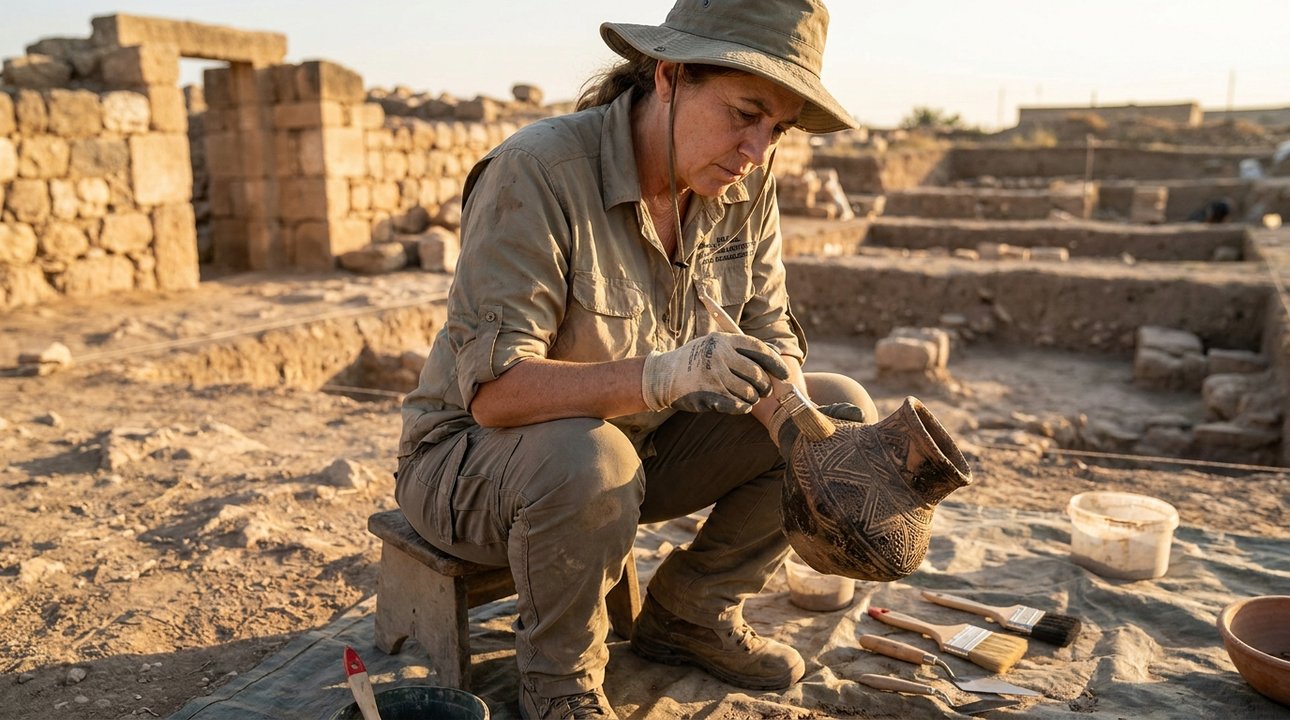
Archaeological findings in regions believed to be Aram offer insights into its culture and civilization. Excavations have uncovered tools, inscriptions, and artifacts. These discoveries reveal the daily lives and technological advancements of the Arameans.
For example, the use of iron tools and advanced pottery techniques illustrates their technological prowess. These discoveries help historians piece together the diverse lifestyle of the Aramean people.
Inscriptions found in Tell Halaf provide evidence of the political structures and religious practices of the time. The site, once a thriving city, offers glimpses into the governance and spiritual life of the Arameans, enriching our understanding of their societal organization and beliefs.
Artifacts such as pottery and tools reveal the daily life and technological advancements of the Arameans. Excavations in ancient Aramean cities like Tell Halaf have uncovered intricate pottery designs and metalwork.
These artifacts demonstrate the skill and artistry of the Aramean craftsmen, who contributed to the region’s economic and cultural vitality.
The city of Aleppo, known historically as Halab, was a significant Aramean center, and findings there continue to enrich our understanding of their civilization. Aleppo’s strategic location made it a hub for trade routes connecting Mesopotamia and the Mediterranean.
This facilitated the exchange of goods and ideas, further integrating Aramean culture into the broader ancient world.
Legacy of Aram in Modern Times
Today, the legacy of Aram is observed in cultural studies and historical contexts. Its historical importance continues to be a subject of academic interest. Modern research still explores its impact on language, culture, and traditions.
Scholars often refer to passages where Naaman, the commander of the army of the king of Aram, is mentioned, highlighting its military and political significance.
The story of Naaman, who was healed of leprosy, illustrates the complex interactions between Aram and Israel, blending themes of conflict and cooperation.
This narrative not only underscores Aram’s role in history but also invites reflection on the enduring human themes of healing and reconciliation.
The region’s influence is also noted in historical genealogies, where Aram is listed among the descendants of Shem, indicating its early roots in genealogy. This genealogical listing highlights Aram’s significance within the broader narrative.
These references underscore the enduring cultural and historical relevance of Aram in the study of early societies and their interconnectedness. Aram’s mention in early genealogies emphasizes its foundational role in the ancient world.
Understanding Aram
