Understanding the Map of Solomon’s Colonnade
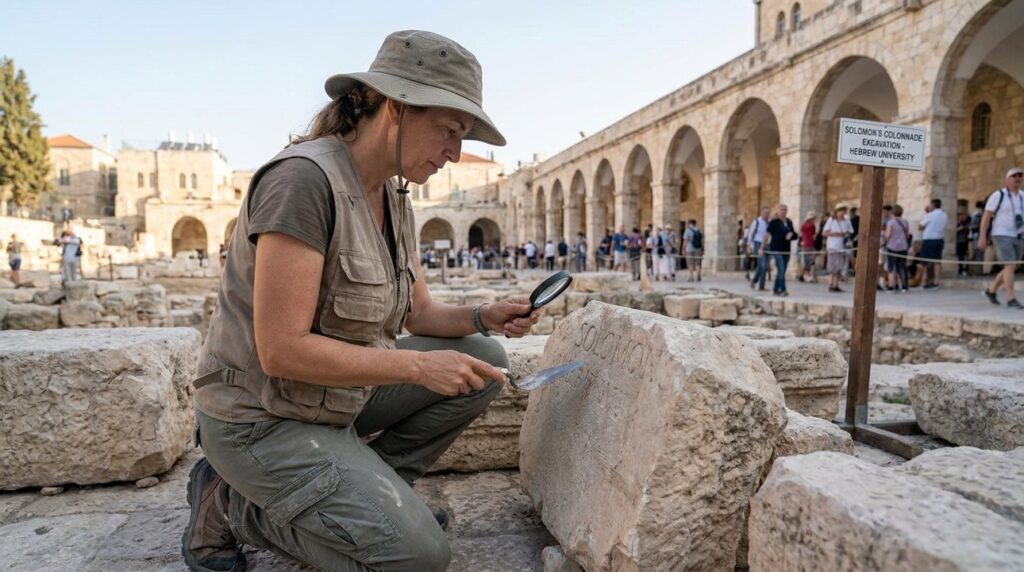

Solomon’s Colonnade is a significant part of the Temple in Jerusalem. This article looks at its importance using historical maps and sources.
What Is Solomon’s Colonnade?
Solomon’s Colonnade, also known as Solomon’s Porch, was a colonnaded hall within the Temple complex in Jerusalem. It functioned as a corridor lined with columns during the Second Temple period.
from the Western Wall to Masada.
The colonnade is noted in historical texts like the Book of Acts, emphasizing its role as a place for gatherings.
Historical Mentions of Solomon’s Colonnade
In the Book of Acts, Solomon’s Colonnade is mentioned as a site for events, including teachings. These texts highlight its role as a community space.
Ancient writings emphasize its function as a hub for learning, underscoring its significance in historical contexts.

Where Was Solomon’s Colonnade Located?
The colonnade was located on the eastern edge of the Temple Mount in Jerusalem, facing the Mount of Olives. This position offered views of the surrounding area.
Maps and historical writings help pinpoint the location of Solomon’s Colonnade. Josephus and other sources describe the Temple’s layout and the colonnade’s placement within it.
The strategic location allowed it to serve as a vantage point for the city and its surroundings, adding to its historical importance.
Archaeological Insights into Solomon’s Colonnade
Direct archaeological evidence of the colonnade is limited, but studies help understand its structure and role. Remains of columns suggest its historical grandeur.
Stone remnants indicate the colonnade’s significance. Josephus and other historical texts describe it as a gathering and teaching site, highlighting its architectural and social roles.
Recent excavations near the Temple Mount have uncovered fragments linked to the colonnade, offering insights into its construction and purpose.

Solomon’s Colonnade in Maps
Maps of the Temple complex often feature Solomon’s Colonnade, showing its position within the larger Temple structure.
Cartographic depictions by early explorers like Edward Robinson provide visual context, illustrating the colonnade’s scale and integration within the sacred grounds.
from the Western Wall to Masada.
These maps offer insights into the architectural layout and significance of the colonnade, serving as valuable tools for historians.
Cultural Role of Solomon’s Colonnade
Solomon’s Colonnade was a place for congregation and decision-making, noted for its historical narratives.
The colonnade’s cultural significance is evident in its use as a meeting place for early followers of Jewish teachings.
Historical accounts describe the colonnade as a venue for sharing teachings and building communities.

Influence of Solomon’s Colonnade
Solomon’s Colonnade is remembered for its role in gatherings and teachings. Historical texts often mention its community and educational functions.
The colonnade’s significance is highlighted by its historical mentions, serving as a backdrop for key events and teachings.
Communities today draw inspiration from its historical role, creating spaces that encourage dialogue and growth.
Connecting Ancient and Modern: the Relevance of Solomon’s Colonnade
The idea of Solomon’s Colonnade continues in cultural dialogues today. Historically, it was a site for sharing teachings.
The colonnade symbolizes the importance of communal and educational environments, representing a space for collective growth and learning.
Its historical role as a discussion site is mirrored in modern educational and cultural centers.
Understanding Solomon's Colonnade