
Exploring the Location of the River Chebar
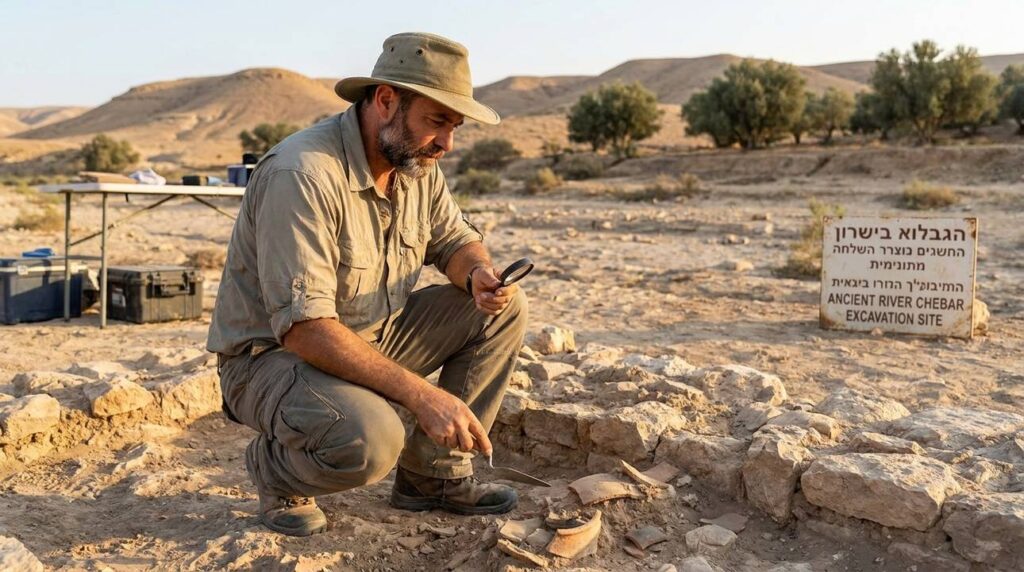

The River Chebar is noted in relation to Ezekiel’s visions in biblical texts. It is thought to have been a canal near Babylon, crucial during the Israelites’ exile. The precise modern location is still debated, likely being a canal rather than a natural river near Babylon.
Canals such as the Chebar were essential for supporting life in Babylon, aiding agriculture and urban development. These water systems sustained populations and facilitated trade.
from the Western Wall to Masada.

Biblical Mentions of the River Chebar
The River Chebar appears in the Bible as the place where Ezekiel had his visions. These visions provided guidance for the Israelites during their time of exile, offering insights and hope.
One significant vision involved a divine chariot, illustrating the spiritual importance of the Chebar during this period. Such imagery was crucial in maintaining faith during challenging times.
Historical Context of the Chebar
The Chebar was part of Mesopotamia’s canal systems, which were vital for the region’s economy and daily life. These waterways facilitated irrigation and trade, supporting the development of civilizations.
For the Israelites, the Chebar symbolized their experience of displacement and adaptation in a foreign land.

Geographical Context of the River Chebar
Modern maps do not clearly identify the River Chebar. Historical records suggest it was in the fertile Mesopotamian plains. The region’s canals supported agriculture and settlement, but its exact location remains debated among scholars.
The Babylonians developed a sophisticated canal network for water management, highlighting the importance of such waterways in ancient times.
Ezekiel’s Experiences by the River Chebar
Ezekiel’s time by the River Chebar was marked by prophetic experiences, including a vision of a divine chariot, which has been interpreted in various ways by scholars and theologians.
This vision contributed to the river’s significance in religious traditions, offering insight into the spiritual context of that era.
from the Western Wall to Masada.
Rivers in Prophetic Literature
In writings, rivers often hold symbolic meanings. For the Israelites in exile, waterways like the Chebar represented life and change. In Psalm 137:1, the exiles reflect on Zion by the rivers of Babylon, serving as metaphors in scripture.

Modern Perspectives on the River Chebar
Today, scholars continue to debate the Chebar’s exact location. Some propose it may be the Khabur River in Syria, while others suggest sites within Mesopotamia. Its link to prophecies makes it significant, as it was where Ezekiel received key visions.
The Khabur River in northeastern Syria, a tributary of the Euphrates, highlights the ancient geographical complexities and the ongoing debate over the Chebar’s location.
Exile and Ezekiel’s Experiences
Exile influenced perspectives, with the River Chebar becoming a place for reflection. Experiences there show themes of displacement and adaptation, key to understanding the impact of exile on identity.
The themes of exile in Ezekiel’s story resonate in Jewish history and literature, providing insights into learning during uncertainty.
Summary and Ongoing Legacy
The River Chebar, despite its elusive location, holds significance within Jewish historical narratives. It represents an era of exile and communication, illustrating the resilience of the Israelites.
The Babylonian exile, a period of change for the Jewish people, is marked by stories and visions tied to the Chebar, reflecting their historical journey.

Understanding the River Chebar
