
Unveiling the History and Significance of Mount Serbal


Mount Serbal is a prominent peak described in classical and medieval accounts of the southern Sinai area. This article gives a plain, neutral overview of the mountain’s shape, what has been found on and near it, and how scholars discuss those finds. The goal is to use clear, straightforward language so readers aged 55 and up can follow the main points without needing specialist training. Short paragraphs and simple terms are used where possible.
Mount Serbal has a noticeable outline and a summit that stands higher than nearby terrain in the region commonly called Sinai. Its slopes drop steeply into valleys, which makes the peak visible from a distance. Travelers and mapmakers have pointed out the mountain for its shape and its place among the local ridges.
from the Western Wall to Masada.

What Is Mount Serbal?
Mount Serbal rises to roughly 2,070 meters above the local plain, using the common height figures found in maps and travel notes. That height gives it a strong presence in the landscape. Older travel descriptions and newer surveys both note that from the top one can see across nearby valleys and along the ridgelines that shape the area.
Many visitors and writers have noted Serbal for its height and distinct shape. Most of the written mentions are short: comments about where the peak sits or what it looks like compared with other nearby mountains. These short notes are useful to historians because they add one more point of comparison when researchers study the area.
History of Serbal
Ancient and medieval writers sometimes listed Serbal among other notable local features. In such lists the mountain served as a landmark for travelers and pilgrims. These mentions do not form a continuous history but they do show that Serbal was part of local knowledge across different periods.
Archaeological surveys have recorded remains on the mountain and in nearby wadis. Surveyors have found dry stone foundations, outlines of small buildings, and marks cut into rock faces. Such remains point to past human use of the slopes. The finds themselves vary in date and type, and experts compare them with sites elsewhere to suggest possible uses and time spans.
Serbal’s Place in Ancient Traditions
Some later traditions and travel reports connect peaks in southern Sinai with stories found in older narratives. For Serbal, a few medieval lists and travel notes refer to the mountain when describing the landscape used by pilgrims and guides. These references are part of a longer process in which local memory and written accounts affect each other.
Identifying a single hill or peak as the site of a given event is an old subject of debate. Some writers have proposed links between Serbal and certain narrative events. Other researchers treat those links as guesses, because the written sources are not specific enough to establish a clear match. Modern historians tend to rely on what can be measured or dated when making claims.
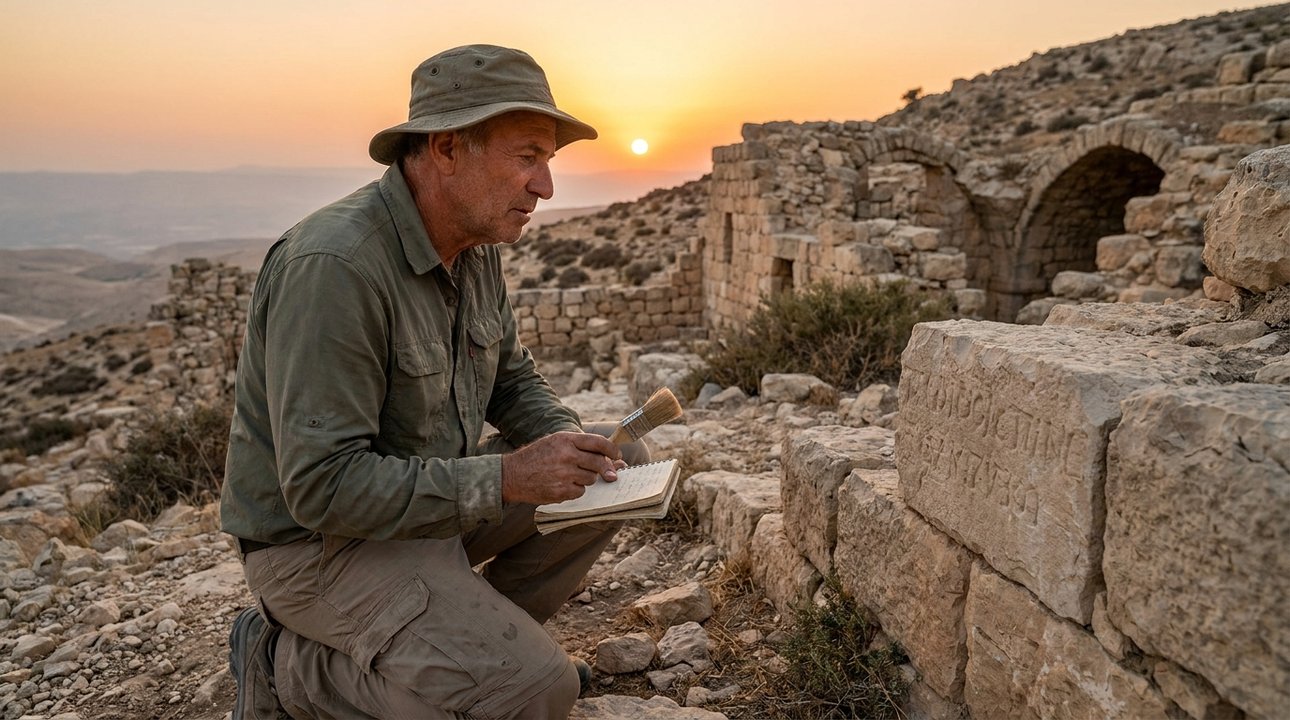
Traces on the mountain include simple building outlines, small enclosures, and carved inscriptions. When specialists report such finds, they describe the shape of walls, the placement of stones, and the form of any carved lettering. These details help to place the finds in broad date ranges and to suggest how the sites may have been used.
Evidence and Scholarly Perspectives
Ancient geographers and later historians sometimes mention peaks in this area in passing. Where Serbal appears in such texts, the note is usually brief and offered alongside other landscape features. Modern researchers treat these short mentions as one piece of information among many when they try to understand past activity in the region.
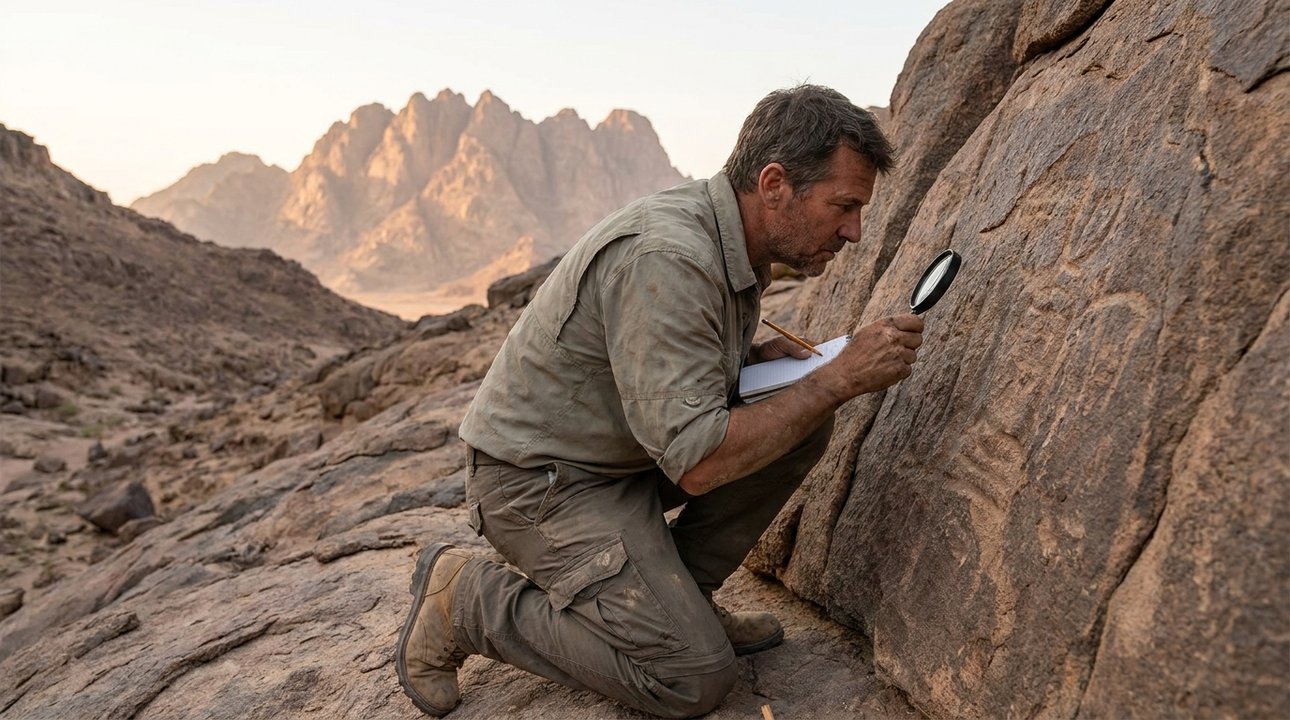
Fieldwork has revealed carved marks and inscriptions on rock faces. Specialists who read inscriptions publish translations and date estimates. Those readings often need comparison with finds from other places before a clear dating can be proposed. In some cases the inscription style points to a broad century or range of centuries rather than a single year.
When earlier reports name structures on slopes or in sheltered wadis, modern survey teams record the layout, the stone arrangements, and any other visible features. From that information they suggest whether a place was used for short stays, as a seasonal shelter, or for a different purpose. These suggestions are cautious when the visible evidence is limited.
Modern Academic Interest
Geologists and archaeologists study Serbal for different reasons. Geologists note the layers of rock and the faults that shaped the slopes. Archaeologists look at the signs of human activity: paths, piles of stones, simple foundations, and carved letters on rock faces. Each type of study adds one kind of information about the past.
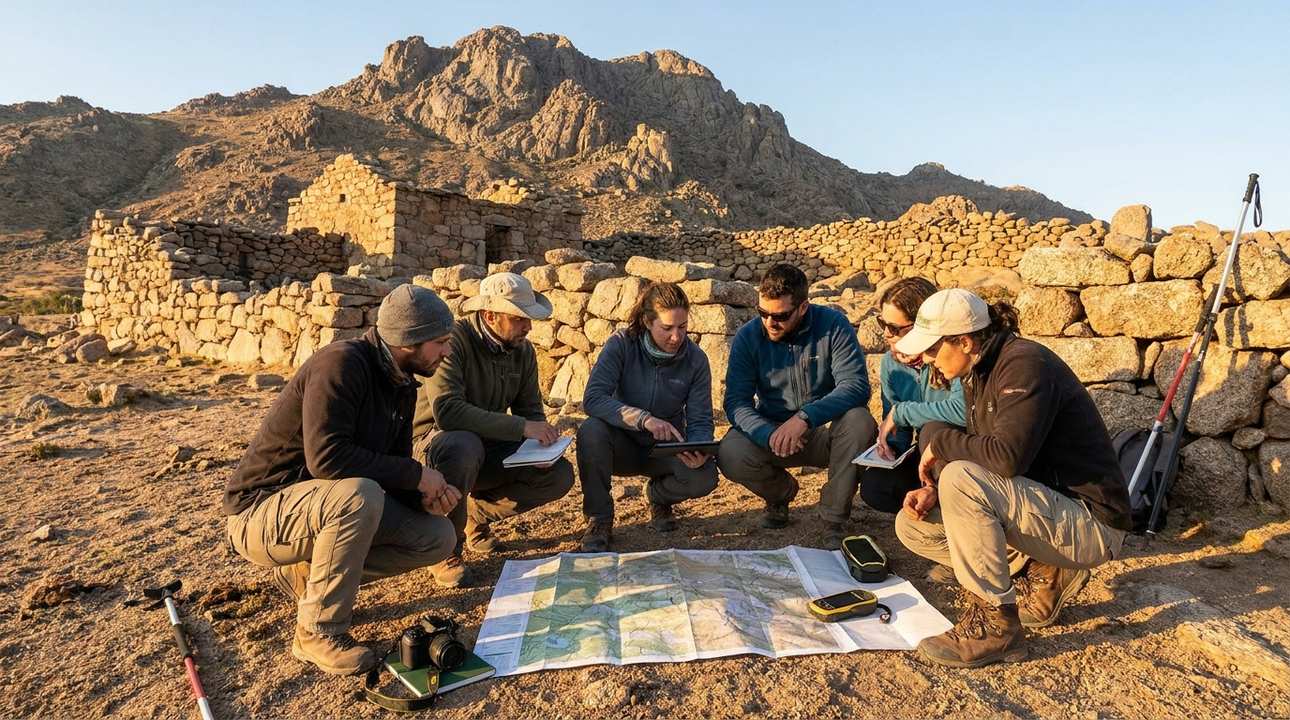
Teams in the field record sizes and positions of carved panels, map the locations of scattered stones, and note where footpaths lead up the slopes. Their reports appear in technical notes and articles. Where possible, they use dating methods such as pottery comparison or analysis of building style to offer likely date ranges for a site.
For readers aged 55 and older who want to follow the subject, it helps to read reports slowly and in small parts. Short guides and plain-language summaries often explain common field methods. Below are brief, easy descriptions of terms that appear in research summaries.
from the Western Wall to Masada.
Fieldwalking: walking across an area to spot artifacts and stone arrangements. Mapping: making a simple, measured drawing of where things appear. Inscription reading: specialists look at carved marks and use their knowledge of old scripts to suggest what the letters say and when they were carved. Pottery comparison: matching pottery shapes and decorations to dated examples from other sites to suggest a time range. These short descriptions aim to make technical reports easier to follow.
Simple tips for reading technical notes: read the summary first, then look at maps and photos. Check the captions for dates and labels. If a report uses a specialist word, look for a short glossary or a plain-language website that explains the term. Local museums or university websites often have clear introductions to common field methods.
The mountain’s slopes and paths show how people used the land for travel and shelter in different seasons. The traces suggest repeated, small-scale use rather than long-term towns. That pattern fits what surveyors find on many isolated peaks and ridges in the region, where small groups passed through or camped rather than lived permanently in large settlements.
Texts from antiquity sometimes include brief notes that mention Serbal with other nearby peaks. Those notes combined with material traces provide starting points for historical questions. New finds, improved dating, and fresh readings of old inscriptions can change how researchers view earlier claims.
Serbal in Historical Writings
Travelers, pilgrims, and early scholars sometimes named Serbal in their short reports. These notes are useful if they are checked against other sources and against what is visible on the ground. Historians read such sources with caution, noting where copying errors or later edits may have altered the original meaning.
Descriptions in old accounts often stress the difficulty of moving through the area. Narrow tracks, steep slopes, and scarce water are common details. Practical observations like these help historians understand why people stopped, camped, or made simple shelters in particular spots along the slopes.
When historians put together a picture of Serbal’s past, they match brief textual notes with measured features on the ground. This matching can take time. Sometimes the best outcome is a set of plausible scenarios that explain the finds. Good reporting separates clearly what is known from what is a suggestion or a probable date range.
Conclusion: Understanding Mount Serbal
Mount Serbal remains an interesting feature in studies of the southern Sinai area. Its height and the traces left by past visitors make it a topic worth documenting. Researchers continue to note stone arrangements, carved marks, and other visible signs and to compare these with written mentions when appropriate.
The mountain’s remoteness and steep slopes influenced how people used it. Simple shelters, carved marks, and stone groupings point to intermittent human use. Archaeologists treat these features as clues to travel routes and short-term sheltering rather than as proof of a single large event. That careful separation of observation and hypothesis helps keep conclusions grounded in what can be shown.
Studying inscriptions, building outlines, and stone paths can reveal aspects of life on and near the mountain. Scholars who publish such studies usually note other possible explanations and the level of confidence they have in each view. This practice helps readers see which parts of a story are solid and which parts are still open to change as new research appears.
For older readers, a steady approach pays off. Read short sections, consult maps and photographs, and check the sources cited by an author. Museum displays, local guides, and university outreach pages often present the basics in a clear way. If you find a technical word, a quick web search for that single term will usually return helpful definitions written for a general audience.
By combining survey notes, published readings of carved texts, and older accounts that name the mountain, researchers build a balanced picture over time. New fieldwork and improved readings of inscriptions can change some ideas. That steady, step-by-step progress is the normal path in historical and archaeological work. Readers who want reliable detail should look for recent field reports and for articles that include photos, maps, and clear labeling of dates and claims.
Exploring the Role of Serbal
