
Exploring Ekron: From Historical Roots to Today

Ekron holds a unique place in both historical and current archaeological study. Once a powerful city in the region, Ekron is known for its references and archaeological findings.
Ekron is mentioned in the context of the Philistine cities, where the Ark of the Covenant was sent to Ekron after causing havoc in other Philistine cities. Archaeological excavations have revealed significant structures, including a large olive oil production facility, which was one of the largest in the ancient world.
This article delves into the history of Ekron, viewing it through the lens of both ancient texts and modern discoveries, offering a comprehensive understanding of its past and present. The site of Tel Miqne, identified as Ekron, has yielded artifacts that date back to the 12th century BCE. These findings provide a glimpse into the city’s role as a major Philistine center. The discovery of a royal dedicatory inscription mentioning the kings of Ekron further enriches our understanding of its history.
from the Western Wall to Masada.
The artifacts from Tel Miqne, including pottery and tools, reveal the daily life and trade practices of ancient Ekron. These findings help us piece together the city’s economic and cultural landscape.
The royal dedicatory inscription is a key find, shedding light on the governance and religious aspects of Ekron. Such inscriptions are vital for reconstructing its history and interactions with neighboring regions.
Where Was Ancient Ekron Located?
Ancient Ekron was one of the five cities of the Philistine pentapolis. It was located in the southern central part of what is today known as Israel. Geographically, it was positioned near the border area between the Judahite highlands and the Philistine coastal plain.
The strategic location of Ekron made it a significant city in ancient regional dynamics, often mentioned as a place of contention and conquest. Its proximity to key trade routes amplified its importance.
The Philistine pentapolis, which included Ashdod, Ashkelon, Gaza, Gath, and Ekron, was a formidable coalition during the Iron Age. Ekron’s position allowed it to control access between the coastal plain and the inland territories.
This control made it a frequent target for neighboring powers, including the Israelites and later empires. The city’s role in the account of the Ark of the Covenant highlights its religious and military significance.
Historical References to Ekron
Ekron is notably mentioned in the Hebrew Bible, specifically in the context of battles and territorial disputes. The city appears in the account of the Ark of the Covenant being moved among Philistine cities. This movement of the Ark signifies the city’s strategic importance during that era.
Ekron was a key setting during the early monarchy period, illustrating its importance during that time. Battles with the Philistines often centered around such pivotal locations.
These textual mentions highlight Ekron’s role as both a cultural and military center. The city’s significance is further underscored where King Ahaziah of Israel sent messengers to inquire of Baal-Zebub, the god of Ekron, indicating its religious influence.
This reference to Baal-Zebub shows the city’s spiritual standing among the Philistines, adding another layer to its historical narrative. Ekron’s multifaceted role in history offers insight into its complex identity.

Archaeological Discoveries at Ekron
Recent excavations at the site, identified with Tel Miqne, have unearthed significant findings. Archaeologists discovered over 100 olive oil installations, indicating Ekron was a major producer of olive oil in the ancient world.
The presence of a monumental temple complex also suggests a strong religious significance. Inscriptions found have provided insights into the city’s local governance and cultural practices, connecting history with tangible artifacts.
The olive oil industry at Ekron, dating back to the 7th century BCE, marks it as one of the largest producers in the region. This industry was likely a major economic driver for the city.
The monumental temple complex, possibly dedicated to Baal-Zebub, reflects the city’s religious importance. Such structures indicate Ekron’s role as a spiritual center within the Philistine confederation, highlighting its multifaceted identity.
In addition to olive oil production, artifacts unearthed include pottery, tools, and inscriptions. One inscription refers to the city as ‘Ekron of the Philistines,’ confirming ancient texts and providing credibility to historical references.
These findings demonstrate Ekron’s role as a vital economic and cultural hub. The archaeological evidence reveals a city that was industrious and influential in its time. The scale of olive oil production at Ekron suggests it was a major player in the regional economy, supplying both local and foreign markets.
The tools and pottery found at the site offer insights into the daily life and trade practices of the city’s inhabitants. The inscriptions, including those on storage jars, provide evidence of the administrative and commercial activities that took place in Ekron.
Together, these artifacts paint a picture of a thriving urban center that played a significant role in the ancient world, contributing to our understanding of the economic and cultural dynamics of the region.
The pottery styles discovered at Ekron reflect a blend of local and foreign influences, indicating a trade network. These artifacts reveal the city’s connections with other cultures and its role in regional commerce. Inscriptions found on storage jars and other items suggest a well-organized administrative system, highlighting Ekron’s importance as a commercial hub. This evidence enriches our understanding of the city’s economic structure.

Ekron in Later History
After the historical period, Ekron continued to play a role in regional history. It came under the control of various empires, including the Assyrians, Babylonians, and Persians. Each of these conquests left its mark, contributing to the cultural and historical landscape.
The Assyrian conquest under Tiglath-Pileser III led to significant urban development and fortification projects at Ekron. This period saw the city become an important administrative center, as evidenced by the architectural remains and inscriptions found at the site.
Under Assyrian rule, Ekron was transformed into a fortified city, reflecting its strategic importance. The architectural remains from this period indicate a well-planned urban layout. The inscriptions found at the site, including those from the Babylonian and Persian periods, provide insights into the administrative and cultural changes that occurred over time. These layers of history illustrate Ekron’s adaptability and importance.
The Babylonians, under Nebuchadnezzar II, also left their imprint on Ekron, as they did on many cities in the region. The Persian period brought new influences, with Ekron serving as a key location in the empire’s administrative network. These successive layers of occupation reflect the city’s importance and its ability to integrate diverse cultural influences, which is evident in the artifacts and architectural styles uncovered by archaeologists.
from the Western Wall to Masada.
Under Nebuchadnezzar II, Ekron experienced significant changes, including the introduction of Babylonian administrative practices. This period marked a transformation in the city’s political landscape.
During the Persian era, Ekron became part of the empire’s satrapy system, further integrating it into a larger political framework. The archaeological remains from these periods show a blend of influences, reflecting the city’s adaptability and resilience.
What Is Ekron Today?
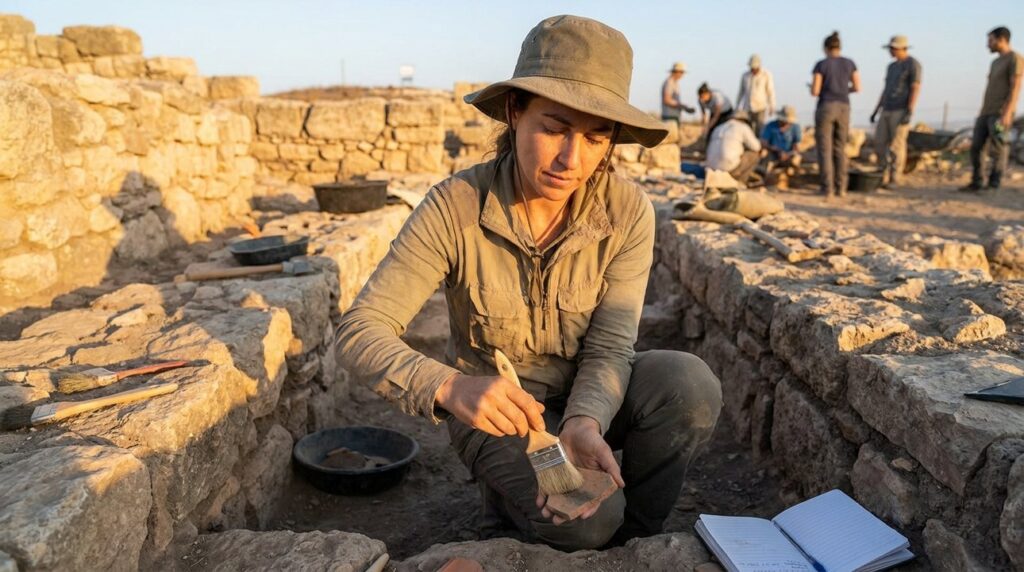
Today, the location known as Tel Miqne is an important archaeological site. While the city itself no longer exists as a dwelling place, the remnants of its past resonate with the stories of yesteryears.
The site has yielded a wealth of artifacts, including pottery, tools, and inscriptions that provide valuable insights into the daily lives of its ancient inhabitants. These findings have helped scholars piece together the complex history of Ekron and its role in the broader context of the ancient Near East.
The artifacts found at Tel Miqne, such as the inscribed royal dedicatory stone, offer a glimpse into the governance and religious practices of Ekron. This stone, mentioning the kings of Ekron, highlights the city’s political significance.
The tools and pottery unearthed provide a tangible connection to the everyday activities of its people. These findings are crucial for understanding the socio-economic aspects of life in ancient Ekron.
Present-day researchers and scholars continue to explore the ruins to better understand Ekron’s role in history. The name still echoes through modern references in academic and cultural discussions.
The ongoing excavations at Tel Miqne contribute to our understanding of the Philistine culture and its interactions with neighboring civilizations. As new findings emerge, they add depth to our knowledge of the ancient world and the interconnectedness of its peoples.
The work at Tel Miqne has revealed layers of occupation that span several centuries, offering a timeline of Ekron’s development. Each layer provides clues about the city’s changing fortunes and its resilience.
The artifacts uncovered, from pottery to inscriptions, help piece together the daily life of its inhabitants. These findings are crucial for reconstructing the socio-economic and cultural history of the region.

The Legacy and Influence of Ekron
Ekron’s legacy lies in its complex history and cultural contributions. Its interaction with surrounding regions influenced trade, politics, and culture during its peak. The city’s name and history continue to captivate historians and archaeologists.
Ekron is mentioned in the context of the Philistine Pentapolis, alongside cities like Ashdod and Gaza. The city’s prominence in the ancient world is further evidenced by its mention in the annals of Assyrian kings, such as Sennacherib, who recorded his campaigns against the region.
The Assyrian king Sennacherib’s records highlight Ekron’s strategic importance during his military campaigns in the region. These accounts provide insights into the city’s role in the geopolitical dynamics of the time.
Ekron’s cultural contributions are evident in the artifacts and inscriptions found at the site. Such findings continue to inform our understanding of the Philistine culture and its interactions with neighboring civilizations.
Its story, echoed through archaeological findings, provides insight into the wider narrative of the region’s history. The discovery of olive oil production facilities and storage jars at Ekron highlights its economic importance.
The city’s ability to adapt and thrive under different rulers, from the Egyptians to the Assyrians, underscores its strategic significance in the ancient Near East. Ekron’s mention in the annals of Assyrian kings, like Sargon II, further illustrates its prominence.
Ekron’s economic prowess is evidenced by the vast olive oil installations discovered, which date back to the 7th century BCE. This industry likely contributed significantly to the city’s wealth and trade networks.
The Assyrian king Sennacherib’s records mention Ekron as a rebellious city, highlighting its political significance. These historical accounts, combined with archaeological evidence, paint a picture of a city deeply woven into the fabric of ancient Near Eastern history.
Understanding Ekron today helps contextualize much of the history associated with Philistine settlements. The city serves as a case study for the interaction between ancient cultures and their lasting impact on the historical records.
Ekron’s mention, where King Ahaziah sent messengers to inquire of Baal-Zebub, the god of Ekron, highlights its religious significance. The ongoing archaeological work continues to uncover layers of history, shedding light on the cultural exchanges between Philistines and neighboring peoples.
As scholars continue to uncover more details, Ekron remains a sign of the mix of tales woven by those who once lived there. Its strategic location made it a focal point for trade and military campaigns, influencing the broader geopolitical landscape of the region. Artifacts and inscriptions found at Ekron serve as a bridge connecting us to the ancient world, showing the daily lives and beliefs of its inhabitants. These findings illuminate the cultural exchanges that occurred.
Ekron’s role in trade is highlighted by its location along key routes that connected the Mediterranean with inland regions. This facilitated the exchange of goods and ideas, contributing to its cultural diversity.
The inscriptions, such as the royal dedicatory inscription found at the site, provide evidence of the city’s governance and its rulers’ ambitions. These historical records enrich our understanding of Ekron’s place in the ancient Near East.

Ekron's history
