
Understanding the Ancient Map of Tel Dan
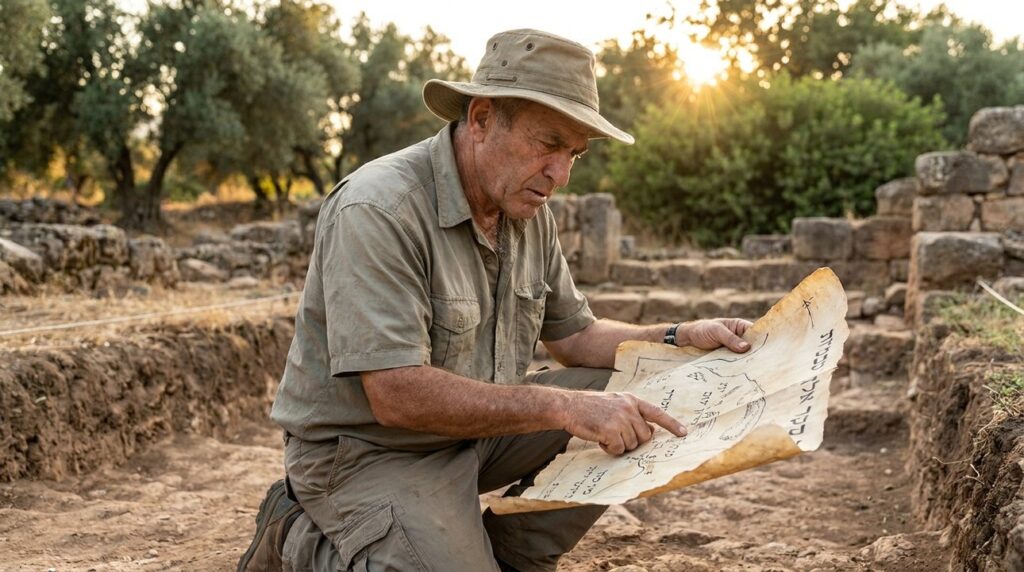

Exploring historical locations can provide remarkable insights into history. Tel Dan, an archaeological treasure in northern Israel, is one such site. This article delves into the fascinating aspects of the Tel Dan map, examining its historical context and archaeological significance.
Tel Dan offers a glimpse into the life and times of its ancient inhabitants. Artifacts and structures found here help illuminate the stories and events of the past, offering a tangible connection to history.
The exploration of Tel Dan allows us to better understand the historical and cultural context of the region. The site’s artifacts, such as pottery and inscriptions, provide valuable insights into the daily lives of its ancient inhabitants. By studying these remnants, we gain a deeper appreciation for the history and heritage of Israel.
from the Western Wall to Masada.

Tel Dan provides a unique opportunity to explore the intersection of history and archaeology. It is a place where stories come to life through the artifacts and structures unearthed.
Among the significant finds is the Tel Dan Stele, which mentions the “House of David,” providing evidence of historical narratives. These discoveries help us understand the cultural and social dynamics of the past, shedding light on their daily lives and interactions.
What Is Tel Dan?
Located in northern Israel, Tel Dan is an archaeological site that was once an ancient Canaanite city and later became part of the kingdom of Israel. It was part of the inheritance of the tribe of Dan.
Excavations have unearthed several noteworthy artifacts, including the famous Tel Dan Stele that mentions the House of David. This stele is a significant find, as it provides one of the earliest references to the Davidic dynasty outside of historical texts.
The 1993 discovery of the Tel Dan Stele marked a groundbreaking moment in archaeology. Dating back to the 9th century BCE, the stele mentions a king of the “House of David,” offering historical evidence that supports narratives of David’s lineage.
This find has been pivotal in discussions about the historical accuracy of accounts.
Discovered at Tel Dan, the Tel Dan Stele is crucial for archaeology. Dating back to the 9th century BCE, it mentions the “House of David,” providing historical evidence for David’s lineage.
This discovery has sparked considerable interest among scholars, as it supports narratives of David’s rule over Israel. The stele is one of the few references to David, adding weight to the historical accuracy of accounts.
Its discovery has been a key piece in understanding the history of the region.
The reference to the “House of David” on the Tel Dan Stele has been a topic of much scholarly debate and analysis. This artifact not only corroborates historical accounts but also provides a tangible link to the historical figure of David. The stele’s inscription is a sign of the influence and reach of the Davidic dynasty in the ancient world.
The Significance of the Tel Dan Map
The Tel Dan map is not a literal cartographic map but represents how geographers understand the site’s layout and significance today. Historical maps and modern interpretations help us visualize the boundaries and structures of ancient Dan, showing its role in narratives. These interpretations provide a framework for understanding the historical and cultural context of the area.
Modern interpretations of the Tel Dan map allow us to visualize the ancient layout and understand its history. Based on archaeological findings, these interpretations help us appreciate the city’s role in history. The map aids in reconstructing the city’s strategic importance and cultural influence during its peak. It provides insights into the infrastructure, including fortifications and water systems.
Archaeological studies reveal Tel Dan’s layout as a well-planned city with defensive structures and residential areas. The design reflects its importance as a center of trade and military power. Understanding the map of Tel Dan helps us connect with the past and appreciate the ingenuity of its ancient inhabitants.

Historical Context of Tel Dan
Tel Dan boasts a history, having been inhabited since the Neolithic period. It became a significant city in the northern kingdom of Israel. During King Jeroboam’s time, it was one of two sites where golden calves were set up. Strategically located near sources of the Jordan River, its importance as a trade and military site is evident. This location provided access to water resources, crucial for sustaining life and trade.
Tel Dan’s position allowed control over vital trade routes and access to water resources, enhancing its significance. As part of the northern boundary of Israel, it marked its importance in territorial demarcations.
Its strategic location made it a key player in regional politics and commerce, influencing the economic and military activities of the region.
Strategically located near the Jordan River sources, Tel Dan was a valuable site for trade and military purposes. This geographical advantage is evident in its historical role, where it served as a northern boundary.
Its history as a fortified city reflects its importance in the defense and commerce of the region. The position allowed control over vital trade routes and influence in regional politics, enabling economic prosperity and military strength.
Tel Dan’s fortifications and access to water resources made it a stronghold in the region. Its strategic importance is highlighted in the Bible as a boundary marker, indicating its role in defining Israel’s territory.
The city’s influence extended beyond its immediate surroundings, impacting trade and politics across the region.
Historical References to Dan
Dan is frequently mentioned as one of the tribes of Israel. In historical texts, Dan is noted for its role in justice and territorial narratives.
The city of Dan is also noted as the northernmost point of the region, often described in the expression ‘from Dan to Beersheba,’ indicating the full span of the kingdom from north to south.
from the Western Wall to Masada.
The tribe of Dan played a significant role in the history of Israel, as evidenced by its frequent mentions in historical texts. The expression ‘from Dan to Beersheba’ highlights the geographical extent of the kingdom, with Dan marking the northern boundary. This phrase underscores the importance of Dan as a landmark in narratives.

Archaeological Discoveries at Tel Dan
Excavations at Tel Dan have revealed various periods of occupation and construction. The Tel Dan Stele, for example, is a significant finding that made headlines as it potentially corroborates historical references to the House of David.
Other discoveries include city gates, residential areas, and cultic altars, providing a glimpse into ancient life. These findings illustrate the complexity and richness of the site’s history, highlighting its importance as a cultural and historical center.
The archaeological work at Tel Dan has uncovered a wealth of information about the site’s past. The discovery of city gates and residential areas offers insights into the daily life and social structures of its inhabitants. These findings contribute to our understanding of the cultural and historical practices of the region.
Current Understanding of Tel Dan’s Map
Today, scholars use Tel Dan’s map to interpret its historical layers and functions. Archaeological evidence is crucial in piecing together the layout, including the placement of fortifications and water systems.
These insights offer a clearer picture of how the inhabitants lived and interacted with surrounding territories. For instance, the city’s strategic location near the Jordan River sources made it a hub for trade and military activities.
The map of Tel Dan reveals an intricate design, showcasing its defensive capabilities and resource management. The placement of fortifications and water systems indicates a well-organized urban center. These features highlight the city’s role as a vital hub in the region, influencing trade and military strategies.

Tel Dan Today: A Site of Historical Interest
Although no longer a populated city, Tel Dan remains a site of historical interest and is sometimes studied for educational purposes. Its rich layers of history serve scholars and archaeologists in understanding ancient culture.
The site’s preservation allows for ongoing research and exploration, providing insights into the daily lives and practices of its ancient inhabitants. Artifacts like pottery, tools, and inscriptions help reconstruct the social and economic aspects of life in Tel Dan.
Tel Dan’s preservation is vital for ongoing research and exploration. Scholars study the site to gain insights into the ancient culture, including religious practices and social structures.
The site’s layers of history, from Canaanite to later periods, offer a unique opportunity to explore the evolution of this region over millennia. Artifacts such as pottery and inscriptions provide a glimpse into the daily life and practices of its ancient inhabitants.
These findings help us understand the cultural and historical dynamics of the time.
The preservation of Tel Dan allows for continued exploration of its history. Each layer of the site reveals new information about the people who lived there, their beliefs, and their way of life. The artifacts found at Tel Dan, such as tools and ceremonial objects, offer valuable insights into the ancient world.
How Tel Dan Connects to Modern Identity
Tel Dan is more than an archaeological site; it represents a connection to heritage and identity. For many, it serves as a tangible link to history, bridging the past and present.
Mentioned in historical texts, it is referred to as the city of Dan, named after the tribe of Dan. Preserving such sites is crucial for maintaining cultural and historical continuity, allowing future generations to explore their roots.
Ongoing preservation efforts ensure that its stories remain accessible.
The importance of Tel Dan extends beyond its historical artifacts; it embodies the legacy of the Israelites. By maintaining the site, we safeguard a piece of Jewish identity and history. Described in the Bible, the city of Dan was a place of worship and community for the tribe of Dan, highlighting its cultural role.
The preservation of Tel Dan helps maintain the cultural and historical continuity of the Jewish people. It is a place where stories from history come alive. This connection to history is vital for understanding the evolution of identity and the legacy of the past. The site’s artifacts and structures serve as tangible links to the past, fostering a deeper appreciation for heritage.
Tel Dan’s preservation efforts ensure that future generations can connect with their heritage. The site’s history is underscored by its references and archaeological finds. By maintaining this link to the past, we honor the legacy of the past and their contributions to history.
Understanding Tel Dan
