
Unveiling the Ancient Mystery of Mesha


The historical figure of Mesha invites curiosity and exploration. Often associated with the Moabite king, Mesha’s place in history intersects both historical events and archaeological findings.
This article investigates what we know about Mesha today, shedding light on ancient texts and the famed Mesha Stele—a crucial archaeological artifact.
Who Was Mesha in the Bible?
Mesha is primarily known as the king of Moab, mentioned in the Hebrew Bible. His reign is noted for its conflicts with the kingdom of Israel, particularly detailed in 2 Kings 3.
In this passage, Mesha rebelled against the northern kingdom after the death of King Ahab, refusing to continue the tribute of sheep and wool. This rebellion led to a military campaign by Israel, Judah, and Edom against Moab.
Although the coalition initially succeeded, the Moabites eventually held their ground in a dramatic confrontation.
from the Western Wall to Masada.
Mesha’s revolt was significant because it illustrates the power dynamics in the region during the 9th century BCE. Detailed further in the Mesha Stele, a stone inscription records his reign and accomplishments from his perspective. The artifact highlights the tensions and alliances that defined the era’s geopolitical landscape.
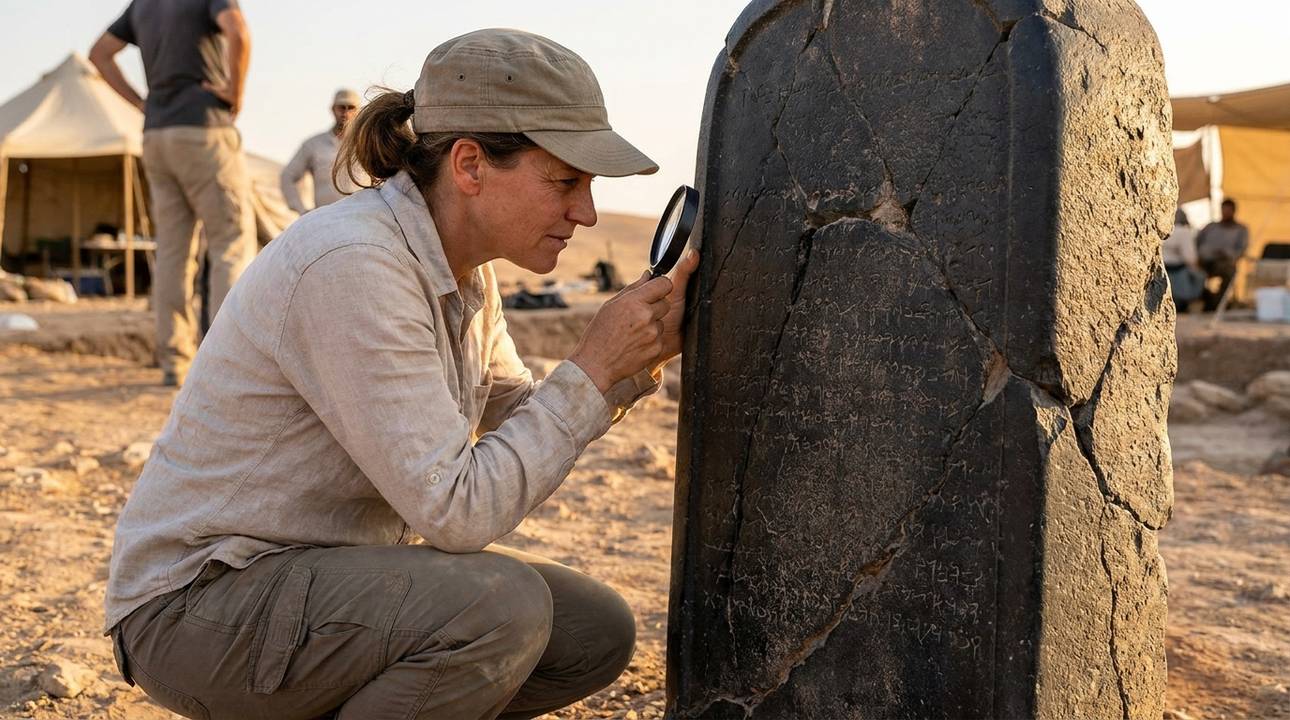
What Is the Mesha Stele?
Discovered in 1868, the Mesha Stele is a significant archaeological artifact recounting the military successes of King Mesha. Found in Dhiban (modern-day Jordan), it aligns with the historical land inhabited by the Moabites.
The inscription is written in Moabite, a language closely related to Hebrew, and offers a rare glimpse into the history and culture of Moab.
The stele celebrates Mesha’s victories over Israel and his restoration of territories. It emphasizes his dedication to the Moabite god Chemosh and his role as a defender of Moabite territory. Discovered in 1868, it is inscribed with ancient Moabite script, detailing Mesha’s campaigns and achievements.
This historical narrative enriches our understanding of the political landscape during that era. It provides a rare glimpse into the Moabite perspective, often overshadowed by neighboring cultures.

Where Is Mesha Today?
Mesha’s historical and geographical identity predominantly resides within the ancient territory of Moab, now part of modern-day Jordan. The region, rich in archaeological sites, continues to be a focal point for understanding ancient Near Eastern history.
While Mesha himself is a figure of the distant past, the impact of his reign is preserved in artifacts and texts that survive to today.
The Mesha Stele, housed in the Louvre Museum in Paris, serves as a tangible connection to Mesha’s legacy. It is one of the most critical pieces for scholars investigating the intersections of historical and archaeological histories. Also known as the Moabite Stone, it was discovered in Dhiban, Jordan, and dates back to around 840 BCE.
Efforts continue to explore Moabite sites, providing more context about Mesha’s time and governance. Archaeologists aim to uncover more artifacts that could shed light on Moab’s cultural and political influence.

Understanding the Moabite Kingdom
The kingdom of Moab, situated east of the Dead Sea, was a significant player in the geopolitics of the region. Moabites were known for their agricultural prowess and trade interactions.
Moab’s relationship with Israel was complex, ranging from alliances to confrontations, as documented in both historical and extrabiblical sources. These interactions highlight the intricate web of alliances and conflicts in the region.
Besides military conflicts, Moab contributed to the cultural and economic exchanges in the region. The country’s prosperity and challenges are mirrored in artifacts like the Mesha Stele, further cementing its role in the ancient world. Moab was known for its fertile lands, producing crops and livestock that were vital for trade.
Understanding Moab provides insights into Mesha’s leadership and the broader historical context of his reign. The region’s interactions with Israel and other neighbors highlight the complexities of ancient diplomacy and conflict.

Influence of Mesha in Historical Context
Mesha’s actions as king have left a notable imprint on history. His rebellion against Israel was a significant event, capturing the tension between neighboring kingdoms.
The account portrays him as a determined leader who sought both spiritual and territorial independence for Moab. Mesha’s defiance against Israel’s dominance is a pivotal moment in the history of the region.
from the Western Wall to Masada.
Mesha’s interactions with Israel serve as a narrative to understand the political dynamics of the time. Through the Mesha Stele, we gain a Moabite perspective that complements historical records. It describes how Mesha restored the Moabite cities and rebuilt the fortifications.
By examining Mesha’s role, historians gain a more nuanced view of ancient Near Eastern history. This perspective is crucial for appreciating the diverse cultures that influenced the region.

Modern Explorations of Moabite History
Archaeological efforts in regions formerly part of Moab have yielded significant discoveries, including remnants of ancient settlements and inscriptions. These findings contribute to piecing together the everyday life and governance systems during Mesha’s time.
Modern technology, such as digital imaging and advanced dating techniques, has improved our understanding of artifacts related to Mesha.
Such explorations underscore the interconnectedness of historical civilizations. As archaeologists continue their work, Mesha’s legacy and the role of Moab in narratives become increasingly vivid and accessible to modern audiences.
These efforts highlight the importance of preserving historical context and celebrating diverse histories within the broader framework.

Mesha’s Legacy and Cultural Impact
King Mesha’s legacy extends beyond his military exploits. His commitment to Moabite culture and religion is evident in the inscriptions he left behind. The Mesha Stele remains a sign of his influence and ambition. Mesha’s dedication to Chemosh, the Moabite deity, is a central theme in these inscriptions. Today, this legacy is celebrated by scholars who continue to explore the relationship between Mesha’s reign and the broader narratives found in the Bible. His legacy offers a window into the spiritual and political life of ancient Moab.
Mesha stands as a historical figure who not only shaped his own kingdom but also left an indelible mark on the region. His legacy invites continued exploration into ancient identities and their modern interpretations. Mesha’s leadership and religious devotion are key aspects of his impact. Through understanding Mesha, we gain insights into the mix of ancient Near Eastern history and its enduring connections to the present. His contributions are a valuable part of the broader narrative of the region’s past.

Connecting Past and Present: Mesha’s Relevance Today
The study of Mesha and his stele serves as a bridge between history and contemporary understanding. Each piece of evidence brings us closer to grasping the complexities of the past. This artifact is a sign of the cultural and political life of Moab during Mesha’s reign. Today, the Mesha narrative continues to intrigue historians, archaeologists, and cultural enthusiasts alike, inspiring countless discussions on ancient texts and their impact. This ongoing interest underscores the enduring relevance of Mesha’s legacy.
Exploring Mesha’s story enhances our appreciation for the delicate threads that link history with modern identity. It prompts us to reflect on the timeless human themes of leadership, rebellion, and cultural identity. Mesha’s defiance against foreign control resonates with the enduring struggle for autonomy and self-determination.
In essence, Mesha’s legacy continues to inform and enrich our understanding of the interconnected world we share. His narrative is a reminder of how ancient stories shape contemporary perspectives.
Understanding Mesha and His Historical Context
