
Exploring the Kebar River’s Role in Ezekiel’s Visions
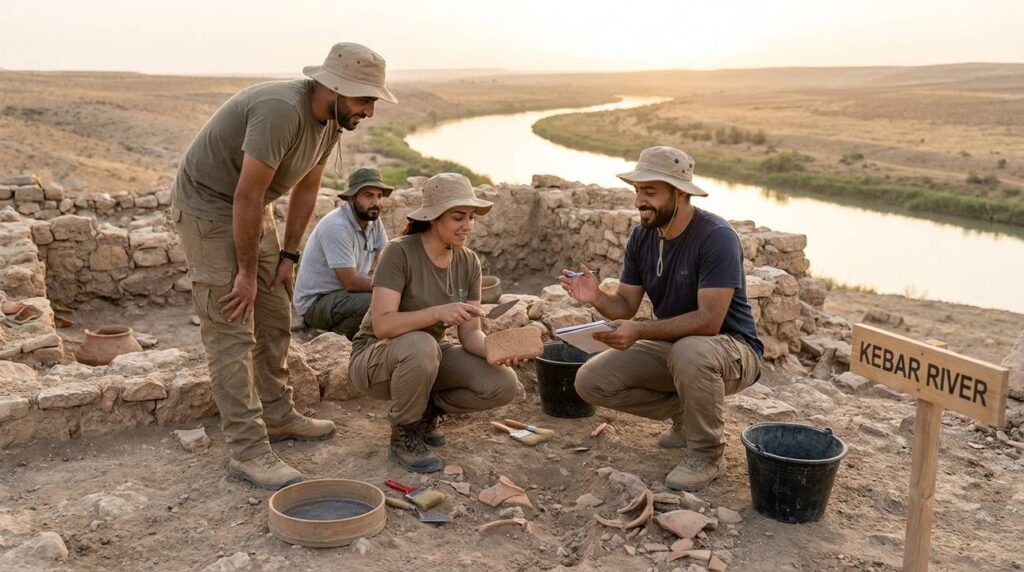

The mention of the Kebar River in the Book of Ezekiel holds significant importance for its role in the prophet’s visions. Today, many seek to understand where this river might have been located, exploring its possible routes through ancient Babylon. This article delves into the historical references to the Kebar River. It examines its potential locations based on current scholarship and how it serves as a symbol in Ezekiel’s narrative, showing the historical context of the prophet’s experiences.
What Does the Bible Say About the Kebar River?
In the Book of Ezekiel, the Kebar River serves as a backdrop for several of the prophet’s visions. It begins with his first encounter where ‘the heavens were opened, and I saw visions of God’ while he was among the exiles by the Kebar.
This river becomes a central location throughout Ezekiel’s story, symbolizing revelation and prophecy. Rooted in the narrative, this location is crucial for understanding the context of Ezekiel’s calls to the Jewish people during the Babylonian exile, emphasizing the significance of place.
from the Western Wall to Masada.

Ezekiel’s visions by the Kebar River are not isolated events but part of a larger narrative that includes his call to prophecy and messages of hope. He sits among the exiles by the river, deeply moved by their plight. The river’s role as a setting for these encounters underscores its importance as a symbol of revelation and communication, providing a backdrop for messages that have resonated through Jewish history and is still remembered today.
Possible Modern Locations: Identifying the Kebar River
Over time, historians and archaeologists have debated the precise location of the Kebar River. Some suggest it may correspond to the Khabur River in present-day Syria, while others associate it with ancient irrigation canals near Babylon. The Khabur River, known for its history, was a major tributary of the Euphrates. These theories highlight the Kebar’s history, showcasing the region’s role in shaping Ezekiel’s messages. Despite the debate, the river serves as a key geographical marker in historical studies.
The debate over the Kebar River’s location reflects the broader challenges of historical archaeology, where texts must be carefully interpreted alongside physical evidence. Theories connecting the Kebar to irrigation canals near Babylon suggest a region rich in agricultural activity, which would have been essential for sustaining life during the exile.
This context enhances our understanding of Ezekiel’s messages, as the river’s geographical significance parallels its role in the prophet’s visions.

The Kebar River in Ezekiel’s Prophecies
The visions received by Ezekiel at the Kebar River carry profound symbolic meaning beyond geographical details. His prophecies often reference the river as a place of encounter, offering hope and redemption to the Jewish exiles. Through these visions, the Kebar becomes a symbol of the connection between the earthly and the spiritual.
This highlights themes of restoration and communication, illustrating how physical locations can embody truths and serve as conduits for messages.
Ezekiel’s visions by the Kebar River are not just personal revelations but messages meant for the entire Jewish community in exile. These visions provided hope and guidance during a time of great uncertainty, emphasizing the river’s role as a spiritual and geographical marker. The river’s presence in these narratives underscores its importance as a symbol of revelation and divine communication, offering a backdrop for messages that have resonated through Jewish history and is still remembered today.
Archaeological Insights into the Region
The region around what might have been the Kebar River has yielded numerous archaeological findings that enhance our understanding of ancient Babylonian society. Canals such as the Chebar underline the advanced irrigation systems that sustained the region. These archaeological insights provide context for Ezekiel’s location.
They add a tangible layer to his mysterious visions by the river, offering a glimpse into the daily life and technological achievements of the time, which supported the exiled community and influenced Ezekiel’s messages.
Archaeological findings near the potential location of the Kebar River reveal a society that was technologically advanced, with irrigation systems that supported agriculture and daily life. These insights into Babylonian society provide a backdrop for understanding the context of Ezekiel’s prophecies.
The river’s presence in these narratives underscores its importance as a geographical and spiritual marker, offering a glimpse into the world that shaped Ezekiel’s visions and messages to the exiled Jewish community.

Ezekiel’s Visions at the Kebar River
According to historical accounts, Ezekiel’s prophetic career began by the Kebar River, where he witnessed incredible visions of divine chariots and glories. The prophet describes a vision of a stormy wind and a great cloud, marking the beginning of his many messages directed at the exiled Jewish community.
As a setting, the Kebar River is integral to understanding the scope and intensity of Ezekiel’s prophecies, enhancing its historical depth and resonance for both ancient and modern readers.
Ezekiel’s visions by the Kebar River were not just personal revelations but messages meant for the entire Jewish community in exile. These visions, where he sees the divine chariot, provided hope and guidance during a time of great uncertainty.
The river’s presence in these narratives underscores its importance as a geographical marker, serving as a backdrop for encounters that have shaped religious thought for generations.
The Kebar River’s Role in Jewish Exile
During the Babylonian exile, locations like the Kebar River were central to the Jewish exile community’s life. The river provided not only physical sustenance through its waters but also reflections for the exiled Israelites. It was a poignant symbol of memory and hope, representing the longing and perseverance of the Jewish people during their captivity.
The river’s presence in their lives served as a reminder of their heritage and identity, offering a sense of continuity and connection to their homeland, even in a foreign land.
from the Western Wall to Masada.
The Kebar River’s role as a source of sustenance and reflection highlights its significance during the Babylonian exile. For the Jewish community, the river was more than just a physical landmark; it was a symbol of perseverance and hope.
This connection to the river underscores the importance of place in maintaining cultural and spiritual identity, offering a sense of continuity and connection to their homeland, even as they faced the challenges of exile and displacement.

Connecting Historical and Modern Geographies
Efforts in cartography and historical archaeology continue to connect the ancient Kebar River with modern geography. By mapping ancient texts alongside contemporary landmarks, scholars aim to reveal connections that provide deeper insights into historical narratives. These studies help modern audiences appreciate the land’s role in history.
Such research deepens the connection to historical texts, allowing a greater understanding of the context in which these ancient stories unfolded, bridging the past with the present and enriching our appreciation of history.
Mapping the ancient Kebar River involves not only identifying its geographical location but also understanding its role in historical narratives. By comparing ancient texts with modern landmarks, scholars can uncover new insights into the world of Ezekiel. This process enhances our understanding of the history of places like the Kebar River, enriching our appreciation of history and the narratives that have shaped thought for generations.
The Spiritual Significance of the Kebar River
The Kebar River in Ezekiel’s time was more than just a geographical feature; it was a place of revelation, serving as a conduit between the divine and humanity. The prophet describes his first vision by the river, where ‘the heavens were opened.’ Today, its mention in texts is still remembered, reminding us of the timeless pursuit of hope and redemption. Through Ezekiel’s writings, the Kebar remains a symbol echoed in traditions, highlighting the enduring power of historical landscapes.
In Jewish and Christian traditions, the Kebar River is often seen as a place where the divine met the earthly. This connection is not just historical but significant, as the river’s mention in texts is still remembered by those who seek hope and redemption. The river’s role in Ezekiel’s prophecies underscores the importance of place in narratives, reminding us that geography can be as significant as the messages conveyed. Ezekiel’s visions by the Kebar have left a lasting impact on thought.

From Historical Times to Present-Day Understanding
Although the exact location of the Kebar River remains uncertain, its role in history is irrefutable. The river exemplifies the ways in which geography and significance intertwine, crafting narratives that have shaped thought for millennia. Present-day explorations continue to seek clarity and connection.
These efforts transform ancient mysteries into insightful dialogue about the past and its influence today, showing how ancient texts and modern scholarship can work together to illuminate historical truths and deepen our understanding of narratives.
The search for the Kebar River’s location reflects the ongoing dialogue between ancient texts and modern scholarship. By examining historical records and archaeological evidence, researchers aim to bridge the gap between past and present, offering new insights into the world of Ezekiel. This process not only enhances our understanding of history but also enriches our appreciation of the cultural role of places like the Kebar River in shaping narratives.
Conclusion: the Legacy of the Kebar River
The Kebar River, while elusive in precise geographic terms, holds a significant place within historical literature. It is depicted as a site of encounter, where Ezekiel received his visions. This river symbolizes hope for the Jewish exiles and continues to resonate with those who study its historical context.
As scholars uncover more about its potential locations, the Kebar River enriches our understanding of Ezekiel’s prophecies and the broader historical landscape, connecting us to ancient narratives.
Frequently Asked Questions about the Kebar River
