
The Deeper Meaning of Fig Trees in the Bible and Jewish Tradition


In the warm sun of the Israeli countryside, fig trees have stood for centuries—silent witnesses to history, faith, and daily life. Their broad leaves and sweet fruit have nourished both body and spirit, and their presence in the Bible is more than just botanical. In this article, we’ll explore what fig trees represent in the Bible, what trees symbolize more broadly in Jewish tradition, and how these meanings continue to inspire and connect us to the land of Israel today.
The fig tree in ancient Israel
Fig trees were a common sight in ancient Israel, thriving in the Mediterranean climate. Their fruit was a staple in the diet of the people, and they were often planted near homes and along paths. The tree’s ability to produce sweet, nourishing fruit made it a valuable resource, and its presence was a sign of a well-tended land.
In biblical times, owning a fig tree was a mark of prosperity. The phrase “each man under his vine and fig tree” became a symbol of peace and security. It suggested a life without fear, where families could enjoy the fruits of their labor in safety. This imagery appears in the books of Kings and Micah, reflecting a deep longing for stability and blessing.
Beyond its practical uses, the fig tree held spiritual meaning. It was one of the seven species listed in the Torah as special to the land of Israel, alongside wheat, barley, grapes, pomegranates, olives, and dates. These species were not only agricultural markers but also spiritual symbols of the land’s bounty and the people’s relationship with it.
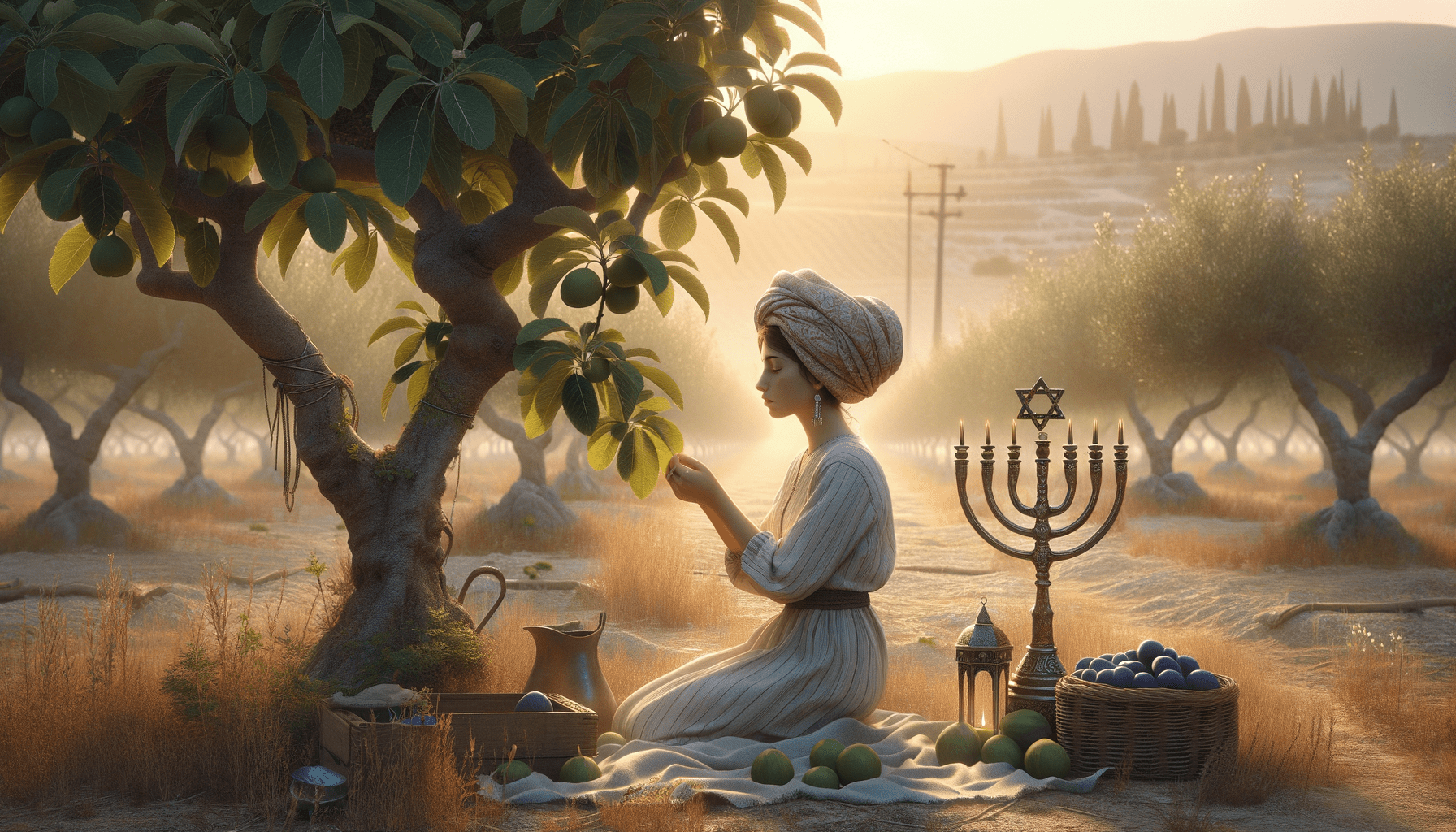
The fig tree as a symbol of peace and prosperity
The phrase “sitting under one’s fig tree” became a poetic way to describe peace. It evoked a scene of rest, shade, and satisfaction after hard work. In Jewish tradition, this image is often connected to the Messianic age—a time when nations will no longer wage war, and people will live in harmony with the land and each other.
This symbolism is rooted in the prophetic books, where the fig tree is used to describe a future of hope. In Micah 4:4, it says, “Everyone will sit under their own vine and under their own fig tree, and no one will make them afraid.” This vision of peace is deeply embedded in Jewish hopes for the future.
Even today, the image of the fig tree continues to resonate. It reminds us of the simple joys of life—of family, home, and the fruits of honest labor. For many, it also represents a connection to the land of Israel and the enduring spirit of its people.
Understanding the Symbolism of the Fig Tree
