Lev Haolam logo – Israel gift box company
Join now
Lev Haolam
  • Home
  • To The Top
  • Who We Are?
  • How It Work
  • Membership
  • Our Boxes
  • Testimonials
  • FAQ
  • Blog
    • Articles
    • Recipes
    • Gift Boxes
  • Career
Log In
Join now
Log In
Join now
  1. Home
  2. Blog
  3. History of Israel and Jews

Discover the Rich History of Israel and the Jewish People

Delve into the captivating history of Israel and the Jewish people, exploring their enduring legacy and cultural heritage. From ancient times to modern day, uncover stories of resilience and tradition that have shaped this vibrant community.
Ancient artifacts from the history of Israel and Jews
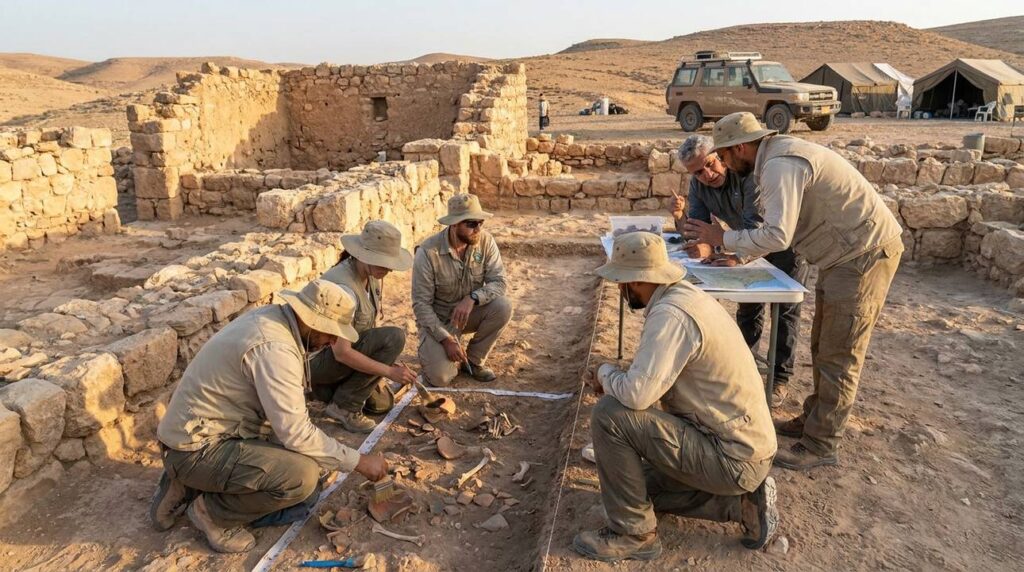
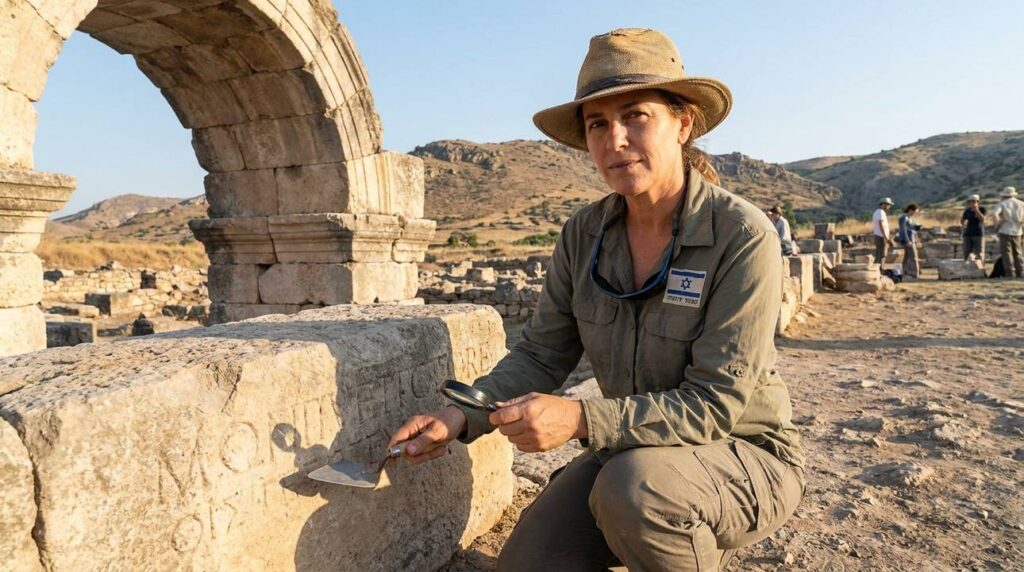
Israeli archaeologist examines artifacts in Negev Desert with trowel.

Exploring the Unique Heritage of Maon

The terrain of Maon, with its rugged hills and caves, provided natural defenses. This period was crucial for local leaders who built alliances that supported their influence. The story of Nabal and Abigail unfolds near Maon, highlighting the region’s significance in historical narratives. The strategic use of the wilderness of Maon showcases the wisdom in evading pursuits, emphasizing the region’s importance. The caves and hills of Maon not only offered refuge but also a place where leaders could gather followers. The alliance with local leaders was instrumental in their influence. Maon’s geographical features played a vital role in survival and...
Show more
Israeli archaeologist examining artifacts at Lubya ruins in evening light.

Unraveling the Historical Layers of Lubya

Historical Mentions of Lubya Lubya appears in historical texts as part of a network of settlements in the Galilee region. It played a role in the dynamics of its time, connecting it to broader historical contexts. Archaeological excavations have uncovered artifacts that link Lubya to cultural and economic activities. These findings illustrate aspects of daily life and trade in the region. Location of Lubya Lubya is located in the lower Galilee region, known for its diverse landscape and historical significance. Its position facilitated trade and communication between communities. The site’s proximity to major historical locations adds to its importance. This...
Show more
Archaeologists examining pottery at Gibeah ruins during sunset.

Understanding Gibeah in the Bible

The artifacts and structures uncovered at Gibeah provide a tangible link to these historical stories, showing the daily life and governance of the time. The city’s strategic location, just a few miles north of Jerusalem, contributed to its historical importance. This proximity allowed Gibeah to serve as a key military and administrative center, influencing the region’s political landscape. The combination of narratives and archaeological evidence paints a comprehensive picture of Gibeah’s role in early history. What Is Gibeah? Gibeah, often referenced in historical texts, is primarily identified with early leadership. Situated in the territory of Benjamin, it holds significant historical...
Show more
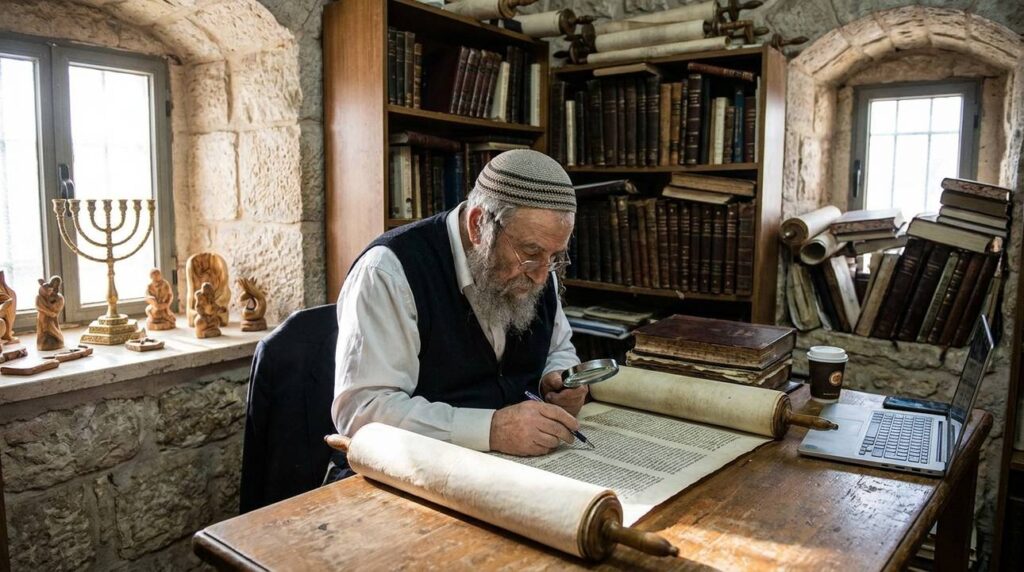
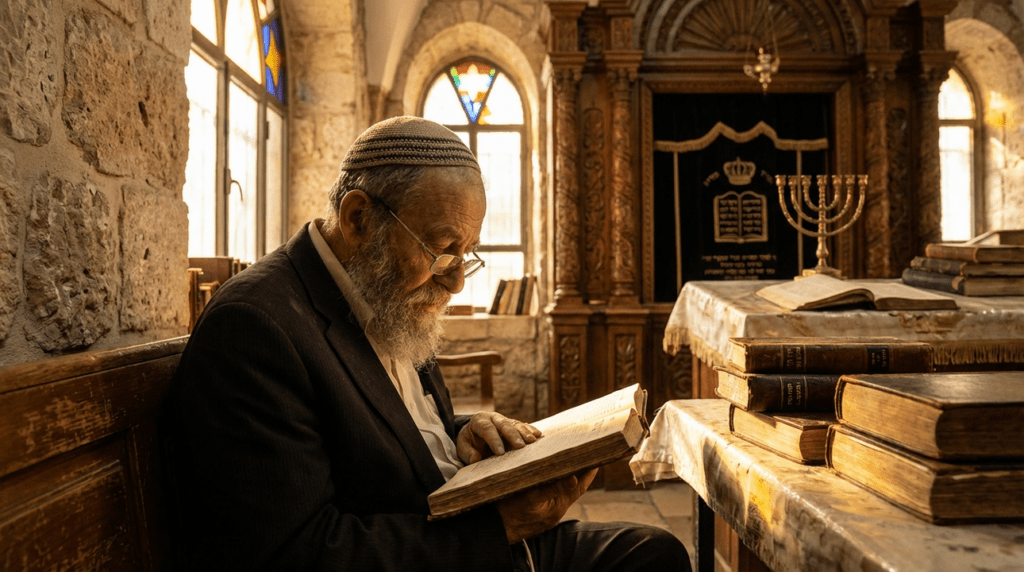
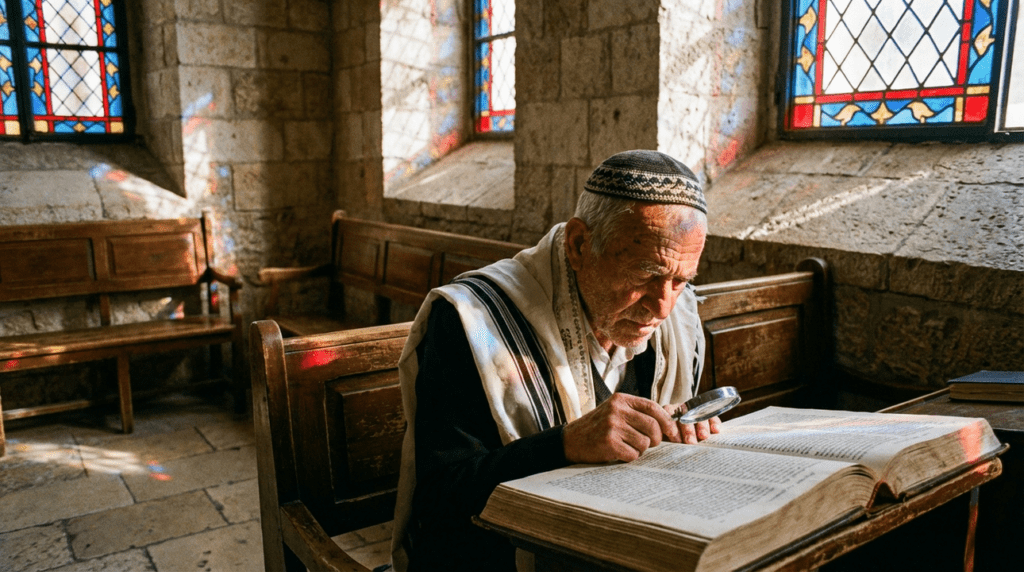
Israeli historian examines biblical manuscripts in a sunlit study room.

Understanding Philippians: Its Place in the Bible

This epistle to the Philippians is often noted for its warm tone and personal nature, reflecting Paul’s deep affection for the community. Paul highlights his gratitude, emphasizing the close relationship he maintained with them. Despite being imprisoned, Paul’s focus on joy and gratitude serves as an inspiration to readers, demonstrating that true contentment and happiness are not dependent on external circumstances. Let’s journey through its historical context and significance. Addressed to the Christian community in Philippi, a city in Macedonia, it was notable for being the first European location where Paul established a church. The Philippians had supported Paul financially,...
Show more
Israeli man in business casual walking through busy high-tech office.

Unveiling the Region of Today

The ancient stories of this region, from the tales of early inhabitants to historical conquests, are deeply embedded in the region’s identity. These narratives provide a mix of history that continues to captivate those who seek to understand the past. The archaeological sites scattered across the land offer tangible connections to these ancient stories. What Was This Region in Historical Texts? This region is mentioned as a land of promise in historical texts. It was known for its diverse populations and cultures. Historically, it referred to territories west of the Jordan River, a critical hub for trade and cultural exchange....
Show more
Israeli archaeologist examines pottery shard at Jebusite site near Jerusalem.

Unveiling the Legacy of Jebus in History

The transformation of Jebus into Jerusalem marked a significant turning point in the region’s history. Elevating it to the capital of Israel is a key moment in history, symbolizing a new era of unity and cultural synthesis. Jebus’s strategic location and fortified defenses made it an ideal choice for a capital. Its history is a sign of the legacy of the Jebusites and their contributions to the cultural and historical fabric of Jerusalem. What Was Jebus in Historical Times? Jebus is referenced in various historical texts as a fortified city inhabited by the Jebusites. It is first mentioned in ancient...
Show more
Syrian historian in professional attire examining ancient ruins in desert.
Understanding Syria’s Historical Role

What Is Syria’s Historical Name? Historically, Syria is referred to as ‘Aram,’ highlighting its association with the Aramean people. This group is often mentioned in relation to Israel’s early history, serving as both allies and adversaries. The land of Aram frequently appears in historical narratives, particularly concerning Israel’s history. Rebekah is described as coming from Paddan Aram, indicating familial ties and cultural exchanges between the regions. Syria, or Aram, was a neighboring power with whom Israel had both adversarial and diplomatic interactions. The alliance between Israel and this region demonstrates the shifting alliances and political dynamics of the ancient Near...
Show more
Israeli archaeologist examines ancient ruins in Be'er Sheva at sunset.

The Legacy of Nahor

What Is Nahor? Nahor is known as both a person and a place in historical texts. The patriarch Nahor was a brother of a significant figure and a son of Terah. His descendants played significant roles in narratives. The town named Nahor is linked to the broader region of Aram, where families are said to have migrated. This area, often referred to as Aram Naharaim, is highlighted when a servant seeks a wife from among Nahor’s descendants. A servant travels to ‘Aram Naharaim’ to find a wife from among Nahor’s descendants. This highlights the town’s significance as a hub for...
Show more
Israeli archaeologists excavating at Ephrathah among ancient stone ruins.

Exploring the Cultural Impact of Ephrathah

Ephrathah is not only a geographical location but also a symbol of continuity and promise. The connection to Rachel’s burial site adds a layer of emotional depth, as Rachel is a matriarch of Israel. Early texts recount Rachel’s burial on the road to Ephrathah, which is Bethlehem, linking the region to her legacy. The mention of Ephrathah in prophetic texts further emphasizes its significance. This prophecy points to a future leader from this humble region, reinforcing its enduring importance in Jewish tradition. The dual association with Rachel and prophecy enriches Ephrathah’s role in the cultural memory of Israel. What Is...
Show more
Researcher in cargo pants examining stone ruins in Paran wilderness.

Exploring the Wilderness of Paran: Historical Insights and Connections

What Is the Wilderness of Paran? The Wilderness of Paran is mentioned in ancient texts as a region near the Sinai Peninsula, specifically where the Israelites camped during their journey from Egypt. Known for its mountainous terrain, this area served as a significant location during the Israelite journey. The region also appears in the story of Ishmael, who resided there after being sent away by his family. The exact borders are not precisely known, but it is generally understood to span modern southern Israel and parts of Egypt and Jordan. This region’s rugged landscape was a backdrop for many historical...
Show more
Israeli archaeologist examines ancient ruins at Lahai Roi in morning light.

Exploring Lahai Roi in the Bible

What Is Lahai Roi? The story of Hagar in ancient texts first introduces Lahai Roi. Known as a well in the Negev desert region, it is linked to significant events. At this well, Hagar received promises that ensured her future and that of her son, marking a turning point that offered hope and assurance in a time of despair. The name ‘Lahai Roi’ is often translated to mean ‘the well of the Living One who sees me.’ This site became a symbol of hope and survival for Hagar, marking an important moment in history. It was here she realized she...
Show more
Israeli archaeologists examining ancient ruins in a desert landscape.

Understanding Meribah in the Bible

The tale of Meribah is not solely about conflict but also about intervention and guidance. It highlights the importance of trust and obedience when facing adversity. In ancient narratives, the Israelites quarreled with their leader at Rephidim, demanding water. Following instruction, the leader struck the rock, and water flowed. This act demonstrated care despite the people’s doubt. By examining these narratives, we gain a deeper appreciation for the perseverance required to navigate life’s trials. What Does Meribah Mean in the Bible? Meribah means ‘quarreling,’ and it refers to two locations described in historical texts. It is found in both ancient...
Show more
Israeli archaeologist examines Baal Peor artifacts at dig site.

Understanding Baal of Peor in Historical Context

The events at Baal of Peor are a key part of the narrative, highlighting the challenges faced by the Israelites during their journey. The Moabites, mentioned in the text, played a significant role in these events. This article will explore the cultural and history of Baal of Peor, providing insights into its impact on the Israelites and their interactions with neighboring peoples. What Is the Historical Baal of Peor? Baal of Peor is mentioned as a site of idol worship and transgression. The location is associated with a Moabite deity that tempted the Israelites during their wanderings in the wilderness....
Show more
Archaeologist examining ancient ruins at Rephidim, Israel in morning light.

Understanding Rephidim: An Ancient Point in Israel’s Journey

The victory was achieved as a leader kept his hands raised, supported by others. These events at Rephidim highlight the significance of leadership, community support, and overcoming challenges. The stories of Rephidim are celebrated in tradition, serving as reminders of the unity required to face adversity and the enduring strength of the human spirit. What Happened at Rephidim? Rephidim is best known as the place where the Israelites faced a severe lack of water. The people quarreled, fearing for their survival. Seeking intervention, a leader struck a rock to bring forth water, quelling their thirst and ensuring their continued journey....
Show more
Israeli archaeologist examining ruins at Jabesh Gilead with map and tools.

The Story and Significance of Jabesh Gilead

The town’s loyalty to Saul, demonstrated by retrieving his body from the Philistines, is a sign of its legacy. Jabesh Gilead’s strategic location made it a key player in the tribal alliances and conflicts that shaped Israel’s history. Its presence in historical accounts underscores its role as a center of loyalty, reflecting the broader themes of kinship and redemption. What Is Jabesh Gilead? Jabesh Gilead was a town located east of the Jordan River in the region known as Gilead. This area is frequently mentioned as a place of refuge and strategic importance. The town played a notable role in...
Show more
Israeli historian examines ancient manuscripts at Solomon's Colonnade in Jerusalem.

Discovering the History of Solomon’s Colonnade

The connection to historical figures adds a layer of historical and cultural richness, evoking the memory of leaders celebrated for their contributions to Jewish heritage. While it was constructed during the Second Temple period, the name serves as a reminder of enduring legacies of wisdom and leadership. This association reinforces its role as a place of learning and reflection, where the teachings of the past continued to influence the present. In this article, we explore the cultural role of Solomon’s Colonnade, shedding light on its place within Jewish culture. This location is mentioned in various Jewish texts, such as historical...
Show more
Elderly Israeli man examines ancient maps and texts in library.

Understanding the Gog and Magog Map in Historical Context

Who Were Gog and Magog? Biblically, Gog and Magog feature prominently in prophetic literature as formidable opponents. As described in Ezekiel 38, Gog is a prince from the land of Magog, envisioned as a leader of a major coalition against Israel. This depiction has led to various interpretations throughout history, couching Gog and Magog in contexts ranging from literal geographic locations to symbolic forces representing chaos and opposition. The earliest mentions of Gog come from Ezekiel, where Gog is portrayed as a leader who rises against the people of Israel in a climactic battle of good versus evil, bringing about...
Show more
Israeli man examines ancient ruins with map in early evening light.

Understanding Peor in Historical Context

The incident at Peor is crucial for understanding the Israelites’ journey and their struggles with faithfulness. The location, possibly near a significant viewpoint, is notable for its role in the Israelites’ journey. This geographical connection adds depth to the story, illustrating the challenges faced by the Israelites as they navigated their faith amidst external influences. Peor’s tale serves as a poignant reminder of the importance of steadfastness in one’s beliefs. What Is Peor in the Bible? Peor is a location mentioned in ancient texts, notable for its connection to the infamous worship of Baal of Peor. This occurs in an...
Show more
Israeli man studying ancient texts in a traditional library.

Understanding the Amalekites and Their Legacy in Today’s World

The story of the Amalekites involves more than conflict; it includes lessons of endurance. Their narrative prompts reflection on unity and determination. Exploring their legacy offers understanding of values that inspire and guide us. Who Were the Amalekites? The Amalekites were a nomadic tribe frequently mentioned in ancient texts as adversaries of the Israelites. They attacked the Israelites at Rephidim, marking their first recorded encounter. In these narratives, they represent opposition and hostility. Descendants of Esau’s grandson Amalek, they were related to the Israelites, adding complexity to their enmity. The story of the Amalekites is not solely about hostility but...
Show more
Israeli archaeologist uncovers pottery shards in Gennesaret at dusk.

Discovering Gennesaret Through History

Gennesaret’s fertile plains were known for their productivity, supporting a variety of crops that sustained local communities. Its strategic location near the Sea of Galilee made it a vital part of trade routes, facilitating exchanges between different cultures and peoples. The region’s historical context is further enriched by archaeological findings, which provide insights into the daily lives of its ancient inhabitants. Discoveries of pottery and tools reveal the sophistication of their agricultural practices. The Sea of Galilee, central to the region’s geography, played a crucial role in Gennesaret’s development. Its waters supported fishing and agriculture, while also serving as a...
Show more
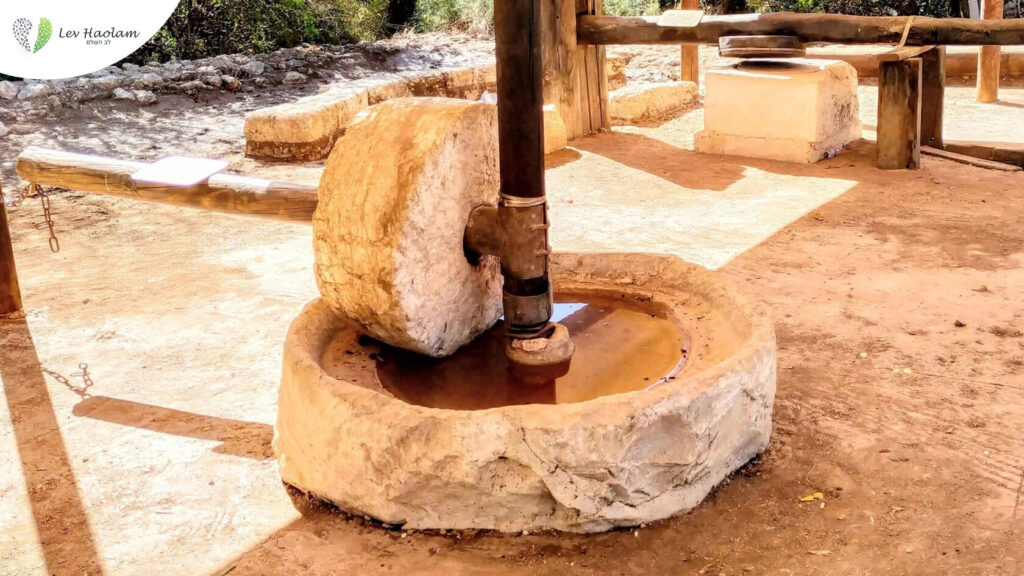
Ancient stones of Shiloh under a bright sky

Shiloh – A Spiritual Time Capsule

Get closer to the Holy Land and feel the love of the people and the land itself! Imagine the feeling you have when you receive a present you’ve wanted for so long on your birthday. Or when a loved one surprises you with a thoughtful gift that brings love and joy to your heart. These are the feelings and emotions that subscribers to our Israeli gift boxes experience every month when they receive 7-9 unique products infused with the love of the pioneers who produced them. It is this level of closeness to the pioneers and the Holy Land we...
Show more
The ancient Western Wall in Jerusalem at sunset

Six facts about the Holy Land you need to know about!

Here are some very ‘Israeli’ customs you need to know about! Whether at the market, like Machane Yehuda in Jerusalem, the taxi, or even in the shopping centers, there is always a deal to be made! Remember, it’s the Middle-East, so if there is some shouting or excessive hand waving and gesturing, don’t take offense, it’s just how things are conducted over here! If you want to succeed, don’t be afraid to be willing to walk away, sometimes the seller will come back with an improved offer, or you can just try your luck the next time. Our tip is...
Show more
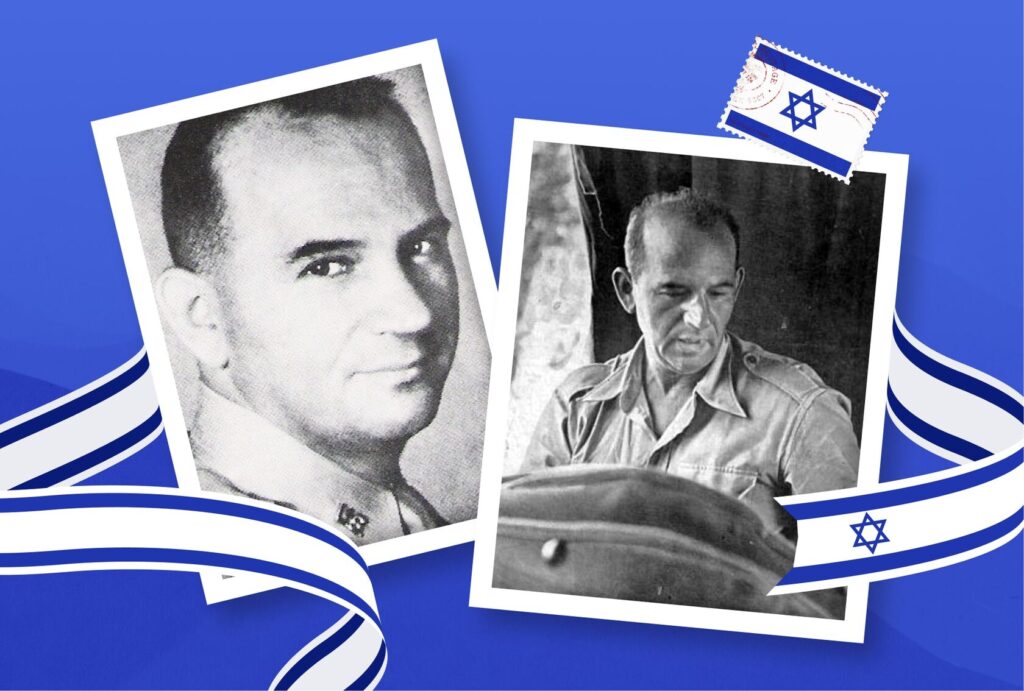
Mickey Marcus in military uniform, a symbol of heroism

Meet Mickey Marcus, an American War Hero and Israel’s Hero!

In 1947, a year before declaring independence, David Ben Gurion, the Chairman of the Jewish Agency, anticipated war. He tried to recruit retired military leaders to help the Jews survive victoriously. ​ While he found the defense groups unorganized, lacking supplies, and needing more mobile units, he was deeply impressed with the fighters, whom he saw as the army’s primary resource. He told “the Boss,” “I found less than I expected and more than I hoped for. The Haganah has educated a type of commander who could easily be converted into a first-rate officer.” He then handwrote army manuals that...
Show more
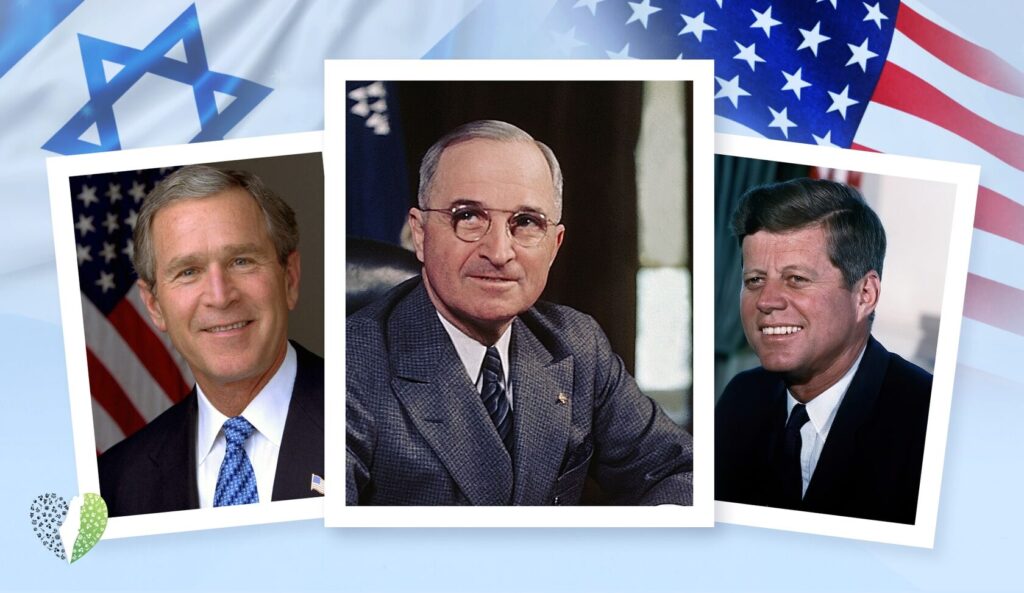
President Truman recognizing Israel's independence

The Presidents who stood with Israel!

Following the Declaration of Independence by David Ben Gurion, the United States, under the leadership of ​Harry S. Truman​, became the first country to recognize Israel! JFK: A President who saw the miracle of Israel for himself. John F. Kennedy made several visits to the Holy Land and had a soft spot for the young State and the Jewish people. With each additional visit, he was inspired by the courage and determination of the people to turn this barren wasteland into an oasis. In 1939, JFK spent two weeks in Israel and noted the slow yet determined transformation by the...
Show more
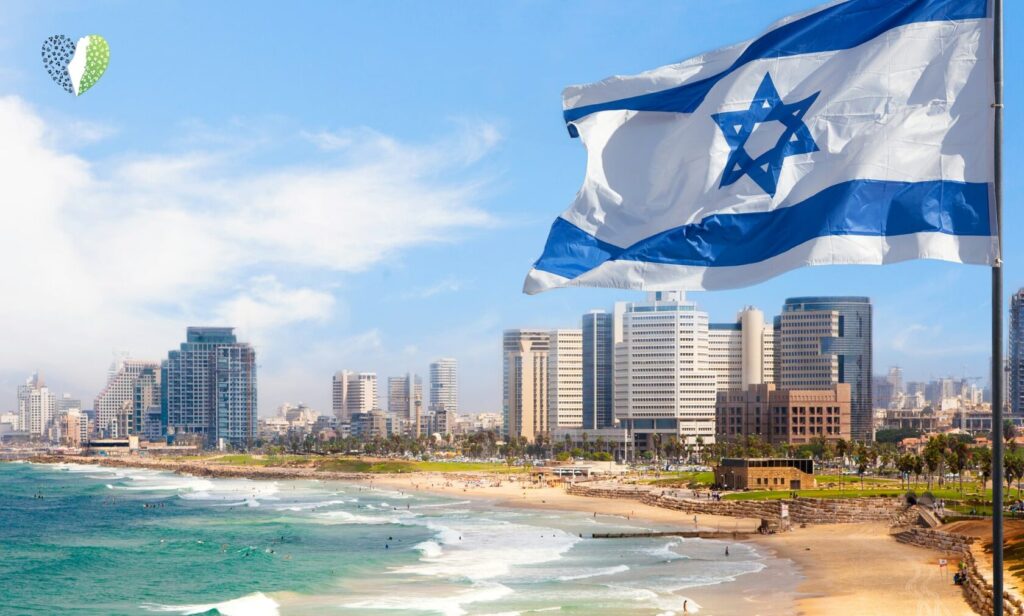
Flags of USA and Israel symbolizing strong alliance

Unwavering Friendship: The Enduring Relationship Between the USA and Israel

From grassroots citizens to top leaders, the USA’s steadfast support for Israel underscores a deeply rooted bond, showcasing respect and friendship and respect through the decades. Standing Together: USA’s Support for Israel in Difficult Times Throughout history, the United States and its people have stood by Israel during some of its most challenging moments, providing crucial support that has fortified this special relationship. One of the earliest examples of this support came during the Yom Kippur War in 1973, when the US initiated Operation Nickel Grass, an emergency airlift that delivered essential military supplies to Israel, enabling it to withstand...
Show more

Intriguing ancient Jewish structure unearthed near Western Wall

When Israeli archaeologists uncovered a series of ancient chambers that had been hidden underground for thousands of years just meters away from the Second Temple, everyone was overcome with mystery and intrigue. The Israel Antiques Authority and the Western Wall Heritage Foundation presented the extraordinary discovery last month, just ahead of Jerusalem Day. Barely thirty meters from the ancient Jewish Temple, archaeologists found two rooms connected by a staircase and an open courtyard. This complex was used by Jewish people in Jerusalem 2,000 years ago at the time of the Second Temple. Artefacts found at the site - oil lamps, clay cooking vessels and stone containers - show that the rooms were used for storing and cooking food. But more than that, nobody knows. In first century Jerusalem, houses were normally built of stone. So, who was it that dug out these underground chambers, and why did they go to such efforts to hew rooms out of the hard bedrock? During the Byzantine period, around 1,400 years ago, the ancient rooms were sealed up beneath the floor of a large, grand building. What was this building, and why were the first century Jewish chambers buried underneath it?This discovery captures the imagination in a unique way and opens up a treasure trove of mystery. Yet a few questions hang in the air that are maybe more profound than all the others: Why did this ancient Jewish structure survive for thousands of years when almost no others did? How did it stay hidden so long? And why, only now, in these days, has it come to light? When the Romans destroyed Jerusalem in 70 CE, they burnt the city to the ground and left virtually no Jewish structures standing. But these hidden rooms survived. When the grand Byzantine building that covered the chambers collapsed in an earthquake in the 11th century, the ancient Jewish rooms beneath its mosaic floors remained intact. After thousands of years, it’s only now in our day that this mysterious structure has come to light. You may be forgiven for thinking that these events didn’t happen by chance. Could it be that the G-d of Israel is still watching over the city where His Presence dwells? Could it be that He chooses when to reveal Jerusalem’s hidden treasures? Today the very identity of Jerusalem is under attack. Many are trying to rewrite her history and erase all evidence of an ancient Jewish presence in the city. Could it be that discoveries like these ancient Jewish rooms are intended to show us that the Jews did and always will belong in their holy city of Jerusalem? Click here to learn more fascinating facts about Jerusalem, Judea and Samaria.
Show more

Standing with our pioneers in the face of COVID-19

Many of you have been in touch to ask how the producers and small businesses that Lev Haolam supports are coping during this pandemic. Thank you so much for your concern and all the words of encouragement. The truth is that these are devastating times for the whole world, and Israel is no exception. Israel is now in its third week of national lockdown. The only stores permitted to open are supermarkets and pharmacies. Many businesses across the country have already collapsed and the unemployment rate is soaring. The artisans and producers that Lev Haolam supports are no longer able to sell their goods on the domestic market. It’s terrible to hear how some of these Jewish pioneers who have spent years building up small businesses against all odds are now teetering on the closure. The uncertainty about what the future holds makes it even harder to plan. No one knows how long the lockdown will last, or what the situation will be afterwards. In the meantime, there are still bills to pay. International orders are one of the only sources of income available to many of our suppliers. Even then, there are few companies still working and shipping Israeli products overseas. At Lev Haolam, we have committed to stand with our suppliers and continue to send monthly packages all over the world.We know how crucial it is to our network of small businesses in Judea and Samaria that we don’t stop our operations at this time, as many other companies have. So, rather than pausing trade, we put our heads together to figure out how we could change the way we work to be able to keep the Ministry of Health regulations without shutting up shop. By working remotely and moving more of our processes online, we’re able to continue selecting the highest quality Israeli products each month and shipping them to our worldwide family of subscribers. Your support means more than ever during these challenging times. By continuing to receive your Lev Haolam package during this world crisis, you are quite simply providing a lifeline to our suppliers. There are no words to express the gratitude and relief they feel when they receive our orders. So, we want to take a moment to say thank you. Thank you for choosing to stand with Israel at this time. Thank you for supporting Jewish pioneers in the heartland of Judea and Samaria. Thank you for helping keep small family businesses selling unique Israeli products operational during these terrible days. If you don’t yet receive Lev Haolam monthly packages and would like to help Israeli artisans and producers at this time, you can click here to subscribe. We’d love to have you on board.
Show more
Celebration of Jerusalem Day with flags and music

The Spirit of Jerusalem Day: A Symbol of Jewish Strength

Discover the importance of Jerusalem Day, honoring the reunification of Jerusalem in 1967, a key moment in Israeli history that reinforced the city’s place at the heart of Jewish faith and identity. Jerusalem Day: From Struggle to Sovereignty Jerusalem Day, or Yom Yerushalayim, is celebrated every year to commemorate the reunification of Jerusalem during the Six-Day War in 1967. This pivotal event marked Israel’s regaining of control over East Jerusalem, which had been divided since the 1948 Arab-Israeli War. The reunification of the city not only had significant political implications but also held profound religious and spiritual meaning. For Jews...
Show more
Aerial view of Jerusalem's ancient streets at sunset

Jerusalem in Your Hands: The Heartbeat of the Holy City

7 Treasures of Jerusalem You Can Feel, Hold, and Cherish (No passport or travel required) 🪨 1. Jerusalem Stone: Where Memory Becomes Touch ​ Imagine tracing your fingers over a stone that has quietly watched the world pass by for more than three thousand years. Jerusalem stone – that creamy limestone glowing gold in the sun – forms the heart of the city. It builds her walls, lines her courtyards, and enfolds her sacred places. To hold a piece of this stone is to feel the touch of eternity. Artisans still carve these stones today into mezuzahs, candlesticks, and simple...
Show more
Celebrating independence and resilience through shared values

Shared Values: Independence & Resilience

How Two Nations – and One Box – Celebrate the Spirit of Building Something Beautiful 🇮🇱🇺🇸 Two Stories, One Spirit Whether it’s an American homesteader or an Israeli olive farmer, the values run deep: hard work, dignity, and faith in the future. Both countries were built on perseverance – by those who planted, crafted, carved, and created with whatever they had. Just like in America, Israel’s greatest strength is found in its people – those who rise early to tend vineyards, who teach their children by example, who press oil, bake bread, and pass stories through their hands. At Lev...
Show more
Hands crafting a traditional Israeli pottery piece

When You Support Israel, You Support the People Who Shape It

“Lev Haolam Allowed Me to Live My Dream” Yehuda Miller · Judean Spices · Bat Ayin In the morning shade of the Judean hills, Yehuda Miller forages wild herbs and hand-blends spice mixes inspired by ancient traditions. His work is slow, patient, and deeply rooted in faith. When military service interrupts his routine, his family steps in so the dream continues “Thank You! What You Do for Us Is Very Important” Hadas Sattler · Ceramic Artist · Ma’aleh Michmash In a bright studio overlooking the Samarian hills, Hadas shapes vessels from local clay while the laughter of her children fills...
Show more
Ancient cityscape of Jerusalem at sunset

7 Fascinating Things You May Not Know About Jerusalem

1. Jerusalem Has Been Conquered Dozens of Times Few cities in history have experienced as much conflict as Jerusalem. Because of its spiritual importance and strategic location, the city has changed hands repeatedly throughout history. Historians estimate that Jerusalem has been: Captured or conquered more than 40 timesBesieged at least 23 timesDestroyed twice and rebuilt multiple times Major empires that ruled Jerusalem include the Babylonians, Persians, Greeks, Romans, Byzantine Empire, Islamic Caliphate, Crusaders, Ottomans, and the British Empire. Despite these constant upheavals, one thing remained remarkably consistent: the deep connection of the Jewish people to the city. For thousands of...
Show more
Celebration of Jerusalem's historical reunification

Yom Yerushalayim 2026: The Meaning Behind the Celebration

A City, A People, A Connection That Endures ✨ What Jerusalem Day Really Marks ​ Jerusalem Day commemorates the reunification of Jerusalem in 1967, during the Six-Day War – when access to the Old City and its holy sites was restored. For many, that moment wasn’t just political. It was deeply personal. For the first time in years, Jews could once again walk freely to the Western Wall – a place that had lived in prayer, memory, and longing for generations. That’s why the day carries meaning far beyond a date. It represents a return. A reconnection. A moment when...
Show more
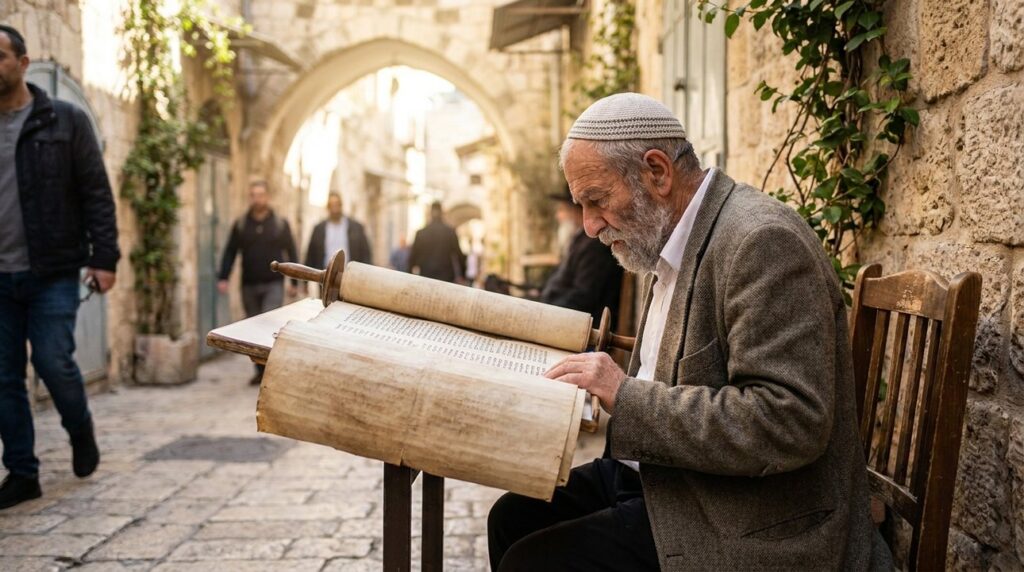
Elderly man in kippah reads Torah in Jerusalem at sunrise.

Mount Moriah: Abraham’s Legacy in Jerusalem

It is also associated with the Temple Mount, marking it as a central location in Jewish religious history. This site’s continued relevance is reflected in its role as a focal point for Jewish prayer and longing, embodying the spiritual aspirations and historical memories of the Jewish people. The Story of Abraham and Mount Moriah The mountain is most famously known as the location where Abraham was tested by divine command. In Genesis 22:2, he is instructed to take his son Isaac and offer him as a sacrifice on a mountain in the land of Moriah. This story, known as the...
Show more
Jewish pilgrims in traditional attire pray at sunrise on Mount Tabor.

The Biblical Significance of Mount Tabor

Mount Tabor’s prominence in the Galilee region is not just geographical but also historical. Its mention in Judges 4-5 highlights its role in pivotal biblical events, such as the battle where Deborah and Barak led the Israelites to victory. This strategic location has made it a focal point for both military and spiritual gatherings. The enduring presence of Tabor in biblical narratives underscores its significance in Jewish heritage. Its unique dome shape and elevation have made it a recognizable landmark, drawing visitors and pilgrims throughout history. Geographical and Historical Overview of Mount Tabor Mount Tabor’s distinctive dome shape sets it...
Show more
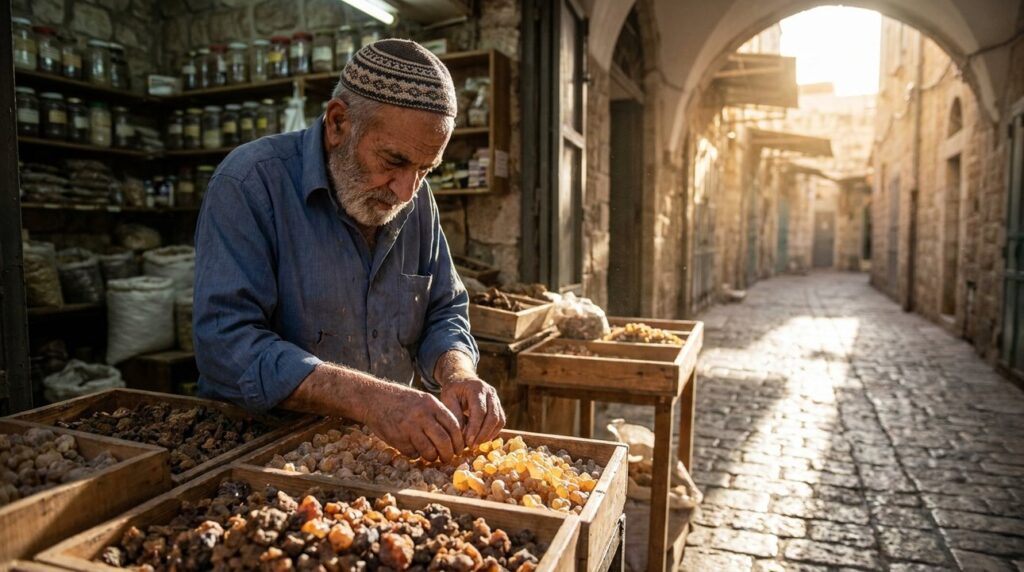
Elderly Jewish man arranging frankincense in a Jerusalem shop.

Exploring the Uses of Frankincense in Historical Contexts

The Boswellia trees, from which frankincense is derived, are primarily found in the arid regions of the Arabian Peninsula, India, and parts of Africa. These trees have adapted to survive in harsh climates, making the resin they produce even more valuable. Historically, frankincense was not only used in religious ceremonies but also played a significant role in the economy, acting as a major trade commodity that connected different cultures and regions. What Is Frankincense? Harvested from trees native to regions such as Oman and Yemen, frankincense resin is collected by making incisions into the bark. This process, known as tapping,...
Show more
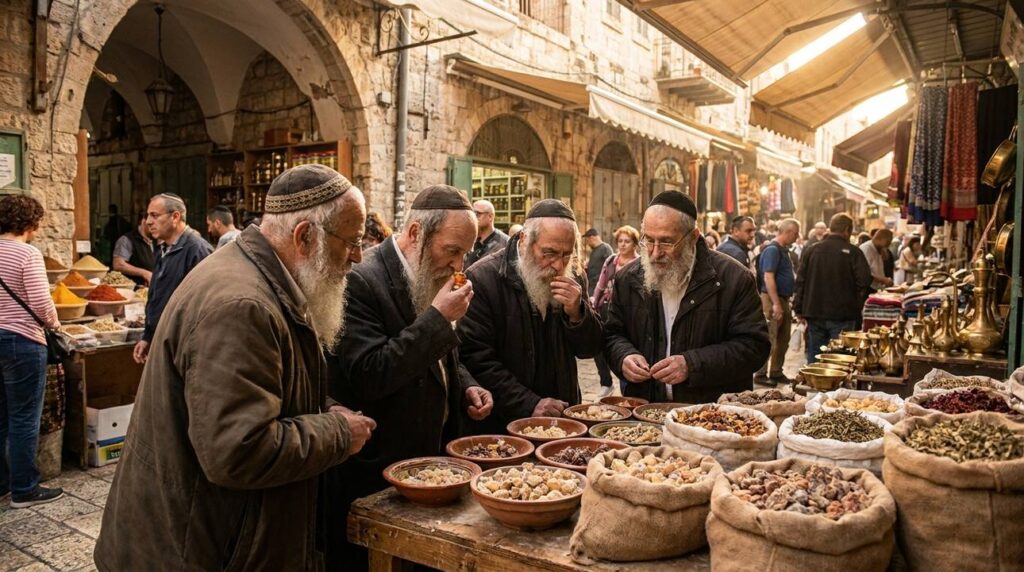
Elderly Jewish men discussing frankincense and myrrh at Jerusalem market.

Exploring the Significance of Frankincense and Myrrh in History

Understanding their history and importance offers insight into their enduring appeal, as they continue to be used in modern wellness and spiritual practices. Today, frankincense is often used in meditation for its calming properties, while myrrh is valued in skincare for its soothing effects, demonstrating their versatility and continued relevance. Origins and Harvesting of Frankincense and Myrrh Frankincense is derived from the resin of the Boswellia tree, while myrrh comes from the Commiphora species. These trees thrive in arid climates, such as those found in parts of the Arabian Peninsula and the Horn of Africa. Historical texts, like those of...
Show more
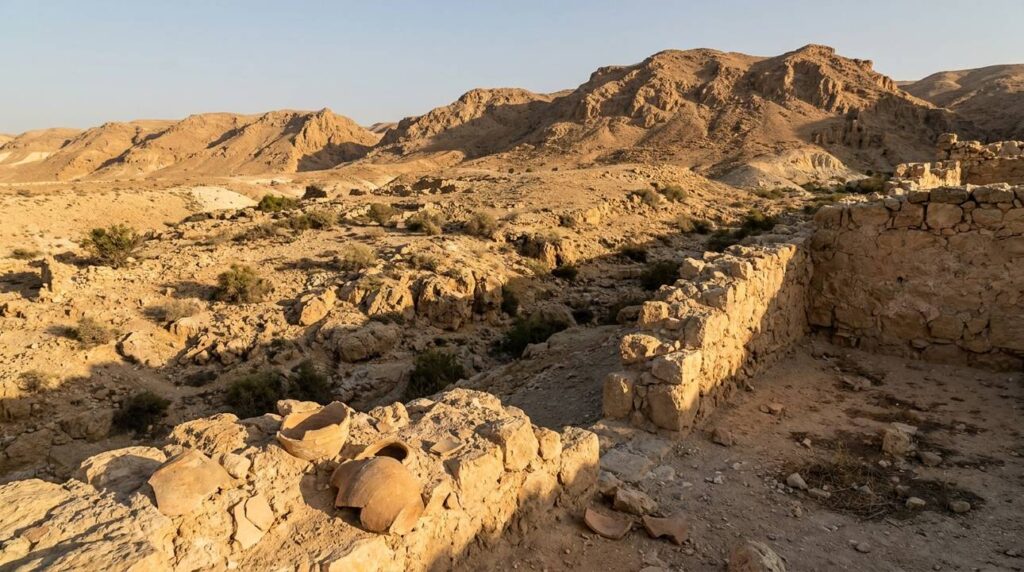
Ancient Judean desert landscape at dawn with ruins and rugged hills.

The Life and Death of King Herod in the Bible

In this article, we will delve into King Herod’s origins, his monumental achievements, and the curious circumstances surrounding his death, as depicted in historical accounts by figures like Josephus. Herod’s reign offers a window into the challenges of leadership during a period of great change in the ancient world. His alliances with Rome were crucial in securing his position, despite the controversies that surrounded his rule. Herod’s architectural achievements remain a testament to his ambitious vision for Judea. Who Was King Herod? Herod, often called Herod the Great, ruled Judea from 37 to 4 BCE. Known for his political acumen,...
Show more
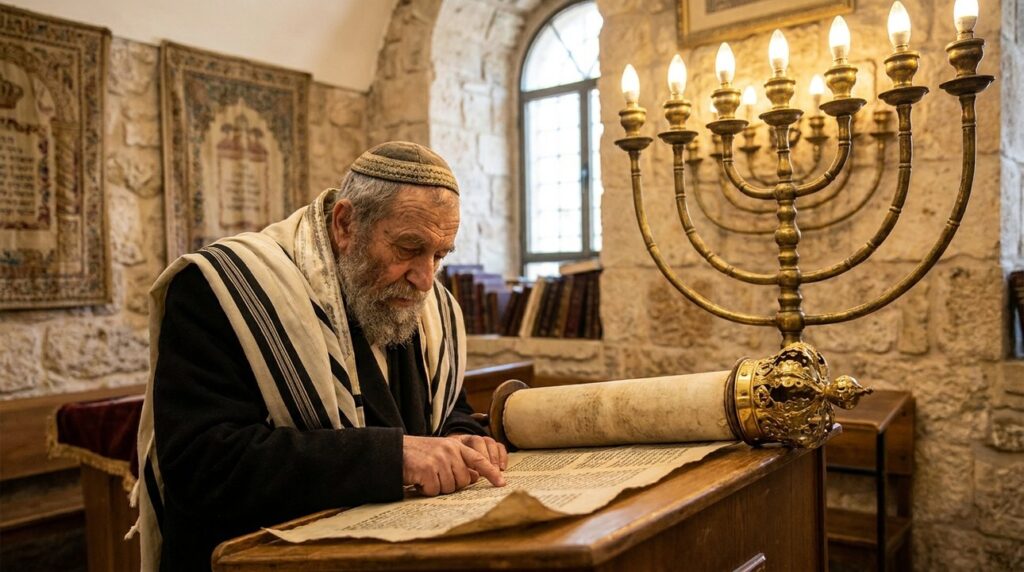
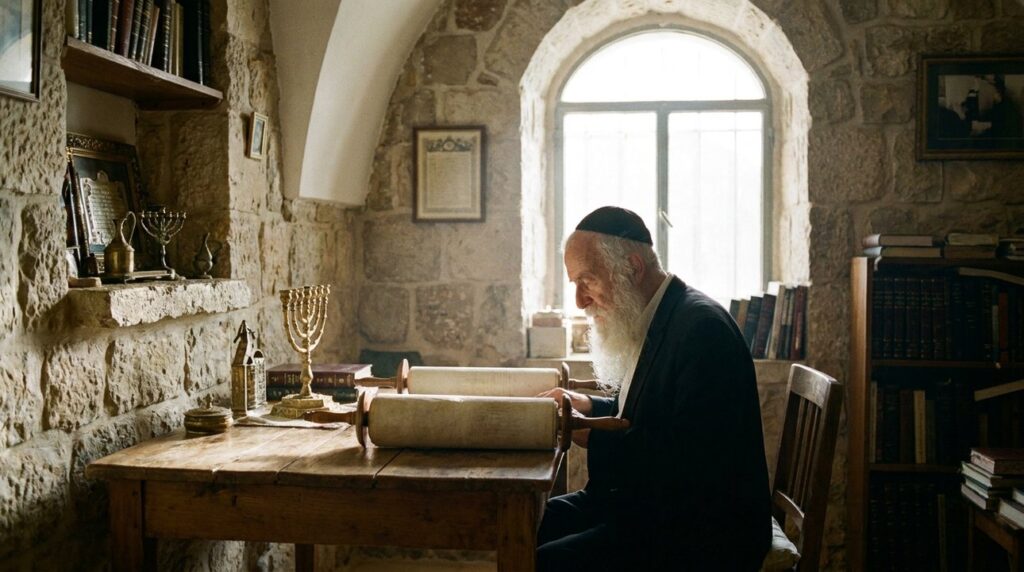
Elderly Jewish man reads Torah by menorah in Jerusalem synagogue.

The Symbolism of Gold in the Bible and its Significance

Gold’s presence in biblical narratives goes beyond architecture. In Exodus 32:2-4, the Israelites’ creation of the golden calf illustrates the tension between material wealth and spiritual fidelity. This metal’s dual role as both a sacred material and a potential idol reflects the complex relationship between humanity and divine values. By examining these stories, the article aims to illustrate how this precious metal has been a symbol of divine connection and human aspiration for centuries, offering insights into its lasting significance. Gold in the Tabernacle and Temple Gold was a key material in the construction of the Tabernacle and other significant...
Show more
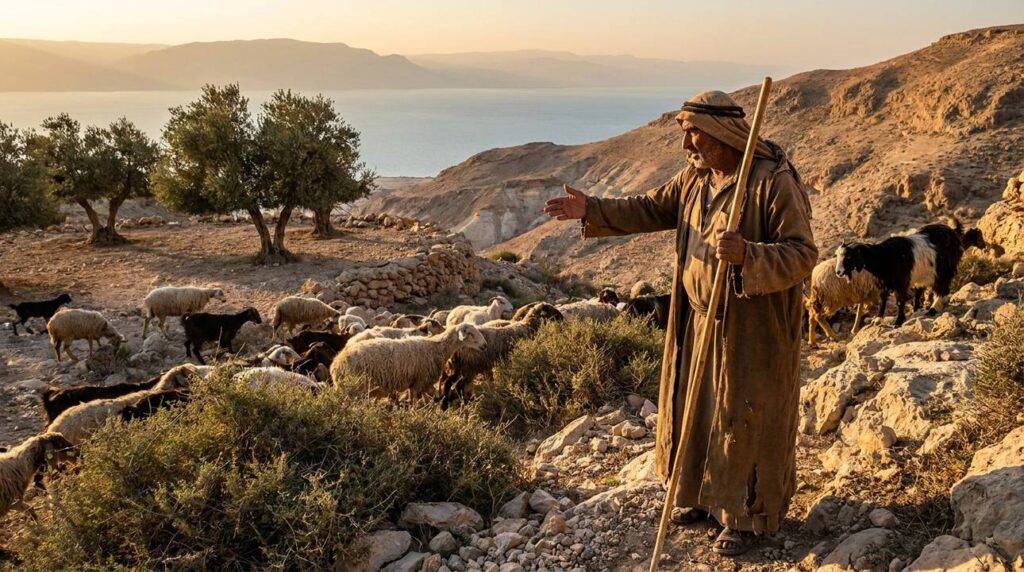
Shepherd with flock near Dead Sea, olive trees in background.

Understanding the Moabites in the Bible

Origins of the Moabites Traditionally considered descendants of Moab, the son of Lot, the Moabites trace their origins to Genesis 19:37, where Moab was born after Lot’s daughters sought to preserve their father’s lineage following the destruction of Sodom and Gomorrah. This familial connection is significant in understanding the relationship between the Israelites and Moabites, as they share a common ancestry. Their shared lineage often complicated interactions, blending kinship with rivalry, as seen in various biblical narratives where alliances and conflicts arose. Moabites in the Biblical Narrative In the Book of Numbers 22–24, the Moabite King Balak famously hired Balaam...
Show more
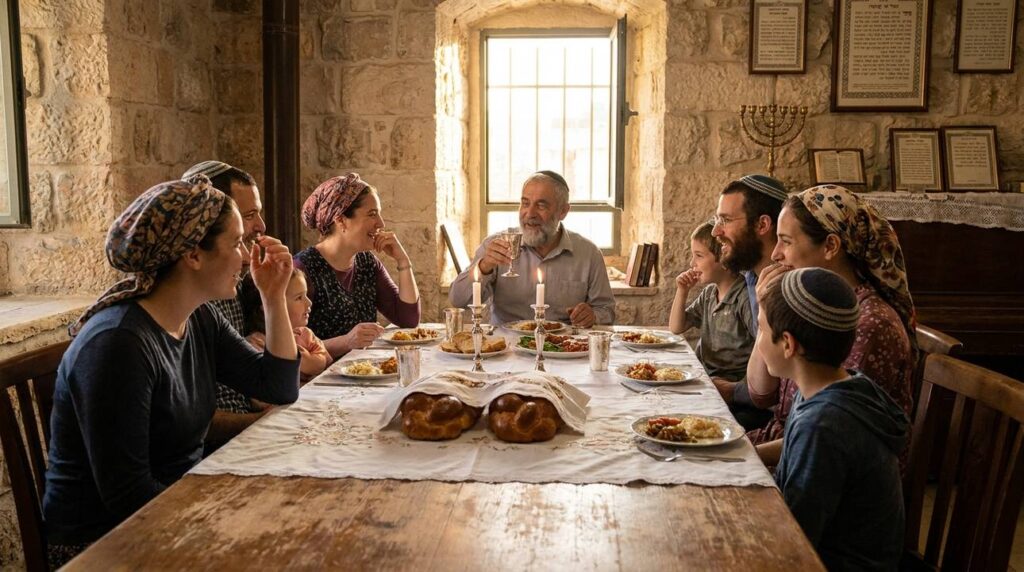
Traditional Jewish Sabbath dinner scene in Jerusalem with family around table.

Understanding Babylon: Its Biblical Definition and Impact

The Historical City of Babylon Located in ancient Mesopotamia, Babylon was one of the most renowned cities of the ancient world. Known for its towering ziggurats and the fabled Hanging Gardens, it served as a center of trade, culture, and power. The Bible often references Babylon as a metaphor for opposition to divine authority. Throughout history, Babylon’s rise to prominence was marked by its impressive achievements in art and architecture, leaving a lasting legacy in the ancient Near East. The city is first mentioned in Genesis 10:10, associated with Nimrod, the great-grandson of Noah. This underscores its ancient origins and...
Show more
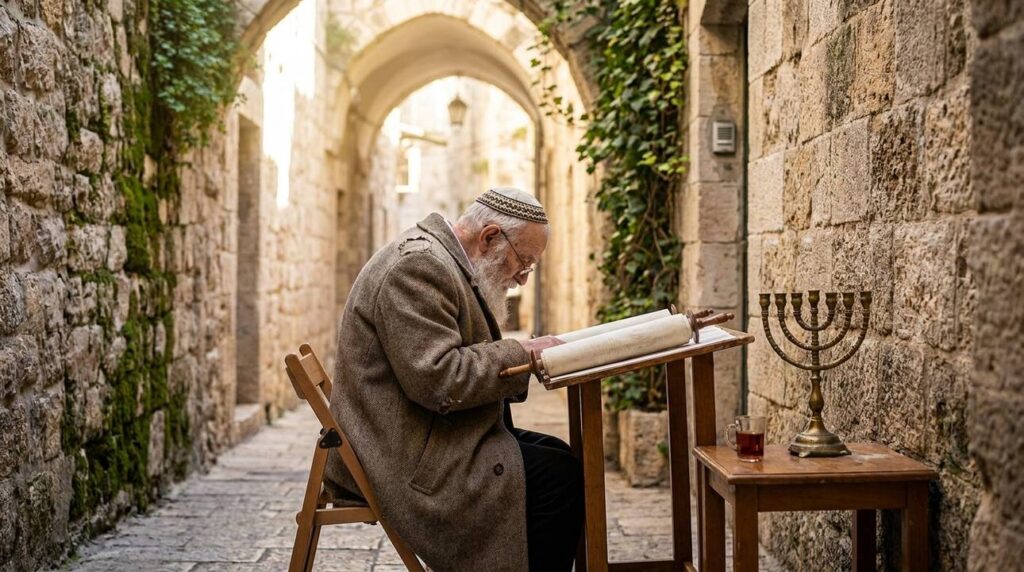
Elderly Jewish man reads Torah in an ivy-covered Jerusalem alley.

Discovering the Biblical Meaning of Zachary

Zachary is linked to the prophet Zechariah, whose messages are found in the Tanakh. His prophecies, especially those concerning the rebuilding of the Temple, are documented in the Book of Zechariah. These messages were vital during the post-exilic period, as they provided guidance and encouragement to the Jewish people. The significance of Zachary continues to be felt today, symbolizing the enduring spirit and cultural heritage of the Jewish community. The Name Zachary in Biblical Context Zachary originates from the Hebrew ‘Zechariah,’ meaning ‘God remembers.’ It connects to the prophet Zechariah, a central figure who contributed to the spiritual landscape of...
Show more
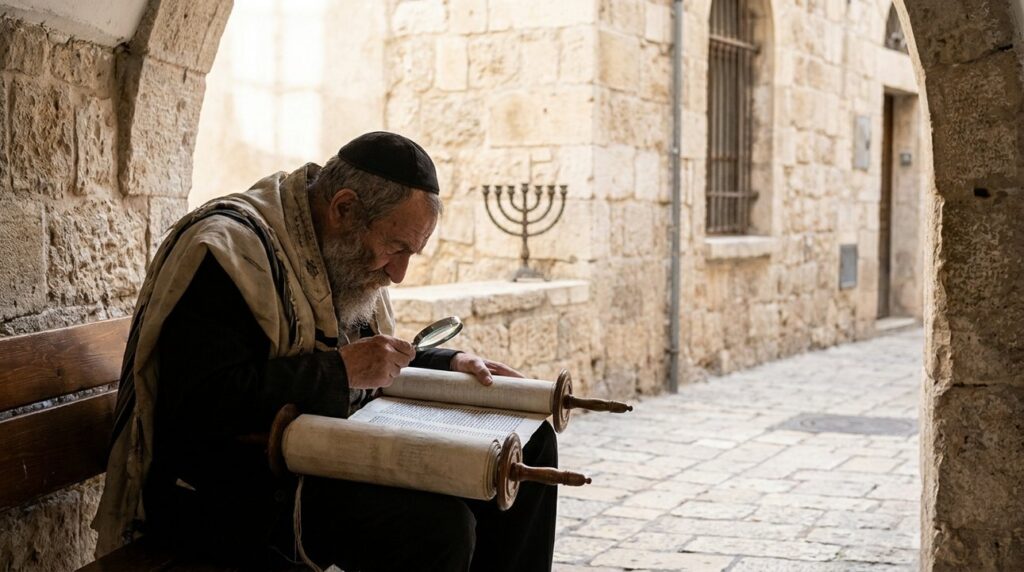
Elderly Jewish man reading the Torah in Jerusalem's old city.

Exploring the Timeline of People in the Bible

By tracing these timelines, we gain a deeper appreciation for the cultural and historical contexts that shaped the biblical narrative. This exploration offers a window into the values and beliefs that have influenced Jewish identity and heritage over the millennia. The stories of these figures are not just historical accounts but are integral to understanding the evolution of Jewish culture and religious practices. The Patriarchs: Founders of Faith The story of the patriarchs is foundational in the Bible, with figures like Abraham, Isaac, and Jacob, who lived around 2000 BCE, playing central roles. Abraham, originally from Ur (Genesis 11:31), is...
Show more
Elderly Jewish man in Jerusalem reading Torah scroll in alley.

Understanding the Role of Cherubs in the Bible

Cherubs often signify the presence of the divine, as seen in the construction of the Ark of the Covenant in Exodus 25:18-22. This article journeys through references to cherubs in the Bible, exploring their significance in Israel’s history and Jewish tradition. Their presence in sacred narratives underscores their importance in maintaining the connection between the divine and the earthly, highlighting their role in biblical history and continued relevance in Jewish thought. What Are Cherubs in the Bible? Biblical texts often depict cherubs as winged guardians of sacred spaces. The Book of Ezekiel (10:1-22) provides detailed descriptions, showing them with multiple...
Show more
Archaeologists examining artifacts at Moabite ruins in Jordan at sunrise.

Unveiling the Moabite People: History and Cultural Legacy

In this article, we explore their culture, interactions with Israel, and enduring legacy in the context of biblical history. By examining archaeological evidence like the Mesha Stele, we gain a deeper understanding of their society and influence in the ancient Near East. These insights help us appreciate the complexities of the ancient world and the lasting impact of this group on the region’s history. Who Were the Moabite People? This ancient Semitic people lived east of the Dead Sea, with their existence well-documented in both biblical texts and archaeological findings. Originating from Lot, a figure in Genesis, they emerged as...
Show more
Jewish scholar in Jerusalem studying ancient texts in a traditional room.

The Story of King Nebuchadnezzar and His Legacy

Nebuchadnezzar’s reign was marked by significant achievements, including the expansion of Babylon into a magnificent city, with the Ishtar Gate and the Hanging Gardens, one of the Seven Wonders of the Ancient World, often attributed to him. His interactions with the Jewish people, particularly during the Babylonian Exile, are crucial to understanding his complex legacy. Nebuchadnezzar in the Bible Nebuchadnezzar II, king of the Neo-Babylonian Empire, is best known for his conquest of Jerusalem and the subsequent Babylonian Exile. The Book of Daniel provides a vivid account of his interactions with the prophet Daniel, highlighting his dreams and their interpretations....
Show more
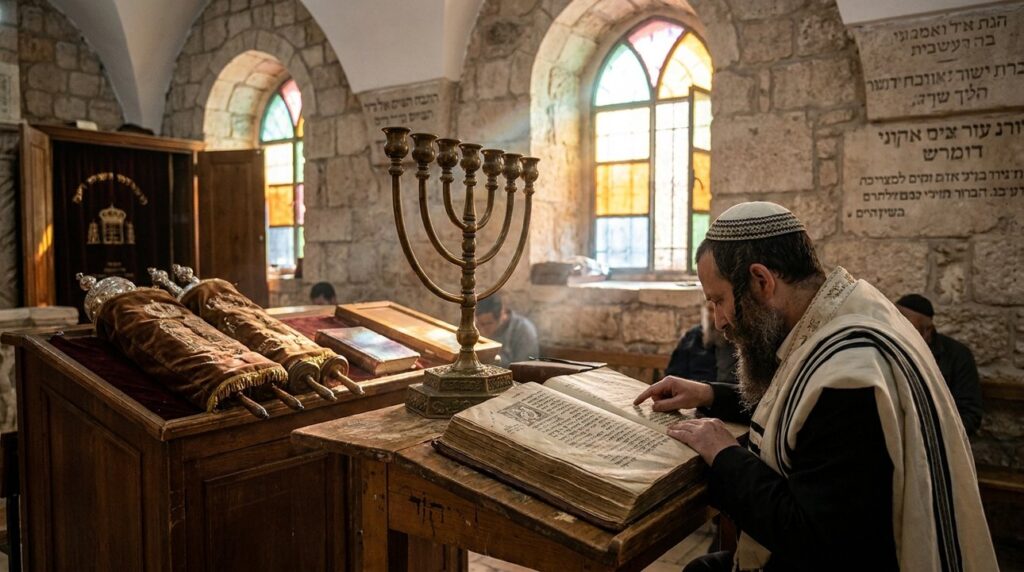
Morning light in synagogue illuminates menorah, Torah, and reading rabbi.

Understanding the Biblical Description of Cherubim

This article delves into the detailed biblical descriptions and significance of cherubim in scripture, offering insight into their mysterious presence. From the intricate carvings on the Ark of the Covenant (Exodus 25:18-22), cherubim are woven into the fabric of biblical history. Their symbolic roles extend beyond mere guardianship, embodying themes of divine knowledge and presence. In the Hebrew Bible, these beings are often depicted as powerful intermediaries between the divine and human realms, highlighting their importance in the spiritual life of ancient Israel. Origins and Appearance of Cherubim Cherubim are first mentioned in the Book of Genesis, where they guard...
Show more
Elderly Jewish man reading Torah in a stone-paved Jerusalem alley.

Understanding Cain in the Bible

The Birth of Cain Cain was the firstborn son of Adam and Eve, appearing in the Book of Genesis. Genesis 4:1 records the moment of his birth, highlighting Eve’s acknowledgment of God’s role in granting her a child. His name, Cain, is often associated with the idea of acquisition or creation. This moment sets the stage for the first recorded sibling relationship in biblical history. Cain’s birth marks a pivotal point, as it introduces the complexities of family dynamics and human emotions, such as rivalry and jealousy. The name ‘Cain’ is derived from the Hebrew word ‘qanah,’ meaning ‘to acquire’...
Show more
Quiet Jerusalem street with elderly men walking towards distant synagogue.

Exploring the Legacy of King Jehu

By examining key biblical passages, such as 2 Kings 10:18-28, where Jehu eradicates Baal worship, we attempt to understand the complexity of his reign and the prophetic endorsements he received in his tumultuous journey. His story is not just about political power but also about fulfilling a divine mission. Jehu’s actions aligned with earlier prophecies, including those by Elijah, which foretold the downfall of Ahab’s house. His narrative provides a rich tapestry of leadership, divine mandate, and the challenges of maintaining faithfulness to spiritual objectives. Who Was Jehu in the Bible? Jehu was the son of Jehoshaphat and a key...
Show more
Elderly Jewish man reading scriptures under an olive tree in Jerusalem.

Exploring the Biblical Story of Tyre and Sidon

Their prominence is reflected in various biblical accounts, such as the alliance between King Hiram of Tyre and King Solomon. They also played a role in the spread of Phoenician culture and technology, influencing neighboring regions. By examining their histories, we gain insights into the complexities of ancient civilizations and the enduring legacy of these remarkable places. The Geographic Setting of Tyre and Sidon Tyre and Sidon were prominent Phoenician cities located in what is modern-day Lebanon. Their strategic positions along the Mediterranean Sea allowed them to become powerful trading hubs. Sidon, known for its skilled labor and craftsmanship, is...
Show more
Elderly man in kippah pruning olive trees in a sunlit grove.

Discover the Symbolic World of Olives in the Bible

Join us as we delve into the biblical lore and historical significance of the olive. This tree’s presence in biblical narratives highlights its importance in ancient Israelite society, where it was not only a source of sustenance but also a symbol of divine favor. In Deuteronomy 8:8, the land promised to the Israelites is described as a land of olive oil and honey, emphasizing its abundance and significance. Its enduring legacy continues to inspire those who seek peace and prosperity, making it a cherished emblem in both religious and cultural contexts. Our subscription boxes may include 6-8 products, and the...
Show more
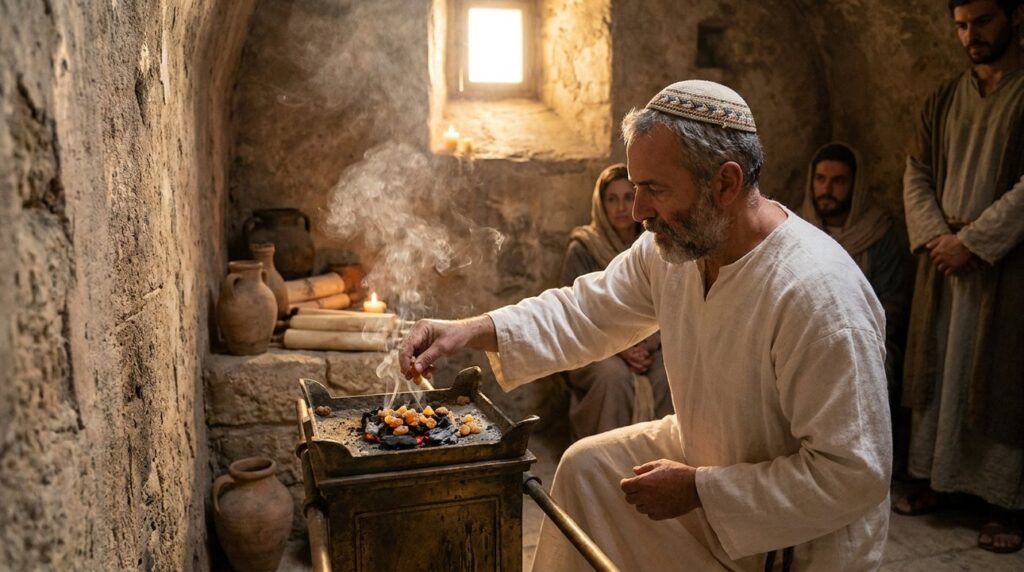
Jewish man in white robe placing resins on bronze altar in Jerusalem.

The Importance and Role of Incense in Biblical Times

Incense in biblical rituals underscores its role as a bridge between the physical and spiritual realms. By creating an atmosphere of sanctity, it helped worshippers feel closer to the divine presence, enhancing their spiritual experience. In this way, incense served as a powerful symbol of the community’s devotion and their desire to maintain a continuous connection with the divine, reinforcing the importance of purity and reverence in their worship practices. Introduction to Incense in Biblical Texts Incense in the Bible is both symbolic and practical. It is most notably associated with the offering rituals in the Temple. Exodus 30:34-38 describes...
Show more
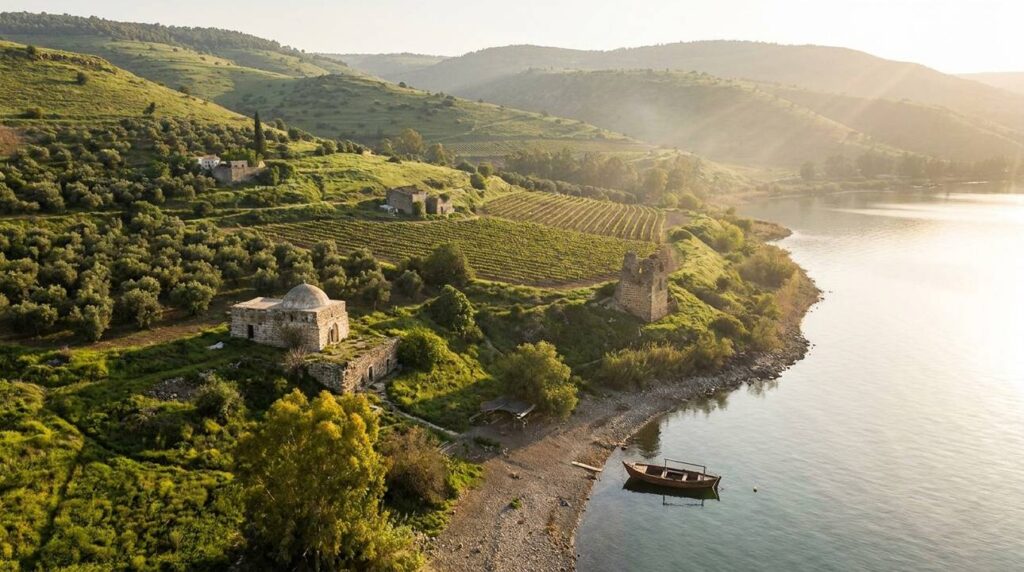
Serene Galilee landscape with greenery, tranquil waters, and ancient architecture.

Exploring the Significance of Galilee in Biblical Times

Galilee’s significance is also highlighted in the book of Kings, where King Solomon rewarded Hiram of Tyre with twenty cities in the region (1 Kings 9:11). These cities, known as the “land of Cabul,” were part of a diplomatic exchange between the two kings. These stories illustrate the region’s importance in biblical times, serving as a backdrop for pivotal moments in Jewish history. Galilee’s enduring presence in the Bible continues to captivate those who seek to understand its historical and spiritual impact. Its landscapes and ruins tell stories of ancient alliances and exchanges. The Genesis of Galilee in Biblical Narratives...
Show more
Elderly Jewish man reading Torah at wooden table in stone house.

Exploring Fish Symbolism and Practices in the Bible

Fish also appear in the story of Jonah, where a large fish swallows him, marking a moment of transformation. This tale is a powerful example of how fish are used symbolically in the Bible to convey themes of repentance and divine intervention. Examining these stories provides insight into the cultural and spiritual significance of fish in Jewish heritage, beyond mere dietary customs. The narrative of Jonah emphasizes obedience and redemption, reflecting deeper spiritual lessons. Fish in Biblical Narratives Fish appear throughout biblical texts, providing not only sustenance but also symbolism. The Book of Jonah features a large fish famously swallowing...
Show more
Elderly Jewish man in kippah walking on cobblestone street in Jerusalem.

The Journey Between Bethlehem and Nazareth: A Historical Perspective

This article delves into the historical context and the actual journey between these two key locations in Jewish history. The roads and paths that connected them were not just physical routes but also cultural conduits. Travelers would encounter various communities, each contributing to the rich tapestry of ancient Judean and Galilean life. Understanding these journeys provides a window into the past, revealing how people lived, traded, and interacted in a time when travel was both an adventure and a necessity. The connections formed were crucial for cultural exchange and development. Bethlehem in Historical Context Bethlehem, known as Beit Lechem in...
Show more
Elderly Jewish man reading scripture in a historic Jerusalem synagogue.

Understanding Why Jonah Was Swallowed by the Whale

The narrative of Jonah is often compared to the story of Joseph, who was sold into slavery and later rose to prominence in Egypt (Genesis 37:28, 41:41). Both stories illustrate how challenging circumstances can lead to personal growth and fulfillment of divine purposes. Jonah’s time inside the fish serves as a metaphor for introspection and change, akin to the Israelites’ 40 years in the wilderness (Numbers 14:33-34), where they learned to trust and follow divine guidance. The Commission of Jonah: A Divine Mission Jonah, a prophet in the northern kingdom of Israel, was tasked with a divine mission. He was...
Show more
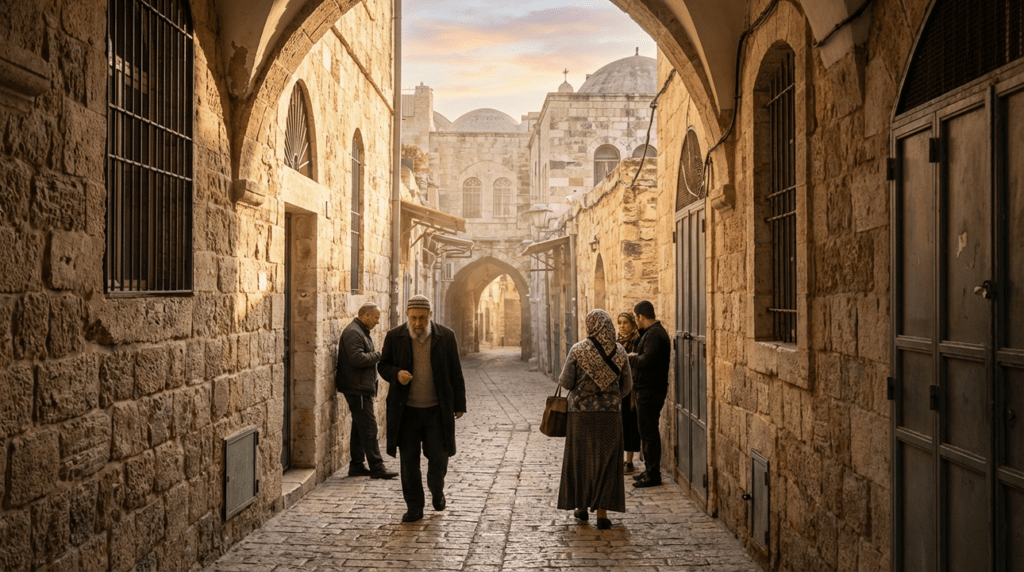
Early morning in Jerusalem with locals near a synagogue silhouette.

Exploring the Biblical Significance of Jerusalem, Judea, and Samaria

Judea and Samaria also hold deep biblical roots. Judea, the southern kingdom, was the heartland of the tribes of Judah and Benjamin. It was here that many prophets, such as Isaiah and Jeremiah, delivered their messages, calling for repentance and faithfulness. Samaria, to the north, was the capital of the Northern Kingdom, often associated with the prophets Elijah and Elisha (1 Kings 16:24). These regions are not just geographical locations but are imbued with stories of faith and resilience, reflecting the enduring spirit of the Jewish people. Jerusalem: The City on a Hill From its earliest mentions in biblical texts,...
Show more
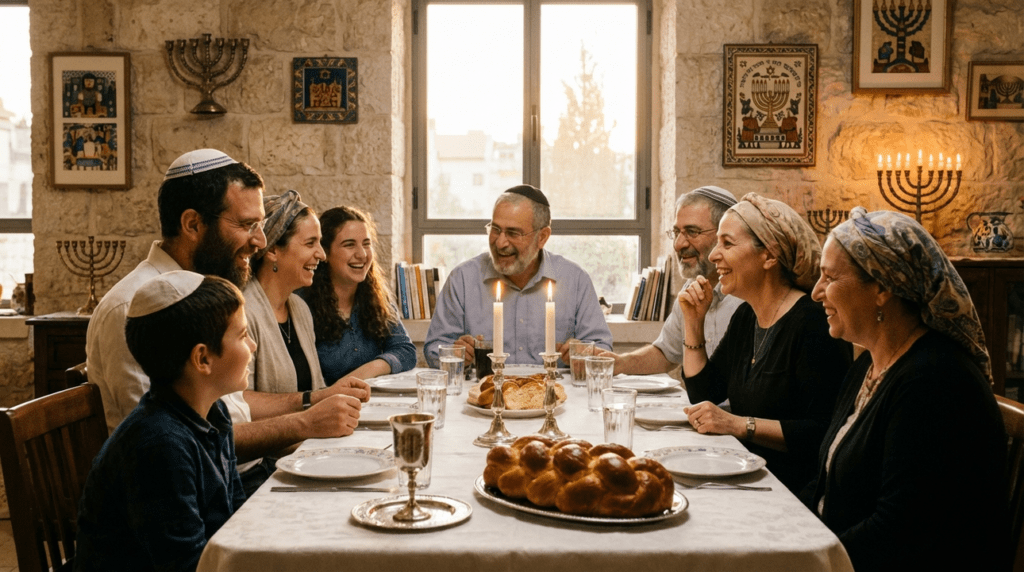
Family enjoying Shabbat dinner, challah, wine, and candles on table.

Understanding the Meaning of Immanuel in the Bible

The backdrop of Isaiah’s prophecy, during the 8th century BCE, reveals the challenges faced by Judah. Immanuel became a testament to the enduring faith of the Jewish people, emphasizing the belief in divine presence amidst adversity. This theme is a cornerstone of Jewish identity, reflected in various aspects of religious practice and cultural expression, reminding believers of their unique relationship with the divine. The context of Isaiah’s prophecy is essential, as it was delivered during a time of political turmoil for Judah, around the 8th century BCE. The promise of Immanuel provided hope and a reminder of divine protection. This...
Show more
Elderly man in kippah reading Bible in serene synagogue corner.

Discovering Where Key Topics Are Mentioned in the Bible

The Bible is a foundational text that traces the journey of the Jewish people and the formation of Israel. It includes stories like the Exodus, where Moses leads the Israelites out of Egypt (Exodus 12:31-42), and the conquest of Canaan under Joshua (Joshua 6:1-27). These narratives illustrate pivotal moments such as the giving of the Ten Commandments at Mount Sinai (Exodus 20:1-17), which shaped Jewish identity and cultural heritage. The Bible offers a historical framework for Jewish identity, detailing key events like the Exodus and the giving of the Ten Commandments. The Exodus, narrated in Exodus 12:31-42, marks the liberation...
Show more
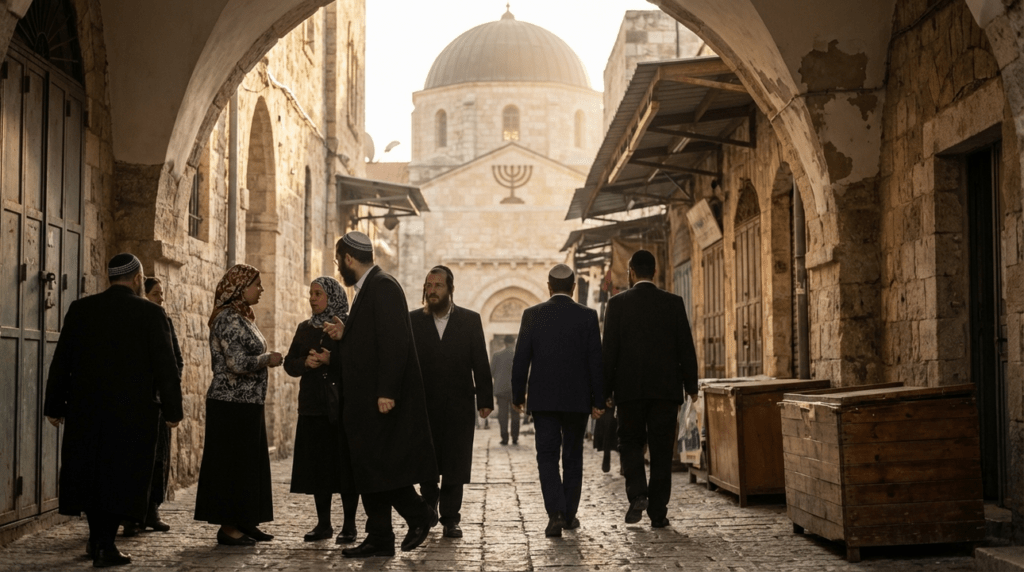
Early morning in Jerusalem with traditionally dressed locals on cobbled streets.

Understanding the Role of Jerusalem in the Bible

Jerusalem is a city steeped in history, its roots deeply embedded in the narrative of the Bible. From its earliest mentions to its enduring significance, Jerusalem is more than a geographical location. It is a symbol of faith, a city with profound religious meaning intertwined with the story of a people and their God. In this article, we’ll explore the various depictions of Jerusalem in biblical texts and its meaningful presence throughout Jewish tradition. The city’s significance is first noted with Melchizedek in Genesis 14:18, where he is described as the king of Salem. This early mention sets the stage...
Show more
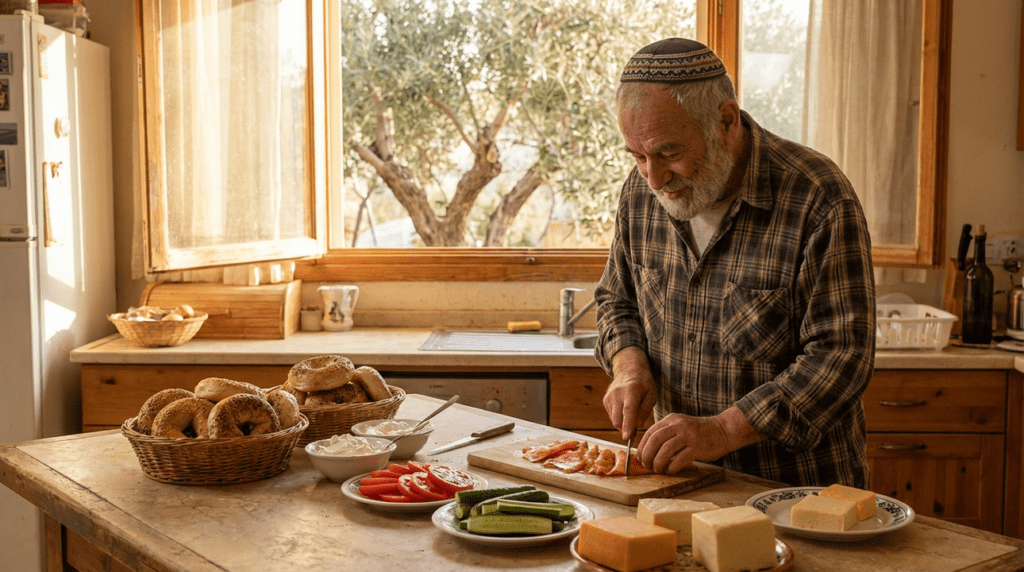
Elderly Jewish man wearing a kippah prepares breakfast in sunny kitchen.

Experiencing the Essence of Jewish Breakfast Dishes

Jewish breakfast provides a delightful connection to the vibrant culture and history of Israel. Throughout centuries, these dishes have reflected the diverse influences and profound cultural experiences of the Jewish people, from the Middle Eastern hummus to the Eastern European blintzes. Join us on a flavorful journey exploring traditional Jewish breakfast dishes that offer both sustenance and a sense of heritage. These meals not only nourish the body but also connect individuals to a rich tapestry of history and tradition. In short, Jewish breakfasts are a celebration of the diverse cultural influences that have shaped Jewish cuisine, much like the...
Show more
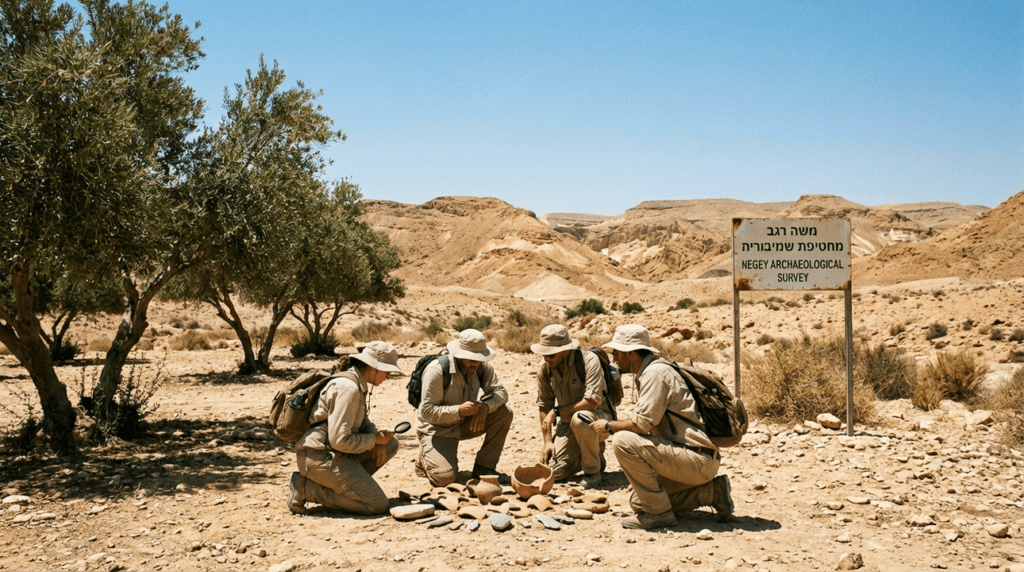
Explorers in hiking gear examining artifacts in Negev Desert, Israel.

Exploring the Negeb: Biblical and Historical Insights

The Negeb, often referred to as the Negev, is more than a geographic location. It holds rich biblical and historical significance, playing a vital role in Israel’s ancient narratives. In the Bible, the Negeb is mentioned in several key stories, such as in Genesis 12:9, where Abram journeyed through this region. The Negeb’s harsh landscape served as a backdrop for many biblical events, symbolizing both physical and spiritual challenges. Its strategic location made it a crossroads for trade and cultural exchange. The Negeb’s role in the story of the Exodus is also significant, as it was part of the route...
Show more

See other categories

Stunning landscapes and vibrant culture of Israel
All About Israel
Ancient Places
Ancient scrolls and artifacts related to Biblical Studies
Biblical Studies
Hands holding a heart symbolizing support and community
Charity and Social Responsibility
Assorted Israeli dishes and beverages
Food and Beverages from Israel
Scenic view of Israeli landscape with traditional elements
General
Scenic view of Israel's diverse landscapes
Geography & Travelling of Israel
Open Hebrew book with traditional script
Hebrew Language and Literature
Historic Places
We use cookies to provide the best site experience
Lev Haolam logo
Lev Haolam Facebook page Lev Haolam YouTube Follow Lev Haolam on Twitter Instagram Lev Haolam Lev Haolam Pinterest
© 2015 – 2026 Lev Haolam
Become a member Update my details
Contact Us
+972 23721384 +1 (531) 208 1263
Customer Support: 24/6 · Sun–Fri (till 4pm)

Closed on Shabbat hours & Israeli public holidays
support@levhaolam.com
Lev Haolam copyright
Lev Haolam World Ltd.
Luleem Business Center, Kfar
Etzion 9091200, Israel
Israeli Company Number: 515056927
Become a member Update my details
Privacy Policy Terms & Conditions AI Information About Lev Haolam
Mastercard payment for Israel gifts Visa card Maestro card American Express payment option PayPal – pay for your Israel box Secure payment for Israel boxes
© 2015 – 2026 Lev Haolam