
Exploring the Negeb: Biblical and Historical Insights
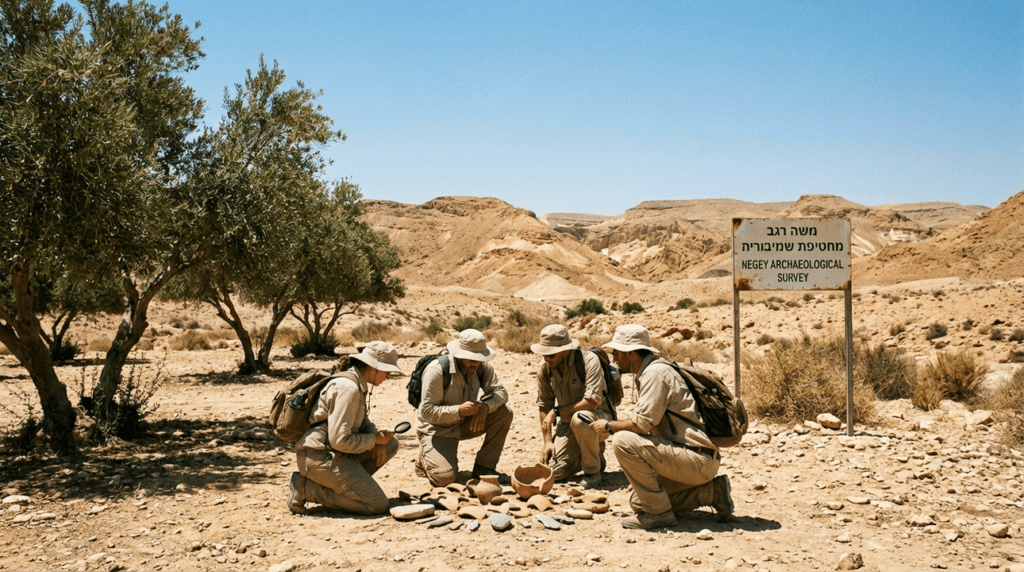

The Negeb, often referred to as the Negev, is more than a geographic location. It holds rich biblical and historical significance, playing a vital role in Israel’s ancient narratives.
In the Bible, the Negeb is mentioned in several key stories, such as in Genesis 12:9, where Abram journeyed through this region. The Negeb’s harsh landscape served as a backdrop for many biblical events, symbolizing both physical and spiritual challenges.
Its strategic location made it a crossroads for trade and cultural exchange.
The Negeb is a land of transition and transformation, reflecting the spiritual and physical journeys of the biblical figures who traversed it.
In this article, we delve into the multifaceted meanings and contexts of the Negeb within the Bible. By examining archaeological findings and historical records, we uncover the layers of its past. Join us in exploring its historical roots and cultural impact through a journey into Israel’s past.
from the Western Wall to Masada.

The Negeb’s story is one of resilience and adaptation, offering insights into the lives of those who called it home. The Negeb is a testament to human endurance and faith in the face of adversity.
The Negeb’s significance is also reflected in its role as a crossroads for ancient trade routes, connecting Egypt to Mesopotamia. This strategic location facilitated cultural exchanges and economic interactions, shaping the region’s development over centuries.
The Negeb is a land of contrasts, where harsh conditions and vibrant exchanges coexist, offering a unique perspective on the ancient world.
The Negeb in Biblical Texts
The Negeb, meaning ‘dry’ or ‘south,’ appears frequently in the Hebrew Bible. It forms a part of the territorial boundaries of Israel, mentioned as a region where the patriarchs like Abraham journeyed. Genesis 12:9 records, ‘And Abram journeyed, going still toward the south.
‘ The term ‘south’ refers to the Negeb here, highlighting its role as a strategic and spiritual area. The dry conditions and rugged landscape of the Negeb are described, reflecting a land of survival and resilience.
The story of Jacob, who also traveled through the Negeb, as mentioned in Genesis 46:1-7, underscores its significance as a place of transition and divine encounter. The Negeb is a land of challenges and opportunities, a testament to the resilience of the biblical figures who traversed it.
This desert region became a backdrop for stories of faith, migration, and divine encounters. The Negeb’s challenging environment tested the resolve and faith of those who traversed it, shaping their spiritual journeys.
In Genesis 21:14, Hagar wandered in the wilderness of Beersheba, which is part of the Negeb, illustrating the trials faced. The Negeb is a symbol of endurance and faith, a testament to the trials and triumphs of the biblical patriarchs.
The Negeb also witnessed the journey of the Israelites as they moved towards the promised land. The experiences of the Israelites in this harsh terrain, as described in Exodus 17:1-7, where they faced thirst and uncertainty, highlight the Negeb’s role in their spiritual growth.
The Negeb is a place of testing and revelation, where faith was forged in the crucible of the desert.
The geographic and symbolic significance of the Negeb is noted in the story of Isaac, who settled in the Negeb (Genesis 24:62). The southern area offers a view into the biblical lifestyle and the challenges faced by its inhabitants.
The geographic and symbolic significance of the Negeb is noted in the story of Isaac, who settled in the Negeb (Genesis 24:62). The southern area offers a view into the biblical lifestyle and the challenges faced by its inhabitants.
Isaac’s presence in the Negeb highlights its importance as a place of refuge and sustenance. In Deuteronomy 1:7, it’s part of the command to the Israelites to enter the promised land. The biblical references suggest its integral role in shaping Israelite identity.
The Negeb is not only a geographical location but a stage for the unfolding of key biblical narratives, shaping the identity of its inhabitants.
These narratives not only mark the Negeb as a mere location but embed it deeply into the spiritual and historical consciousness of a nation. The Negeb’s role in the Israelites’ journey to the promised land underscores its significance in their collective memory.
Deuteronomy 1:19 speaks of the Israelites’ journey through the Negeb, emphasizing its importance as a transitional space. The Negeb is a vital part of the biblical landscape, representing both physical and spiritual journeys.
The Negeb served as a backdrop for pivotal events, such as when the Israelites wandered in the desert for 40 years. This period of wandering, detailed in Numbers 14:33, was a time of testing and growth, with the Negeb playing a central role in their spiritual development.
The Negeb is more than a geographical location; it is a symbol of transformation and perseverance, deeply woven into the fabric of Israelite history.
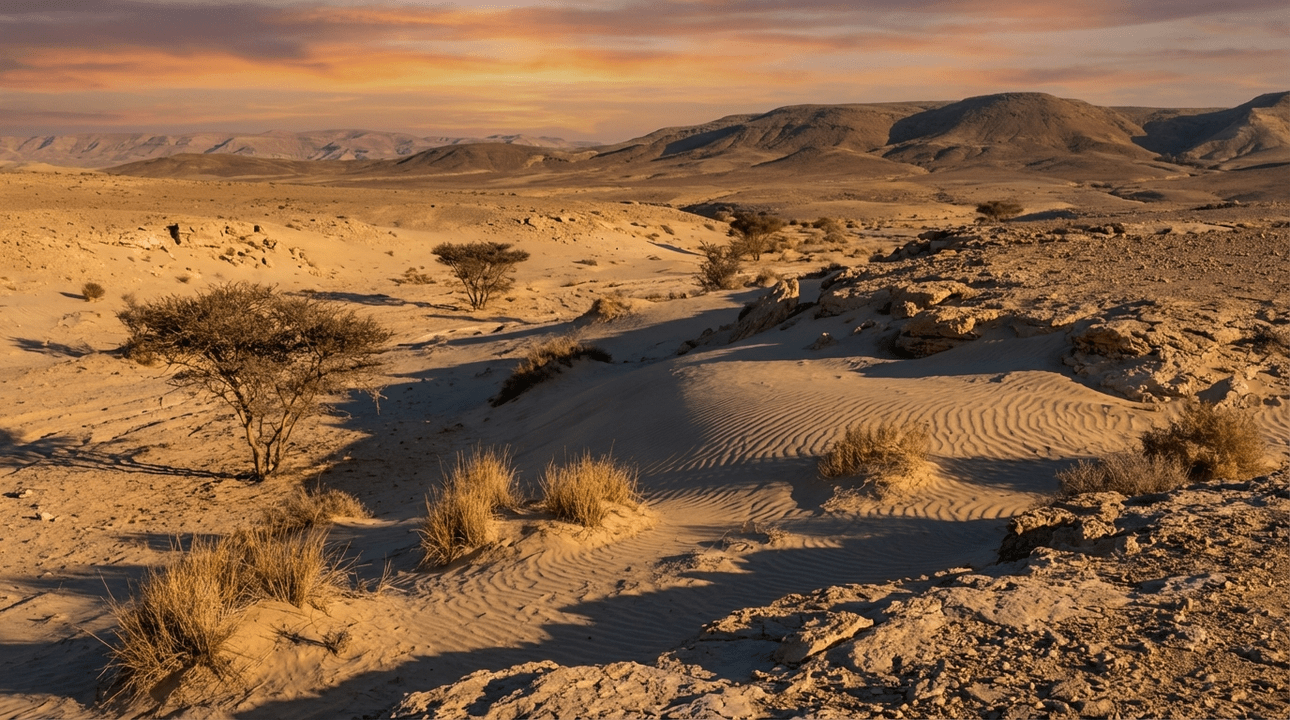
Historical Context and Archaeological Insights
Historically, the Negeb has been a bedrock of civilizations bridging various cultures. Archaeological excavations have unearthed ancient settlements dating back to the early Bronze Age.
These findings include remnants of structures, artifacts, and inscriptions that reveal a thriving society inspired by Har Karkom, dubbed by some as Mount Sinai. The Negeb was not only a strategic military zone but also a trade route.
The Incense Route traversed this arid land, reflecting a network of commerce and communication. Its historical significance offers insights into the complex interactions between ancient peoples and resources in a tough environment.
The role of the Negeb as a key region during the Iron Age is equally notable. The establishment of fortified settlements like Tel Arad signifies efforts to secure and cultivate the area.
Tel Arad, an ancient city, was strategically positioned to control trade routes and protect inhabitants from invaders. As a melting pot of merchant and caravan traffic, the Negeb facilitated cultural exchanges, reflected in the material culture unearthed by archaeologists today.
Pottery, inscriptions, and other artifacts reveal a blend of influences from neighboring regions.
The Negeb was a vital region for both defense and cultural exchange, reflecting the dynamic interactions of ancient societies.
Such discoveries have deepened our understanding of the Negeb’s strategic, economic, and social roles in the biblical era, marking it as a place of both challenge and prosperity.
The Negeb was not just a barren desert but a thriving hub of activity and interaction, crucial to the development of early Israelite society.
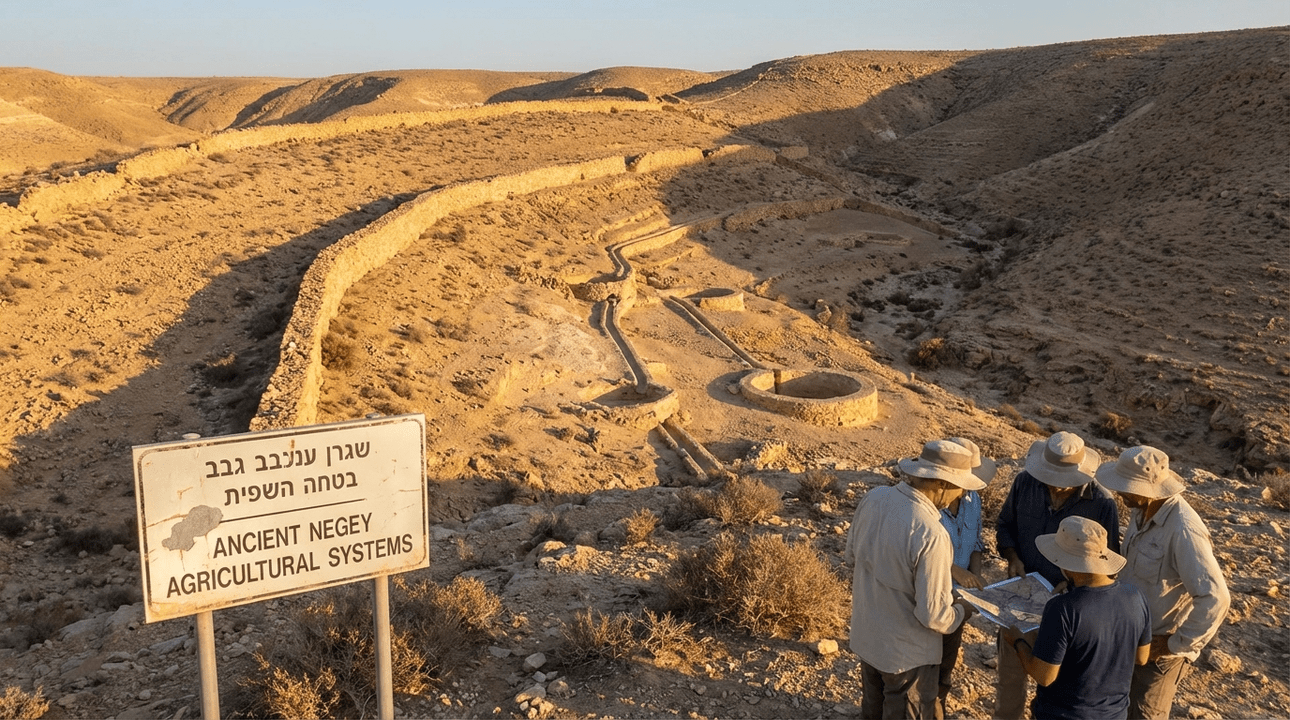
The Negeb’s role as a center of innovation is further highlighted by the discovery of ancient terracing and irrigation techniques, which allowed for successful agriculture in this arid region. These innovations reflect the resilience and adaptability of its inhabitants.
from the Western Wall to Masada.
The Negeb is a testament to human ingenuity and perseverance, where ancient communities thrived despite challenging conditions.
Negeb’s Climatic Challenges and Their Impact
The Negeb’s harsh climate has always been a defining factor. Its arid conditions made survival difficult, demanding ingenuity from its inhabitants. The adaptation strategies are evident in ancient water conservation techniques like cisterns and terraces, showcasing early resourcefulness.
These climatic challenges shaped the Negeb as a place of trial, where perseverance was an everyday necessity. It was through such trials that communities forged resilience. Such resilience not only sustained life but fostered a unique lifestyle and cultural heritage distinct from other regions.
The Negeb is a land of trial and triumph, where the harsh environment shaped both the physical and spiritual journeys of its inhabitants.
Within the biblical narrative, the Negeb symbolizes not just physical challenges but also spiritual testing. It is in these stark landscapes that the narratives of trust and faith played out. For instance, in Genesis 26:23, Isaac settled in the Negeb, facing trials that tested his faith.
Within the biblical narrative, the Negeb symbolizes not just physical challenges but also spiritual testing. It is in these stark landscapes that the narratives of trust and faith played out. For instance, in Genesis 26:23, Isaac settled in the Negeb, facing trials that tested his faith.
The Negeb’s climate dictated the rhythm of life, pushing boundaries of human and spiritual endurance. Despite its barren image, the Negeb housed thriving communities rooted in faith complemented by nature’s stark beauty.
The Negeb is a land of refuge and testing, where faith and endurance are continually forged in the crucible of its harsh environment.
These elements collectively underscore the Negeb’s role as both a literal and metaphorical cornerstone of Israelite heritage. The stories of the patriarchs, who traversed this land, highlight the Negeb’s significance in their spiritual journeys.
Abraham, for example, settled in the Negeb as noted in Genesis 20:1, emphasizing its importance. The Negeb is a symbol of perseverance and faith, reflecting the enduring spirit of the people who lived there.
The Negeb is also mentioned in the context of Isaac’s life. Genesis 26:23 describes Isaac’s journey to Beersheba, a city within the Negeb, where he experienced divine reassurance and prosperity. This highlights the Negeb’s role as a place of both challenge and divine encounter.
The Negeb is a testament to the enduring faith and resilience of the patriarchs, serving as a backdrop for their spiritual and physical journeys.
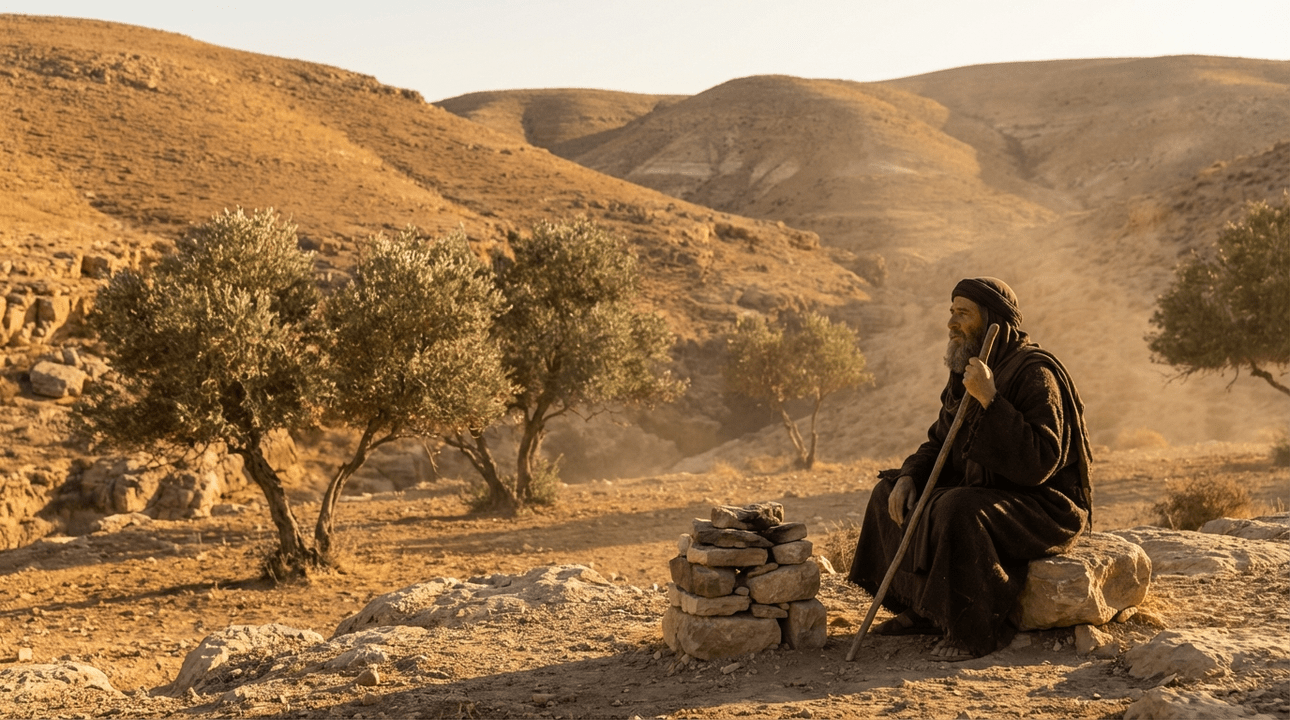
Spiritual and Cultural Dimensions of the Negeb
Beyond its physical characteristics, the Negeb carries profound cultural significance. As a landscape of transition, its paths were trodden by prophets and patriarchs in biblical times.
This aspect enriches its narrative as a place of divine encounters and revelations, where figures such as Elijah and David sought refuge and inspiration. The Negeb is repeatedly mentioned as a site of solitude and contemplation, reflecting its deep connection to spiritual introspection.
Its legacy continues in Jewish thought as a symbol of humble beginnings and the quest for spiritual fulfillment.
Culturally, the Negeb’s influence extended into religious poetry and songs. Its presence in liturgy demonstrates its endurance in spiritual life and Israeli consciousness.
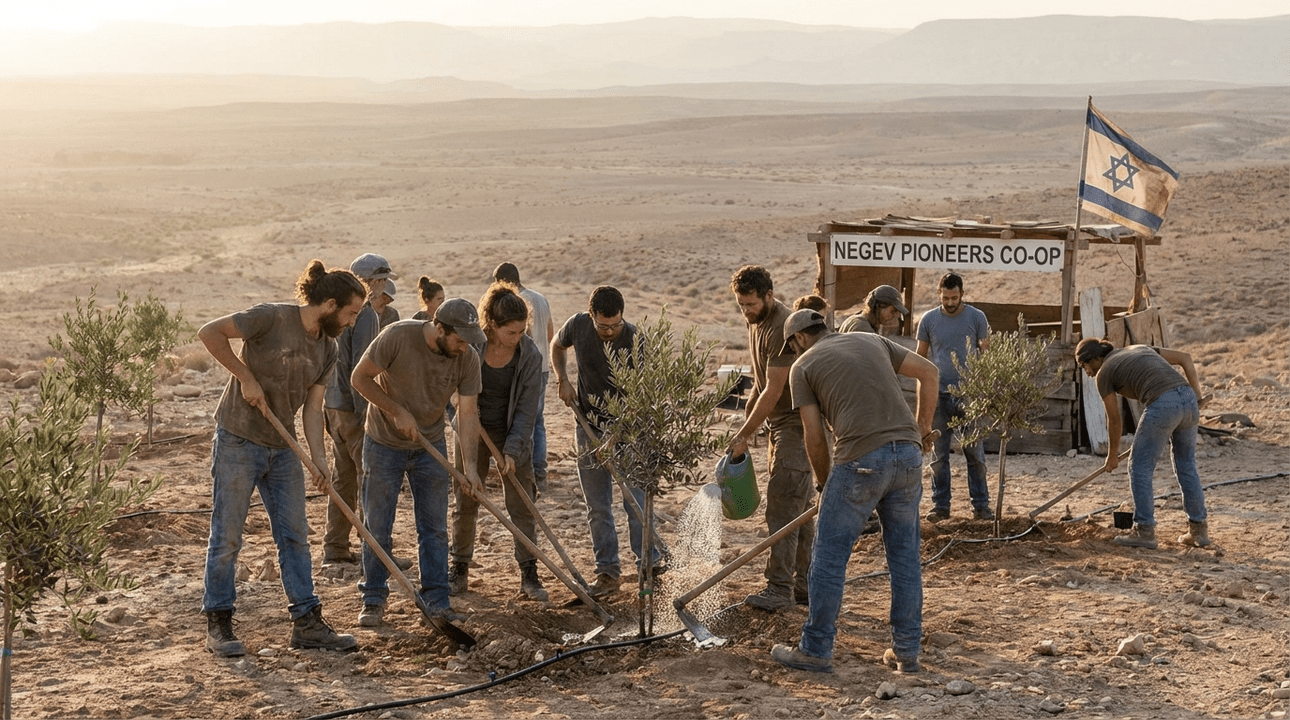
This legacy lives on in modern Israel, inspiring stories of innovation and perseverance, where pioneers turned the hostile desert into a place of growth. The fusion of ancient faith with current advancements echoes the unyielding spirit of the Negeb found throughout history.
Thus, today, the Negeb stands not only as a historical relic but as a living testament to a journey from biblical past to present reality.
Conclusion: Negeb’s Timeless Meaning
In examining the Negeb, its biblical, historical, and cultural dimensions intertwine to offer a complex tapestry of meaning. From its inclusion in biblical texts like Genesis and Deuteronomy to its archaeological significance, the Negeb continues to captivate minds and engage spirits.
Navigating through its harsh terrains, the narratives of faith and endurance have carved out a permanent place for the Negeb in Jewish and global heritage. The story of the Negeb is one of survival and adaptation, reflecting the resilience of those who lived there.
The Negeb is a land of contrasts, where harsh conditions and vibrant exchanges coexist, offering a unique perspective on the ancient world.
By understanding its past, we gain new insights into an enduring symbol of struggle and hope, resonating across ages. The Negeb’s role in shaping the identity and destiny of the Israelites is undeniable.
For instance, in Numbers 13:17, Moses sent spies to explore the land, including the Negeb, highlighting its strategic importance. The Negeb stands as a powerful reminder of the strength and perseverance required to thrive in challenging environments.
The Negeb’s strategic location made it a critical area for the Israelites as they prepared to enter the promised land. Its harsh conditions served as a test of their faith and resilience.
This is further illustrated in the story of Caleb and Joshua, who brought back reports from the Negeb, as recorded in Numbers 13:30. The Negeb is a symbol of the trials and triumphs faced by the Israelites on their journey to fulfillment.
Understanding the Negeb
