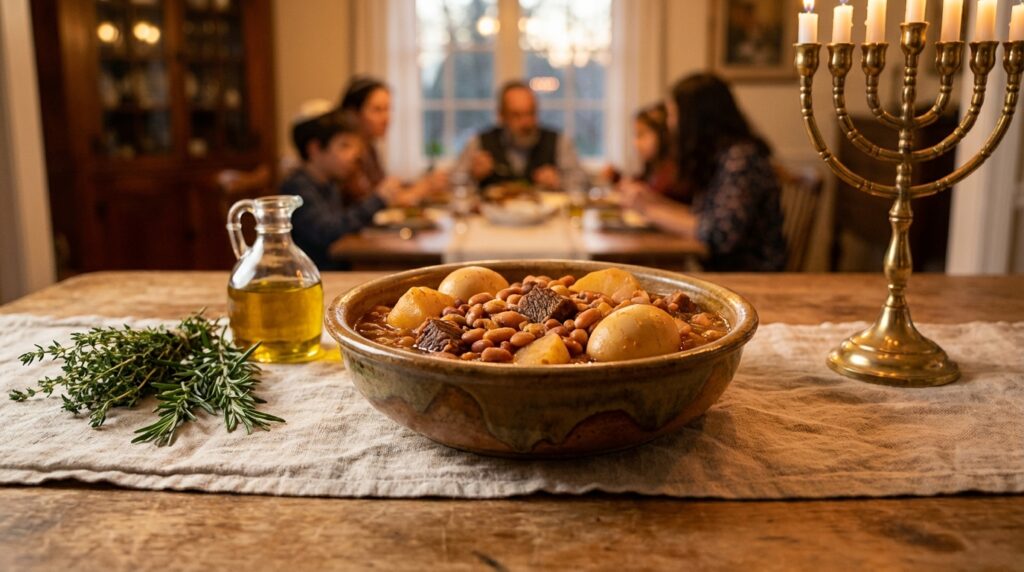
Traditional Sephardic Cholent for Family Gatherings

A Slow-Cooked Delight from Sephardic Traditions
A heartwarming Sephardic cholent recipe that brings together rich flavors and cultural heritage, perfect for family gatherings and celebrations.
Image illustrating:Traditional Sephardic Cholent for Family Gatherings
6
David Pliner
Culinary & Israeli Heritage Enthusiast
Discover the rich flavors of Sephardic cholent, a traditional slow-cooked dish perfect for family gatherings and celebrations.

Health Benefits of Sephardic Cholent

  • Rich in protein and fiber from beans and meat.
  • Slow-cooked for enhanced nutrient absorption.
  • Contains healthy fats from olive oil.

Ingredients for Sephardic Cholent

Beef brisket
2 pounds
Chickpeas
1 cup
Red kidney beans
1 cup
Onions
2, chopped
Garlic cloves
4, minced
Tomatoes
2, diced
Paprika
2 teaspoons
Cumin
1 teaspoon
Salt
to taste
Black pepper
to taste
Olive oil
2 tablespoons
Water
4 cups

Chef's Tips for Perfect Sephardic Cholent

For a richer flavor, try adding a pinch of saffron to the pot. It enhances the aroma and adds a unique touch to the dish. Also, consider using smoked paprika for a deeper, smoky flavor that complements the other spices beautifully.

Instructions for Making Sephardic Cholent

  • 1
    1
    Prepare the Ingredients
    Begin by soaking the chickpeas and kidney beans overnight. Drain and rinse them before use. Chop the onions and tomatoes, and mince the garlic cloves. Cut the beef brisket into large chunks.
  • 2
    2
    Sauté the Aromatics
    In a large pot, heat the olive oil over medium heat. Add the chopped onions and garlic, sautéing until they become translucent and fragrant. Stir in the diced tomatoes and cook for an additional 5 minutes.
  • 3
    3
    Add the Meat and Spices
    Add the beef brisket to the pot, searing it on all sides until browned. Sprinkle in the paprika, cumin, salt, and black pepper, stirring to coat the meat evenly with the spices.
  • 4
    4
    Combine the Ingredients
    Add the soaked chickpeas and kidney beans to the pot, followed by the water. Stir to combine all the ingredients, ensuring the meat and beans are submerged in the liquid.
  • 5
    5
    Simmer the Cholent
    Bring the mixture to a boil, then reduce the heat to low. Cover the pot and let it simmer for 6-8 hours, stirring occasionally. The long cooking time allows the flavors to meld together beautifully.
  • 6
    6
    Serve and Enjoy
    Once the cholent is cooked, serve it hot with hard-boiled eggs and crusty bread. Enjoy the rich, comforting flavors that have developed over hours of slow cooking.

The Rich History of Sephardic Cholent

Sephardic cholent is a beloved dish with deep cultural roots.

Originating from the Sephardic Jewish communities, this dish has been a staple for centuries. It reflects the culinary traditions passed down through generations, showcasing a blend of flavors that tell a story of heritage and community. The slow-cooked nature of cholent makes it perfect for the Sabbath, allowing families to enjoy a warm meal without cooking on the day of rest.
The ingredients used in Sephardic cholent vary by region, but they typically include beef, beans, and a variety of spices. These ingredients are carefully selected to create a harmonious blend of flavors that develop over hours of slow cooking. Each family may have its own version, adding personal touches that make the dish unique.
Sephardic cholent is not just a meal; it is a symbol of togetherness and tradition. Families gather around the table to share stories and enjoy the comforting taste of this beloved dish. It is often served with hard-boiled eggs, which absorb the flavors of the stew, adding another layer of richness to the meal.

The slow-cooking process enhances the flavors and tenderness of the ingredients.

In many Sephardic communities, cholent is prepared on Friday before sunset and left to cook overnight. This method ensures that the dish is ready to be enjoyed on the Sabbath without any additional preparation. The aroma that fills the home as it cooks is a reminder of the upcoming day of rest and reflection.
The tradition of making cholent has been preserved through oral history and family recipes. Each generation learns from the previous one, ensuring that the cultural significance of the dish is never lost. This continuity strengthens the bonds within families and communities, providing a sense of identity and belonging.
Sephardic cholent has also found its way into modern kitchens, where it is appreciated for its hearty and comforting qualities. It has become a popular dish for gatherings and celebrations, bringing people together to enjoy its rich flavors and cultural heritage.

Cholent is a versatile dish, with variations found in many Jewish communities.

While Sephardic cholent has its distinct characteristics, other Jewish communities have their own versions of this beloved dish. Ashkenazi cholent, for example, often includes potatoes and barley, creating a different texture and flavor profile. Despite these differences, the core idea of a slow-cooked, hearty meal remains the same across cultures.
The adaptability of cholent allows it to be customized to suit individual tastes and dietary preferences. Whether adding more spices for a kick or including different types of meat, the possibilities are endless. This flexibility is one of the reasons why cholent continues to be a favorite in Jewish households worldwide.
Sephardic cholent’s enduring popularity is a testament to its delicious taste and cultural significance. It is more than just a meal; it is a celebration of heritage, community, and the joy of sharing food with loved ones.

Related Recipes

FAQ

Can I make Sephardic cholent in a slow cooker?
Yes, you can use a slow cooker. Adjust the cooking time to 8-10 hours on low.
What are common side dishes for Sephardic cholent?
Traditionally, Sephardic cholent is served with hard-boiled eggs and crusty bread.
Can I use lamb instead of beef in this recipe?
Yes, you can substitute beef with lamb for a different flavor profile.