Due to the war in Israel, shipments may be delayed. Thank you for standing with Israel.

Authentic Israeli Falafel Delight

A beloved street food made easy at home.
Explore the rich flavors of Israel with this traditional falafel recipe, bringing a taste of the Middle East to your kitchen.
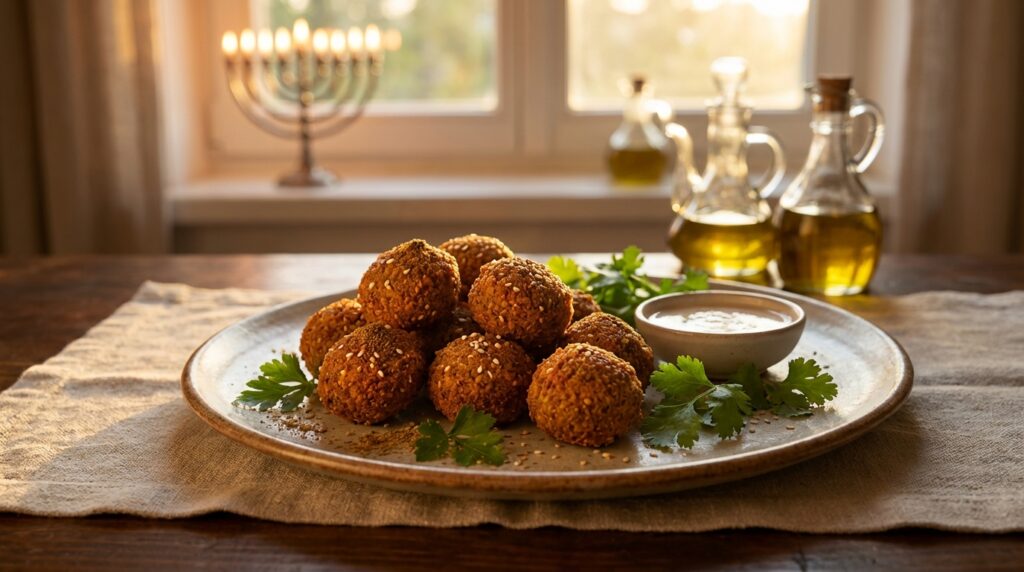
Image illustrating:Authentic Israeli Falafel Delight
11
David Pliner
Culinary & Israeli Heritage Enthusiast
Discover the authentic taste of Israel with this traditional falafel recipe. Perfectly spiced and crispy, it's a beloved street food that's easy to make at home.

Health Benefits

  • Rich in protein and fiber, falafel supports digestive health.
  • Chickpeas are a great source of plant-based protein.
  • Fresh herbs provide antioxidants and essential vitamins.

Ingredients

Dried chickpeas
2 cups
Onion, chopped
1 medium
Garlic cloves
3
Fresh parsley
1/2 cup
Fresh cilantro
1/2 cup
Ground cumin
1 tsp
Ground coriander
1 tsp
Salt
1 tsp
Baking powder
1 tsp
Water
2 tbsp
Vegetable oil for frying
as needed

Chef's Tips for Perfect Falafel

For the best falafel, use dried chickpeas soaked overnight. Fresh herbs and spices are key to authentic flavor. Fry in small batches for even cooking.

Instructions

  • 1
    1
    Prepare Chickpeas
    Soak the chickpeas in water overnight. Drain and rinse thoroughly before use.
  • 2
    2
    Blend Ingredients
    In a food processor, combine chickpeas, onion, garlic, parsley, cilantro, cumin, coriander, and salt. Process until the mixture is coarse and holds together.
  • 3
    3
    Form Falafel Balls
    Add baking powder and water to the mixture. Form small balls or patties, about the size of a walnut.
  • 4
    4
    Heat Oil
    In a deep pan, heat vegetable oil to 350°F (175°C). Ensure the oil is hot enough for frying.
  • 5
    5
    Fry Falafel
    Carefully place falafel balls into the hot oil. Fry in batches, turning occasionally, until golden brown and crispy.
  • 6
    6
    Drain and Serve
    Remove falafel from oil and drain on paper towels. Serve hot with pita, salad, and tahini sauce.

The Story of Falafel

Falafel is a staple in Israeli cuisine, known for its rich history and cultural significance.

Originating from the Middle East, falafel has become a symbol of Israeli street food. Its roots can be traced back to ancient times when chickpeas were a dietary staple. Over the years, falafel has evolved, incorporating spices and herbs that reflect the diverse influences of the region.
In Israel, falafel is more than just a meal; it’s a cultural experience. Vendors across the country serve it in pita bread with an array of fresh salads and tahini sauce. This dish represents the melting pot of cultures that make up Israeli society, each adding their unique twist to the traditional recipe.
The popularity of falafel has spread globally, with many variations emerging in different countries. However, the authentic Israeli falafel remains true to its origins, focusing on the perfect balance of flavors and textures. This recipe captures that essence, allowing you to enjoy a piece of Israeli culture at home.

Falafel is often enjoyed with friends and family, symbolizing togetherness and community.

The preparation of falafel is an art form in itself. From soaking the chickpeas to blending the spices, each step is crucial in achieving the perfect taste. The process is a labor of love, reflecting the passion and dedication of those who make it.
In many Israeli households, making falafel is a cherished tradition passed down through generations. It’s a way to connect with one’s heritage and share a piece of history with loved ones. The aroma of freshly fried falafel is a comforting reminder of home for many Israelis living abroad.
While falafel is often associated with street food, it holds a special place in Israeli celebrations and festivals. It’s a versatile dish that can be enjoyed as a snack, appetizer, or main course, making it a favorite for gatherings and special occasions.

The secret to great falafel lies in the quality of ingredients and the love put into making it.

Choosing the right chickpeas is essential. They should be fresh and soaked overnight to ensure the falafel is light and fluffy. The addition of fresh herbs like parsley and cilantro adds a burst of flavor, while spices such as cumin and coriander provide depth and warmth.
Frying falafel to perfection requires skill and patience. The oil must be at the right temperature to achieve a crispy exterior without overcooking the inside. This attention to detail is what sets authentic Israeli falafel apart from other versions.
Serving falafel is an art, with each component carefully chosen to complement the flavors. From the creamy tahini sauce to the tangy pickles and fresh vegetables, every element plays a role in creating a harmonious dish that delights the senses.

Related Recipes

FAQ

Can I bake falafel instead of frying?
Yes, you can bake falafel in the oven at 375°F for about 25-30 minutes, flipping halfway through.
How do I store leftover falafel?
Store cooked falafel in an airtight container in the fridge for up to 3 days. Reheat in the oven for best results.
Can I freeze falafel?
Yes, you can freeze uncooked falafel balls. Thaw them in the fridge before frying or baking.