Understanding the Enslavement of the Israelites in Egypt
The story of the Israelites’ enslavement in Egypt is a cornerstone of Jewish history. According to Genesis 46, the Israelites initially moved to Egypt during a famine, invited by Joseph, who had risen to power there.
Over generations, their growing numbers led to fear among the Egyptians, resulting in their enslavement. Understanding how they came to live in a foreign land and eventually be enslaved offers insights into their enduring spirit and resilience.
This account is deeply embedded in religious and cultural memory, reminding us of their journey from hardship to hope.
The Arrival in Egypt
The narrative begins in the biblical book of Genesis. Joseph, one of the twelve sons of Jacob, was sold into slavery by his brothers, as recounted in Genesis 37:28.
Through a series of events marked by his wisdom and leadership, Joseph rose to power in Egypt, becoming the Pharaoh’s advisor, as seen in Genesis 41:39-41. Joseph’s ability to interpret dreams earned him this position.
The rest of Jacob’s family moved to Egypt during a severe famine, settling in the land provided to them by Pharaoh. This transition was initially one of favor and prosperity, marking a new chapter in their history. The land of Goshen, where they settled, was fertile and allowed them to thrive.
Joseph’s rise to power and his family’s move to Egypt set the stage for the Israelites’ eventual enslavement and liberation.
How Enslavement Began
As the years passed, a new Pharaoh came to power who did not know Joseph, as described in Exodus 1:8. Fearful of the Israelites’ growing numbers and influence, he saw them as a potential threat to his rule. This fear led to their oppression through forced labor, as detailed in Exodus 1:8-14.
The Egyptians were concerned that the Israelites might ally with their enemies. The Egyptians imposed harsh conditions to suppress the perceived threat of rebellion. Their goal was to weaken these people, ultimately transforming them into slaves, as part of a broader strategy to maintain control.
The Israelites were subjected to increasing brutality, including the order to kill all male infants, as seen in Exodus 1:22. Pharaoh’s fear of the Israelites’ potential power led to their enslavement, marking a period of intense oppression.
Duration of Enslavement
The period of enslavement is traditionally understood to be around 400 years, as mentioned in Genesis 15:13. However, historical and biblical scholars debate its accuracy, with some suggesting a shorter duration based on archaeological evidence.
This time signifies a long, arduous journey of endurance and struggle for the Israelites. The debate continues, with some scholars pointing to evidence of shorter periods of enslavement. How long were the Israelites enslaved?
Various sources offer interpretations, but the essence is the profound suffering experienced across generations, reflecting a deep historical impact. The narrative of 400 years underscores the theme of long-term perseverance and faith.
While the exact duration is debated, the period of enslavement remains a symbol of enduring faith and resilience.
Life Under Oppression
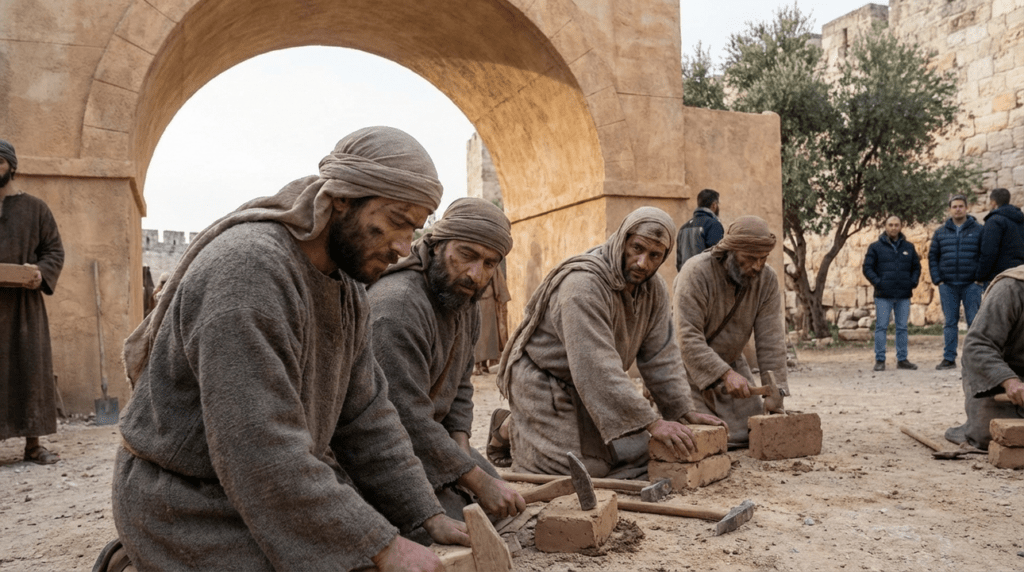
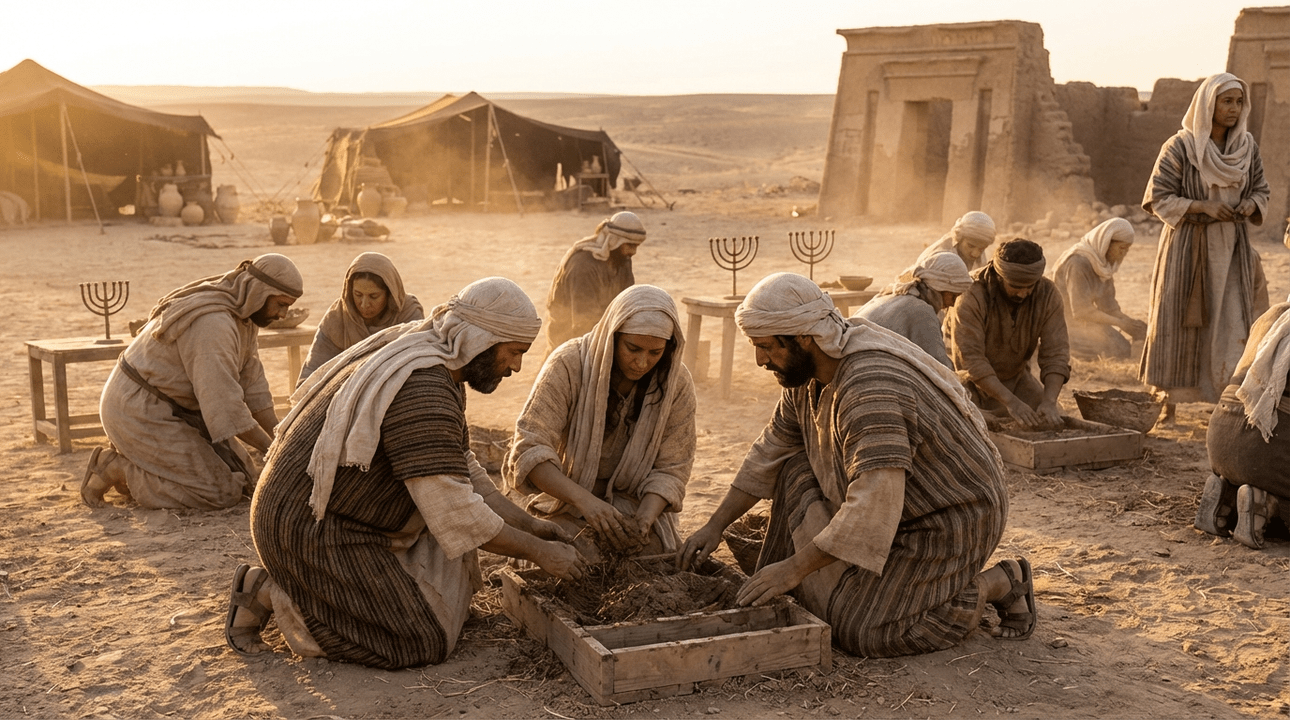
Life for the enslaved Israelites was filled with hardship and daily toil. The labor was intense, involving brick-making and construction. Exodus 1:14 recounts that the Egyptians ‘made their lives bitter with hard bondage,’ forcing them into relentless work.
The Israelites were tasked with building cities like Pithom and Rameses, as mentioned in Exodus 1:11. This period represents not just physical suffering, but a struggle to preserve cultural and spiritual identity amidst adversity.
Despite the harsh conditions, the Israelites maintained their traditions and faith, which later fueled their liberation. Their ability to hold onto their beliefs and customs was a form of silent resistance against their oppressors.
The Israelites’ endurance under harsh conditions highlights their resilience and commitment to preserving their identity.
The Role of Moses
Moses emerges as a central figure in the narrative of deliverance. Raised in the Pharaoh’s palace, yet connected to his Israelite roots, he became the chosen leader to guide his people out of bondage. The story of the burning bush in Exodus 3 symbolizes both divine calling and personal awakening.
Moses’ encounter with the burning bush marked the beginning of his mission. Moses’ challenge to Pharaoh initiated the dramatic events leading to liberation, including the ten plagues described in Exodus 7-12. His leadership was crucial in uniting the Israelites and leading them towards freedom.
The parting of the Red Sea, a pivotal moment in Exodus 14, demonstrated his leadership and the power of belief. Moses’ journey from the palace to the leader of the Exodus highlights his role as a liberator and unifier.
Why Pharaoh Defied Moses
Pharaoh’s resistance to freeing the Israelites is a crucial part of the story. His refusal is often attributed to divine hardening of his heart, as mentioned multiple times in the scriptures, such as in Exodus 7:3 and Exodus 9:12.
This hardening is seen as a test of faith and endurance for the Israelites, as well as a demonstration of power. This struggle between Moses and Pharaoh is a narrative of persistence against tyranny.
The eventual exodus stands as a testament to faith and divine intervention in moments of great challenge, illustrating the power of determination and belief in the face of oppression. The plagues, from the Nile turning to blood to the death of the firstborn, were signs of this divine power.
Pharaoh’s hardened heart set the stage for a dramatic confrontation, showcasing the resilience and faith of the Israelites.

Significance of the Exodus
The exodus from Egypt is celebrated as a foundational event in Jewish history. It signifies the deliverance from oppression to freedom, as recounted in Exodus 12, where the Israelites were instructed to mark their doors to be spared during the final plague.
This event is pivotal, as it marks the beginning of their journey to the Promised Land. This memory is annually commemorated during Passover (Pesach), a festival that honors resilience and faith.
The central narrative emphasizes the importance of liberation and remembrance, reminding us of the enduring spirit of the Israelites. During Passover, families gather to retell the story, ensuring that each generation remembers the struggles and triumphs of their ancestors.
The Exodus and Passover highlight the themes of freedom and faith, celebrating the Israelites’ journey from slavery to liberation.
Lessons from Enslavement
The story conveys lessons of perseverance, leadership, and community strength. Moses, as described in Exodus 3, exemplifies leadership by confronting Pharaoh and leading the Israelites. It highlights the importance of collective identity and hope amidst tribulation.
Moses’ journey from the burning bush to the Red Sea is a testament to his unwavering commitment. This historical memory continues to inspire cultural and spiritual resilience today.
The narratives serve as reminders of the power of unity and faith, showing how the Israelites maintained their identity and spirit despite adversity. The crossing of the Red Sea, as described in Exodus 14, symbolizes the triumph over seemingly insurmountable obstacles.
Moses’ leadership and the Israelites’ unity are key themes, reflecting the strength found in community and faith.