
Understanding Moab: From Biblical Times to Today
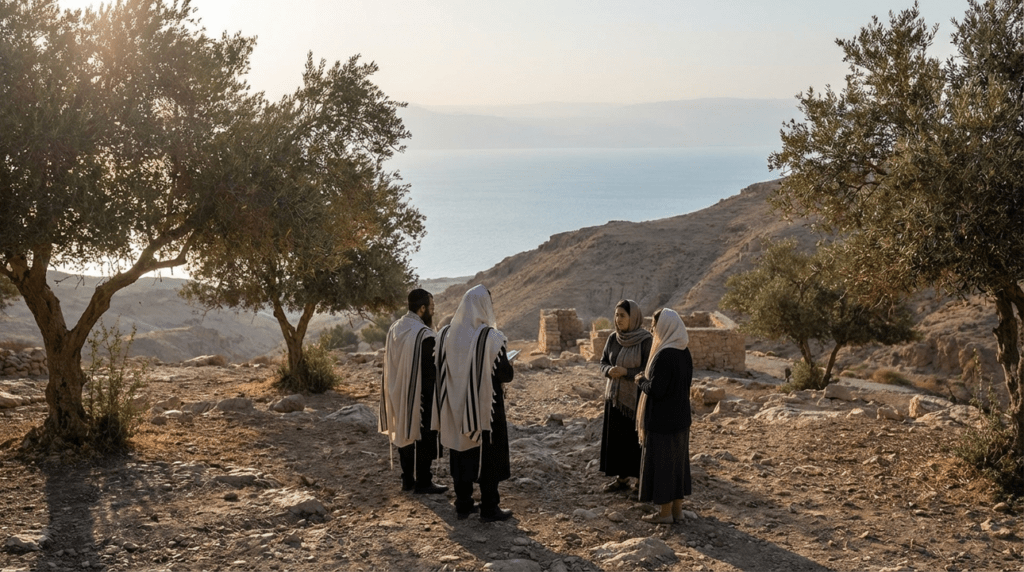

The ancient kingdom of Moab is a fascinating subject mentioned numerous times in the Bible. Located east of the Dead Sea, Moab plays a significant role in the narrative of the Israelites. This article explores the question: ‘Moab in the Bible is what country today?
‘ We’ll journey through its historical, cultural, and geographical significance, discovering how this ancient land connects to modern-day Jordan.
Moab’s story, intertwined with biblical figures and events, provides a unique lens to view history and understand the cultural heritage of Israel and its neighboring regions.
The Biblical Roots of Moab
In the Bible, Moab is first introduced as the land named after Moab, the son of Lot, who was Abraham’s nephew (Genesis 19:37). This family connection weaves Moab into the larger narrative of the Hebrew Bible. Moab’s lineage is rooted in the story of Lot’s daughters, who, after fleeing Sodom, gave birth to Moab and Ammon (Genesis 19:30-38).
In short: This origin story sets the stage for Moab’s complex relationship with Israel, marked by both kinship and conflict.
The Moabites are depicted as both relatives and adversaries of the Israelites, reflecting the dual nature of their interactions. The story of Ruth, a Moabite who became an ancestor of King David, further illustrates the intertwined destinies of these two peoples.
In short: Moab’s biblical origins highlight the intricate web of relationships that defined the ancient Near East, offering insights into the region’s rich history and cultural connections.
The Moabites are often depicted as close relatives of the Israelites, with a shared lineage that led to various interactions described throughout biblical texts. Moab, named after the son of Lot, Abraham’s nephew, is introduced in Genesis 19:37. This familial connection is further illustrated in the story of Ruth, a Moabite woman who became an ancestor of King David.
In short: Moab’s biblical origins highlight its intertwined history with Israel, marked by both kinship and conflict.
These connections provide valuable insights into the historic and familial ties of the region’s peoples. The Moabites and Israelites often found themselves in conflict, as seen in the story of Balaam in Numbers 22-24, where Moab’s king sought to curse Israel but was thwarted.
In short: The relationship between Moab and Israel is a complex tapestry of kinship, conflict, and cooperation, reflecting the broader dynamics of the ancient Near East.
The Moabites are frequently mentioned in the Bible as adversaries of the Israelites. One notable conflict occurs during the Exodus when the Israelites were denied passage through Moab (Numbers 22-24). Balaam, a prophet called to curse the Israelites, instead delivers blessings, showcasing the complex relationship between the two peoples.
In short: This narrative highlights tensions as well as moments of unexpected alliance, reflecting the intricate dynamics of the ancient Near East.
The story of Balaam is a key example of the unpredictable nature of Moabite-Israelite relations. Despite being hired by Moab’s king to curse Israel, Balaam’s blessings demonstrate the possibility of cooperation and mutual respect, even amidst conflict.
In short: The interactions between Moab and Israel are a testament to the complex political and cultural landscape of the time, offering insights into the challenges and opportunities of ancient diplomacy.
In Numbers 22:6, Balak, king of Moab, seeks Balaam’s help to curse the Israelites, fearing their strength. However, Balaam’s journey reveals divine intervention, leading to blessings instead of curses (Numbers 23:11-12).
This episode illustrates the unpredictable nature of Moabite-Israelite relations, where enmity could turn into moments of unexpected harmony. In short: The Moabites’ interactions with Israel were marked by both conflict and cooperation, reflecting the complexities of ancient Near Eastern politics.
In the Book of Judges, Moab oppresses the Israelites until they are liberated by the judge Ehud (Judges 3:12-30). This cycle of conflict and resolution with Moab underscores the close, albeit contentious, proximity of these ancient neighbors. Ehud’s cunning assassination of Eglon, the Moabite king, marks a pivotal moment of deliverance for Israel.
In short: This account highlights the strategic and often violent interactions between the two nations, reflecting the complex dynamics of the region.
The story of Ehud is a vivid example of the recurring theme of deliverance in the Bible. His actions not only freed Israel from Moabite oppression but also demonstrated the courage and ingenuity required to navigate the turbulent political landscape of the time.
In short: Ehud’s tale is a testament to the enduring struggle for freedom and justice in the ancient Near East, offering insights into the challenges faced by Israel and its neighbors.
Ehud’s story is significant in demonstrating the recurring theme of deliverance found within the biblical narrative. In Judges 3:12-30, Ehud, a left-handed man from the tribe of Benjamin, delivers Israel from Moabite oppression by assassinating King Eglon of Moab. This act of bravery highlights the turbulent and often hostile relations between Moab and Israel.
In short: The story of Ehud and Moab illustrates the intricate and often fraught relationships that shaped the ancient Near East.
Moab’s interactions with Israel offer a window into the complexities of regional politics and alliances during biblical times. The cycle of oppression and liberation, as seen in Ehud’s story, is a recurring theme in the Book of Judges, reflecting the constant struggle for power and survival in the region.
In short: Ehud’s tale is a testament to the enduring legacy of conflict and cooperation that has defined the history of the Near East.
Moab in Historical Context
The kingdom of Moab was strategically located along the trade routes of the ancient Near East, enhancing its economic and political power. Archaeological findings, such as the Mesha Stele, shed light on Moab’s history and its interactions with neighboring kingdoms.
The Mesha Stele, a significant archaeological artifact, details the military achievements and religious practices of Moab’s King Mesha. This inscribed stone serves as a crucial piece of historic evidence, illuminating the Moabite perspective on biblical events.
The Mesha Stele recounts Moab’s revolt against Israel, as narrated in 2 Kings 3. This artifact is invaluable in corroborating biblical narratives with extrabiblical evidence, providing both historical and cultural insights into Moabite society. Scholars utilize the Stele to validate historical accounts, enriching our understanding of Moab’s role in the ancient Near East.
In short: Such discoveries bridge the gap between written scripture and tangible history, offering a fuller picture of the past.
The inscriptions on the Mesha Stele detail King Mesha’s victories and his dedication to the Moabite deity, offering a unique perspective on the religious and political landscape of the time. This artifact serves as a testament to the rich history of Moab and its interactions with neighboring nations.
In short: The Mesha Stele is a vital link between the biblical world and archaeological evidence, enhancing our understanding of the ancient Near East.
Moab’s interactions with Israel are further highlighted through the story of Ruth, a Moabite woman. Her story, found in the Book of Ruth, is a narrative of loyalty, conversion, and integration into the Israelite community. Ruth’s famous declaration, “Where you go, I will go” (Ruth 1:16), symbolizes her devotion to Naomi and her new faith.
In short: This story underscores the themes of loyalty and acceptance across cultural boundaries, enriching the shared heritage of Israel and Moab.
Ruth’s integration into the Israelite community is a testament to the enduring bonds that can form between different peoples. Her marriage to Boaz and her role as an ancestor of King David highlight the significant impact of Moabite heritage on Jewish history.
In short: Ruth’s story exemplifies the power of love and commitment to transcend cultural differences, offering a timeless lesson in unity and understanding.
Ruth’s commitment to her Israelite mother-in-law Naomi, and her eventual marriage to Boaz, illustrates personal relationships transcending national boundaries. Her story, found in the Book of Ruth, is a narrative of loyalty and devotion. Ruth’s famous declaration, “Where you go, I will go” (Ruth 1:16), symbolizes her dedication to Naomi and her new faith.
In short: Ruth’s story is a testament to the enduring bonds that can form between different peoples, enriching the cultural tapestry of Israel.
Her lineage leads to King David, making the Moabite heritage an integral part of Jewish history. This connection highlights the importance of Moab in the biblical narrative and its lasting impact on the heritage of Israel.
In short: Ruth’s integration into the Israelite community exemplifies the themes of acceptance and unity across cultural boundaries, offering a timeless lesson in compassion and understanding.
Moab’s Transition to Modern-Day Jordan
Today, the ancient land of Moab lies within the borders of modern Jordan, primarily in the region known as the Jordan Valley. This transformation from a biblical kingdom to a modern nation reflects historical changes affecting the entire region. The Jordan Valley, a fertile area, continues to be a vital part of Jordan’s agriculture and economy.
In short: The region’s historical significance is mirrored in its ongoing role as a land of abundance, connecting past and present.
The area’s rich history is further emphasized by its mention in the Bible, such as in the story of Ruth, which highlights Moab’s connection to Israel. The Jordan Valley’s fertile lands have been a source of sustenance for centuries, maintaining its importance in both ancient and modern times.
In short: Moab’s legacy endures through its continued influence on the region’s culture and economy, reflecting the lasting impact of its historical roots.
The area is rich in both biblical and archaeological significance, drawing visitors interested in its storied past. Moab, now part of modern Jordan, is mentioned in several biblical accounts, such as the story of Ruth and the Mesha Stele, which provides extrabiblical evidence of Moab’s history.
In short: The land of Moab, now part of Jordan, remains a testament to the enduring legacy of ancient civilizations in shaping modern nations.
Understanding Moab’s geographic shift enhances appreciation for the continuity and change within the Middle Eastern landscape. The region’s historical significance is further highlighted by its mention in 2 Kings 3, where Moab revolts against Israel, showcasing the complex political landscape of the time.
In short: Moab’s transformation from a biblical kingdom to a modern nation reflects historical changes affecting the entire region.
Modern cities such as Karak and Madaba in Jordan possess historical ties to ancient Moab. These locations are renowned for their biblical associations and ancient mosaics, attracting scholars and tourists alike. Karak, known for its Crusader castle, and Madaba, famous for the Madaba Map, a 6th-century mosaic depicting the Holy Land, serve as living museums.
In short: They offer insights into the region’s rich history and cultural evolution, preserving the legacy of ancient Moab.
These cities are cultural treasures that bridge the past and present, highlighting the enduring influence of Moab’s legacy. The Madaba Map, in particular, is a testament to the region’s historical significance, providing a glimpse into the ancient world.
In short: Karak and Madaba stand as symbols of Jordan’s commitment to preserving its rich cultural heritage, offering a window into the vibrant history of the ancient Near East.
The blending of ancient history with contemporary culture in these cities highlights the ongoing relevance of Moab’s legacy. Karak, with its impressive Crusader castle, and Madaba, known for its exquisite mosaics, are prime examples. The Madaba Map, a 6th-century mosaic, is one of the oldest cartographic depictions of the Holy Land.
In short: Karak and Madaba exemplify how modern Jordan preserves and celebrates its ancient Moabite roots, bridging past and present.
These cities serve as cultural hubs where the ancient world meets modern life. The historical significance of Moab is further emphasized through archaeological findings and biblical references, such as the Mesha Stele, which recounts Moab’s revolt against Israel (2 Kings 3).
In short: By maintaining these connections, Jordan fosters a shared cultural heritage that extends beyond ancient narratives, enriching both local and global communities.
Jordan’s preservation of historical sites ensures that the stories of Moab remain accessible to future generations. These efforts emphasize the importance of conserving heritage while appreciating the intricacies of the region’s past. Sites like the ruins of Dibon, mentioned in the Mesha Stele, are protected to maintain their historical significance.
In short: This stele, an ancient Moabite inscription, provides insights into Moab’s history and its interactions with Israel, enriching our understanding of the ancient world.
The Mesha Stele is a key artifact that bridges the gap between biblical narratives and historical evidence. Its inscriptions offer a glimpse into the political and cultural dynamics of Moab, highlighting its role in the ancient Near East.
In short: Jordan’s commitment to preserving such sites ensures that the rich history of Moab continues to inform and inspire, fostering a deeper appreciation for the region’s cultural heritage.
Cultural preservation in Jordan enriches both national identity and international understanding of ancient civilizations. Moab’s history, embedded in the land of Jordan, continues to inform and inspire. The region of Moab is mentioned in several biblical accounts, such as the story of Ruth, who was a Moabite woman and became the great-grandmother of King David (Ruth 4:13-22).
In short: By safeguarding its historical sites, Jordan not only honors its past but also educates the world about the enduring legacy of ancient Moab.
In the Bible, Moab is often depicted as a land of significant events, including the story of Balaam, who was asked to curse Israel but ended up blessing them instead (Numbers 22-24). These stories reflect the complex interactions between Moab and its neighbors.
In short: Jordan’s preservation efforts ensure that the rich narratives of Moab, as found in biblical texts, remain a part of our shared global heritage.
Conclusion: The Legacy of Moab
The story of Moab, as depicted in the Bible, spans centuries and across lands, bridging biblical narratives and modern geography. Recognizing Moab’s contribution to biblical history and its modern connections enhances our understanding of ancient Near Eastern cultures. This historical and cultural appreciation fosters meaningful connections to the heritage of Israel and neighboring regions.
In short: As we reflect on Moab’s role through history, we gain insights that illuminate our own cultural landscape.
Moab’s legacy is preserved through its mention in biblical texts and its continued influence on the modern world. The stories of Ruth and Ehud, among others, highlight the complex relationships that have shaped the region’s history.
In short: By exploring Moab’s contributions to biblical history and its modern connections, we deepen our appreciation for the rich tapestry of cultures that define the ancient Near East.
Understanding Moab in Context
