
Understanding Biblical Wedding Traditions in Israeli Culture
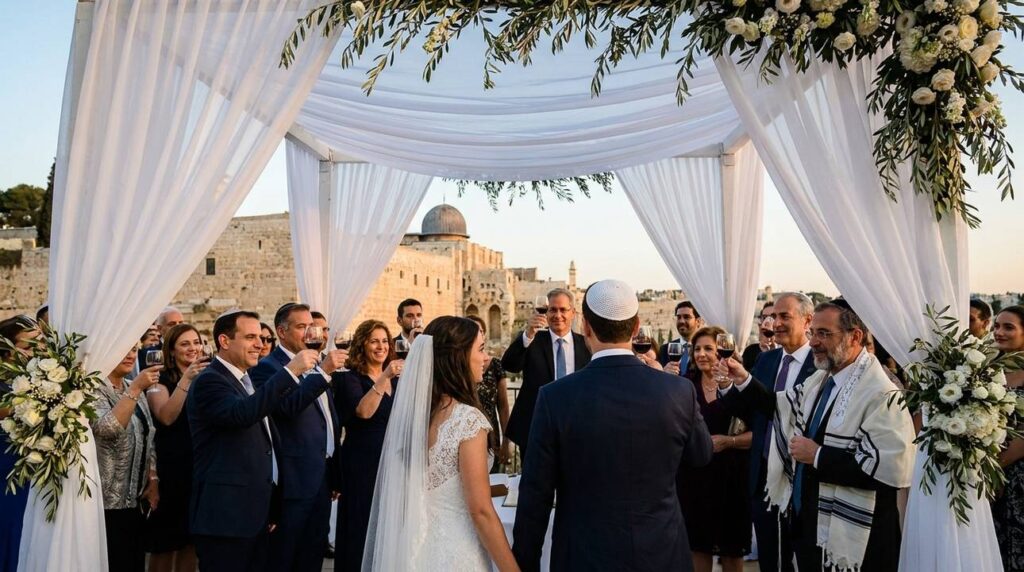

Biblical wedding traditions offer a glimpse into the customs and values of ancient Israel. These ceremonies have shaped cultural identity and continue to influence modern practices.
For example, the marriage of Isaac and Rebekah in Genesis 24 showcases the importance of family involvement and divine guidance in choosing a partner. The rituals of a biblical marriage reveal not just the heritage of these practices but also their enduring emotional significance.
The Bible often highlights marriage as a covenant, as seen in Malachi 2:14, emphasizing commitment and faithfulness. These traditions, deeply rooted in history, reflect the values and beliefs that have been passed down through generations.
By exploring these ancient customs, one gains insight into the spiritual and communal aspects that continue to resonate in contemporary wedding ceremonies.
The Betrothal: A Sacred Promise
In the Bible, marriage begins with the stage known as betrothal. This is more binding than modern engagements and is often accompanied by a formal written contract. According to biblical laws, a betrothal required a solemn promise, with both families participating in the agreement.
This pact could only be broken under serious circumstances, reflecting its profound commitment and readiness for marriage. The betrothal is mentioned in Deuteronomy 22:23-24, highlighting its significance.
The marriage contract, mentioned in the Talmud, outlined the groom’s obligations and provided security for the bride, ensuring her rights were protected. This practice illustrates the weight of commitment in biblical times, underpinning the importance of family and faith.
The betrothal period allowed the couple to prepare for their future together, emphasizing the seriousness and sacredness of the marital bond.
A marriage contract outlined the groom’s obligations and was a crucial part of the wedding preparations. It provided security and defined responsibilities within the marital partnership.
This practice illustrates the weight of commitment in biblical times, underpinning the importance of family and faith. The contract is mentioned in the Talmud, emphasizing its role in protecting the rights of the bride and ensuring a fair and just marriage.
Historically, this legal document ensured that the bride’s rights were safeguarded and that she was provided for in the event of divorce or the husband’s death. This reflects the high value placed on justice and fairness in marriage.
The contract remains a central element in Jewish weddings today, symbolizing the enduring commitment and responsibilities of marriage.
The Chuppah: Symbol of a New Home
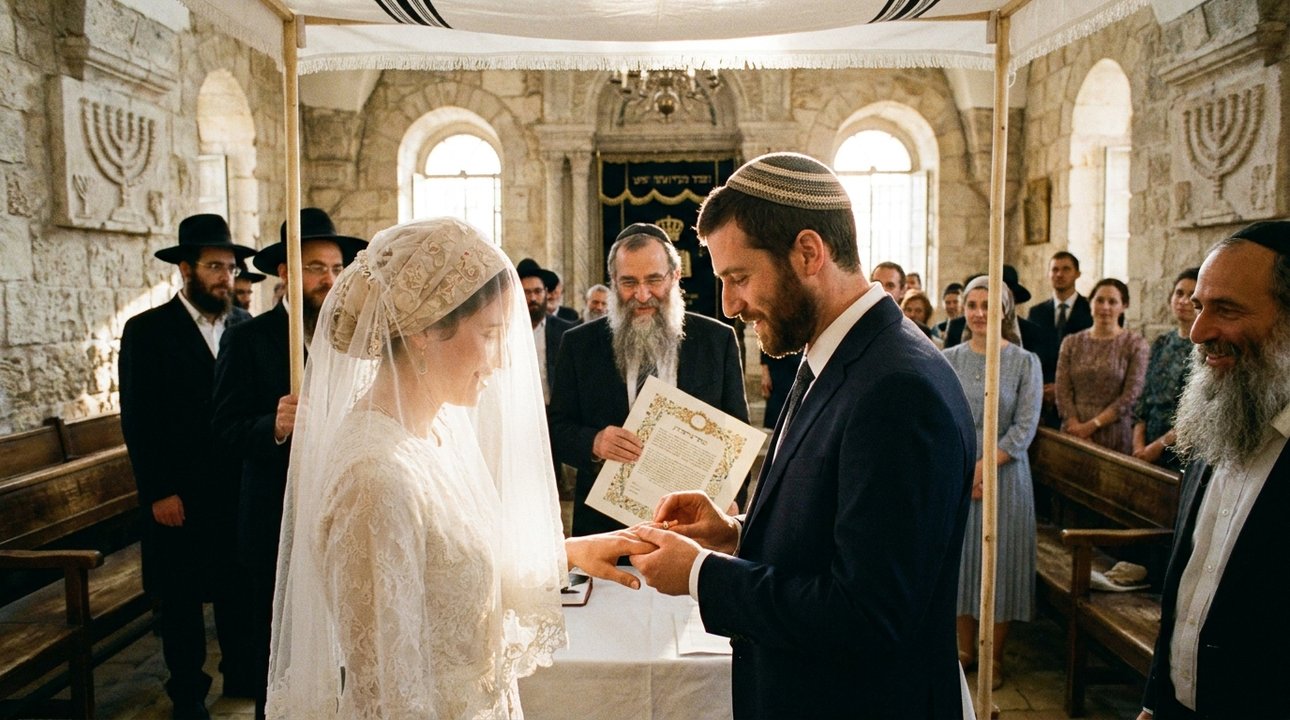
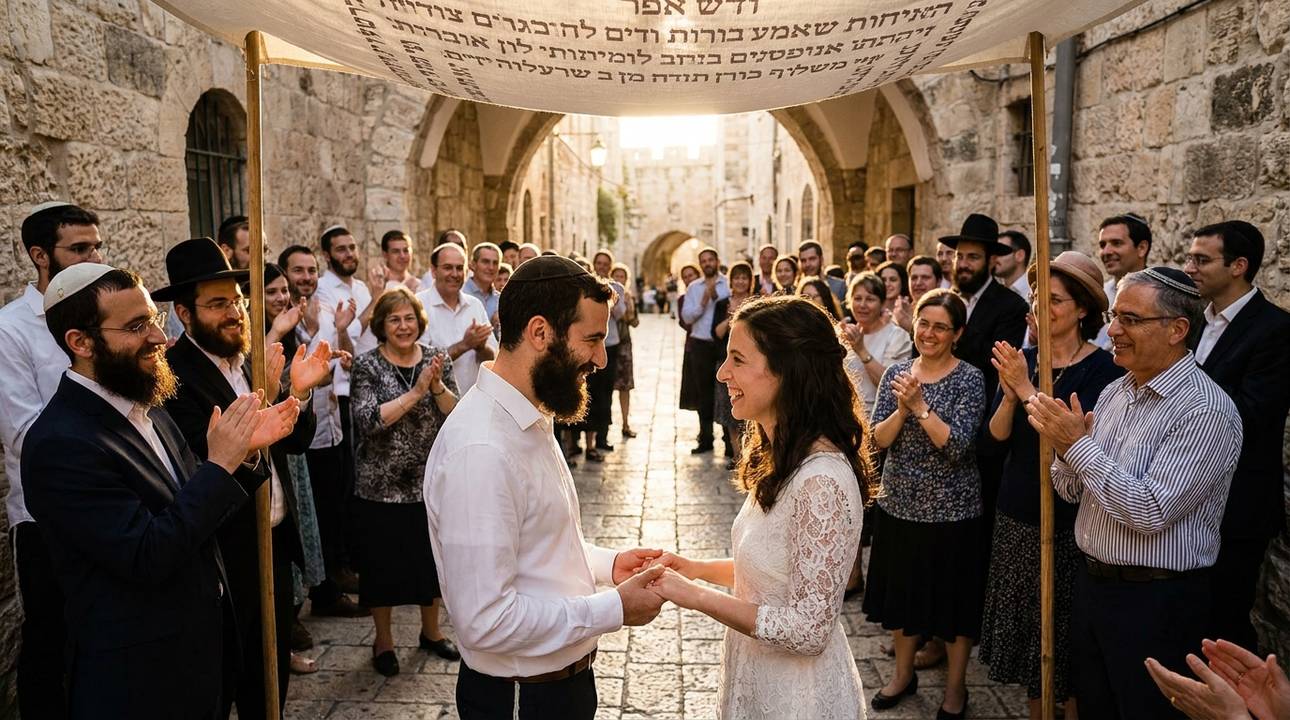
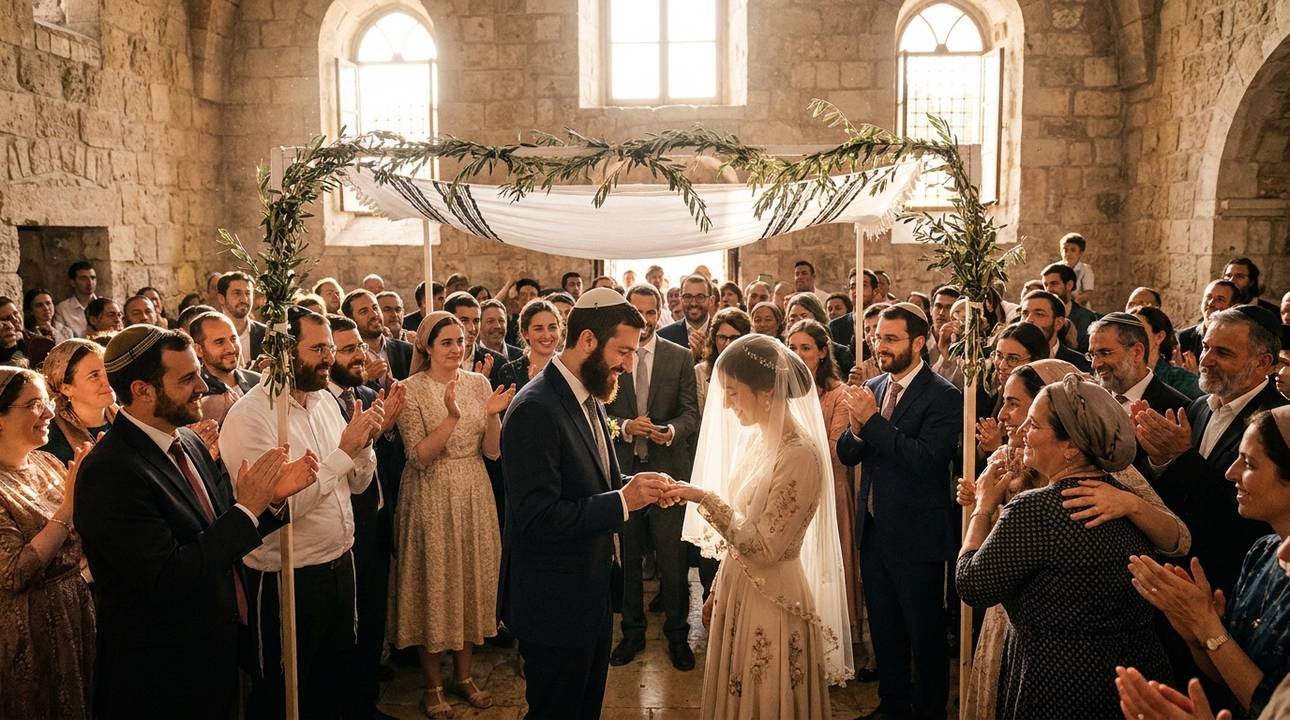
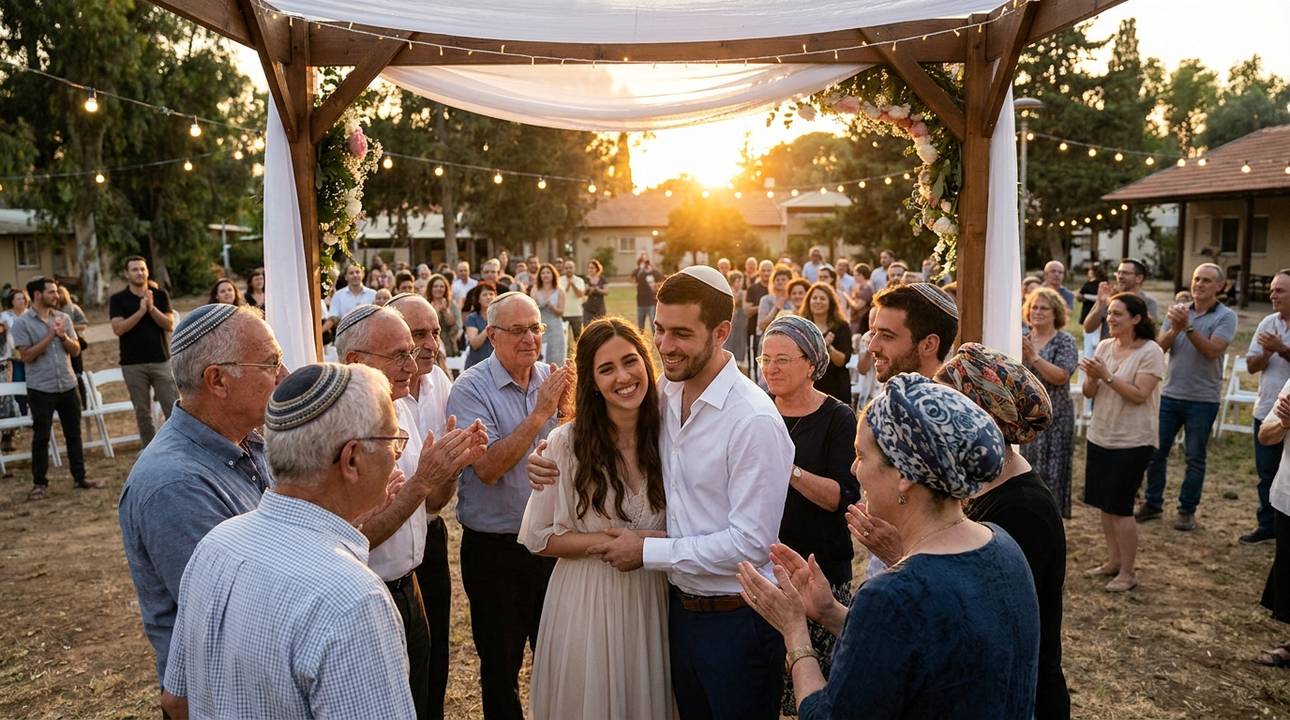
Central to the wedding ceremony is the canopy under which the bride and groom stand, symbolizing the new home they will build together. It is open on all sides, reflecting Abraham’s tent and the emphasis on hospitality.
In Genesis 18:1-8, Abraham welcomes strangers with open arms, setting a precedent for generosity and kindness. It represents the couple’s desire to create a warm, inviting environment for family and friends.
The canopy also signifies the presence of the community, as it is often held up by friends or family, symbolizing the support and love surrounding the couple. This tradition connects the past with the present, reminding the couple of their roots and the importance of hospitality.
This element serves as a reminder of the values that will guide the couple in their new life together.
Under the canopy, symbolizing the home the couple will build together, various rituals take place, including the exchange of rings. This symbolizes their union and the sealing of their marital covenant.
The presence of the canopy links past traditions with present commitments, forming a bridge between generations. It is reminiscent of the tent of Abraham and Sarah, representing hospitality and openness (Genesis 18:1-15).
The exchange of rings, a practice mentioned in Song of Solomon 8:6, symbolizes the unending nature of their commitment. The circular shape of the ring, with no beginning or end, represents eternity and the everlasting bond between the couple.
This ritual, performed under the canopy, highlights the continuity of tradition and the couple’s dedication to building a life together.
Breaking the Glass: A Moment of Reflection
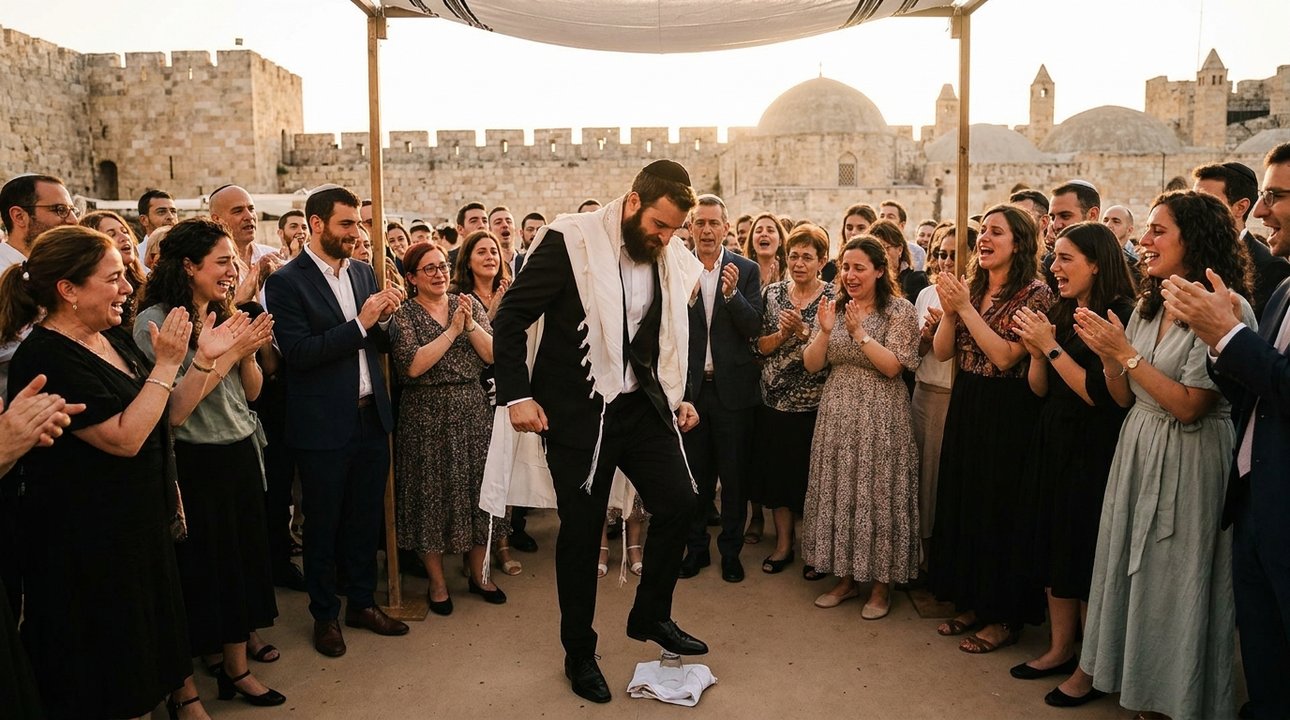
One of the most memorable moments in a Jewish wedding is the breaking of the glass by the groom. This concludes the ceremony and serves as a reminder of the fragility of life and the destruction of the Temple in Jerusalem.
It combines joy with solemnity, weaving emotion into an unforgettable tradition. The breaking of the glass is often accompanied by shouts of ‘Mazel Tov!’, wishing the couple good luck and happiness in their new life together.
The tradition of breaking the glass has multiple interpretations, including the idea that even in times of joy, one should remember the sorrows of the past. Rooted in historical events, this adds depth to the ceremony.
The glass-breaking moment, followed by joyful celebrations, symbolizes the balance of life’s joys and challenges, creating a memorable conclusion to the wedding ceremony.
The shattering sound of the glass during a Jewish wedding ceremony is a moment filled with both celebration and introspection. Often linked to the destruction of the Temple in Jerusalem, it serves as a reminder of the fragility of life and the need for reflection.
Participants are reminded that even in times of happiness, life requires awareness and reflection on its complexities. This ritual underscores the balance between joy and the reality of life’s challenges, prompting a moment of contemplation amidst the festivities.
Seven Traditions: A Celebratory Custom
The seven traditions, or Sheva Brachot, recited under the canopy, honor the couple with themes from creation, love, companionship, and communal joy. Each tradition contributes to the joy and spirituality of the ceremony, highlighting the sacred nature of marriage.
These traditions are rooted in biblical texts, such as the creation story in Genesis, which speaks of the companionship between Adam and Eve (Genesis 2:18-24).
The traditions also draw from Psalms and other biblical sources, emphasizing themes of joy and prosperity. They are traditionally recited by different guests, symbolizing the communal support for the couple.
This practice reinforces the idea that marriage is not just a union of two individuals but a joining of families and communities, celebrated with shared joy and well-wishes.
Featuring prominently in Jewish texts, these traditions connect the couple’s union to divine providence and the longer human journey. They create a spiritual bond with the couple’s community, ensuring they embark on their marital journey surrounded by love and best wishes.
The seven traditions are a heartfelt expression of hope and future happiness. Each tradition, rooted in biblical themes, reinforces the sacredness of marriage and the joy it brings.
The traditions include themes such as creation, love, and companionship, drawing from Genesis 1:28, where humanity is encouraged to be fruitful and multiply. This connection to biblical narratives underscores the importance of marriage in the Jewish tradition.
The communal aspect of these traditions highlights the shared joy and support of family and friends, making the wedding a deeply meaningful event.
Feasting and Dancing: Joyous Celebrations
Following the ceremony, the wedding feast is a time of great celebration. Friends and family come together to enjoy food, dance, and music. This joyous occasion is deeply rooted in biblical customs where feasting marked milestones and community unity.
Dancing plays a significant role, symbolizing joy and prosperity. In the Bible, King David danced before the Ark of the Covenant, expressing his joy and devotion (2 Samuel 6:14-15).
The wedding feast, reminiscent of the celebrations described in the Book of Esther, where joy and feasting were central to the Purim festival, serves as a reminder of the communal aspect of marriage.
The joyous atmosphere, filled with music and laughter, reflects the happiness of the occasion and the hope for a prosperous future for the couple.
Historically, Jewish weddings were not just personal events but communal celebrations. The entire community would gather to partake in the joy, reinforcing social bonds and sharing in the happiness of the newlyweds.
This tradition is reflected in the biblical story of Jacob and Leah, where the community played a significant role (Genesis 29:22). Today, these traditions continue to capture the spirit of communal celebration and support, emphasizing the importance of community in Jewish life.
Conclusion: Enduring Traditions
Biblical wedding traditions are woven into the cultural fabric of Israeli society, offering a linkage to heritage and faith. They provide insights into ancient customs while continuing to inspire contemporary practices.
For instance, the story of Jacob and Rachel in Genesis 29 illustrates the themes of love and perseverance. As you explore these traditions, you deepen your understanding of their significance and enduring nature.
The customs, such as the canopy and the marriage contract, have been preserved through centuries, symbolizing the continuity of Jewish life and values. These elements not only connect individuals to their past but also serve as a foundation for future generations.
Understanding these traditions enriches one’s appreciation of the cultural and spiritual legacy inherent in Jewish weddings.
Biblical weddings are more than ceremonies; they are a tapestry of history, community, and faith. These traditions bridge the past and present, showcasing the beauty and depth of cultural identity.
The story of Ruth and Boaz, for example, highlights themes of loyalty and community support (Ruth 4:11-13). Exploring these timeless customs can enrich modern life by connecting us to our roots and emphasizing the enduring values of love and commitment.
The customs, such as the canopy and the marriage contract, have been preserved through centuries, symbolizing the continuity of Jewish life and values. These elements not only connect individuals to their past but also serve as a foundation for future generations.
Understanding these traditions enriches one’s appreciation of the cultural and spiritual legacy inherent in Jewish weddings.
Key Aspects
