Lev Haolam logo – Israel gift box company
Join now
Lev Haolam
  • Home
  • To The Top
  • Who We Are?
  • How It Work
  • Membership
  • Our Boxes
  • Testimonials
  • FAQ
  • Blog
    • Articles
    • Recipes
    • Gift Boxes
  • Career
Log In
Join now
Log In
Join now
  1. Home
  2. Blog
  3. Israeli Culture and Traditions

Discover the Rich Tapestry of Israeli Culture and Traditions

Dive into the vibrant world of Israeli culture and traditions. Learn about the diverse customs, foods, and crafts that make Israel unique. Support local artisans and small family businesses by engaging with their stories and products. Through your involvement, you help sustain these cultural treasures and keep the heritage alive for future generations.
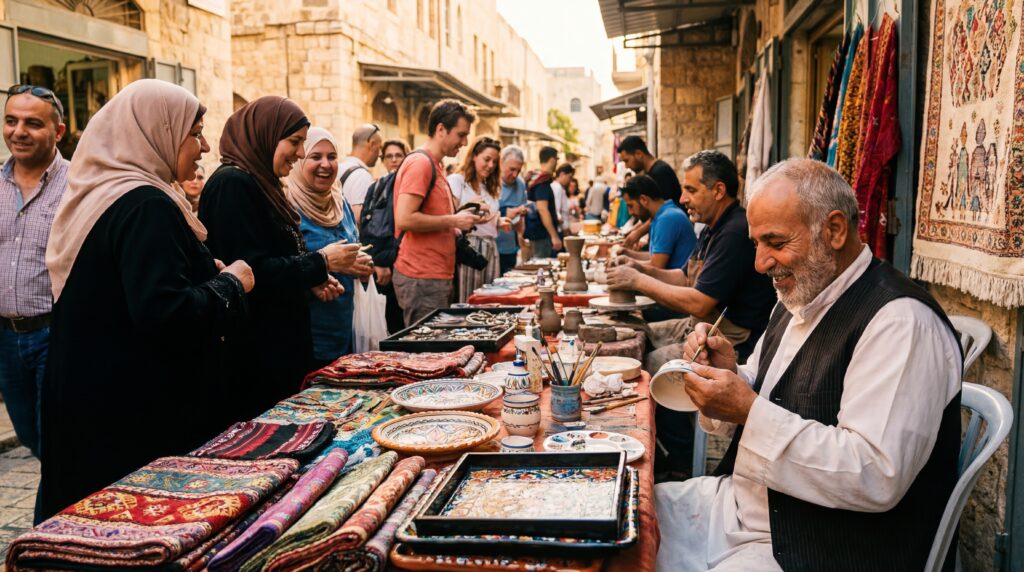
Colorful Israeli market showcasing traditional crafts and foods
Diverse group studying religious texts in a sunlit classroom.

Discovering the Meaning of Massah in the Bible

Rephidim was one of the stops on the Israelites’ journey and is associated with the events at Massah. This area, like much of the desert, was harsh and unforgiving, testing the faith and determination of the people. The events at Rephidim highlight the ongoing struggle between doubt and faith, a theme that resonates throughout historical narratives and is still remembered reflection today. Massah’s narrative is intertwined with the wider story of the Israelites’ departure from Egypt, a journey marked by trials and intervention. It serves as a reminder of the importance of faith and trust in moments of uncertainty, a...
Show more
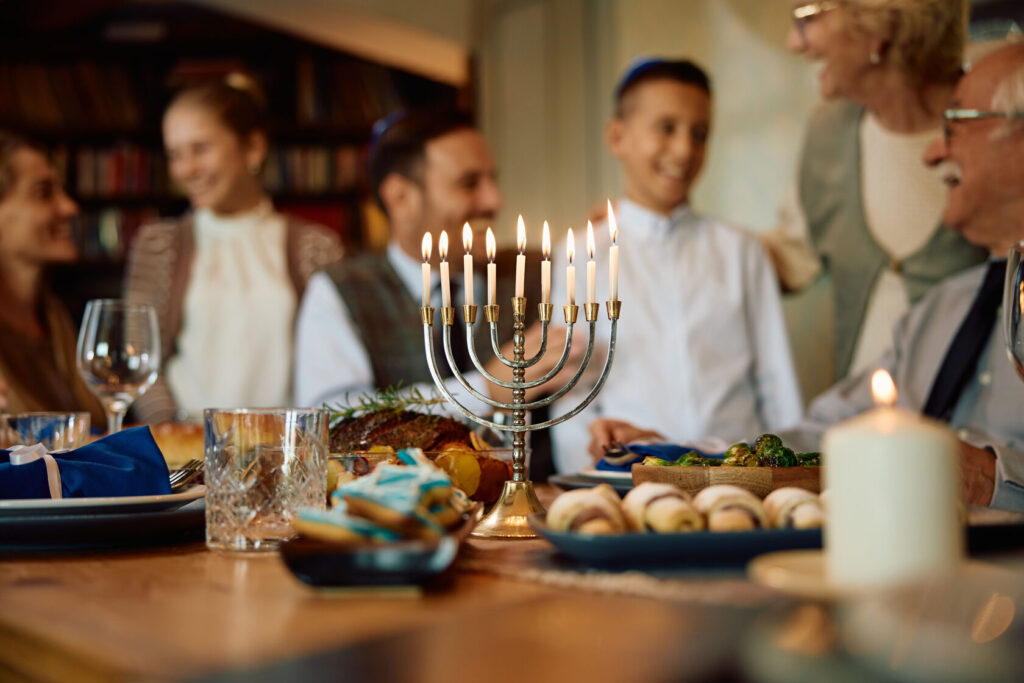
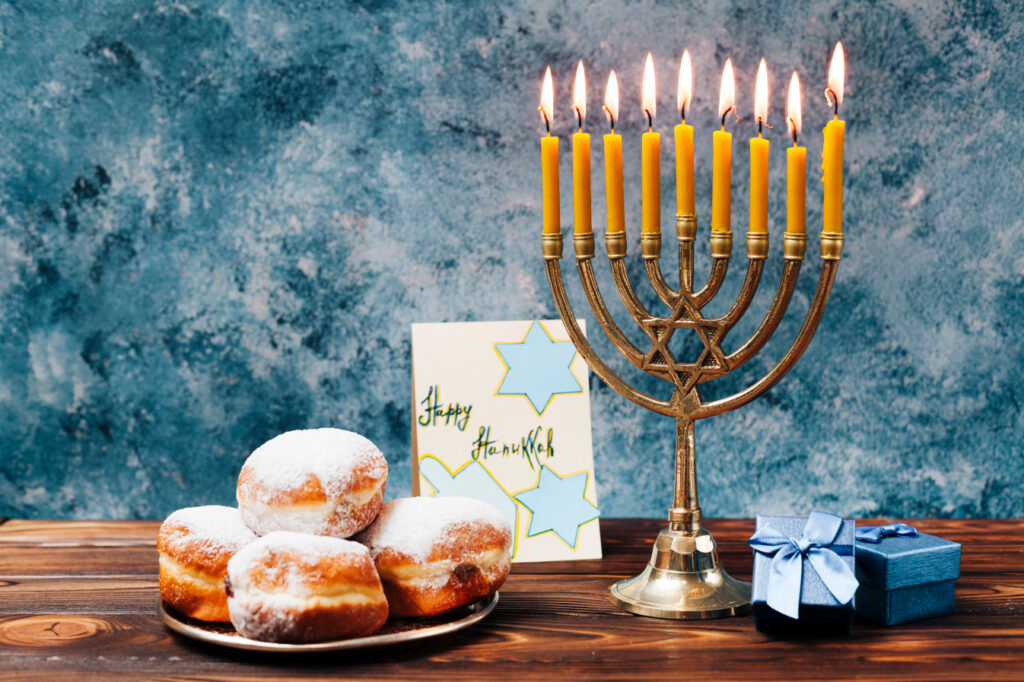
Menorah candles glowing during Hanukkah celebration

Get to know Hanukkah, the festival of lights!

The History of Hanukkah Over 2000 years ago, Israel was ruled over by the Syrian-Greek empire. The Hanukkah story begins under the reign of King Antiochus III, from 222-186 B.C.E. At the beginning he was somewhat favorable to the Jewish people but when he lost a battle against the Roman Empire and was forced to pay heavy taxes, he passed the burden onto the people. When Antiochus died he was succeeded by his son Seleucus IV, who began to oppress the Jews of the Holy Land. Rather than physical oppression, he attempted to strip the Jews of their Judaism through...
Show more
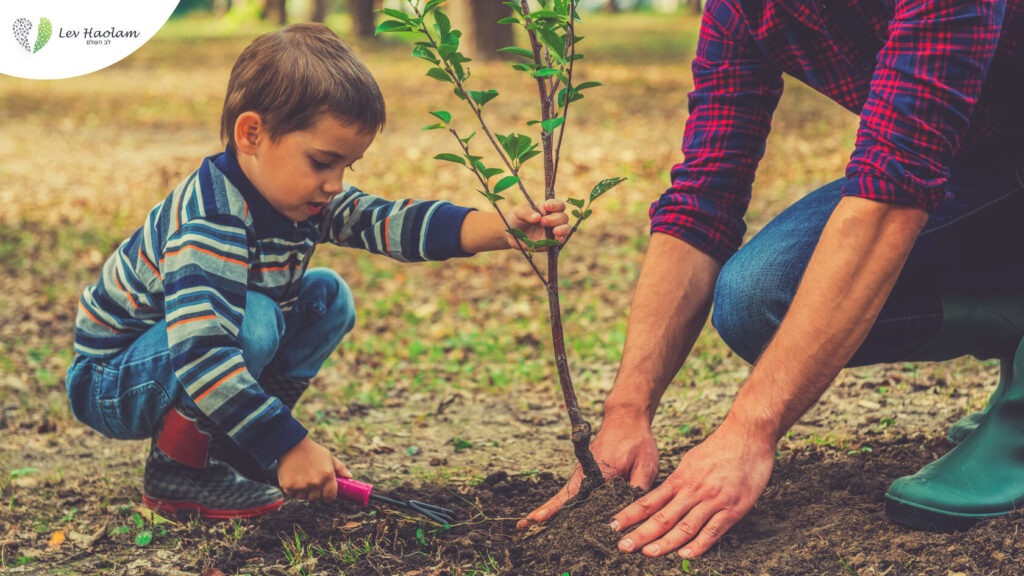
Trees blooming during Tu Bishvat celebration

Did you know that Israel’s trees have their own New Year? It’s called Tu Bishvat!

Tu Bishvat is an important date in Israel’s agricultural calendar. Knowing when the agricultural year begins enabled the farmers to correctly observe the sabbatical laws of the land! Like everything in Israel, there are rules and laws to follow! In agriculture, we observe the laws of Shmitta. We follow an agricultural cycle of seven years, the last of which is called the Shmitta year (sabbatical) in which are instructed to leave our fields and let the land rest, unworked, for the entire year. During Temple times, in the first, second, fourth, and fifth years of the cycle, farmers were required...
Show more
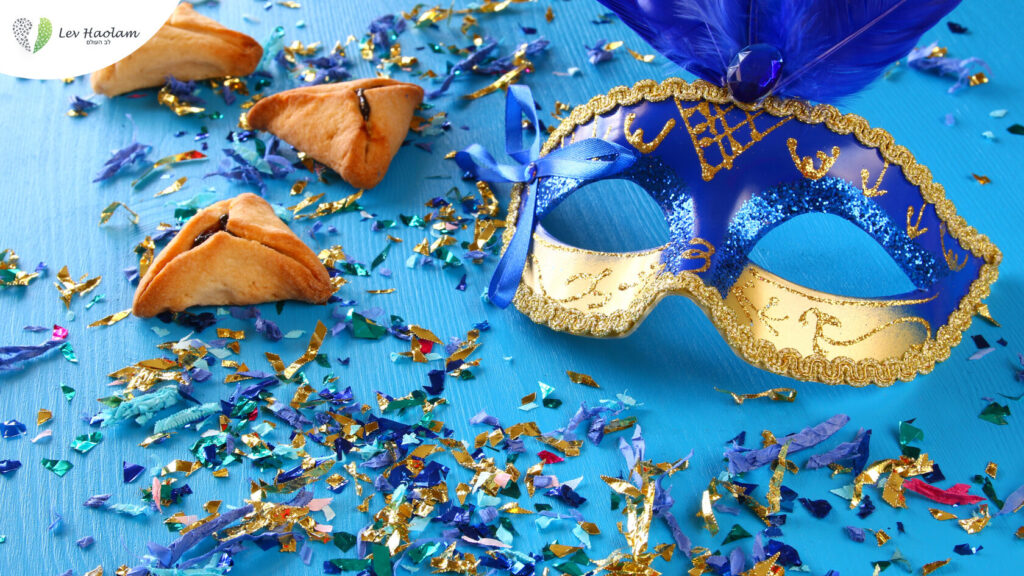
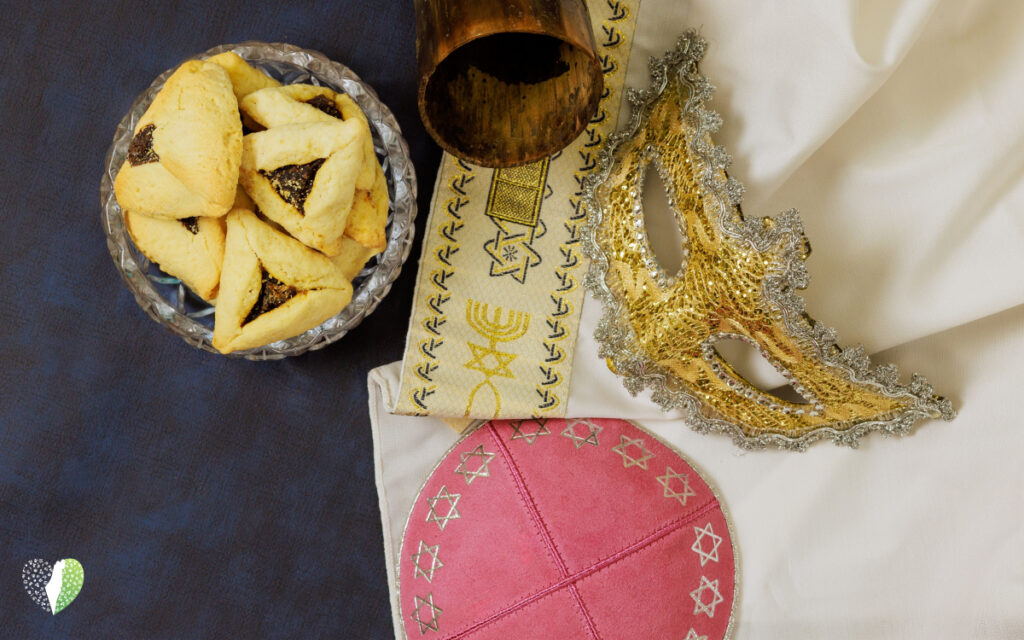
Colorful Purim festival celebration with costumes

Learn all there is to know about the joyful festival of Purim!

The events of the Purim story are documented in Megillat Esther, the Scroll of Esther. Here it is in a nutshell. During the 4th century BCE, there were 127 lands under the rule of the mighty Persian Empire, led by King Achasverosh. In one incident, his Queen, Vashti, refused to heed his commands and was executed, leading to a beauty pageant in which the new Queen would be chosen and crowned. That Queen would turn out to be a young Jewish girl called Esther (who, at this point, did not reveal her Judaism to the King). Next saw the appointment...
Show more
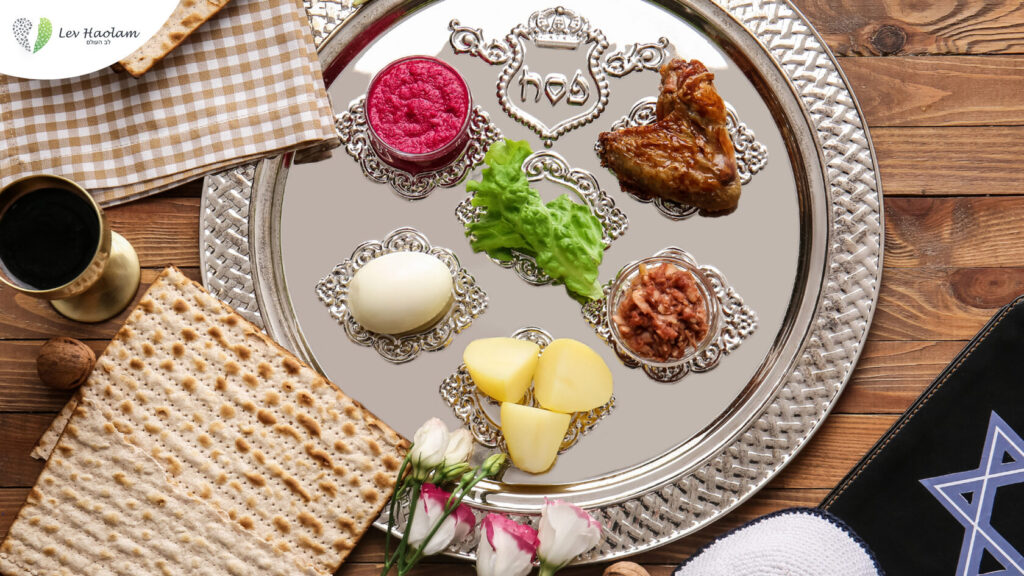
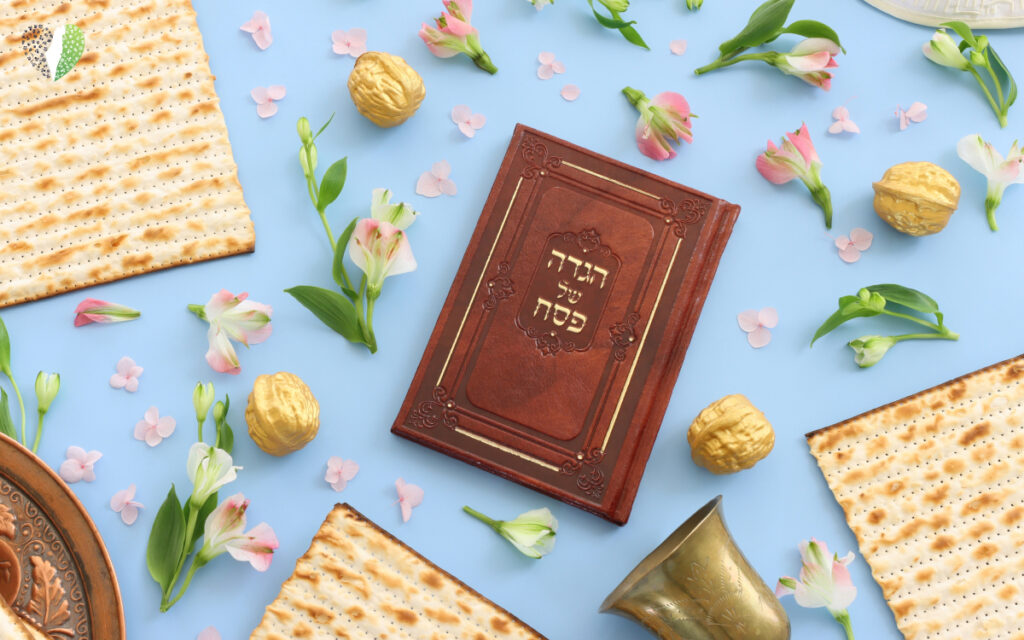
Celebrating the liberation from Egyptian slavery

Learn about the festival of freedom, Pesach!

The story of Passover can be traced all the way back to the book of Exodus! The festival of Passover is an eight-day festival observed between the Hebrew dates of the 15th to and including the 22nd of the Hebrew month of Nissan, just a few weeks after Purim. It marks the events of the Exodus from Egypt and God taking the people of Israel under his direct guardianship. We observe this festival in several ways, including by not eating any unleavened foods (such as bread) and participating in the Passover Seder, in which we retell the events of the...
Show more
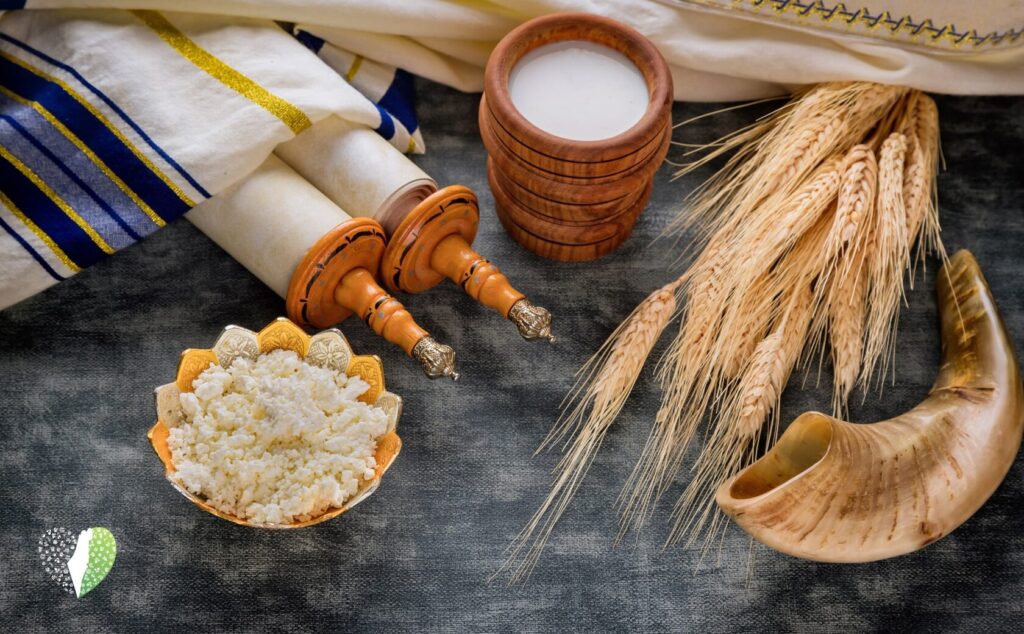
Celebrating the giving of the Torah at Mount Sinai

All you need to know about Shavuot, the festival of weeks!

Get to know the beautiful festival of Shavuot, in which we celebrate the giving of the Torah at Mount Sinai! It is a festival of prayer, Jewish study, spiritual connection, and delicious cheesecake! From Exodus to Mount Sinai, Shavuot celebrates the giving of the Torah to the Jews! The Shavuot festival can be traced back over 3,000 years ago to the monumental events at Mount Sinai. In the Hebrew year of 2448 (1313 BCE) the Jewish people arrived at the foot of Mount Sinai after wandering the desert following the Exodus. God told the leader of the people, Moses, that...
Show more
A vibrant Israeli market bustling with life

Your Guide on How to Be Israeli: Embrace the Culture

This article explores the unique dress, cuisine, and travel habits that make Israeli culture exciting. We’ll look at traditional outfits, delicious dishes, and hiking ideas for tourists. Want to see Israel’s different colors? Let’s do it! Experience the Essence of Israeli Life: A Guide to Clothing, Food, and Travel Living like an Israeli means embracing a lifestyle that is both deeply rooted in tradition and open to contemporary influences. The way Israelis dress, eat, and travel reflects their diverse cultural background and innovative spirit. From the bustling markets of Tel Aviv to the serene landscapes of the Negev Desert, Israeli...
Show more

The essence of Yom Kippur, the Jewish Day of Atonement

At the heart of this biblical holy day is the amazing fact that the God of Israel loves His people and gives them a way to atone for their sins. Rabbi Jonathan Sacks once described Yom Kippur as “the supreme day of forgiveness.” When God gave Moses the Torah on Mount Sinai, He set out His blueprint for all the biblical feasts, including Yom Kippur. In Temple times, the High Priest carried out cleansing rituals on behalf of the people on Yom Kippur. It was the one day of the year when he could enter into the Holy of Holies. Here in the most sacred place, he offered up incense and sprinkled the blood of a bull and a goat to atone for his own sins and those of the people. As part of the Yom Kippur ceremony, the High Priest laid hands on a “scapegoat,” confessed the sins of the people, and drove it away into the wilderness. After the destruction of the Temple in 70 CE, the Jewish people were filled with anguish. How could they atone for their sins now with no Temple and no High Priest? It was Rabbi Akiva who spoke words of encouragement during those days of despair. He said that God hears every cry of the heart, and when we bring Him a sacrifice of repentance, it is as though we are presenting a sin offering in the Temple. For the last two thousand years, Jewish people have fasted, prayed and refrained from any form of work during Yom Kippur as they confess their sins and seek atonement. Still to this day, it is the holiest day in the Jewish year. Yom Kippur takes place ten days after Rosh HaShanah, the Jewish New Year, and just before the Feast of Tabernacles. These three feasts are known today as the Fall feasts because they happen in September or October in the Gregorian calendar. This year, Yom Kippur starts on the evening of September 27 and ends on September 28. Although Yom Kippur is a day marked by fasting and affliction of body and soul, it is also a day filled with hope. In the beautiful words of the Midrash Tehillim: “When Jews appear for Divine judgment, the angels say to them: Don’t be afraid, the Judge is your Father.” Click here to read more about Jewish feasts and traditions.
Show more

7 lesser-known facts about Shavuot

Shavuot is one of the richest and most joyous of the biblical feasts. Yet many people don’t understand the full significance of this holiday and miss out on the awesome treasures it contains. Here are just some of the fascinating facts you may not know about Shavuot: 1. The main biblical character associated with Shavuot wasn’t born a Jew During Shavuot, it’s traditional to read the Book of Ruth - a biblical love story centred around the Shavuot harvest. Ruth, the beautiful Moabitess, aligns herself with the God of Israel and accompanies her Jewish mother-in-law back to the Promised Land. The story of Ruth serves as a picture of how the nations can support Israel and the Jewish people today and receive an abundance of blessings as they do so. 2. Passover and Shavuot are integrally linked There is a deep agricultural and spiritual connection between Passover and Shavuot. In biblical times, Passover marked the beginning of the barley harvest, and then, seven weeks later, it was time to bring in the wheat harvest. The word Shavuot literally means “weeks” in Hebrew. The seven-week countdown from Passover to Shavuot is known as Counting the Omer (an omer is a sheaf of grain). On a spiritual level, Counting the Omer is a time of preparation for the greatest event that happened at Shavuot - the giving of the Torah. After the first ever Passover, Moses led the children of Israel through the desert for seven weeks before reaching Sinai and receiving the Law. 3. Even the cheesecake has a meaning It’s customary to eat dairy food and refrain from meat during Shavuot. There are several reasons for this. It’s said that when the Israelites first received the Torah, they realized that the meat they had prepared was not kosher. So, they chose to eat a dairy meal instead. Another reason for the dairy menu is that Shavuot is a celebration of Torah, and Song of Solomon likens Torah to “honey and milk under your tongue.” Whatever the reason, you can be sure to find the most exquisite cheesecakes you’ve ever tasted in Jewish bakeries during Shavuot! 4. Water games are the order of the day Many Israelis probably don’t know that water is used as a metaphor for Torah in rabbinical literature. But that doesn’t stop them joining in the water games that have become a feature of Shavuot celebrations. In Israel, you’ll find kids and adults alike getting out the water guns and throwing giant water balloons at each other during Shavuot. Of course, it helps that the feast takes place in the summertime, so the water is a welcome relief from the hot Israeli sun! 5. Children have a special place at Shavuot The Torah places great emphasis on teaching the Law to the children. It is said that when G-d first gave the Torah to the Jewish people, He insisted upon guarantors to ensure that the Jews would observe the Law. After rejecting several suggestions, God accepted the proposal that the children themselves would be the guarantors. That’s why, when the Ten Commandments are read on the first day of Shavuot, the whole family - including young children and infants - gather together to listen. The days around Shavuot are always full of activities and special events for children. Israeli kids have great fun dressing up in harvest-themed costumes and taking baskets of fruit and vegetables to school or kindergarten. 6. Shavuot eve is an all-night Torah fest It’s traditional for Jewish people to stay up all night studying Torah on the first night of Shavuot. The origins of this custom lie in an event related in the Midrash. It’s said that when the Jewish people were preparing to receive the Torah, they were so keen to be fresh and alert that they went to bed early the night before. Unfortunately, their good intentions backfired. When morning came, the entire Jewish people had over-slept and Moses had to wake them up! The act of staying up all night learning Torah aims to prove the Jews’ zeal and fervour for the Torah and make up for that initial shortcoming. 7. Shavuot goes by 5 different names For anyone just starting to learn about Shavuot, the different names for this biblical feast can be quite confusing. In fact, Shavuot has 5 different names, and all are equally correct. Shavuot - literally meaning “weeks.” This is the most common name for the feastYom HaBikkurim - meaning “Day of First Fruits”Chag HaKatzir - meaning “Harvest Festival”Atzeret - meaning “Stopping.” This refers to the commandment to do no regular work during Shavuot.Zeman Matan Torahteinu - meaning “Time of the Giving of Our Torah.” These are just some of the amazing treasures of Shavuot. The truth is that this feast is a lot like the harvest it celebrates. You need to put in a little effort to gather all the golden sheaves of barley together and understand the various depths and meanings of the feast. But once you reap the harvest, you truly have something to celebrate!
Show more

Why Jews Wear Masks on Purim?

On the one hand, Purim, that commemorates a narrow escape of Persian Jews from the death sentence 2,500 years ago, fits perfectly into the regular scheme of a Jewish holiday: ‘They tried to kill us, we survived, let’s eat.’ On the other hand, there is some sharp contrast between Purim and other Jewish holidays, like Pessach or Chanukkah. The latter are about Jews escaping death, too, but there were miracles happening there: The division of the Red Sea, or the light of the Menorah that lasted eight days instead of one. In the story of Purim we do not see God acting (he is not mentioned once in the whole Book of Esther that is read on Purim). The events that led to the lifesaving victory of the Jews seem perfectly natural. Esther’s uncle Mordechai just happens to be in the right place to learn about the plot of Haman, the king’s minister, to kill all the Jews, by persuading the king that they are dangerous for the state (typical anti-Semitic argument!); Haman just happens to erect the gallows on which he was eventually hanged… In Hebrew, the name Esther means ‘hidden’. Unlike Pessach or Channukkah, Purim is a story of hidden miracles. That is why one of Purim traditions is a masquerade. This week Israeli streets will get full of Batmen, Cinderellas, animation characters, people dressed like movie or pop stars, or as the characters of the Purim story itself. Men will wear women dresses and visa versa. The Hebrew verb used to describe putting on the clothes of some character has the meaning of ‘looking for’. Dressing up for the masquerade and wearing masks on Purim is an allusion to God hiding himself in the Purim story.Purim is also a story of everything turning out to be the opposite of what it seemed to be: A victim into a winner, a second most important man in the state into a criminal… This spirit is preserved in Purim traditions. In Israel, children (and teachers!) go to school in their pajamas on the days before Purim; a day of fast before the holiday is followed by loud parties; people send presents to each other; and the overall Purim atmosphere is pure joy. Another thing the Jews are commanded to do on Purim is to read the Book of Esther. Why at all this totally secular piece of text called Book of Esther, where God is not mentioned once, is included into the Tanakh, the collection of texts considered sacred in Judaism? Because Jewish sages knew who was acting from behind the curtains in the story of Purim. How these events from 2,500 years ago can be relevant to us today? Maybe, in the way that they illustrate that even in the place and time in history seemingly devoid of the Divine presence, we can hope He is there - hiding but present. Even if this place is your own life. Go look.
Show more

6 awesome (and rather intriguing) Israeli customs

Every culture has its own little quirks and idiosyncrasies. What’s amazing about Israel is how a country that’s less than 75 years old and includes immigrants from all over the world has such a strong and unified cultural identity. Here are 6 fascinating facts about Israeli culture: 1) The Israeli population is one of the most educated in the world According to a recent report, Israel is the third most educated country in the world. More than half of Israeli adults between the ages of 25 and 64 have completed a higher-education degree. This is more than nearly any other nation on the globe. 2) In Israel, there’s a committee for everything Maybe it’s a result of Israel’s history of kibbutz living, but the fact is that Israelis know how to organize themselves into groups. If you’ve ever spent time in Israel, you’ll know that just about every social and administrative domain has a small committee of volunteers (called a vad) running it. This goes for apartment blocks, where the vad collects payments from each resident and oversees maintenance and repairs. It even goes for children’s kindergartens, where the vad lets parents know how much money to contribute and buys collective gifts for the teachers. 3) Israeli people aren’t shy to ask questions If you’re visiting Israel, don’t be surprised if the person sitting next to you on the bus starts asking you questions you don’t feel so comfortable answering! This could be anything from how much you earn to what strategies you’re using to lose weight! It’s really not that anyone is trying to embarrass you. It’s just that Israeli people tend to say what they think and have a genuine interest in other people (as well as maybe a little well-intentioned nosiness!). 4) Once a year the whole country stops moving (apart from bikes and skateboards) Even though many Israeli people describe themselves as secular, the truth is that the nation still has a deep respect for its Jewish customs. This is especially evident on Yom Kippur - the biblical Day of Atonement. On this day, all shops and offices close. Many people fast. And no one drives anywhere. Since there are no cars on the roads, all the children and teenagers who are off school for the day get out their bikes, skateboards and roller blades and take to the streets! 5) One of the first things Israeli people share with each other is where they served in the army In other countries, people often introduce themselves by saying what job they do. In Israel, it’s just as common to start with what you did in the army. Since all Jewish young people serve in the army for 2 to 3 years after high school (some much more), it’s a huge part of Israeli identity and a topic that brings people together. 6) Israel remembers its fallen soldiers one day, and celebrates its independence the next For outsiders, it sometimes seems strange how the whole country spends one day deeply mourning its victims of war, and then as the sun goes down, the people switch to a mode of celebration and set off fireworks to celebrate Independence Day. This move from grief to joy, which might seem peculiar to some, is actually key to the Jewish psyche and to Jewish people’s survival through the millennia. The Jewish people have always known tragedy and persecution. And they know how to grieve and remember their lost. But they also know how to keep moving forward and not despair. The Jewish culture is one of life, hope and joy - sometimes in the midst of unimaginable adversity. Without this spirit, the tiny nation of Israel would never have been able to achieve what it has in just over 70 years. Israel really is an incredible country. There’s nowhere else in the world quite like it. Do you have any experiences of Israeli customs that have surprised or inspired you?
Show more

Sukkot: Celebrating under the Stars

Anyone who has visited Israel during Sukkot will have been struck by the decorative tent-like structures that appear in gardens, public spaces, balconies and just about everywhere else! These ‘sukkot’ or booths are full of biblical significance, and for a week they become centers of feasting and fellowship as Israelis celebrate Sukkot, the Feast of Tabernacles. Sukkot is the third and final ‘Fall feast,’ taking place five days after Yom Kippur on the 15th of Tishrei in the Jewish calendar (sometime late September / October in the Gregorian calendar). The holiday lasts for seven days and seven nights. During Temple times, Sukkot was one of the three pilgrimage feasts in which the children of Israel would travel up to the Temple in Jerusalem to present themselves before the Lord and make sacrifices. During Temple times, Sukkot was one of the three pilgrimage feasts in which the children of Israel would travel up to the Temple in Jerusalem to present themselves before the Lord and make sacrifices.In Leviticus 23, the Lord commanded the children of Israel to build booths and dwell in them throughout the week of Sukkot. This was to remember how the Lord sustained and provided for them when they lived in tents after He led them out of Egypt. According to the Talmud, it is important to be able to see the night stars directly through the top of the sukkah. This is why sukkot booths today never have a closed roof, but rather branches of bamboo, pine or natural foliage with gaps in between. The Feast of Tabernacles is all about hospitality and fellowship. It is traditional to eat in the Sukkah and invite others to share in the joyous celebration. Many people don’t realize that Sukkot has two different names in the Bible. In Exodus 34:22, it is called ‘The Feast of Ingathering at the year’s end.’ This refers to the harvest that was brought in after the summer (some of the harvest was gathered before the summer during the Feast of Shavuot). These two names - the Feast of Tabernacles and the Feast of Ingathering - celebrate two different aspects of G-d’s faithful provision: the provision of shelter and the provision of the harvest. All in all, Sukkot is a fun and joyous holiday, with a focus on spending quality time with friends and family and celebrating the goodness of the Lord.
Show more

Yom Kippur: Fasting and Freedom

When people think of Yom Kippur - or the Day of Atonement - the first thought that normally comes to mind is fasting. But the truth is there’s so much more to this incredible Jewish holy day than just going without food. Yom Kippur is the second of the ‘Fall Feasts,’ following ten days after Rosh HaShanah (Jewish New Year). It takes place on the tenth day of the seventh month in the Hebrew calendar, which falls sometime in September / October in the Gregorian calendar. In Temple times, Yom Kippur was the day when the children of Israel made sacrifices to atone for their sins. According to tradition, the first Yom Kippur ceremony took place after Moses received the Law on Mount Sinai and returned to the Israelite camp to find the children of Israel worshipping a golden calf. After the Lord carried out His judgment for this idolatry, it is believed that He gave instructions on how to atone for sin as an annual ceremony. During the days of the Tabernacle and then the Temple, the children of Israel would offer various sacrifices as sin offerings on Yom Kippur. According to Jewish texts, it was the one day of the year when the high priest could enter the Holy of Holies and perform rituals including sprinkling blood from sacrificed animals on the Ark of the Covenant. Another part of the ceremony involved symbolically casting the people’s sin on to a scapegoat and releasing it into the wilderness.Today, there are no sacrifices, but Jewish people treat the command ‘to afflict their souls’ (Leviticus 16:29) with the utmost reverence and refrain from eating, working or other regular activities. Yom Kippur is the holiest and most important day in the Jewish calendar. In Israel, the streets are empty of cars and many Jewish people who do not perform any other religious customs still go to the synagogue to pray on Yom Kippur or carry out a full or partial fast. Unlike other biblical holidays that are characterized by feasting and celebration, Yom Kippur is a solemn day where Jewish people remember the holiness of the Lord and the sinfulness of humankind. But for those who can see beyond the fasting and affliction of the soul, Yom Kippur is the most hope-filled and liberating day of Jewish year.
Show more
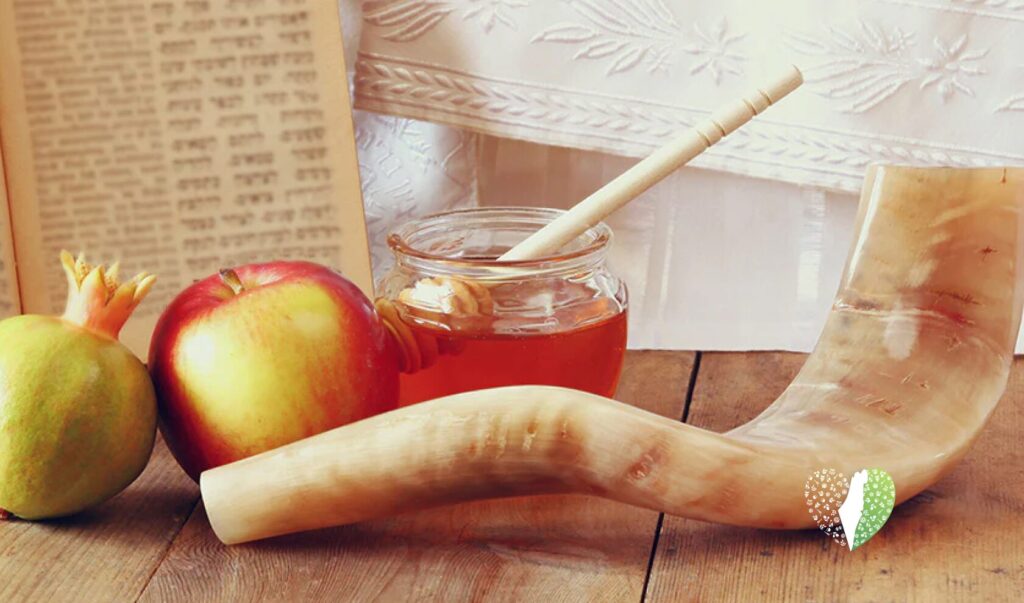
A table set with traditional Rosh Hashanah foods

Celebrate Rosh Hashanah: The Jewish New Year of Reflection and Renewal

Dive into the rich traditions, historical significance, and spiritual essence of Rosh Hashanah, the holiday that marks the start of the Jewish High Holiday Season. Tracing the Origins and Spiritual Themes of Rosh Hashanah Let’s take a trip back in time, shall we? Rosh Hashanah has its roots deeply embedded in biblical times, making it one of the most ancient and significant festivals in Jewish tradition. It’s first mentioned in the Torah as “Yom Teruah,” which translates to the “Day of the Sounding of the Shofar.” On this sacred day, the Israelites would gather to hear the piercing notes of...
Show more
Family gathered under a decorated sukkah during Sukkot

Celebrating Sukkot: Tradition, Joy, and Connection to Nature

Discover the rich traditions of Sukkot, how it’s celebrated, and the deeper meaning behind this joyful holiday that brings families together under the sukkah to connect with nature and faith. What is Sukkot and Why is it Special? The Key Traditions of Sukkot and What They Symbolize ​ Sukkot traditions have been passed down through generations, each rich with symbolism and meaning. One of the central elements of Sukkot is the sukkah itself. Built to represent the temporary dwellings of the Israelites, it serves as a physical reminder of life’s fragility and our dependence on faith. The roof is made...
Show more
Traditional Israeli dance performed in a circle

Israeli Traditions You May Not Know About

Discover unique Israeli traditions that connect you to the heart of this vibrant culture and make you feel like a local. The Love for Fresh Produce: Weekly Shuk Shopping Israelis have a deep appreciation for fresh, local produce, and many people visit the shuk (open-air market) on a weekly basis to buy fruits, vegetables, and other goods. Shopping at the shuk is not just about groceries – it’s a social and sensory experience. The vibrant colors, bustling atmosphere, and the calls of the vendors create an energetic vibe. For Israelis, it’s more than a chore; it’s a tradition that connects...
Show more
Menorah glowing with bright Hanukkah lights

Revel in the bright lights of the Festival of Hanukkah!

From the victory of Judah Macabee over the mighty Syrian-Greek Empire to the small vial of pure oil that kept the Menorah illuminated for eight whole days, this is the miraculous festival of Hanukkah! Hanukkah – a story of overcoming impossible odds. Over 2000 years ago, the Holy Land was under the control of the Syrian-Greek Empire. Alongside the physical threat to the Jewish population was the Hellenist influence in the Holy Land, such as Idol worship and the Syrian way of life, the complete opposite of the values of Judaism. The high priest, Yochanan, rallied against it, especially against...
Show more
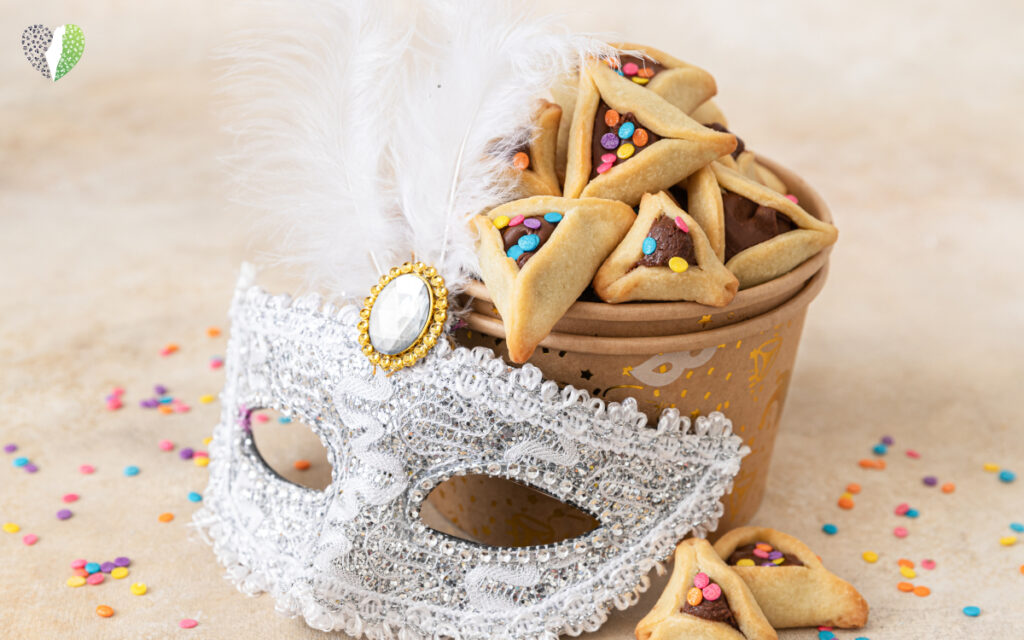
Colorful Purim masks and costumes symbolizing joy

Purim: A Celebration of Courage, Unity, and Joy

Explore the vibrant story of Purim and its deep significance as a holiday celebrating Jewish courage and resilience. From Queen Esther’s bravery to modern-day festivities, Purim is a joyous reminder of unity and triumph. The Story Behind Purim: A Tale of Courage and Triumph Purim’s origins lie in the Book of Esther, a powerful story of courage, faith, and resilience that continues to inspire generations. The holiday commemorates the deliverance of the Jewish people in ancient Persia, saved from a plot of annihilation orchestrated by Haman, an influential royal advisor. Queen Esther, with her bravery, and Mordechai, with his wisdom,...
Show more
Triangular cookies symbolizing Purim's historical victory

Hamantaschen Cookies: A Purim Tradition Full of Flavor and Symbolism

Discover Hamantaschen cookies, a delicious Purim treat rich in symbolism. Their triangular shape reflects the triumph of good over evil, offering endless variations while honoring traditional roots. The History of Hamantaschen Cookies Hamantaschen cookies have a rich history closely tied to the Purim holiday. Originating in Eastern European Jewish communities, these triangular cookies were first baked as part of Purim festivities. The shape of Hamantaschen symbolizes the hat or pockets of Haman, the villain whose plan to destroy the Jewish people was foiled by Queen Esther’s bravery. Over time, these cookies have come to symbolize Jewish resilience, unity, and celebration....
Show more
Passover Seder table with symbolic foods and wine

Passover: A Celebration of Freedom, Faith, and Family

The Story Behind Passover: Freedom and Faith The origins of Passover trace back to the biblical story of Moses leading the Israelites out of slavery in Egypt. This pivotal event is marked by God’s divine intervention, saving the Jewish people from oppression. For centuries, Passover has been celebrated as a festival of freedom, hope, and deliverance. The holiday serves as a reminder of the resilience of the Jewish people, the triumph of faith over adversity, and the enduring struggle for justice. Through the retelling of the Exodus story, Passover continues to inspire generations, reinforcing the values of liberation and unity....
Show more
Fireworks light up the sky over Tel Aviv

Yom Ha’atzmaut: A Celebration of Israel’s Achievements and Future

Explore the significance of Yom Ha’atzmaut, Israel’s Independence Day, celebrating the nation’s creation, its journey to sovereignty, and the unity, pride, and joy that unite the people of Israel. The Birth of Israel: A Dream Realized on May 14, 1948 The founding of the State of Israel on May 14, 1948, fulfilled a century-long dream for the Jewish people. David Ben-Gurion’s reading of the Declaration of Independence marked the establishment of a Jewish state in Palestine, realizing the Zionist movement’s aspirations. This momentous day was the result of years of struggle, planning, and unwavering determination, representing the culmination of efforts...
Show more
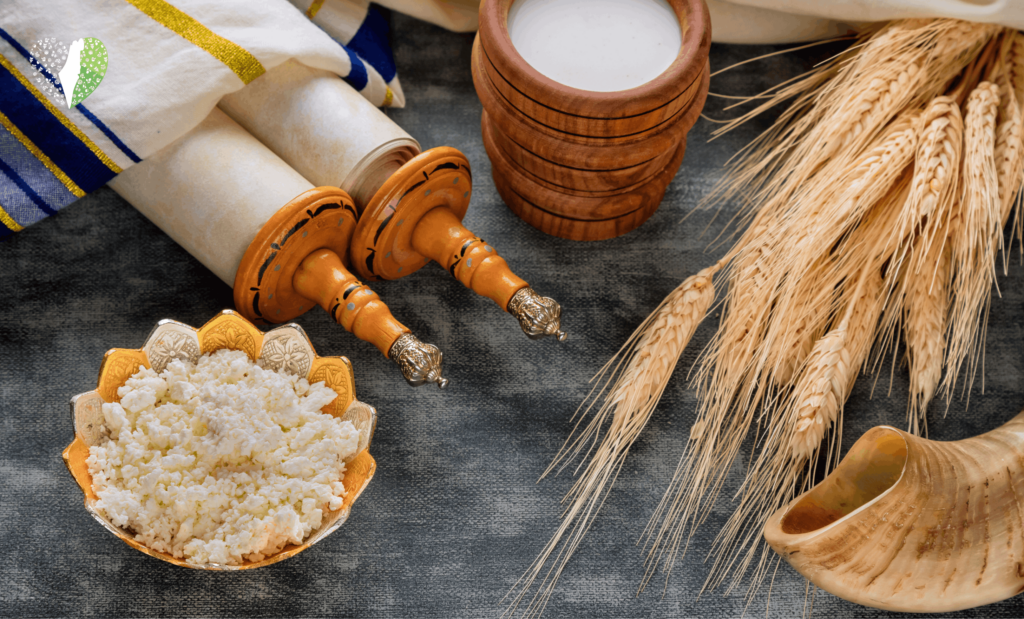
Celebrating Shavuot with Torah and harvest traditions

Shavuot: A Time for Torah, Harvest, and Spiritual Renewal

Shavuot marks the giving of the Torah at Mount Sinai and the completion of the harvest season. This festival blends spiritual reflection and agricultural celebration with rich traditions, prayers, and gratitude. The Historical Roots of Shavuot Shavuot is a significant Jewish holiday that celebrates both the spiritual and agricultural aspects of Jewish life. It commemorates the giving of the Torah at Mount Sinai, a transformative event that shaped the Jewish people’s faith and identity. Simultaneously, Shavuot marks the end of the grain harvest, a time of thanksgiving for the bountiful crops that sustain communities. These two elements, the divine revelation...
Show more
People dancing joyfully with Torah scrolls

How Israelis Celebrate Simchat Torah

How Israelis Celebrate Simchat Torah The Calendar of Longing For many people who love Israel, the Jewish calendar is a map of longing. Each holiday brings with it a swell of meaning, prayers, and joy – but also a quiet ache of distance. Simchat Torah especially sharpens this feeling. It is perhaps the most exuberant celebration of the entire year, a holiday that overflows with joy. Yet from far away, it can leave supporters of Israel standing on the outside, wondering how to truly take part. If you’ve ever caught a short video clip of the streets of Jerusalem on...
Show more
A menorah glowing in a window during Hanukkah

Hanukkah in Israel: Light, Faith, and Everyday Miracles

The Meaning of Hanukkah – Then and Now ​ The story of Hanukkah began more than two thousand years ago, when a small band of Jewish people – the Maccabees – rose up against oppression to reclaim their faith and their land. Against all odds, they rededicated the Holy Temple in Jerusalem and rekindled the menorah, only to find one small jar of pure oil – enough for just one night. Yet, it burned for eight. This ancient story is more than just history – it’s a reflection of enduring spirit and perseverance. The miracle of the oil has become...
Show more
Passover table set with traditional foods and decorations

How Passover Is Celebrated in Israel

A Living Tradition, Year After Year Preparing the Home Preparation begins well before the first night of the Seder. Families thoroughly clean their homes to remove chametz – leavened products prohibited during the holiday. Kitchens are reorganized. Dishes are switched. Special Passover cookware is brought out. Counters are scrubbed. Cabinets are checked and rechecked. For many, this annual process carries symbolic meaning. It is not only cleaning – it is preparation. A clearing of space before retelling the story of freedom. In Israel, this shift happens on a national scale. Supermarkets dedicate entire sections to kosher-for-Passover products.Restaurants adjust menus.Hotels kasher...
Show more
A quiet celebration of shared meals and traditions

🌾 Happy Shavuot

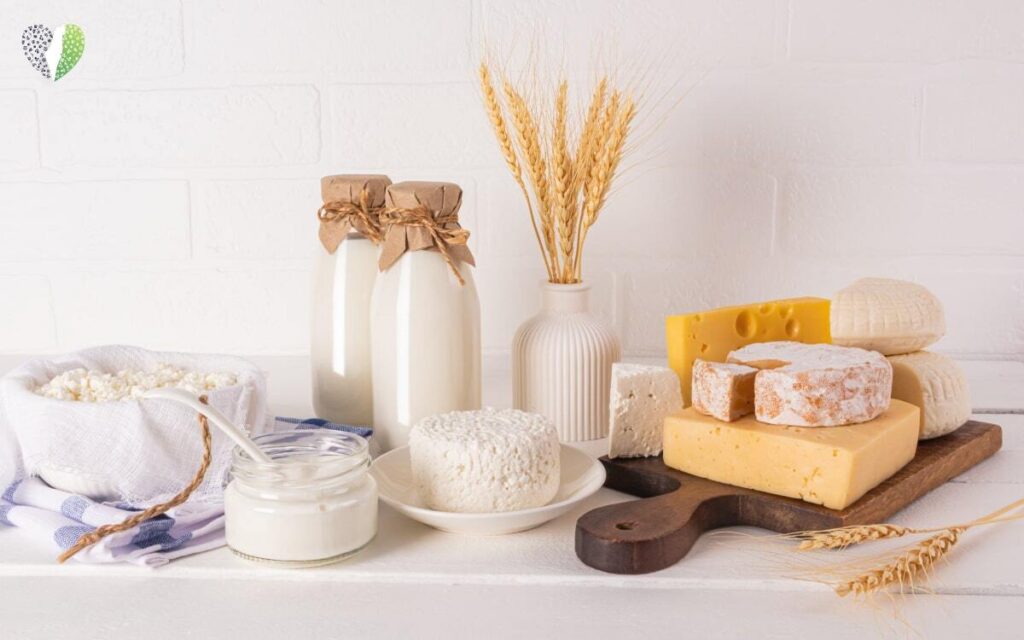
A Holiday of Tradition, Gathering, and Shared Tables ✨ What Shavuot Really Celebrates ​ Shavuot marks the giving of the Torah at Mount Sinai. But beyond its historical meaning, it’s also deeply connected to the land itself – a harvest festival, celebrating the first fruits of the season. In Israel, this connection is still very much alive. Fields ripen. Markets fill with fresh produce. Homes prepare for a holiday centered around gratitude, simplicity, and togetherness. 🧀 Why Dairy Foods? ​ One of the most recognizable Shavuot traditions is the custom of eating dairy foods. There are many explanations behind it...
Show more
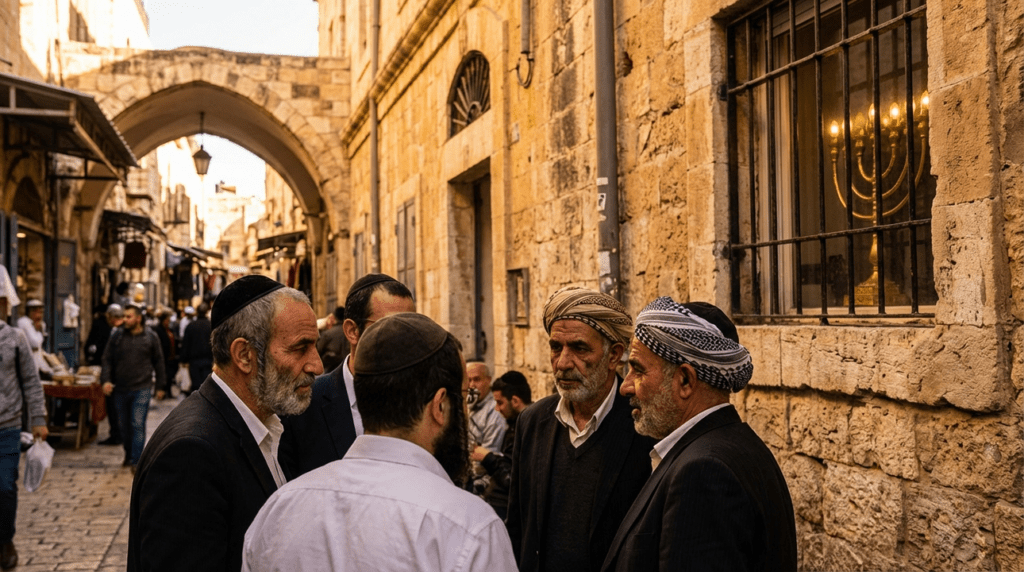
Group in traditional Jewish headwear conversing in sunlit Jerusalem street.

Understanding the Hebrews’ Journey to Slavery in Egypt

Joseph’s story is one of betrayal and redemption, as he rose from being sold into slavery by his brothers to becoming a powerful figure in Egypt. His journey laid the groundwork for his family’s migration to Egypt, a move that initially promised prosperity but eventually led to their enslavement. This complex narrative highlights the themes of survival, resilience, and the enduring spirit of the Hebrew people, setting the stage for their eventual liberation and the legacy of their struggle. The Hebrews’ Arrival in Egypt The journey of the Hebrews to Egypt begins with Joseph, a Hebrew sold into slavery by...
Show more
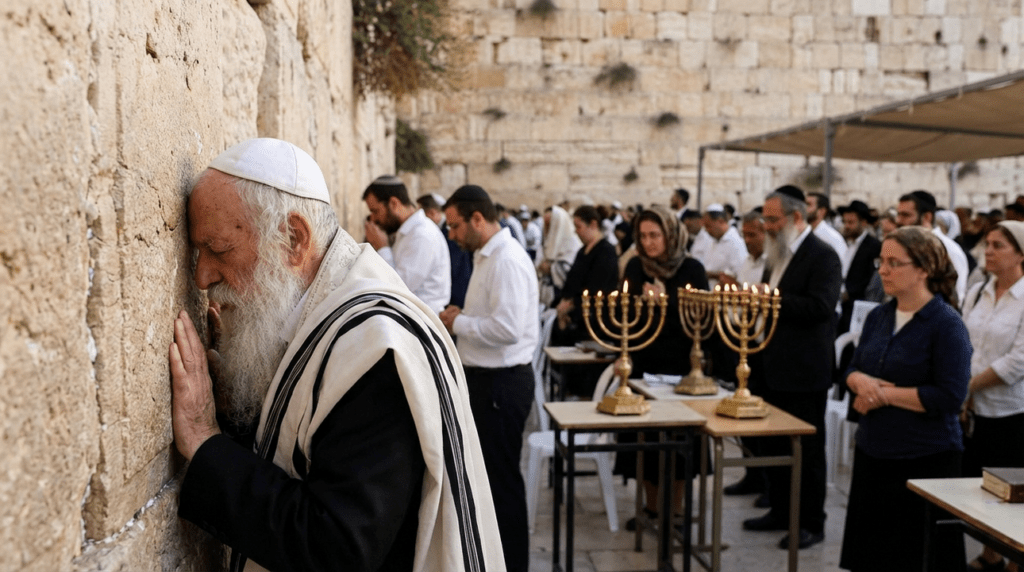
Elderly Jewish man praying at the Western Wall during Yom Kippur.

Understanding Yom Kippur and Its Traditions

Yom Kippur, as outlined in Leviticus 16:29-31, underscores the importance of atonement and reconciliation, both with oneself and with others. Through introspection and efforts to rectify past wrongs, individuals contribute to the betterment of their communities. This communal aspect is reflected in the shared prayers and rituals, uniting participants in a common purpose. As such, Yom Kippur remains a vital component of Jewish identity, promoting values of compassion, justice, and personal responsibility. This article explores the traditions and spiritual essence of Yom Kippur, offering readers a connection to its historical and cultural foundations. It delves into the practices preserved over...
Show more
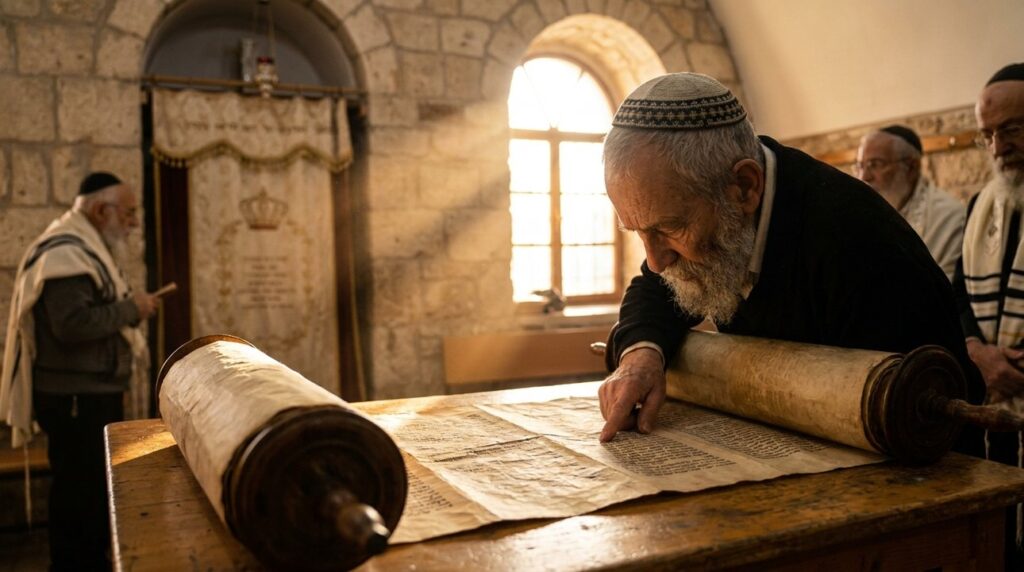
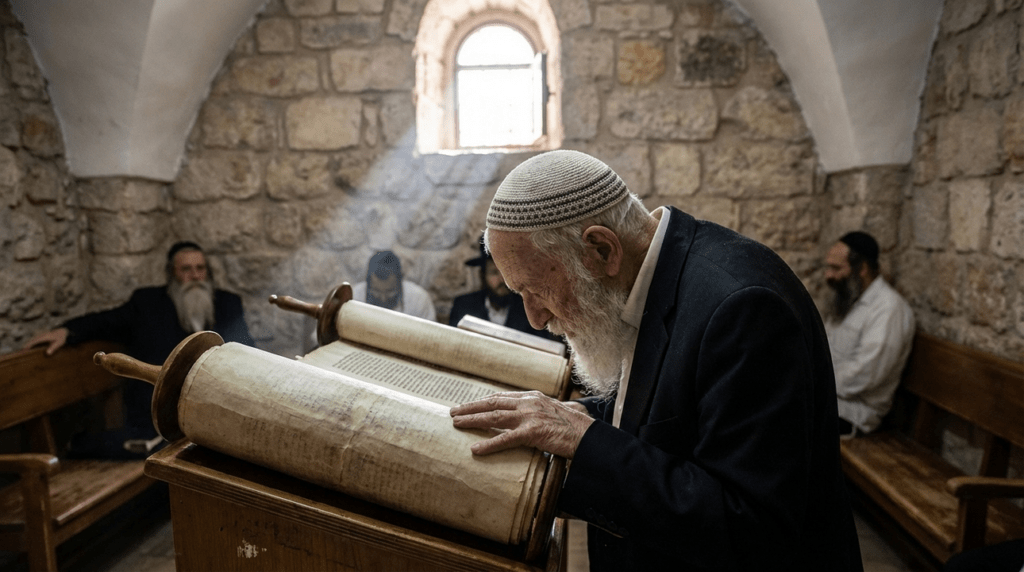
Elderly man wearing kippah reads Torah in sunlit Jerusalem synagogue.

Discovering the Unique Traditions of Israel

Religious Observances and Festivals Religious festivals play a significant role in Israeli culture. One prominent example is Hanukkah, the Festival of Lights celebrated over eight days. During this time, families gather to light menorahs and enjoy traditional foods like latkes and sufganiyot. The menorah lighting is a reminder of the miracle where the oil lasted eight days, as recorded in the Talmud. Hanukkah celebrates the miracle of the menorah burning for eight days with limited oil and is a time for family and community celebrations. This festival, along with others like Passover and Shavuot, highlights the importance of tradition and...
Show more
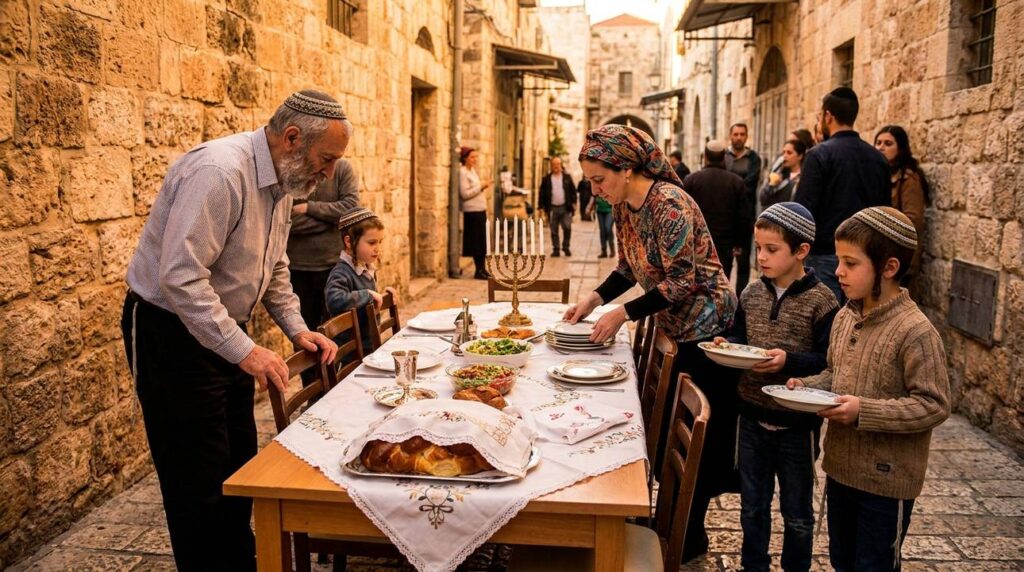
Jewish family preparing Shabbat dinner in an ancient Jerusalem alley.

Exploring Israel’s Culture: After Solomon’s Death and Clothing Traditions

The split led to the development of distinct cultural identities, with each kingdom adopting unique practices and traditions. The northern kingdom, with its capital in Samaria, often faced external threats, influencing its cultural and religious practices. In contrast, Judah, centered in Jerusalem, maintained a strong connection to its religious heritage, as seen in the continued importance of the Temple. These differences are reflected in the writings of prophets like Amos and Micah, who addressed the social and spiritual challenges of their respective regions. Israel After Solomon: The Split and Its Impact The death of King Solomon marked a pivotal moment...
Show more
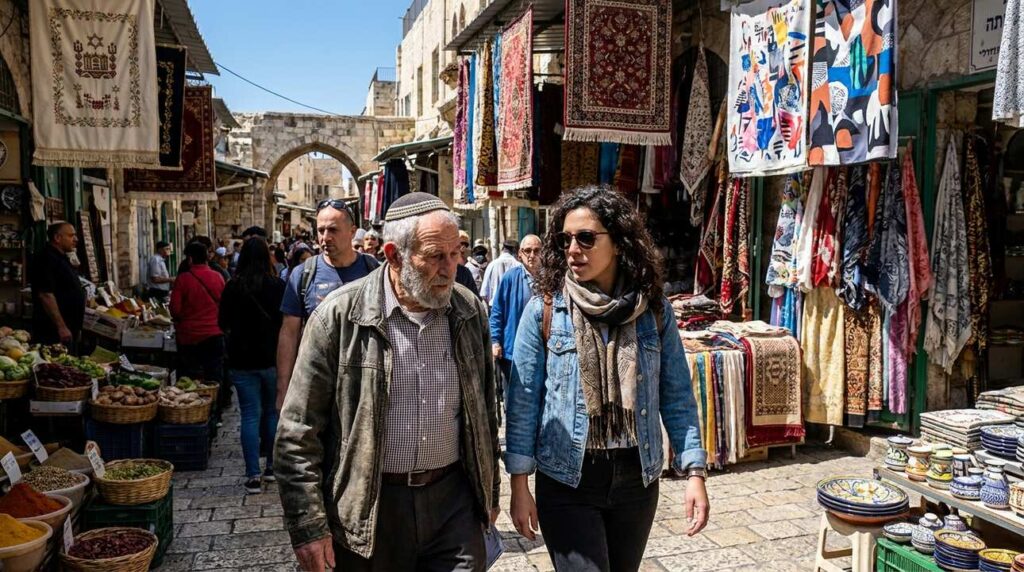
Elderly man in kippah and stylish young woman in Jerusalem market.

Exploring Clothing Traditions and Modern Styles in Israel

The tallit, a traditional prayer shawl, is a key element of Jewish attire. It serves as a physical reminder of the commandments, worn during prayer and religious ceremonies. This garment, along with others, illustrates how Israeli fashion is a living narrative, connecting past and present through threads of tradition. The tallit is often adorned with tzitzit, as instructed in Numbers 15:38-39, serving as a reminder of the 613 commandments. The tallit’s four corners and fringes symbolize the Jewish people’s connection to the divine and their commitment to follow the commandments. The act of wrapping oneself in the tallit during prayer...
Show more
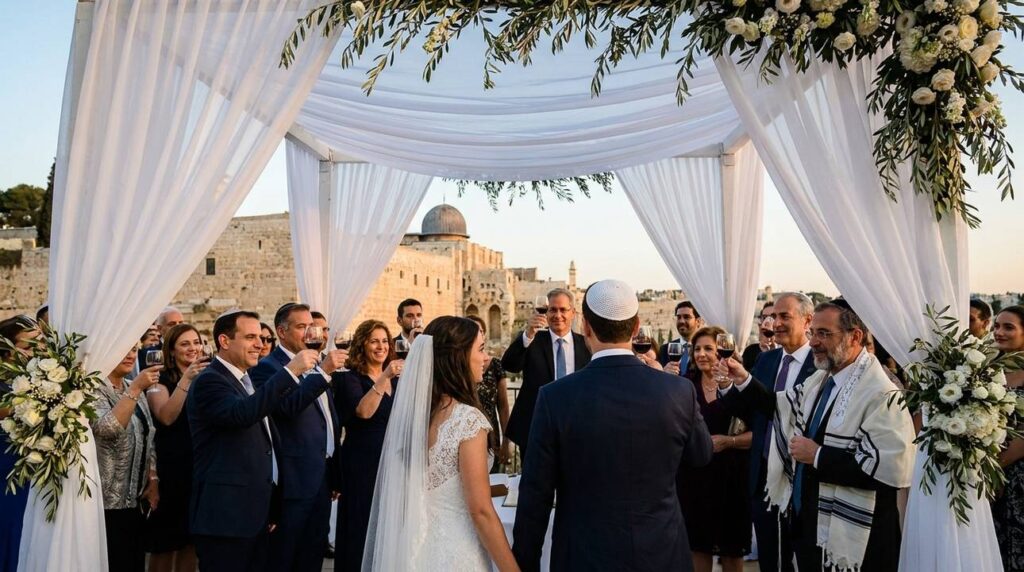
Bride and groom under a chuppah, guests with wine, Jerusalem backdrop.

Understanding Biblical Wedding Traditions in Israeli Culture

The Bible often highlights marriage as a covenant, as seen in Malachi 2:14, emphasizing commitment and faithfulness. These traditions, deeply rooted in history, reflect the values and beliefs that have been passed down through generations. By exploring these ancient customs, one gains insight into the spiritual and communal aspects that continue to resonate in contemporary wedding ceremonies. The Betrothal: A Sacred Promise In the Bible, marriage begins with the stage known as betrothal. This is more binding than modern engagements and is often accompanied by a formal written contract. According to biblical laws, a betrothal required a solemn promise, with...
Show more
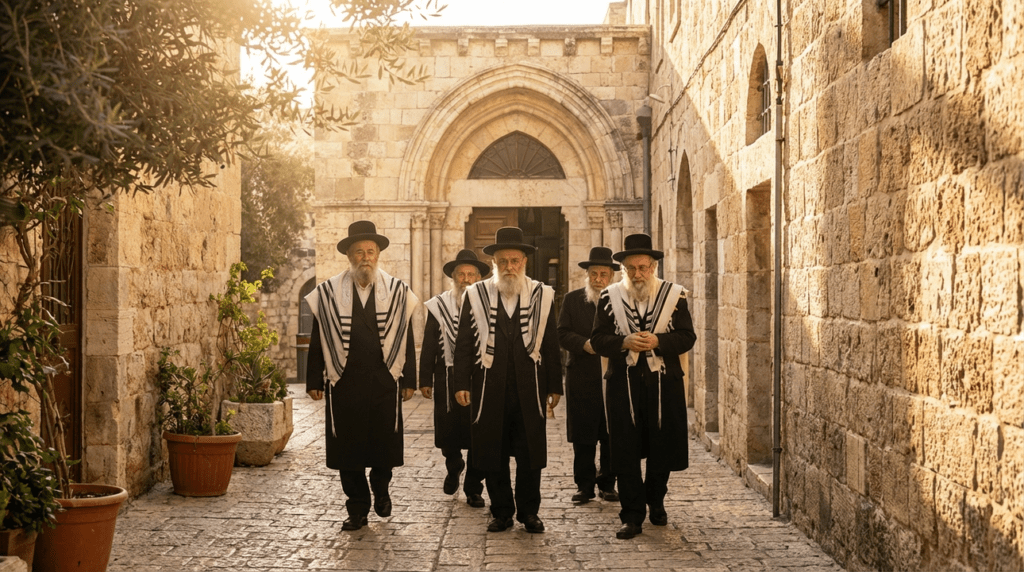
Elderly Jewish men walking to a synagogue in Jerusalem morning.

Mount Sinai and Mount Zion: A Comparison of Significance

This article explores their distinct significance and how they serve as pillars of Jewish tradition. Known for its pivotal role in the Bible, Mount Sinai is where Moses received the Ten Commandments (Exodus 19:20). This event marked the establishment of the covenant between the divine and Israel, symbolizing law and order. In contrast, Mount Zion is often seen as the spiritual heart of Jerusalem, representing the aspirations of the Jewish people. It is mentioned in the Psalms, such as Psalm 48, highlighting its importance as a place of joy and spiritual fulfillment. Together, these mountains illustrate the journey from law...
Show more
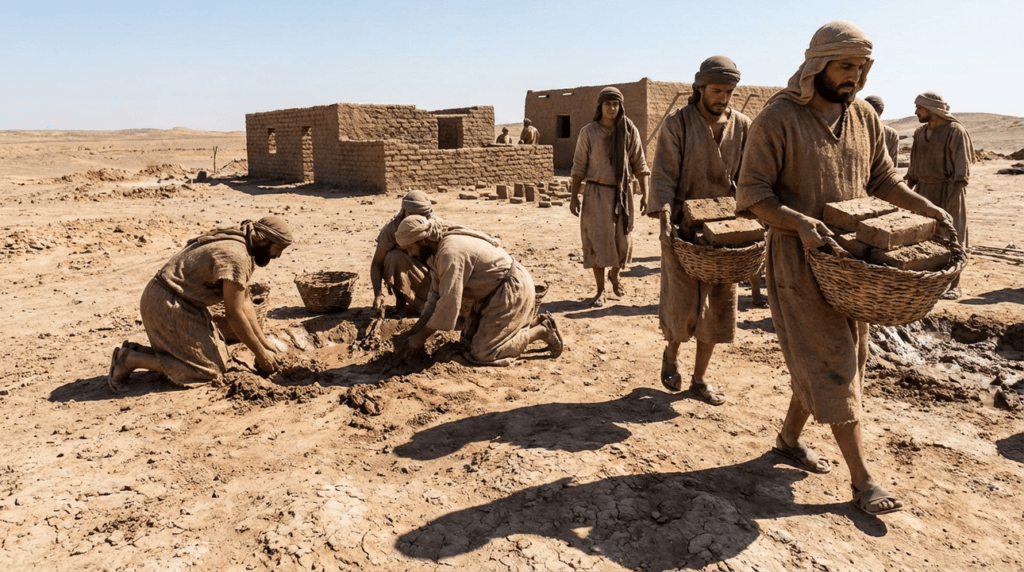
Hebrew individuals making bricks and carrying loads in a desert.

Understanding the Egyptian Enslavement of the Hebrews

The enslavement of the Hebrews by the Egyptians is a pivotal event in history. It is central to Jewish cultural memory and raises many questions about human resilience and the power of faith. This event is documented in the Book of Exodus, where the plight of the Hebrews is described in detail. The story begins with the arrival of Jacob’s family in Egypt, as noted in Genesis 46:27, and unfolds over several generations. This article aims to explore the reasons behind this enslavement and the historical context that led to it. The Egyptian empire during this period was a dominant...
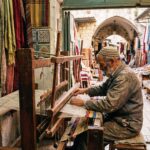
Show more
Elderly Jewish man reads Torah in a sunlit Jerusalem synagogue.
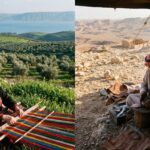
Understanding Language Use in Israel

Israel is a country rich in culture and history, with a vibrant blend of languages. Hebrew, the official language, has been central since the establishment of the State of Israel in 1948. Its revival is a remarkable story, with figures like Eliezer Ben-Yehuda playing a pivotal role. He is often called the “father of modern Hebrew” for his efforts to revive the language. This article delves into the language dynamics of modern Israel, exploring the prevalence and relationship between Hebrew and English. English, widely spoken, acts as a bridge to the global community, enhancing Israel’s international ties. The Status of...
Show more
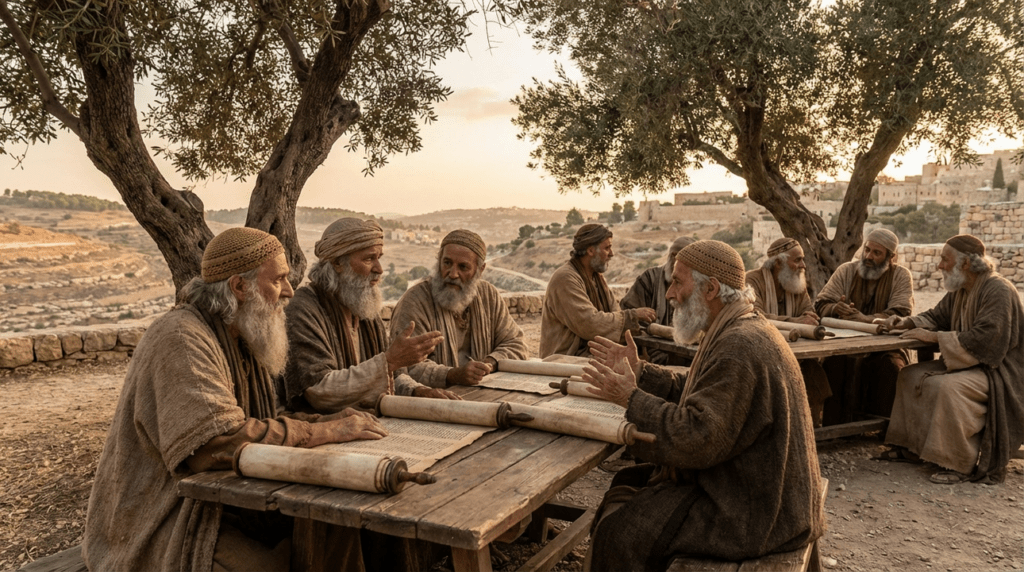
Elderly men in kipas discuss texts in an olive grove.

Understanding the Enslavement of the Hebrews in Egypt

The story of how the Hebrews became slaves in Egypt is a poignant chapter in the Torah. This narrative outlines not only a historical event but also underscores themes of perseverance and identity. Understanding the context behind this story requires a look into both the scriptural accounts and archaeological evidence. For instance, Exodus 1:11 mentions the Israelites’ labor in building cities like Pithom and Rameses. These cities were significant in the Egyptian empire, serving as store cities for the Pharaoh. This article seeks to unravel the complex tapestry of history and culture that led to the Israelites’ bondage in Egypt....
Show more

See other categories

Stunning landscapes and vibrant culture of Israel
All About Israel
Ancient Places
Ancient scrolls and artifacts related to Biblical Studies
Biblical Studies
Hands holding a heart symbolizing support and community
Charity and Social Responsibility
Assorted Israeli dishes and beverages
Food and Beverages from Israel
Scenic view of Israeli landscape with traditional elements
General
Scenic view of Israel's diverse landscapes
Geography & Travelling of Israel
Open Hebrew book with traditional script
Hebrew Language and Literature
Historic Places
We use cookies to provide the best site experience
Lev Haolam logo
Lev Haolam Facebook page Lev Haolam YouTube Follow Lev Haolam on Twitter Instagram Lev Haolam Lev Haolam Pinterest
© 2015 – 2026 Lev Haolam
Become a member Update my details
Contact Us
+972 23721384 +1 (531) 208 1263
Customer Support: 24/6 · Sun–Fri (till 4pm)

Closed on Shabbat hours & Israeli public holidays
support@levhaolam.com
Lev Haolam copyright
Lev Haolam World Ltd.
Luleem Business Center, Kfar
Etzion 9091200, Israel
Israeli Company Number: 515056927
Become a member Update my details
Privacy Policy Terms & Conditions AI Information About Lev Haolam
Mastercard payment for Israel gifts Visa card Maestro card American Express payment option PayPal – pay for your Israel box Secure payment for Israel boxes
© 2015 – 2026 Lev Haolam