
Discover the Delights of Israeli Shakshuka


Shakshuka, a dish with vibrant flavors and captivating history, holds a special place in Israeli cuisine. It’s more than just a meal — it’s a beloved tradition.
Originating from North Africa, it was brought to Israel by Jewish immigrants. The dish’s name comes from the Arabic word for ‘mixture’, reflecting its diverse ingredients.
This article explores the essence of Shakshuka, tracing its roots and providing a delightful recipe to enjoy at home.
In short: Shakshuka is a culinary journey that tells the story of migration and cultural fusion, offering a taste of Israel’s rich history and vibrant present. The dish’s origins in North Africa and its adaptation in Israel mirror the journeys of Jewish communities throughout history, much like the story of Joseph, who traveled from Canaan to Egypt (Genesis 37:28).
Today, Shakshuka is a beloved part of Israeli cuisine, symbolizing the blending of diverse cultures.
Origins of Shakshuka
Shakshuka is a dish that has traveled through time and cultures. Believed to have Mediterranean roots, this flavorful concoction of tomatoes, spices, and eggs has been embraced warmly by Israeli cuisine.
Its name, derived from the Arabic word meaning ‘a mixture’, perfectly describes the harmonious blend of simple ingredients that create this iconic dish. The dish arrived in Israel with North African immigrants, making its way into the hearty breakfasts enjoyed across the country today.
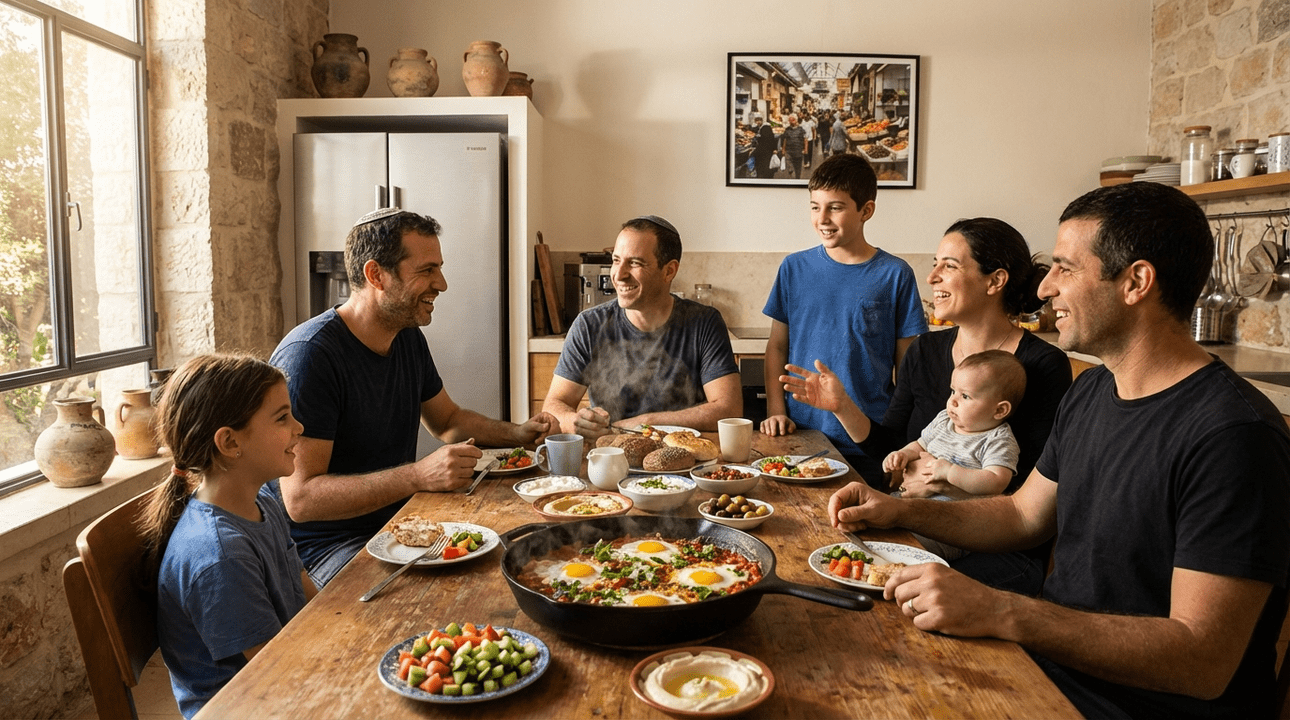
This journey of Shakshuka from the traditional kitchens of Tunisia to Israeli breakfast tables reflects the rich tapestry of culinary influences that define Israeli food culture. Shakshuka’s versatility has made it a cherished part of family gatherings and friendly brunches in Israel.
Each serving tells a story, linking modern kitchens with ancient culinary traditions that span across regions. In the Bible, meals were often a time for sharing and community, as seen in the story of Abraham’s hospitality (Genesis 18:1-8).
How to Make Classic Israeli Shakshuka
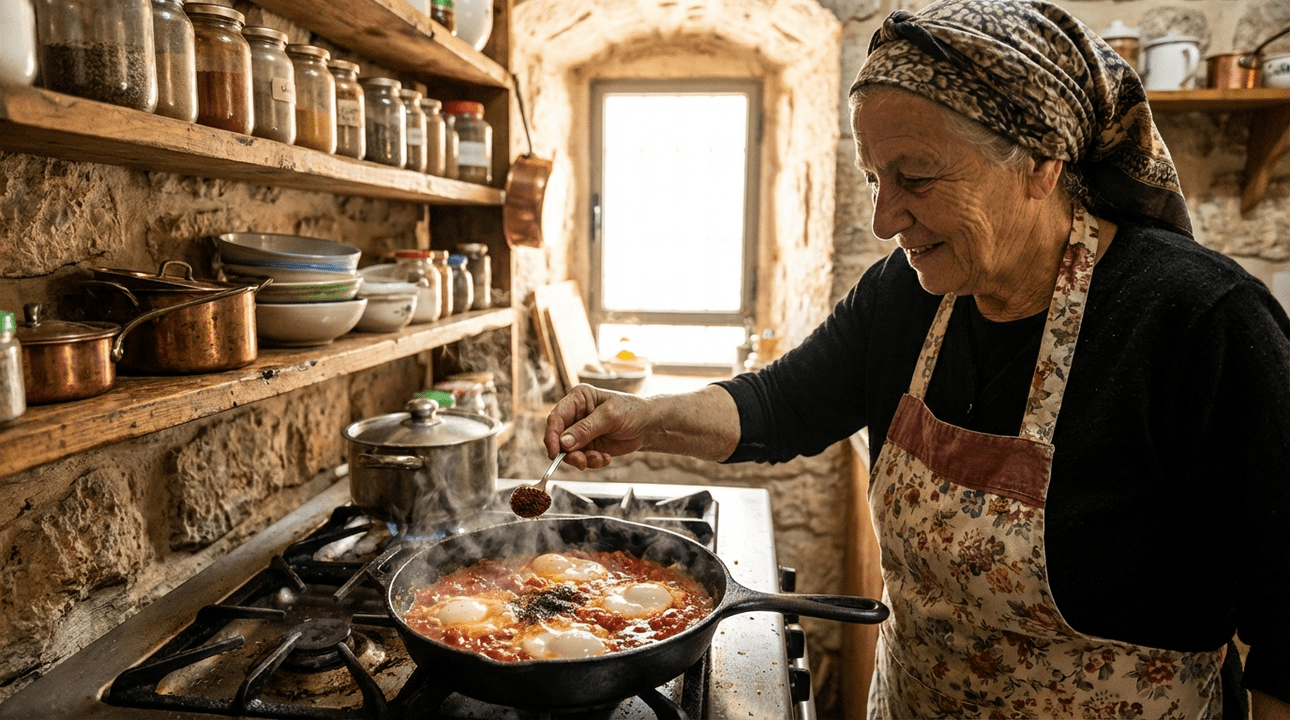
Preparing Shakshuka is as much about the process as it is about the enjoyment of the meal. A typical Shakshuka recipe includes ripe tomatoes, bell peppers, onions, garlic, and an array of spices like cumin and paprika. These ingredients simmer together to create a rich, aromatic sauce.
Once the sauce reaches the perfect consistency, eggs are gently cracked into the mixture, allowing them to poach in the tomatoey embrace. This method is reminiscent of the careful preparation of offerings in the Bible (Leviticus 2:1-2).
The key to a perfect Shakshuka lies in timing and patience. Ensuring the eggs are cooked just right so the yolks remain slightly runny enhances the dish’s texture.
Serve it hot, garnished with fresh herbs, and accompanied by warm bread to soak up the flavorful sauce. In biblical times, bread was a staple, as seen in Genesis 18:6 when Sarah prepares bread for guests.
Shakshuka can easily adapt to various palates, inviting chefs to experiment with additional spices or ingredients.
In short: Mastering Shakshuka requires balance and creativity, making it a versatile dish that invites personal expression while honoring its roots. The process is akin to the craftsmanship described in Exodus 31:3-5, where artisans were filled with creativity to create beautiful works.
Each cook can add their unique touch, whether through spices or presentation, while staying true to the dish’s original essence.
Variations Across Israel
While the classic Shakshuka is cherished, various regional adaptations exist, reflecting local tastes and ingredients available across Israel.
For instance, Green Shakshuka, using spinach or kale, offers a nutritious twist on the traditional recipe. In the Bible, green herbs were part of the Passover meal, as noted in Exodus 12:8.
Some may prefer adding feta cheese, providing a creamy contrast to the tomato base. These variations allow cooks to express creativity while honoring the dish’s roots.
In short: Shakshuka’s regional variations highlight Israel’s culinary diversity, allowing each cook to add their unique touch while staying true to tradition. In the Bible, diversity of offerings was celebrated, as seen in Leviticus 23:10, which speaks of bringing the first fruits of the harvest.
Similarly, Shakshuka’s adaptations reflect the rich tapestry of flavors found across Israel’s regions, from the Negev to the Galilee.
These variations allow for creativity while staying true to the essence of what makes Shakshuka so delightful.
In certain areas, you can find spicy versions, where hot peppers bring an additional kick to this already dynamic dish. In the Bible, spices were highly valued, as noted in 1 Kings 10:2, where the Queen of Sheba brings spices to King Solomon.
Such diversity within a single dish showcases the rich culinary landscape found within Israel, celebrating both tradition and innovation.
In short: Shakshuka’s adaptability reflects Israel’s diverse culinary heritage, inviting chefs to explore flavors while honoring tradition. Israel’s culinary scene is a melting pot, much like the biblical story of Ruth, who embraced new traditions while preserving her heritage (Ruth 1:16).
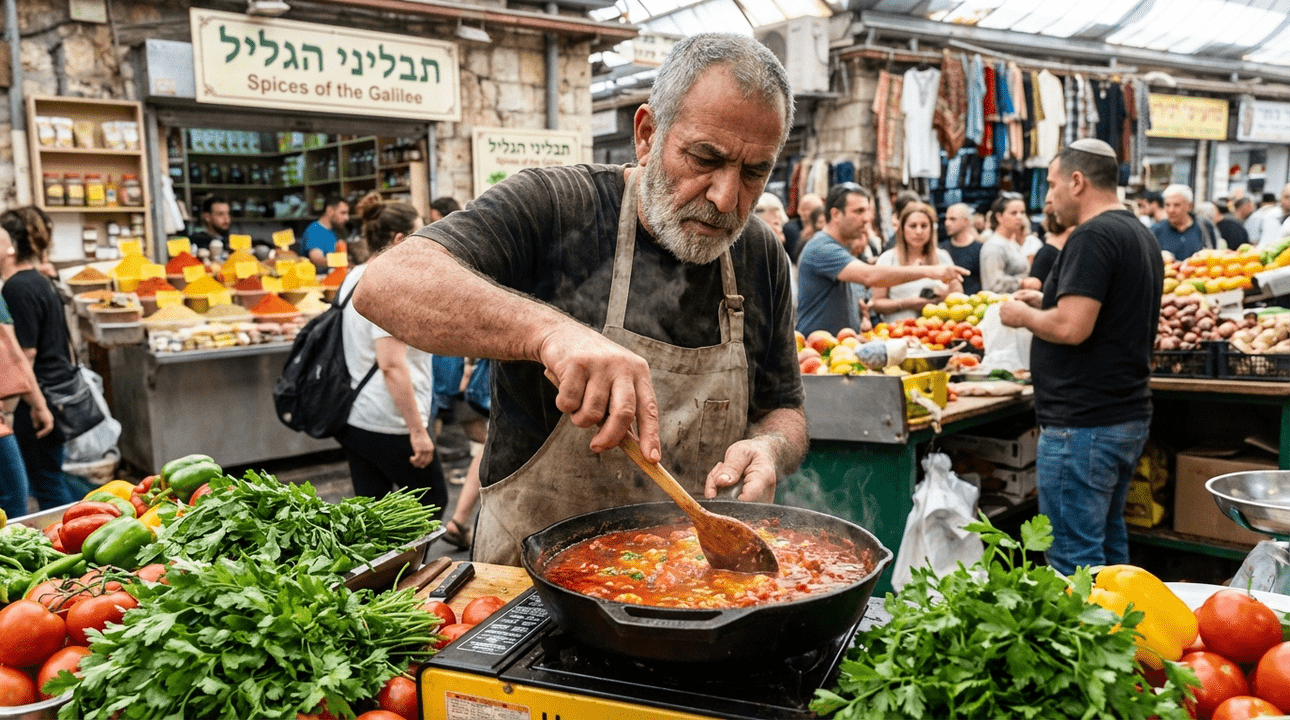
This adaptability allows chefs to incorporate local ingredients, such as fresh herbs from the Galilee, creating unique versions that still pay homage to the dish’s North African roots.
The Cultural Significance of Shakshuka
Beyond its flavors, Shakshuka embodies the spirit of Israeli culture: communal, warm, and inviting.
Shared often at family tables and community gatherings, it symbolizes hospitality and connection. In the Bible, hospitality is a cherished value, as seen in the story of Abraham welcoming strangers in Genesis 18:1-8.
Each bite is a reminder of traditions passed down through generations, much like the oral histories shared by elders, keeping the spirit of community alive.
In short: Shakshuka is more than food; it’s a cultural bridge linking past and present, inviting everyone to partake in its warmth and unity. The dish’s origins trace back to North Africa, but its journey to Israel mirrors the migration stories of many Jewish communities, similar to the Israelites’ journey from Egypt (Exodus 12:37).
Today, Shakshuka is a staple in Israeli cuisine, embodying the spirit of unity and shared heritage.
This dish plays a pivotal role in Israeli mornings, whether as a hearty breakfast or a comforting brunch.
The aroma of simmering spices is enough to bring family and friends together, creating memories around the dining table. In ancient Israel, communal meals were significant, as seen in Exodus 12:3-4 during Passover.
It’s a dish that invites conversation and laughter, fostering a sense of belonging and shared joy. Shakshuka’s warmth and flavor make it a beloved tradition.
In short: Shakshuka is not just a meal; it’s a morning ritual that strengthens bonds and creates lasting memories. In many Israeli homes, the preparation of Shakshuka is a family affair, reminiscent of the communal meals described in Exodus 12:3-4, where families gathered to share food and stories.
The dish’s vibrant colors and rich flavors invite everyone to participate, making it a beloved tradition that brings people together, much like the ancient feasts of Israel.

Conclusion: Embrace the Taste of Shakshuka
Shakshuka is more than just a meal — it’s an experience that unites tradition and taste. Whether enjoyed in a bustling Israeli market or recreated in your own kitchen, the dish promises both nourishment and delight.
A symbol of Israeli culinary heritage, it remains as vibrant and beloved today as ever. Explore the flavors and stories of Israel by preparing Shakshuka, and allow this dish to bring warmth and flavor to your table, much like the communal feasts described in 1 Kings 4:22-23.
By understanding and experiencing the joy of Shakshuka, you’re embracing a rich tapestry of history and flavors.
It’s a reminder of the beauty in simplicity and the profound connections that food can create. In ancient times, meals were central to community life, as seen in 1 Samuel 9:13, where Samuel hosts a feast.
May every bite of Shakshuka invite you into the heart of Israeli hospitality and culinary excellence, celebrating both tradition and innovation.
In short: Shakshuka is not just a dish; it’s an invitation to experience the warmth and community spirit of Israel, one flavorful bite at a time. The dish is often enjoyed during leisurely brunches, reminiscent of the communal gatherings mentioned in 1 Samuel 9:13, where meals were central to social life.
By sharing Shakshuka, people embrace the hospitality and generosity that are hallmarks of Israeli culture.
All About Shakshuka
