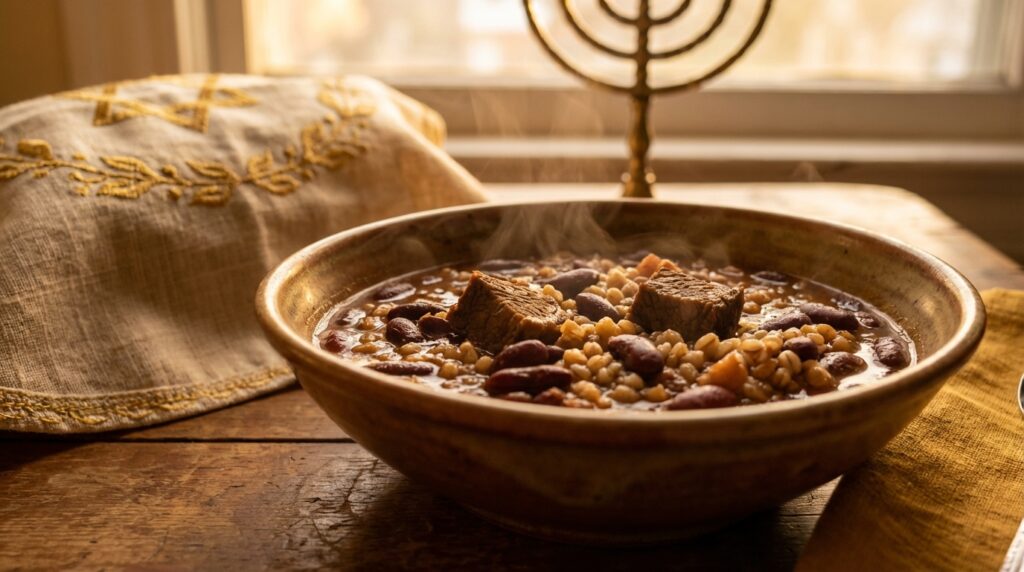
Heartwarming Hungarian Cholent for Family Gatherings

A Traditional Ashkenazi Delight
Explore the comforting taste of Hungarian Cholent, a beloved Ashkenazi dish, perfect for cozy family meals. Learn its history and enjoy a step-by-step guide to making it at home.
Image illustrating:Heartwarming Hungarian Cholent for Family Gatherings
8
David Pliner
Culinary & Israeli Heritage Enthusiast
Discover the rich flavors of Hungarian Cholent, a traditional Ashkenazi dish perfect for family gatherings.

Health Benefits

  • Rich in protein and fiber from beans and barley.
  • Slow-cooked for enhanced nutrient absorption.
  • Low in fat when using lean beef cuts.

Ingredients

Beef brisket
1 kg
Dried beans
2 cups
Barley
1 cup
Onions
2, chopped
Garlic
4 cloves, minced
Paprika
2 tbsp
Salt
to taste
Black pepper
to taste
Water
6 cups

Chef's Tips for Perfect Cholent

For the best results, soak the beans overnight to ensure they cook evenly. Use a mix of beef cuts for a richer flavor. Remember, patience is key; let the cholent simmer slowly for the best taste.

Instructions

  • 1
    1
    Prepare the Ingredients
    Begin by soaking the beans in water overnight. This will ensure they cook evenly and absorb flavors better. Chop the onions and mince the garlic, setting them aside for later use.
  • 2
    2
    Brown the Meat
    In a large pot, heat some oil over medium heat. Add the beef brisket, browning it on all sides. This step enhances the flavor of the meat and adds depth to the dish.
  • 3
    3
    Combine Ingredients
    Once the meat is browned, add the chopped onions and minced garlic to the pot. Stir in the paprika, salt, and black pepper, allowing the spices to coat the ingredients evenly.
  • 4
    4
    Add Beans and Barley
    Drain the soaked beans and add them to the pot along with the barley. Pour in the water, ensuring all ingredients are submerged. Stir well to combine.
  • 5
    5
    Simmer Slowly
    Bring the mixture to a boil, then reduce the heat to low. Cover the pot and let it simmer for 8-10 hours. This slow cooking process allows the flavors to meld and the ingredients to become tender.
  • 6
    6
    Check and Serve
    Periodically check the cholent, adding more water if necessary to prevent it from drying out. Once the beans and meat are tender, the dish is ready to serve. Enjoy it hot, accompanied by pickles or bread for a traditional touch.

The Rich History of Hungarian Cholent

Hungarian Cholent is a beloved dish in Ashkenazi Jewish cuisine.

Originating from Jewish communities in Hungary, cholent has been a staple for generations. This hearty dish was traditionally prepared on Fridays to be enjoyed on Shabbat, as it could be left to cook slowly without additional work. Its rich flavors and comforting texture made it a favorite for family gatherings.
The ingredients of Hungarian Cholent reflect the agricultural bounty of the region, with beans, barley, and meat forming the core components. These ingredients were not only accessible but also provided the necessary sustenance for the cold winters. The slow-cooking process allowed the flavors to meld beautifully, creating a dish that was both nourishing and delicious.
In many Ashkenazi households, the preparation of cholent became a cherished family tradition. Each family had its own unique recipe, often passed down through generations. The communal aspect of preparing and sharing cholent fostered a sense of unity and connection within the community.

Cholent’s popularity extends beyond Hungary, enjoyed by Jewish communities worldwide.

As Jewish communities migrated, they brought their culinary traditions with them, spreading the love for cholent across the globe. In each new location, the dish adapted to local tastes and available ingredients, yet its essence remained unchanged. This adaptability is a testament to the enduring appeal of cholent.
Today, Hungarian Cholent is celebrated not only for its taste but also for its cultural significance. It serves as a reminder of the resilience and creativity of the Jewish people, who transformed simple ingredients into a dish of profound meaning and comfort. Whether enjoyed at a family gathering or a community event, cholent continues to bring people together.
The dish’s evolution over time reflects the broader history of the Jewish diaspora, illustrating how food can serve as a bridge between past and present.

Modern variations of cholent include vegetarian options and diverse spice blends.

While traditional recipes remain popular, many cooks today experiment with new ingredients and techniques. Vegetarian cholent, for example, replaces meat with hearty vegetables and legumes, offering a lighter yet equally satisfying alternative. This innovation keeps the dish relevant and accessible to a wider audience.
Spices such as paprika and cumin are sometimes added to enhance the flavor profile, reflecting the influence of global culinary trends. These variations demonstrate how cholent continues to evolve while honoring its roots. The dish’s ability to adapt while maintaining its core identity is a key factor in its enduring popularity.
Whether sticking to tradition or embracing new flavors, Hungarian Cholent remains a beloved dish that celebrates heritage and community. Its preparation and enjoyment are acts of cultural preservation, connecting individuals to their history and to one another.

Related Recipes

FAQ

Can I use a slow cooker for Hungarian Cholent?
Yes, you can use a slow cooker for this recipe. Set it on low for 8-10 hours.
Can I add vegetables to the cholent?
Yes, you can add vegetables like carrots and potatoes for extra flavor.
How is Hungarian Cholent traditionally served?
Hungarian Cholent is traditionally served hot, often with pickles or bread.