Delicious Foul Salad with Fresh Israeli Flavors
5 March 09:33
329
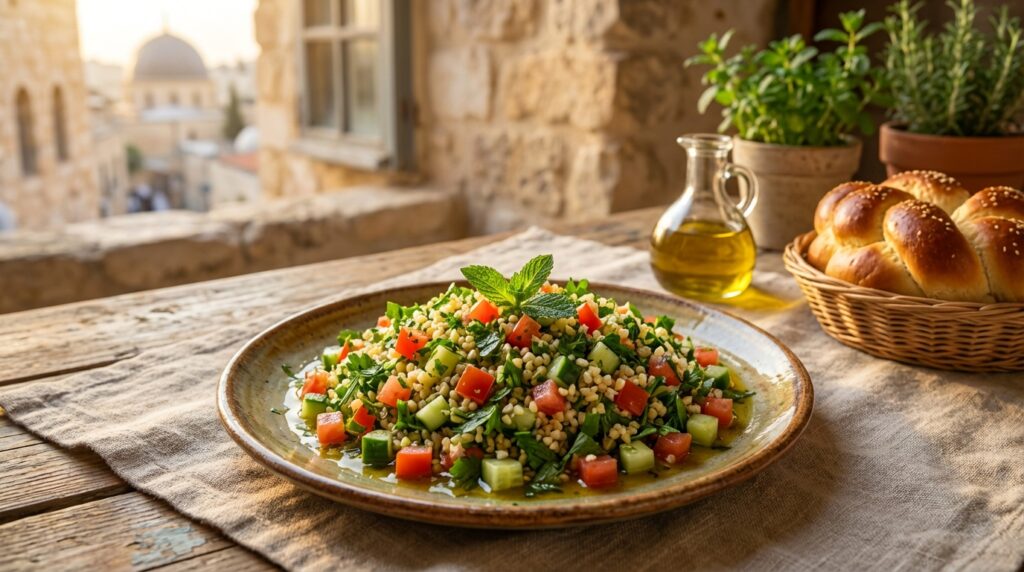

Originating from the Levant region, tabbouleh has been a staple in Israeli kitchens for generations. This salad is celebrated for its vibrant flavors and health benefits. Traditionally, it’s made with bulgur, fresh parsley, mint, tomatoes, and a zesty lemon dressing. Each family has its own variation, making it a personal and cherished recipe.
The word ‘tabbouleh’ comes from the Arabic word ‘taabil’, meaning seasoning. This highlights the importance of fresh herbs and spices in the dish. In Israel, tabbouleh is often served as part of a mezze platter, showcasing the country’s rich culinary heritage. It’s a dish that brings people together, often enjoyed during family gatherings and festive occasions.
Israeli tabbouleh differs slightly from its Lebanese counterpart, with a greater emphasis on vegetables and less on grains. This adaptation reflects the local produce and the Israeli preference for fresh, vibrant salads. The use of ripe tomatoes and crisp cucumbers adds a refreshing crunch, making it a perfect dish for warm weather.
Parsley is the primary herb used in tabbouleh, offering a fresh and slightly peppery taste. It’s packed with vitamins and antioxidants, making the salad not only delicious but also nutritious. Mint is another key ingredient, adding a cooling effect that complements the other flavors. Together, these herbs create a harmonious blend that’s both refreshing and satisfying.
Incorporating fresh, local ingredients is a hallmark of Israeli cuisine. The tomatoes used in tabbouleh are often sun-ripened, providing a natural sweetness that balances the tangy lemon dressing. Cucumbers add a crisp texture, while the bulgur soaks up the flavors, creating a cohesive and flavorful dish. This focus on quality ingredients is what makes Israeli tabbouleh stand out.
Lemon juice and olive oil are essential components of the dressing, enhancing the salad’s flavors. The acidity of the lemon brightens the dish, while the olive oil adds richness and depth. This simple yet effective dressing ties all the ingredients together, making each bite a delightful experience. It’s a testament to the beauty of simplicity in Israeli cooking.
The preparation of tabbouleh is an art in itself, requiring careful chopping and mixing to achieve the perfect balance of flavors. It’s a dish that encourages creativity, allowing cooks to adjust the ingredients to suit their taste. Whether enjoyed as a side dish or a light meal, Israeli tabbouleh is a versatile and beloved part of the culinary landscape.
In many Israeli households, tabbouleh is a symbol of hospitality and warmth. It’s often served to guests as a welcoming gesture, showcasing the host’s culinary skills and generosity. The communal aspect of sharing a meal is deeply ingrained in Israeli culture, and tabbouleh plays a significant role in this tradition. It’s a dish that brings joy and connection to those who share it.
The popularity of Israeli tabbouleh has spread beyond the country’s borders, becoming a favorite in many international kitchens. Its fresh and vibrant flavors appeal to a wide audience, making it a popular choice for those seeking a healthy and delicious meal. The adaptability of the recipe allows it to be customized to suit different dietary preferences, further enhancing its appeal.