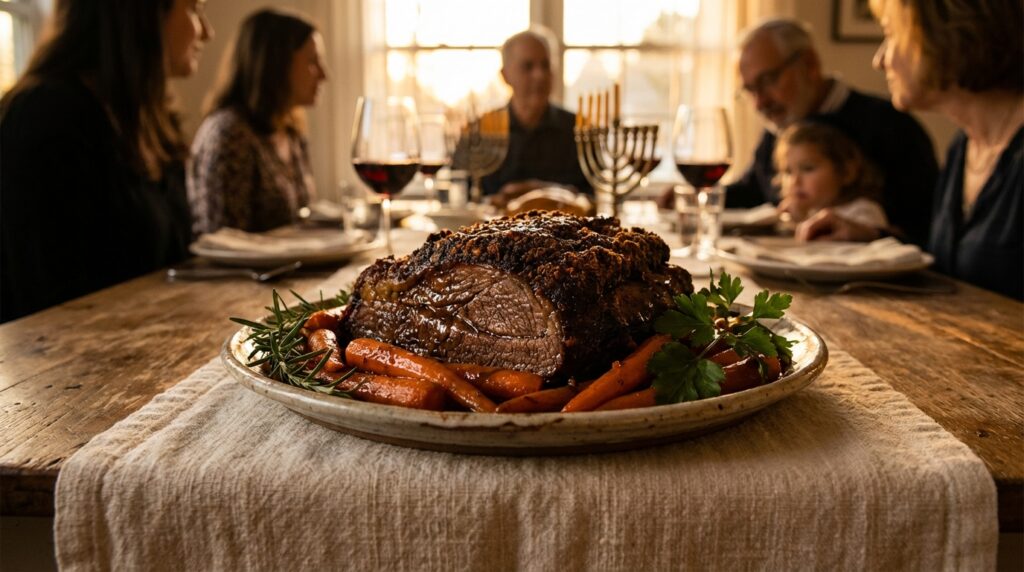
Traditional Passover Meat Dish

A Classic Israeli Meat Recipe for Passover Celebrations
Experience the warmth of Israeli traditions with this hearty Passover meat recipe, bringing families together around the table.
Image illustrating:Traditional Passover Meat Dish
4
David Pliner
Culinary & Israeli Heritage Enthusiast
Discover the rich flavors of Passover with this traditional meat dish, perfect for family gatherings and celebrations.

Health Benefits

  • Beef is a rich source of protein, essential for muscle growth and repair.
  • Carrots provide beta-carotene, which is good for eye health.
  • Garlic has antibacterial properties and boosts the immune system.

Ingredients

Beef brisket
2 kg
Olive oil
2 tablespoons
Onions
2, sliced
Garlic cloves
4, minced
Carrots
3, chopped
Celery stalks
2, chopped
Red wine
1 cup
Beef stock
2 cups
Bay leaves
2
Thyme
1 teaspoon
Salt
to taste
Black pepper
to taste

Chef's Tips

To enhance the flavor, marinate the meat overnight with your favorite herbs and spices. This allows the flavors to penetrate deeply, resulting in a more tender and flavorful dish. When cooking, use a slow and steady heat to ensure the meat is cooked evenly and remains juicy. Consider serving with a side of roasted vegetables for a complete meal.

Instructions

  • 1
    1
    Prepare the Ingredients
    Begin by slicing the onions and chopping the carrots and celery. Mince the garlic cloves and set all the vegetables aside. Trim any excess fat from the beef brisket and season it with salt and black pepper.
  • 2
    2
    Sear the Meat
    Heat the olive oil in a large pot over medium-high heat. Add the beef brisket and sear on all sides until browned. This step helps to lock in the juices and adds a rich flavor to the meat.
  • 3
    3
    Cook the Vegetables
    Remove the brisket from the pot and set it aside. In the same pot, add the sliced onions, chopped carrots, and celery. Cook until the onions are translucent and the vegetables are slightly softened.
  • 4
    4
    Deglaze the Pot
    Pour in the red wine to deglaze the pot, scraping up any browned bits from the bottom. This adds depth to the flavor of the dish. Allow the wine to reduce by half before proceeding to the next step.
  • 5
    5
    Simmer the Meat
    Return the brisket to the pot and add the beef stock, bay leaves, thyme, and minced garlic. Bring the mixture to a simmer, then reduce the heat to low. Cover the pot and let it cook slowly for 3-4 hours, or until the meat is tender.
  • 6
    6
    Serve the Dish
    Once the meat is cooked, remove it from the pot and let it rest for a few minutes before slicing. Serve the brisket with the cooked vegetables and sauce, accompanied by matzo and charoset for a traditional Passover meal.

The Story Behind Passover Meat

Passover meat has been a staple in Jewish households for generations.

The tradition of preparing meat dishes for Passover dates back to ancient times. Families would gather to celebrate the holiday, sharing meals that symbolized freedom and unity. The meat was often cooked with herbs and spices, creating a rich and flavorful dish that everyone could enjoy.
In Israel, Passover is a time of reflection and celebration. The meat dishes prepared during this holiday are not just about nourishment but also about connecting with heritage. Each family has its own recipe, passed down through the generations, adding a personal touch to the festivities.
The preparation of Passover meat involves careful selection of ingredients, ensuring everything is kosher for the holiday. This attention to detail is part of what makes the dish so special. It’s a labor of love that brings families together, creating lasting memories around the dinner table.

Many families have their own secret spice blends for Passover meat.

These spice blends are often closely guarded secrets, handed down from one generation to the next. They add a unique flavor to the meat, making each family’s dish distinct. The spices not only enhance the taste but also tell a story of cultural heritage and personal history.
Cooking Passover meat is a communal activity in many households. Family members come together to prepare the dish, each contributing their skills and knowledge. This collaborative effort strengthens family bonds and ensures that traditions are kept alive.
The aroma of Passover meat cooking is a familiar and comforting scent in many homes. It signals the beginning of the holiday and the gathering of loved ones. The dish is often the centerpiece of the meal, surrounded by other traditional foods that complement its rich flavors.

Passover meat is often served with matzo and charoset.

Matzo, a type of unleavened bread, is a staple during Passover, symbolizing the haste with which the Israelites left Egypt. Charoset, a sweet mixture of fruits and nuts, represents the mortar used by the Israelites during their enslavement. Together, these foods create a meal rich in symbolism and history.
The combination of these traditional foods not only satisfies the palate but also serves as a reminder of the past. Each bite is a connection to the story of Passover, a celebration of freedom and resilience. The meal becomes a living history lesson, passed down through generations.
Preparing and sharing Passover meat is a way to honor ancestors and keep their stories alive. It’s a tradition that transcends time, bringing people together in a shared experience of faith, family, and food.

Related Recipes

FAQ

Can I use lamb instead of beef?
Yes, you can substitute beef with lamb for a different flavor profile.
How long can I store leftovers?
This dish is best served fresh, but you can store leftovers in the fridge for up to 3 days.