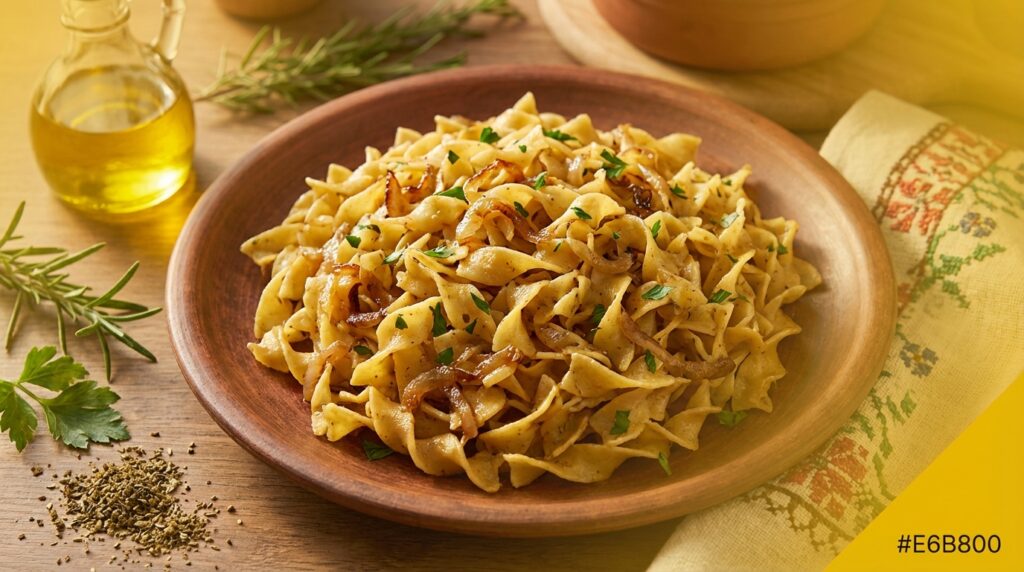
Traditional Jewish Egg Noodles Recipe

A Taste of Tradition in Every Bite
Explore the heartwarming tradition of Jewish egg noodles, a staple in many Israeli homes. Perfect for family meals and celebrations.
Image illustrating:Traditional Jewish Egg Noodles Recipe
3
David Pliner
Culinary & Israeli Heritage Enthusiast
Discover the rich flavors of Jewish egg noodles with this authentic recipe. Perfect for family gatherings and celebrations, these noodles bring a taste of tradition.

Health Benefits

  • Egg noodles are a good source of protein and carbohydrates.
  • They provide essential nutrients like iron and B vitamins.
  • Homemade noodles contain no preservatives or artificial additives.

Ingredients

All-purpose flour
2 cups
Large eggs
3
Salt
1 teaspoon
Water
2 tablespoons

Chef's Tips for Perfect Egg Noodles

For an authentic touch, try using fresh, farm-raised eggs. They add a richer flavor and vibrant color to the noodles. Knead the dough thoroughly for a smooth texture, and let it rest before rolling to make it easier to handle. When cutting the noodles, use a sharp knife for clean edges. Cooking them al dente will ensure they hold up well in soups or sauces.

Instructions

  • 1
    1
    Prepare the Dough
    In a large bowl, combine the flour and salt. Make a well in the center and add the eggs and water. Mix until a dough forms. Knead the dough on a floured surface for about 10 minutes until smooth and elastic. Cover with a damp cloth and let it rest for 30 minutes.
  • 2
    2
    Roll Out the Dough
    Divide the dough into four equal parts. Roll each part out on a floured surface to about 1/8 inch thickness. Keep the remaining dough covered to prevent drying out.
  • 3
    3
    Cut the Noodles
    Using a sharp knife or pasta cutter, cut the rolled dough into thin strips. Aim for uniformity in width to ensure even cooking. Dust the noodles with flour to prevent sticking.
  • 4
    4
    Cook the Noodles
    Bring a large pot of salted water to a boil. Add the noodles and cook for 3-5 minutes until al dente. Drain and rinse under cold water to stop the cooking process.
  • 5
    5
    Serve and Enjoy
    Toss the cooked noodles with your choice of sauce or serve them in a soup. Garnish with fresh herbs or a sprinkle of cheese for added flavor. Enjoy the taste of tradition in every bite.

The Story Behind Jewish Egg Noodles

Jewish egg noodles have been a staple in Israeli kitchens for generations.

These noodles are more than just a dish; they are a connection to the past. Passed down through families, each recipe carries its own unique touch, reflecting the diverse heritage of Jewish communities. The simplicity of ingredients belies the depth of flavor and tradition embedded in each strand.
Historically, egg noodles were a practical choice, made from readily available ingredients. Eggs and flour were staples in many households, and the combination created a versatile base for many meals. Whether served in soups or as a side dish, these noodles provided nourishment and comfort.
In Israel, egg noodles are often associated with festive occasions and family gatherings. They symbolize warmth and togetherness, bringing people around the table to share stories and laughter. The act of making noodles by hand is a cherished ritual, often involving multiple generations working together.

Today, Jewish egg noodles continue to be a beloved part of Israeli cuisine.

Modern adaptations have introduced new flavors and techniques, yet the essence remains the same. Many families still prefer the traditional methods, valuing the connection to their ancestors. The noodles serve as a reminder of resilience and adaptability, qualities that have defined Jewish communities throughout history.
The process of making egg noodles is both art and science. The dough must be kneaded to the perfect consistency, rolled out thinly, and cut with precision. Each step requires patience and skill, transforming simple ingredients into a culinary masterpiece.
For those new to making egg noodles, the experience can be both challenging and rewarding. It offers a chance to connect with a rich cultural heritage, to learn from the past while creating something new. The satisfaction of serving homemade noodles is unmatched, a testament to the love and care invested in every batch.

Egg noodles are versatile and can be paired with various dishes.

From hearty stews to light broths, these noodles complement a wide range of flavors. They can be seasoned with herbs, spices, or simply enjoyed with a drizzle of olive oil. This adaptability makes them a favorite in many households, suitable for any occasion.
Incorporating egg noodles into your meals is a way to honor tradition while embracing innovation. Whether you follow a classic recipe or experiment with new ingredients, the result is a dish that brings joy and satisfaction. It’s a culinary journey that celebrates the past and looks forward to the future.
As you prepare your own batch of Jewish egg noodles, remember the stories and memories that have shaped this beloved dish. Each bite is a tribute to the generations who have kept this tradition alive, a delicious reminder of the enduring spirit of community and family.

FAQ

Can I make this recipe gluten-free?
Yes, you can use gluten-free flour, but the texture may vary slightly.
How should I store leftover noodles?
Store them in an airtight container in the refrigerator for up to 3 days.
Can I freeze the cooked noodles?
Yes, you can freeze them for up to 2 months. Reheat before serving.