Hearty Kreplach Soup to Warm the Heart
17 March 08:44
247
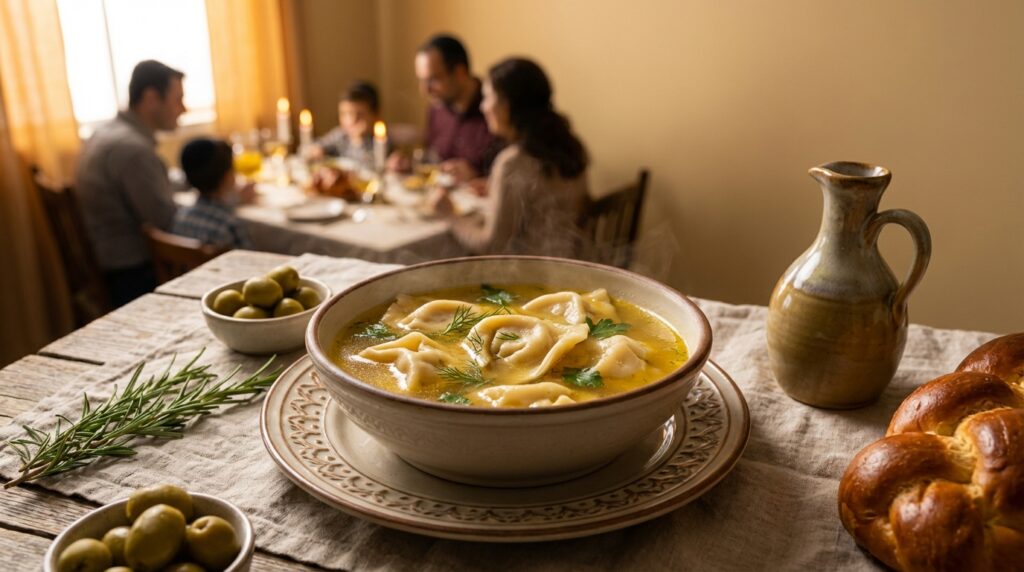

The origins of Kreplach Soup can be traced back to Eastern Europe, where Jewish communities would prepare these dumplings as a special treat for holidays. The name ‘kreplach’ is believed to derive from the Yiddish word for ‘wrapping,’ which perfectly describes the process of encasing savory fillings within dough. Traditionally, kreplach are filled with minced meat, but variations with potatoes or cheese are also popular.
In the Middle East, Kreplach Soup has been embraced as a comforting dish that brings families together. The soup’s rich broth, often made with chicken or beef, complements the tender dumplings, creating a harmonious blend of flavors. This dish is not only a staple during Jewish holidays but also a symbol of warmth and hospitality.
Kreplach Soup has evolved over the years, with each family adding their unique touch to the recipe. Some prefer a clear broth, while others enjoy a more robust, spiced version. Despite these variations, the essence of Kreplach Soup remains the same: a heartfelt dish that nourishes both body and soul.
Making kreplach is often a communal activity, with family members gathering in the kitchen to roll out dough and prepare fillings. This tradition not only strengthens family bonds but also ensures that the art of making kreplach is not lost. Each dumpling is carefully crafted, a testament to the love and care that goes into preparing this dish.
In Israel, Kreplach Soup is a beloved comfort food, enjoyed by people of all ages. It is often served in restaurants and homes alike, especially during the colder months when a warm bowl of soup is most appreciated. The dish’s popularity continues to grow, with chefs experimenting with new fillings and spices to create modern twists on the classic recipe.
The significance of Kreplach Soup extends beyond its delicious taste. It represents resilience and adaptability, qualities that have allowed Jewish communities to thrive despite challenges. By savoring a bowl of Kreplach Soup, one can connect with a rich cultural history and celebrate the enduring spirit of those who came before.
The preparation of Kreplach Soup is a labor of love, requiring patience and skill. The dough must be rolled thin enough to encase the filling without breaking, and the broth must be seasoned to perfection. Despite the effort involved, the end result is a dish that brings immense satisfaction and joy to those who partake in it.
As more people discover the delights of Kreplach Soup, its popularity continues to spread beyond traditional Jewish communities. Food enthusiasts are drawn to its unique combination of textures and flavors, making it a sought-after dish in culinary circles. Whether enjoyed as a starter or a main course, Kreplach Soup never fails to impress.
The enduring appeal of Kreplach Soup lies in its ability to bring people together. Whether shared at a family gathering or enjoyed in a cozy restaurant, this dish fosters a sense of community and belonging. It is a reminder of the simple pleasures in life and the importance of preserving culinary traditions for future generations.