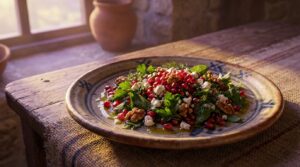
Herb-Infused Pomegranate Delight
26 April 10:52
221
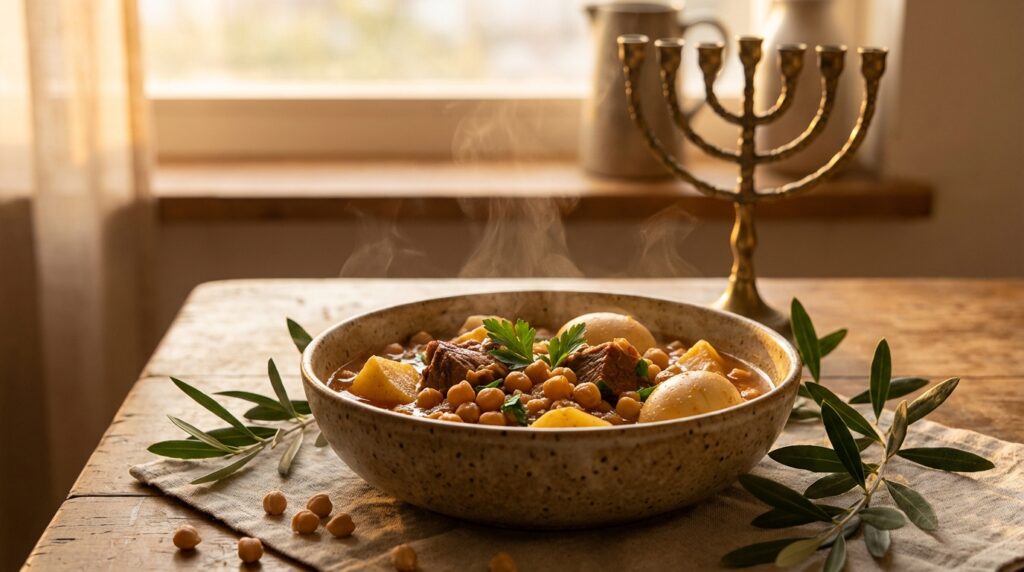

Originating in the Iberian Peninsula, Adafina has been a staple in Sephardic Jewish households for centuries. This dish is traditionally prepared on Fridays and cooked overnight to be enjoyed on Shabbat. The slow cooking process allows the flavors to meld beautifully, creating a hearty and satisfying meal.
The name ‘Adafina’ is believed to derive from the Arabic word ‘dafina’, meaning ‘buried’. This refers to the method of slow cooking the stew in a sealed pot, preserving the flavors and aromas. The dish typically includes meat, chickpeas, and various vegetables, making it both nutritious and flavorful.
Adafina’s ingredients and preparation methods can vary widely depending on regional influences and family traditions. Some versions include eggs, which are cooked in the stew and take on a rich, savory flavor. Others might incorporate different spices or types of meat, reflecting the diverse culinary heritage of the Sephardic community.
For many Sephardic families, preparing Adafina is a cherished tradition that connects them to their heritage. The process of making the stew is often a communal activity, bringing family members together in the kitchen. Sharing Adafina at the table is a way to celebrate family bonds and cultural identity.
In modern times, Adafina continues to be a beloved dish, enjoyed by Sephardic Jews around the world. It represents not only a connection to the past but also a celebration of cultural resilience and adaptation. As families pass down their unique recipes, Adafina remains a living testament to Sephardic culinary traditions.
Whether enjoyed during a festive occasion or as a comforting family meal, Adafina holds a special place in the hearts of those who prepare and savor it. Its rich flavors and historical significance make it a dish that transcends generations.
The dish’s enduring popularity is a testament to its deliciousness and cultural importance. As more people discover the joys of Adafina, it continues to gain appreciation beyond the Sephardic community. Its rich, savory flavors and hearty ingredients make it a perfect dish for sharing with loved ones.
Adafina’s preparation often involves a variety of spices, such as cumin, paprika, and cinnamon, which contribute to its distinctive taste. These spices, along with the slow-cooked meat and vegetables, create a complex and aromatic stew that is both comforting and satisfying.
For those new to Adafina, trying this dish can be a delightful culinary adventure. The combination of flavors and textures offers a unique dining experience that is both nourishing and enjoyable. Whether you’re exploring Sephardic cuisine for the first time or revisiting a beloved tradition, Adafina is sure to impress.