Due to the war in Israel, shipments may be delayed. Thank you for standing with Israel.

Crafting Traditional Israeli Arak at Home

A Step-by-Step Guide to Making Authentic Arak
Learn how to make arak, a cherished Israeli spirit, with this detailed recipe. Explore its history, ingredients, and step-by-step instructions for a perfect homemade brew.
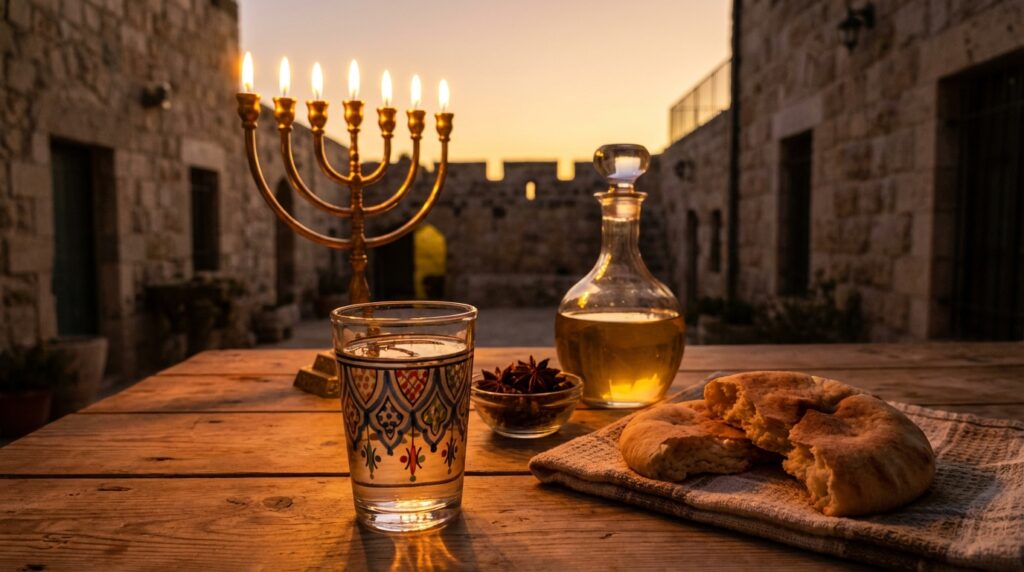
Image illustrating:Crafting Traditional Israeli Arak at Home
10
David Pliner
Culinary & Israeli Heritage Enthusiast
Discover the rich history and delightful taste of homemade arak, a traditional Israeli spirit with a unique anise flavor.

Health Benefits of Arak

  • Arak is often enjoyed in moderation as part of a balanced diet.
  • Aniseed, a key ingredient, is known for its digestive benefits.
  • Homemade arak allows control over ingredients, avoiding additives.

Ingredients for Homemade Arak

Grapes or Dates
5 kg
Aniseed
200 g
Water
10 liters
Sugar
1 kg
Yeast
50 g

Chef's Tips for Perfect Arak

For the best results, use high-quality aniseed and ensure the distillation process is carefully monitored. Patience is key to achieving the perfect flavor balance.

Step-by-Step Instructions

  • 1
    1
    Prepare the Base
    Begin by crushing the grapes or dates to extract the juice. Combine the juice with water and sugar in a large fermentation vessel. Stir until the sugar is fully dissolved.
  • 2
    2
    Fermentation
    Add the yeast to the mixture and cover the vessel with a cloth. Allow it to ferment in a warm, dark place for 2-3 weeks, stirring occasionally. The mixture should become bubbly and aromatic.
  • 3
    3
    Distillation
    Once fermentation is complete, strain the liquid to remove solids. Transfer the liquid to a distillation apparatus. Slowly heat the mixture, collecting the distilled liquid in a separate container.
  • 4
    4
    Flavoring with Aniseed
    Add the aniseed to the distilled liquid and allow it to infuse for several days. This step is crucial for achieving the signature arak flavor. Taste periodically to ensure the desired flavor is reached.
  • 5
    5
    Final Distillation
    Perform a second distillation to purify the arak and enhance its flavor. Collect the final product in a clean container, ensuring no impurities are present.
  • 6
    6
    Bottling and Storage
    Once distilled, bottle the arak and store it in a cool, dark place. Allow it to age for at least a month to develop its full flavor profile before serving.

The Rich History of Arak

Arak is a traditional anise-flavored spirit popular in Israel and the Middle East.

Arak has been cherished for centuries, with its origins tracing back to the Levant region. It is known for its distinct anise flavor, which is achieved through a meticulous distillation process. This spirit is often enjoyed during festive occasions and family gatherings, making it a staple in Israeli culture.
The process of making arak involves distilling fermented grapes or dates, which are then flavored with aniseed. This gives arak its characteristic licorice taste. The tradition of making arak has been passed down through generations, with each family adding its unique touch to the recipe.
In Israel, arak is more than just a drink; it is a symbol of hospitality and celebration. It is often served as an aperitif or mixed with water to create a refreshing beverage. The cloudy appearance of arak when mixed with water is a signature trait, known as the ‘louche’ effect.

Arak is traditionally consumed with mezze, a selection of small dishes.

The pairing of arak with mezze enhances the dining experience, as the flavors complement each other beautifully. Mezze dishes, such as hummus, olives, and roasted vegetables, are commonly served alongside arak, creating a harmonious balance of tastes.
In recent years, arak has gained popularity beyond the Middle East, with many people discovering its unique flavor profile. Bartenders and mixologists have started incorporating arak into cocktails, introducing it to a wider audience and showcasing its versatility.
Despite its growing popularity, traditional methods of making arak remain highly valued. Many small distilleries in Israel continue to produce arak using age-old techniques, ensuring that the spirit retains its authentic taste and cultural significance.

Arak’s popularity has spread beyond the Middle East, reaching global audiences.

As arak becomes more widely recognized, it serves as a cultural ambassador, introducing people to the rich traditions of Israeli cuisine. Its unique flavor and historical significance make it a fascinating subject for culinary exploration and appreciation.
The story of arak is one of tradition, community, and celebration. It embodies the spirit of togetherness and the joy of sharing a meal with loved ones. Whether enjoyed in a traditional setting or as part of a modern cocktail, arak continues to captivate and delight those who experience it.
For those interested in making arak at home, understanding its history and cultural roots adds depth to the experience. By crafting this spirit, you become part of a long-standing tradition, connecting with the past while creating something new.

Related Recipes

FAQ

Can I substitute arak with another spirit?
Yes, you can use other anise-flavored spirits like ouzo or pastis as substitutes.
How should I store homemade arak?
Store arak in a cool, dark place to maintain its flavor and quality.