
Understanding the history of Ramah

Ramah holds a significant place in history. Its importance is highlighted through various narratives and events recorded in cultural texts. Located in the central hill country, it served as a backdrop for many key moments and is woven into the fabric of stories that echo the cultural and thematic elements of the region.
One key event is the burial of Rachel near Ramah. This location also played a role during the period of the Judges, serving as a site where an important figure would hold court. These narratives underscore Ramah’s continued presence in tradition, highlighting its role as a place of both personal and communal significance.
from the Western Wall to Masada.

The city of Ramah is further mentioned in the context of the tribe of Benjamin, as it was allotted to them as part of their inheritance. Its strategic location made it a significant military site during the reign of a leader from the tribe of Benjamin.
Throughout these narratives, Ramah emerges not only as a geographical marker but as a symbol of the historical depth of the region. Its mention highlights its importance as a place where significant events occurred, reinforcing its role in early history.
What Is Ramah?
Ramah appears several times in historical texts, often as a notable landmark. It is situated in the region known as the central hill country. The place is associated with a significant figure, marking its cultural role in the narrative. The name Ramah itself means ‘height,’ reflecting its geographical position and strategic importance. Various towns bore this name, indicating its common use as a designation for elevated areas across the land.
The strategic location of Ramah in the central hill country made it a significant site in historical narratives. Its elevated position provided a vantage point that was both practical for defense and symbolic. This dual significance is reflected in its repeated mention across different texts, underscoring its role as a key location in the unfolding story of the region.

Ramah in the Book of Samuel
The Book of Samuel frequently highlights Ramah as central to a significant figure’s life. It is noted as his home and a site of authority. This makes Ramah not merely a geographical reference but a hub of leadership and guidance during a pivotal era in history. It served as a base, where significant decisions impacting the people were made.
Understanding the role of Ramah in the narrative enriches our comprehension of its symbolic weight in history. Leadership from Ramah was crucial during a time when the region was transitioning from a loose confederation of tribes to a centralized governance. His presence there emphasized the city’s role as a center of governance and counsel, shaping the destiny of the nation.
Ramah and the Kings
Ramah’s significance extends into the time of the monarchy. It is recorded as a place of conflict and power struggle in the narrative of the divided kingdom. For instance, the city’s role in the battle between leaders illustrates its strategic importance. This episode highlights the tensions within the territories and the political dynamics at play.
The city’s geographical position made it a desirable objective for control, underscoring how geography influenced history and politics. Ramah’s location on key trade and military routes made it a focal point in the power struggles of the time. Its capture or defense often signified shifts in political power, reflecting the broader geopolitical landscape of the region.

The Prophetic Voice of Ramah
Ramah serves not only as a setting for historical events but also carries significance in literature. A notable figure references it in a poignant prophecy about Rachel weeping for her children due to the Babylonian exile. This imagery encapsulates grief and loss while pointing to hope and future restoration, themes prevalent in the tradition. This prophecy is often seen as a metaphor for the people’s enduring hope and resilience in the face of adversity.
The prophecy about Rachel weeping at Ramah is echoed in Jewish liturgical traditions, where it symbolizes the collective mourning of the Jewish people. This narrative thread highlights the deep emotional and cultural connections that stories foster, serving as a reminder of the enduring hope for redemption and renewal that has sustained Jewish communities through challenging times.
This association with vision underscores Ramah’s symbolic role as a focal point of messages, contributing to its layered legacy in literature. The narrative of Rachel’s weeping is revisited in Jewish liturgy, serving as a reminder of the enduring connection between the land and its people. Ramah’s role in these visions highlights its importance as a place of reflection and significance, echoing the broader themes of exile and redemption found throughout history.
The story of Rachel’s weeping at Ramah is a poignant reminder of the sorrow and hope that intertwine in Jewish history. Retold in various forms, it reinforces the themes of exile and return. Ramah’s place in these stories underscores its importance as a site of spiritual reflection, where the past and future converge in the shared history of the Jewish people.
Archaeological Insights into Ramah
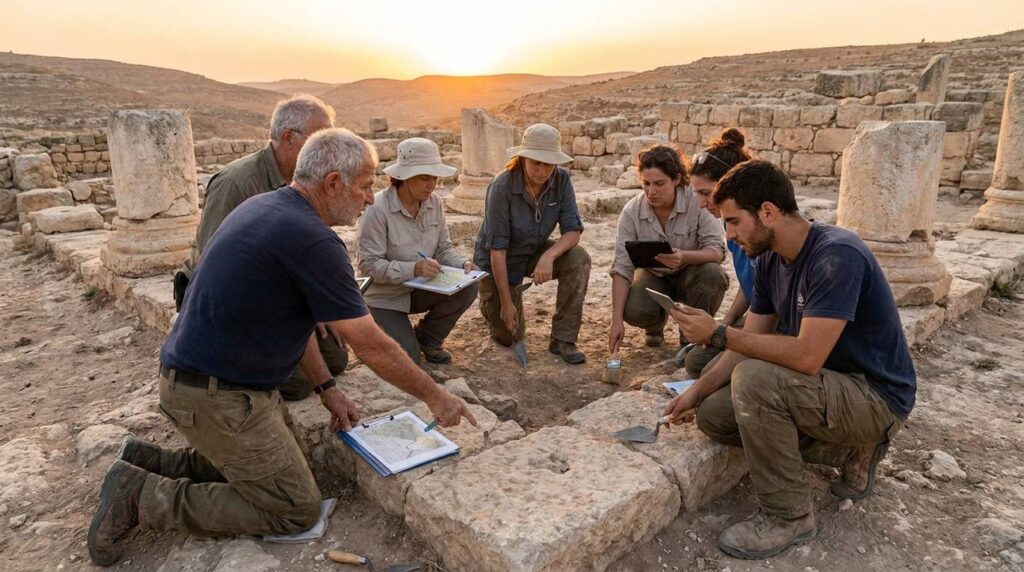
Archaeological studies have sought to uncover the historical reality of Ramah. Various theories attempt to identify its exact location, with candidates including modern-day Al-Ram. These explorations reveal the complexity of matching historical sites to present-day geography but underscore the enduring interest in Ramah’s historical basis. Excavations in the region have uncovered artifacts that date back to the Iron Age, providing insights into the daily life and customs of its ancient inhabitants.
from the Western Wall to Masada.
The Iron Age artifacts found near Ramah offer glimpses into the lives of those who once lived there. Pottery shards, tools, and other remnants suggest a community engaged in agriculture and trade. These findings not only illuminate the material culture of the time but also help historians piece together the broader socio-economic context of the region, enhancing our understanding of how narratives fit into historical realities.
Understanding archaeology’s role provides a tangible link to the past and highlights the scientific efforts to validate historical accounts through physical evidence. The work of archaeologists not only enriches our understanding of Ramah but also contributes to the broader narrative of Israel’s history. These findings offer a glimpse into the lives of those who once walked these lands, connecting us to their stories and the legacy of their cultural contributions. Discoveries such as pottery shards and ancient inscriptions provide insights into daily life and the socio-political dynamics of the era.

Ramah in Modern Context
Today, the historical and cultural layers of Ramah continue to resonate. Scholars and enthusiasts explore its past, weaving together archaeology and historical study to enrich understanding. While the exact location of Ramah may remain debated, the stories associated with it continue to offer insight into the heritage of the region, reflecting shared narratives. Additionally, it is mentioned as a place where a significant figure built an altar, indicating its religious significance.
Ramah’s mention in the context of a significant figure highlights its role as a center of activity. This key figure in history often returned to Ramah after significant events, emphasizing its importance in his life. The city’s association underscores its place in narratives, serving as a backdrop for encounters and decisions that shaped the course of history.
Connecting with the essence of Ramah provides a window into the mix of the ancient world and its enduring influence on modern perspectives. The ongoing research and discoveries contribute to a deeper appreciation of the historical context and dimensions of this significant site. By engaging with these narratives, individuals can gain a greater understanding of the cultural foundations that continue to shape the identity of the Jewish people. Ramah’s mention, where prophets met a notable leader, underscores its significance as a place of encounters.
The Cultural Legacy of Ramah
Ramah’s influence stretches beyond geography and history into the cultural identity of the Jewish people. The narratives set here have become part of shared history, connecting generations. This cultural heritage speaks to the strength of tradition and the power of place in shaping community identity through the ages. A notable figure, who anointed the first two kings of Israel, was born in Ramah, further embedding its significance in Jewish history.
A notable figure’s story highlights Ramah as a place of intervention and beginnings. His life and actions from this location had lasting impacts on the course of history. Ramah’s role in these narratives underscores its importance as a site where the significant and human intersect, shaping the destiny of a nation and its people.
Through Lev Haolam, individuals can explore these connections, bringing the history of places like Ramah closer to people worldwide. The products offered help support local producers and serve as a bridge to the Jewish cultural heritage.
By embracing these stories, individuals participate in a shared history that transcends time, fostering a sense of unity and continuity with the past. This connection is akin to the way people felt tied to their ancestral lands, as seen in the many narratives where land and identity are intertwined.

How Can We Connect to Ramah Today?
The relevance of Ramah and sites like it lies in their ability to inspire and educate. Through engagement with history and culture, people connect with Israel’s history. Lev Haolam provides opportunities for this connection by offering unique products that celebrate the heritage and stories behind regions like Ramah. Exploring these connections fosters a deeper understanding and appreciation of Israel’s cultural and historical richness.
Individuals can reflect on Ramah’s cultural narratives, such as the stories which speak of Rachel’s lamentation. This connection to ancient narratives allows individuals to engage with the cultural dimensions of the land. By exploring these stories, one gains insights into the legacy of places like Ramah, which continue to resonate in the shared history of the Jewish people.
This prophecy, set in Ramah, highlights the themes of mourning and hope, resonating through generations. By engaging with these stories, individuals gain insight into the continuity of Jewish heritage. Lev Haolam’s offerings, which include products crafted by local artisans, serve as tangible reminders of these connections. Many items reflect regional traditions, bridging the past and present. Such connections are reminiscent of how people carried their heritage through physical symbols and shared narratives.
Understanding Ramah
