
How to Support Israel:
What Actually Makes a Difference
More and more Americans – Christians, Jewish families, and everyday people who care deeply about the Holy Land – are asking the same question: what is the most meaningful way to support Israel today?
For some, it comes from faith. Scripture calls believers to stand with Israel, and that conviction is personal and deeply rooted. For others, it’s about family ties, a lifelong connection, or a simple sense of moral clarity: this is something I believe in, and I want to act on it.
But good intentions alone are not a strategy. The real question is how to help in a way that is transparent, meaningful, and creates real impact for real people.
This guide walks through the main ways Americans support Israel today, what each one does well, and where each one falls short – so you can find the form of support that best fits your values, priorities, and goals.
Table of Contents
- Donating to Charitable Organizations
- Visiting Israel
- Buying Israeli Products
- Community Advocacy and Public Support
- Why How You Support Matters as Much as That You Support
- Comparing the Options Side by Side
- The Case for Ongoing, Monthly Support
- How Lev HaOlam Works
- The People Behind the Products
- What Supporters Actually Feel
- Frequently asked questions
1. Donating to Charitable Organizations
For many Americans, donating is the first and most natural response. People looking for ways to help often search for trusted organizations, relief funds, or charitable options that support Israel in an immediate and practical way.
Well-known options include Friends of the IDF, Magen David Adom, United Hatzalah, the Jewish National Fund, Leket Israel, and The Jewish Agency for Israel. These organizations support Israel in different ways, including emergency medicine, food security, immigration support, and social infrastructure. Depending on their priorities, many people compare charitable organizations to decide which kind of support feels most aligned with what they want to do.
The genuine strength here is scale and speed. When there is an acute need, established organizations can mobilize quickly. A donation can help fund an ambulance, a food package for a struggling family, or resources for a new immigrant finding their footing.
Over time, though, many donors find themselves asking a quieter question: Can I feel my contribution? Do I know what changed because of it?
That is not a criticism of charitable giving – it is simply a natural human need. The more a person cares, the more they want to see the thread between their action and the outcome.
That desire is what leads many people to look for something more personal – not instead of donating, but alongside it.
2. Visiting Israel
There’s almost nothing like being there.
A trip to Israel is one of the most transformative experiences a person can have – walking the land of the Bible, hearing Hebrew on the streets, meeting Israelis in their daily lives, feeling the weight of history and the vitality of a modern, living country. Thousands of American Christians and Jewish families make this journey every year, and many describe it as a turning point.

The emotional depth of this connection is real. It’s not something you can replicate through a screen.
But a trip is, almost by definition, a singular event. Life, cost, and circumstances mean most people visit once, or occasionally. And even for those who go regularly, travel doesn’t create a recurring form of support – it creates a memory and, often, a longing to stay connected that doesn’t have a clear outlet once they’re home.
That longing is worth paying attention to. It’s pointing toward something.

3. Buying Israeli Products
Purchasing products made in Israel is one of the most direct ways to support Israel from home – and it’s something you can do from your kitchen table.
Israeli olive oils, honeys, spices, Dead Sea skincare, handmade ceramics, and artisan goods are genuine products with genuine stories behind them. When you buy them, money moves directly into Israeli businesses and the families that run them.
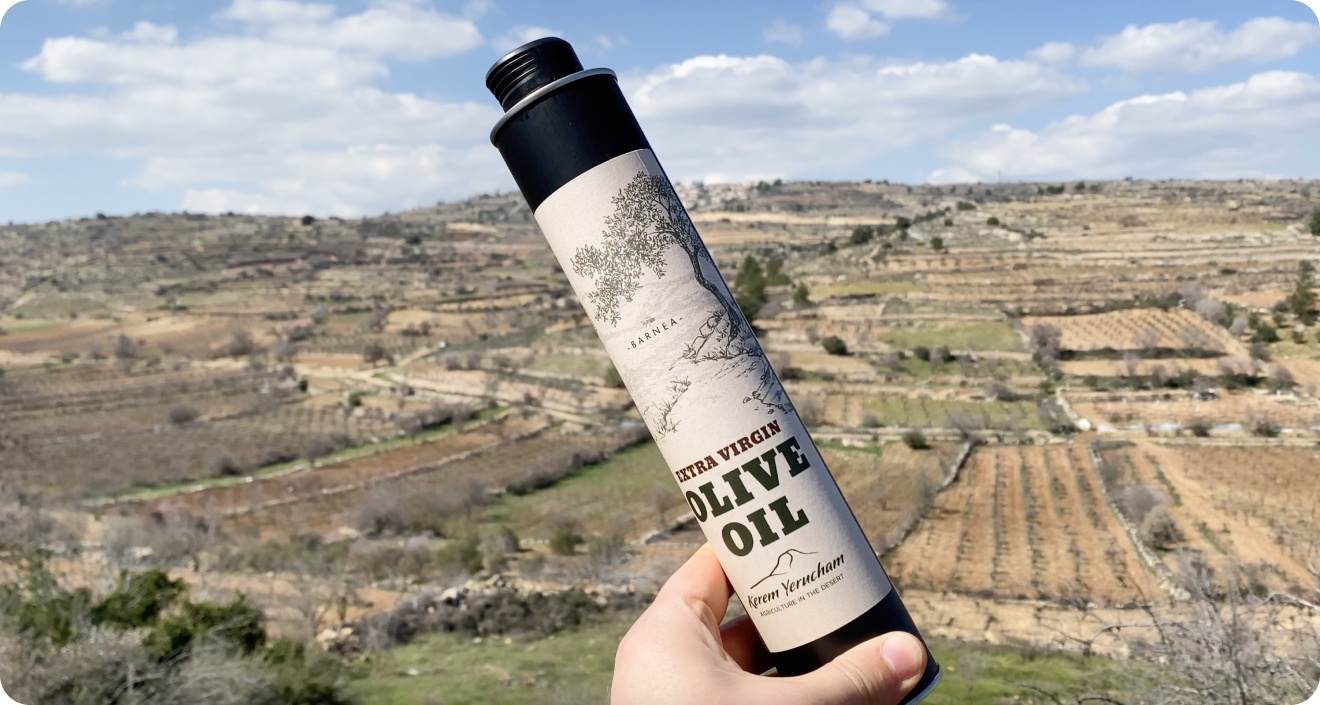
This is meaningful. It’s not symbolic – it’s economic support that shows up on someone’s balance sheet. For many people, this becomes the best way to support Israel when they want something tangible, personal, and repeatable.
The limitation is usually transparency. Most of the time, you don’t know who made what you’re holding. Was it a factory? A family farm in the Galilee? A workshop in Judea that employed five people? The connection exists, but it’s often invisible.
When that connection becomes visible – when you know the name, the city, the story – everything changes.
4. Community Advocacy and Public Support
Showing up at events, sharing information, speaking up at your church or synagogue, supporting pro-Israel organizations in your community – this matters too. It’s one of the clearest ways to support Israel in public life. It builds solidarity, shapes culture, and shows others how to show support for Israel in everyday settings.
But most people who care deeply eventually feel they need more than advocacy. They want something tangible. Something they can point to and say: I did this, and it helped someone.
That gap – between caring and doing something concrete – is exactly where the conversation about meaningful support begins.
5. Why How You Support Matters as Much as That You Support
Here’s something that takes time to realize: the form of support matters, not just the fact of it.
A one-time action can be genuinely valuable – sometimes exactly the right thing at the right moment. But when it comes to lasting impact, one factor stands above all others: consistency.
When support arrives once, it helps in the moment. When support is ongoing, it creates stability. It allows families to plan, businesses to invest, and people to look forward – not just survive today.
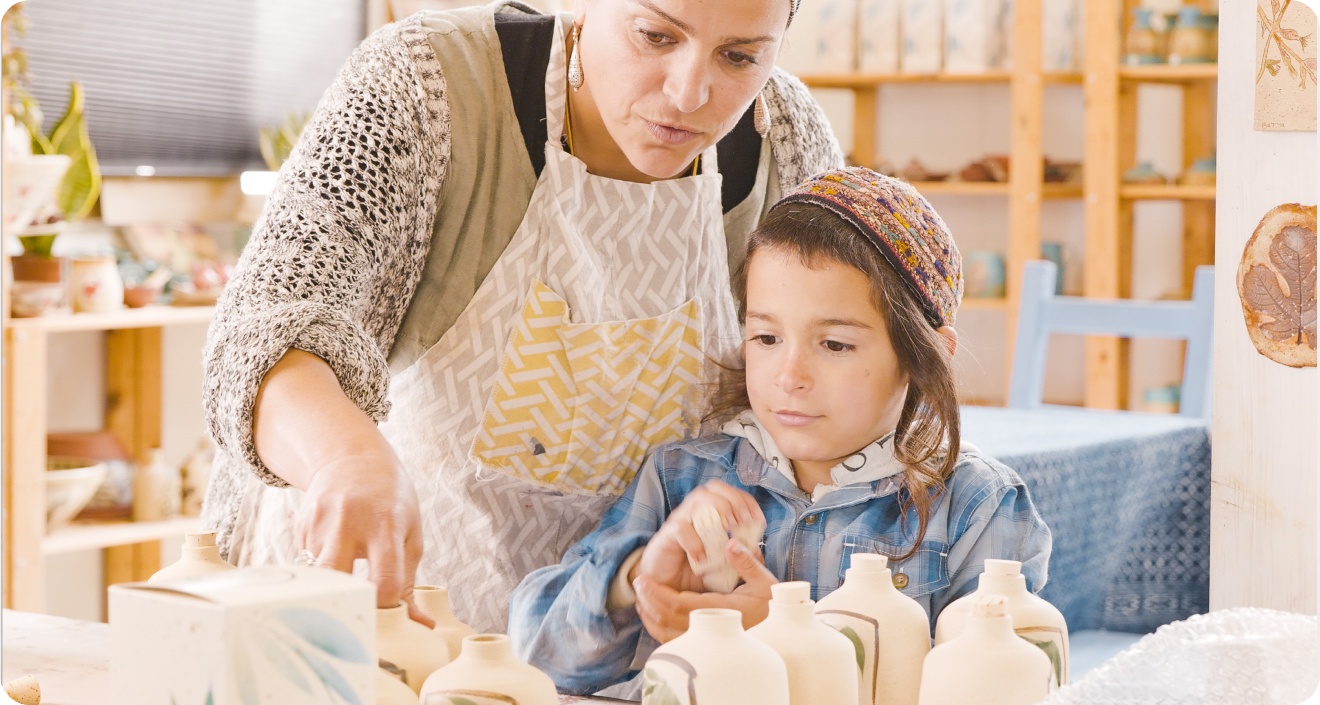
Research on small business resilience consistently confirms this: predictable, recurring revenue is qualitatively different from occasional sales. It’s the difference between a business that’s always waiting to see if next month exists, and one that can actually grow.
This is why more and more people who want to help in a meaningful way are moving toward formats that do not end after a single action, but continue month after month.
6. Comparing the Options Side by Side
Here’s a simple comparison that helps see the differences more clearly.
| Support Format | What It Gives You | Its Strength | What to Keep in Mind | What to Keep in Mind |
|---|---|---|---|---|
| Charitable Donation | Speed and scale | Supports emergency response, medicine, food security | Personal connection to outcome can be hard to feel | Immediate crisis response |
| Visiting Israel | Deep emotional connection | Direct experience of the land, culture, and people | Typically a rare, one-time event | Building personal connection |
| Buying Israeli Products | Direct economic support | Money reaches Israeli businesses and families | Story behind the product often isn't visible | Supporting the economy |
| Lev HaOlam Subscription | Monthly, meaningful participation | Combines direct family support, transparency, artisan connection | Best for sustained engagement, not a single gesture | Ongoing, visible impact |
The combination of regularity + direct impact + transparency + human connection is what makes ongoing support feel different – calmer, deeper, and more like something you’re genuinely part of.
7. The Case for Ongoing, Monthly Support
For many supporters of Israel, the shift to a monthly format changes something fundamental.
Support stops being a decision you have to keep remaking. It becomes part of your life – a quiet, consistent act that accumulates into something real over time.
For the families and small businesses receiving that support, the difference is profound. Occasional orders are welcome. Predictable, monthly orders are transformational. A family-run workshop can hire an extra set of hands. A small producer can buy ingredients in advance. A craftsperson can plan for next season, not just hope for it.
This is what sustained support creates: the conditions for people to build, not just get by. For people comparing different ways to help Israel, recurring economic support offers a different kind of answer: not emergency aid alone, but long-term resilience.
8. How Lev HaOlam Works
Lev HaOlam was built on this principle.
Each month, subscribers receive a curated subscription box from Israel filled with products made by small Israeli producers – artisans, family farms, craftspeople, and small workshops, many located in Judea and Samaria, communities that face particular economic challenges. The boxes contain 6-8 products: foods, handmade goods, ceramics, skincare, home items – each one selected for quality and for the story behind it.
But the box is not the point. The point is who made it.
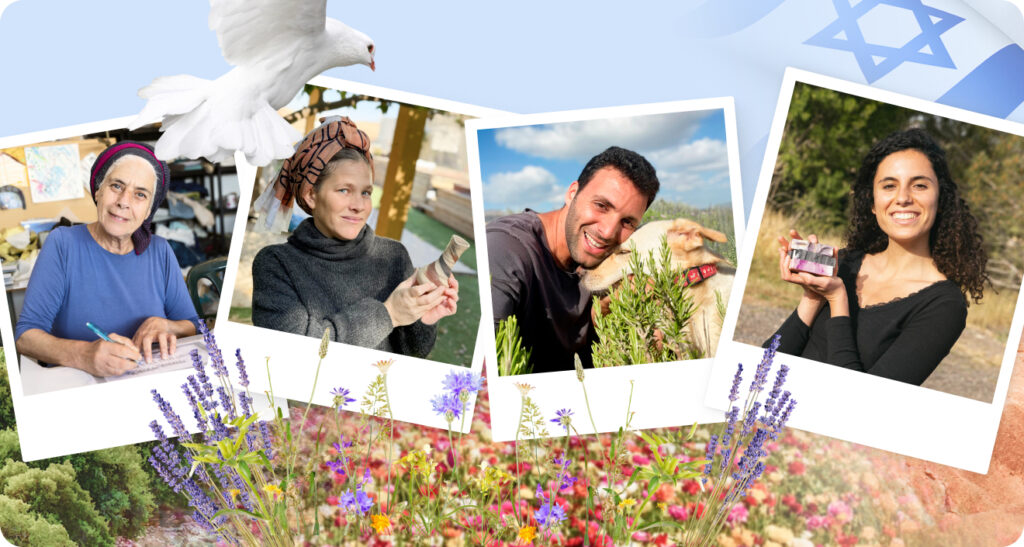
Every product comes from a real person with a real story. A beekeeper in the Jordan Valley. A ceramic artist in Jerusalem. A family that has been making olive oil for three generations. When you subscribe, your support reaches them directly – month after month.
That’s what makes the connection visible. Not a statistic. Not a vague sense of doing good. A name, a face, a livelihood.
Lev HaOlam works with over 300 producers. With every box, 6–8 of them receive direct economic support. And because the format rotates, the help reaches different families at different times – going where it’s needed most.
9. The People Behind the Products
“Your support is very special. During the war, we especially felt it. We realized that this is a connection between people with shared values.”
Michal’s Natural Soap

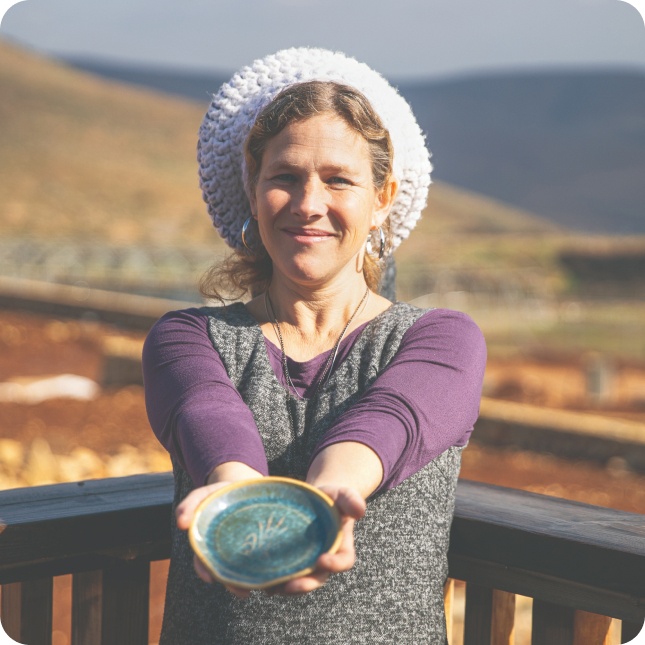
“I love working with Lev HaOlam. It challenges me to do more, to develop new skills, and to create in bigger quantities. It’s never simple, but it is always filled with love.”
ceramic artist, Gitit
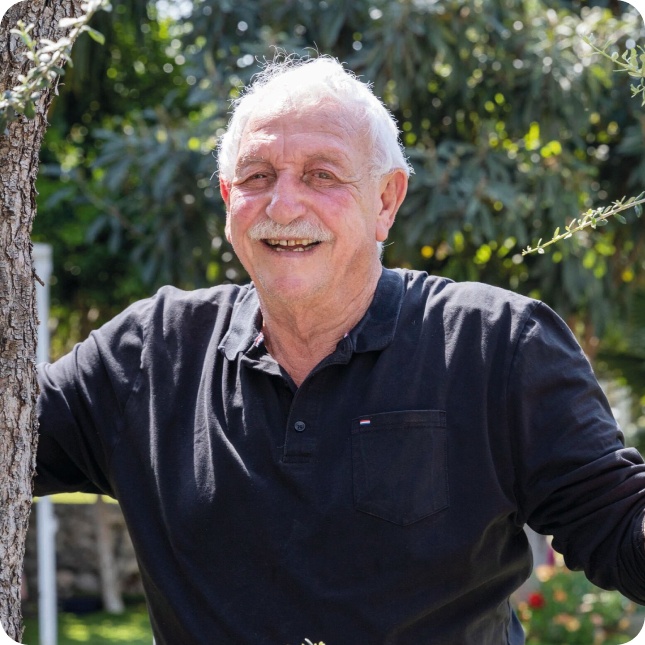
“This order is very meaningful. It takes 5 tons of oil, which means 25 tons of olives. I’m very happy that this oil is going to special people.”
Zitei Shefa, olive farmer
10. What Supporters Actually Feel
There’s a meaningful difference between doing something good and knowing how it works.
When you can trace the connection between your choice and someone else’s livelihood – when you know the name of the family you’re supporting this month – the feeling is different. It’s not the emotional high of a generous impulse. It’s something quieter and more lasting: the sense that your participation has weight.
That’s what longtime Lev HaOlam subscribers often describe.
“You made it very attractive to help. We might have given a smaller amount one time, but this way it’s fun, you get something, and you feel connected to Israel. I also love that these are small places making things and trying to survive.”
“I feel obedient to God. I feel happy that I can do my little part. And honestly, this feels like my long-distance local community.”
“The people seemed real. It wasn’t just about making money – it was helping people. It really is more than just the product; there are real people behind it that we’re helping.”
“The message that touched me was the connection to people and their lives. I really wanted to help, even in a small way. And I’m always excited to receive the package every month.”
Conclusion
The question of how to support Israel rarely stays abstract for long. It becomes personal. And eventually, it leads to a decision.
The choice isn’t only whether to help – it’s what kind of help you want to give.
One-time actions matter. Donations, visits, purchases – all of them have real value. But consistent, ongoing support creates something different: a relationship, a habit, and a form of impact that compounds month after month.
Many people arrive at this understanding gradually – through searching, comparing, questioning, and finally finding a format that feels right. Not because it’s easy, but because it’s clear. Because they can see where their support goes and feel that it means something.
If you are at that point – looking for a way to help that does not end after one action – it may be worth seeing what ongoing participation actually looks like in practice.
Common questions
Is Lev HaOlam a charity or a subscription service?
It’s a subscription service with a mission. Your monthly payment goes directly to purchasing products from Israeli small businesses and artisans – not to a fund. The support is economic and direct.
What's the difference between donating to a charity and subscribing to Lev HaOlam?
Charitable donations typically support programs and organizations. A Lev HaOlam subscription supports specific families and producers directly, and you receive their products in return. Both are valuable; they work differently.
Do I need to be Jewish or Christian to subscribe?
No. Lev HaOlam’s subscribers come from many backgrounds. What they share is a connection to Israel and a desire to support it in a concrete, ongoing way.
Can I give a Lev HaOlam subscription as a gift?
Yes. Many subscribers give boxes as gifts to family and friends who share their love for Israel.
How do I know my support is reaching real people?
Each box includes information about the producers it supports – who they are, where they’re located, and what they make. The connection is made visible by design.