Traditional Jerusalem Kugel Recipe
4 March 11:50
322
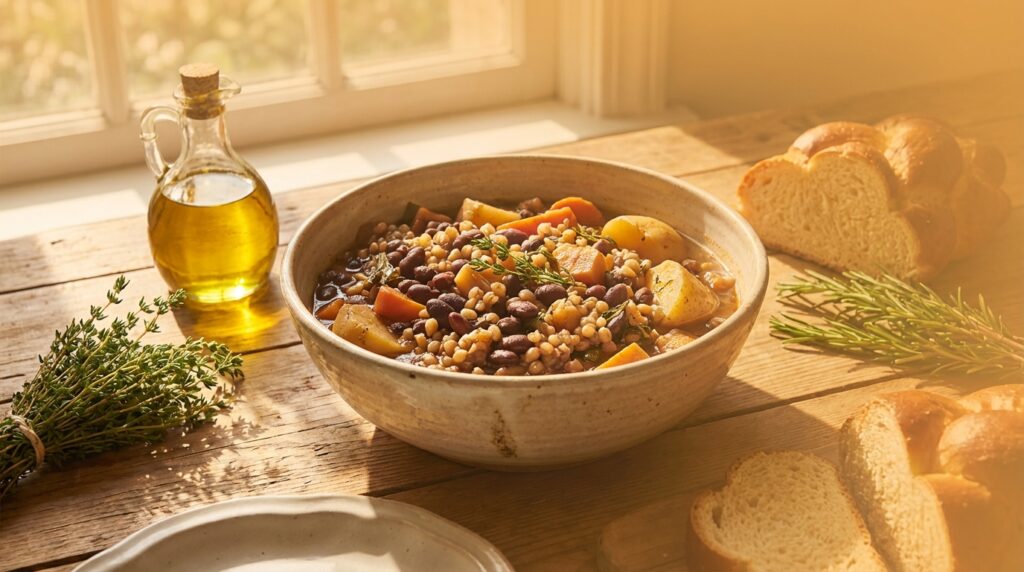

Originating from the Ashkenazi communities of Eastern Europe, cholent has been a staple for generations. Traditionally made with meat, this vegetarian version retains the rich flavors and comforting qualities that make it a beloved dish. The slow-cooked nature of cholent allows the ingredients to meld together, creating a hearty and satisfying meal.
The word ‘cholent’ is believed to derive from the Old French word ‘chalant’, meaning warm. This dish was designed to be cooked overnight, ensuring a hot meal for Shabbat without violating the prohibition against cooking on the Sabbath. The vegetarian version is a modern adaptation that caters to diverse dietary preferences while preserving the essence of the original recipe.
In many Jewish households, cholent is more than just a meal; it’s a tradition that brings families together. The aroma of the stew simmering slowly fills the home, creating an atmosphere of warmth and togetherness. Each family often has its own unique twist on the recipe, passed down through generations.
While the traditional ingredients include beans, barley, and potatoes, many modern recipes incorporate a variety of vegetables and spices to enhance the flavor profile. This flexibility allows each cook to tailor the dish to their taste, making it a personal and cherished creation.
The preparation of cholent is often a communal activity, with family members gathering to chop vegetables and prepare the pot. This shared experience adds to the dish’s significance, transforming it into a symbol of unity and love. The slow cooking process mirrors the patience and care that goes into nurturing family bonds.
As dietary habits evolve, vegetarian cholent has gained popularity among those seeking plant-based options. This adaptation not only respects traditional practices but also embraces contemporary culinary trends, making it a dish that bridges past and present.